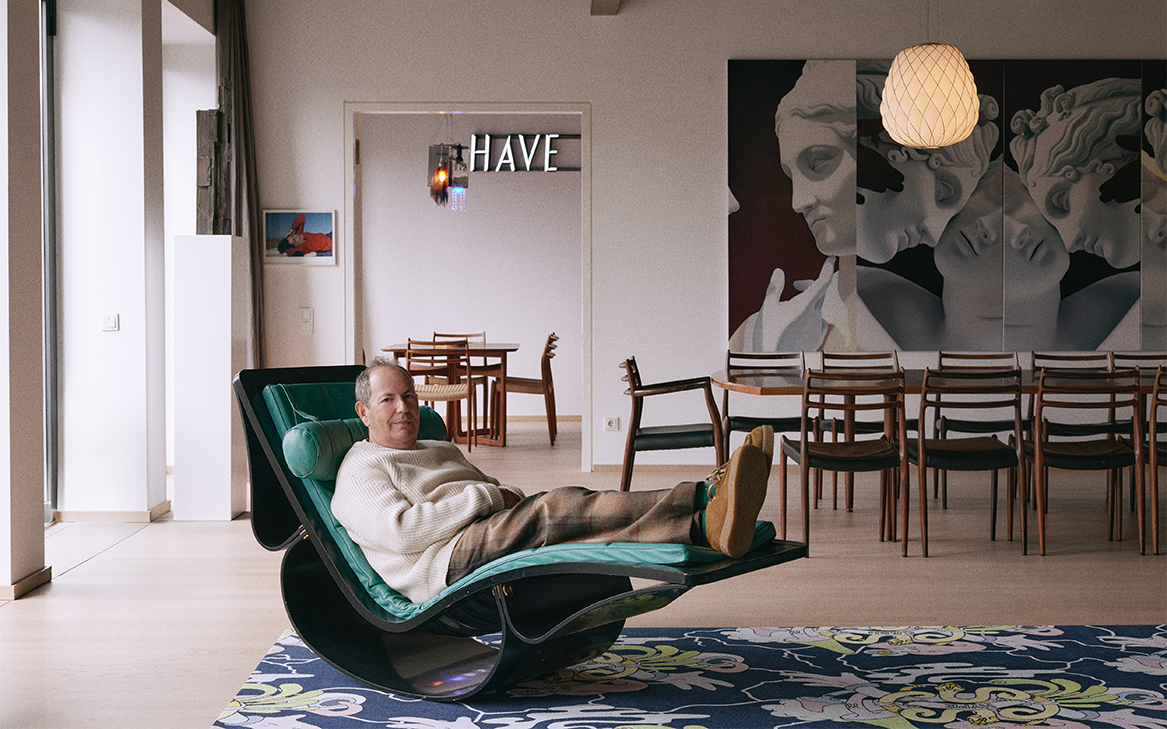
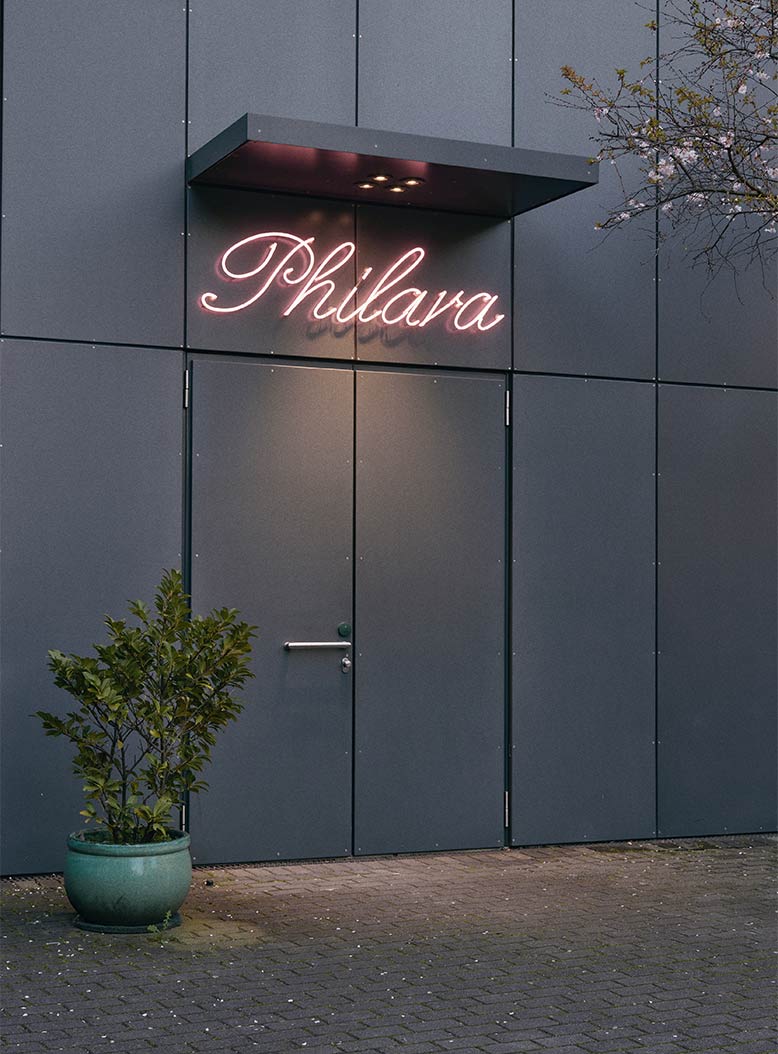
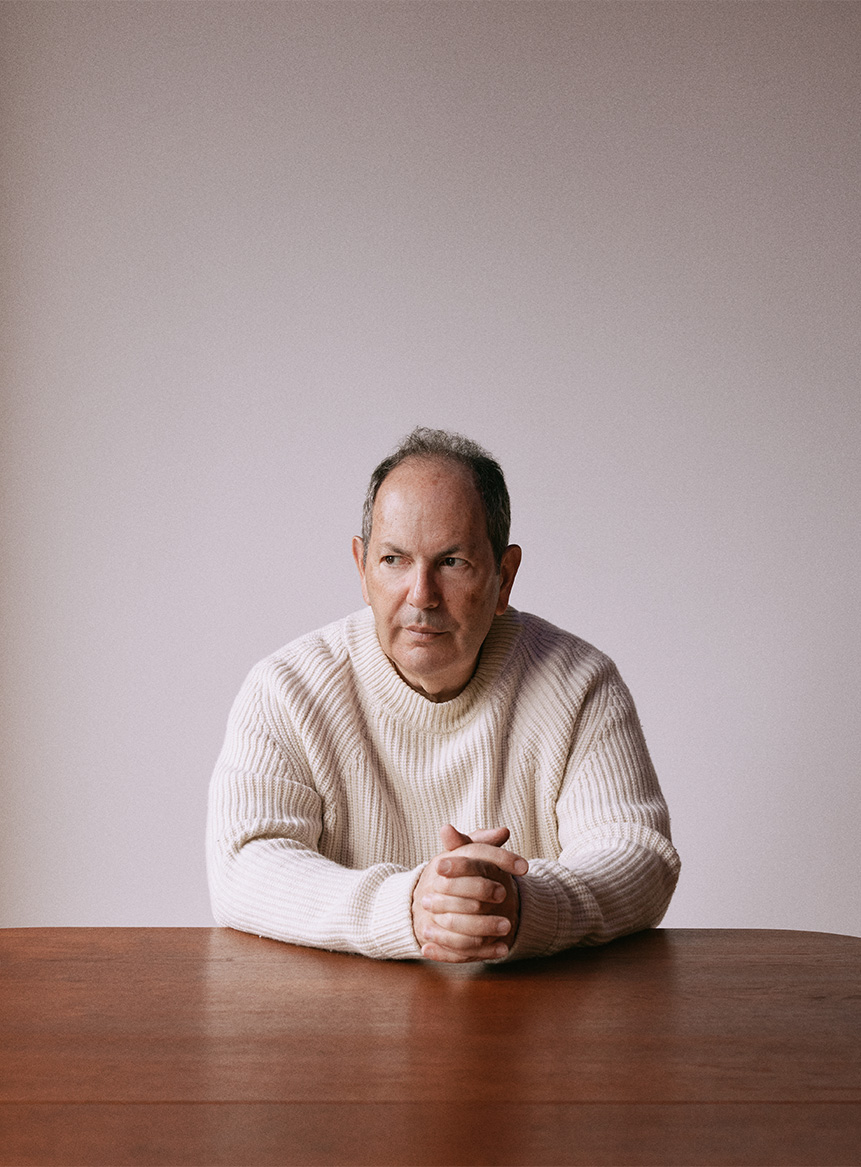
The Düsseldorf art collector Gil Bronner is the founder of the Philara Collection, which will celebrate its tenth anniversary in 2026. The Philara Collection is a public exhibition space for international contemporary art, showing art in a former glassworks in Düsseldorf. Parts of his private collection, which Bronner has been building up since the 1990s, are also on display here.
Gil, you come from a family of collectors – so was there no escape from art collecting?
I suppose one becomes a victim of one’s upbringing, for better or for worse! Even if one does not want to. I think the same applies to my children.
Where do you buy? From galleries, from artists, at fairs?
All of the above. As for the commercial side of things: these days, you can buy good works by established artists, for a fraction of the price at auctions. That is one reason, if you are honest, you have a look around at the fairs and end up not buying much. In any case, I have been buying more at auctions lately.
So economic considerations play a role?
Yes, absolutely. A few gallery owners might be annoyed by that, but that is just how it is. I have been buying art for 35–40 years now. The budget has grown, but the market has never been as inverted as it is now. It is in a bit of a slump, and Art Basel has reached a certain point of ennui for me. After 30 years, we are taking a break. Now there is Art Basel Paris, and for me that is the more interesting city.
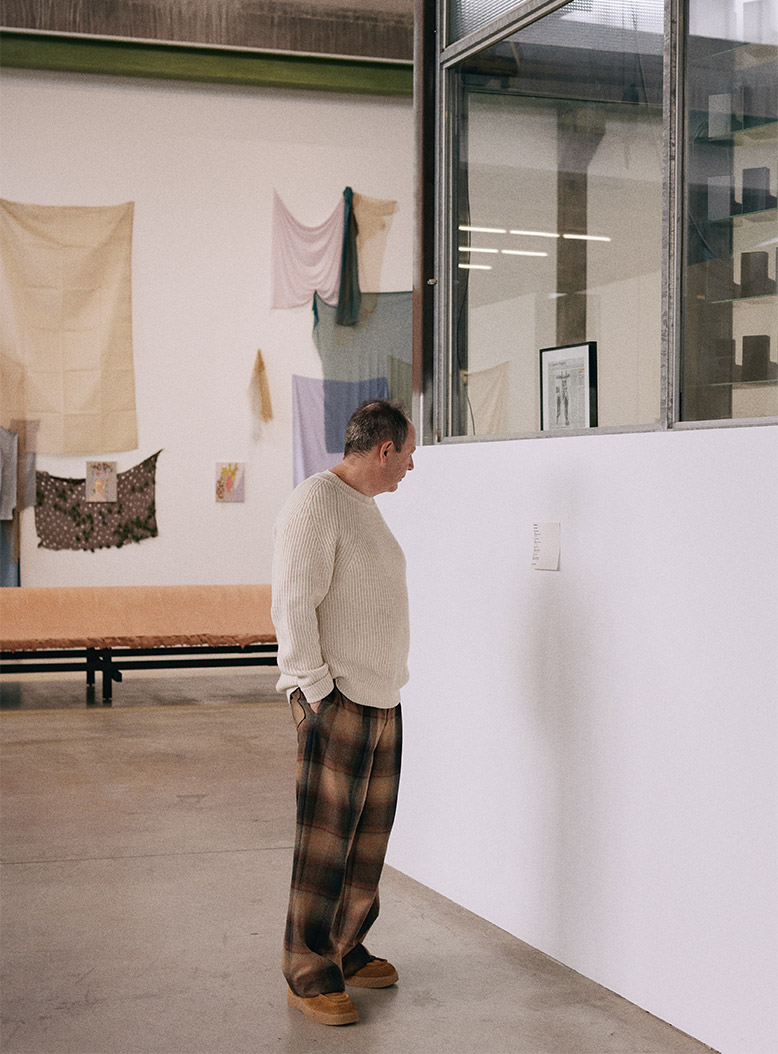
Exhibition view Heimspiel. Mitarbeitende der Sammlung featuring works by Frederic Bahr and Ruben Benjamin Smulczynski. Courtesy of the artists
Speaking of Art Basel: art fairs have become more numerous and larger, showcasing correspondingly more artists. In your view, has the quality of what’s on offer also improved as a result?
No, art does not get better or worse; it is what it is. The market does not seem to have produced a genius of the century, like Picasso so far. But the more money you invest in something, the more detached most people unfortunately become, in their view of the work. I used to acquire many works by young artists out of pure pleasure, and I still do so to some extent today – though often against my better judgement.
Is it then a matter of support?
Yes. But it is not patronage! Because when you buy young art, you do get something in return. As a patron, for example, I act through our foundation, through which we support exchange programmes, or through Philara, where we finance exhibitions. People who call themselves patrons, simply because they have bought three works by young artists, are not patrons in my eyes. That is utter nonsense!
Speaking of patrons: art has become fashionable. Do you also see people who drink a glass of champagne at openings but don’t really have anything to do with art?
That has been going on for decades. But the people I know are very committed and interested. Perhaps I have distanced myself from the others too! Art has always been the most sophisticated form of showing off. Virtually anyone with money can buy an expensive sports car, but very few know what makes a truly good painting.
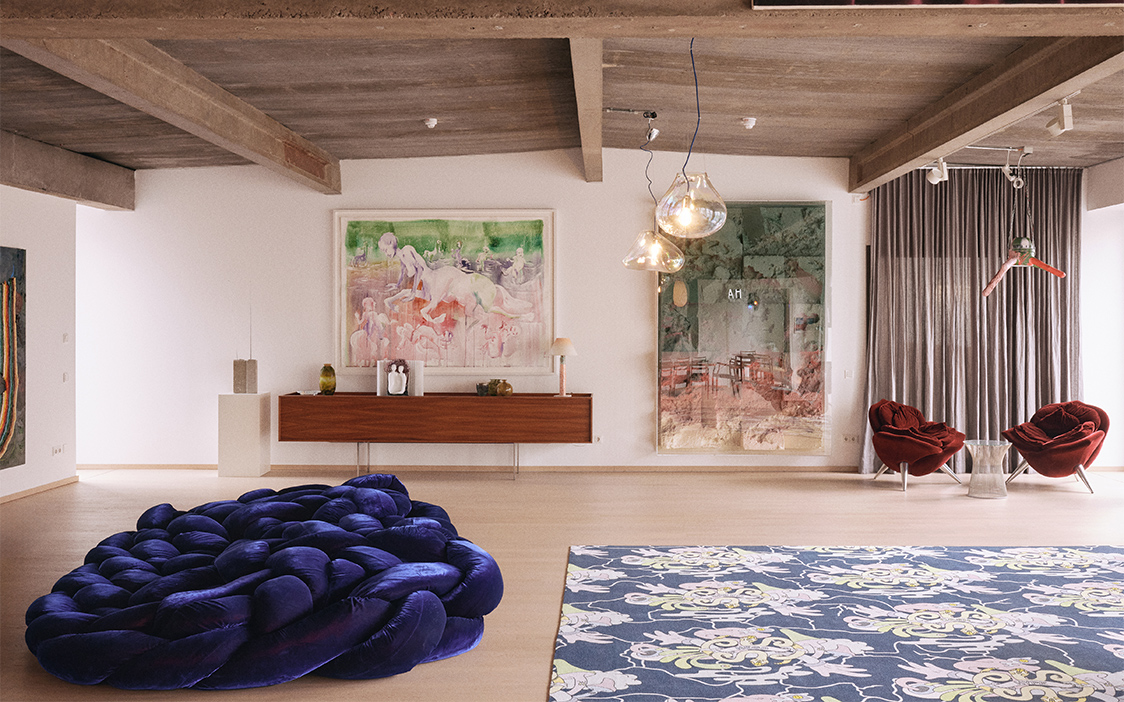
Isa Genzken, Marianna Simnett, Andreas Schmitten, Katja Tönnissen, Jan Albers, Franz West, Zuzanna Czebatul (from left to right). Courtesy of the artists
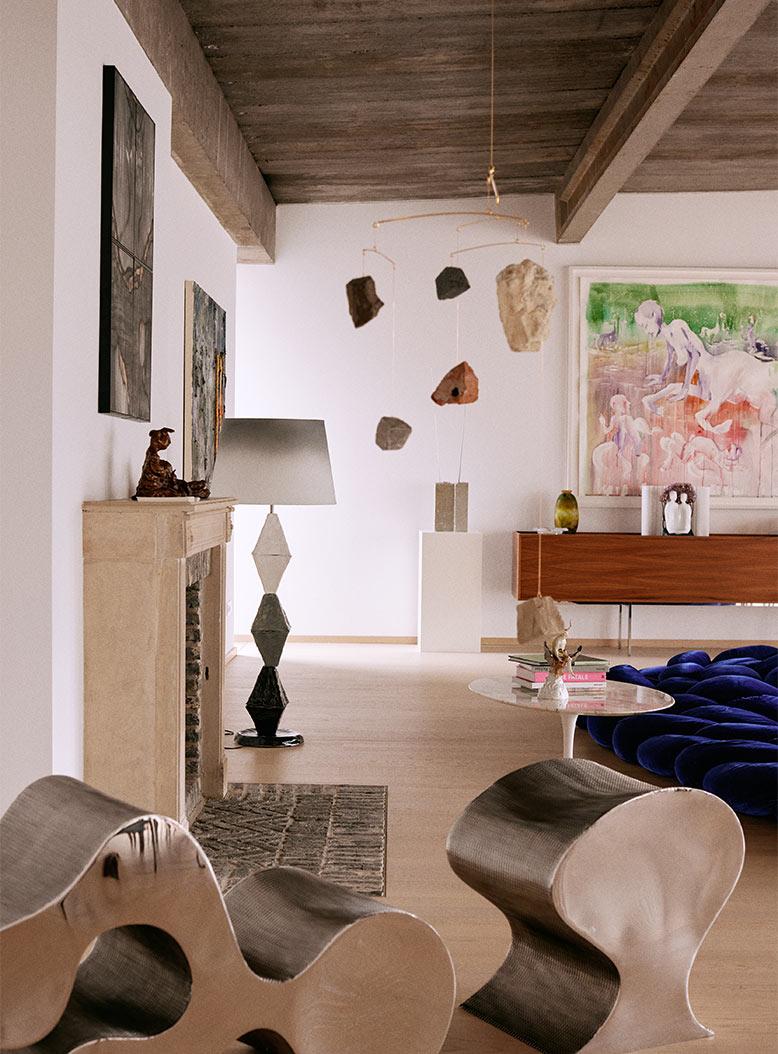
Alicja Kwade, Paloma Varga Weisz, Carolina Aguirre, Katja Tönnissen, Friedrich Kunath, Isa Genzken, Marianna Simnett, Andreas Schmitten (from left to right). Courtesy of the artists
Although – aren’t there ‘show-off artists’ and galleries?
Of course. There are top galleries that are comparable to top fashion brands. You know someone does not really know anything about fashion if they are running about with a thick Hermès belt and a Rolex. That is the crowd that drinks champagne at the fair and thinks Leon Löwentraut a renowned artist.
Do you go to vernissages yourself?
I usually visit an exhibition before or after the opening. I try to avoid vernissages as I am not particularly fond of small talk.
What about events such as the opening of the Venice Biennale?
I have been there a few times, and the invitations are wonderful, but it is much better not to go to the opening. It is quite unbelievable how many events take place; you want to take everything in, and then the art gets neglected.
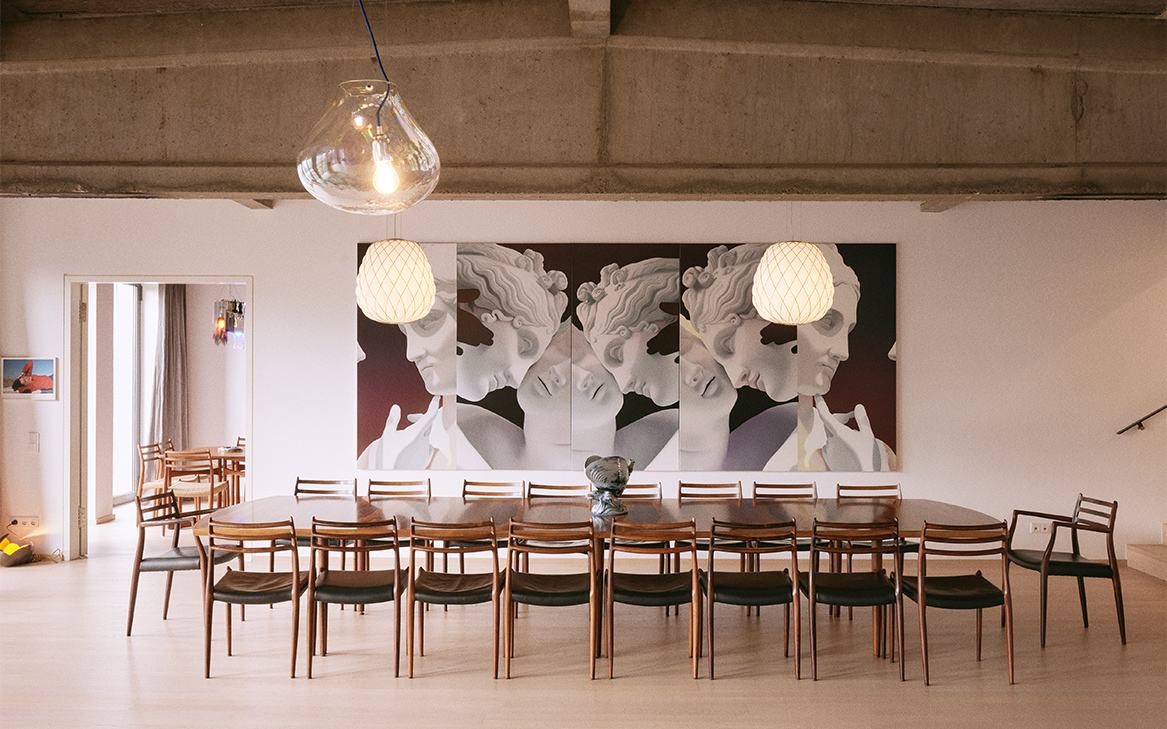
Wolfgang Tillmans, Konrad Friedel, Keren Cytter, Vivien Greven (from left to right). Courtesy of the artists
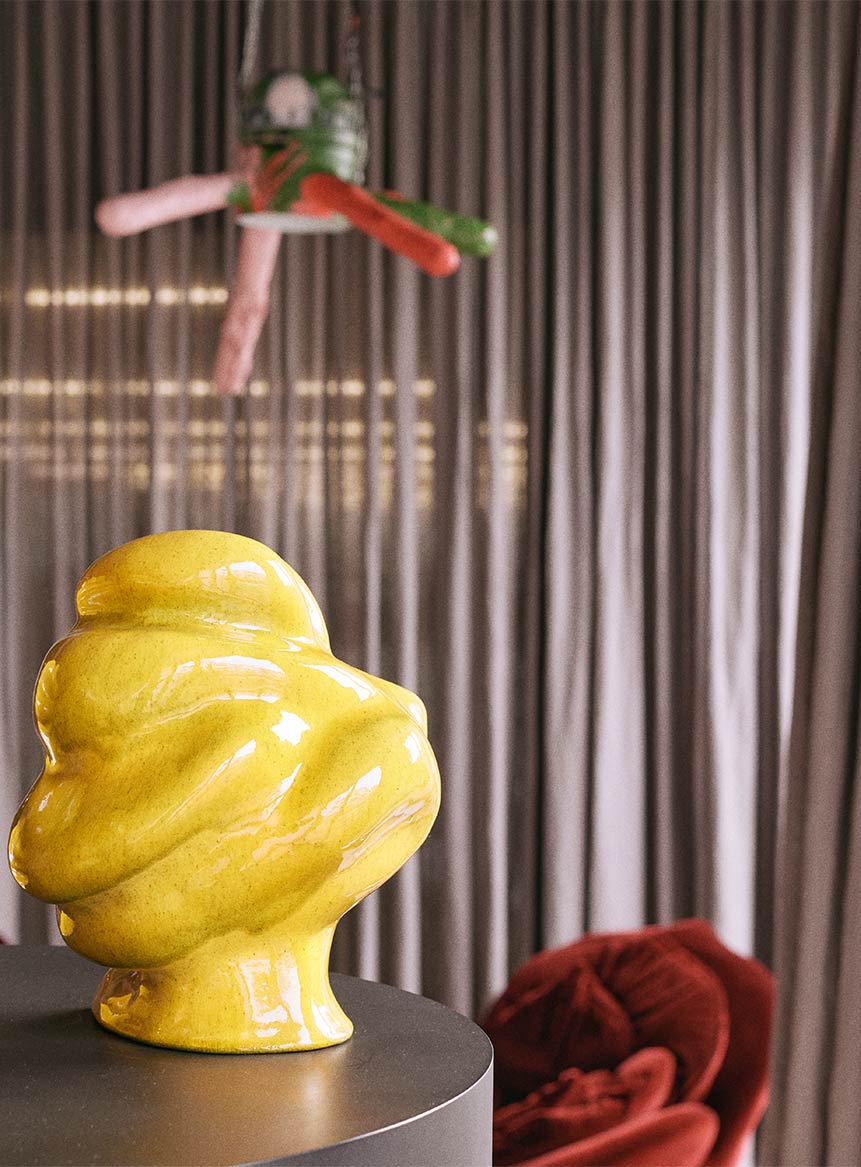
Thomas Schütte and Franz West. Courtesy of the artists
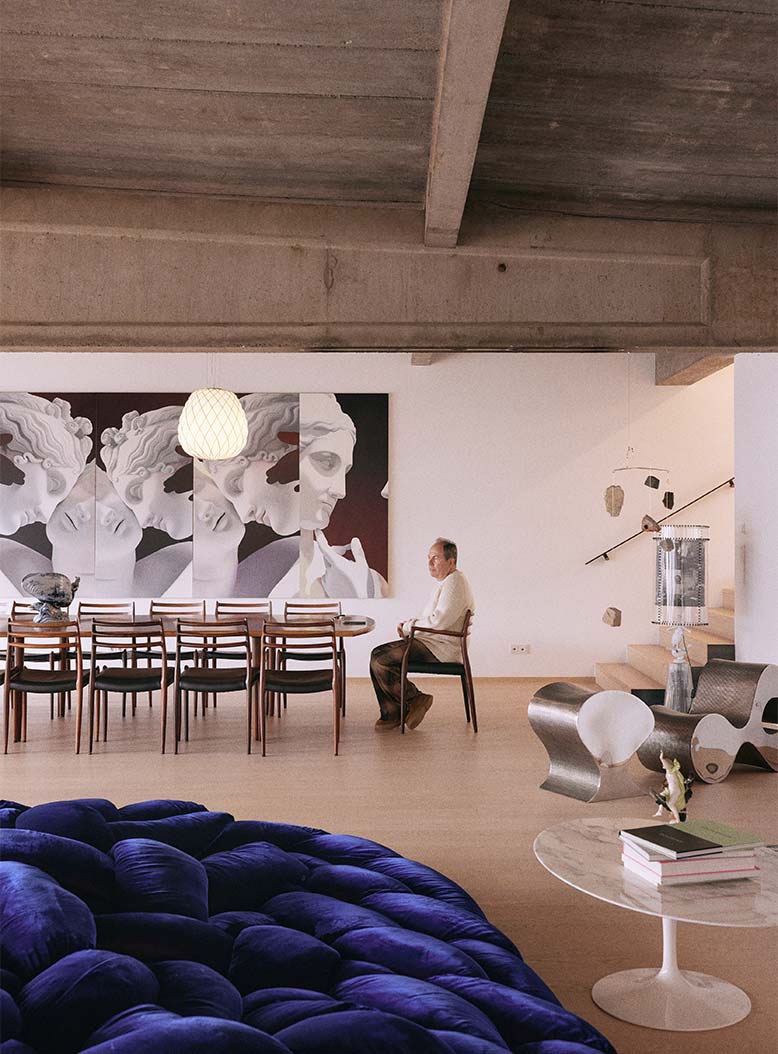
Vivien Greven, Claus Föttinger, Alicja Kwade (from left to right). Courtesy of the artists
You own over 2,000 works. You cannot have every single one in your head– or can you?
There are works you simply forget, but very few. My visual memory still works quite well!
Why do you collect art? What do you enjoy about it?
It is pathological, I believe. But if I were sitting in a room at home and there were no art on the walls, I would feel something was missing!
Have you learnt anything about yourself through your collecting?
The first thing you learn is that you do not really have yourself under control. But about yourself, no. Art is not the only thing in life. You are constantly evolving, and art is just one part of that. You have a working life, a married life, a life with friends, a life with poor sporting results and who knows what else.
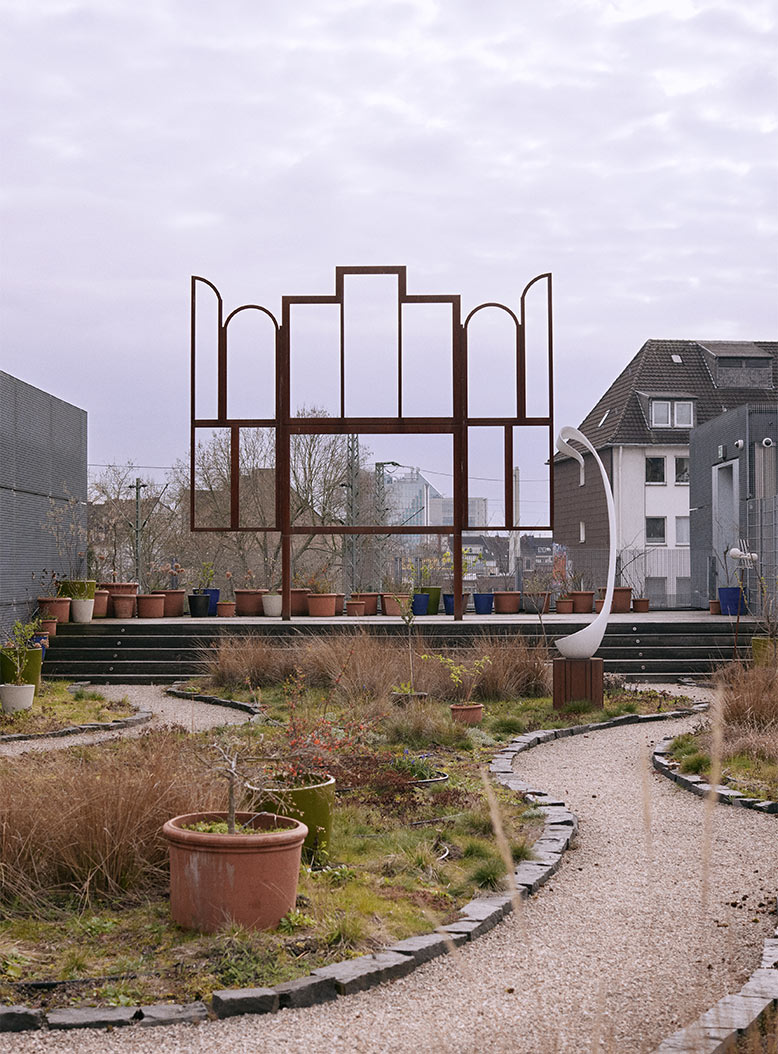
Kris Martin and Andreas Schmitten. Courtesy of the artists
Has your art evolved alongside you, in line with distinct phases of life?
It has matured, that may well be the case. Today, it is more likely that you will hang key works of post-war art at home alongside contemporary pieces. My display at home is more of a coincidence, but it works quite well visually.
As for the programme at your public exhibition space for international contemporary art, Philara: how involved are you?
I am happy to leave it to the team to produce ideas. If there is something I do not want, I say so. And if there is something specific I want, I say that too. We are celebrating 10 years of Philara and I would like to see a lovely presentation of the collection.
The exhibition Heimspiel – Philara Collection Staff is currently running, featuring artists who have worked with you. That sounds amazing…
Almost everyone who works with us is an artist. After all, the Düsseldorf Art Academy is right nearby, and many of them work part-time with us. Aspiring curators studying art history also work with us in our education programme. As for our Heimspiel exhibition, I was sceptical at first. I did not want to put on a courtesy exhibition. But if I had known how brilliant it would turn out, I would have agreed straight away! And it has created a special atmosphere and sense of camaraderie in the building.
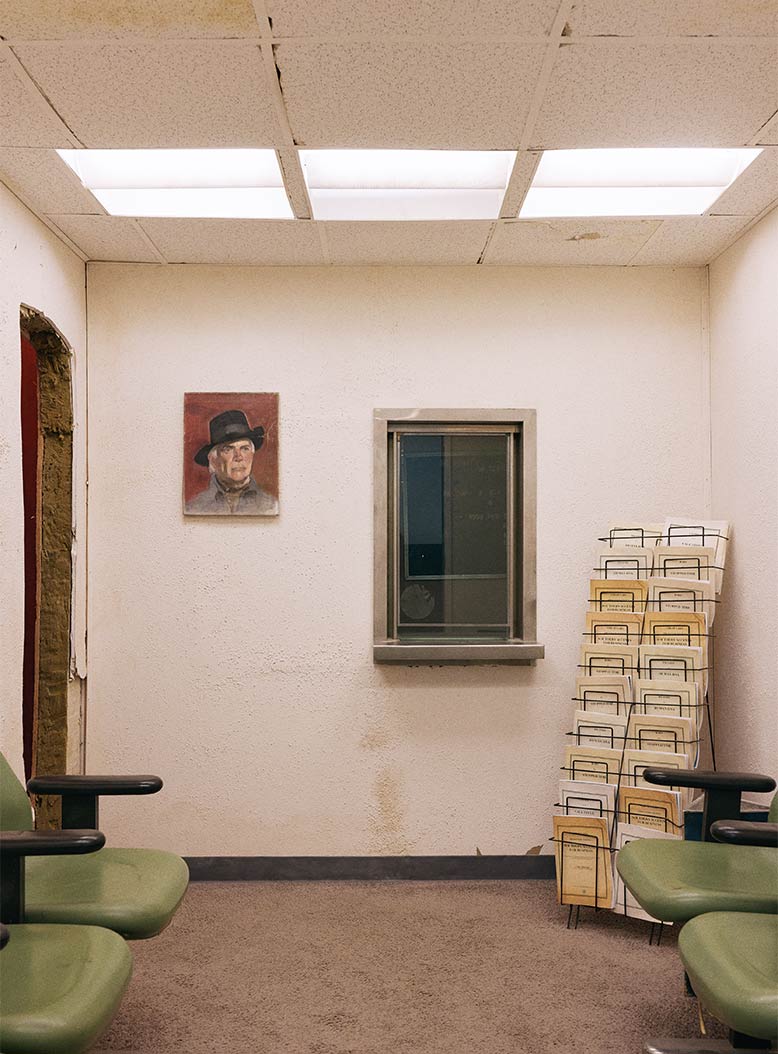
Artichoke Underground by Jonah Freeman and Justin Lowe. Courtesy of the artists
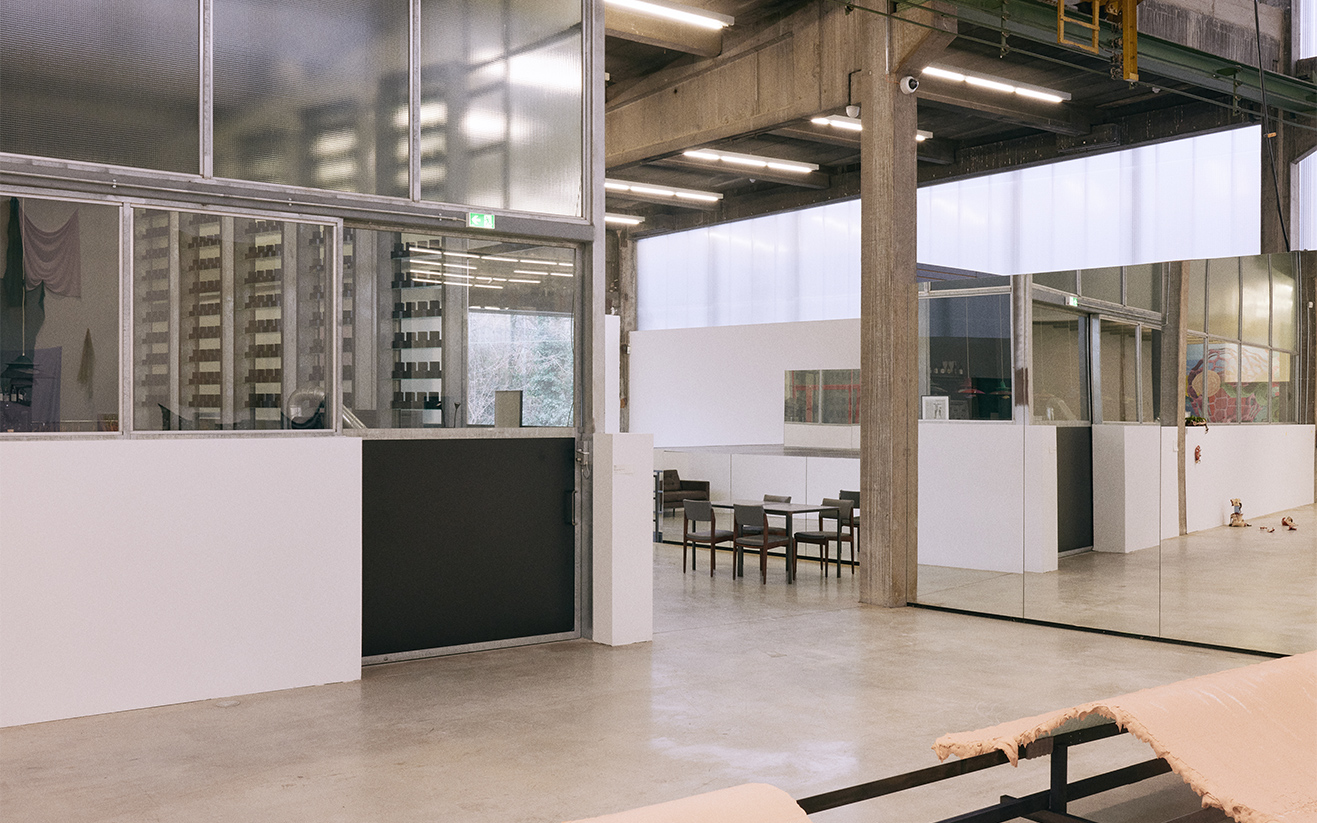
Sammlung Philara, exhibition view Heimspiel. Mitarbeitende der Sammlung
Speaking of the Düsseldorf Art Academy: do you attend the tours?
Less often than I used to. In my view, the Düsseldorf Art Academy has discredited itself, as of late. For some time, I have criticised the fact that there is too little politics in art, but it is a good thing if artists have little understanding of politics.
On the other hand, young creatives sometimes say they feel pressure to express political views through their work.
That immediately brings an analogy to mind. I have always believed that anyone sitting in the Bundestag (German parliament) should have worked in a profession for at least ten years beforehand. Anyone who wants to make art about politics should first pick up and read ten decent history books and keep their hands off Instagram, and TikTok! A lack of education can wreak havoc!
Speaking of Instagram - in your view, is social media the death of art?
I believe social media has been the death of many things. It is simply an uncontrolled medium where the loudest idiot is listened to the most. Marcel Reich-Ranicki once said: ‘Television will make the clever cleverer and the stupid stupider’; the same applies to the internet, and unfortunately that is exactly what has happened, with a unique brutality.
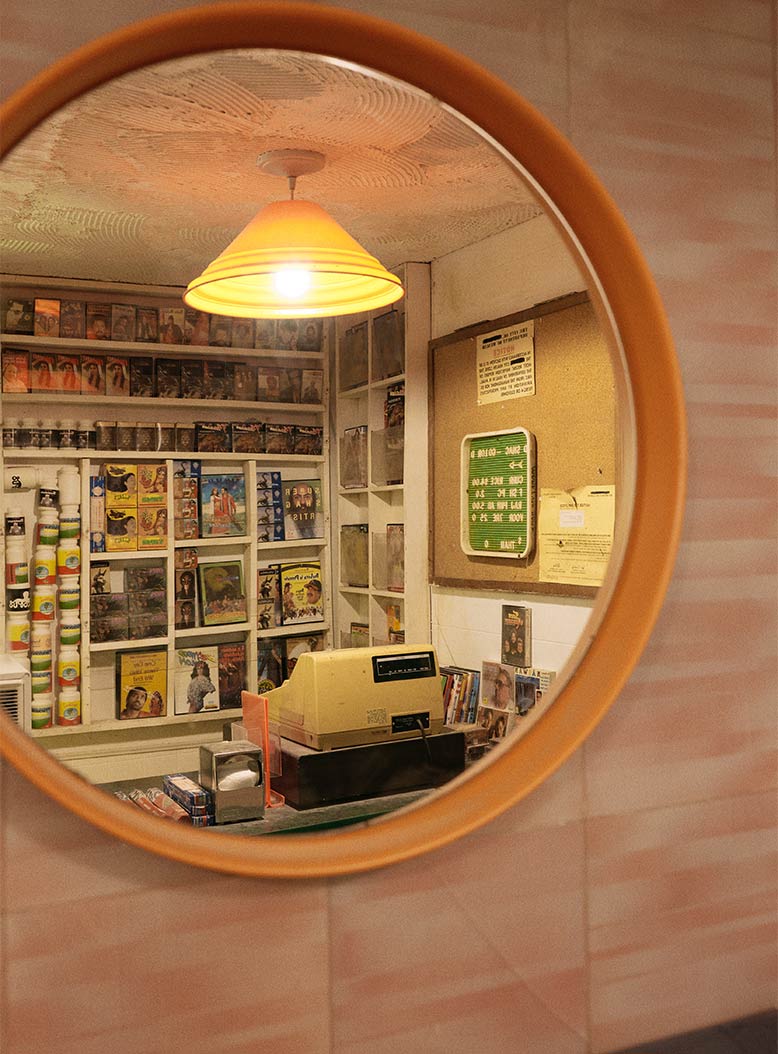
Artichoke Underground by Jonah Freeman and Justin Lowe. Courtesy of the artists
Is there any art you would never collect?
I would never categorically rule anything out. I do not collect much video art. Indeed, large installations, which I used to collect, are difficult in terms of storage and display.
What do you think of NFTs?
That has never interested me. I see no aesthetic value in having something flickering across a screen. Artificially generated art has an artificially generated market. And that has collapsed.
What is the common thread running through your collection?
Hard to say. Aesthetics is an umbrella term for everything; it must appeal to me aesthetically, and it must hold my interest over the long term. It can be humorous, although humour does not often feature in art! I would say that I collect in a rather encyclopaedic way, not necessarily in depth. I would like to have one or two works by every artist I like.
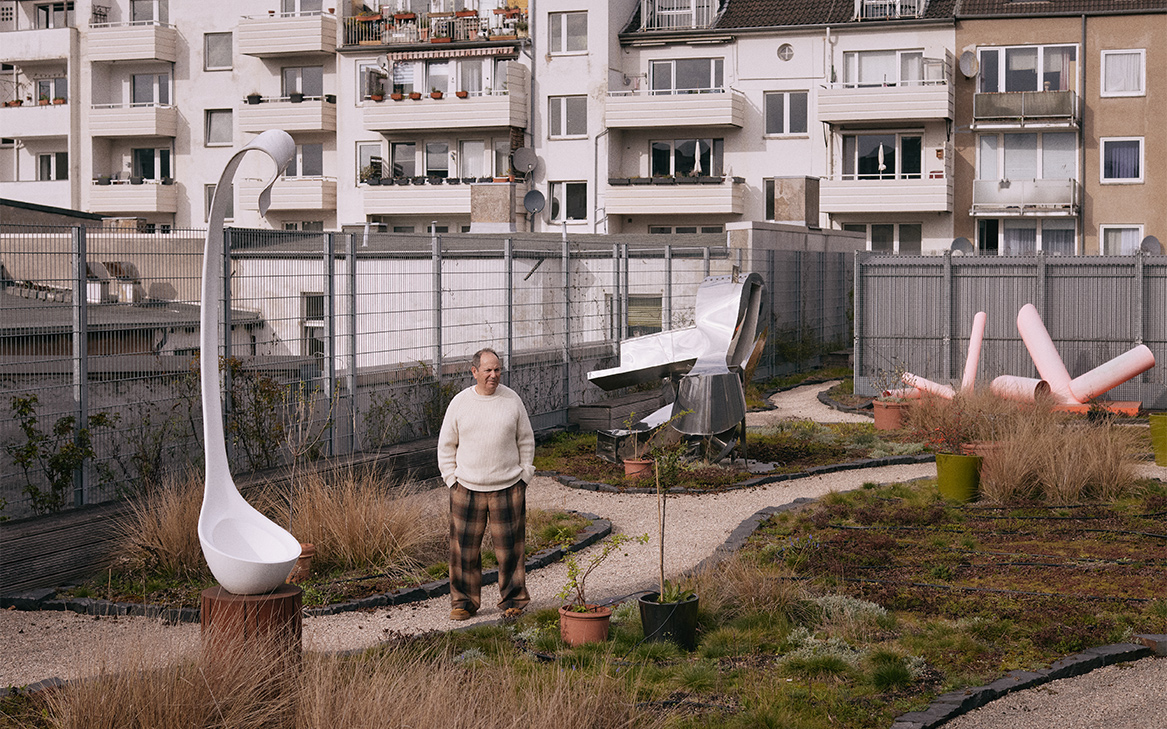
Andreas Schmitten, Thomas Kiesewetter, David Renggli (from left to right). Courtesy of the artists
Is it important to you to represent your own generation as well?
It is probably the most strongly represented generation, but it is not a criterion. Just as someone’s gender has never been a criterion — it is only the quality that matters.
Do you believe that quality can be learnt?
As a collector, certainly. You learn to recognise quality through constantly looking at art. There are, however, people who are like Teflon. They take nothing in, remain as they are and have a tendency not to feel anything.
Do you have any works from your early days as a collector that you do not rate as highly today?
Yes, that is certainly possible. I still like most of it, but there are works where the artists have stopped or have not developed further. At the start, you did not have such a good eye. As time goes on, you do not find some things as great anymore.
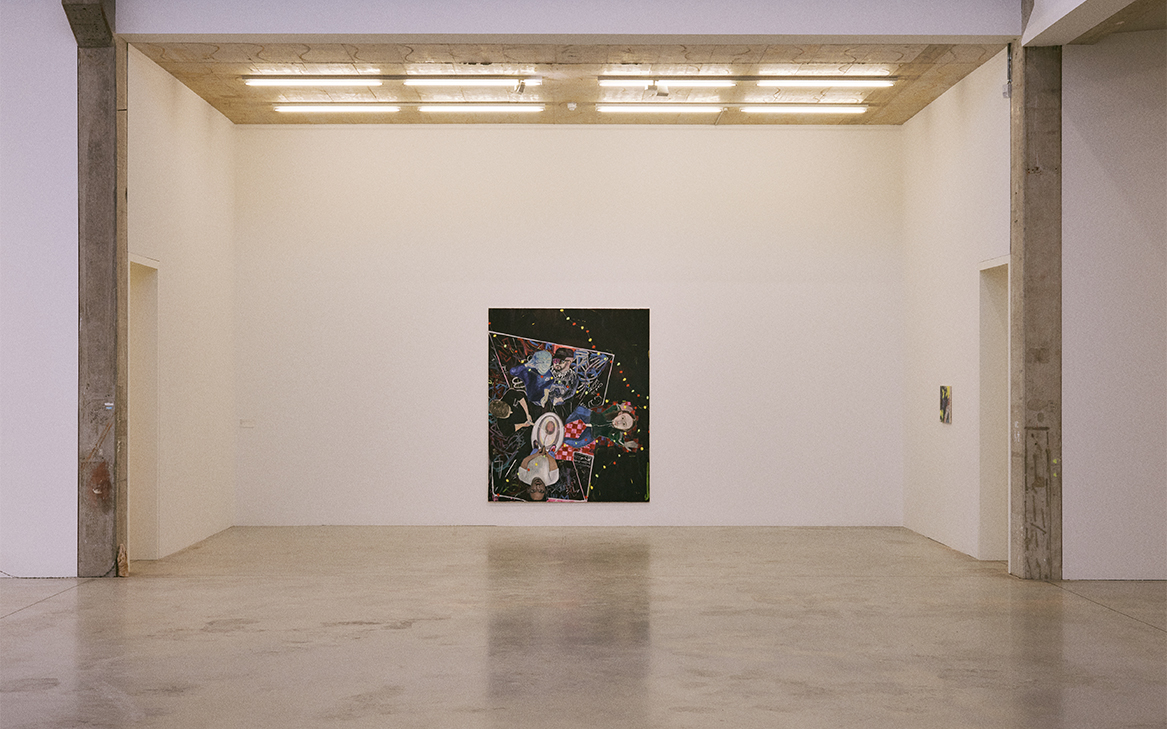
Exhibition view Heimspiel. Mitarbeitende der Sammlung with a work by Min-Hae Sohn. Courtesy of the artist
Do you sometimes sell works from your collection?
I do, under the justified pressure of my wife, who says we need to clear things out, for the children’s sake. I want to sort out my estate in good time, not because I am planning to die, but because I want to live comfortably; and that simply includes sorting through the art collection.
Does your collection contain both works that have increased in value, and those that have not?
Yes, certainly. It is hard to say which I prefer.
Collectors sometimes say they have learnt the most from works they did not like at first…
That may well be true, but I would argue that these people were also under pressure from galleries who thought it would be worth more in the future. Why buy something you do not actually like? There must be a motivation, and that can be financial.
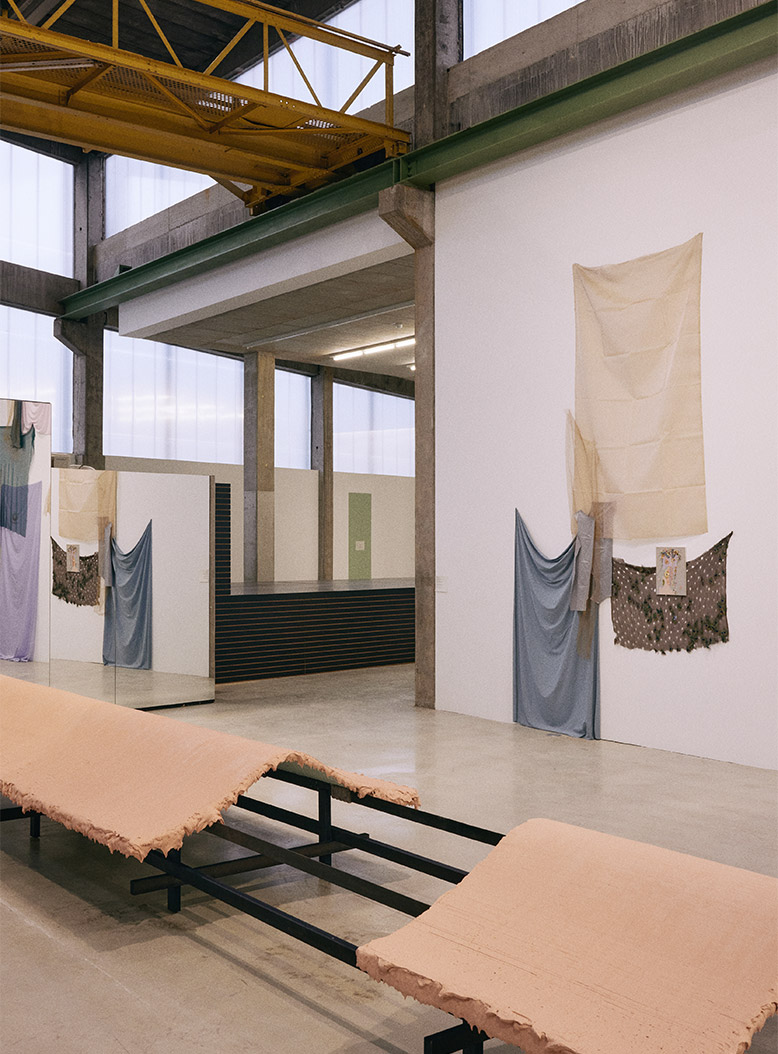
Exhibition view Heimspiel. Mitarbeitende der Sammlung featuring works by Frederic Bahr and Ruben Benjamin Smulczynski. Courtesy of the artists
Do you sleep on it before buying something?
I try to. Although I usually make up my mind, mostly positively, beforehand. The only thing holding me back is my wife.
How involved is your wife?
As a brake on things? Massively (laughs). But I am joking, she studied art history and knows her stuff. In my experience, women are more cautious and reserved when it comes to buying art. I have regretted a few of her decisions, but on the whole, I should have listened to her more often.
Are there any collectors you hold in high regard?
Yes, and many of them are in my circle of friends. One of my most important ‘partners in crime’ is Steffen Hildebrand in Leipzig, whose G2 Kunsthalle-exhibits works from his private collection. And my good friend Michael Zimmer has the most beautiful sculpture garden I have ever seen in Pulheim. I also enjoy visiting Mexico City, for example, where there is the Jumex Museum run by Eugenio López Alonso – it is impressive.
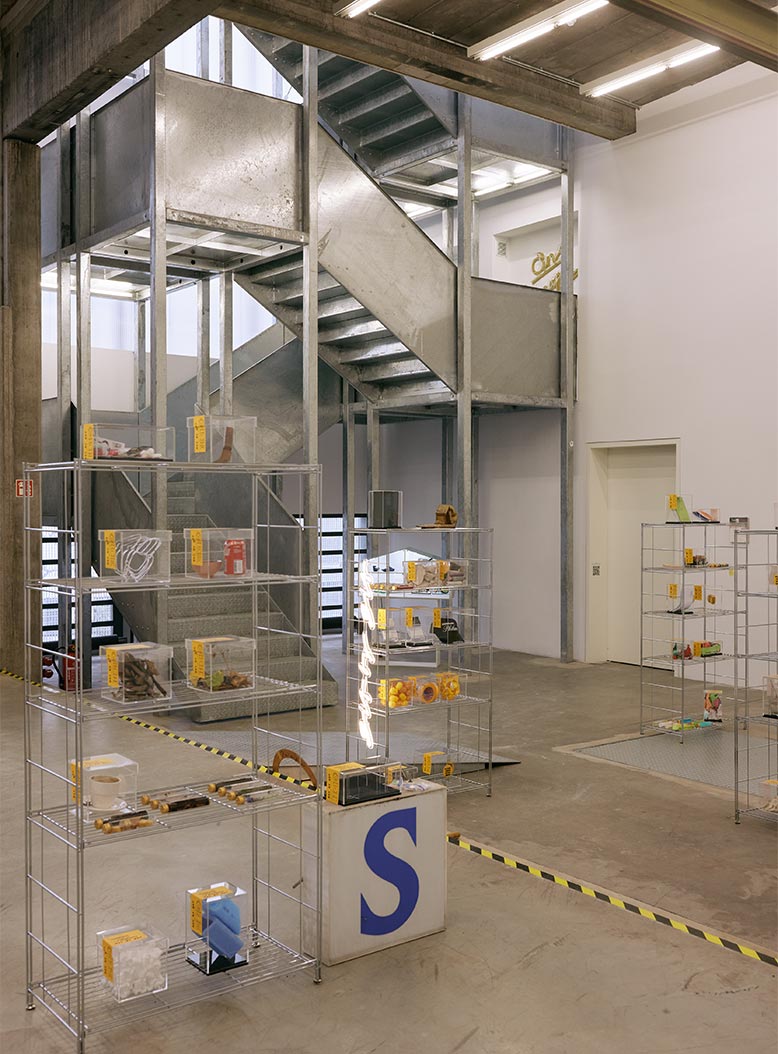
Exhibition view Heimspiel. Mitarbeitende der Sammlung with a work by Elisabeth Heil. Courtesy of the artist
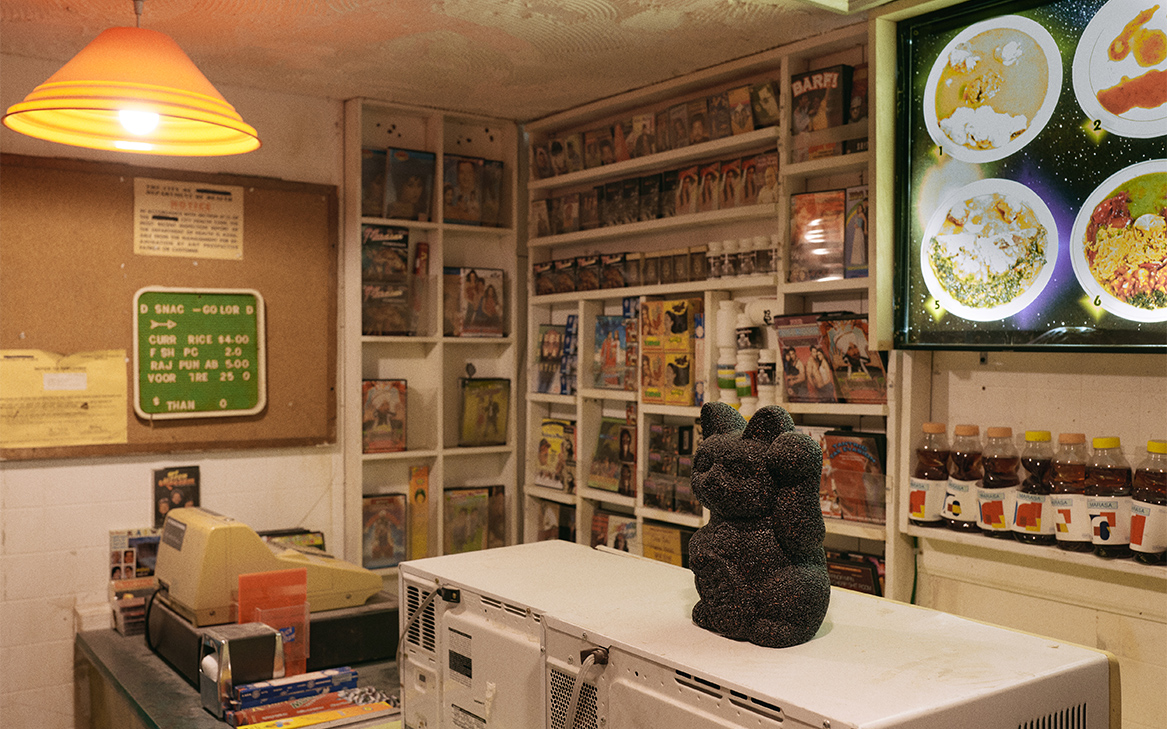
Artichoke Underground by Jonah Freeman and Justin Lowe. Courtesy of the artists
Do you know straight away what your last art purchase was?
I bought a multiple by Urs Fischer at an auction.
And what was your very first piece?
Miguel Ángel Campano – a young Spanish rebel, back in Barcelona in the early 90s.
How do you remember all the names of the works?
I don’t (laughs)! I cannot remember them! I am asked what my first art purchase was; otherwise I would not know.
You have your own exhibition space: have you learnt anything about museum audiences?
I do not think I learn anything there. But mostly I am delighted by the consistently positive reactions to our exhibitions. What I did find interesting once, however, was a group of art history students. And apart from one, none of them had been to a museum in the last year. I asked them: “Why are you studying this at all if you’re not interested in it?” I did not get it.
This rather superficial engagement with art?
My engagement with art is ultimately superficial too. I do not go there, and read a novel about it, so that I know what it is about. That is what the curators do. I am always amazed at how much background knowledge the curators have accumulated to understand the art – knowledge which, in my view, the artists themselves are often not really aware of.
Final question: If you could have any work of art, which would you choose?
I think something classical. A great Klimt – The Golden Adele, I suppose. Not for its value, but because it is iconic. And an absolutely fantastic work aesthetically.
Text: Alexandra Markl
Photos: Sabrina Weniger
Trailer image: Gil Bronner, in front of a artwork by Maxi Lorenz, on the occasion of the exhibition Heimspiel. Mitarbeitende der Sammlung. Courtesy of the artist
Title image: Isa Genzken, Wolfgang Tillmans, Keren Cytter, Vivien Greven, Zuzanna Czebatul (from left to right). Courtesy of the artists