Regine Schumann, Jonny Niesche
»Transition«
5 – 26 September, 2020
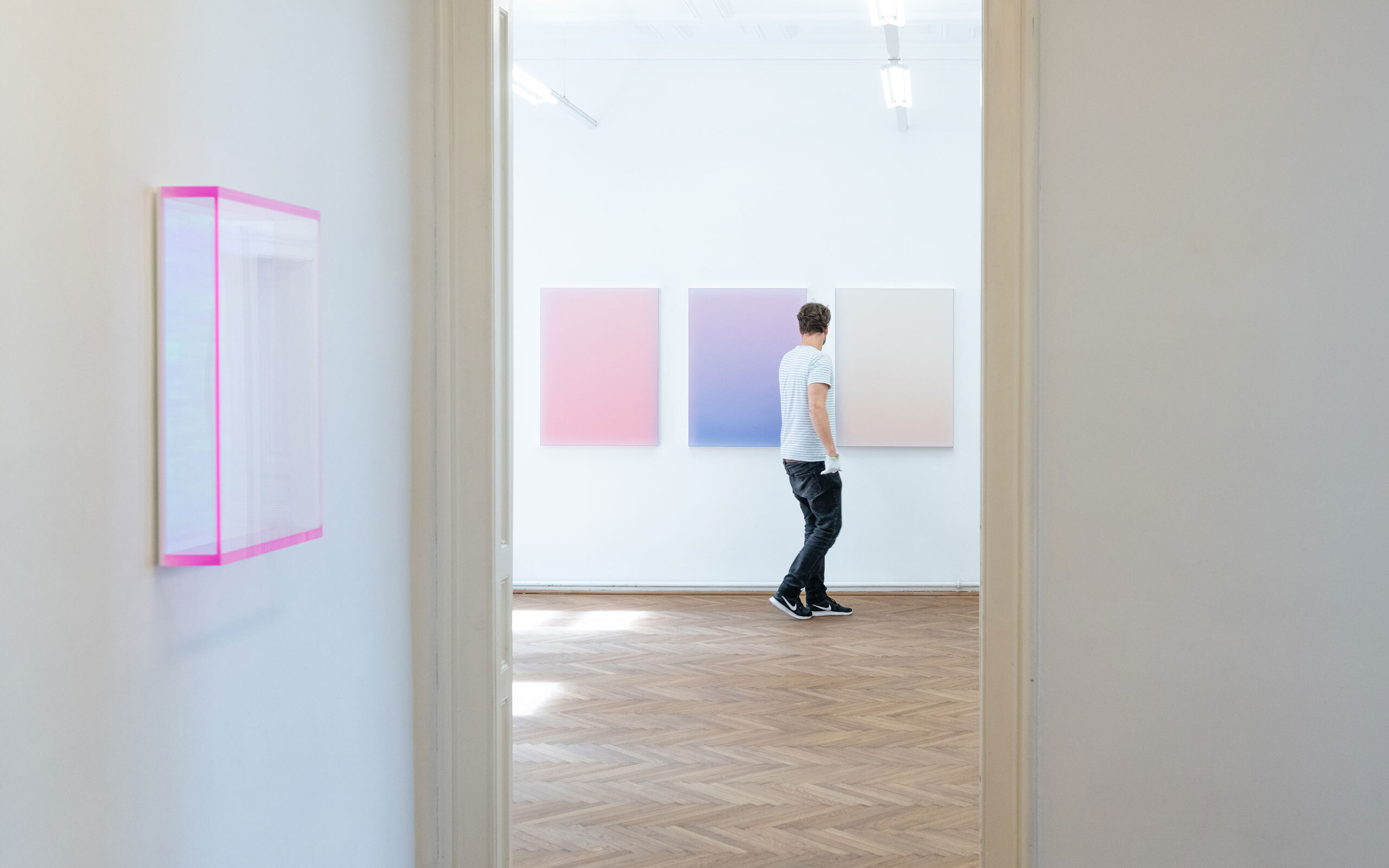
Transition presents two international contemporary positions, Regine Schumann and Jonny Niesche, whose work is moving between dramatic radiance and minimalist purity. The show explores the artists’ interest in transitionary movement, the change of state from one to another and the associated atmospheric transformation through color, light and space. It is the first time the two artists are showing together.
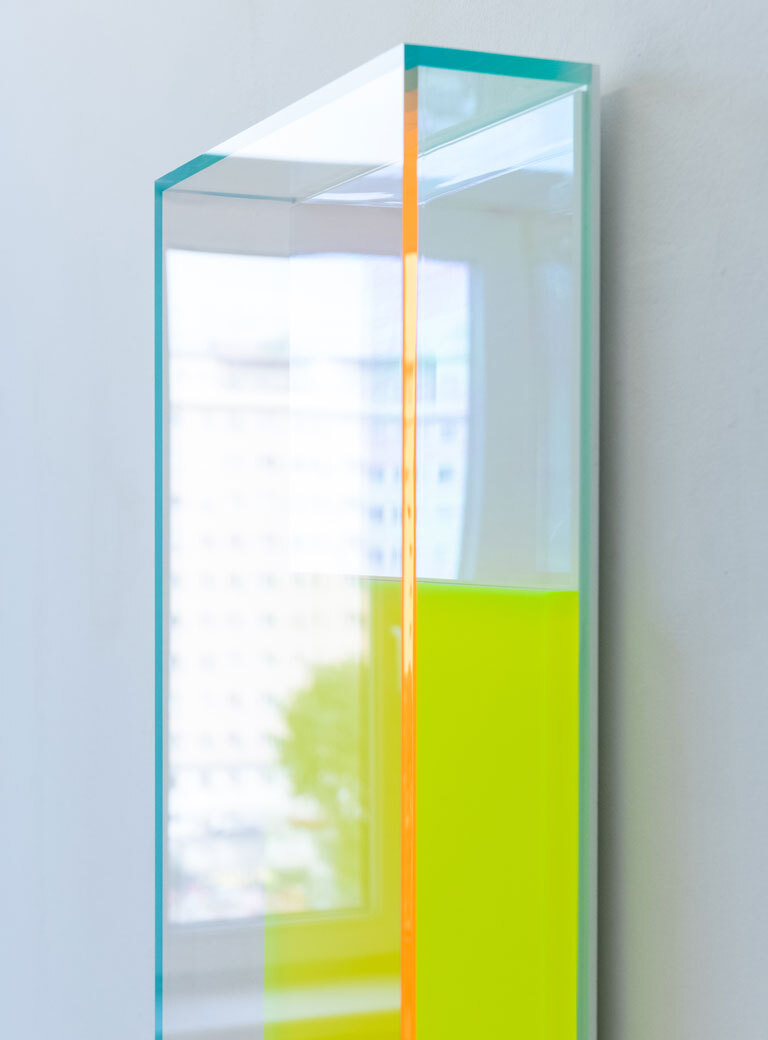
Regine Schumann (*1961 in Goslar, Germany) focuses on light effects caused by fluorescent materials. Her materials include colored UV-light reactive Plastilight-chords and different colored acrylic panels, which she composes into complex color spaces in accordance to Goethe's theory of colors. Her works change their glow depending on the daylight situation. But it is really when illuminated in UV light that her light-boxes undergo a drastic transformation of color and spatiality, moving into a totally different color palette. Despite the intense and radiant character of her works, Schumann does not go for the spectacular. Moreover, she is concerned with the positive and meditative effect that art can have on people.
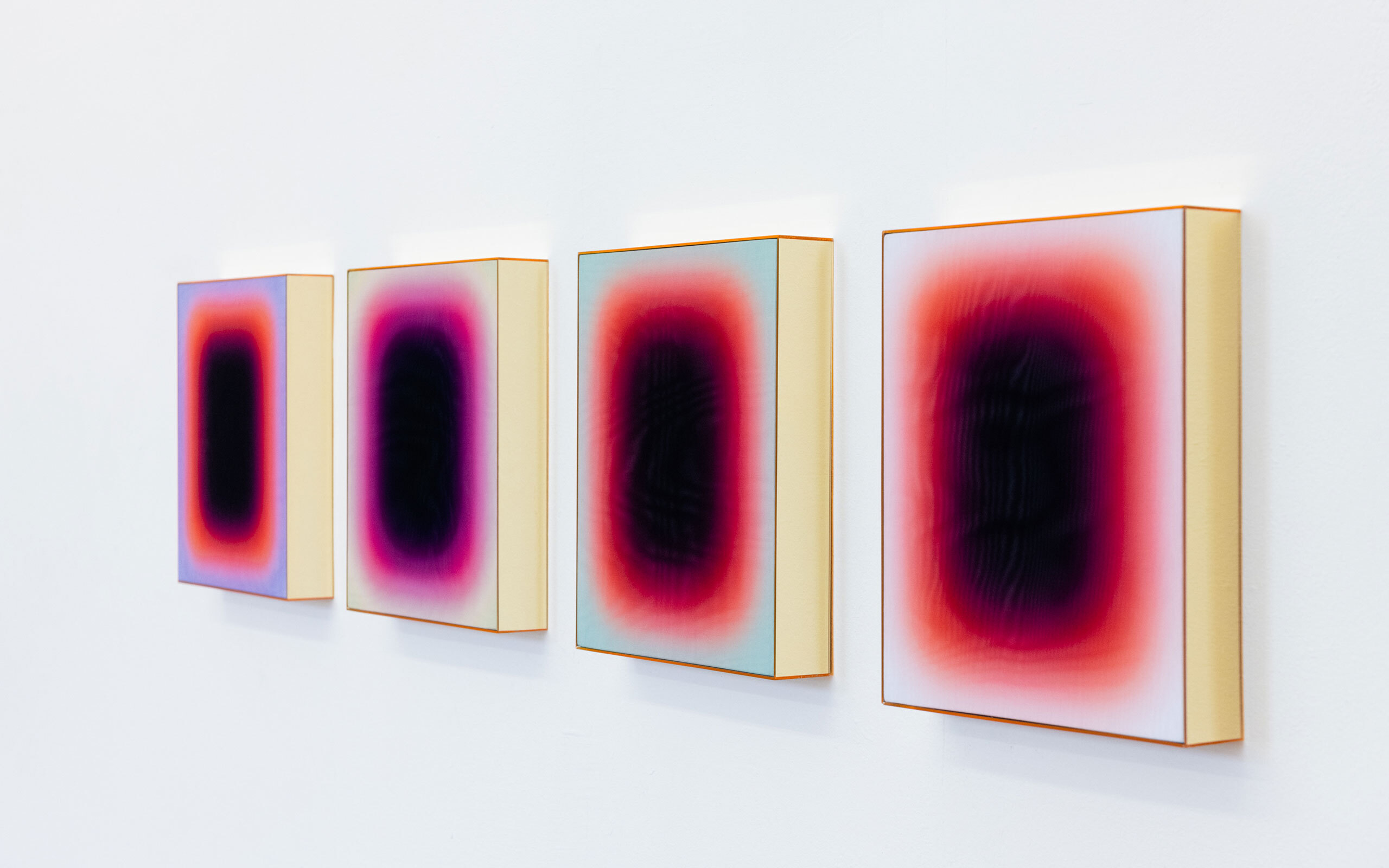
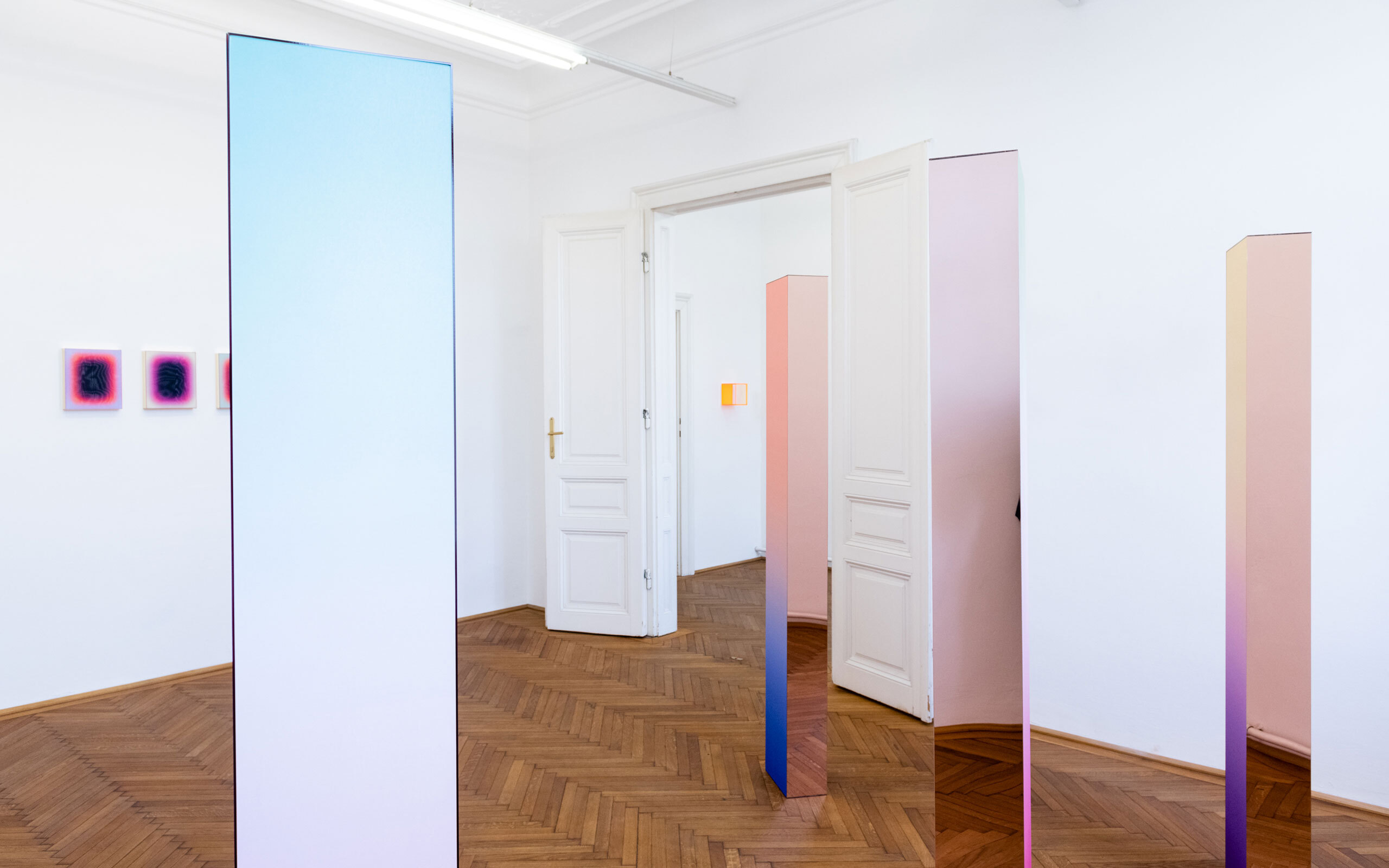
The works of Jonny Niesche (*1972, Australia) pursue similar themes. Like Schumann's light sculptures, Niesches paintings, sculptures, and installations wrestle with the perceptions of color, surface, and spatiality and, in doing so, they excert an equally meditative effect. What all his works have in common is that they seek to createdeep spatial experiences for the mind to become free and quiet to just “be”, a personal moment of “performative contemplation” as Niesche calls it.
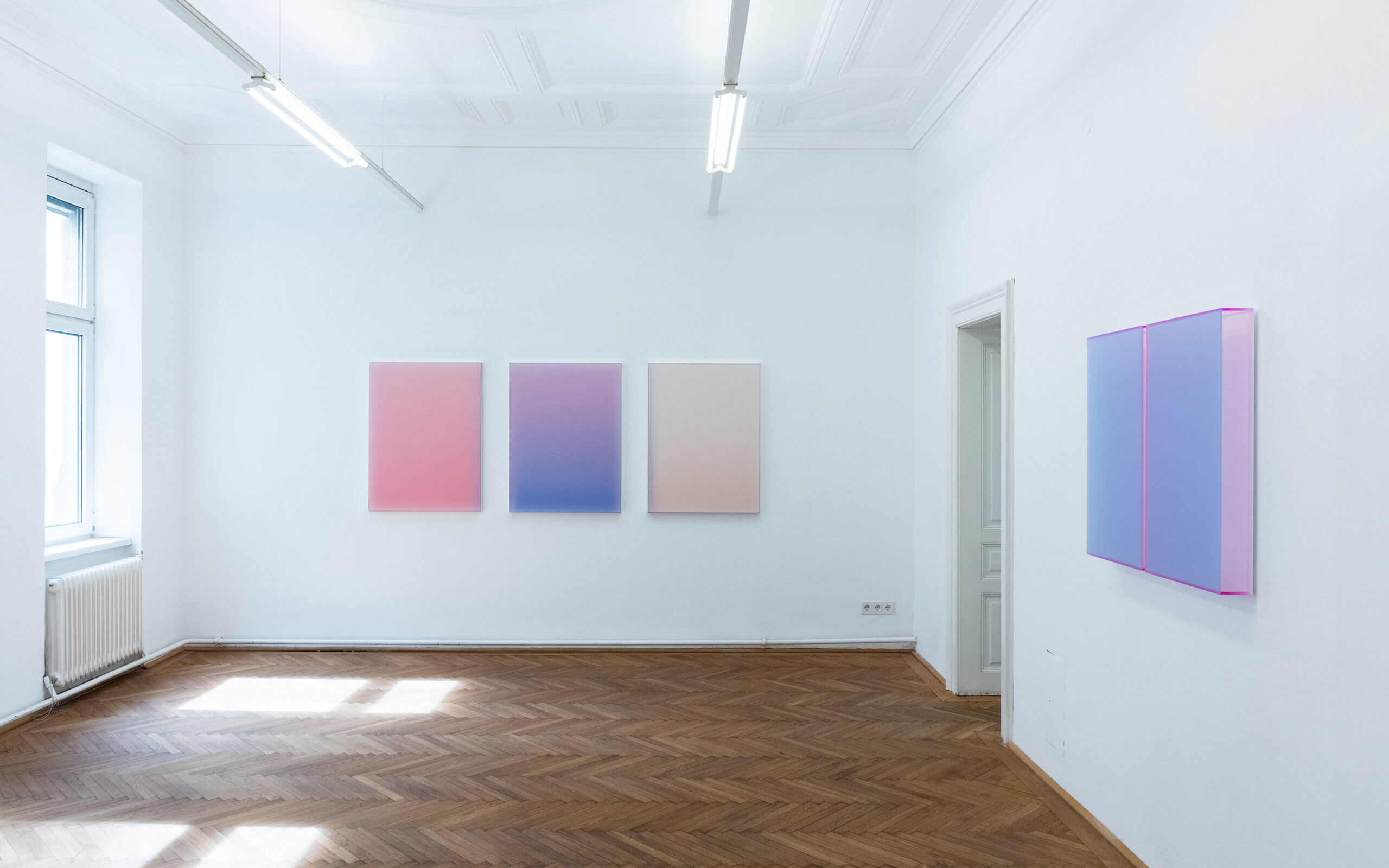
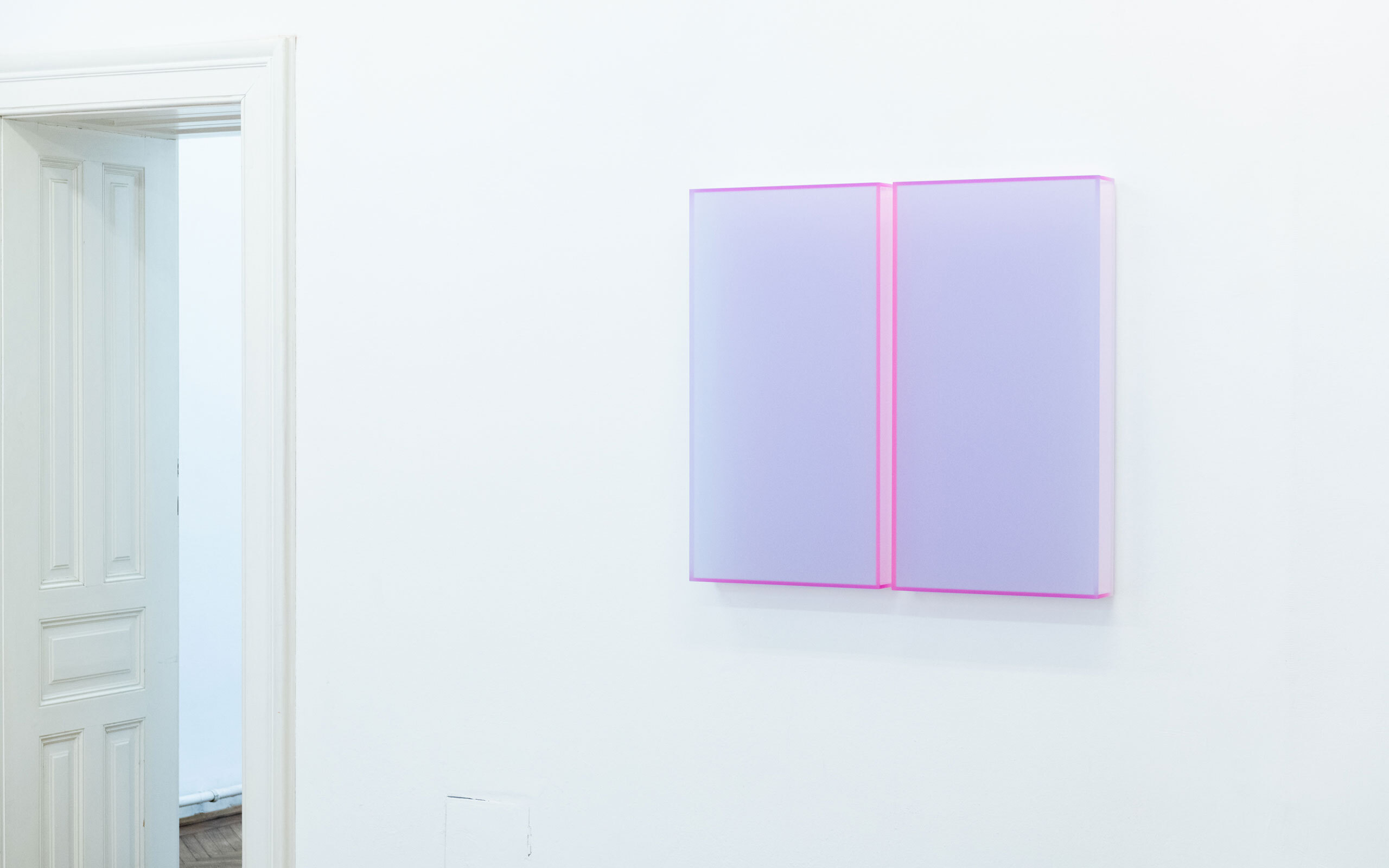
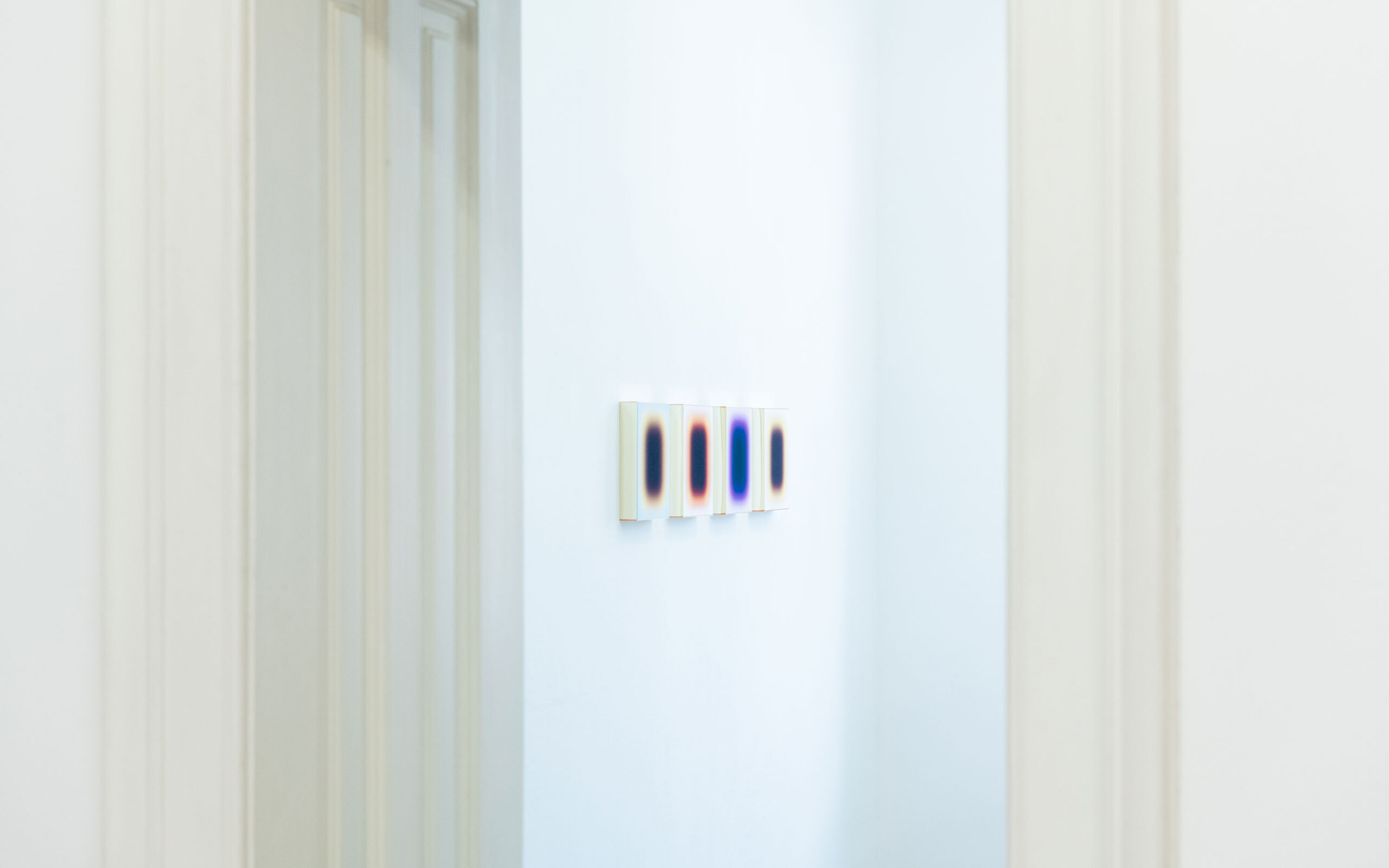
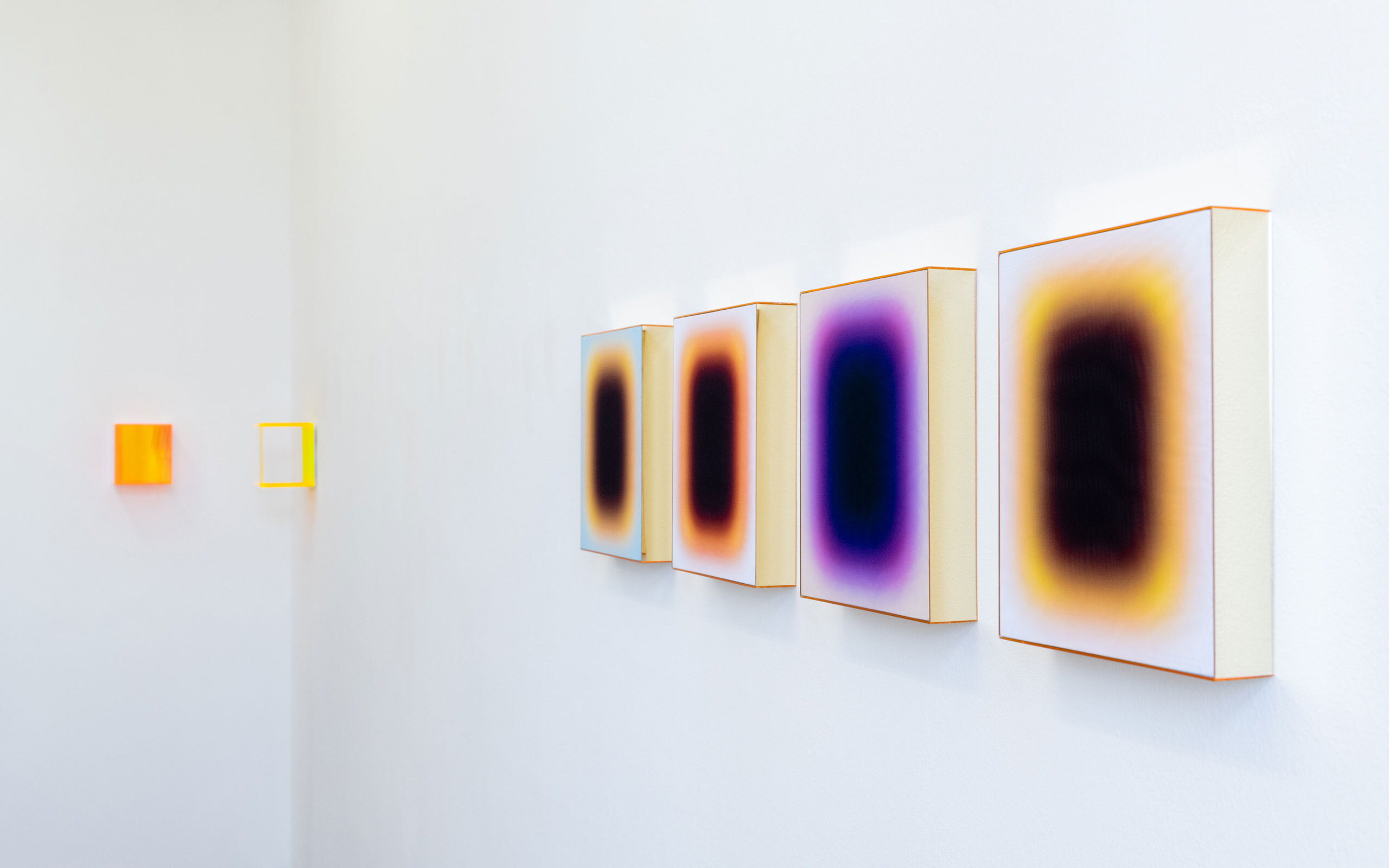
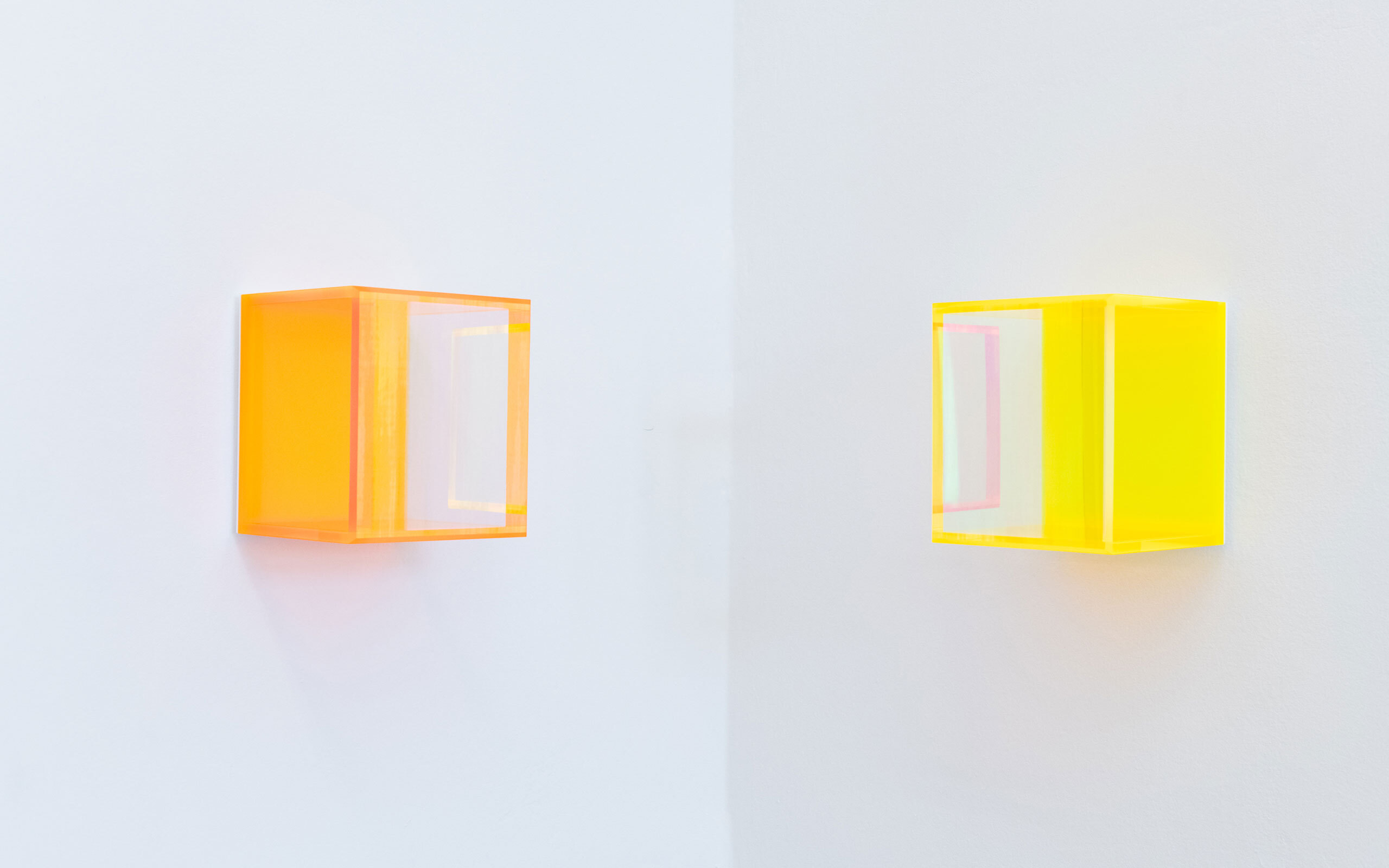
Schumann and Niesche are dealing with an airiness that is denying or actually leaving behind the actual weight of the materials used. They are reliant on light, the atmospheric and environmental conditions that affect their works and how they are interpreted.
Schumann seeks to extend of the architecture in which her works exist by a dimension of vibration and, as she calls it, by a configuration of a room temperature that is creating a spatially experiential plasticity. Similarly, Niesche is interested in mood and temper and the exploration of the atmosphere in a space as an “aesthetic category of its own” (Swiss architect Peter Zumthor).
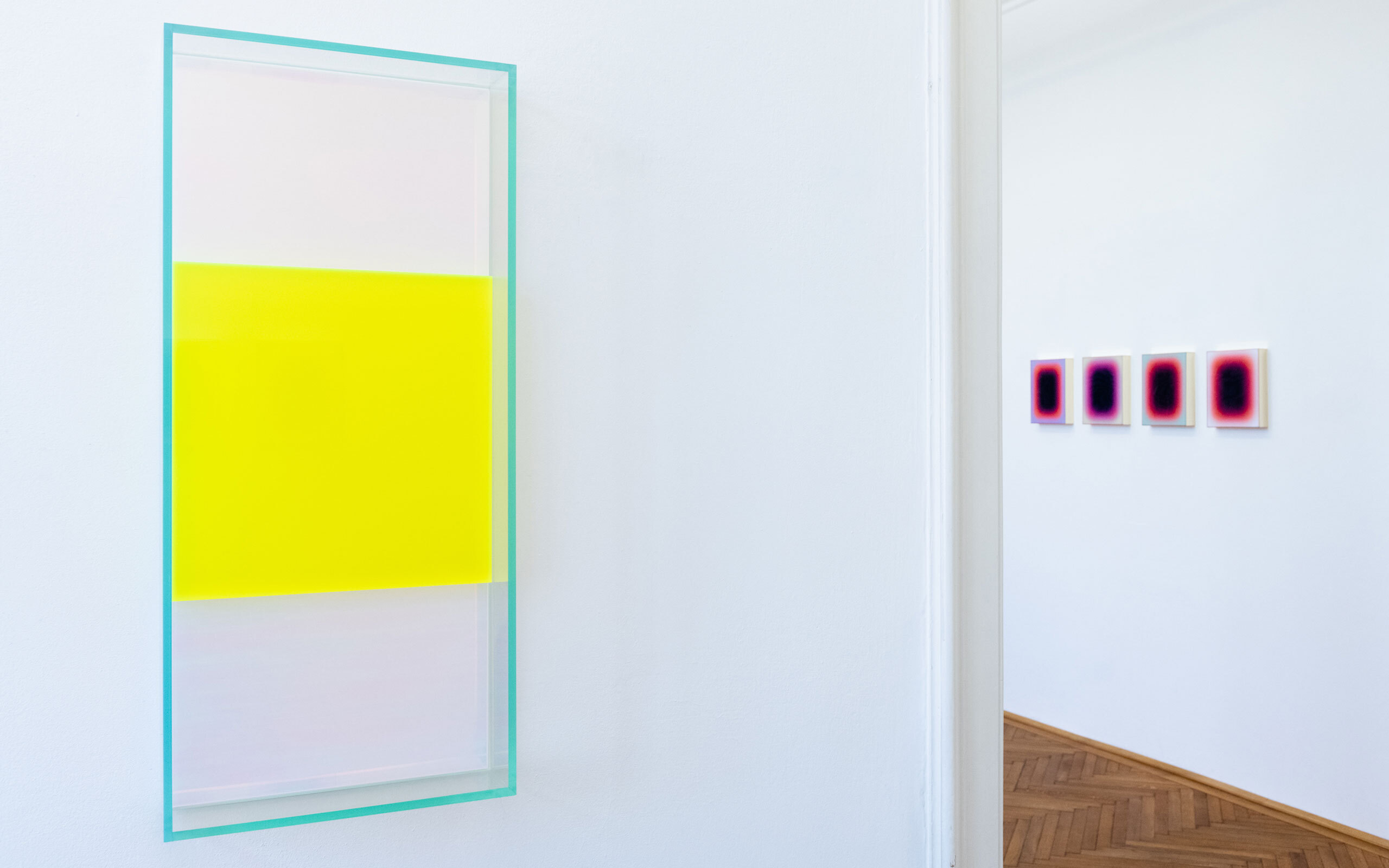
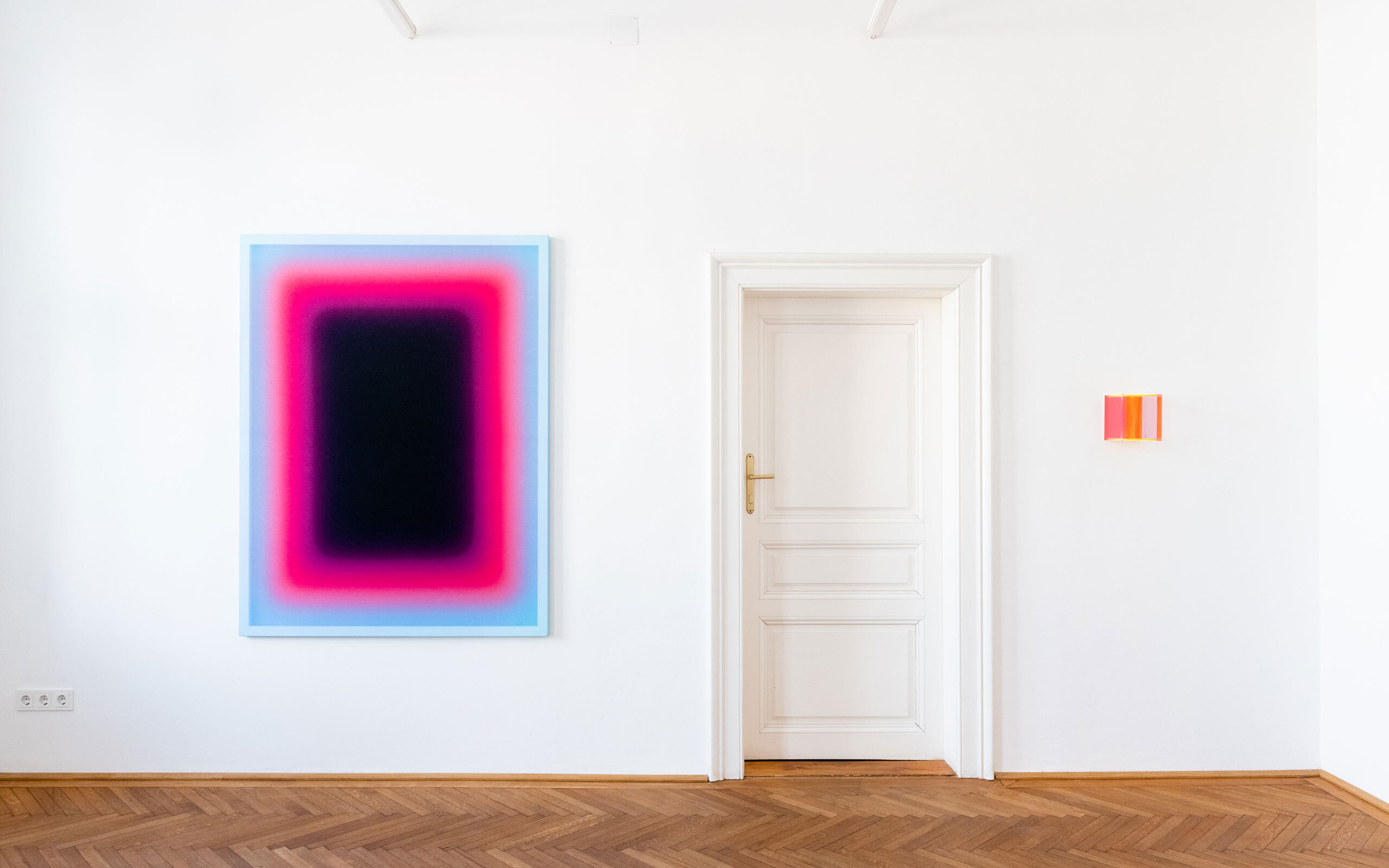
In the practice of both Schumann and Niesche the clarity of form gives enormous space to color, and vice-versa. Clearly both artists hold an appreciation for the great pioneers of light art such as Dan Flavin, Larry Bell, Robert Irwin, Keith Sonnier or James Turrell. Unlike some of the aforementioned artists, whose work may appear rather static and monumental, the works by Schumann and Niesche however seem to be relying rather on dynamic experience as they are subject to constant change.
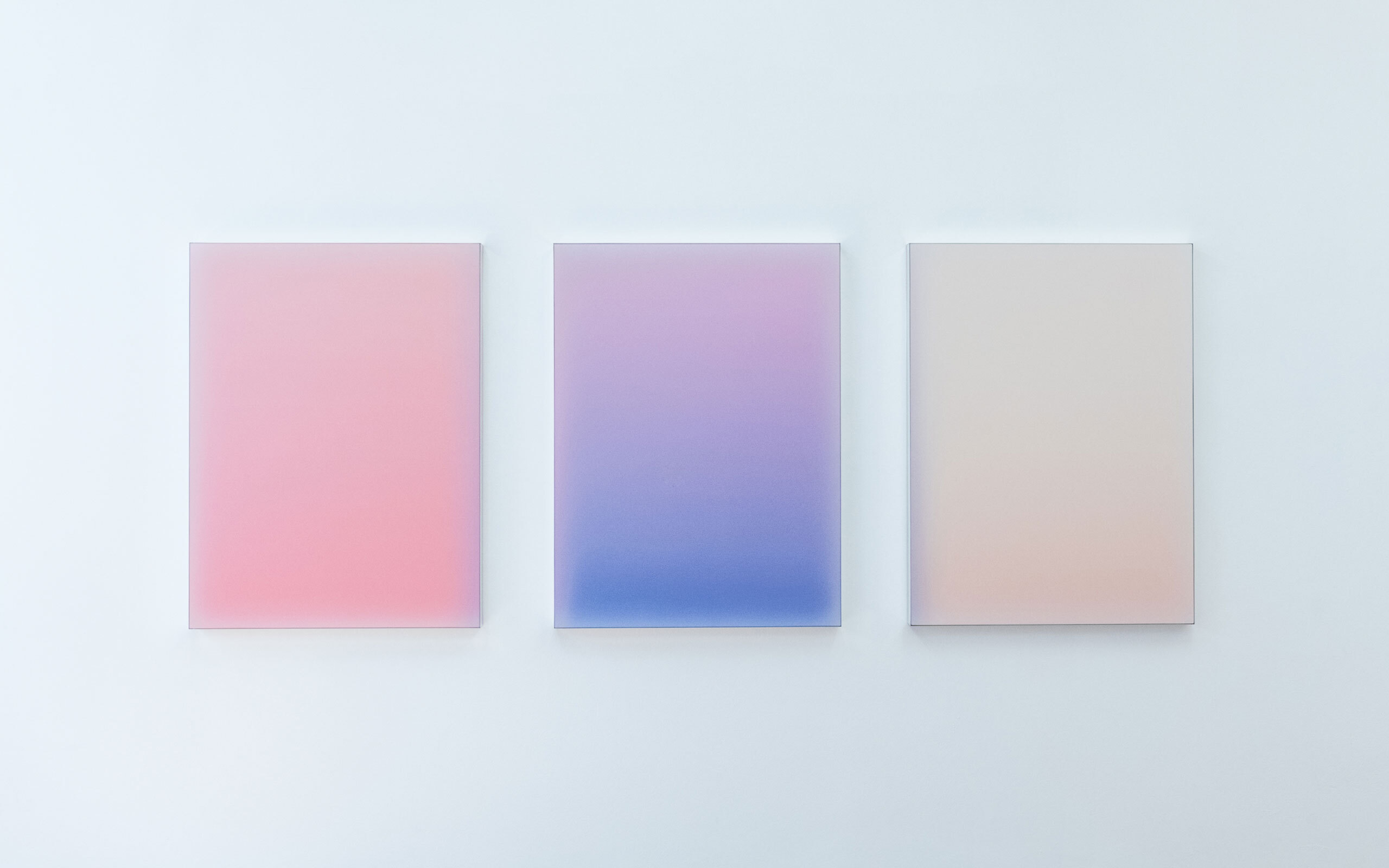
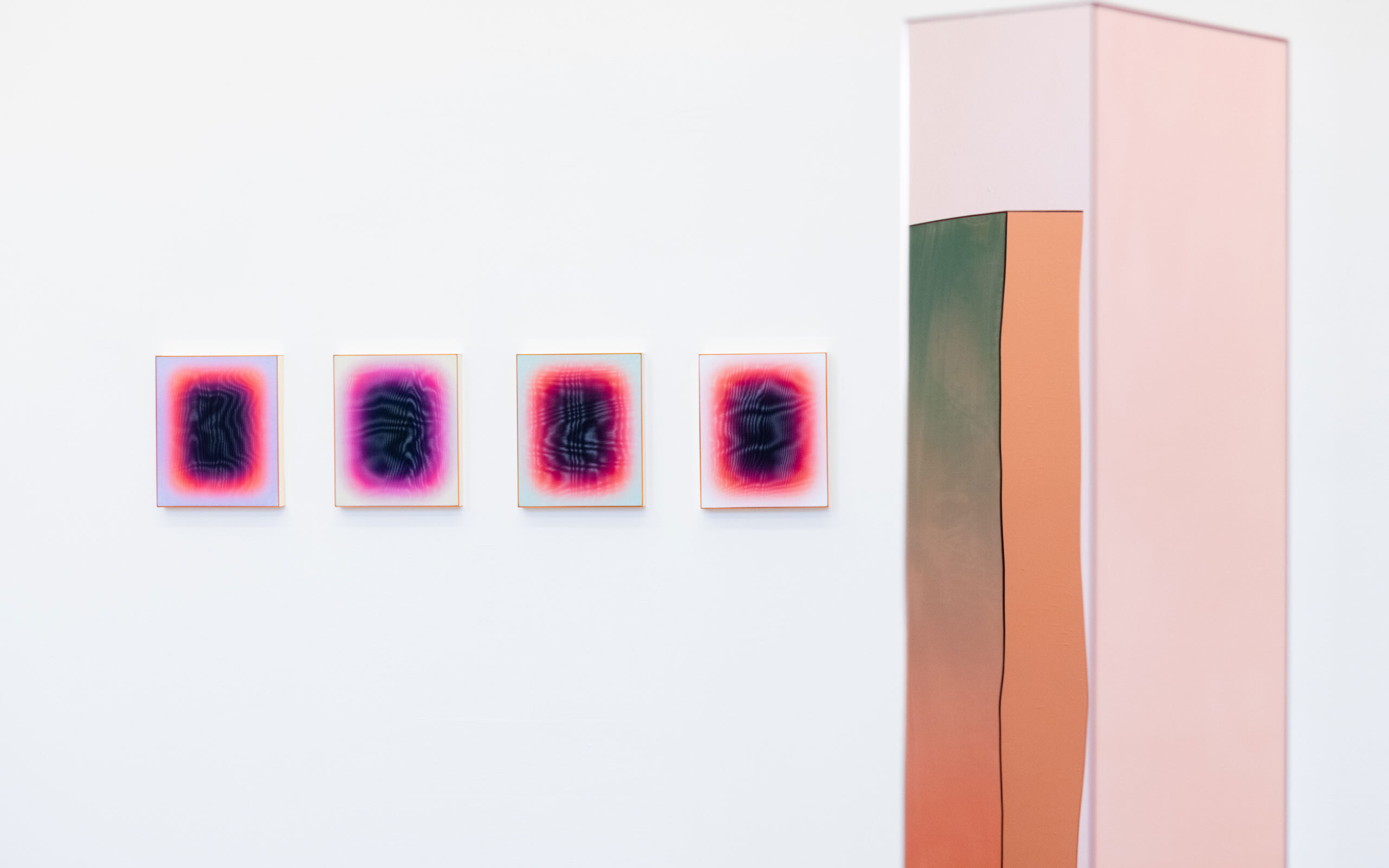
Viewing Schumann’s light-boxes from different angles, different layers of luminous plates meet in different ways, developing a spectacular dramaturgy of space, light and color each time anew. Niesche’s work deals with light in a more metaphoric way. His color gradients evoke the feeling of watching the sunset at the ocean, possibly at the East coast of his home country Australia, or observing the color spectrum on the horizon over the clouds from the window of a plane. But like in Schumann’s practice, Niesche’s works are changing with the light conditions in the space or with new viewing angles, playing with the contrasts of object and illusion, employing effects of opaqueness, transparency, reflection and geometric patterns caused by moiré effects.
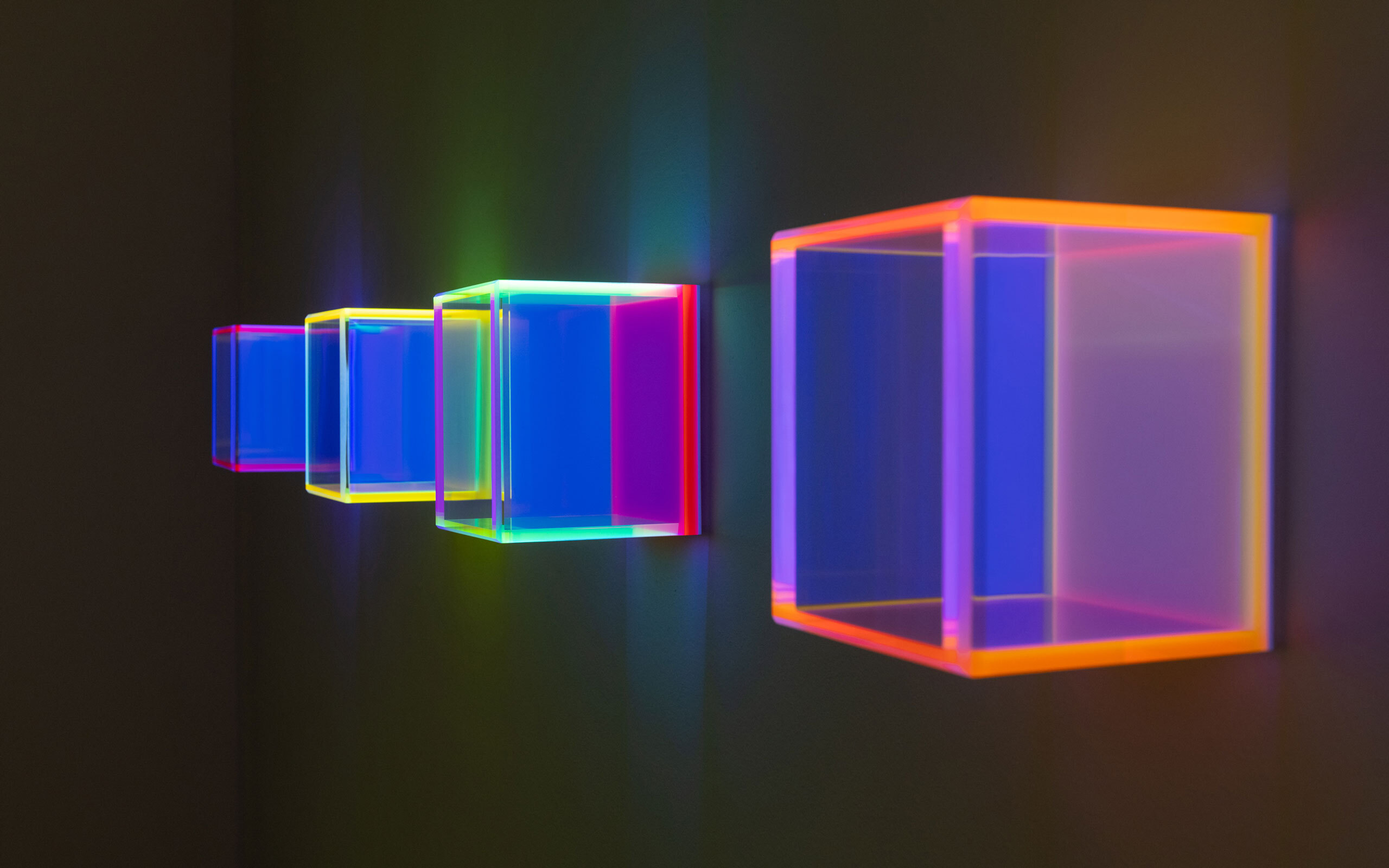
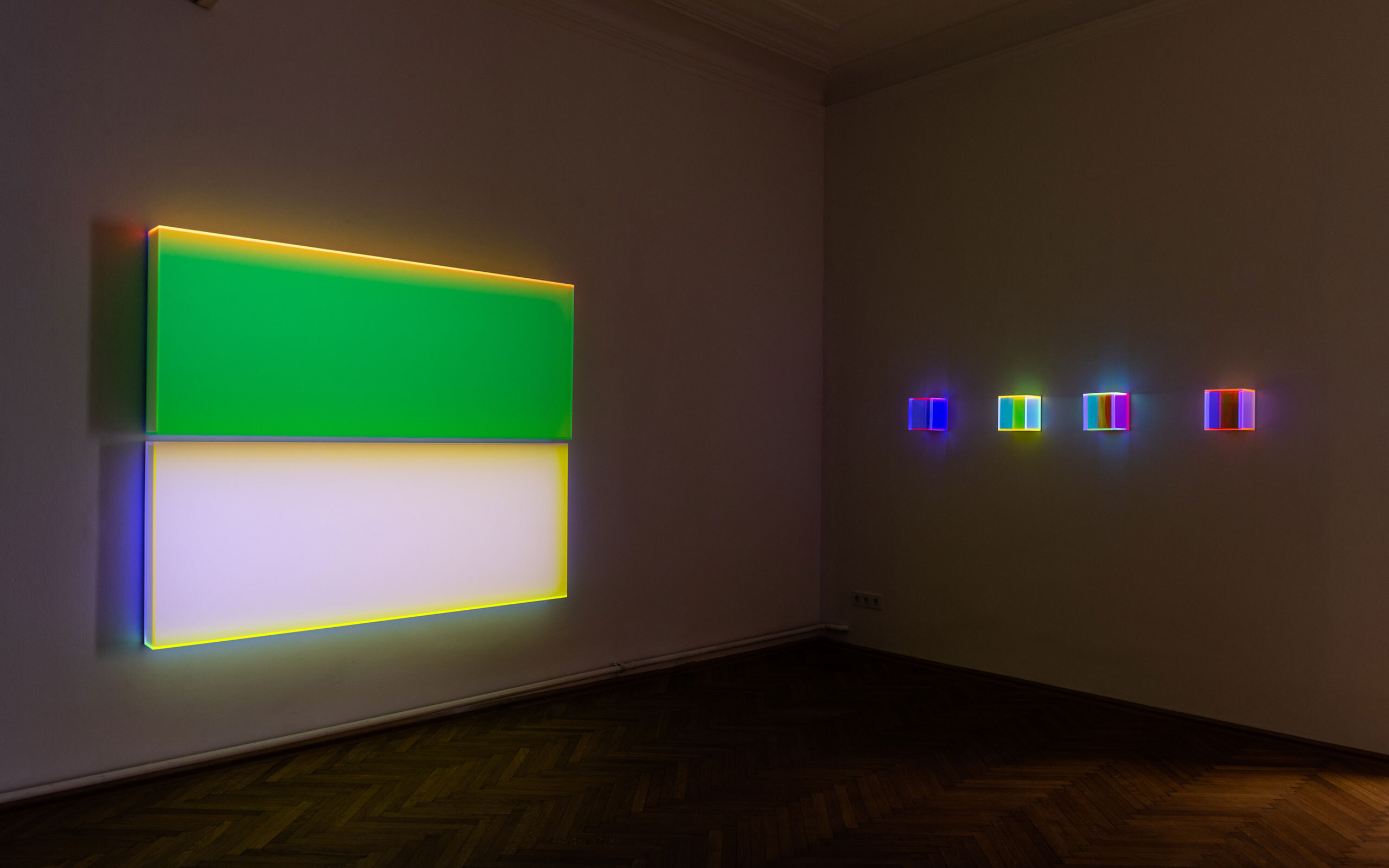
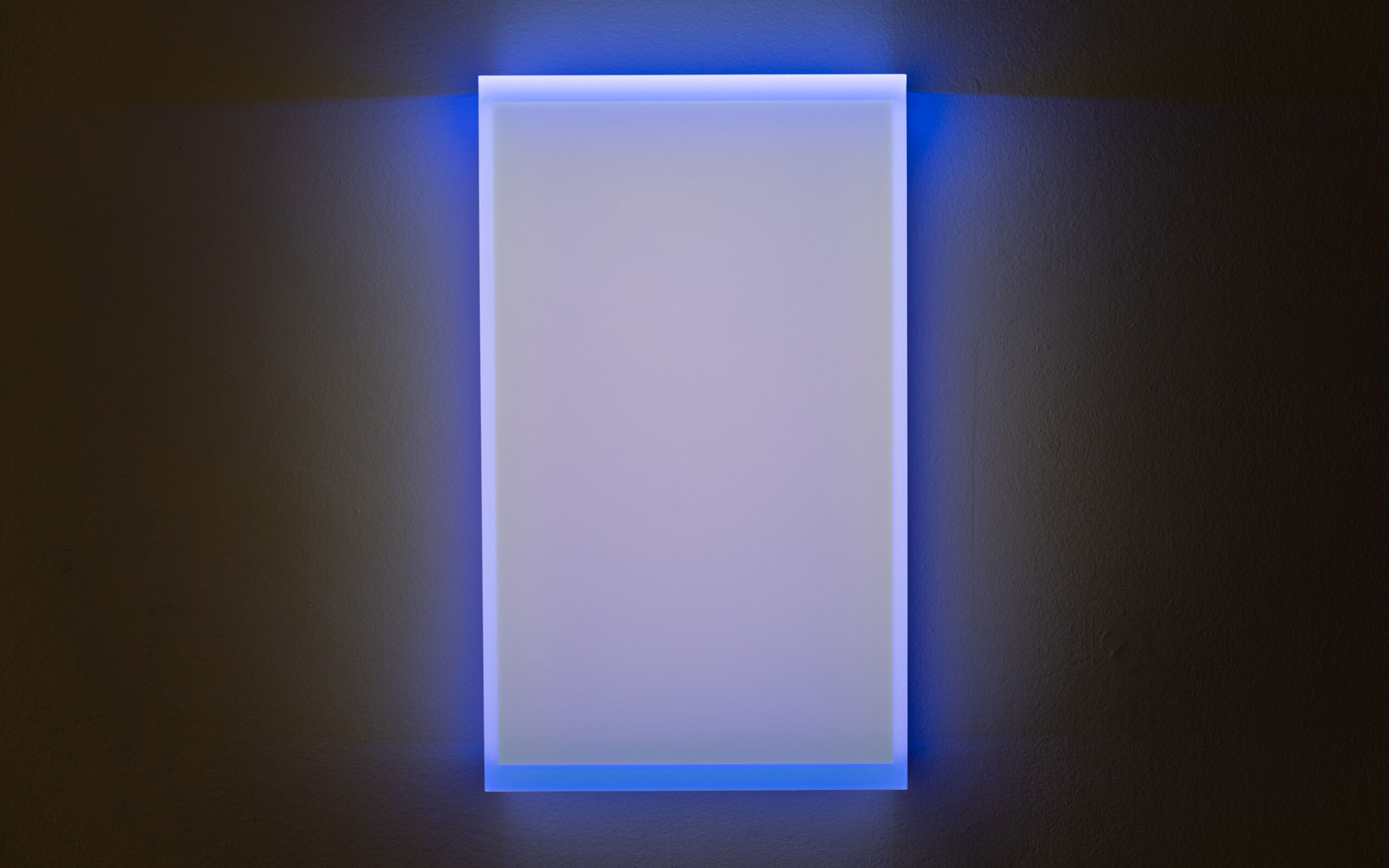
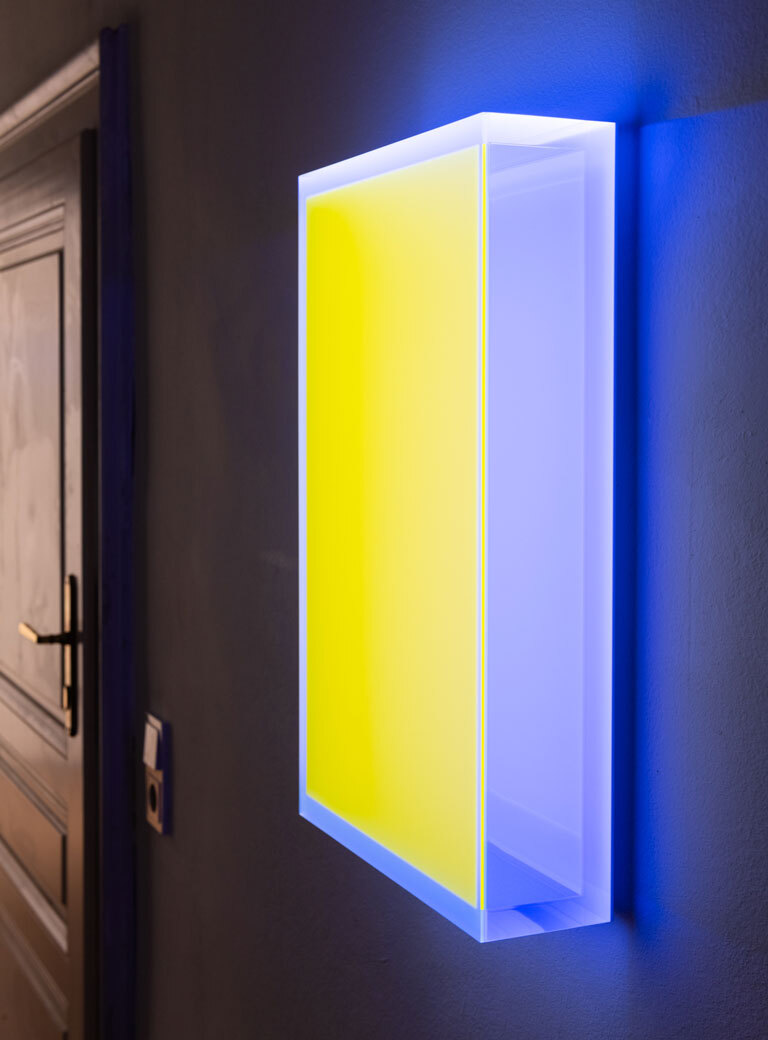
Besides borrowed larger-scale works, the exhibition features two new smaller-scale series of unique works from 2020 by Regine Schumann and Jonny Nieschewhich have been exclusively created by the artists for Collectors Agenda.
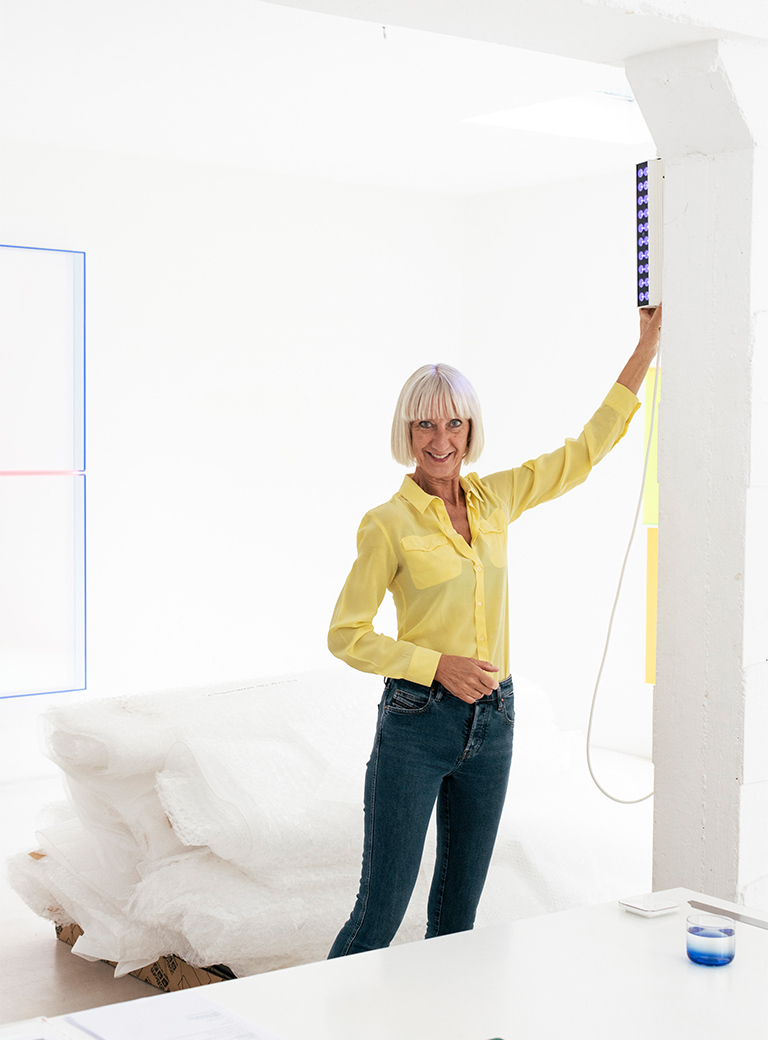
In her work Regine Schumann (* 1961 in Goslar, Germany) focuses on light effects caused by fluorescent materials. Some of the materials she uses are colored polylight-cords and different colored acrylic panels, which she composes into complex color spaces in accordance to Goethe's theory of colors. The artist also uses black light to illuminate the objects in order to expand the range of colors many times over. The emphasis of her room-specific installations is the extension of the existing architecture to a dimension of vibration and – as she calls it – the configuration of a room temperature. The inclusion of sculptural principles as hanging, laying, arranging, conjointing, jacketing is characteristic of the work of Regine Schumann and leads towards a thinking in colors and color spaces in a spatially experiential plasticity.
Regine Schumann studied fine art at Hochschule für Bildende Künste Braunschweig from 1982 to 1989. In 1989 she was acknowledged as a master student of Roland Dörfler. From 1986 to 1994 she was a member of the artist group Freiraum, consisting of Frank Fuhrmann, Dieter Hinz and herself. Aside of numerous scholarships (amongst others a DAAD-scholarship for Italy in 1990 and a grant from the state of North Rhine-Westphalia for Japan in 2000) and contracts for public art, she received the Leo Breuer Prize in 2006. Regine Schumann lives and works in Cologne.
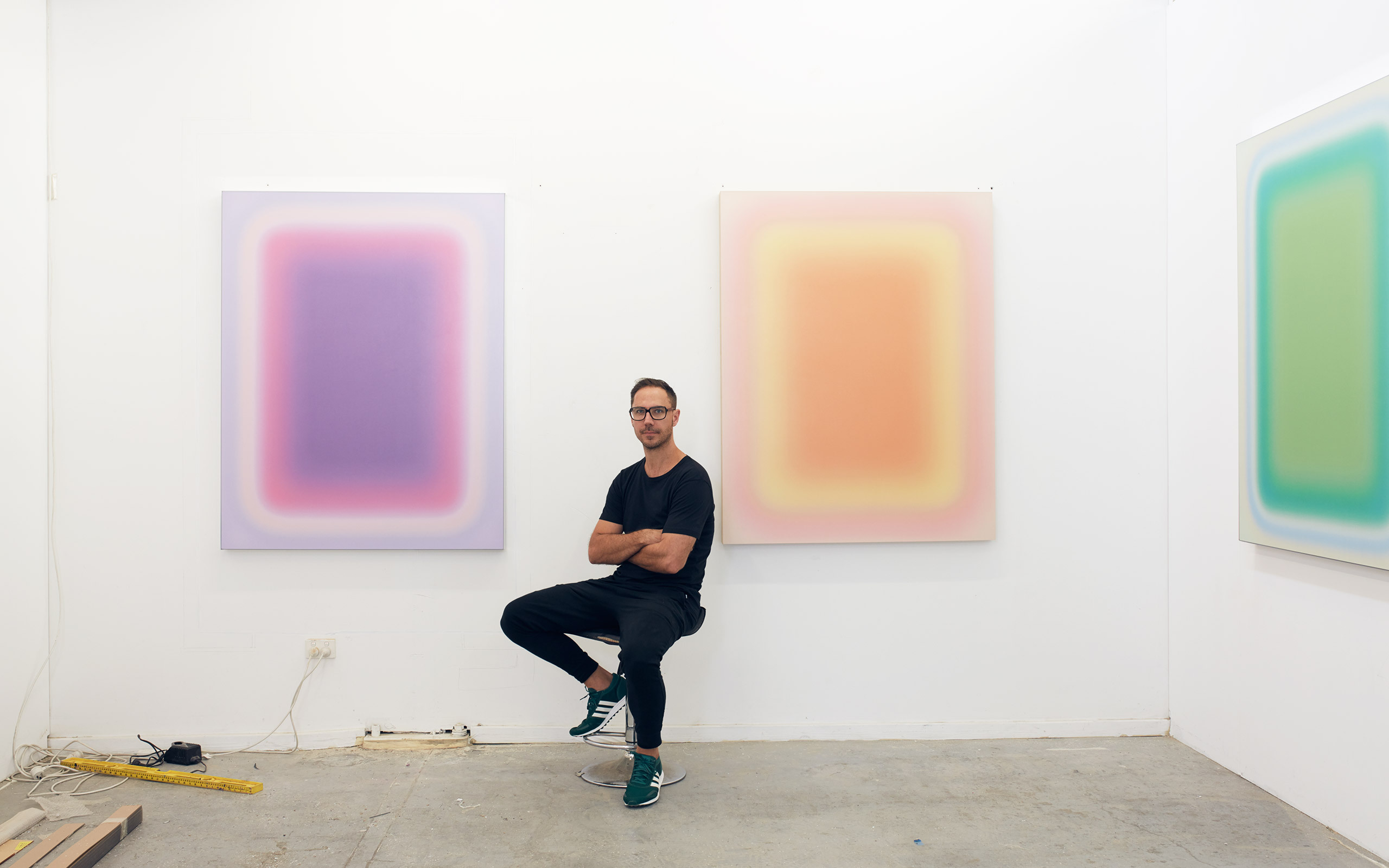
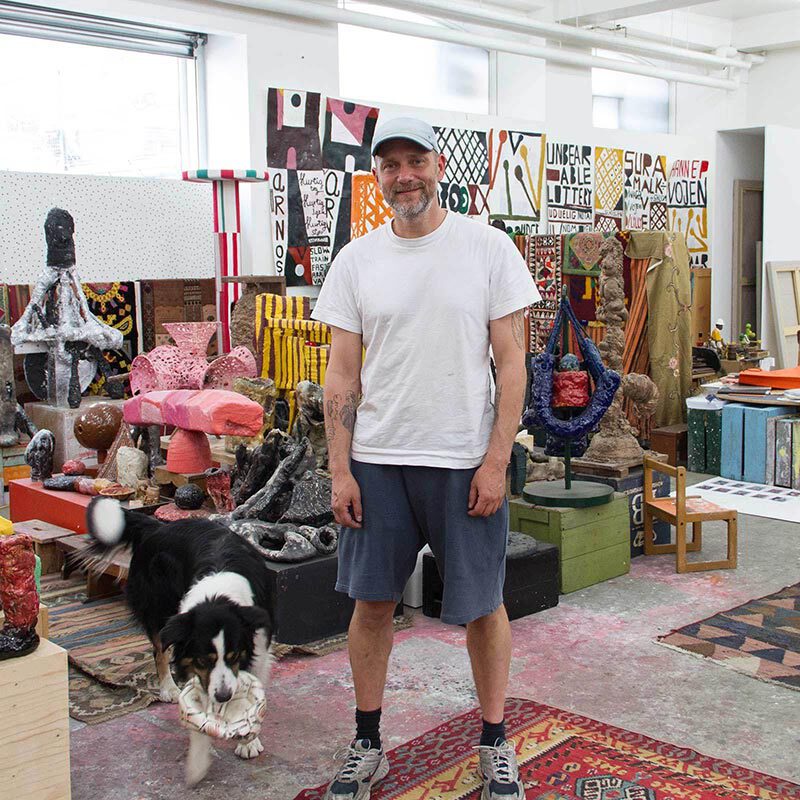
Jonny Niesche (*1972 in Australia) lives and works in Sydney. Steered by the visual metrics of the Glam Rock era and its cosmetic counter culture, he creates sublime paintings, sculptures, and installations that wrestle with the perceptions of colour, surface, and spatiality. By employing complex steel fabrications, mirrors, and digital painting processes on transparent fabric, he brings forth an experiential trigger that is part psychosexual, metaphysical, superficial, and rhapsodic, luring the viewer into a personal moment of “performative contemplation.”
Niesche holds a Master of Fine Arts at Sydney College of the Arts and studied under Heimo Zobernig at the Academy of Fine Arts Vienna. In 2015, he was awarded the Fauvette Loureiro Travelling Scholarship. He has staged numerous solo shows, notably at Zeller van Almsick in Vienna, New Jörg Kunstverein in Vienna, Lundgren Gallery, Palma de Mallorca, Sarah Cottier Gallery in Sydney and Station Gallery Melbourne. Niesche has participated in group shows at Artspace in Sydney, the National Gallery of Victoria in Melbourne and the Museum of Contemporary Art, Sydney. The Museum of Contemporary Art Sydney also Commissioned Niesche to make a new work for Vivid festival with Mark Pritchard. His work is held in the collections of Museum of Contemporary Art in Sydney, the Museum of Old and New Art in Hobart, and the National Gallery of Victoria in Melbourne, and in private collections across USA, Europe, Asia and Australia.
Curated by: Florian Langhammer
Text: Florian Langhammer
Photos: Christoph Liebentritt, Hugh Stewart (portrait Jonny Niesche), Damien Rossellen (portrait Regine Schumann)