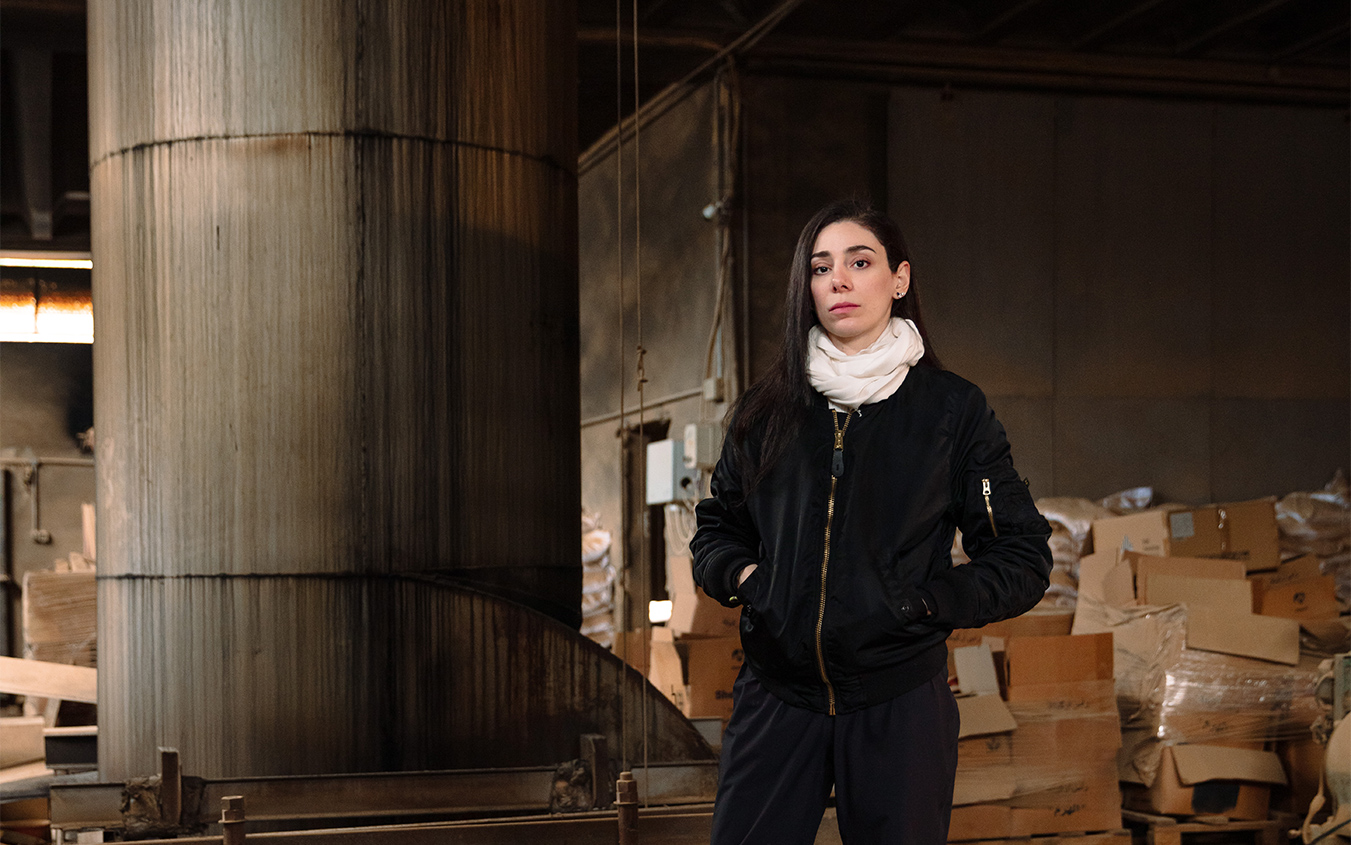
Dala Nasser’s work begins with the most elemental things: cloth, water, clay, light. Working across painting and sound, the Lebanese artist imprints landscapes marked by occupation, extraction, and erasure, approaching them not as backdrops but as active sites of memory. Throughout her work, myth appears as a framework for thinking about the present rather than escaping it. Ancient narratives surface alongside contemporary realities, raising questions about how stories are constructed, repeated and imposed over time. In Nasser’s hands, natural materials are never neutral: they become political, a means of questioning how we live with what has been inherited, what has been erased, and what, through love and remembrance, might still be carried forward.
I wanted to start by asking, did you always want to be an artist?
I grew up around a lot of art. My uncle is a poet, my aunt was a playwright and my father a photographer and avid painter. I grew up around many, not just artists, but also paint brushes and books; as a kid, I used to take my dad’s dry brushes and pretend I was painting his paintings. When I was a teenager, I thought I’d do fashion, and then a little bit later I thought maybe I’d be an animator. Finally, I decided I was a fine artist and went on to study painting. Even if my work gets described as sculpture or installation, I always think of myself as a painter.
Your work often feels like a painting that’s been deconstructed. Is that how you think about it?
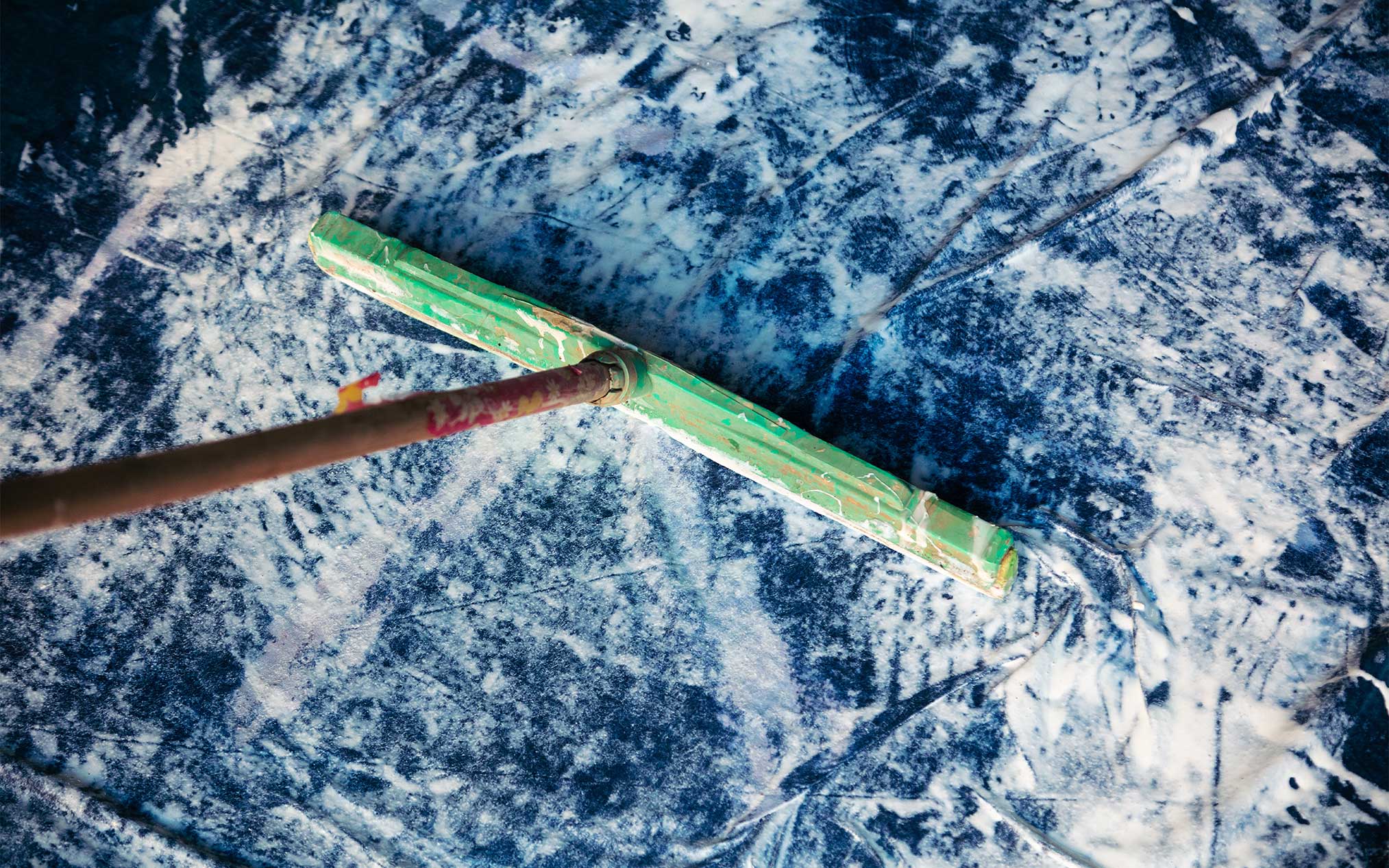
It’s interesting you say deconstructed, because I do think of painting as a kind of alchemy. The way that paint is liquid and then forms something hard in the end. That’s often how I think about the material element of my practice. Generally, sculptors think of turning a hard rock into something soft, I attempt the opposite: turning something very soft into something quite hard.
Ancient figures and landscapes are vital subject-matters of your practice. Painting has such a long history of depicting places through a Western lens, how do you sit with that history now?
When I approach art history, I want to interpret it closer to the actual source, rather than accepting the visual interpretation that has been imposed upon us. I am from Lebanon, and there are many depictions in art history of the Holy Land that always look like a projected imagination. They all look like Dutch meadows, they all look like the European imagination, and not at all like where they’re actually from. For example, when I was working in the region of Mount Lebanon, I was following the myth of Adonis, the mortal lover of the Goddess Aphrodite, who was killed by a wild boar. Throughout history, there have been many paintings of Aphrodite, Adonis and the death scene. However, they are never attributed to its actual location, most would not know that it happened in Lebanon but rather in an imaginary scene somewhere in Europe, generally these arbitrary divisions are what I aim to challenge with the subject matter and the process.
Your pieces often feel as if they are happening in parallel times: past, present, and sometimes even future. When does a work begin for you?
I definitely begin it in the now and in the why: Why does the present look like the way it does? I think this approach comes from the fact that I come from Beirut, which is always changing. I was born in 1990, when the Civil War ended. It completely changed the way we live, and our relationship to the city. I became interested in tracing the events leading up to today to understand how we had actually gotten there. I look at the patterns that we are living through and link them to a wider narrative. It’s interesting that you mention the future. I think that the work that looks the most towards the future is Noah’s Tombs, even if it’s about what is probably the oldest story ever told. If you don’t understand history, you are doomed to repeat it.
In works like Adonis River, myth and geography feel inseparable, and somehow very present-day too. What draws you back to mythology?
The thing about mythology is that we don’t know if it’s real, but also, it doesn’t matter if it is. I’m interested not in the theory itself of a myth, but more in why they exist. What is the need that people have, that we have, to attach ourselves to these stories? Why do we need this overarching explanation of everything that’s genuinely absurd? Both myths and politics are meant to solidify a version of history. But whether they happened or not doesn’t necessarily change the outcome.
Your work seems to require a great deal of research before you ever arrive at a site. How does research and the physical encounter?
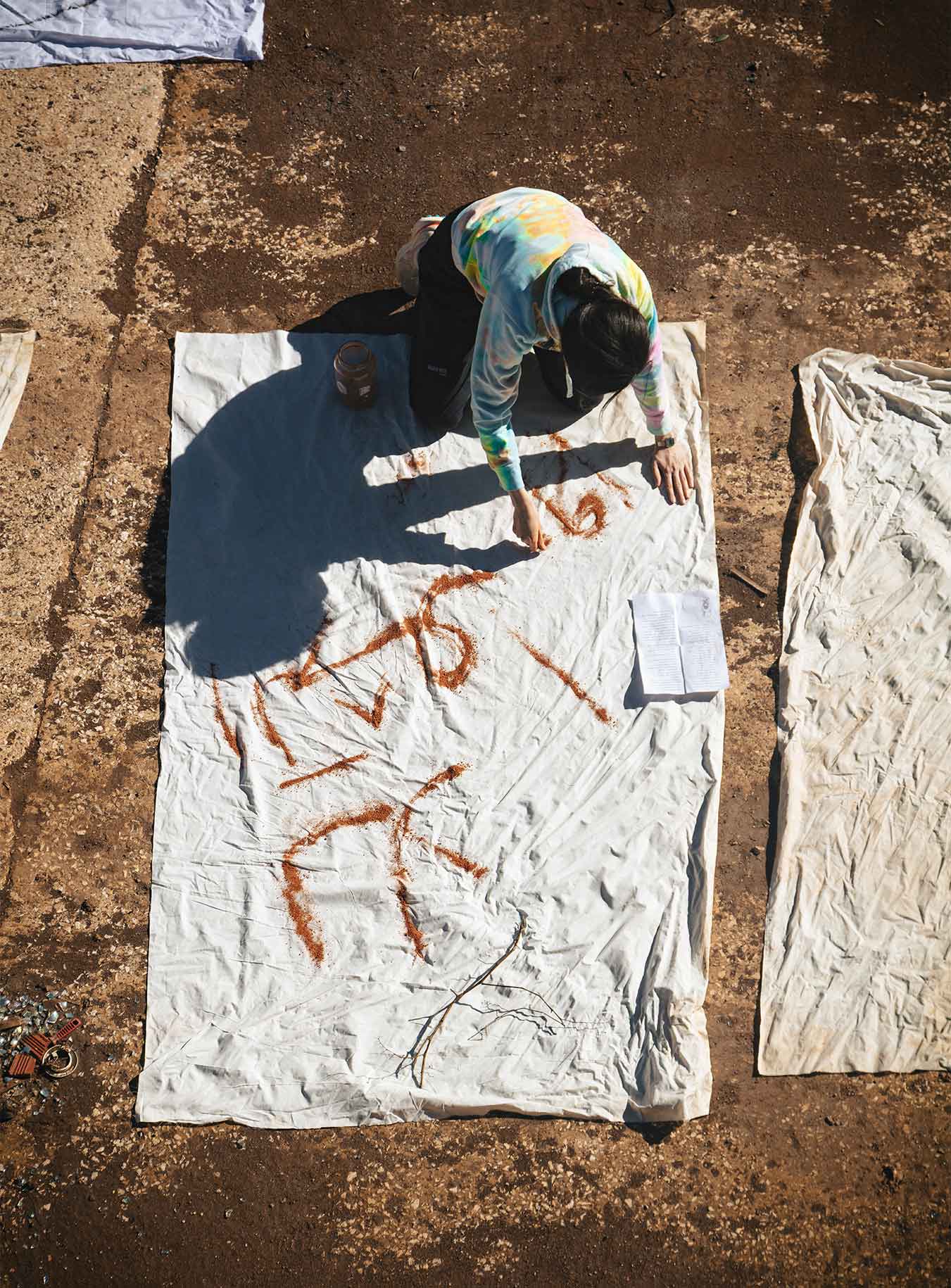
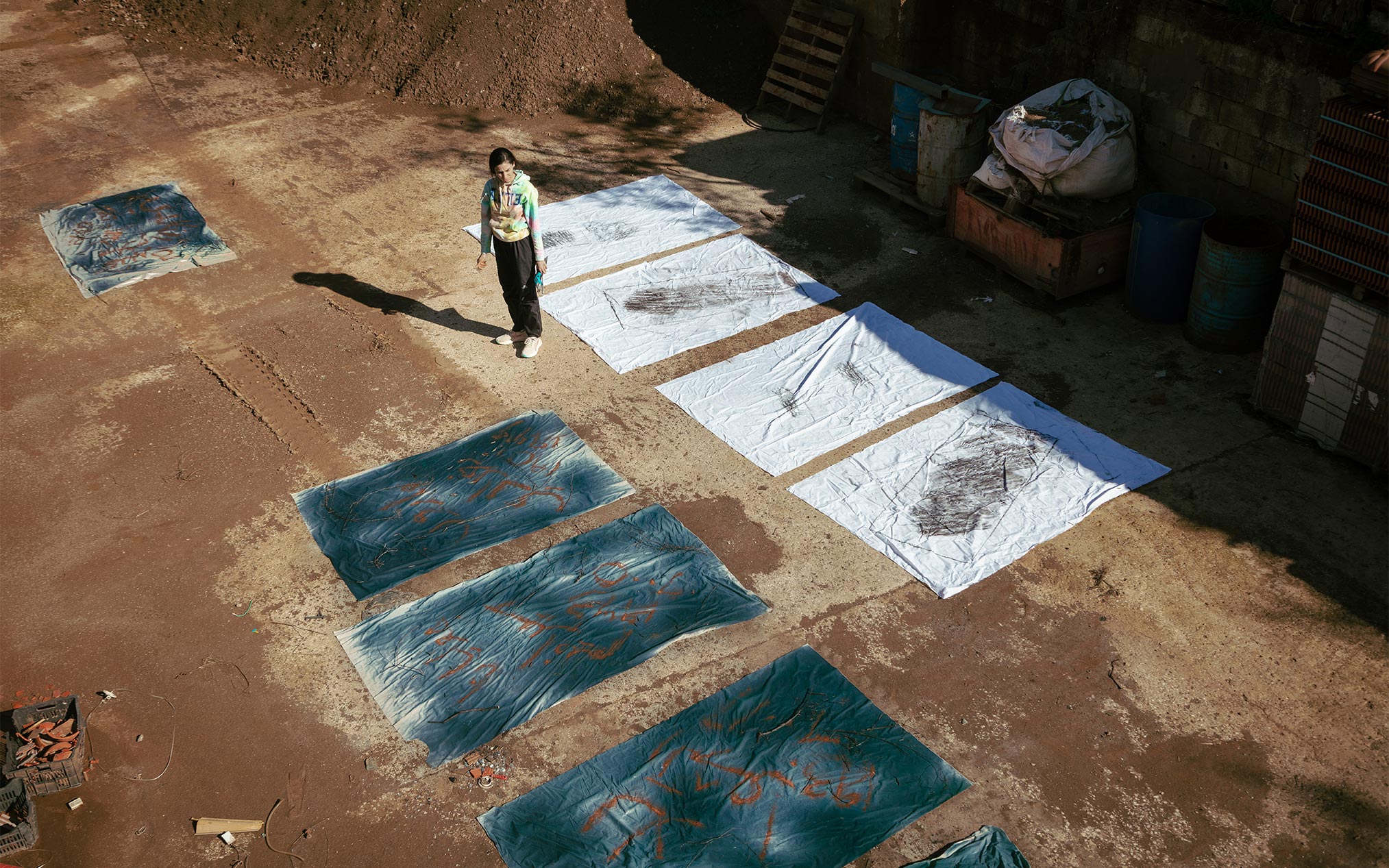
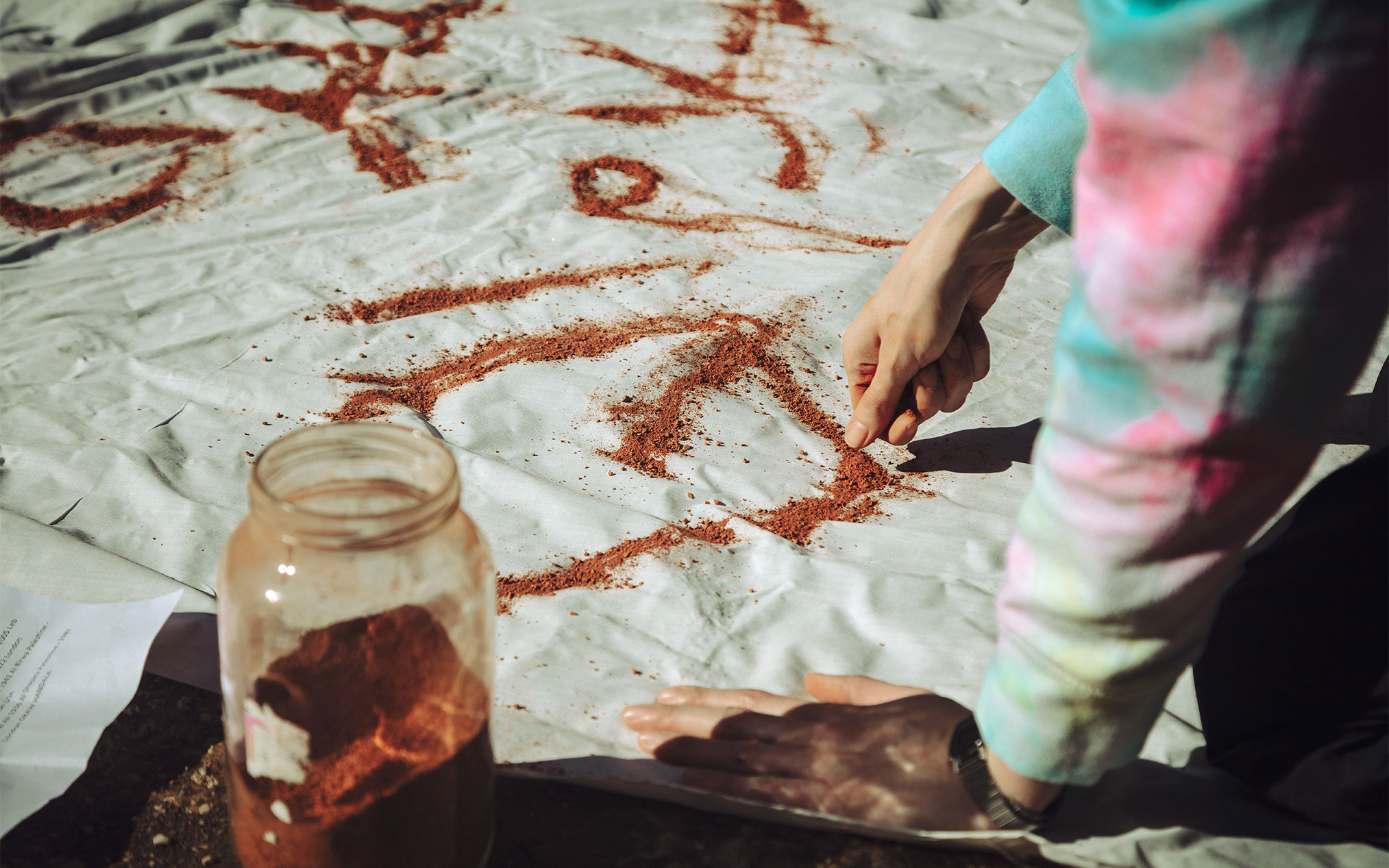
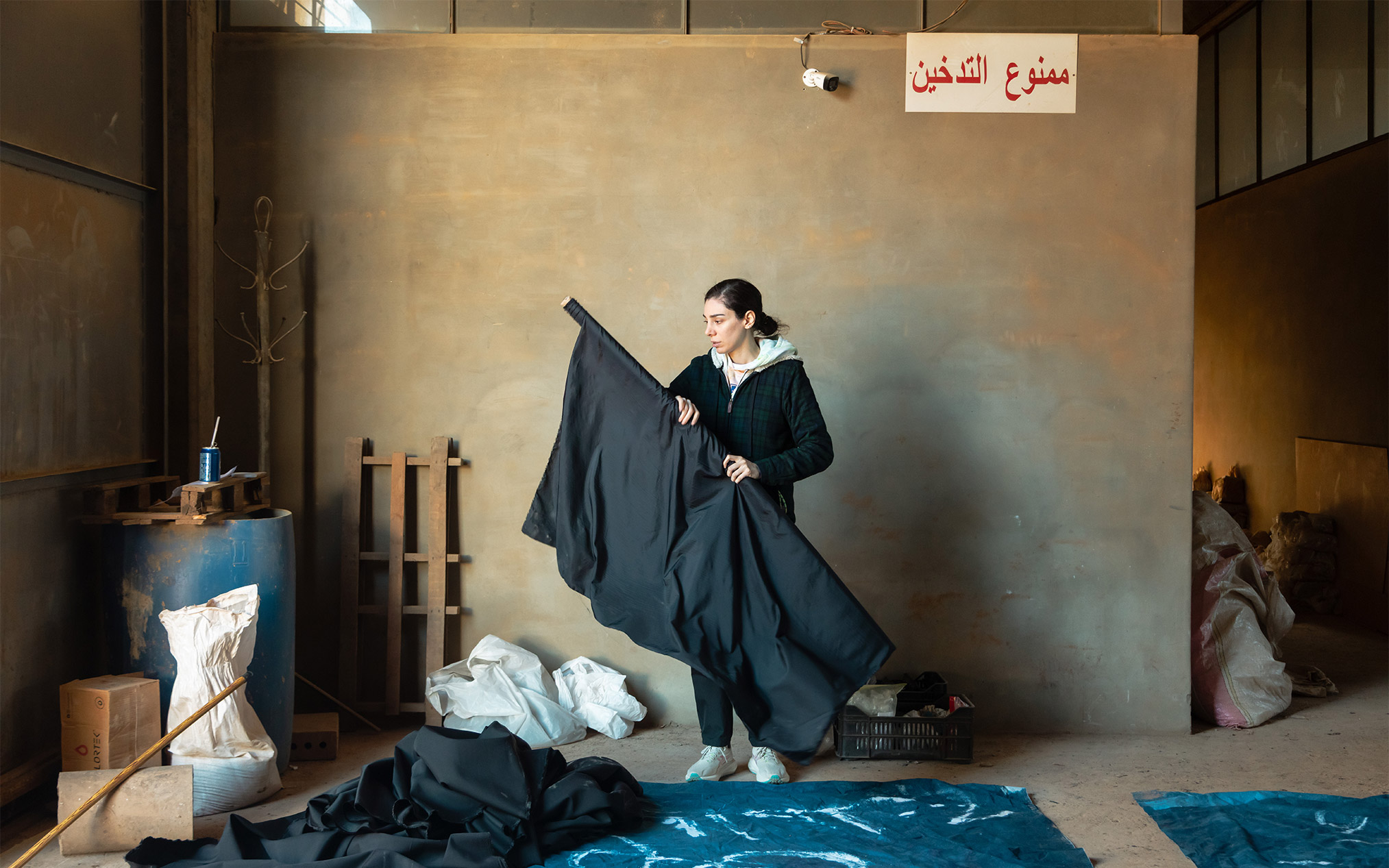
It goes in parts. At the beginning, the research is more historical, whether it’s through texts or past visual depictions. Once I’ve done enough research to point to the geographical locations that I want to go, I visit the place one time, and take with me fabric and charcoal. In the space, I’ll start getting a feel for it and producing a little bit on-site, before I go back.
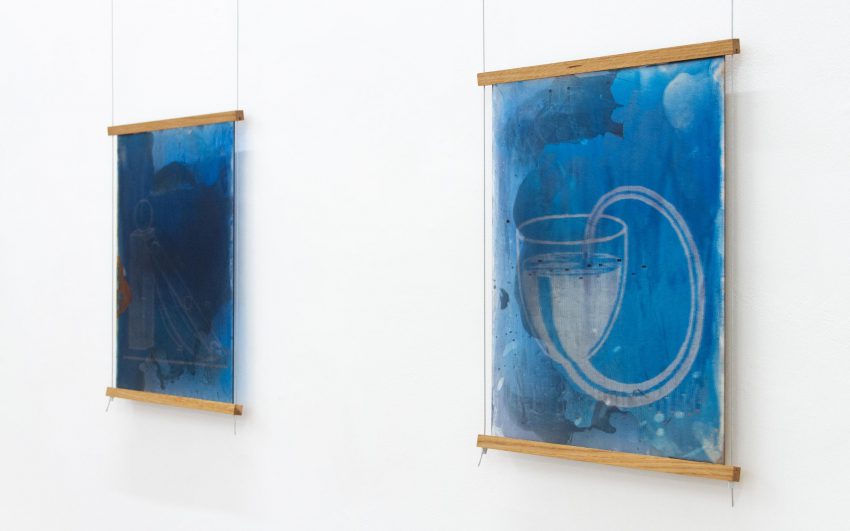
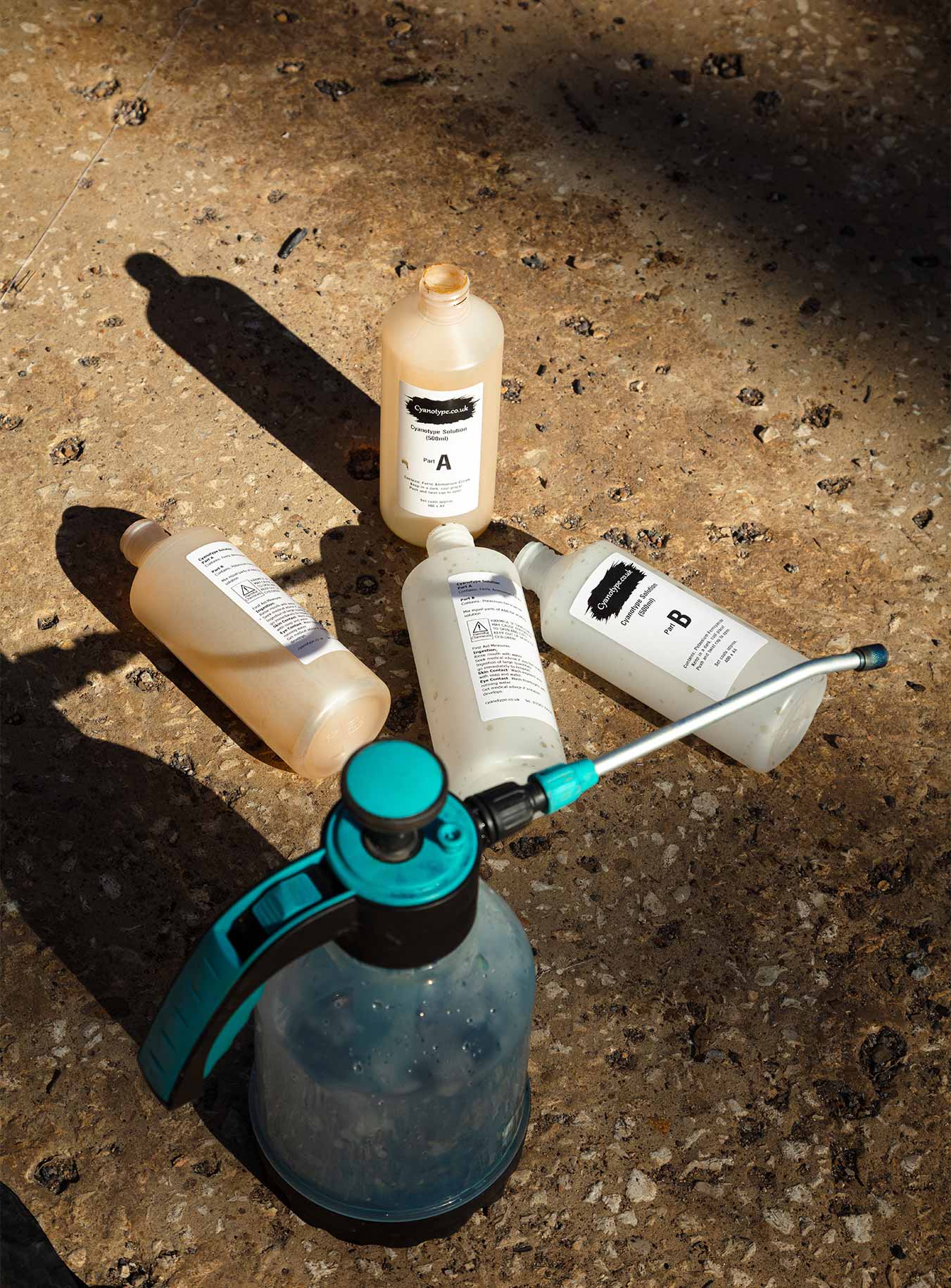
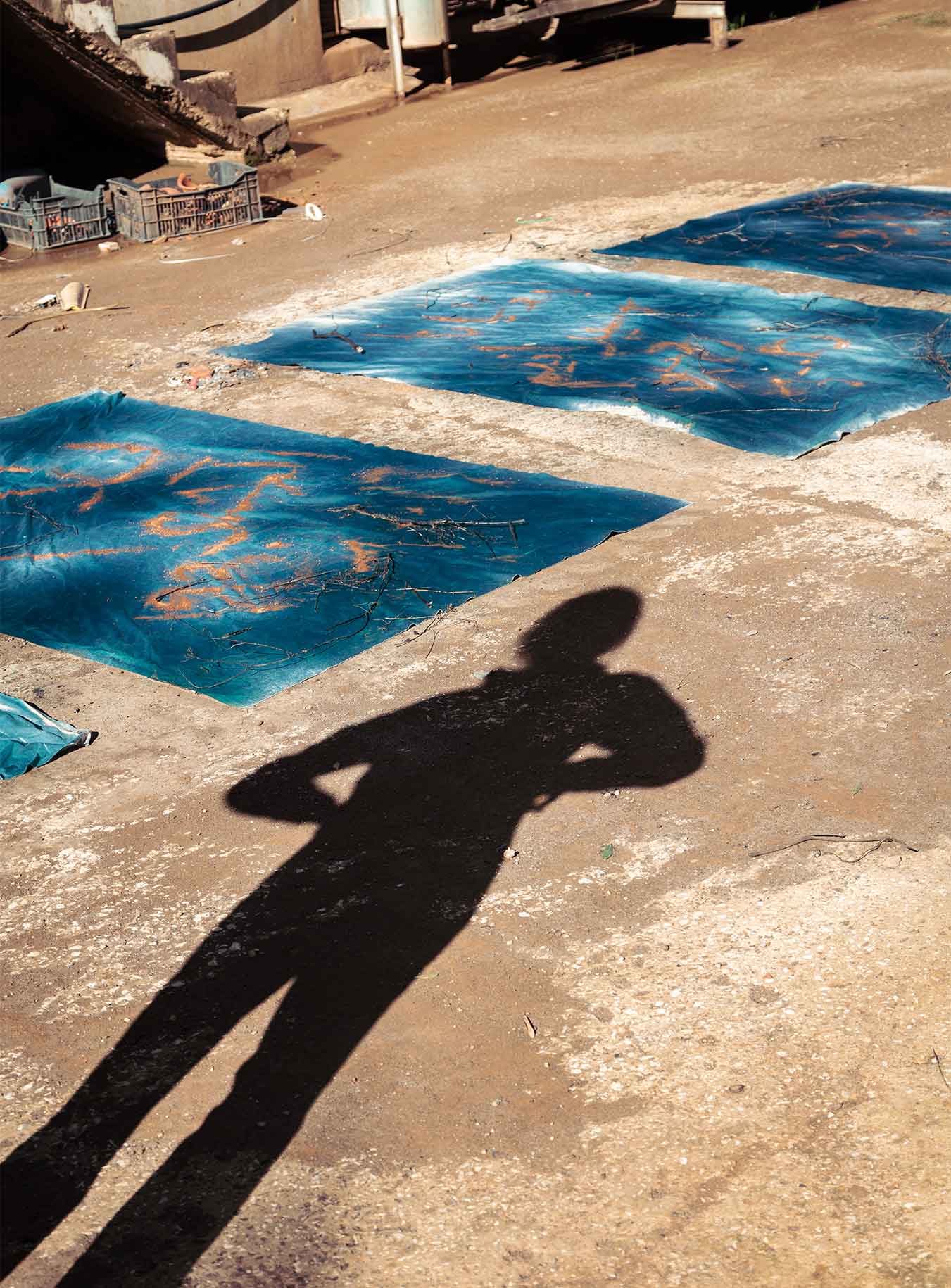
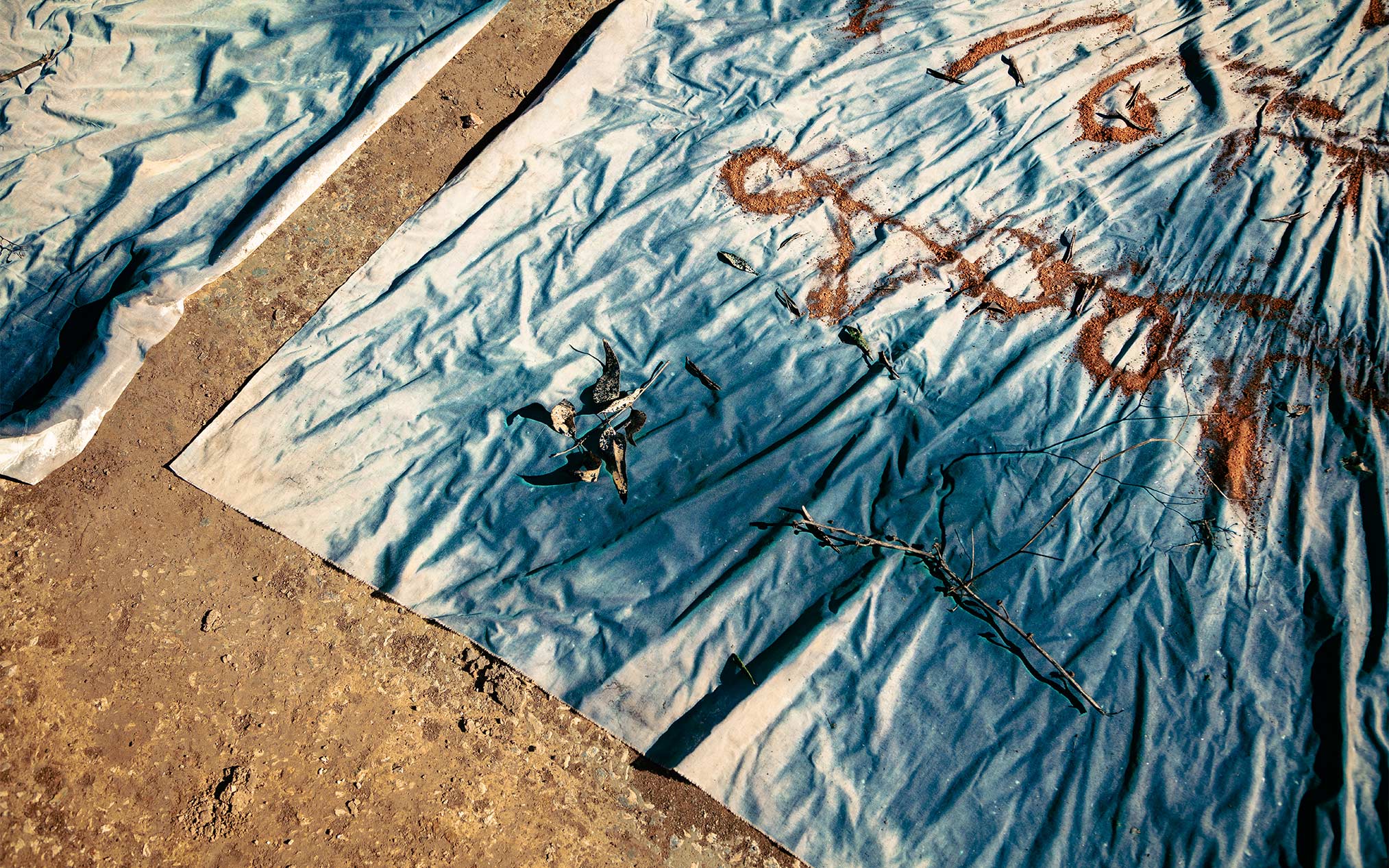
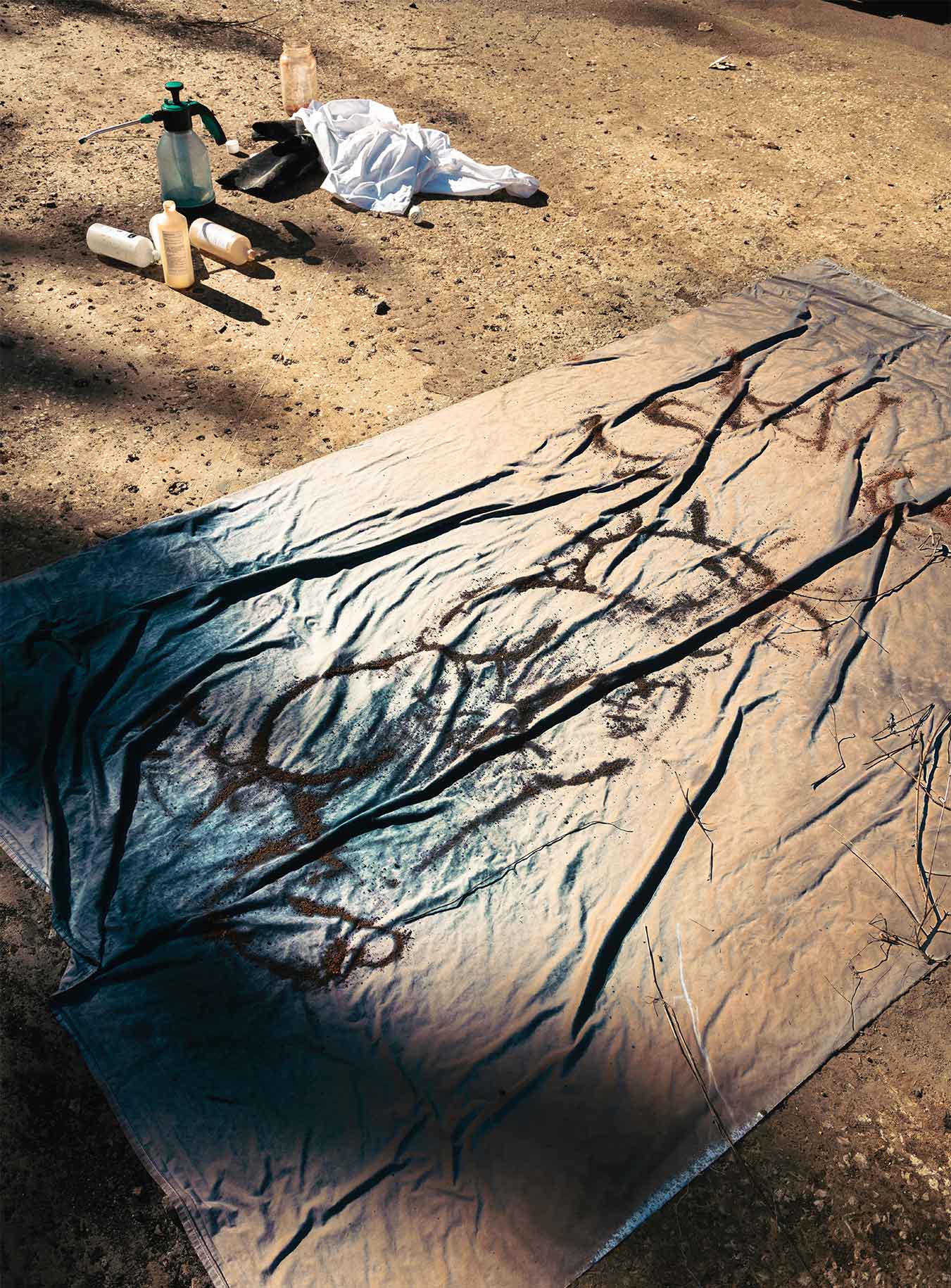
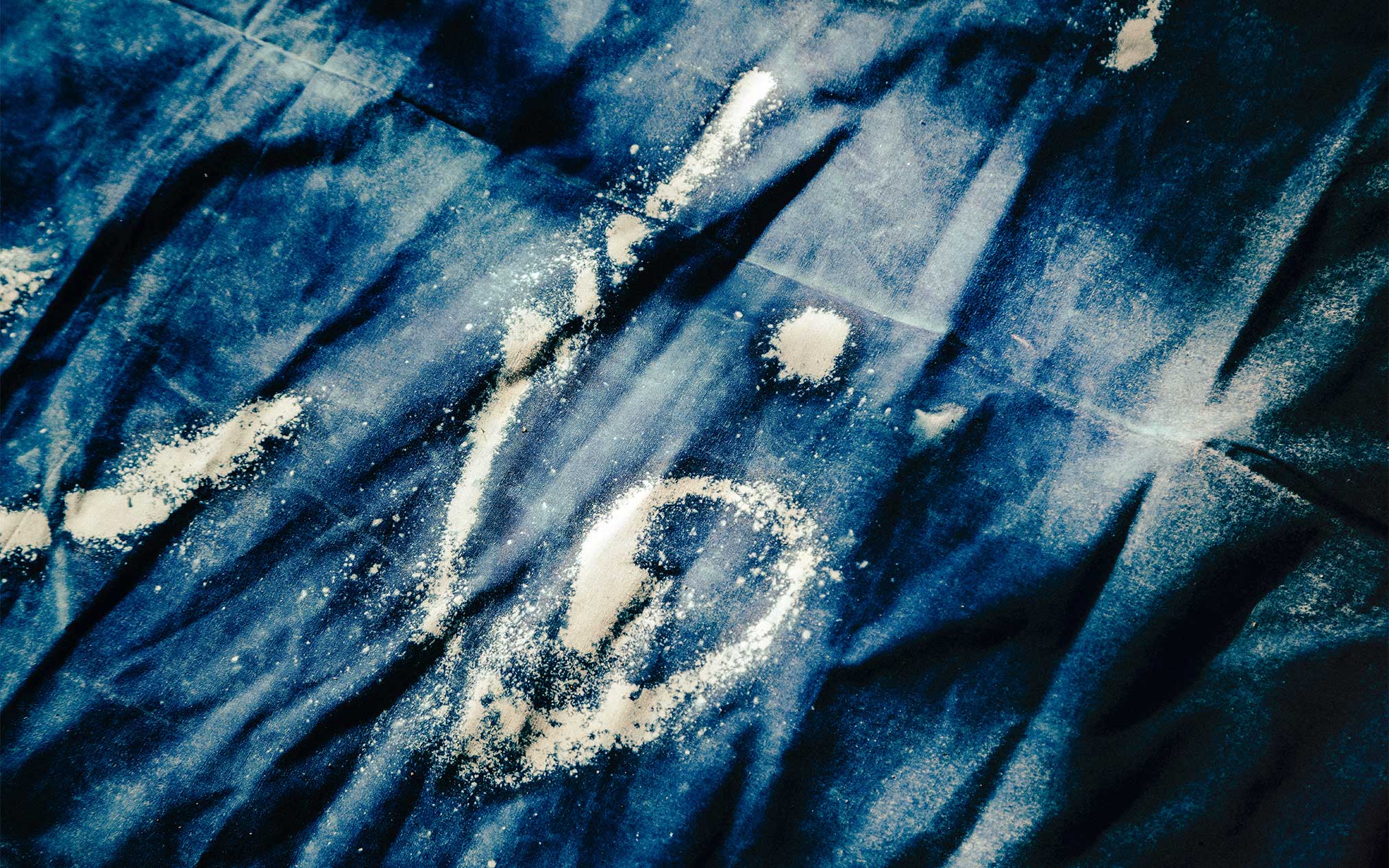
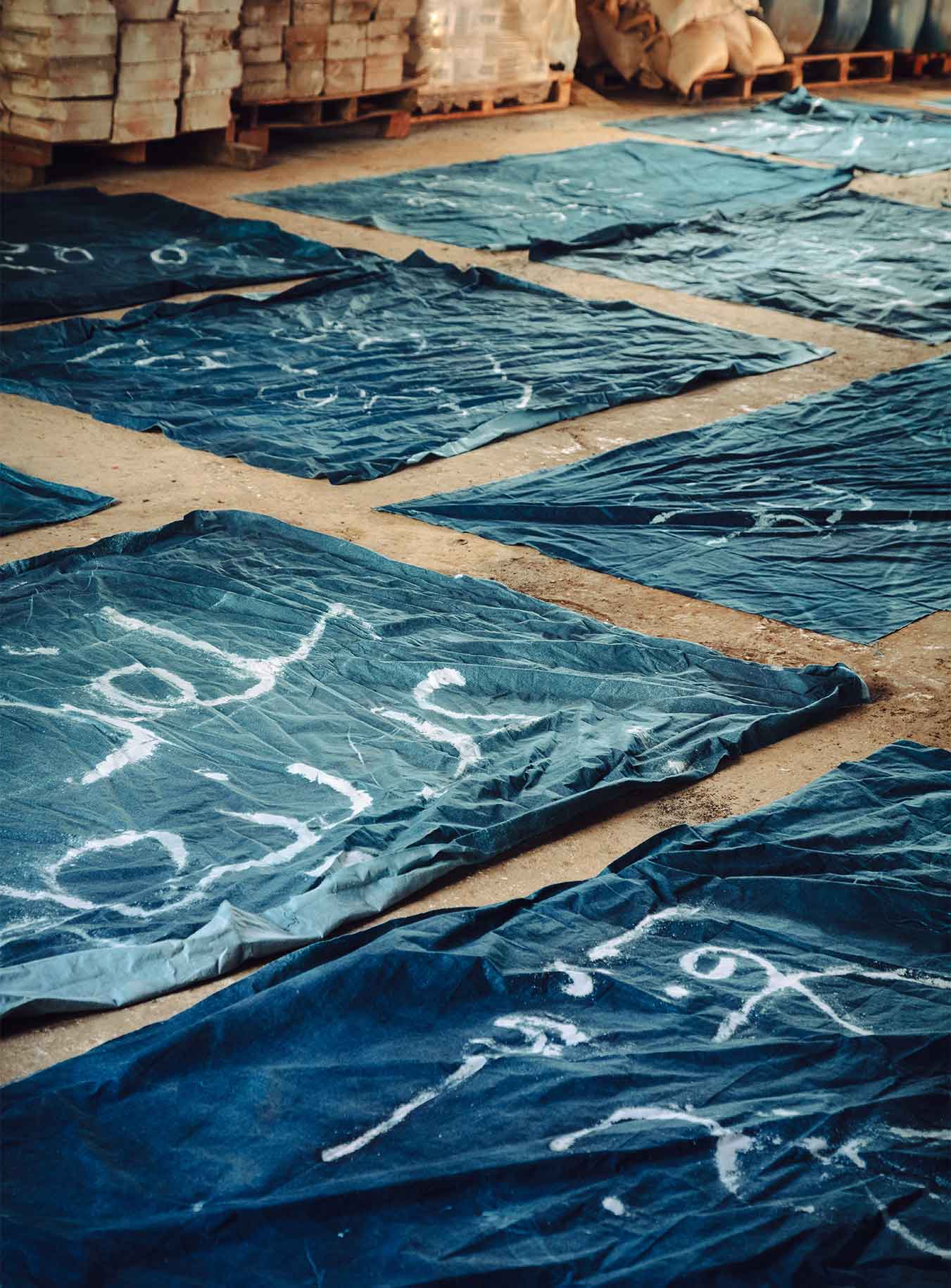
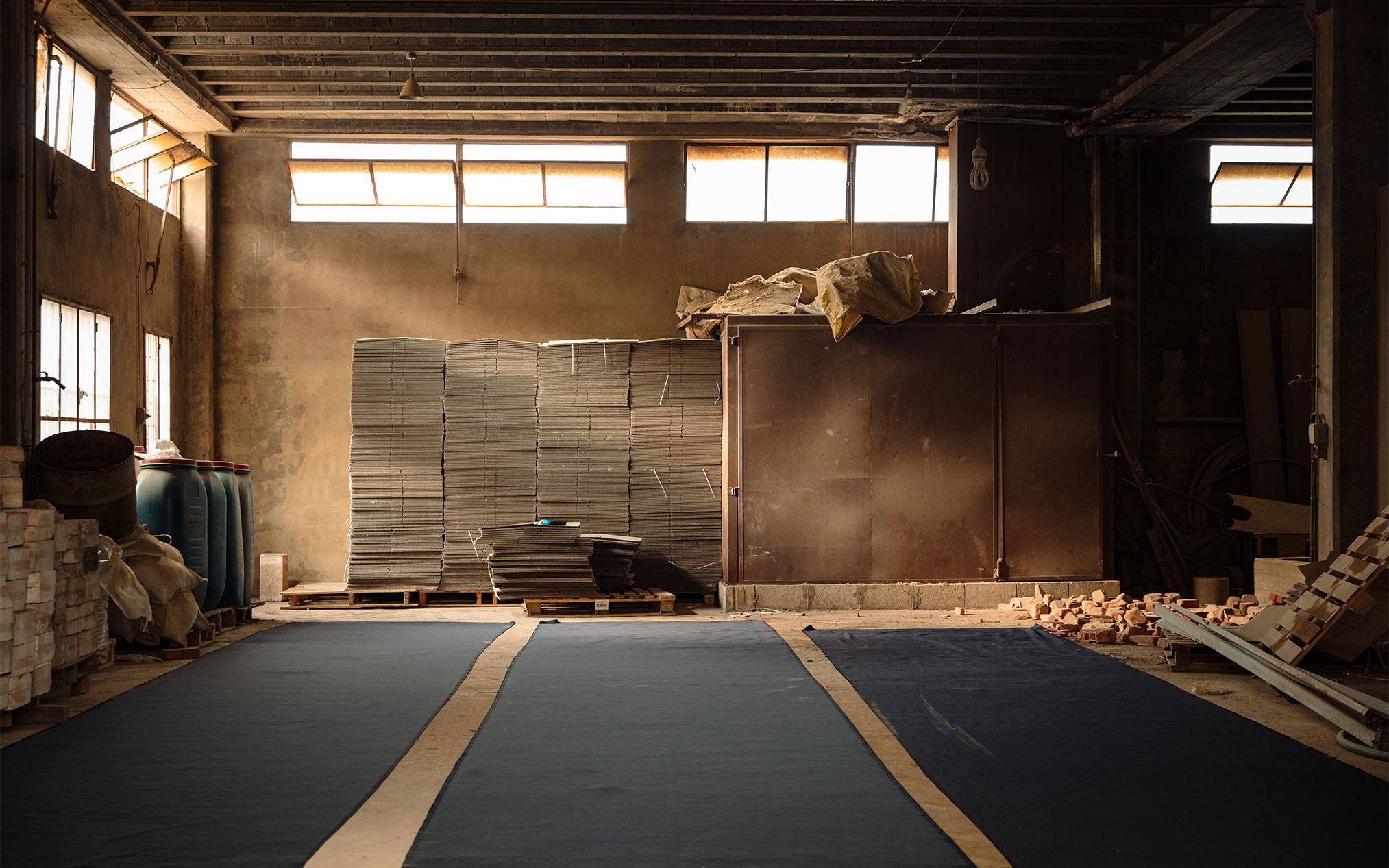
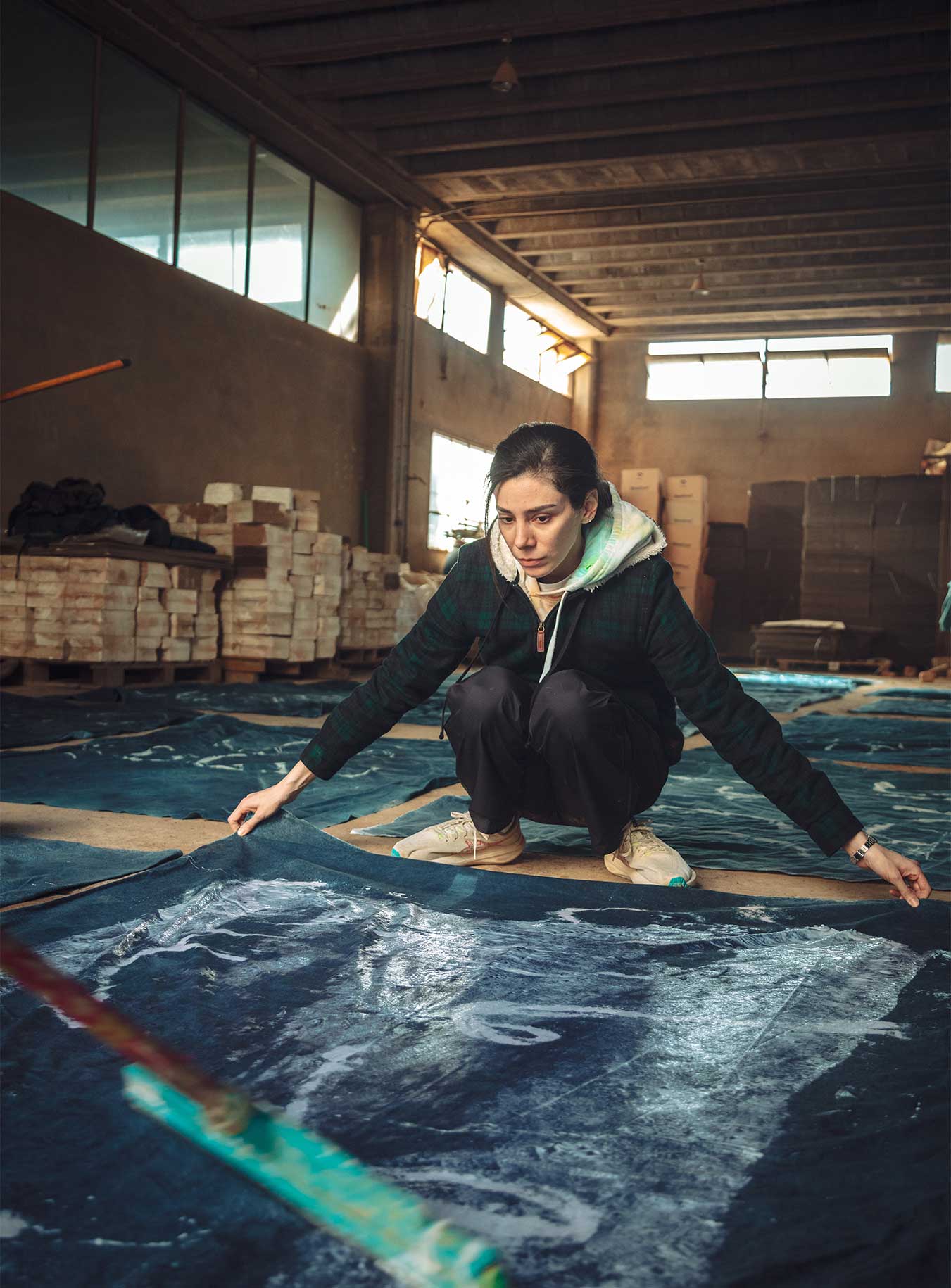
The production stage is really quite physical. Every time I have to take care of my body and prepare for the visits because it puts a lot of strain on me, I’ve broken my foot while working, I’ve hurt my shoulder to the point that I could not grip anymore, the scale and the process are so commanding. Essentially, my whole body becomes like a paintbrush or a tool to depict the marks. Given the nature of the work, I can’t really say I have a studio. My studio changes based on locations, and every piece is different. For Adonis River, it was a hike, but for example, for the work at Kunsthalle Basel, Xíloma. MCCCLXXXVI, the site was inaccessible. Once I realized I couldn’t go, I had to think of another way of depicting it. I ended up using the sun as material and made cyanotypes, especially because that body of work deals more with imagery rather than just location.
Sound has become an increasingly present element in your installations, often coming from the same landscapes as the visual work itself. What have you found in sound?
I use sound as a tool to make you very aware of your presence and surroundings not a tool to transport you to the location. In all my works I have collaborated with composer Mhamad Safa, his work is so cinematic it really animates the surroundings of the work. The first time I ever used sound was in my film Red in Tooth. There was a point where I fully cut the sound, so that the audience could hear everything in the room, and then became very aware that they were not in the landscape they were seeing. I work a lot with that effect. Most of the works are made using live recordings and then I introduce gaps of silence within them. It’s a kind of layering of places, sound becomes another way of nudging you into being hyper-aware of your surroundings and your temporality within the space. It’s a way of depicting the boundary between you and the landscape.
You make work in very specific landscapes, and then it travels. How does it change when it’s shown far from where it began?
For me, even though the audience or the location is disjointed from the actual landscape I visited, there are still stories and narratives that connect them. In the process of preparing a show, it’s really down to looking into which piece is going to bridge both locations – the landscape depicted and the show’s location – to close that gap with whoever is seeing the work.
So the works keep evolving, depending on where they’re seen.
Yes. Absolutely.
Do you ever feel like they’re finished?
When I first started painting, I was experimenting with how to make a painting that changes beyond the artist’s hand. So when I am done working on it, it keeps changing on its own. For me, all of my works go hand in hand. I don’t think you can look at them separately. They are all one and affect one another. So they’re not finished because I am not done making art. Maybe at the end of my life, when they are all together, maybe then it’ll be done, but I don’t think they are finished for now.
There’s such a strong sense of loss in the work, but also love. In your recent project Cemetery of Martyrs, you collected charcoal rubbings from the graves of artists, writers, poets, and thinkers from across Lebanon, Egypt, Jordan, and England. What did grieving come to mean while making it?
It’s interesting that you used the word love, because I really think that generosity is the highest thing I could aim for as an artist. If I can make a generous artwork, then I am satisfied. And that really comes from love. For example, with the show about Adonis, I was working with a descriptor for something being lost too soon. Adonis was far too young , a life unfinished, that’s why mourning him was so difficult: it’s the mourning of the future. With Cemetery of Martyrs, I felt that loss with every figure. I wanted to do this work now, at a time when every day, there is a new mass grave that comes up. I wrote obituaries for all of the figures that appear in it, so I would say emotionally, it’s the hardest work yet, to deal directly with death. As an artist, I felt the need to look at these legacies of all these thinkers before me, and to see what we’ve inherited from them. Because these ideas aren’t gone if they are remembered. The work comes out as generous because the subject matter is generous. This work comes from a place of love, and I would hope that all of my works together someday will feel that way.
In the end, do you think the work is hopeful?
Absolutely, because nothing’s ever lost, not even in death. Emotions, ideas, they all live through us. It’s all about carrying what you hold dear within you. For example, my earrings are from my great-aunt, and wearing them makes me feel loved and protected. I have a necklace with all these different charms on it as well. Things that are lost are never necessarily gone, even if they aren’t physically there. It’s about taking what you can, whether to learn, to not make the same mistake, or to take an idea and move it forward. It’s all part of a continuity with one another.
Text: Maria Paris
Photo: Vicken Avakian