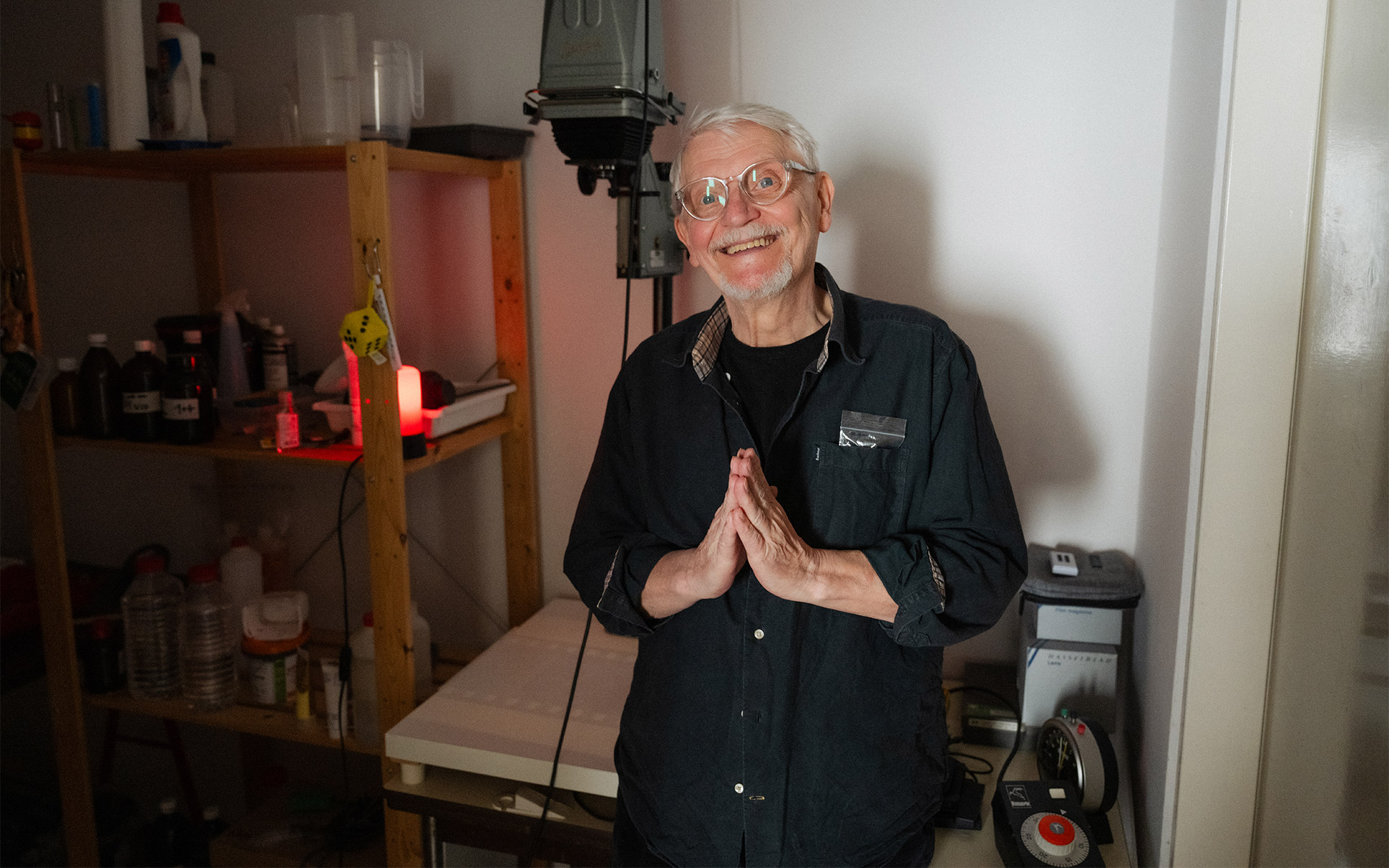
Erwin Kneihsl’s photographic practice is characterised by a radical reduction that stems from a deep understanding of materiality, process and perception. Building on classical training in analogue photography, he has developed a visual language that consistently focuses on elementary motifs, foremost among them the sun as a universal constant. Kneihsl understands photography as a medium of concentration, in which external appearance and internal visualisation overlap and are characterised by reduction, repetition and a clear formal structure.
Erwin, you originally undertook a classical photographic training at the Graphische (Federal Training and Research Institute of Graphic Arts) in Vienna. To what extent does this technical foundation still shape your artistic practice today?
I can only say that it was the best thing that could have happened to me. My training at the Graphische had a profound influence on me and remains an essential foundation of my artistic practice. I grew up in the ninth district, on the ‘other side’ of the Danube Canal, and struggled at secondary school. The system was much stricter back then, and I repeatedly attracted attention for skipping school. At some point, I had missed so many lessons that it was clear I would not be able to finish the year.
What happened next?
Originally, I wanted to study history; that was always my greatest interest. History and geography were the subjects in which I consistently did very well. I even borrowed books from higher year groups, simply because they fascinated me. At the same time, my family situation was somewhat restrictive, which is why I had to organise a lot of things myself. When it became clear that I could not continue at grammar school, my father insisted that I choose a specific career path. Looking back, the move to the School of Graphic Arts was a decisive moment, because there, for the first time, I had an environment that truly matched my interests and abilities.
Did you already have the desire to become an artist at that point, or did that only develop during your training?
Not at all. Becoming an artist was not even on my radar back then, I must be completely honest about that. My exposure to culture mainly came through my mother, who regularly went to the Volkstheater and the Vienna Volksoper. As a child, I often went along and those theatre spaces fascinated me. You could move around freely; it was dark, atmospheric, and almost a world of its own.

How did you then get into photography?
I got into photography quite by chance. For the entrance exam at the Graphische, I borrowed a camera and simply took photos of my mother. I had neither experience nor a specific model. Photographs were not strictly required back then; the entrance exam consisted of general questions. I admitted openly that I had never taken photographs before, but wanted to learn, and was accepted. Looking back, I believe that was a stroke of luck. The training was exceptionally rigorous, particularly when it came to black-and-white photography. The tutors were very demanding, yet incredibly dedicated. It was all about fine-tuning, about materiality, about seeing with precision. That is exactly what left an impression on me.
How did you find your time at the Graphische, particularly in terms of the training environment and your own progress within the class?
The course was clearly structured: there were three studios, and you were assigned to a specific professor. Of the original 36 students, only about 15 graduated. So the selection process was certainly rigorous. My own path was not entirely straightforward. Missed classes remained an issue, and overall, it took me longer than planned. In the meantime, I even spontaneously set off abroad, hitchhiking from Vienna to Amsterdam. That naturally had consequences: as I had not officially withdrawn, my return to the school was initially in doubt.
What was ultimately decisive in enabling you to continue your studies at the Graphische?
Looking back, the support of my professors was crucial. They stood up for me and enabled me to continue my studies. That is precisely why I can say only positive things about my time at the Graphische. Despite all the detours, it was formative and ultimately set the direction for my future path.
To what extent did this newly gained freedom and the environment at the Graphische help you in your development as a photographer?
This freedom gave my development a huge boost. You must keep in mind the 1960s: the environment I came from was rather limited. At the Graphische, a whole new world opened up to me. I was suddenly surrounded by people from different backgrounds, including international students and many from families of photographers.
You have been working with photography since the 1970s. What changes have you seen since then?
The changes are fundamental. The most obvious upheaval is, of course, digitalisation, particularly through smartphone photography, which has turned image production into a mass, everyday practice. This has also significantly altered the professional sphere, for instance in photojournalism. In the past, the entire working process was different, you worked with slides, developed film, often under time pressure. I have worked with 24-hour labs, for instance in London. Today, all of that is available immediately, in real time.
How do you position yourself within this development, particularly in relation to analogue and digital photography?
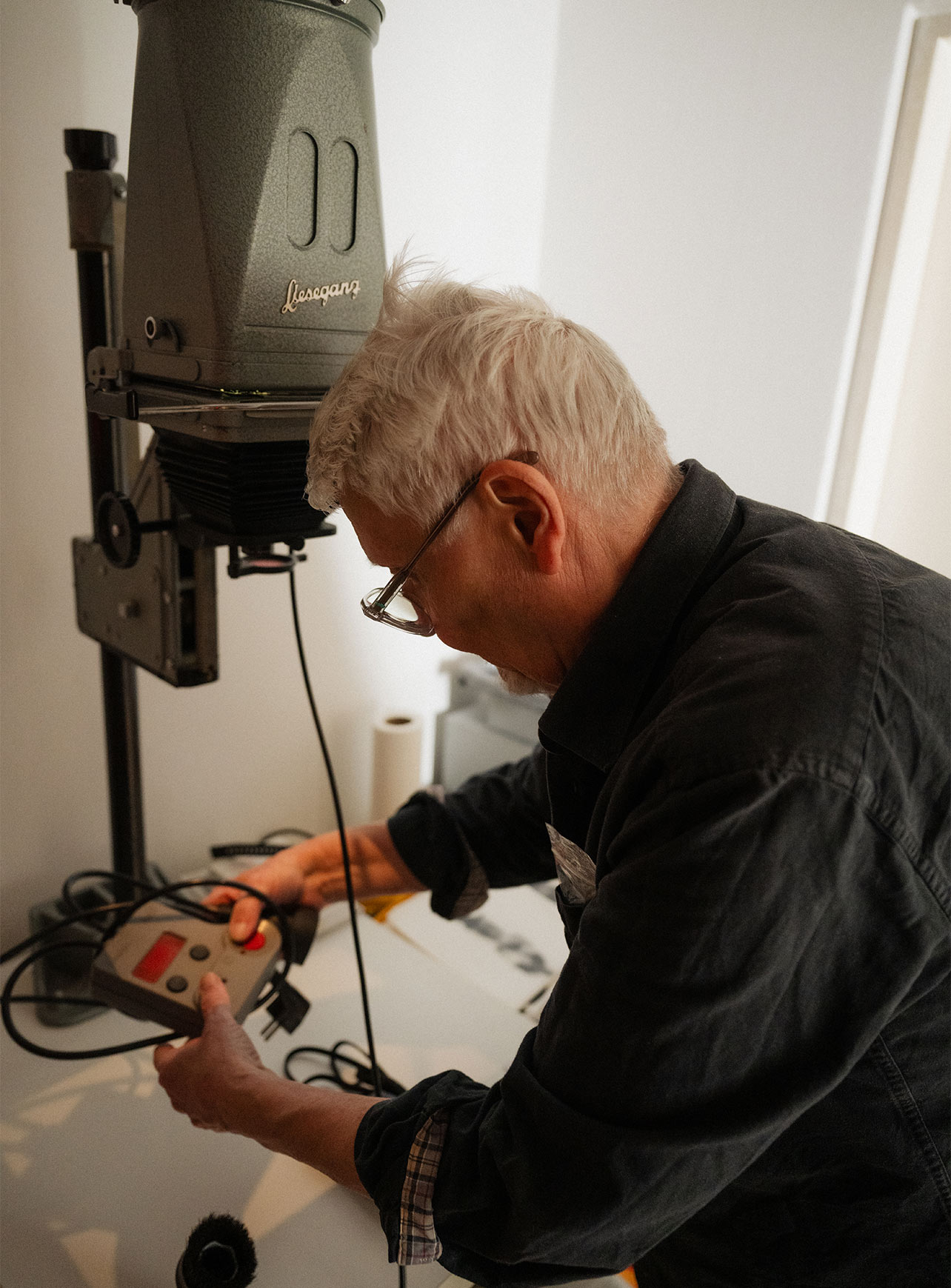
In artistic photography, digitisation has long been established anyway. I have never fundamentally rejected it, but for my own practice, the analogue process remains central. For me, it is about the materiality and the physical presence of the image. A classic baryta print still has a different quality for me than a digital print, both visually and haptically.
How has the analogue process changed over the years, particularly in terms of materiality and working methods?
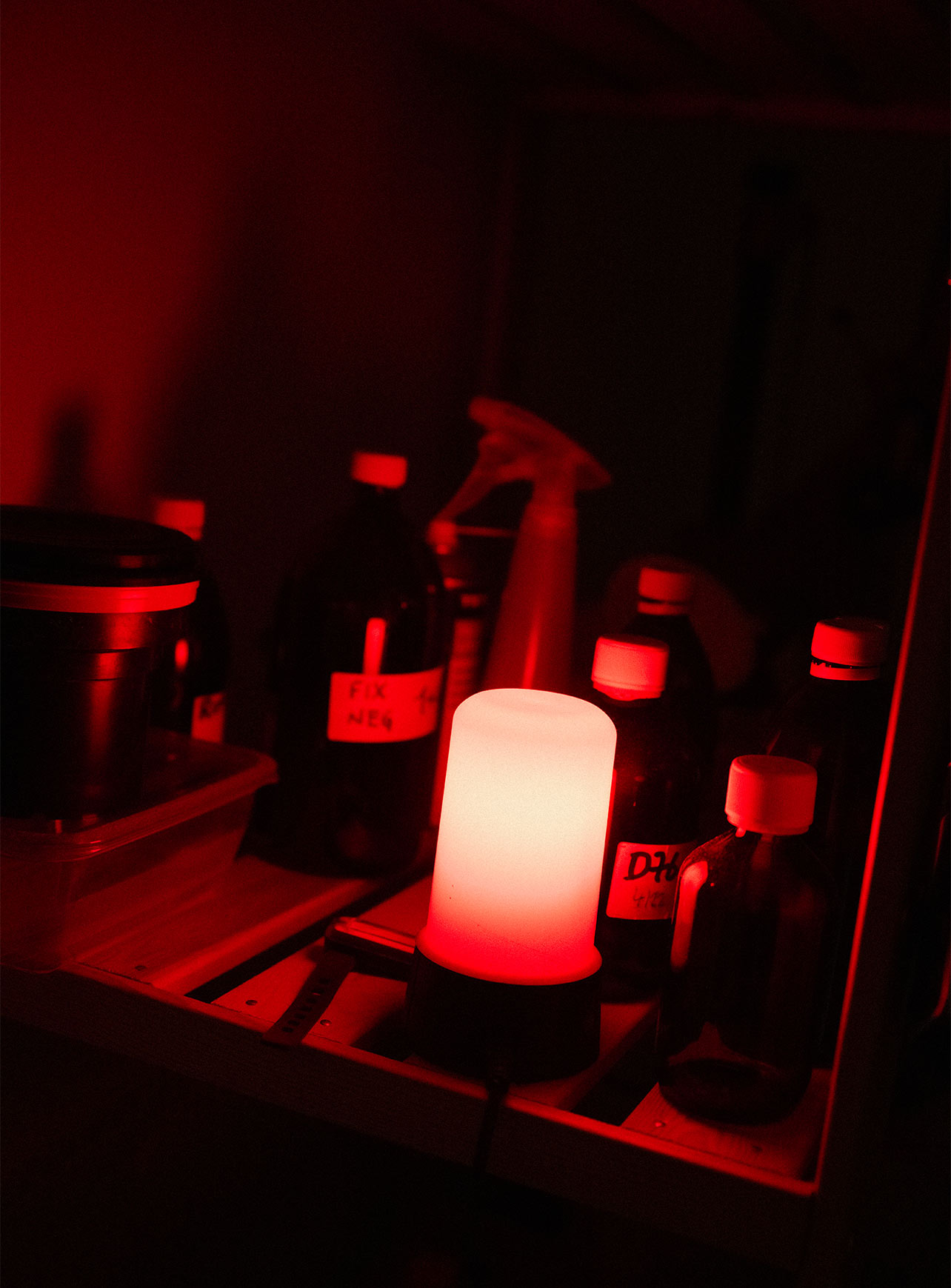
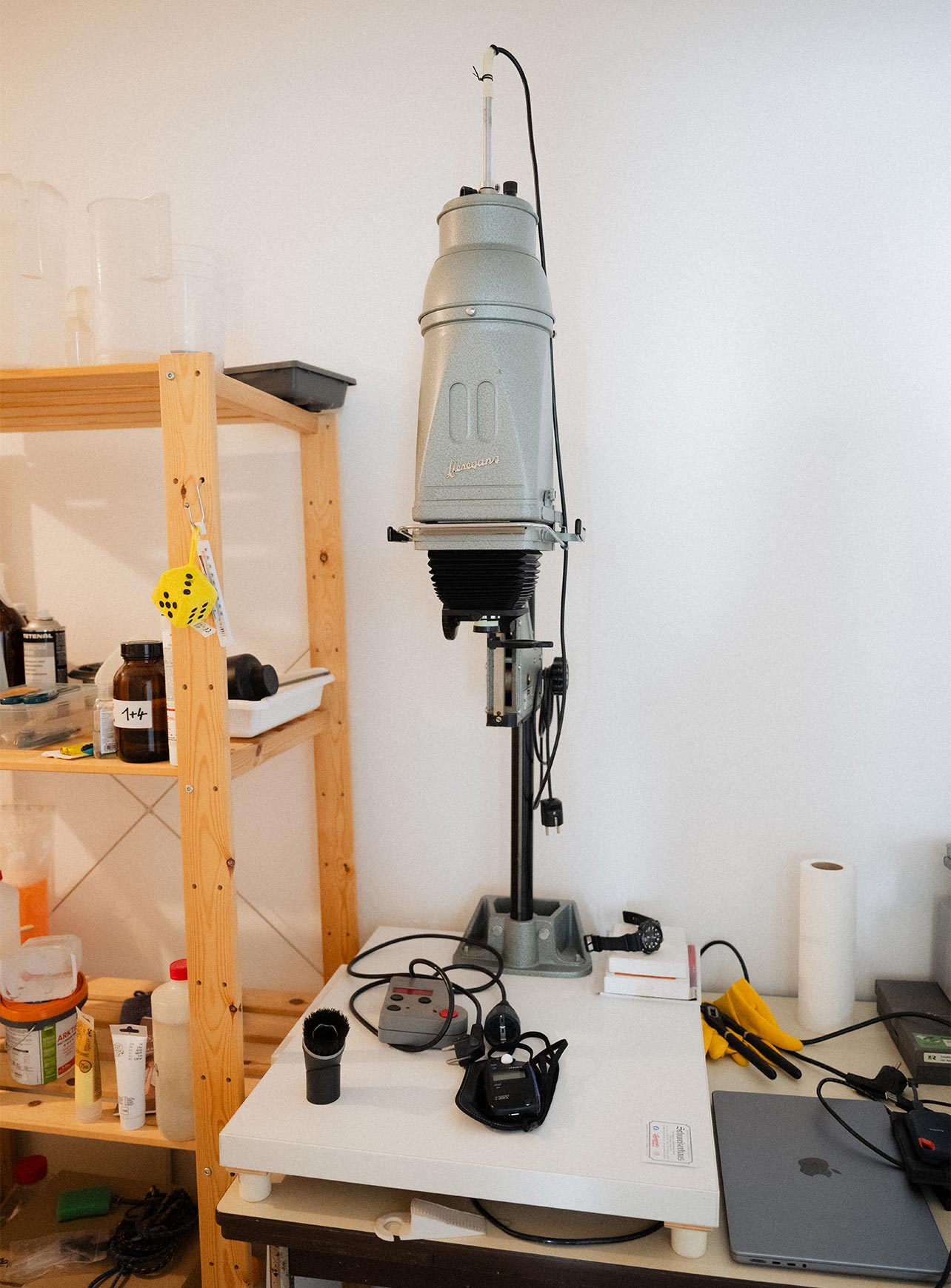
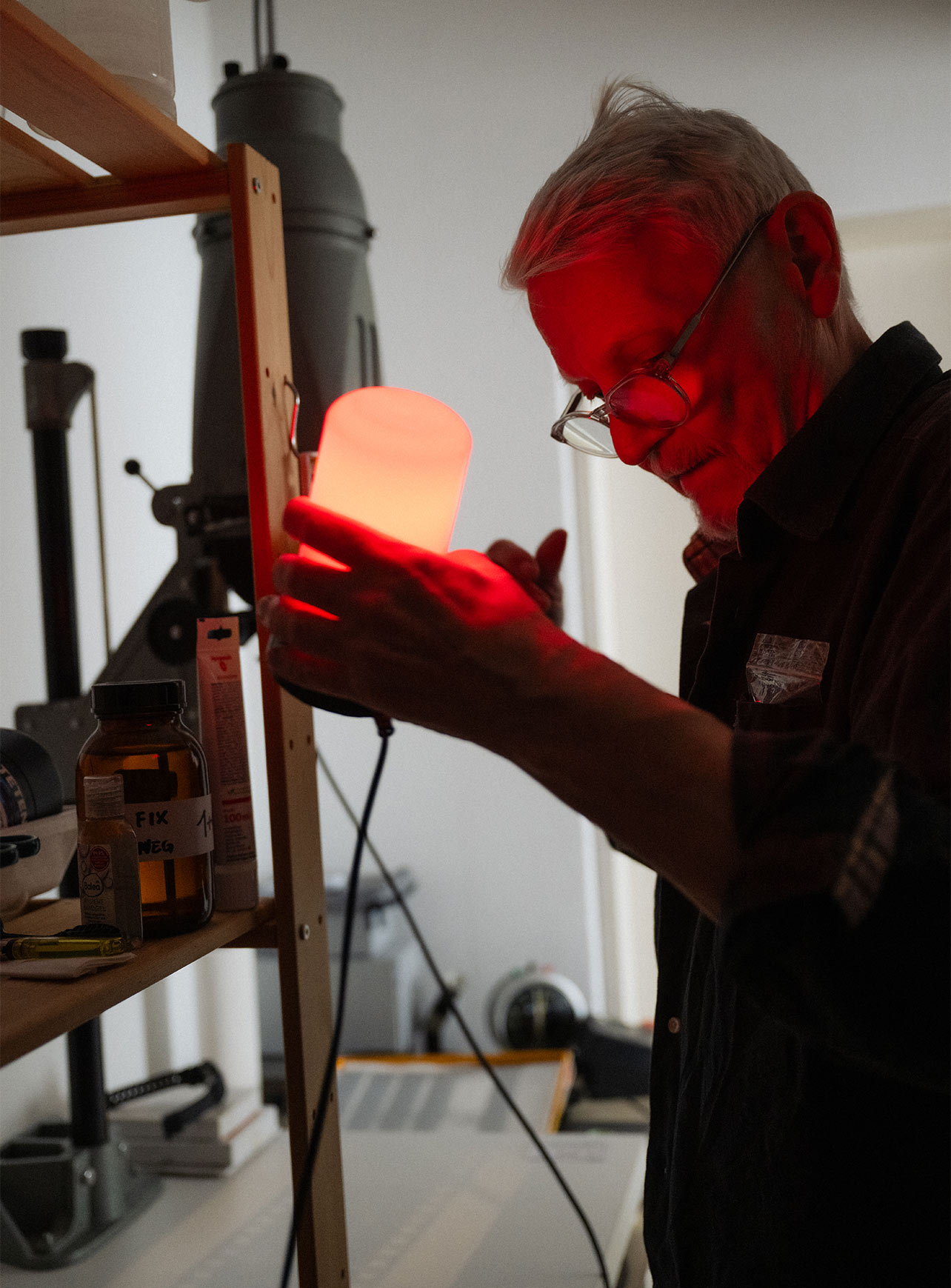
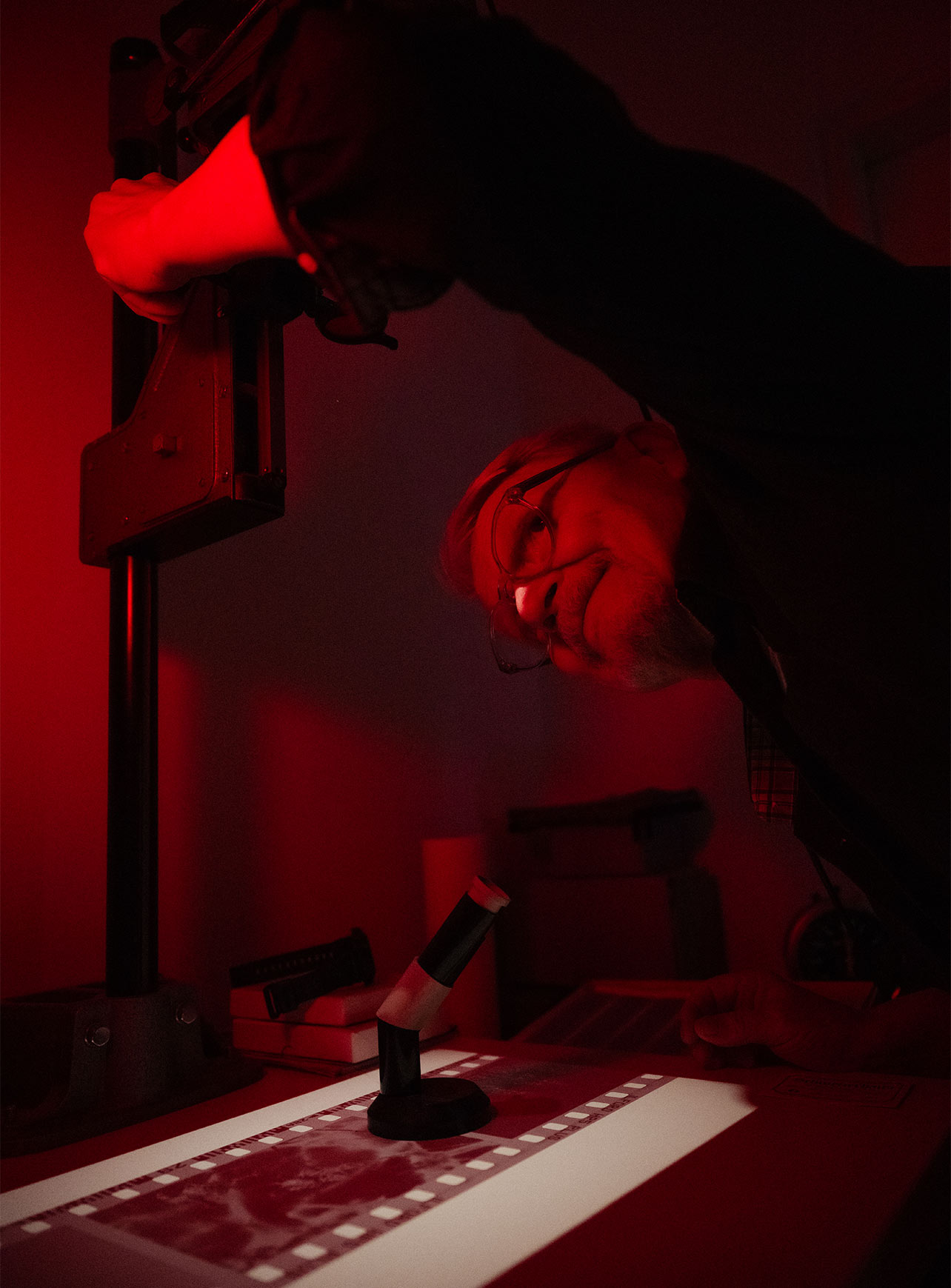
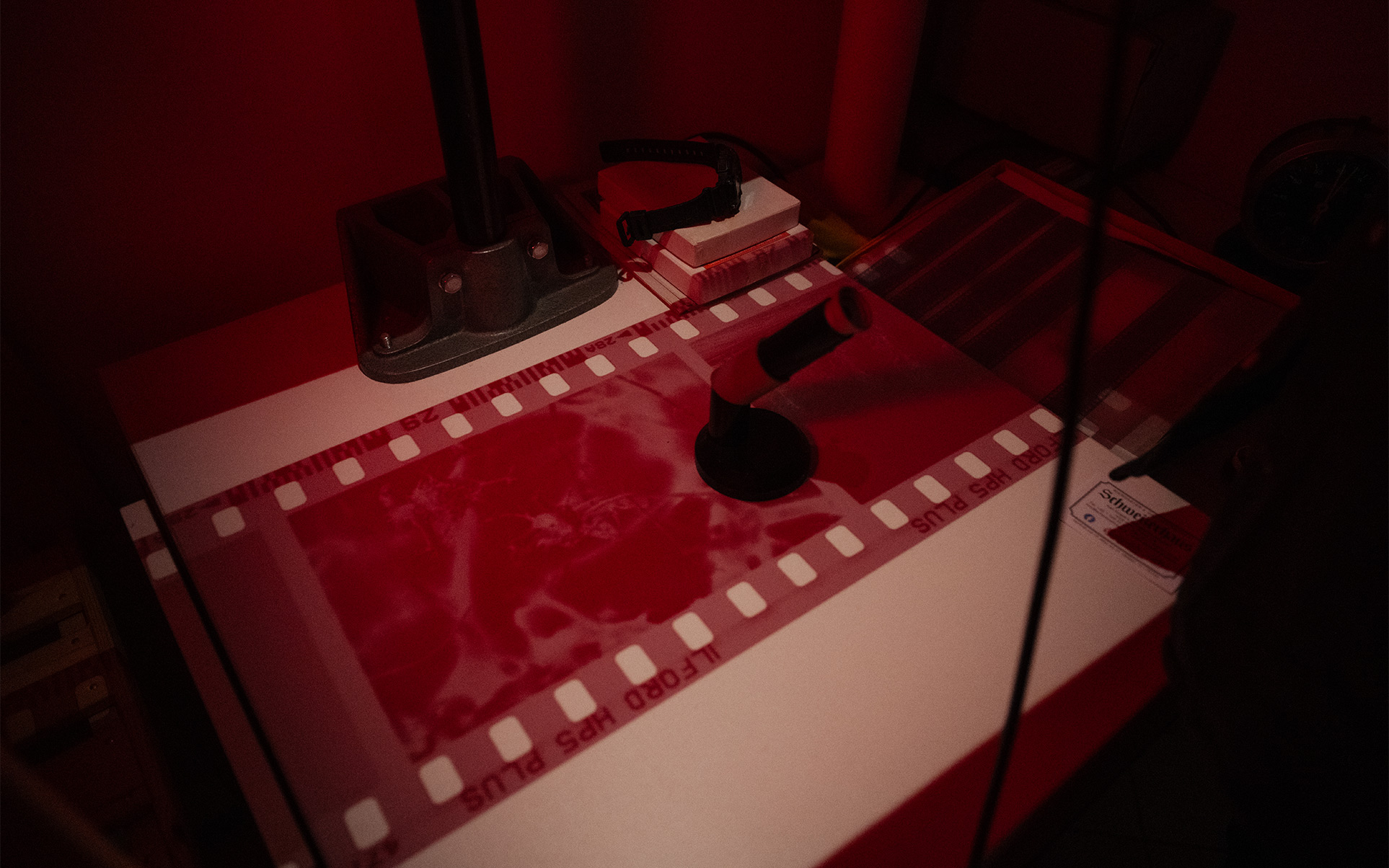
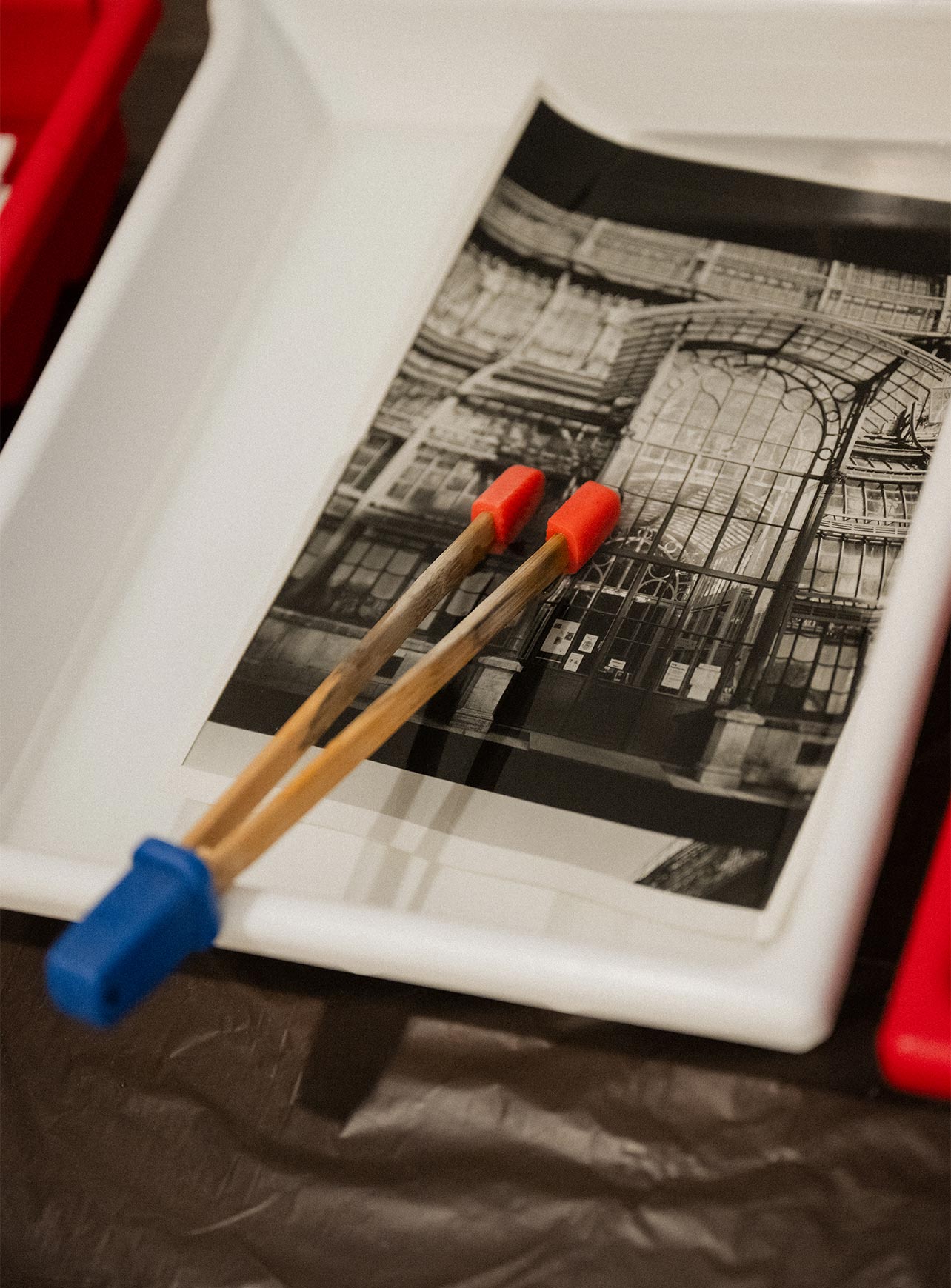
What still fascinates me today is precisely the materiality of the analogue process. In the darkroom, you have enormous control – over black levels, contrasts, chemical processes. In a way, you work like an alchemist. At the same time, conditions have changed significantly. Many materials are harder to come by today, or their quality is different from what it used to be. Certain chemical components have disappeared, silver has become significantly more expensive, and photographic papers have changed too; even if the name and packaging have stayed the same, their composition is no longer the same.
Can you give us an example?
I have worked with classic baryta papers for years – and you notice these shifts very clearly. This has not made the analogue process impossible, but it has made it more demanding. It is also interesting to see how young artists deal with this today. There is certainly a return to analogue photography, in cities like Berlin, for instance. However, the process often no longer ends with the classic positive: many scan their negatives and continue working digitally. The complete analogue workflow from negative to finished print has become rarer, usually practised by those who make a very conscious decision to do so.
You now work almost exclusively in analogue and in black and white. Are there still exceptions in your practice?
Almost exclusively, yes. There are a few exceptions. One of them is a digital piece I created, using a plotter. That is more of a special case within my practice.
You have a recurring motif, the ‘red monkey’, which features in many of your exhibitions. What significance does this figure hold for you?
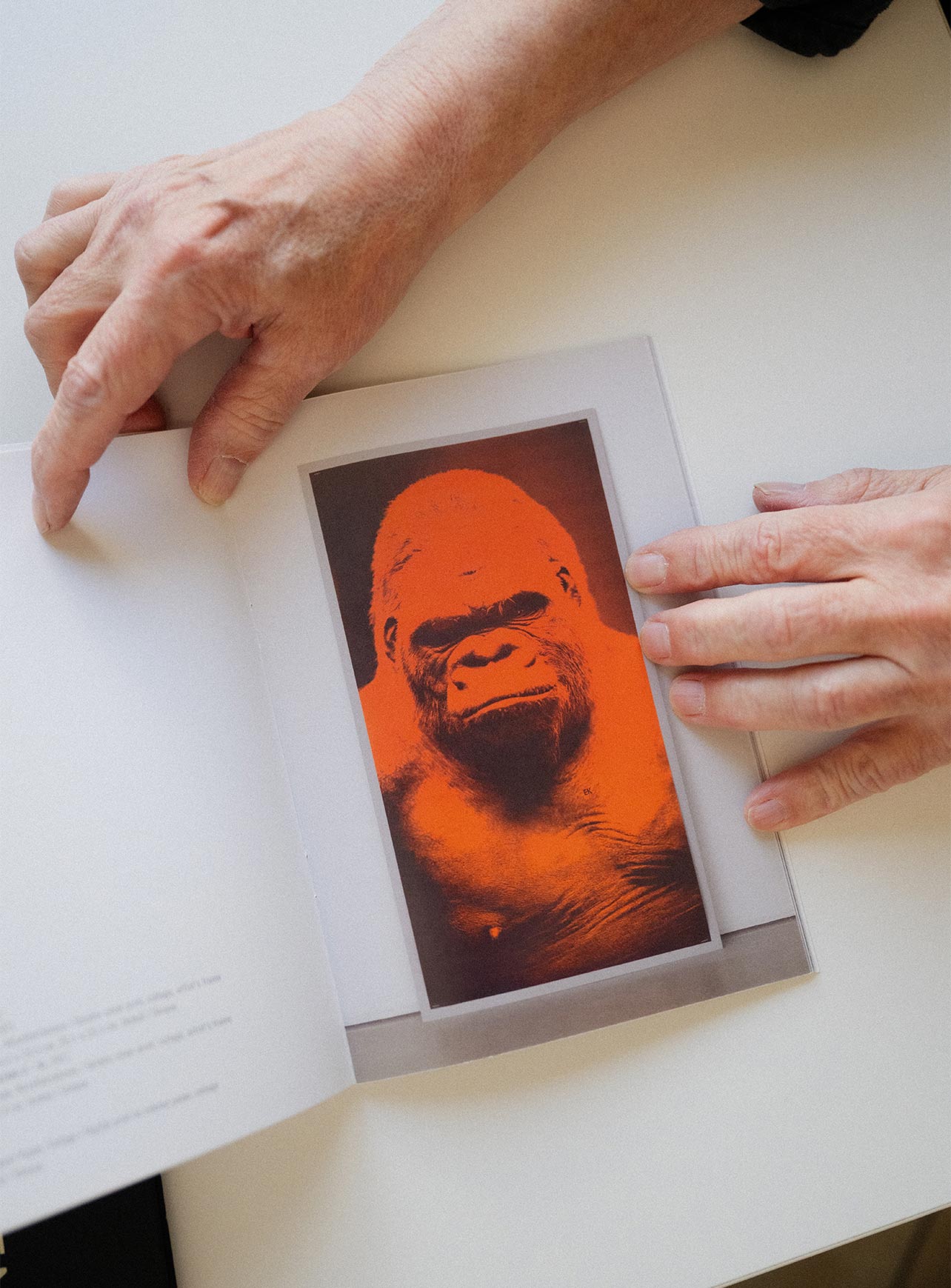
The ‘red monkey’ is a constant companion for me. I take it with me to every exhibition, regardless of the theme. In a way, it has an almost personal, biographical dimension. Asa child, I had a soft toy that I always had to have with me, and the monkey fulfils a similar function today. I photographed it at the Natural History Museum in Berlin. It is a historical gorilla, a figure from the 1920s that was displayed in exhibition contexts at the time. This history resonates, but it is not the only aspect. What is crucial is that the monkey functions as a recurring element, as a kind of constant within changing contexts. It is present in every exhibition and is usually allocated in advance, as it is a strictly limited edition work.
What does limiting yourself to black and white and analogue photography enable you to do, compared to digital image production?
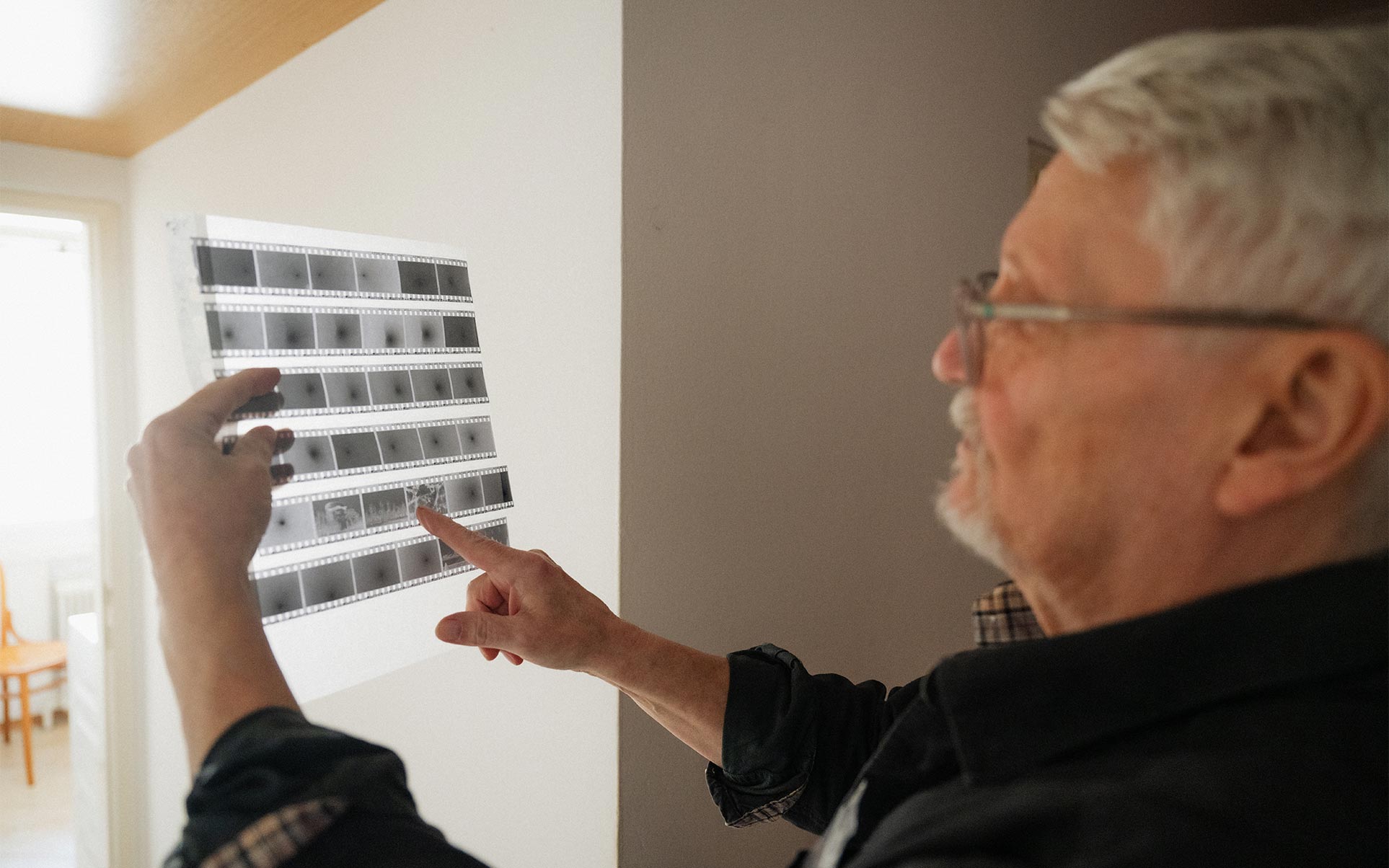
Restricting myself to black-and-white and analogue allows me, above all, a radical focus, both formally and in terms of content. My central motif is the sun. It is the fundamental prerequisite for all life and, at the same time, something that is the same for everyone – a universal constant.
What interests you about it?
I am not interested in the surroundings or a landscape context, but in the sun itself as the subject of the image. This focus is further intensified by the reduction to black and white and the analogue process: it is less about distraction or variation, and more about precision and repetition. At the same time, my training is strongly influenced by craftsmanship: at the Graphische, the emphasis was less on free artistic practice and more on a technical understanding of image production. My actual artistic development only took shape later, partly in Berlin, partly through working in a cinematic context. This combination of technical precision and reduction of content ultimately forms the basis of my work.
How did your work in film lead you to Berlin, and what role did this context play in your artistic development?
I initially worked with 16mm film and started out in Austria, at a trade union-owned film production company – a very hands-on introduction. Later I went to Germany and worked in Düsseldorf as a camera assistant at a film company that produced, amongst other things, cultural programmes for WDR. It was through this work that I also ended up in Berlin. My camera operator was from Berlin and worked there regularly, for instance on theatre productions around the Hallesche Ufer. That is how I first got to know the city through film. At the same time, it was there that I was confronted more intensively with artistic movements for the first time, such as ‘Actionism’.
How did you connect with the local art scene in Berlin, and which encounters were formative for you during this early phase?
I was twenty-one at the time and ended up in that scene rather by chance. A misunderstanding led me to Oswald Wiener, who ran the Exil bar with Ingrid Wiener – a central meeting place of that era. I quickly made friends there and grew into that milieu. I eventually even managed to work and live with the Wieners; my darkroom was set up in a small servants’ room. I gave up my job in Düsseldorf and moved to Berlin full-time. Crucial inspiration came from this environment, particularly through my encounter with Günter Brus.
What significance did Berlin, particularly in the 1970s, hold for your work and your life?
I refer to the years between 1973 and 1976 as a formative period. At that time, West Berlin was a central hub for film not only artistically but also in terms of infrastructure, with film laboratories, dubbing studios and a functioning production landscape – in contrast to Düsseldorf, where much had to be outsourced. At the same time, the city was a unique political space: no curfew, a distinct sense of freedom and a special social mix, for instance due to conscientious objectors from West Germany. I experienced Berlin in various phases, both in the 1970s and later, over a total of around three decades. For me, the city was always a place of energy and openness, a state of permanent presence, a kind of ‘eternal youth’, characterised by exchange and an artistic milieu.
And I suppose it was also simply very inspiring artistically?
Absolutely. The encounters with artists like Günter Brus were formative. Not, however, in the sense of grand discussions or direct collaboration. We tended to meet by chance, say at the bar, and exchange ideas on specific occasions. What you also saw in the process were the realities of life within that scene. Brus, for instance, was by no means established or financially secure at the time. Many of the artists lived in precarious conditions, were partly supported by their community, even in a very concrete sense. There was little money, but a form of mutual support.
Was there a moment when your understanding of art fundamentally changed?
Yes, definitely. A decisive moment for me was watching Günter Brus draw. That consistency, page after page, without interruption, made a deep impression on me. At that moment, I realised that art is not about individual images, but about an attitude, a continuous practice. Oswald Wiener’s thinking also had a formative influence on me, particularly the idea of ‘inner images’.
If you had to reduce your artistic practice to its core, how would you describe it?
At its core, I see my practice as conceptual. I am less interested in a specific medium than in a question that expresses itself in different forms. I initially worked a great deal with film, particularly in 16mm and Super 8, and was interested in the immediacy of subjective, everyday images. This gave rise to my own film works. At the same time, it became clear to me that, in the long term, film was too heavily dependent on production structures and collaboration for my purposes. I therefore moved away from it and worked more conceptually, and at times in a painterly manner, deliberately free from traditional expectations regarding technique or perfection. Photography emerged from this as the medium that affords me the greatest independence and allows me to realise my concepts most directly.
Your work encompasses various media and creative phases. How would you structure this development?
I work in blocks of work. Over the course of several years, self-contained groups of works emerge. One example is a longer phase during which I worked in a painterly style and also exhibited, including at the Dominican Monastery in Vienna. In parallel with this, I have repeatedly engaged with performative approaches. What is important here is that these phases are, for me, complete. I move very clearly from one block of work to the next. Today, my practice is focused on photography – whilst it has always been present, it now takes centre stage.
How do you work in concrete terms today? Is there such a thing as a typical working day or studio day?
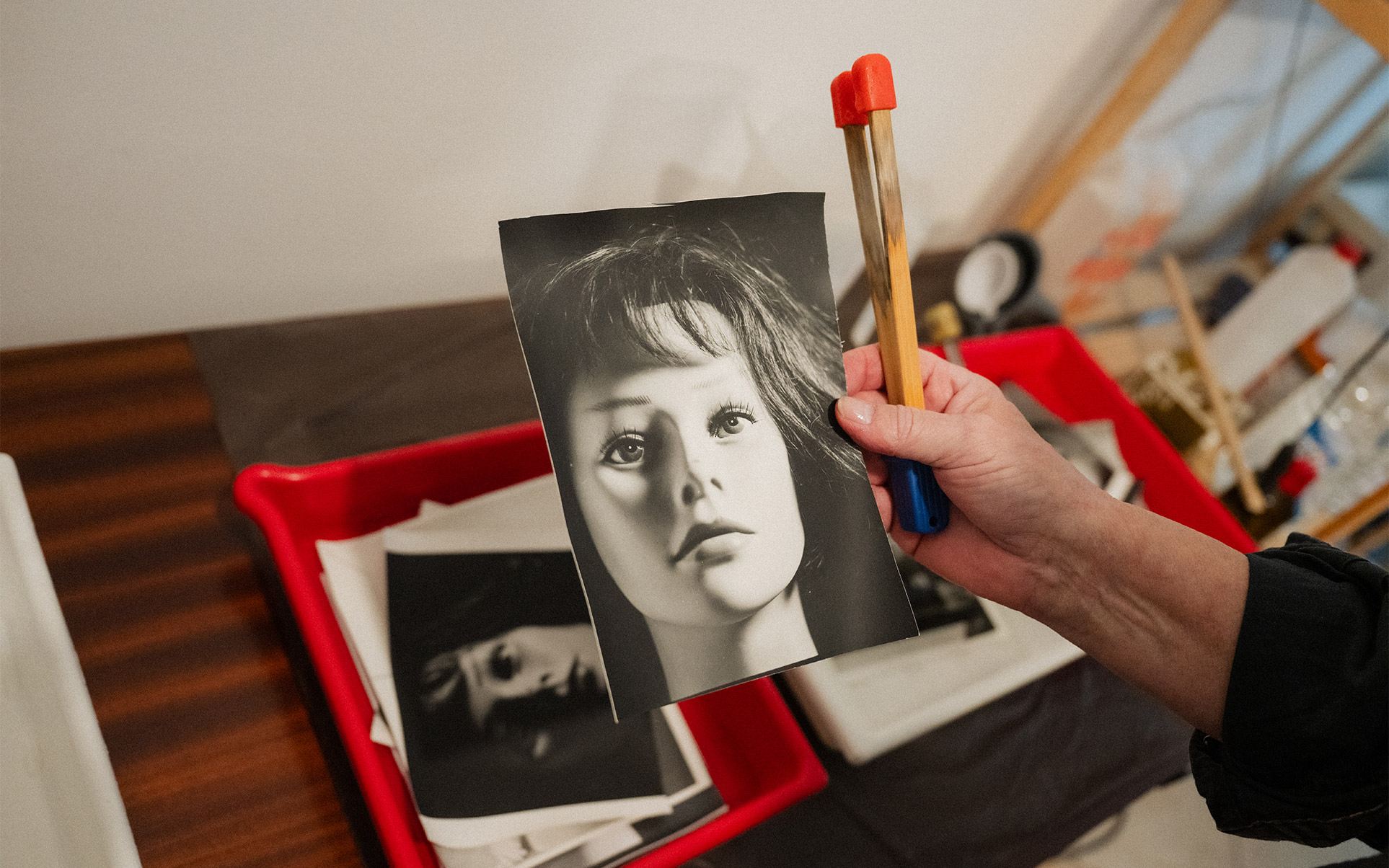
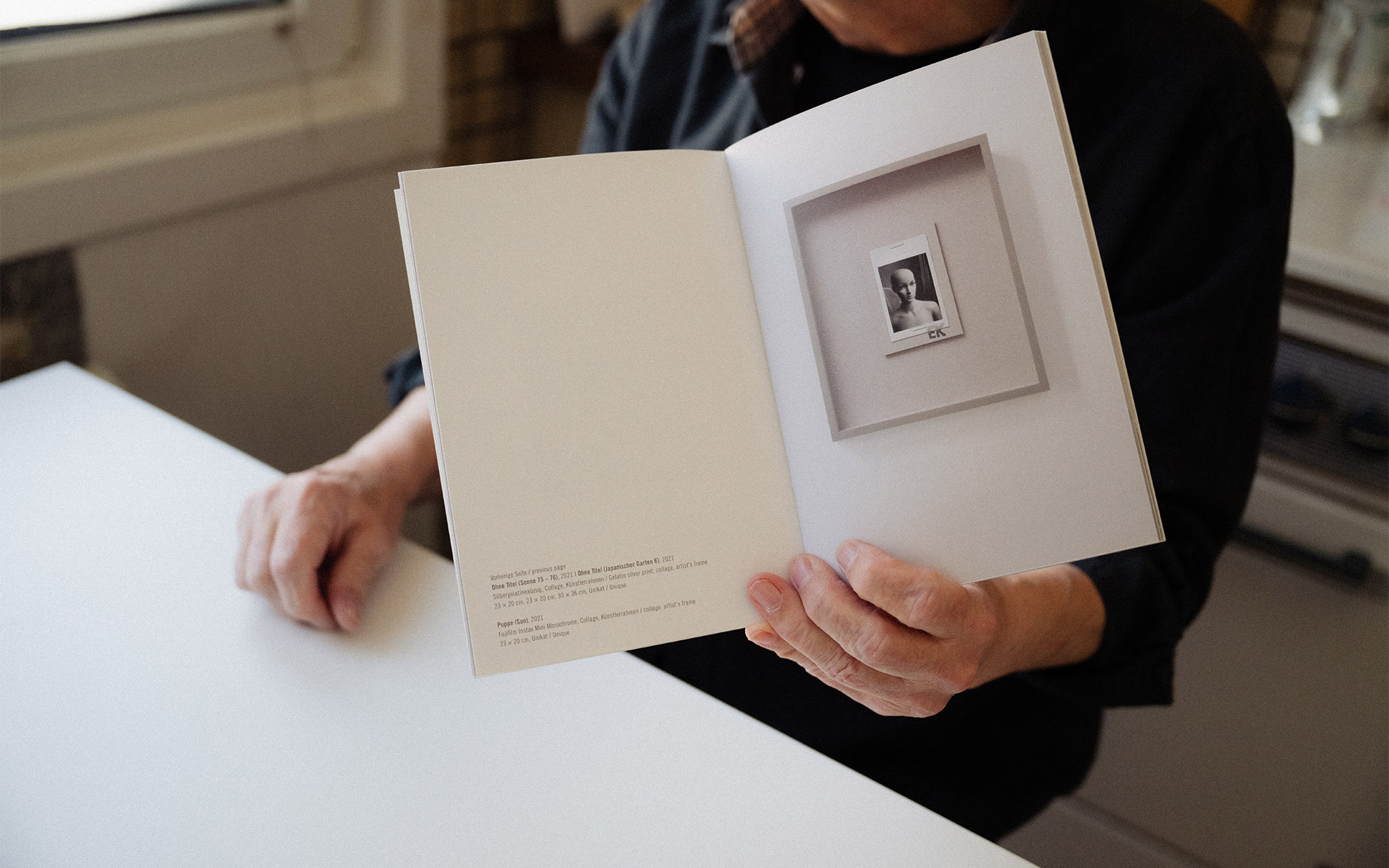
I do not have a traditional studio in the strict sense of the word. My work is not tied to a fixed location or daily routine. Much of it arises situationally, and from whatever interests me at the time. However, there are recurring motifs and series, such as mannequins or objects like a hairdressing head, which I work with. These elements interest me as image carriers because they can produce different effects depending on the light and staging. Generally speaking, my themes often revolve around elemental motifs: water, earth, air, fire, as well as certain influences from Japanese and Chinese aesthetics. I am particularly interested in reduction and simplicity: a single motif, clearly defined.
You have an upcoming exhibition. What will be on display there and how do you work within the context of an exhibition?
In the upcoming exhibition, the sun and the classical elements will once again take centre stage: namely earth, water, air and fire. The sun remains my central motif. The presentation is also an important aspect for me: I often design the lighting for exhibitions myself. In doing so, I draw inspiration from Japanese lighting concepts, among other things, where light often comes from a low angle and creates its own atmosphere. As for the gallery, I have been working with Galerie Guido W. Baudach for many years. This collaboration is important to me because it gives me great freedom, both in terms of content and execution. The upcoming exhibition will open on June 11 at KOENIG2 by_robbygreif in the gallery’s renovated and expanded spaces.
Text: Livia Klein
Photo: Christoph Liebentritt