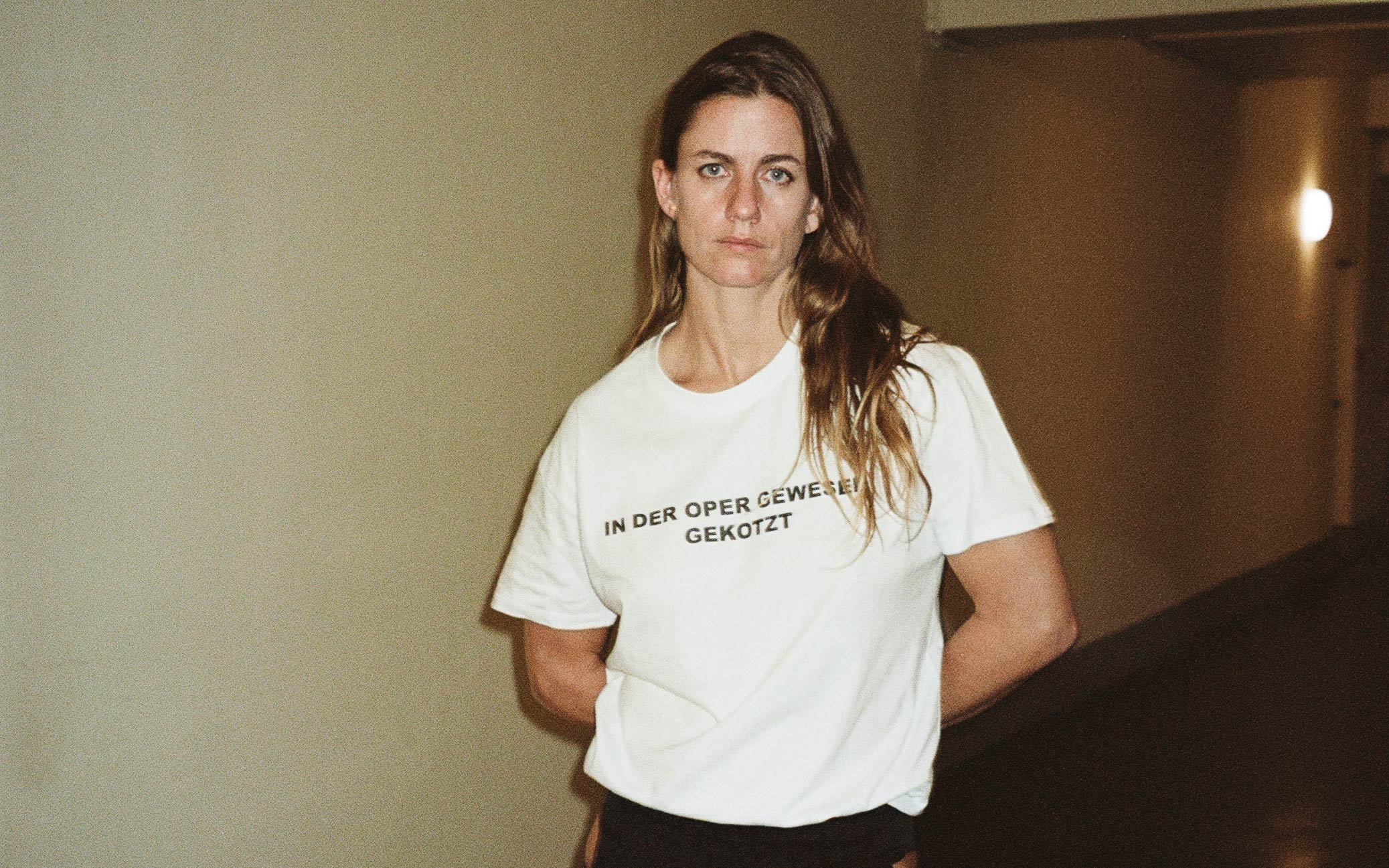
Florentina Holzinger's work combines dance, theatre and performance art. Holzinger and her team work with the naked body, which is presented not only as an object, but tells the story of the dealing with the self. Through her work, Holzinger creates a collective aspect that transfers from the stage to the auditorium. The magazine Theater Heute voted her Director of the Year in 2023, and Monopol awarded her Artist of the Year in 2024. Holzinger will represent Austria at the Venice Biennale in 2026 with Seaworld Venice.
Florentina, you trained as a choreographer – did you come to art through dance?
Yes. However, I only came to dance quite late, at the age of 15 or 16. My technical level was not high enough for the entrance exams at a dance academy, so I ended up training in choreography in Amsterdam. There, it was pretty much up to you to define and interpret dance for yourself.
So it was a very free course of study?
At first, I found it aimless. Nevertheless, it was an eye-opener because it was about designing your own pieces and works; translating content with your body. In the experimental fringe, I was given a lot of freedom and encouragement. And that's how it all came about.
Your work seems to have struck a chord early on. Was it simply the right moment for performance?
I don't truly know, because in the dance world itself, our work didn't feel particularly unique. I worked a lot with Vincent Riebeek, and we had few boundaries; we wanted to try everything. At the same time, we saw ourselves very much as part of a long tradition, both in performance art and in dance. We wished to challenge all of that!
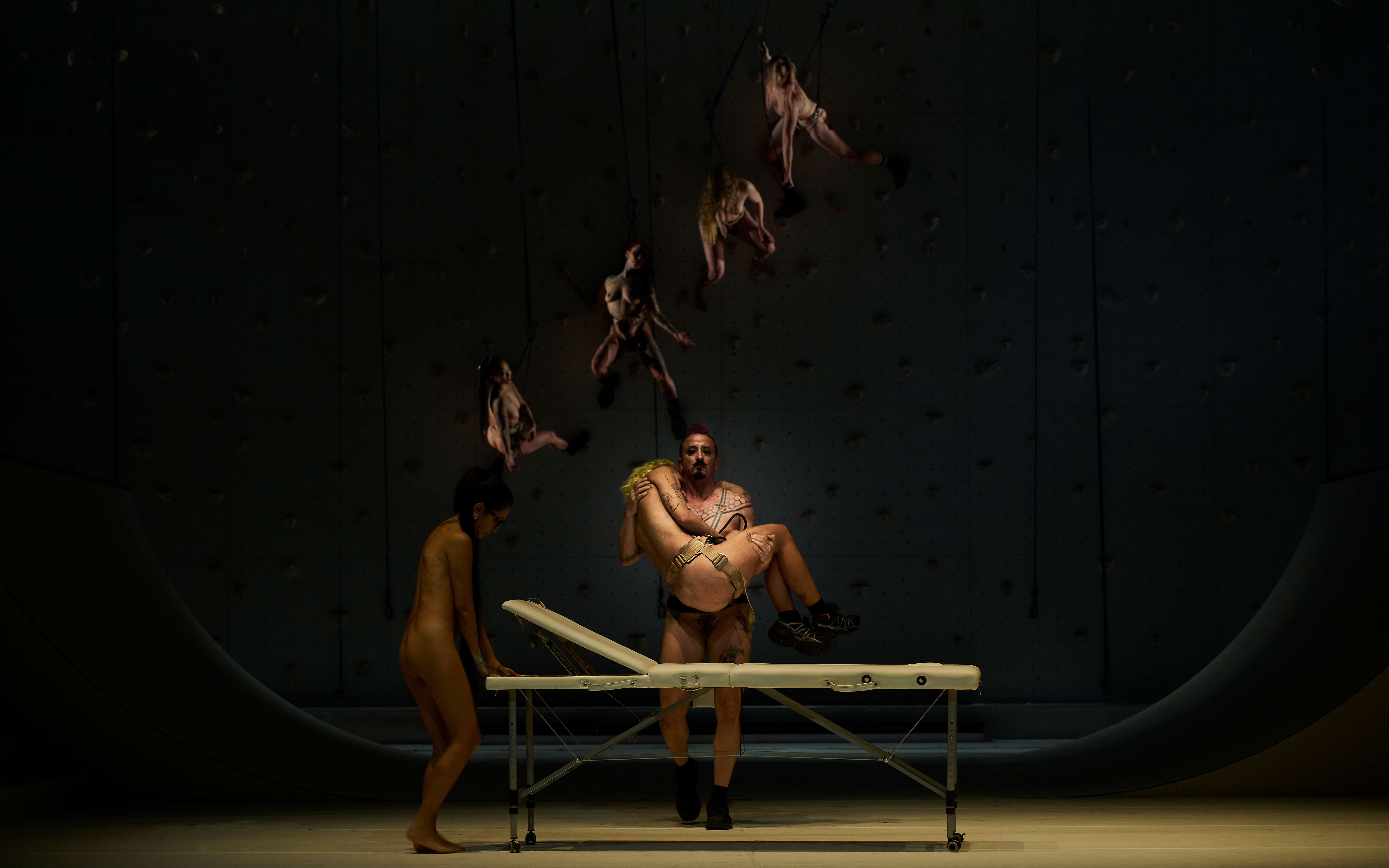
SANCTA © Mathias Baus_courtesy Opera Stuttgart
Speaking of challenging tradition: was it more dance-based for you, or did you also have areas such as Viennese activisim or the Spanish avant-garde theatre and performance group La Fura dels Baus in mind as inspiration?
We were interested in all of these things. Art, dance, film, pop culture - there was never any difference. Dance was less about beautiful form in space and more about openness. Experimental dance is much more open than theatre, which is more about content.
You talk about the openness of dance: does this go hand in hand with a strong autonomy of the protagonists?
Absolutely! In a conventional dance context, the body is objectified. You are part of a company where everyone has to fulfil the same form. But from the beginning, I had my own definition of dance and dance technique in order to escape the cliché of technical skill, beauty and aesthetics.
Speaking of objectification, in your performances, you succeed in bringing the subjective to the forefront. One gets the feeling that the performers are portraying themselves?
I have always been very concerned with the negotiation of the self. Real people are on stage, real life is being negotiated. I don't falsify anything to anyone, in that regard.
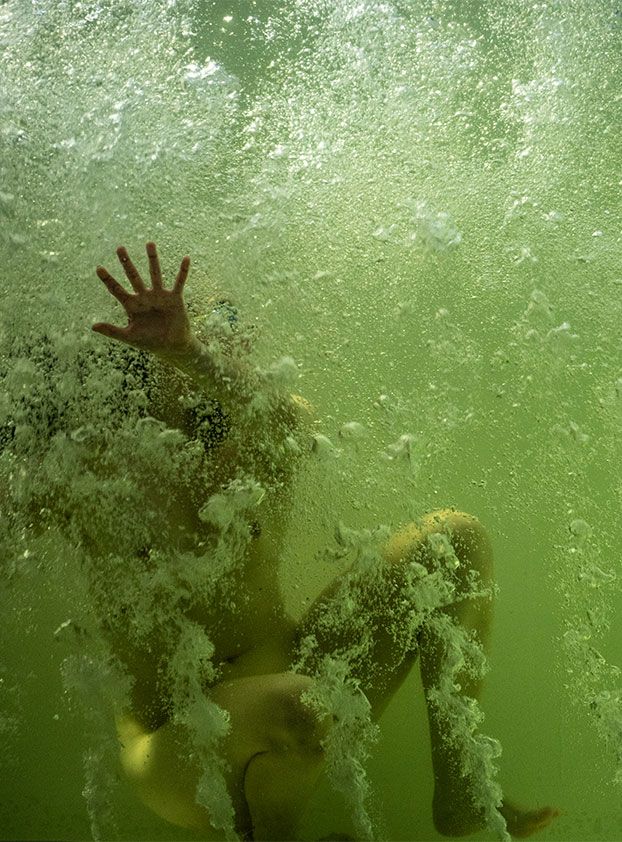
Ophelia's Got Talent © Nicole Marianna Wytyczak
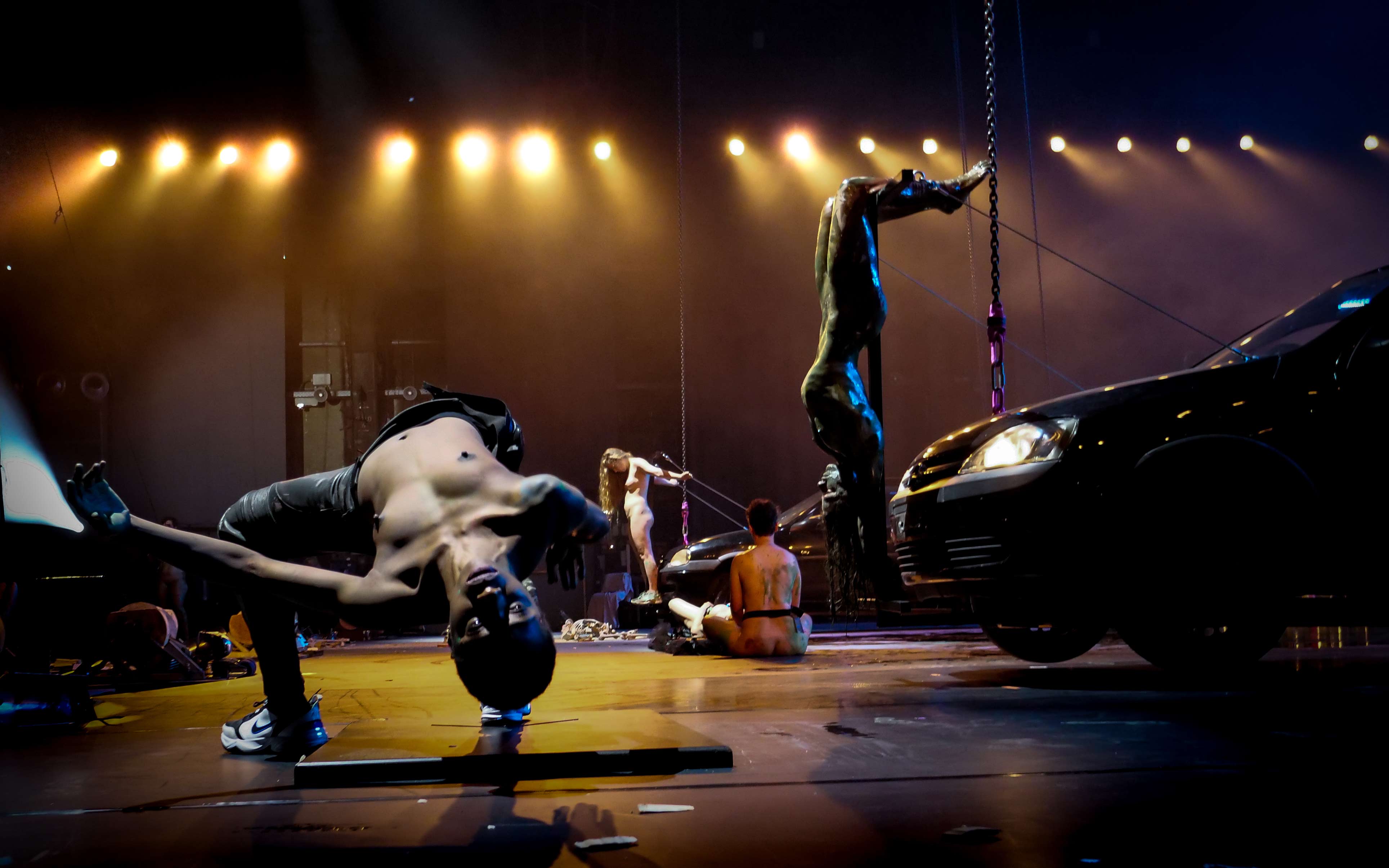
A Divine Comedy © Nicole Marianna Wytyczak
Speaking of not pretending, what about the effects?
Regarding effects, we like to cheat, of course. Sometimes more, sometimes less, obviously. I wouldn't have devoted myself to theatre if I were not fascinated by the possibility of illusion.
After your performances, are you often asked if it was real? Does that bother people?
People find it difficult to distinguish between real and not real. People have the most absurd theories…
Such as?
When we hang ourselves by the skin on our backs as part of a show, people often assume that it's fake! They cannot imagine how it could be possible. But I genuinely have no idea how I could do that without a huge Hollywood budget!
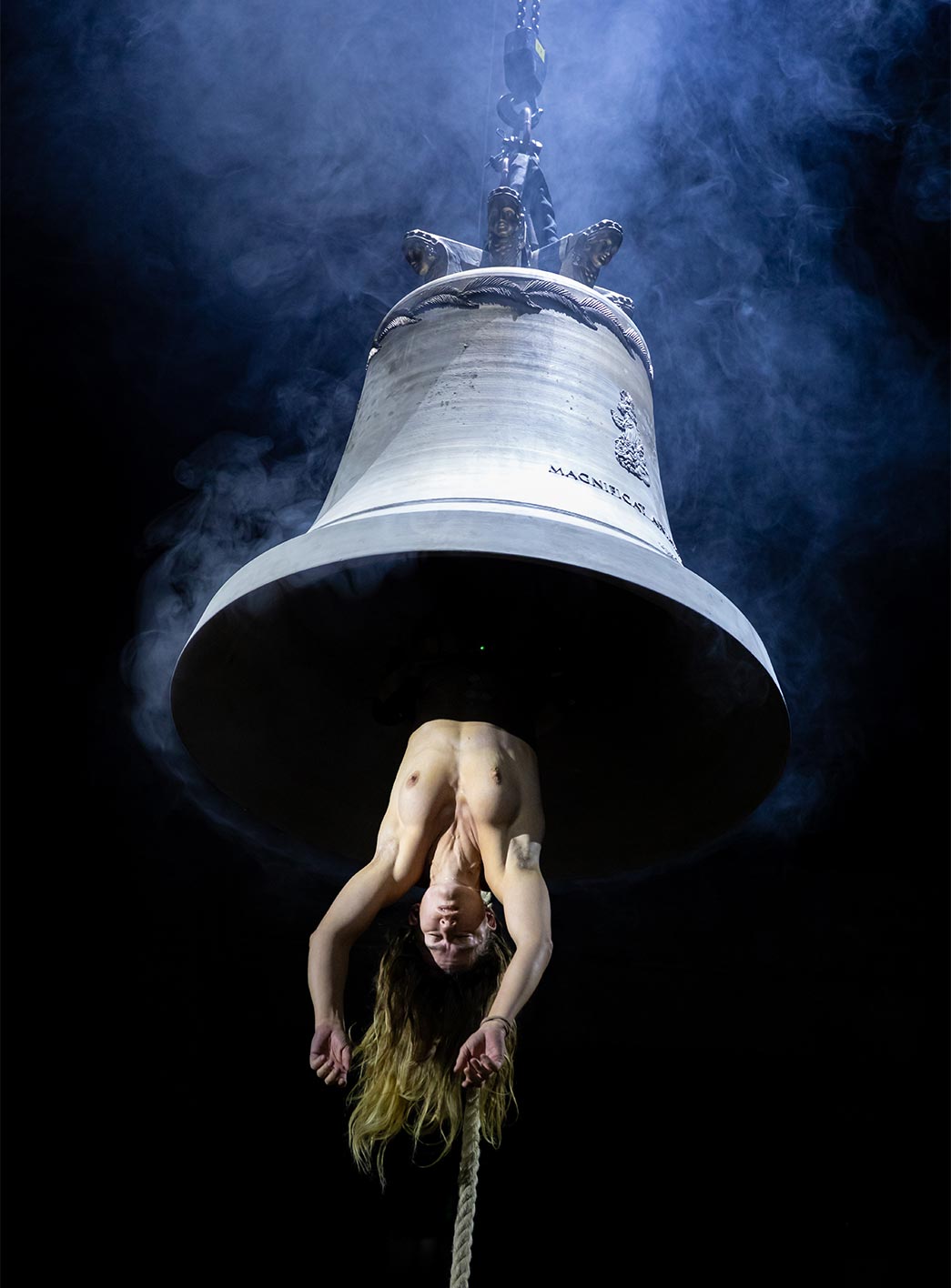
Etude for Church © Mayra Wallraff
Everything seems possible...
The questions of authenticity and fakery are very controversial topics. That's why I want to address them, and to show people how much manipulation is often involved. In general, how we treat our bodies is a big issue.
For you, the body is a political body. Is it about triggering something through the coming together of the performers' naked bodies – a feeling of togetherness?
Yes, definitely. After 15 years of performing with my body, it's becoming increasingly clear to me that the real strength of the work doesn't lie in the content. It's about the community that has been built up over years of collaboration, and which stands for itself and behind something. It's the big collective aspect that seems relevant to me.
Do you feel that you can change the world with your work?
Yes, I do believe that I can change the world. Step by step, piece by piece. With each new work, I try to gain a little more understanding of humanity. After shows, people often come up to me and tell me that they have never seen things ‘like this’ before. I think that sounds like a learning curve, does it not?
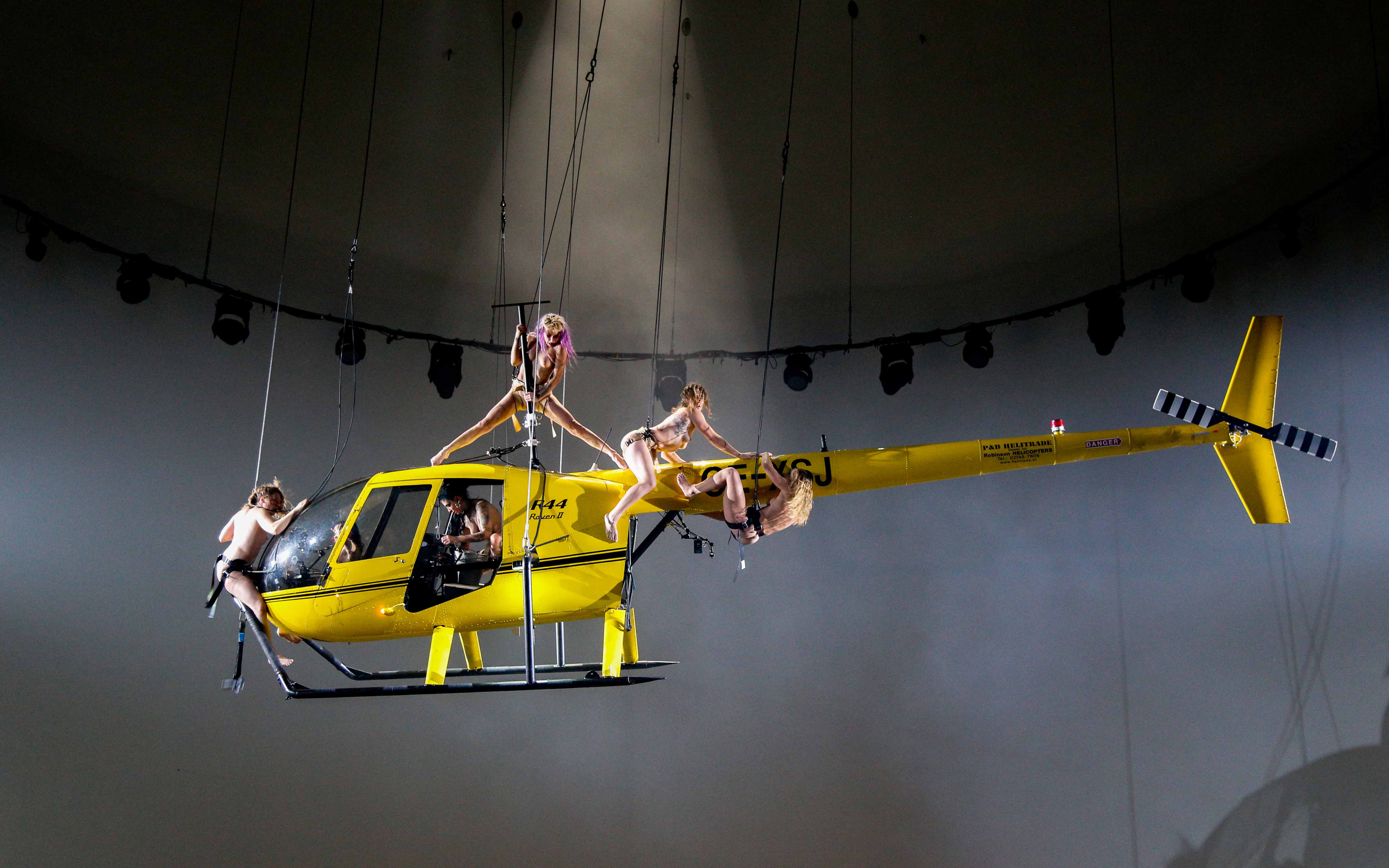
Ophelia's Got Talent © Bahar Kaygusuz
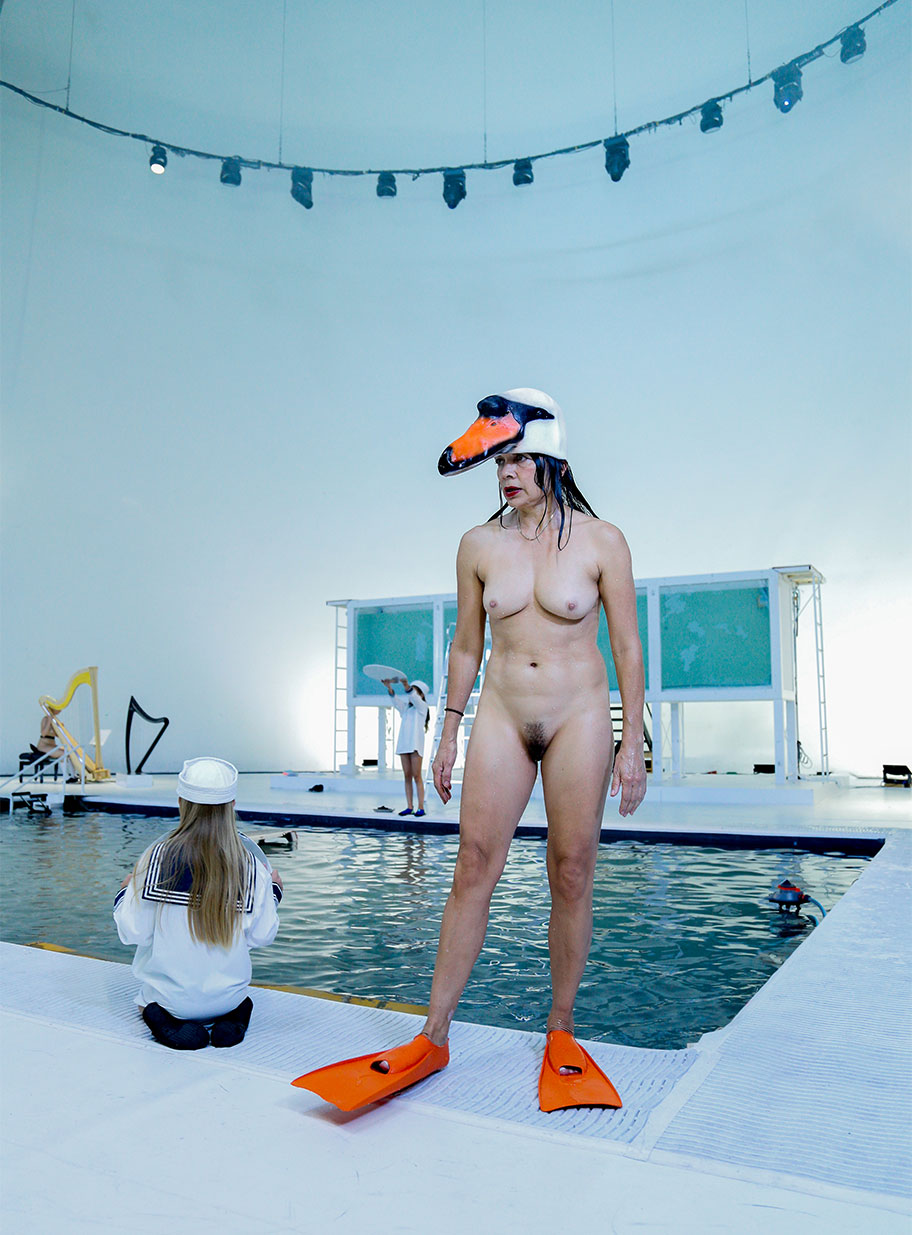
Ophelia's Got Talent © Bahar Kaygusuz
The collective you create in your work is something unique – but at the same time something you can't touch. Your art is ephemeral, by definition, so what remains of it?
That's a good question. I'm careless when it comes to preserving my work. There are videos, but ultimately they are poor recordings that only really serve the purpose of allowing us to look back briefly.
Would you like to change that?
I have mixed feelings about that. Sometimes yes, and sometimes it's the last thing I want to spend money on. The shows are about sharing this moment together, and the nature of that moment is that it changes from second to second. Besides, the work isn't made for the screen, but for real bodies to tell stories, about real bodies.
Do you ever think about building a legacy?
It's important to me that the work can continue to evolve. And in terms of legacy, I'm rather afraid of that. There's a lot of that, systems, methods, institutes and so on.
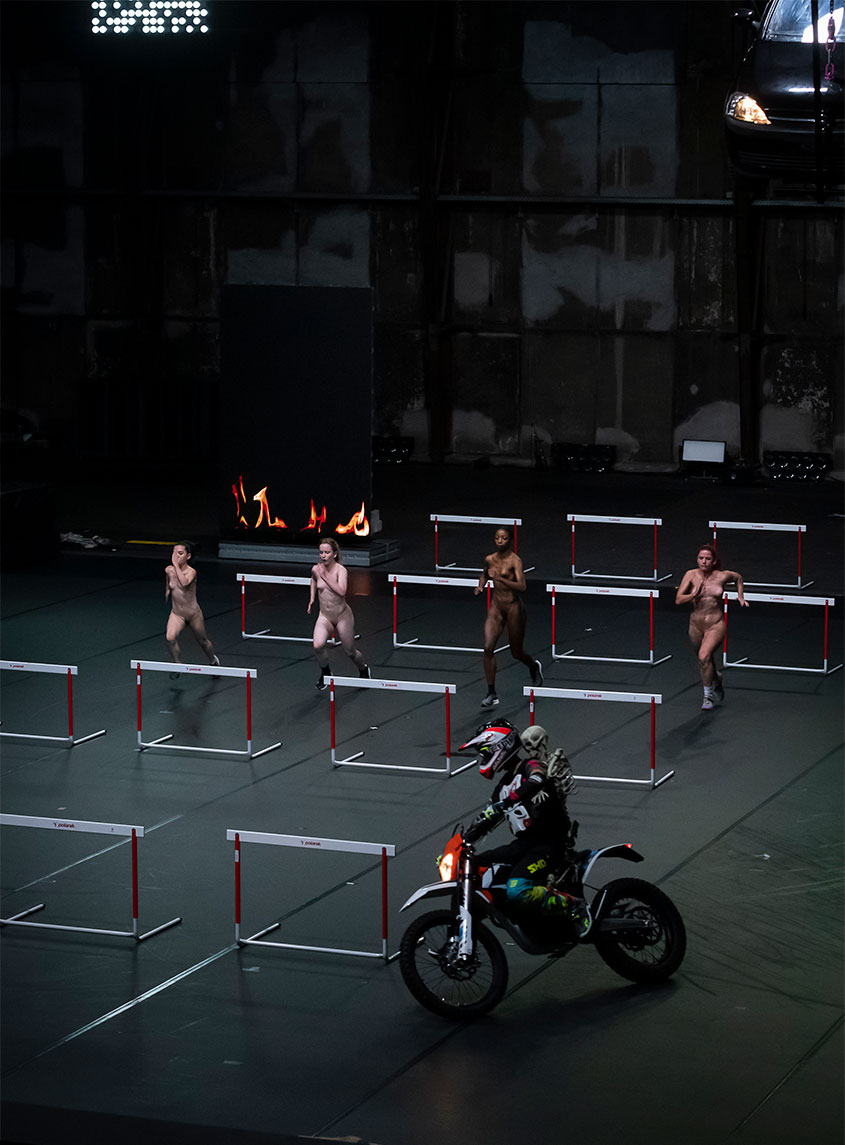
A Divine Comedy © Katja Illner
The Marina Abramović Institute, for example!
To be honest, I do not have a system and if anything, I am rather proud of that. I think it's cool when things can change, and some things happen organically. Then again, never say never. With the Venice Biennale, for example, there will be a catalogue of the work for the first time.
And you are now represented by gallery Ropac. How did you make the transition from theatre performance to the art world? Or was it always one and the same thing for you?
Essentially, I don't like to differentiate. I don't feel any more or less of an artist now than I did before. Every single project is different from the one before. For me, it was completely different to have done dance first and then something at a municipal theatre like the Volksbühne Berlin, and then at an opera house like the Stuttgart Opera House. For me, the difference lies more in the specific possibilities within different contexts. In general, I enjoy it when the work opens up to other people again and gives them access.
How will you design institutional exhibitions where people are not sitting but moving around?
I will also take a very performative approach to things there. The body will play a major role, and everything will depend on it.
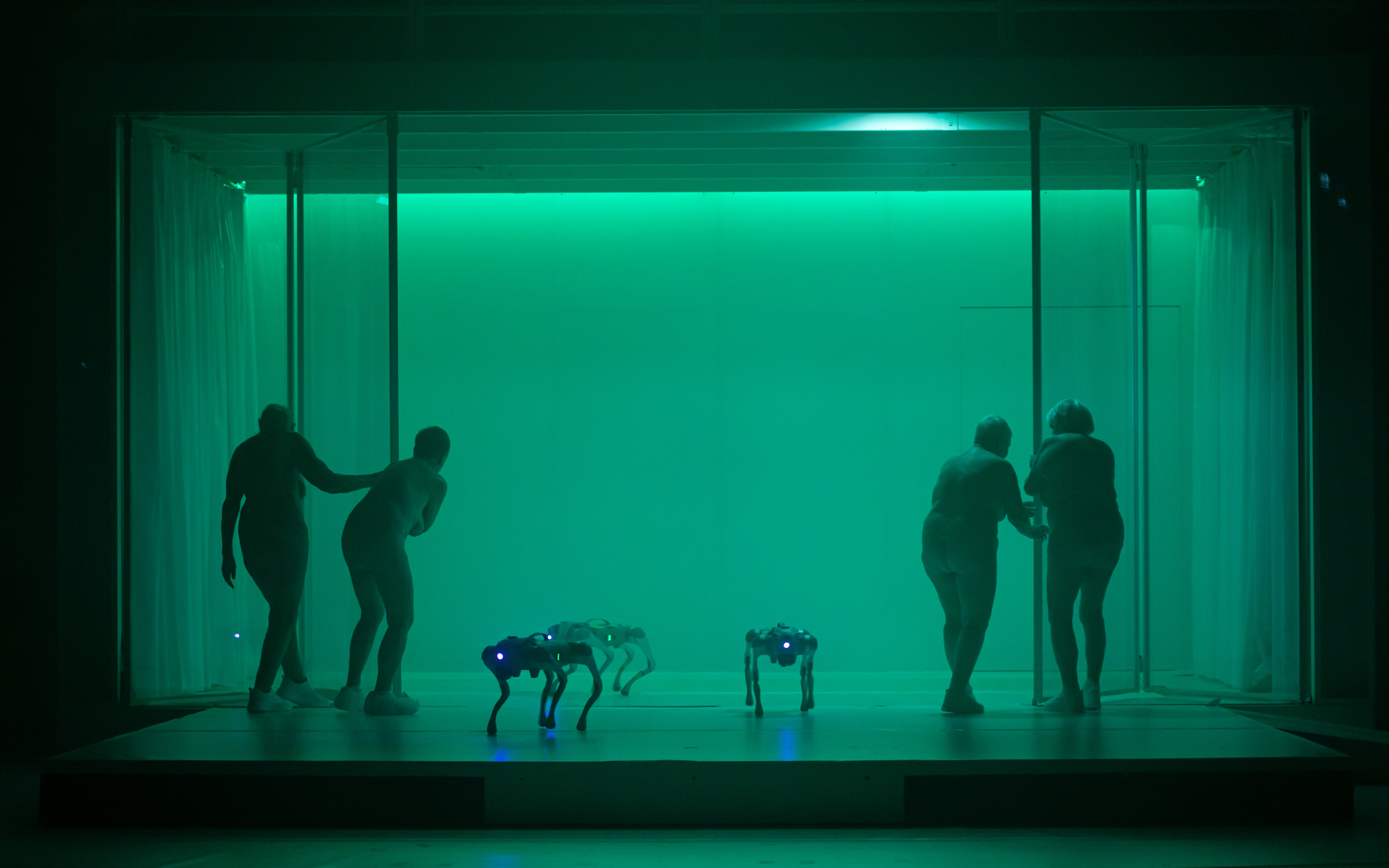
A Year without Summer © Mayra Wallraff
Does the approach remain the same, regardless of where your work takes place?
Yes, I approach every new show in a similar way. I look at the space, let it inspire me and think about what would be cool to do there. An important aspect of my work is - what is the visual element and the world you create in the space? For me, that is no different in the context of an exhibition. We also plan to take the Venice installation on tour, but it will then be strongly influenced by its new surroundings.
The object remains...
But the body changes! The exciting thing about our proposal for Venice is the format, which is unusual for us, as it doesn't have the dynamics of a show. For the first time, a more installation-like setup will take place in the same location for a longer period of time: seven months, six days a week, eight hours a day. It's a temporary takeover of this pavilion.
What was the starting point for Seaworld Venice? Was it water?
Certainly, water is the important element in Venice. A significant resource that cannot be ignored.
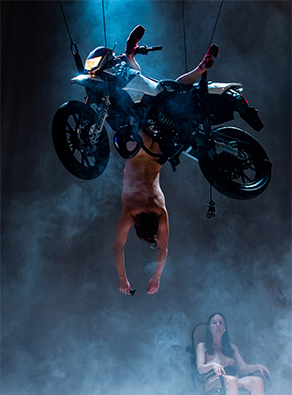
TANZ © Nada Žgank_courtesy of City of Women
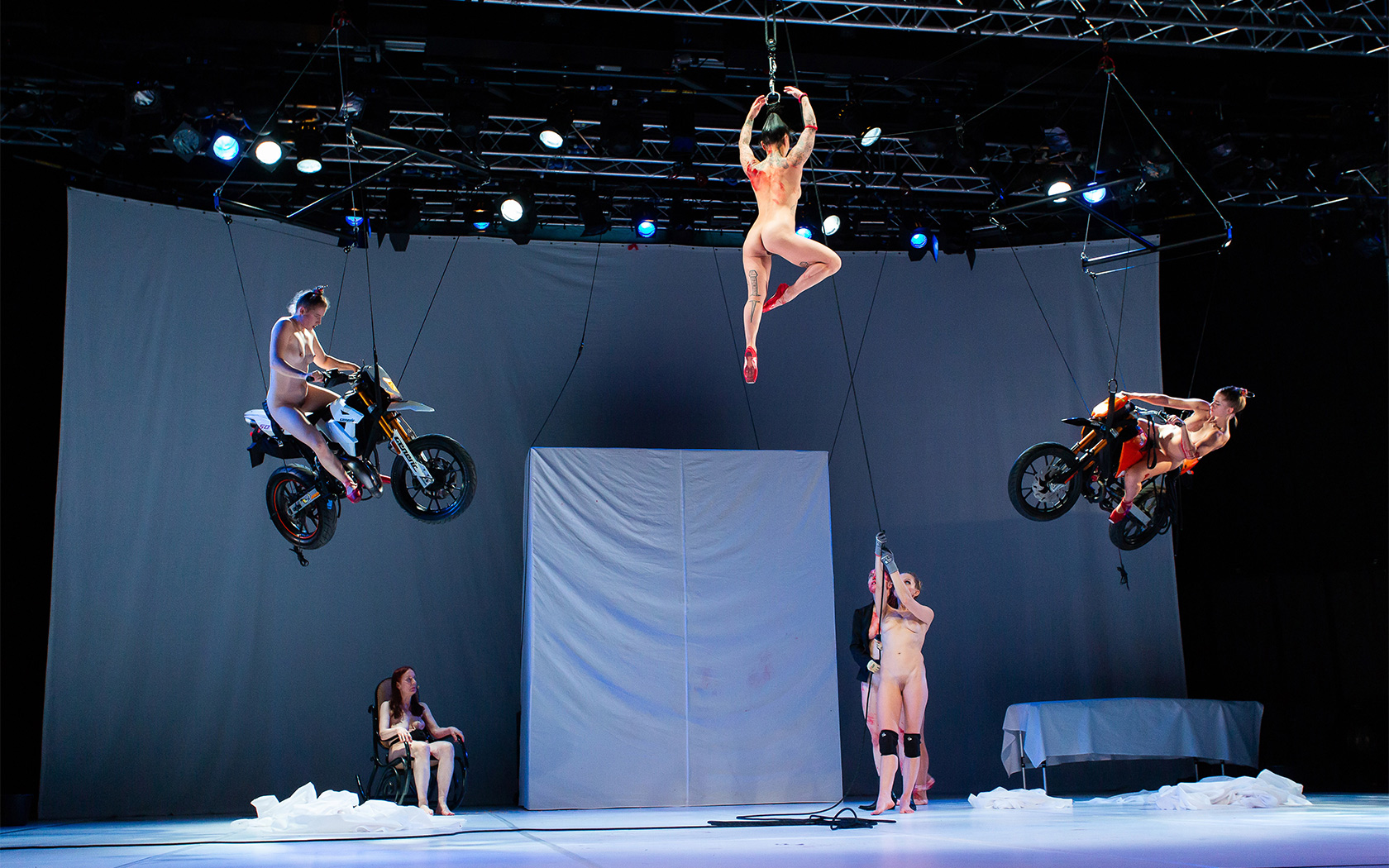
TANZ © Nada Žgank_courtesy of City of Women
You mentioned seven months during which you will be performing in the pavilion. Did that appeal to you, to become a little more settled?
Well, we still have three shows that we are touring at the same time! Fortunately, however, our team is so large that we can pass the torch to each other.
How many people are we talking about?
In total, there are more than a hundred people working on a wide variety of things – and that is without an orchestra or choir! These are people I have performed and toured with a lot. The pavilion remains occupied when the shows are on tour. There's a big mechanism behind it.
That all sounds like hard work, extreme concentration and discipline. Are you a very disciplined person?
I am really just like my work, the product of many contrasts. In certain areas, I am extremely disciplined, and in others, not at all. Some scenes are performed with incredible precision, while others are complete anarchy. In my opinion, this results in the most exciting dramaturgy. I've spent a lot of time studying ballet and sports, so I know what physical discipline is. Putting these shows together takes a lot of work! Some people say, “Ey, Florentina is a crazy bitch because she's doing this crazy stuff.” But I am not, or at least not only that! Our everyday work can be very monotonous and grey, and many of us come from dance and are used to training.
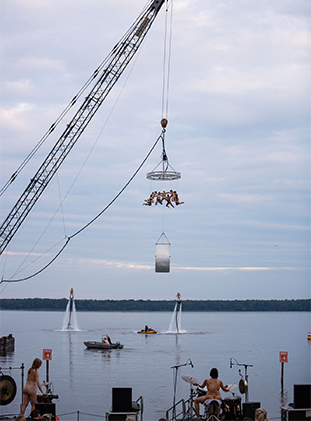
Etude for a Crane © Tammo Walter
And you know what hard work is!
Yes. It’s familiar territory, this discipline. But for me, it’s often more important to show the undercurrents, what's hidden beneath the surface. The chaotic or ageing body, the body that is sick, or the body that fails.
How much improvisation do you allow in your shows?
There is a lot of freedom in the rehearsals. I work a lot on the concept before the performers come into the process – and then I already know quite a bit about the piece. The performers then give these ideas body and flesh – and a million more ideas! The more I work with certain people, the more individual freedom there is, because I rely on them one hundred per cent, and because they can also help shape the work. It often happens that I say to a person, you are this or that character, now go and develop your material. That's an important part of the work - it's very collective in that sense.
But the moment on stage itself is a controlled situation?
Yes. It's about safety, but also about the fact that there is a clear dramaturgy – some people don’t believe it. But we also construct this in such a way that it sometimes leads us astray, and opens up spaces where complete anarchy can happen, and the audience is also invited to take on a role that we cannot control. Freedom for us, freedom for the audience, that's an important element.
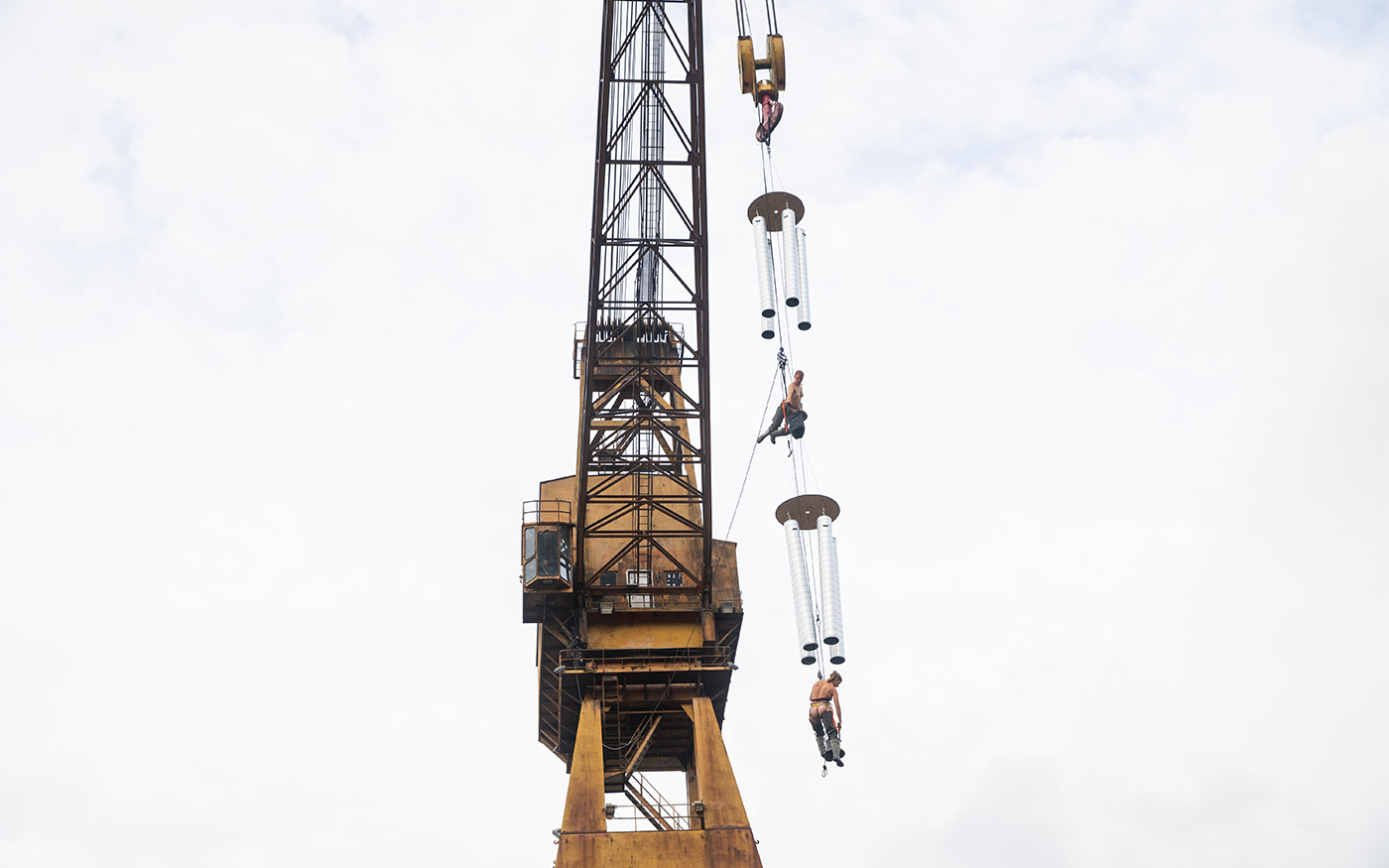
Harbour Etude © Nayara Leite_courtesy of BergenKunsthall
A Monopol magazine podcast was about your work and its connection to Actionism. The German journalists said: ‘Man, the Austrians are pretty radical.’ Do you agree?
It's a bit of a cliché, ‘the Austrians who don't give a shit.’ It may be because Germany has dealt with its own past far more rigorously. That's why there are more scruples and a different sense of responsibility. In Austria, we're just good at covering things up and getting ourselves out of trouble, but on the other hand...
...are we just more ‘radical’?
…there's more freedom to be brash! There's a certain culture. So it wasn't difficult to get my parents to come to my shows at first. They already knew from Austrian cultural history that people put shit into museums.
Since you just mentioned your parents, how much of your own biography flows into your work?
A lot of it has anecdotal and biographical elements, which is essential for the work. At the same time, I think it's important to bring themes in my work close to myself and the other performers so that it feels authentic and essential to us. Only then does the work fulfil my requirement of being truly political. We are told endless stories about our bodies, narratives that have had a strong influence on us and continue to do so. And we have at least as many new stories to tell – and as long as we are given a stage for them, we are happy to use it uncompromisingly.
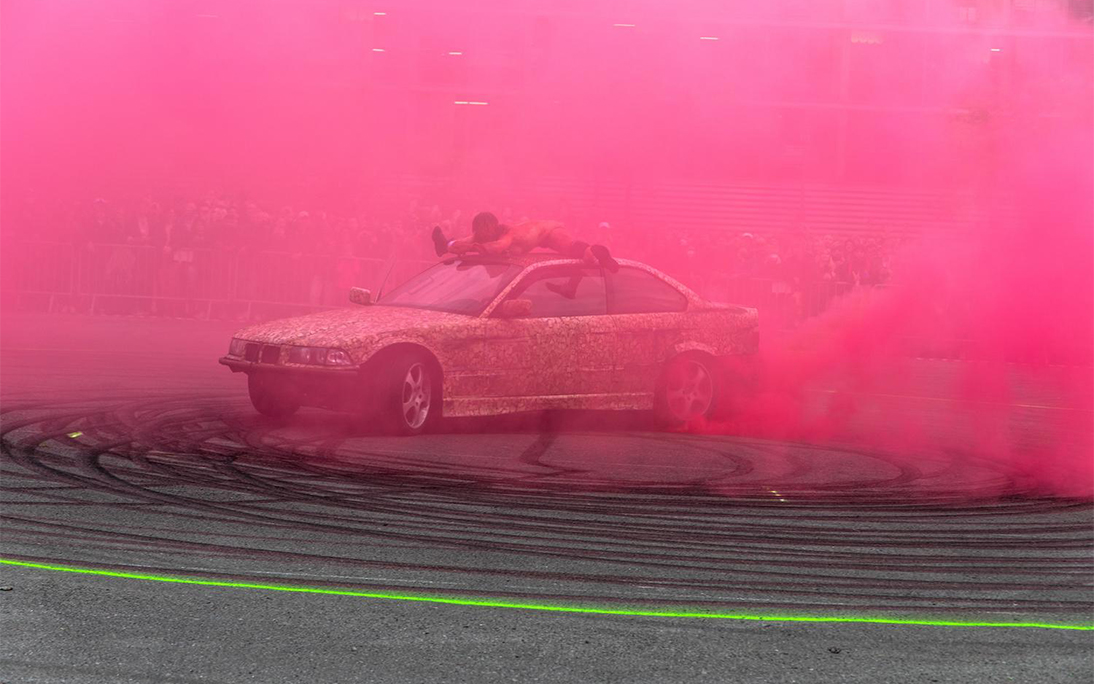
DISAPPEARING BERLIN, Étude for Disappearing © Silke Briel_courtesy Schinkel Pavillon
You come across as someone who is very much at peace with herself. Is that something you have learned, or have you always been that way?
No, that is an ongoing struggle for me. But I try to make very conscious decisions, and not let myself be influenced. However, if I feel that public attention is creating expectations... then those are issues that I also deal with in my work.
Is there actually a topic that is taboo for you?
My taboos are more limited to hygienic taboos, I think. For example, pooping on stage and then leaving the shit there for a while.
But no taboos in terms of content? Thoughts must remain free?
Yes, thoughts must be free, can be free. I think anything is possible if you give it enough thought. And if you are well prepared.
What are your plans for the future?
Right now, I'm very busy with Venice. But we have a big stage project planned for 2027.
What will it be about? Can you say anything yet?
It's a charged topic, as we are currently writing a ‘War Requiem’. Since the cutbacks in culture, that are happening across Germany and Austria and are linked to a certain militarisation, I had no choice but to take a stand with my work here too.
Text: Alexandra Markl