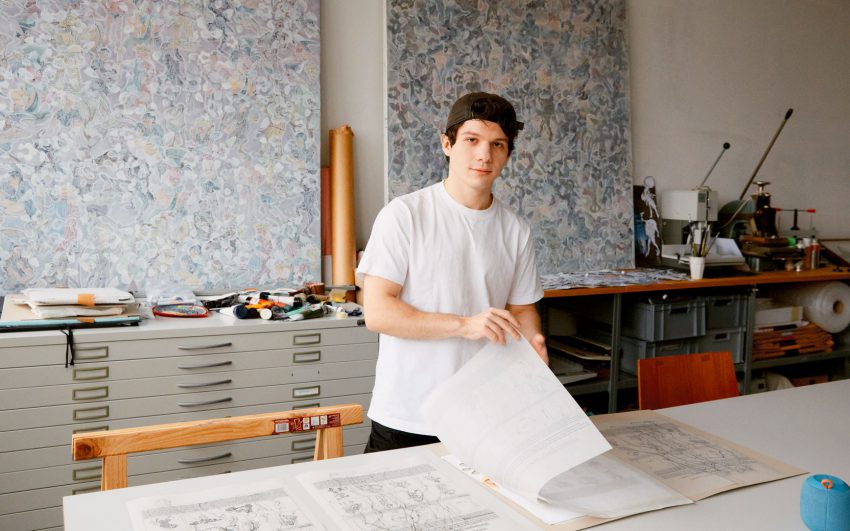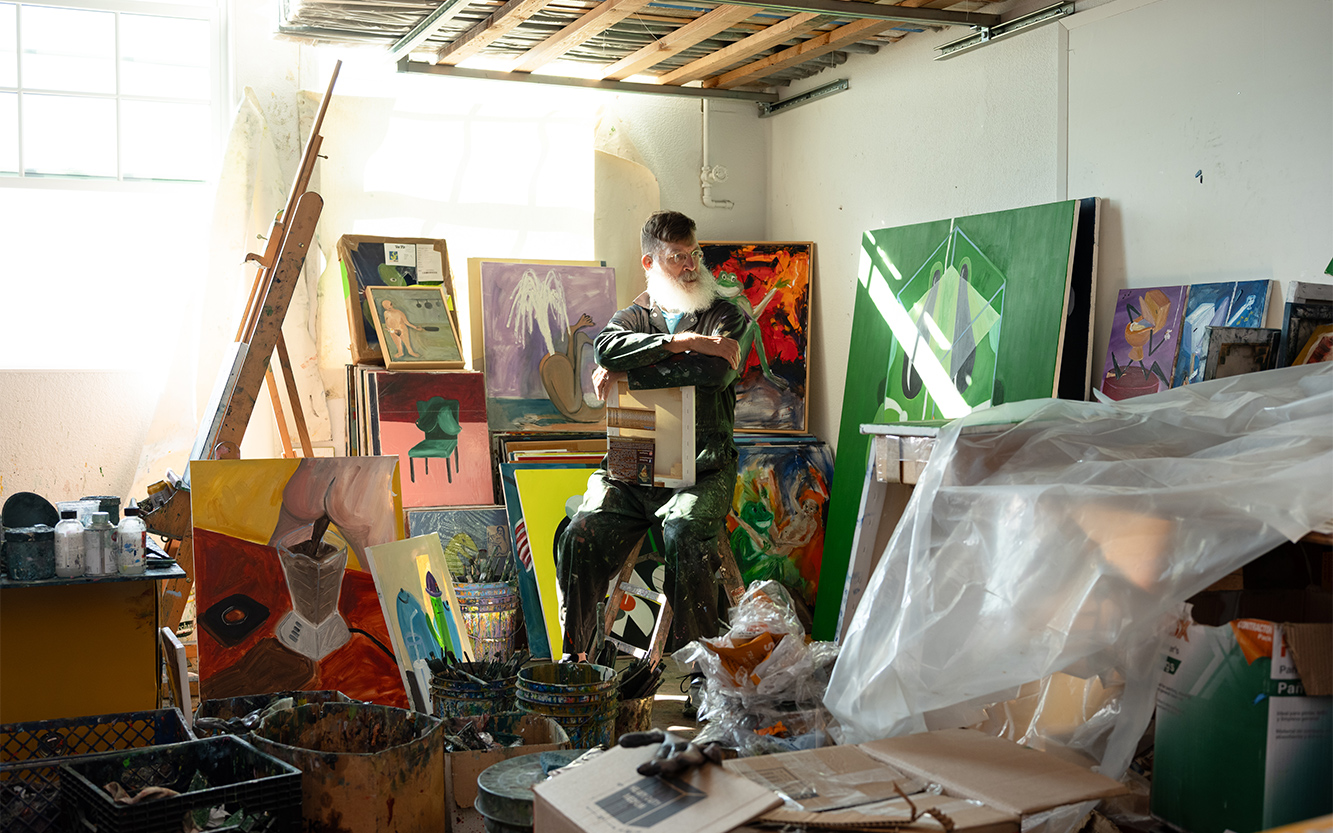
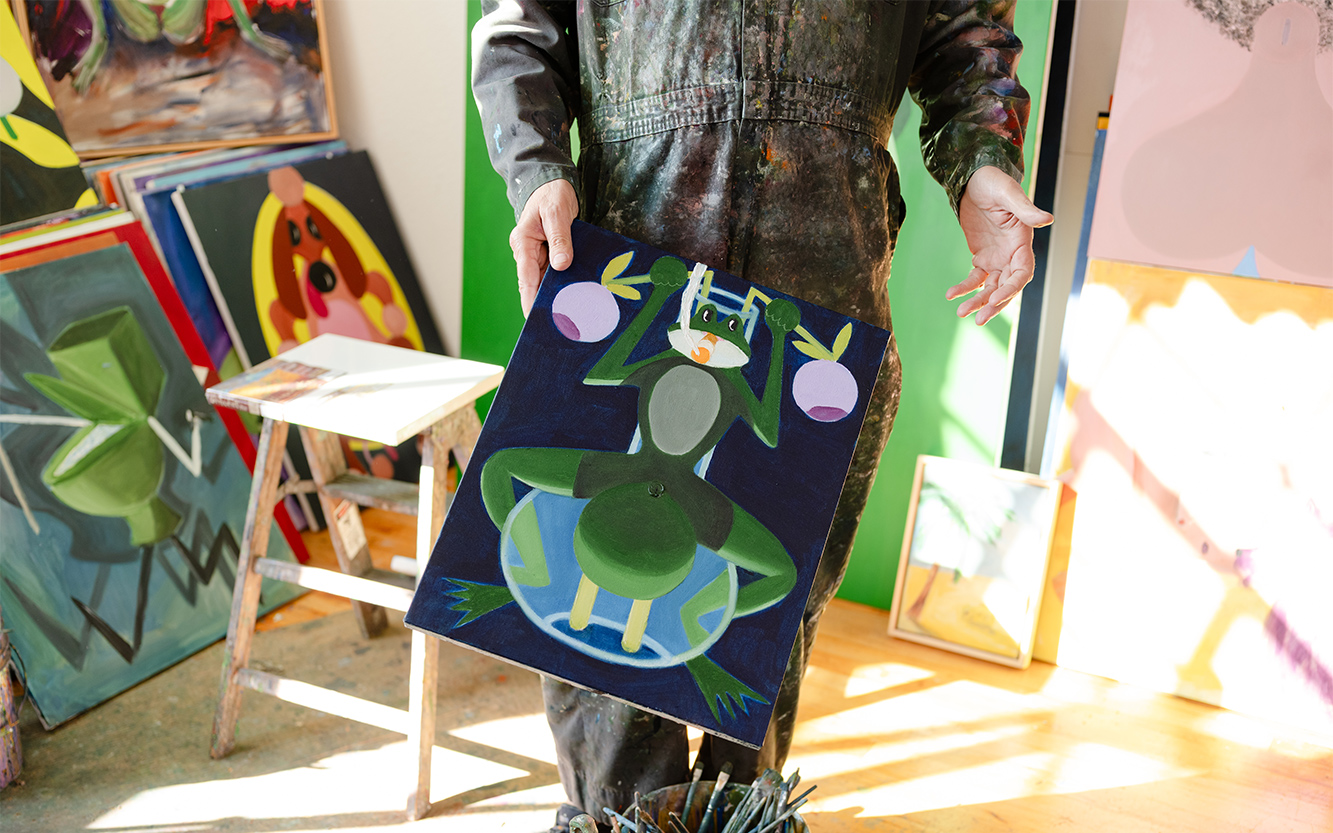
American conceptual artist Keith Boadwee emerged in the early 1990s through abstract action painting and photography that pushed the boundaries of decency. Over time, he expanded his practice into multiple, overlapping bodies of work—ranging from quick, expressive, and often scatological figurative paintings to more recent works featuring frogs, poodles, and domestic objects. Humour remains a vital element, even though Boadwee resists having his art dismissed as simply fun. From the very beginning, his work has been a fearless exploration of radical queerness, sexual liberty and social critique.
Keith, you recently mentioned Russian writer Leo Tolstoy on Instagram as a style inspiration. He had a rigid routine — rising at five in the morning, and spending long hours writing, avoiding visitors and any distractions. What’s your relationship with your work schedule?
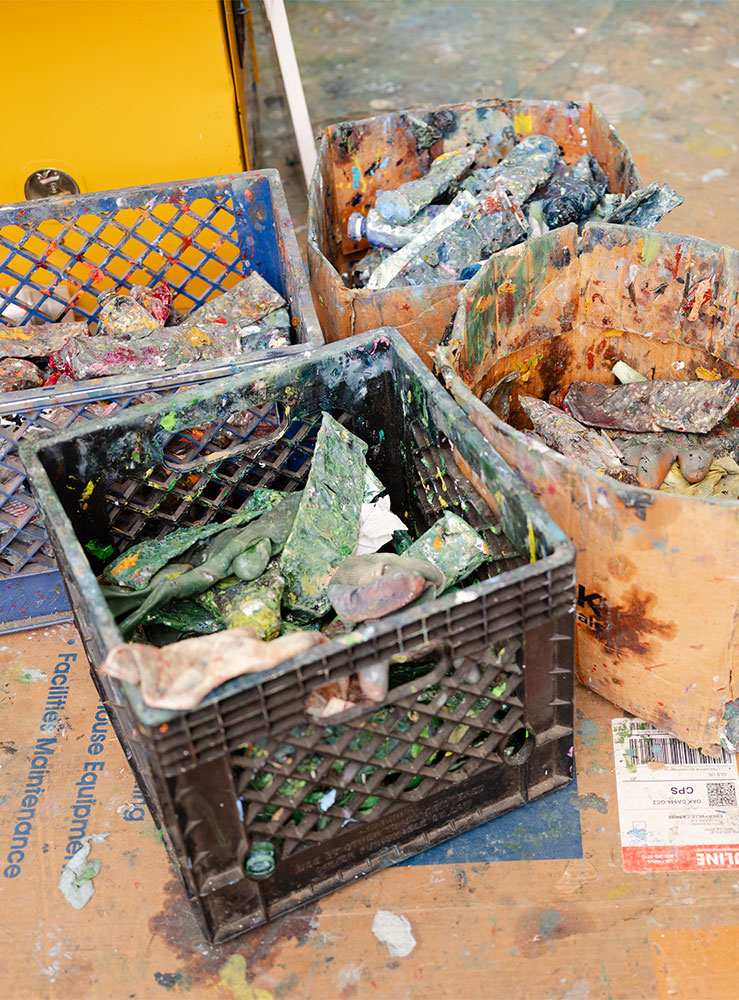
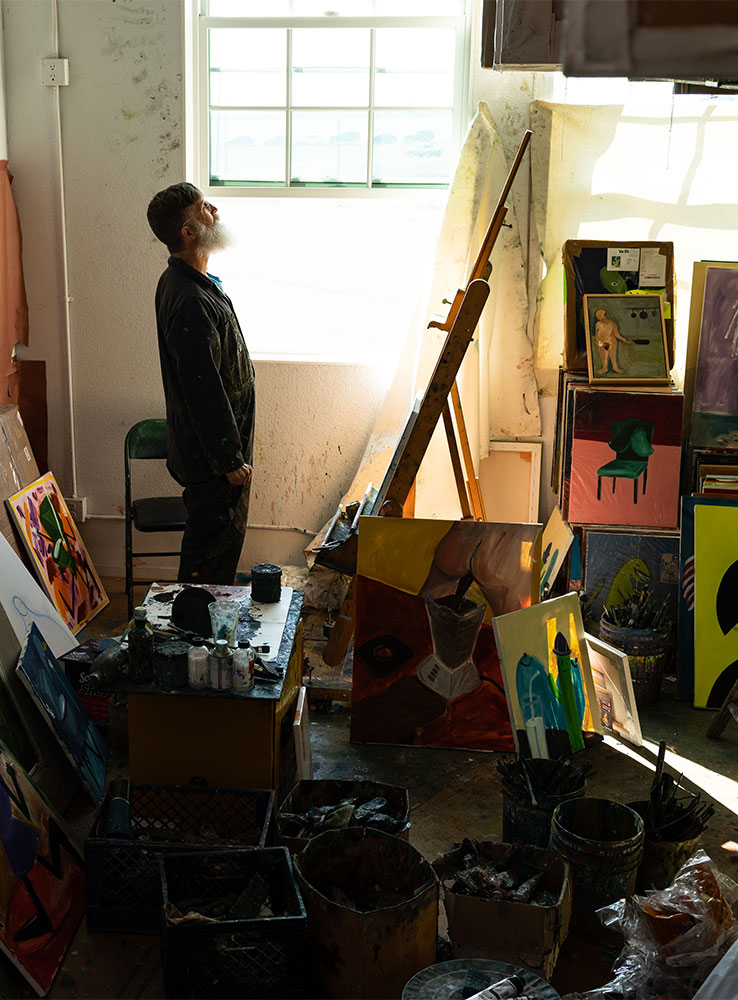
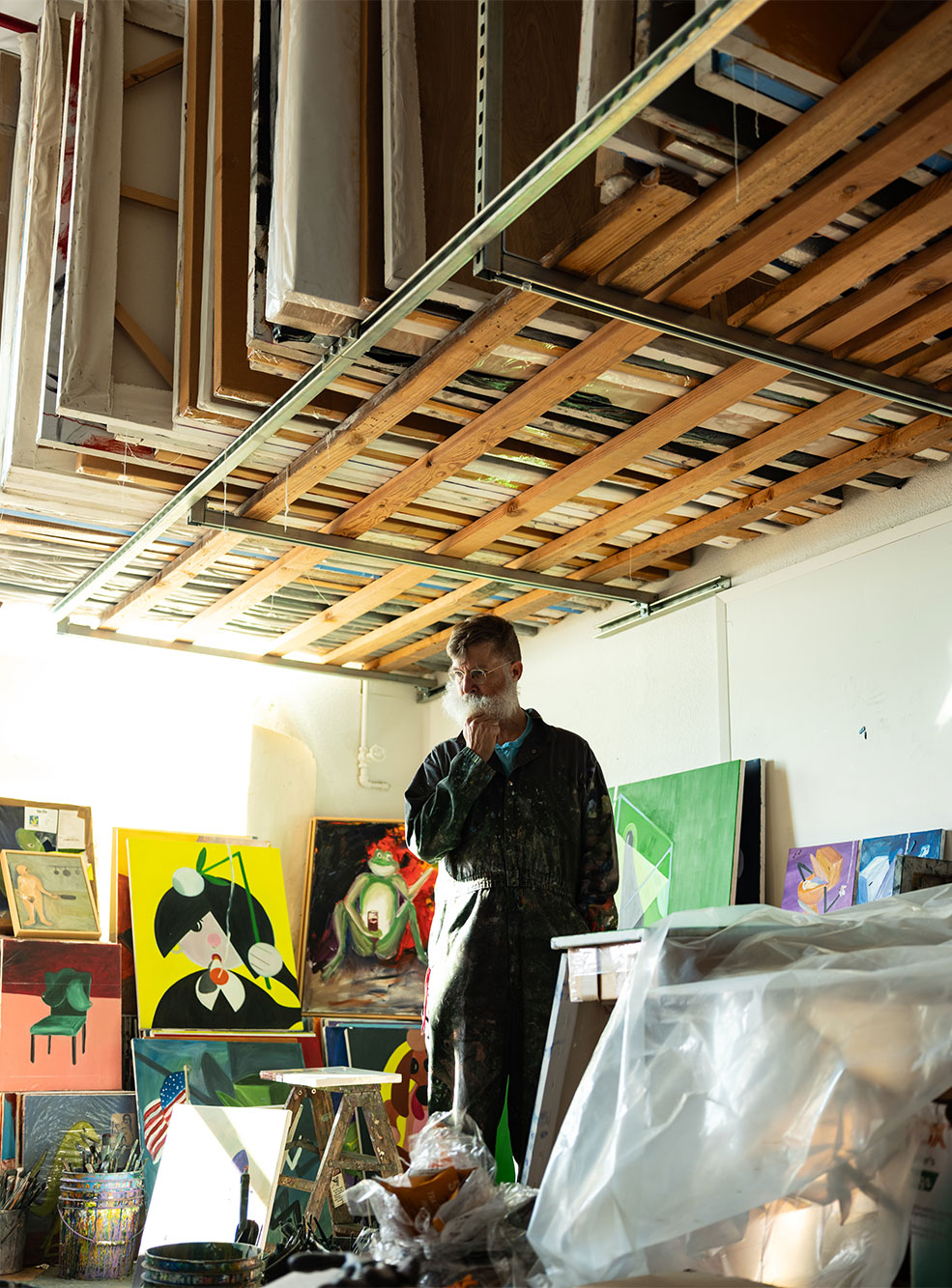
I’m not someone who works on a strict schedule. Winter makes it especially hard for me — I don’t like the light, my studio gets cold, and it gets dark early in the day. Once the sun goes down, I usually don’t want to work anymore. When I was younger, I worked at night under artificial light. I’d start in the afternoon and keep going until 3 or 4 AM, sometimes even overnight. Now, a good day means starting in the studio around noon. If it’s warm and sunny, I’ll stay there from midday, until six or seven in the evening.
Was being an artist something you imagined doing when you were young?
I grew up in Louisiana, in the southern part of the United States — very religious and very conservative. I had grown up around kids on farms, and I never drew or took art classes as a child. In college, I met two young professors in the theatre department who were very left-wing, very radical. Meeting them changed my life. They made me realise things I’d never thought about before: you don’t have to believe in God, or be a Christian, and you don’t have to believe in capitalism. These were basic ideas, but for a seventeen-year-old like me, from a small town and a family without intellectual discourse, they were completely eye-opening.
You received your Bachelor of Arts from UCLA (University of California Los Angeles)when you were 28. Does that suggest you had a different path in mind before committing to art?
The closest big city to where I grew up was New Orleans. It had lots of food, music, and culture, though not much of an art scene. I studied theatre there for a few years, then moved to New York, unsure what I wanted to do with my life. When I was 22, I started dating a wealthy man from Los Angeles who asked if I wanted to move there. I agreed, but after a few years, I realised I didn’t want to be dependent on someone else — I needed to make my own path. In Los Angeles, I started going to museums, and seeing modern and contemporary art sparked something in me. One day, I decided I was going to be a painter. I bought canvas, brushes, and acrylic paint and started painting in my bedroom. After about a year, I realised I should go to university and learn properly. So I enrolled at the University of California, Los Angeles. At the time, UCLA had a strong faculty, though it was not yet well-known for its art program, as it is now.
You studied under Paul McCarthy, one of the most influential contemporary American artists. What was that experience like?
It’s a miracle, really, when you think about it. I was at school about five or six years before his career really took off. His work was so wild and so unexpected that it was hard to imagine he would become such a famous artist. He was amazing and very encouraging. LA itself was just beginning to become a big art city. I just landed there by accident, and suddenly I was surrounded by really interesting people. The challenge for me was that I was about five years older than most of the other students. I felt like I’d lost a lot of time, so I had to work harder, try harder, and really push to build a career.
You began your career in performance and photography, using your body — including your genitals — as a central medium. What was it like to be so exposed in your art?
I wanted to shock people, grab their attention, have an audience — to be a little punk, a little “fuck you”. It was shocking for a lot of people, and it was very sensational. But underneath it all, I knew very little about the art world. I was ambitious, and I worked relentlessly. Somehow, it all came together quickly. I became successful, but I was young and reckless. I made wrong choices, worked with wrong people, and in the end, it all fell apart. I pissed a lot of people off. I was full of myself. Over time, I realised something simple: people respond to kindness. Be nice to everyone and make stuff. Those are the important things I’ve learned on this journey. I do my best. Sometimes I succeed, sometimes I don’t.
The Enema Paintings, where you used your body to create abstract works by squirting paint, brought you significant fame. How did it change your career?
I thought that every time I did a new exhibition, it had to be completely different from everything I’d done before. It had to be provocative. I was constantly trying to outdo myself, to make a bigger, more impactful gesture. But at some point, I realised that approach was not going to work. After The Enema Paintings caused such a sensation, I found myself thinking, “What can I do next to top this?” It took me a long time to understand that chasing that kind of escalation was a dead end — and that trying to keep it up was, honestly, a pretty dumb idea.
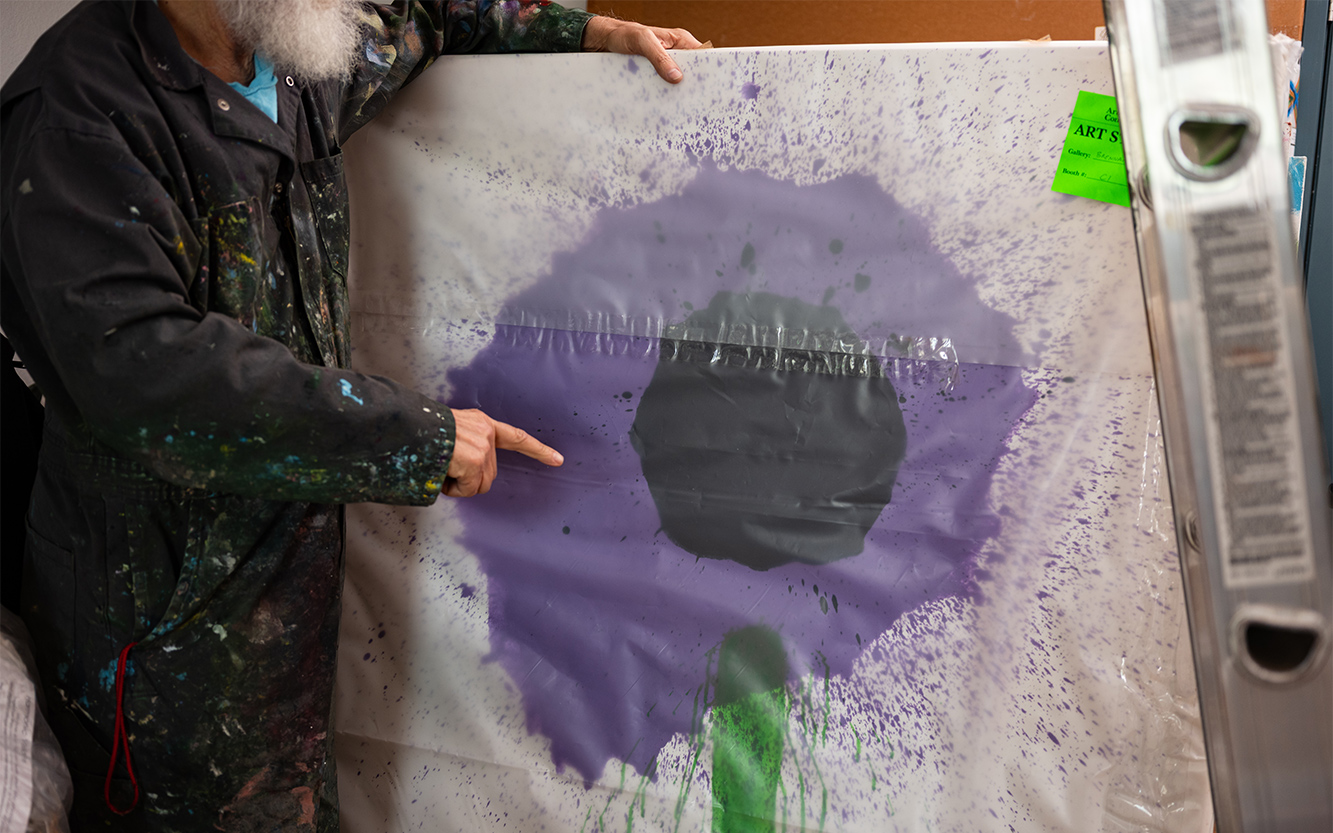
In this work, you both honour and subvert the legacy of Jackson Pollock and his iconic drip technique, and throughout your career, references to art history are a constant element. What drives this engagement?
I think art about art can exclude a lot of people, so I try to add other layers that can reach viewers who don’t know those histories. But there’s another side to it: if you’re an artist, your life is completely immersed in art. It becomes part of your everyday existence—something you live and breathe—so it feels natural to critique it or comment on it. As you point out, the work functions as both critique and homage. These works have been read as a feminine critique of a masculine or phallocentric gesture (which they obviously are), but my intention was more specifically to critique abstraction itself. That would require a much more in-depth conversation
I’ve read that in the 90s your motto was, “If you are not willing to humiliate yourself, your art probably won’t be any good”. How do you feel about that now?
It wasn’t me, but American filmmaker John Waters who said something like that he finds my work strong because I’m not afraid to humiliate myself. I’m not sure I ever truly feel like I’m embarrassing or humiliating myself though. I have, however, done a lot of things that most people would find embarrassing or humiliating if they did them.
Did being a queer artist affect the way you established yourself early in your career?
In the last twenty years, there’s been a real push for broader representation — for people of colour, trans people, queer people, and people with disabilities — which is a big change. Now, the art world is starting to incorporate a wider range of voices. When I first entered the art world, there was a growing interest in queer artists and queer imagery. In that sense, I was lucky.
What does it mean to you to be a queer artist?
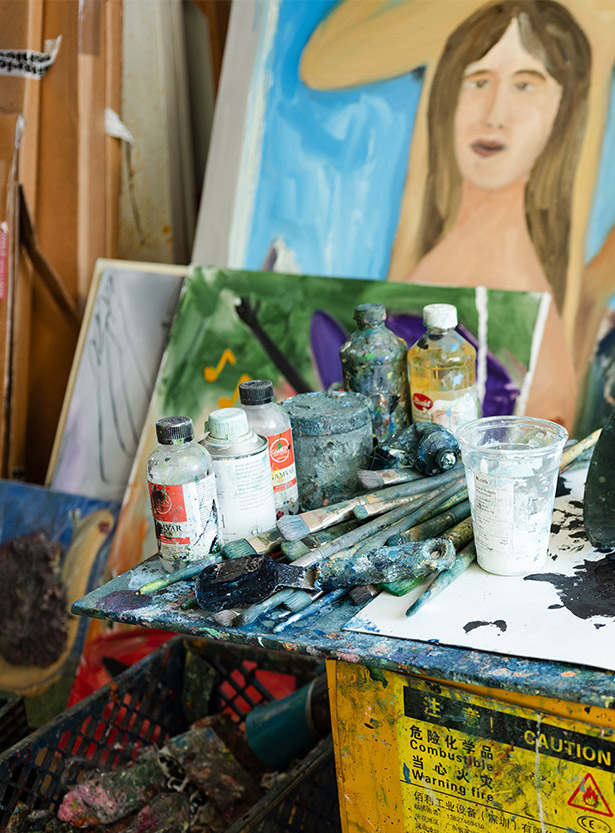
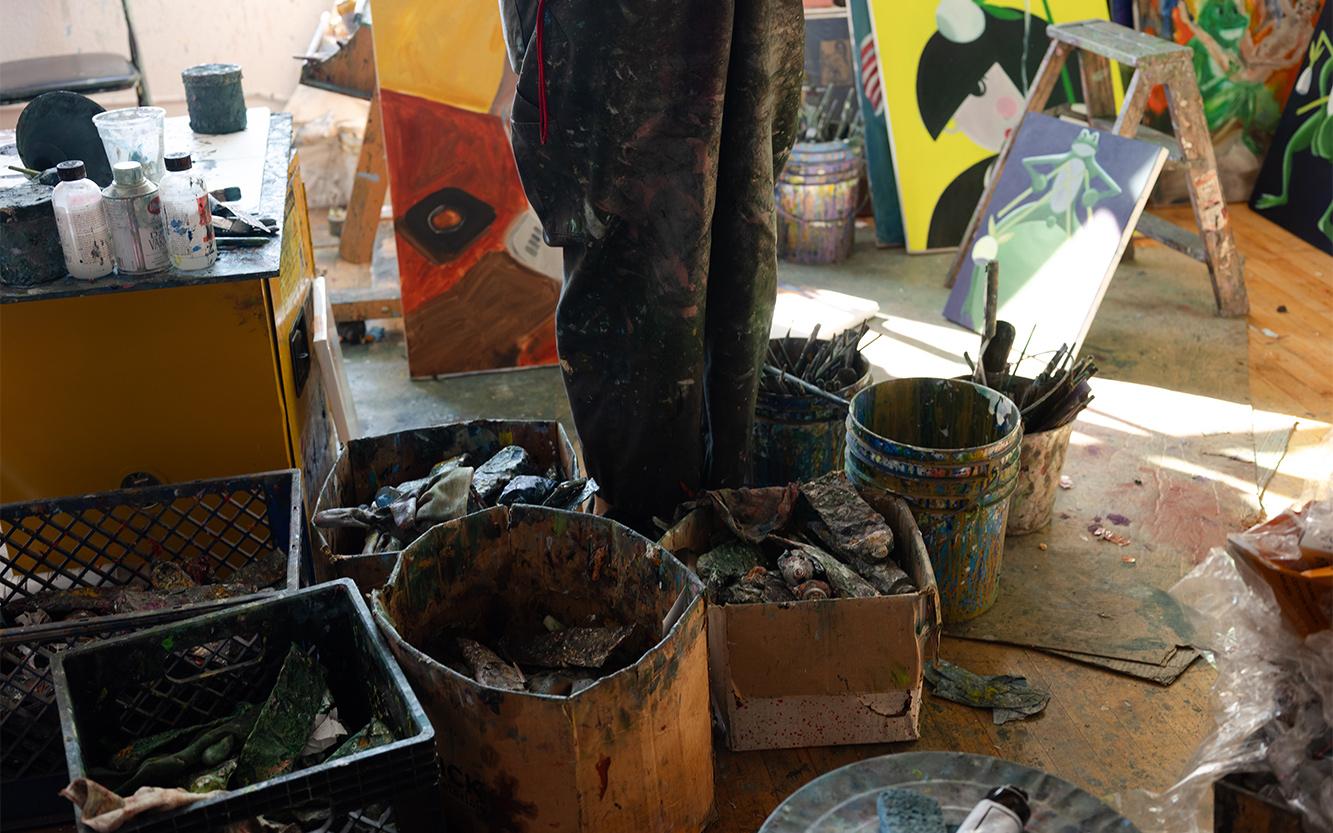
You’re part of a community that has been — and still is — oppressed. And in America there's a great deal of homophobia and transphobia, and with the current political climate, people are afraid to speak openly and publicly, which hasn't been a thing for a long time. Of course, visibility matters. Being open matters. But it still drives me crazy that it has to matter. I don’t want to be “Keith Boadwee, a queer artist”. I just want to be Keith Boadwee. I’m an artist whose work comes from my own experience. That experience includes being queer, but it’s more about being me than about representing a category. It’s exhausting that we keep being forced back into this conversation because people won’t stop being hostile toward us. That said, one of the most meaningful aspects of my practice has been hearing from younger queer artists who tell me that my work mattered to them — that it influenced their art, brought them joy, or helped them feel seen.
After a long break from the public, you returned to painting. What sparked this comeback?
I stepped away from the art scene for a while, but I never stopped working. The shift from performance photography to painting was really about process. When I was the subject of the photos, I couldn’t take them myself—I always needed a photographer, the right space, lighting, and very specific conditions. Then there were the costs of developing, mounting, printing, and framing, with so many steps removing me from the thing I wanted to make. Then I realised I had forgotten how to paint and had to relearn it from scratch, which took a long time—and I’m still learning how to paint. Painting allows me to work every day, directly, without all the intermediate steps standing between the thought and the final piece. Over time, I’ve accumulated a large vocabulary of images, ideas, and ways of making things, and now I simply take all those bits and pieces and put them together in all different ways.
Your practice now, though, isn’t only about paintings?
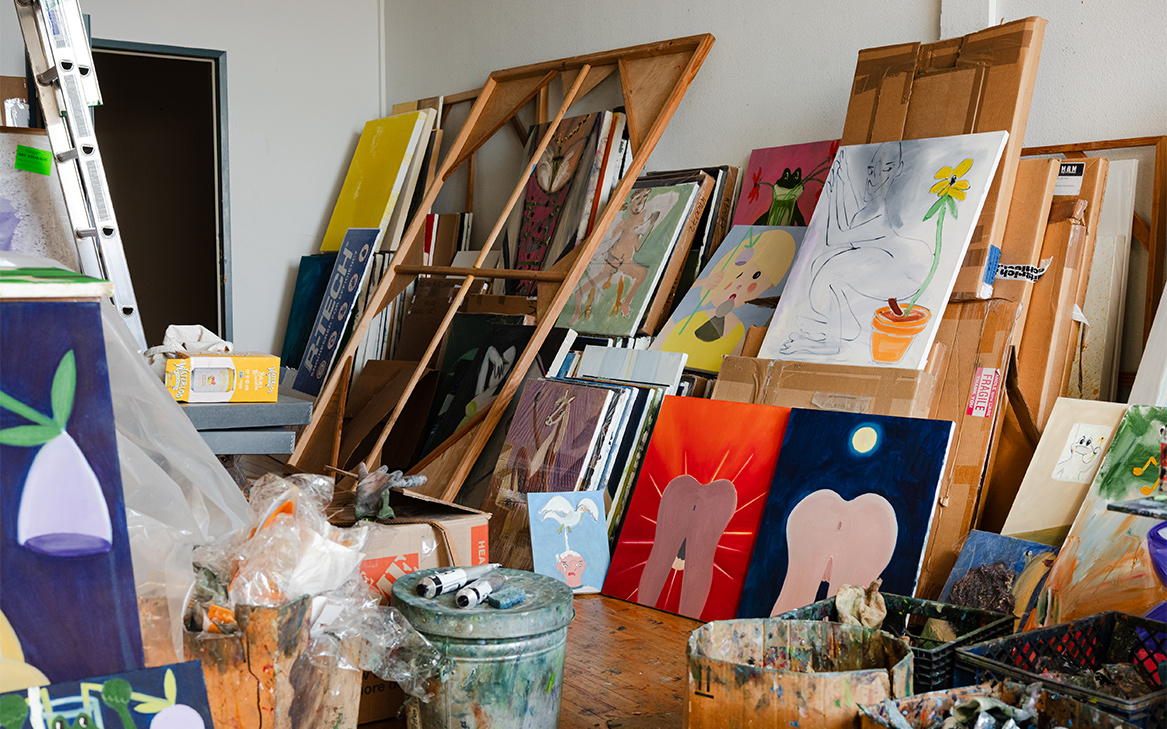
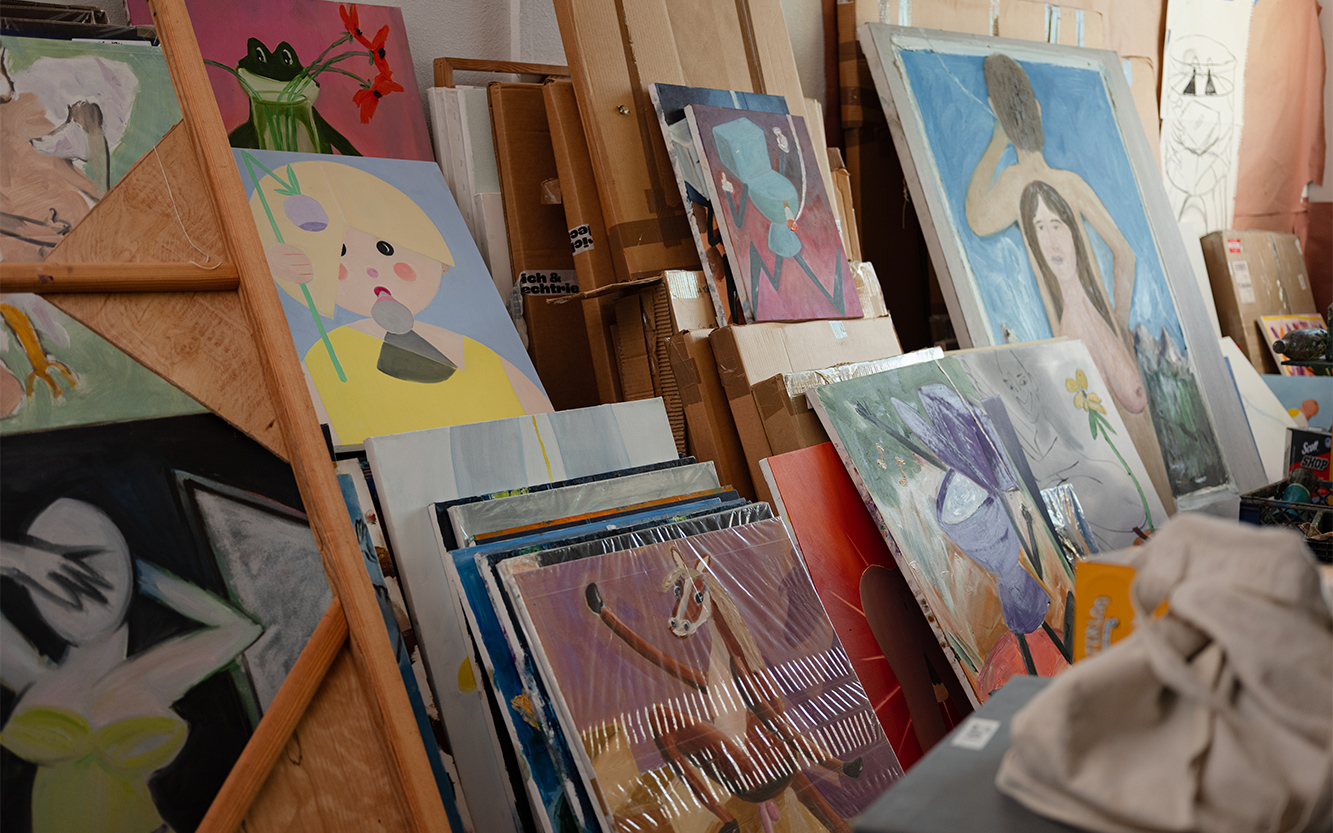
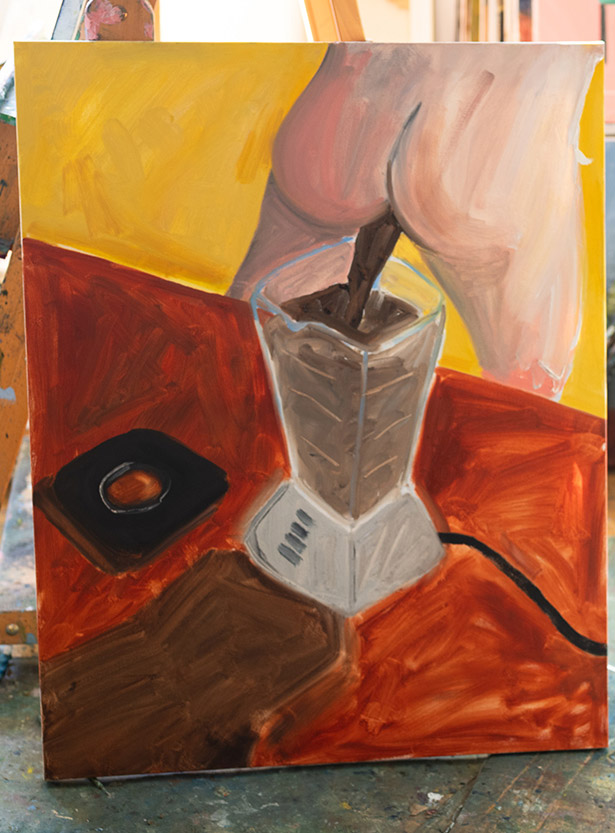
Yes, I make multiple bodies of work. Some are figurative paintings that are quick, expressive, scatological, or abject. More recent pieces include the frogs, poodles, and emo kids. The Enema Paintings, which I began in 1995, is an ongoing project incorporating flowers, God’s eyes, and plaids. I also make works on paper, which encompass my scatological drawings and collage. There is also a trove of photographs that hark back to earlier photo performance works made over the last decade; these have yet to see the light of day.
How did animals come to take such a central role in your practice?
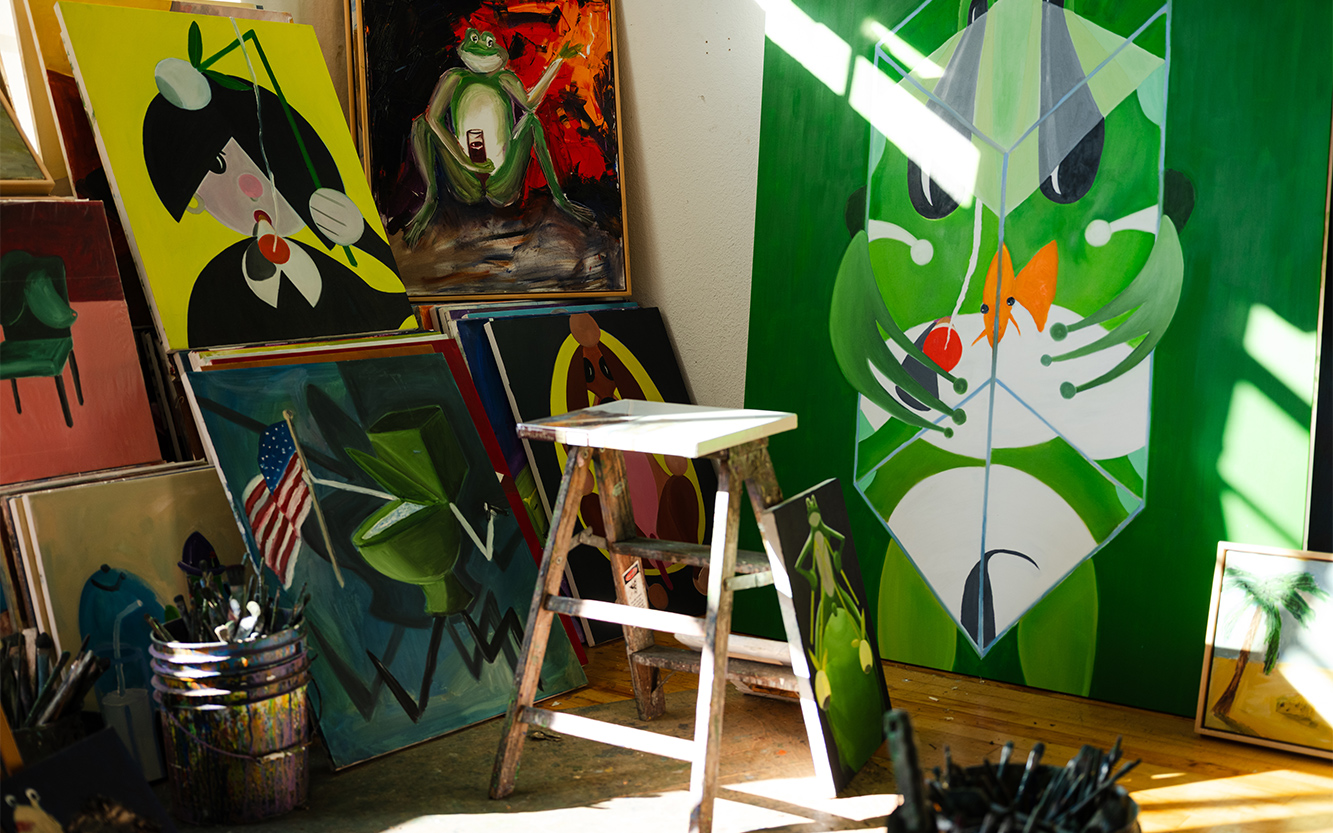
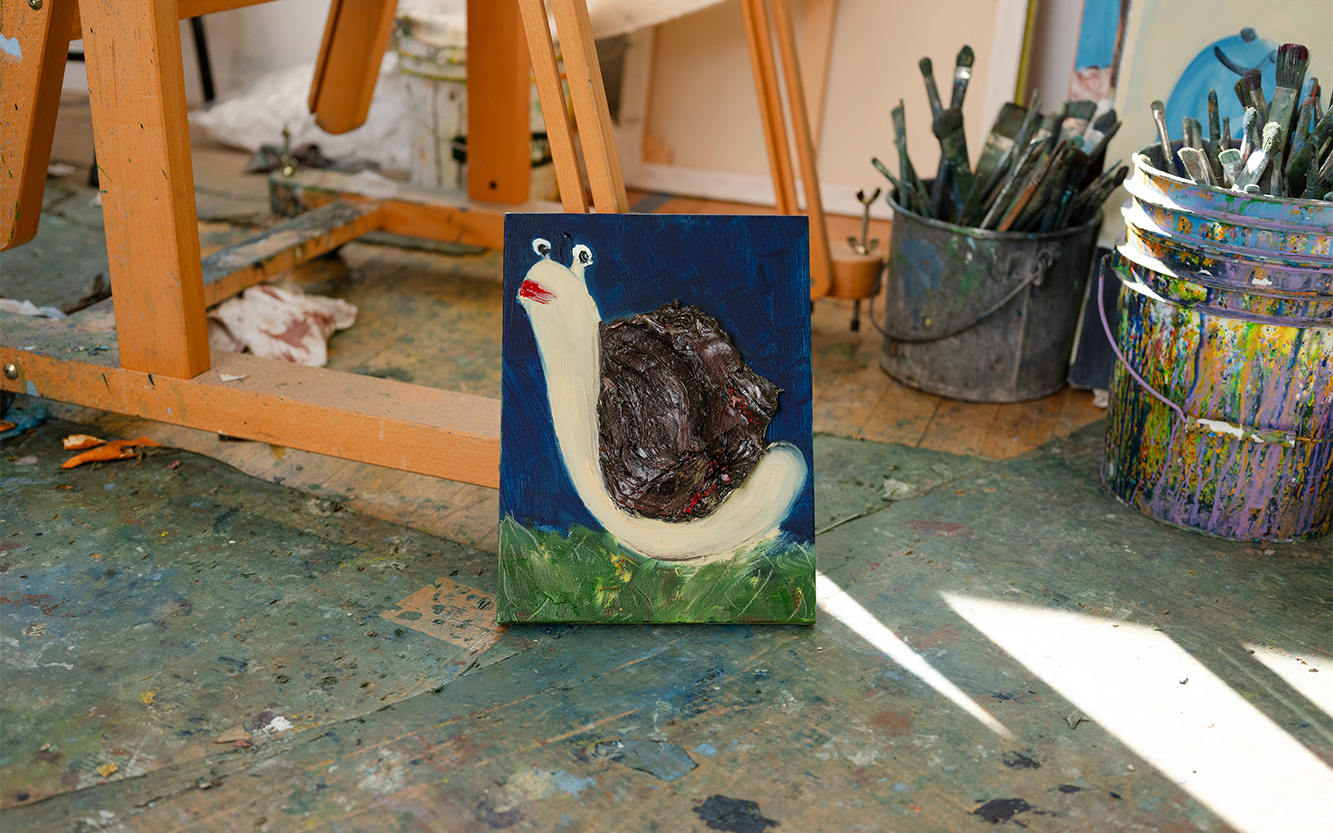
I’ve always been really bad at painting human figures, so I started painting frogs and poodles. When you paint a person from life, people can be very judgmental—viewers have rigid and exacting expectations of what a human figure should look like. Frogs and poodles, on the other hand, function as stand-ins for people. They can channel basic human emotions and expressions without being judged as harshly from a technical perspective.
Is there still a personal or autobiographical element in what you’re making now?
For me, every work is autobiographical. But when I’m making something, I’m never asking myself, “What is this about?”. The impulse is just to make it. I taught in art school for a long time, and one thing I really hated was how much the school system was designed to make students explain their work. I think that’s terrible, because the great thing about a work of art is the mystery. How a work is explained or understood is the job of other people, not mine.
Your sense of humour feels quite rare in contemporary art. But I’ve heard that you would not be happy if someone described your work as funny - is that true?
It’s fine if people say that my work is funny, I don’t mind. I want people to laugh or smile or whatever — funny is great. What people often say, though, is that my work is “fun”. To me, fun is riding a roller coaster, or going to see the Barbie movie, or going to a Taylor Swift concert. Those are fun activities. There’s something dismissive about calling artwork “fun”, and I’ve heard it a lot.
Do you think humour makes artwork more accessible?
Humour does make art more accessible. Some artists understand this. Many viewers understand this. However, if you’re an artist who uses humour, galleries and institutions often consider you a lesser artist compared to those making ‘serious’ art. I’m always saddened by the fact that my work is popular with people but not with institutions. That doesn’t make sense to me!
You had a major retrospective exhibition in 2025, Head to Toe: Works from 1990-2024. How did it feel to reflect on your career through that exhibition?
I’d wanted to do that show for a long time. Shortly before the exhibition was due to open, the fires happened (in Los Angeles). I wanted to postpone it for months, but the work had already been shipped to Los Angeles and was hanging on the walls. We ended up postponing the opening by two weeks. By then, people in the community were ready to see each other again. A lot of people came to the opening, which was really nice. Los Angeles is probably the place in the world where people know me best. That’s where I started my career, and many of the people I went to school with, as well as my teachers, were there. I saw people from the beginning of that time and from all stages of my life. In some ways, it was great to have an exhibition at that moment, as I think the community really needed a dose of levity and reasons to congregate. Commercially, it probably wasn’t the best time to have a show, but I didn’t lose my house to the fire—it’s all about perspective.
What are you working on now?
I’m just beginning a big push to create a new group of paintings. I’ll be opening a show with OTP Copenhagen around the end of June 2026 or beginning of July. I’ll also be doing a residency at Fondazione Lac o Le Mon in San Cesario di Lecce, Italy, where I was invited by the artist Luigi Presicce. I haven’t been to Europe since 2022, so I am excited to spend July and August riding trains and seeing many friends across the continent!
These days, if you need to introduce yourself as an artist to a stranger, what would you say?
Some artists are very focused on what’s outside themselves, the world around them. My art practice is very internal—it’s all inside my head. It’s an escape. I live in this safe little world I’ve created for myself. It’s got toilets, frogs, snails, dogs, cats, volcanoes, dinosaurs, bananas, flowers, flags, people, cheese, cigarettes, cocktails… and a lot of shit, piss, tits, dicks, and buttholes. It’s like having my own army around me, my own little club. I guess I’m just a weirdo making weird stuff, creating my own little universe that has nothing to do with what’s outside my door. I like to use symbols and images that are familiar to everyone as points of entry. Ultimately, they come together to form a cocoon in which I find comfort and happiness. I think my viewers can share that with me.
Text: Anton Isiukov
Photos: Graham Holoch