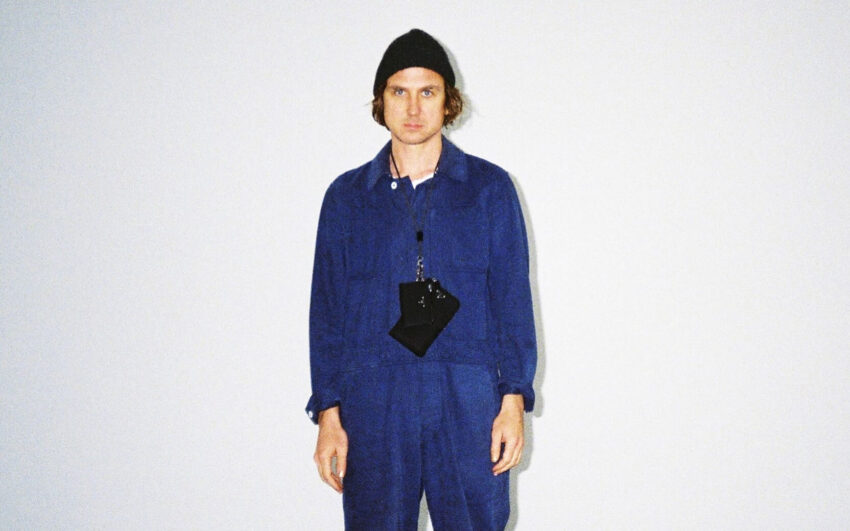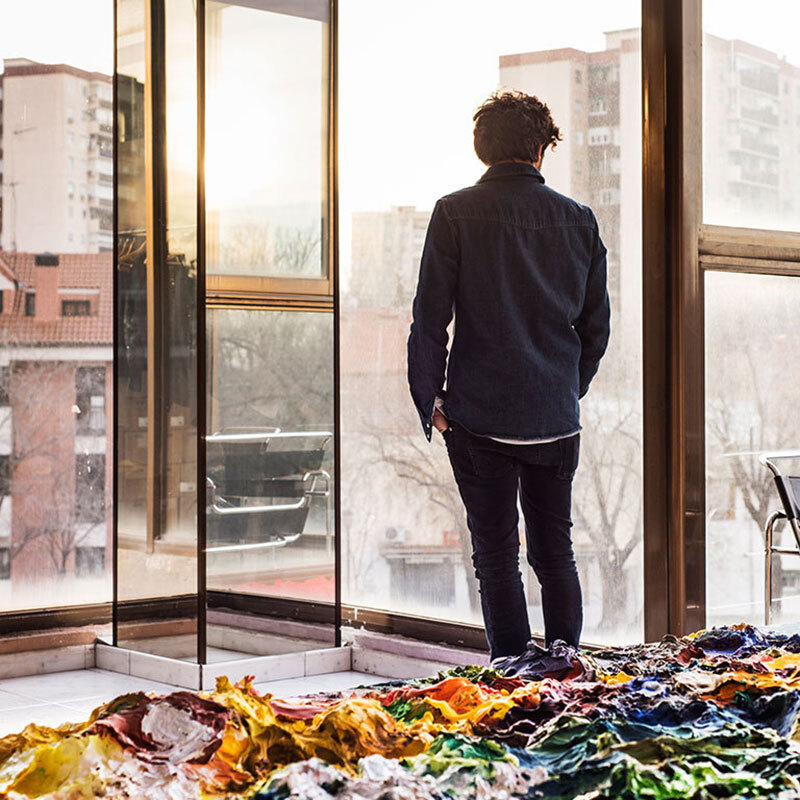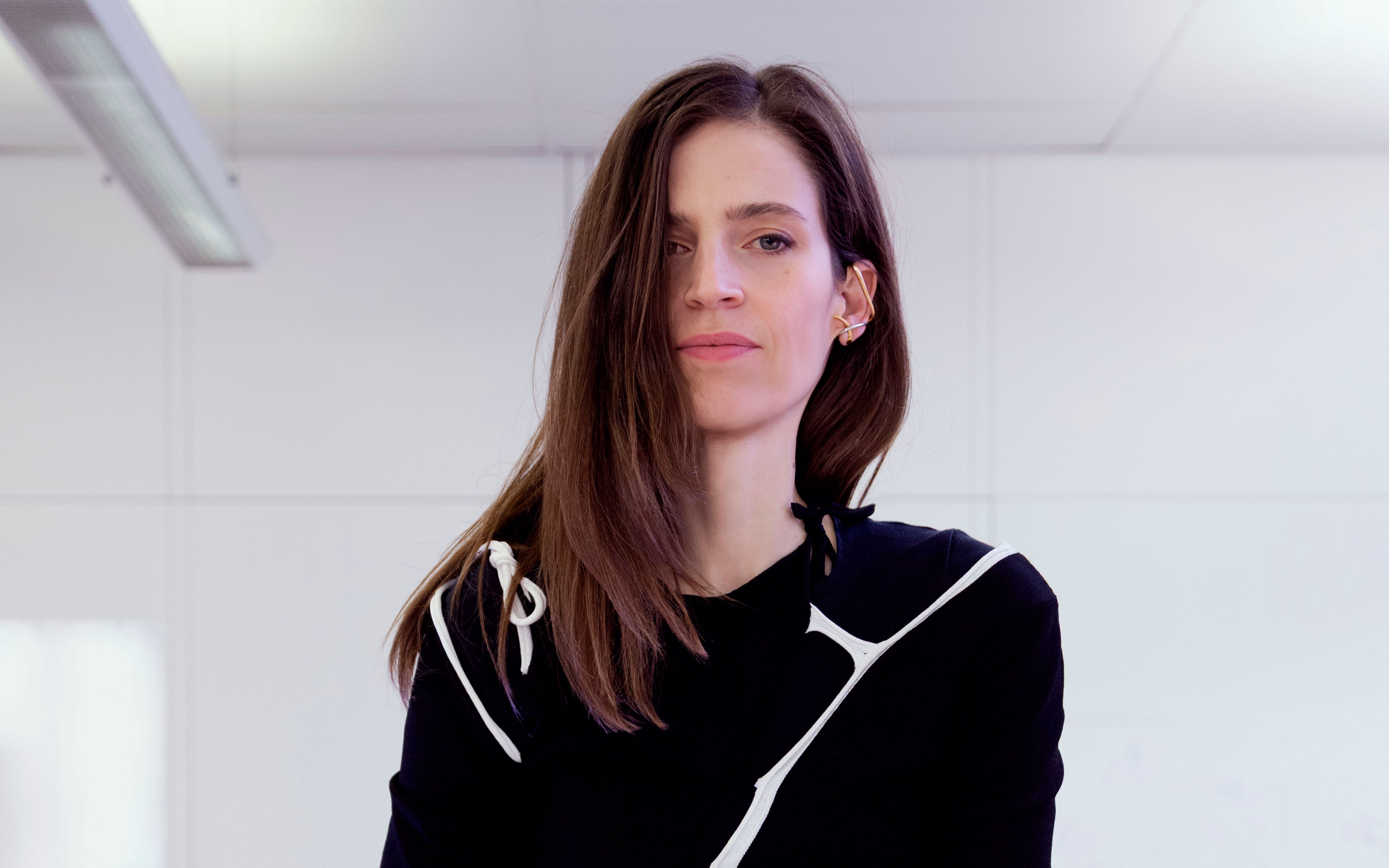
Swiss artist Pamela Rosenkranz combines biology, technology and culture into her work. Through sculptures, installations and paintings, she explores questions such as the conflict between scientific description and subjective experience, or the boundary between nature and artificiality. Rosenkranz exhibited at the Swiss Pavilion at the Venice Biennale in 2015 and at New York's High Line with a tree sculpture in 2023.
Pamela, how did you get into art?
I have always drawn and read a lot. Drawing was a natural activity for me, almost a form of thinking. At the same time, for a long while I did not truly know what art was, as it was not a clear profession in my mind. It was only later that I realised that what I did could be considered a talent.
What was your experience of art school like?
I started studying art from a noticeably early age, right after secondary school. It was great; suddenly I could work creatively all day long, and everything I had previously done on the side was now the focus. I could try out all kinds of materials and disciplines. It was a wonderful time.
What does your work mean to you?
I see my involvement with art as a river without which I would stand still, a river that is constantly growing and will continue to grow. For me, art is a field in which you can ask very fundamental questions: about people, their beliefs, our bodies, nature, technology, the future. I am profoundly grateful that I can be an artist.
How do you begin a work?
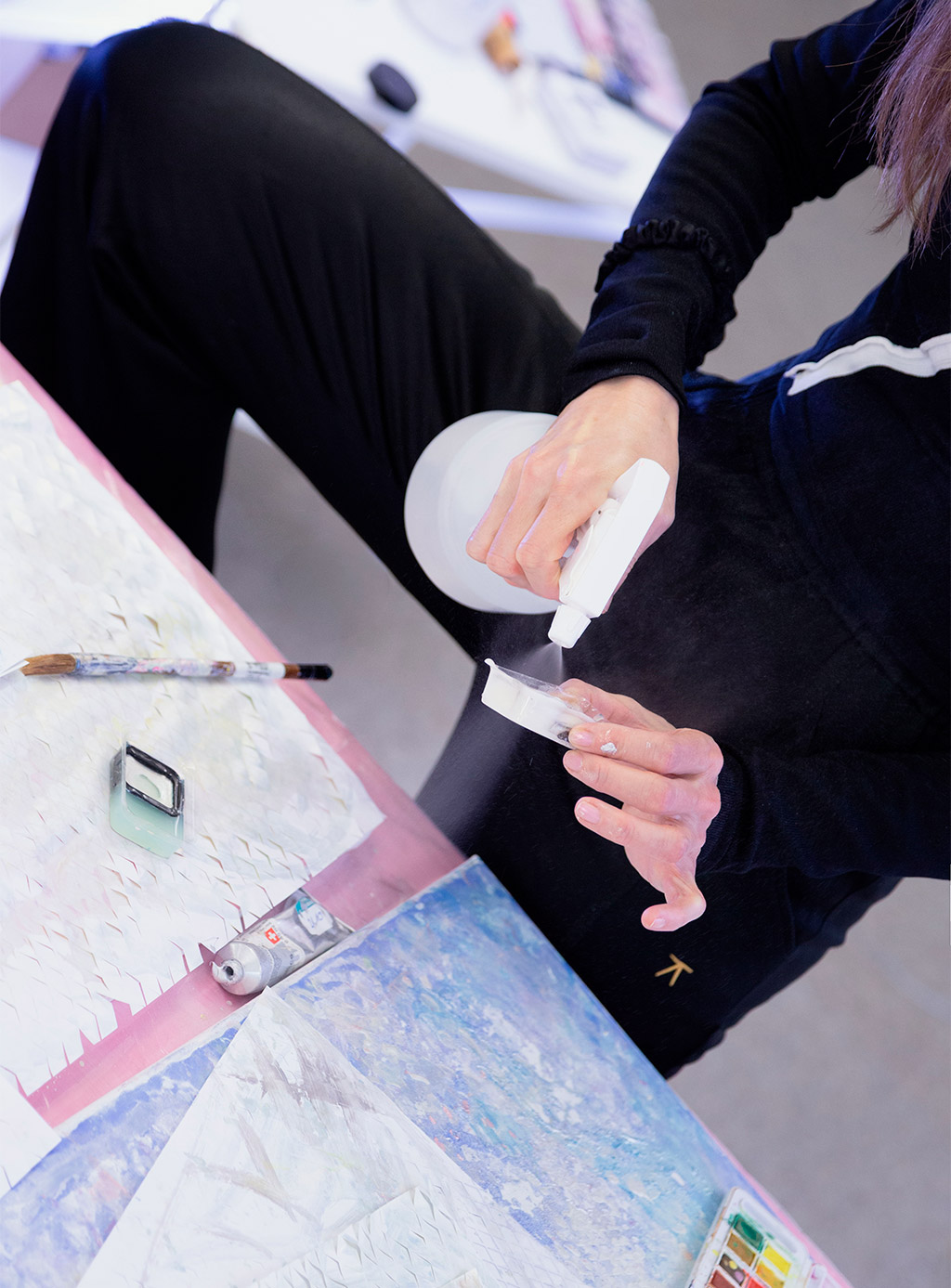
I usually immerse myself in the topics from a wide variety of angles – social, scientific, historical, material, cultural, but often also very intuitively. In this way, the project becomes increasingly linked to contemporary human questions.
Is research essential for you?
Yes, but I am not really looking for answers there – more questions. I really like questions. I read a lot online - scientific texts and studies, or talking to researchers. The internet is an incredible resource of knowledge. At the same time, I am also interested in what the digital world does to us physically.
You said that you like questions – which interest you in particular?
I really like speculative and big, fundamental questions. As in philosophy, art is not about being right and providing evidence, but about opening possibilities and finding tensions; for example, the conflict between scientific description and subjective experience. Science can also shake our self-image. When neuroscience shows that identity is not a fixed core but a process, it can be as liberating as it is disturbing.
What else are you thinking about?
The question of a boundary between nature and artificiality. I doubt that this boundary exists. Rather, everything is natural, even what we consider artificial or synthetic. Today, we are gradually beginning to understand much more about how our ‘natural’ bodies are already permeated by hormone-active components of synthetic chemistry that we have been absorbing for around a century. In my work, I try to make such contradictions sensually tangible, for example through pigments reminiscent of human skin, through liquids, smells, light or with AI.
Liquids and smells – that brings us to your work Our Product, which you presented at the Venice Biennale in 2015. At that time, you filled the Swiss Pavilion with a skin-coloured liquid. Was it about the nature of this organ?
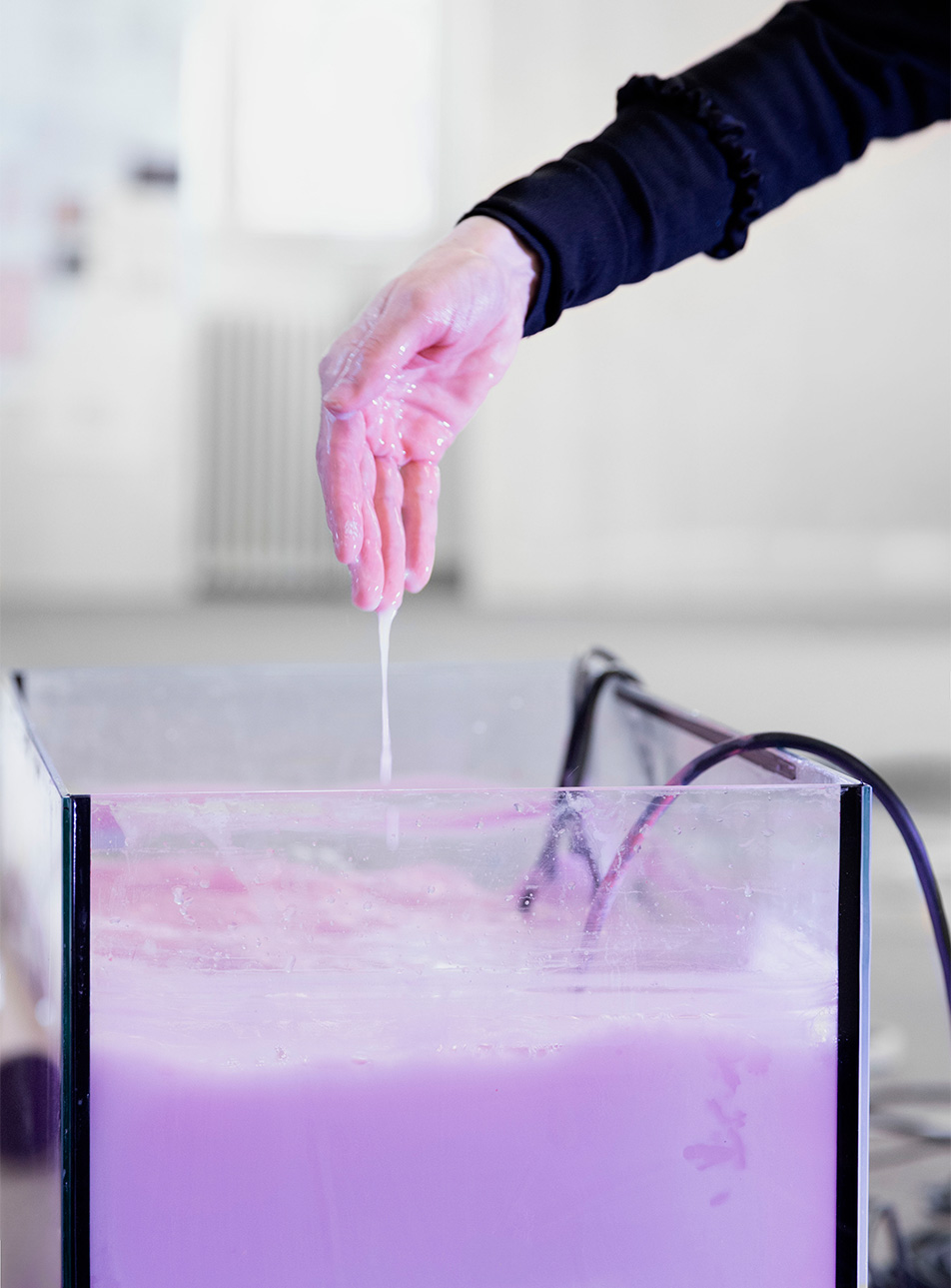
I am interested in the surface of the human being – the skin as a membrane between the inside and the outside. In the pavilion, I therefore worked with a liquid whose colour is reminiscent of monochrome human skin, as well as a scent that was intended to evoke ideas of integrity and new beginnings – specifically, the idea of a newborn human being, i.e. a state that is not yet marked.
How can one imagine the installation?
The scent flowed into the room through the sewage system and spread differently depending on the temperature and air movement. Visitors set out to find it. In general, what interests me in such works is the overall experience of an environment into which one imperceptibly immerses oneself. Scent, light, material and colour appeal to different levels of our perception. Scents, especially, have a very strong neurological effect, even if we can hardly grasp them linguistically.
On the other hand, you also used water bottles like those from the Fiji brand – what is the significance of this?
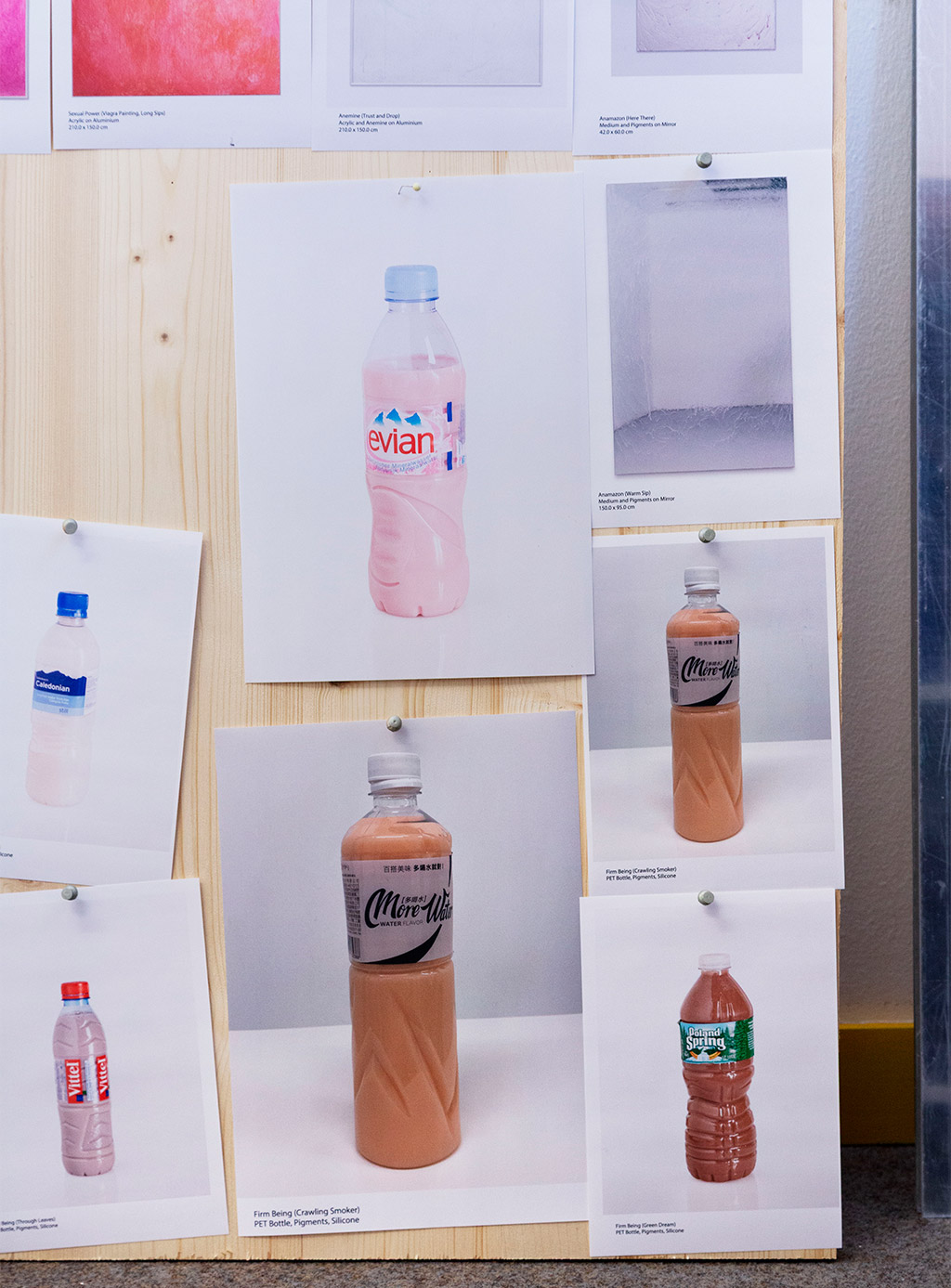
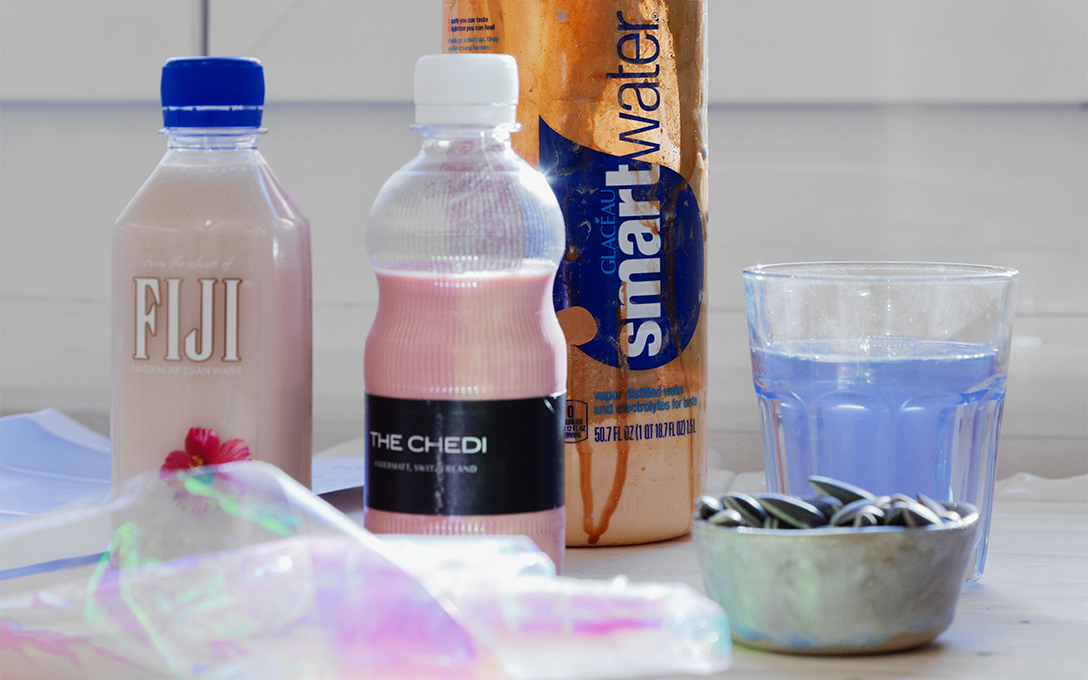
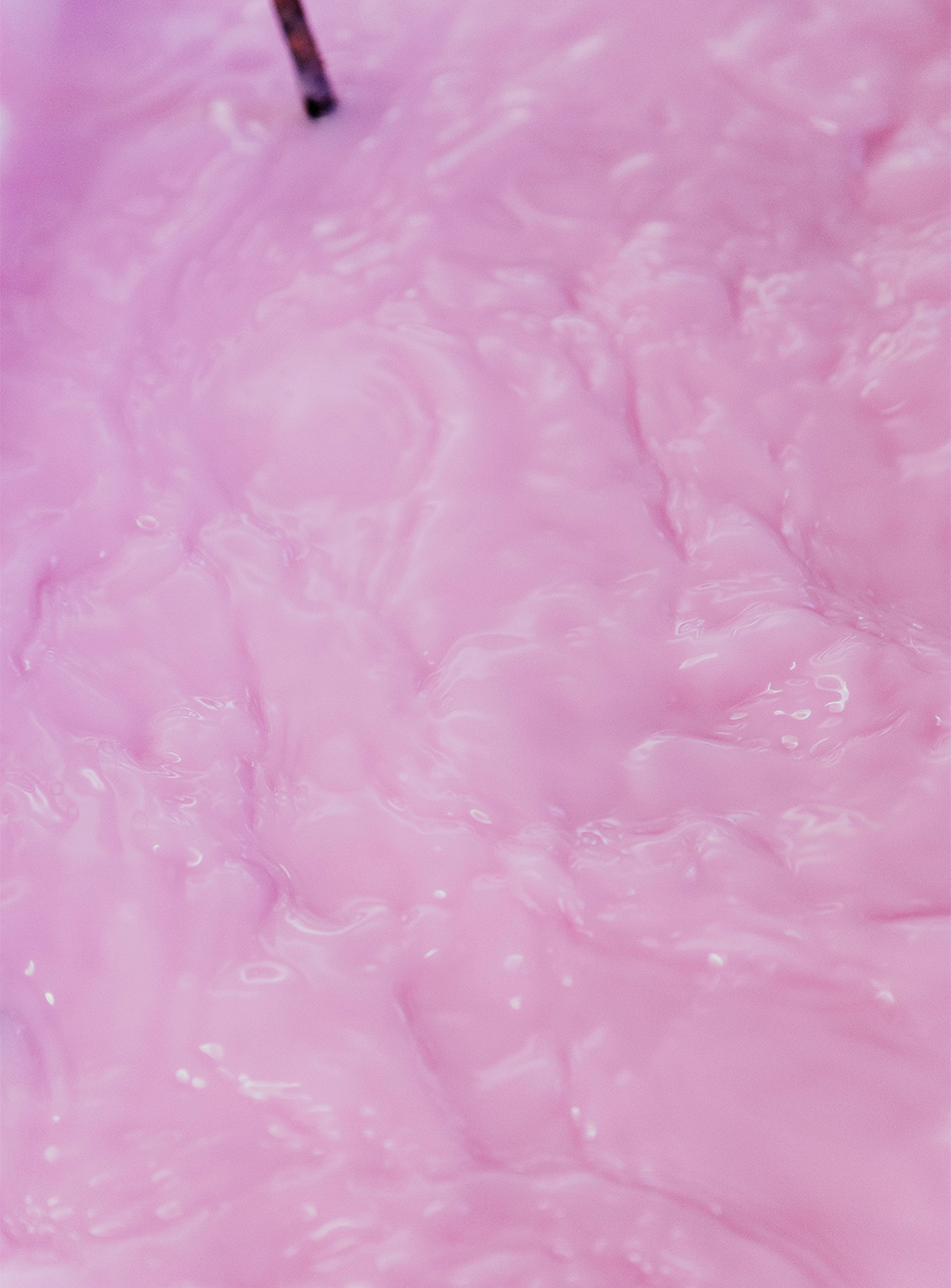
This reflects a similar interest in ideas about the body. Brands like Fiji advertise with ideas of being pure and untarnished – ‘Untouched by Man’ or ‘Uncompromised by the Air of the 21st Century’ are their slogans. At the same time, the water is bottled in plastic, which in turn releases questionable substances. In my work, I replaced the water with a silicone mixture containing pigments, the colour of which is reminiscent of various shades of human skin. The monochrome colour becomes a quasi-human volume that fills the bottle and short-circuits as a product.
In addition to skin colour, the colour blue also plays a recurring role in your work – is this a reference to Yves Klein?
I am less interested in blue symbolically, so much as physically and neurologically. Our eyes are evolutionarily attuned to certain frequencies, and the blue light from screens affects our hormone balance and sleep patterns. I addressed this effect in the work Alien Blue, for example. My exploration of Yves Klein was less mystical than material – I was interested in the tension that a colour can generate biologically as a medium, as well as the chemical substances associated with his early death.
You created a different kind of tension with the snake Healer – what was that about?
The snake Healer is another way of thinking about the relationship between nature and technology. It reads electromagnetic signals that influence its movement patterns. Visitors also control it unconsciously, for example with their mobile phones. I am interested in how expectations arise in the art space and how technology and instinct intertwine.
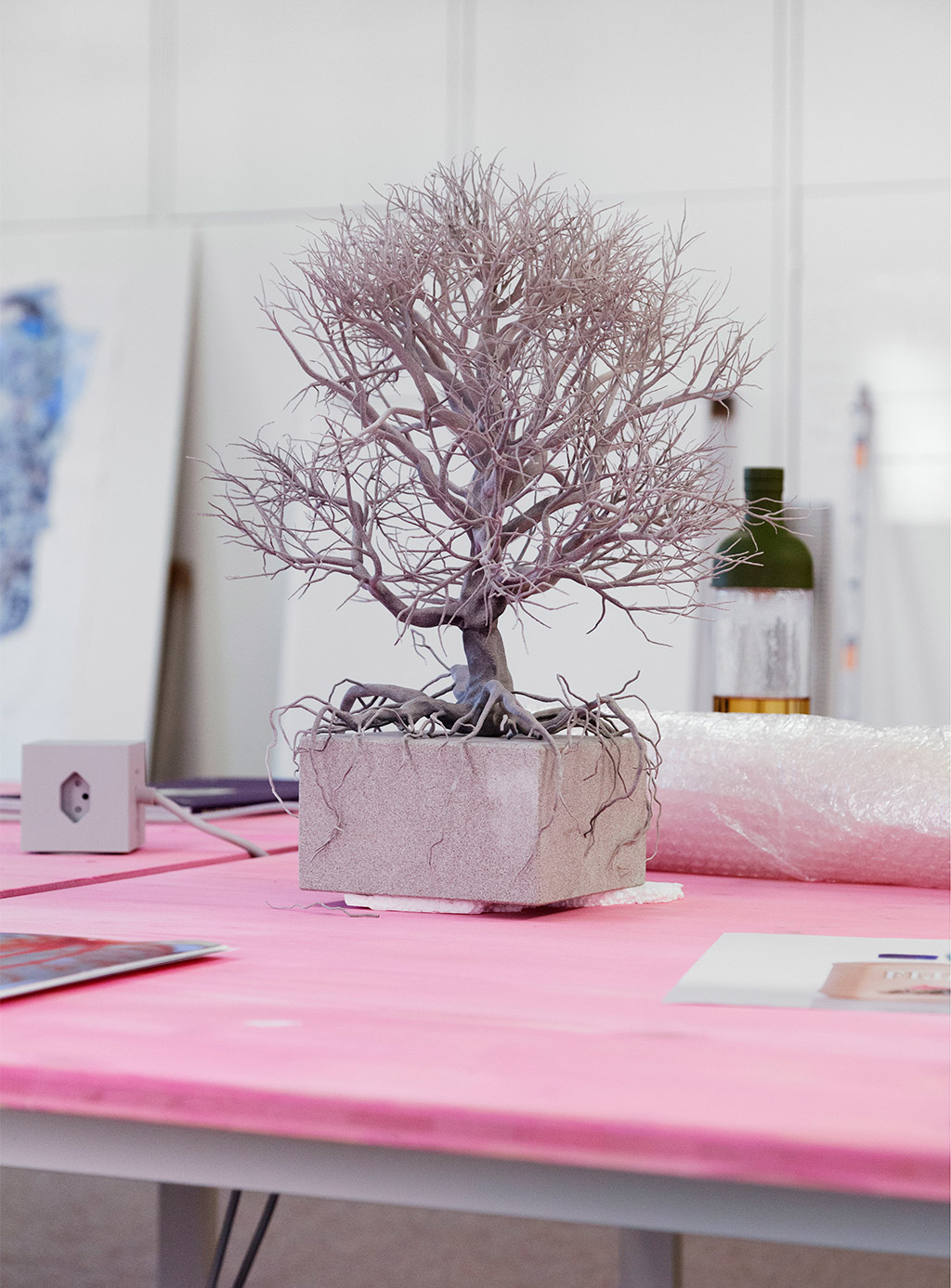
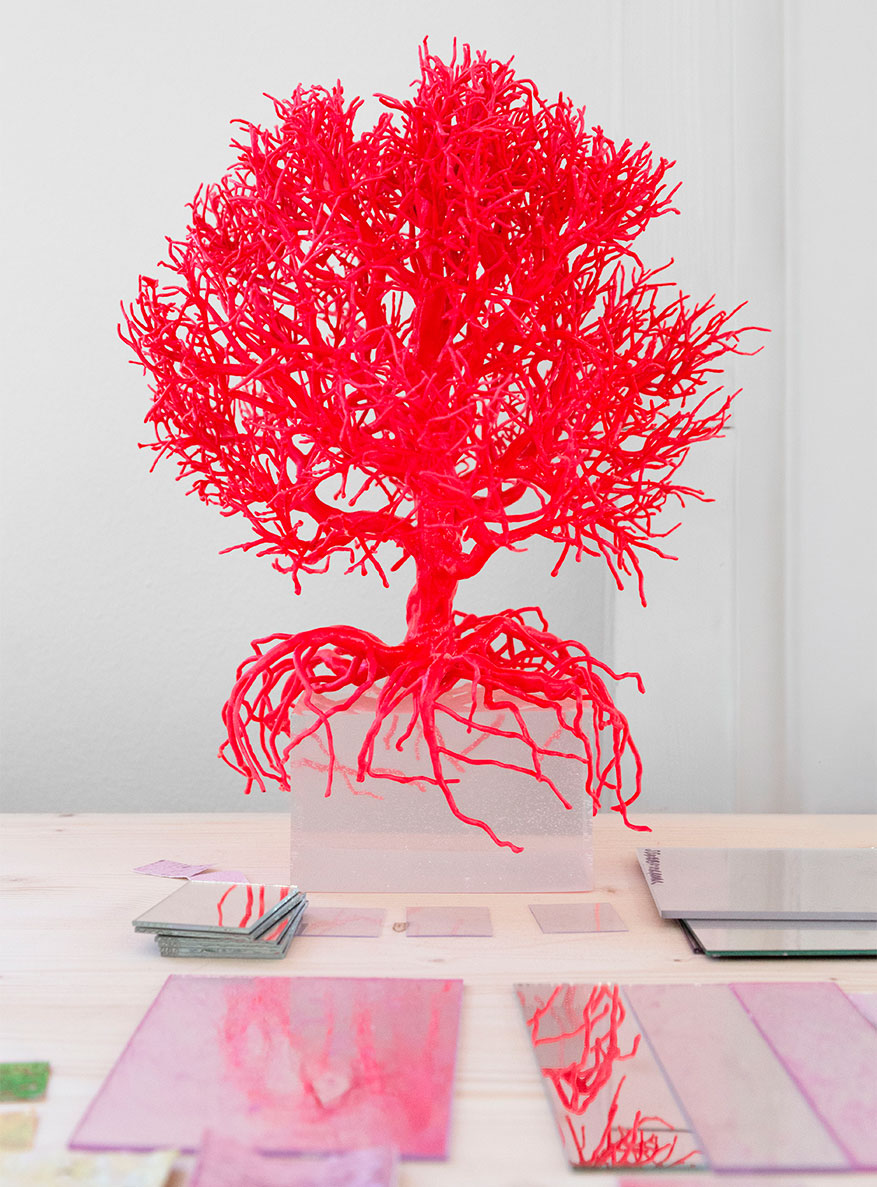
At first glance, the sculpture Old Tree, a huge pink tree that was on display on the High Line in New York in 2023, also seemed very artificial. On closer inspection, however, one was fascinated to discover that it also had something very natural about it...
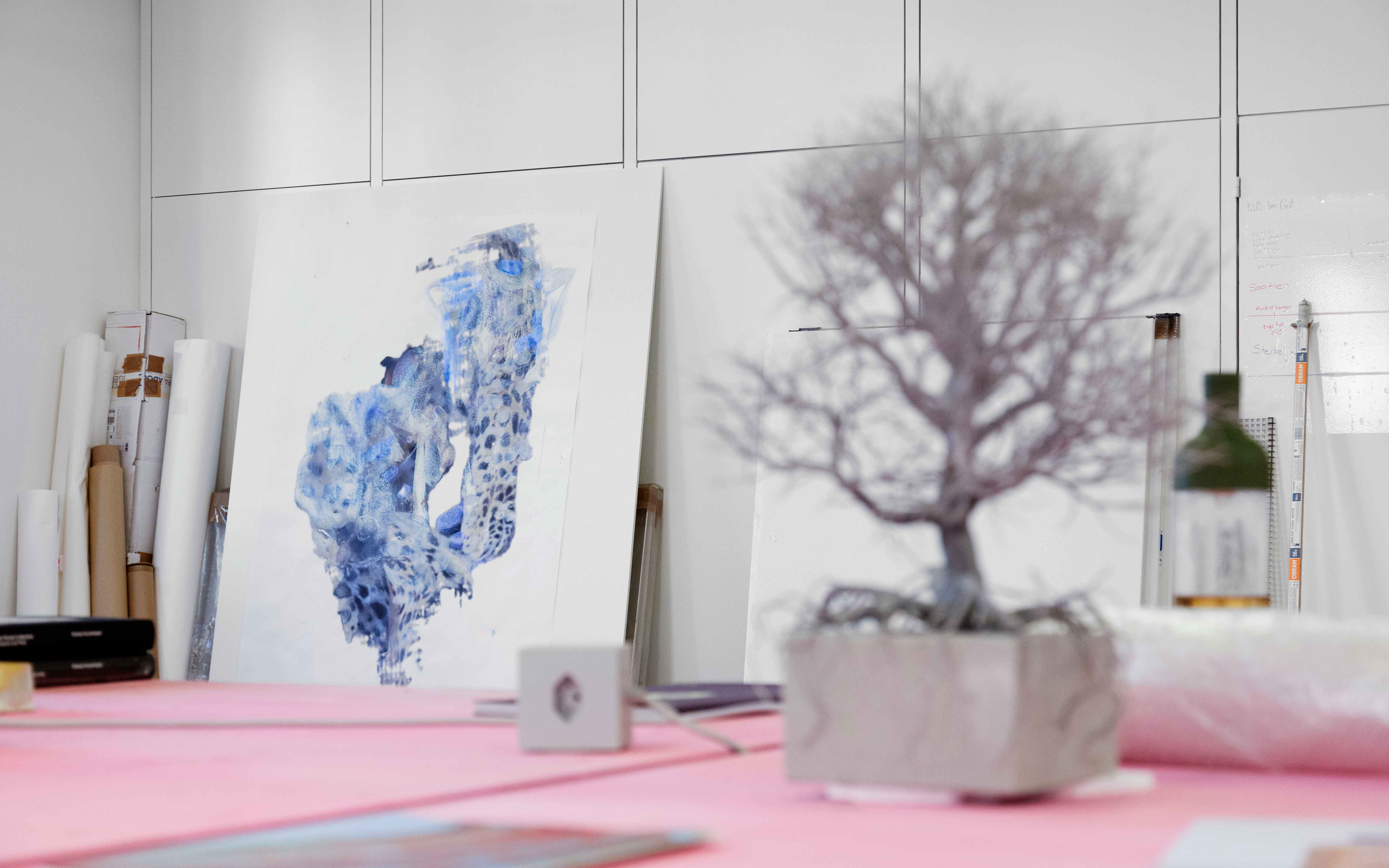
This ambivalence continues here as well. Old Tree fluoresces pink-red, and its branches are reminiscent of blood vessels or nerves, as if the tree had grown out of a human organism.
The tree attracted attention and had something very aesthetic about it: does beauty play a role in your work?
I am highly interested in beauty. However, beauty in the form of purity is a very fragile and questionable constellation. I believe that beauty only becomes truly interesting when it attracts, but also contains, something irritating. This tension creates distance – and reflection.
Speaking of reflection: you are interested in the theory of speculative realism, which, in simple terms, states that reality exists independently of human thought. What attracts you to this idea?
I generally like to engage with speculative knowledge and am interested in theories that incorporate contemporary thinking. I am particularly concerned with the question of what actually makes us human – and how art can help us to reflect on this.
Should art ask these questions?
Yes. For me, art should ask big questions without making hasty judgements. For me, it is the place where thought and feeling come together like nowhere else.
What inspires you?
My inspirations are less so individual images, more ‘templates’ and more encounters and tensions – with people, materials and concepts. Sometimes even with very concrete situations in which something suddenly shifts and a feeling or thought emerges that seems unfamiliar to me.
You met Louise Bourgeois in New York. What was that encounter like?
It was an incredible encounter. She was already very old, I think 95. I had the feeling that she was almost oscillating because she was still so mentally alert and present, but her body seemed so delicate and frail, and emotionally she belonged to Picasso's generation. I was so grateful to meet her; I had just finished my studies, and she had long been one of my heroes. When she looked at my work, she told me repeatedly that I should not take myself so seriously, but equally that she was impressed I seemed to take myself so seriously. She was so attentive and somehow loving, even though she was demanding at the same time. It was so intense and felt like another whole art degree to me, even though it only lasted about three hours.
What did you learn from it?
Through Louise, I also discovered this mixture of intimacy and harsh clarity in myself. It takes a lot of courage to face your own vulnerability. But this also makes us deeply human, and that is what art ultimately is for me: it is deeply human and can show us who we are. Meret Oppenheim was also important to me, of course. Her art, and above all, the fur cup, is a work that makes an immediate impression – before you even begin to ‘understand’ it. It is sensual, funny, irritating, and immediately creates tension between attraction and repulsion, between object and body, between incorporation and disgust. I am very interested in this kind of sensitive disturbance, precisely because it does not have to be loud to have a strong effect.
Is this ‘disturbance’ necessary in art?
I wonder why art moves us at all – not only in terms of art history, but also neurologically. I am fascinated by what gets ‘under the skin’: smells, surfaces, light, image recognition, small molecular processes that we hardly perceive consciously, but which can strongly influence behaviour and perception. In my early works, I dealt with material in a very physical way because I am interested in precisely this interface between the inside and the outside: what remains visible when something passes through the body or when a material becomes a carrier of meaning?
Speaking of material: which materials do you appreciate?
I am regularly inspired by everyday materials and objects: plastics, synthetic pigments, silicone, smells, consumer products. Not because I simply want to comment on them, but because they actually shape our living environment – atmospherically, but also biologically and physically. Perhaps you could say that I try to take a more urgent look at things that we have long accepted as being neutral.
What are your current projects?
At the moment, I am working on several pieces that continue my interest in artificial life and emotional simulation. These include new robotic works as well as large-format sculptural installations. At the same time, I am developing works for upcoming exhibitions and continuing my research into materials that can evoke physical processes such as tears, hormones or skin-like surfaces. Works involving AI-generated image production, animation and reactive environments are also playing an increasingly important role.
How can we imagine this?
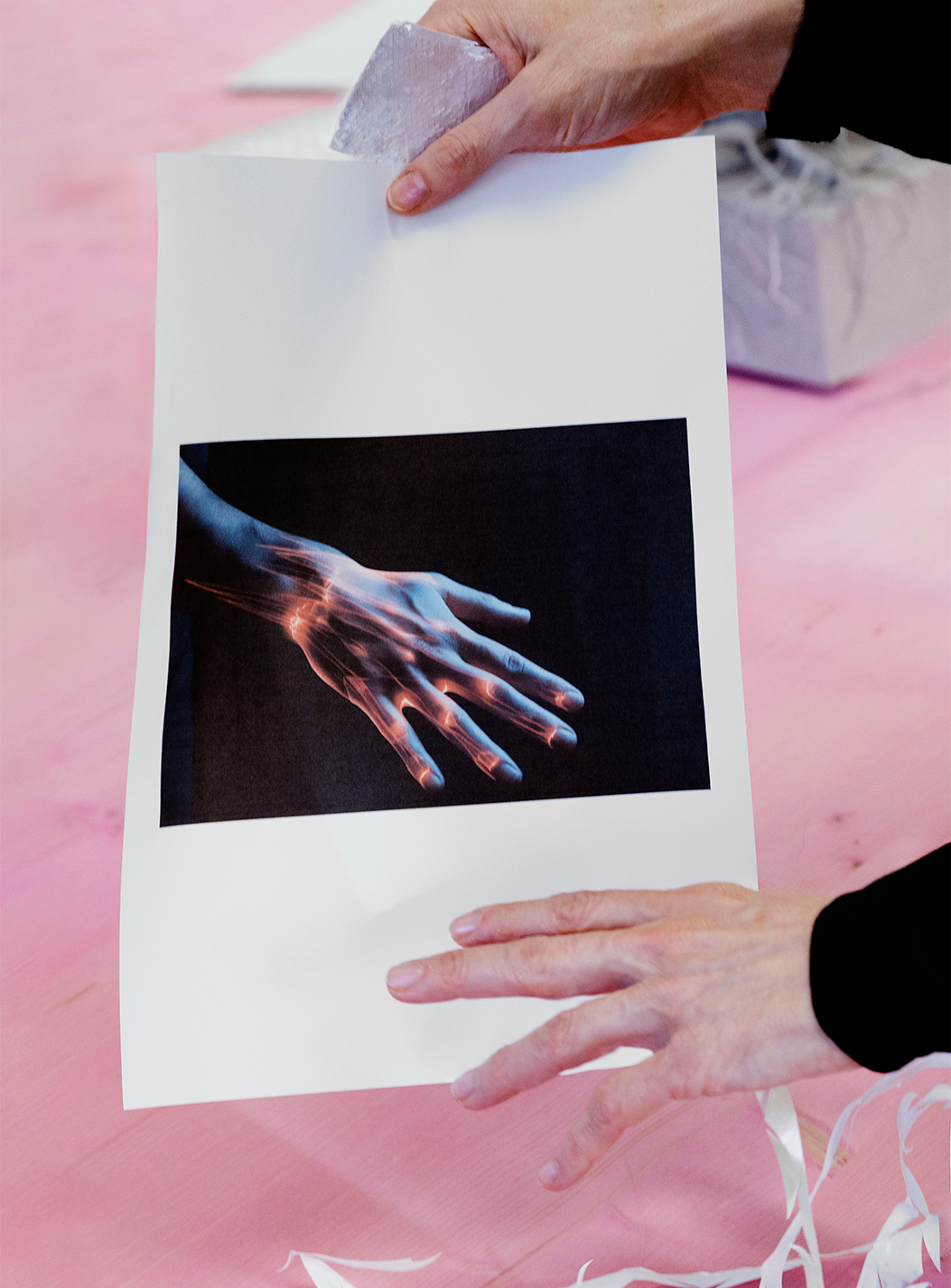
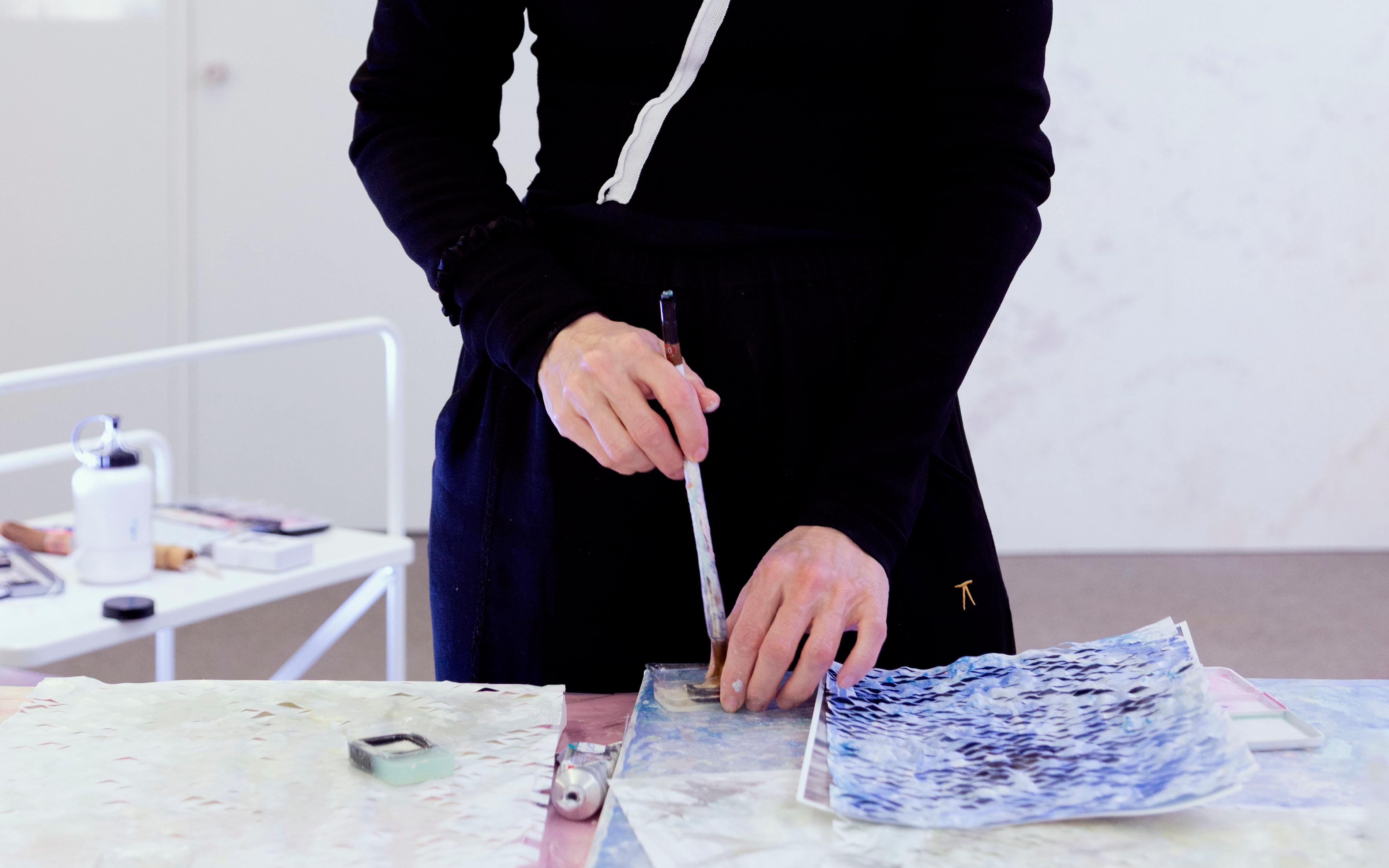
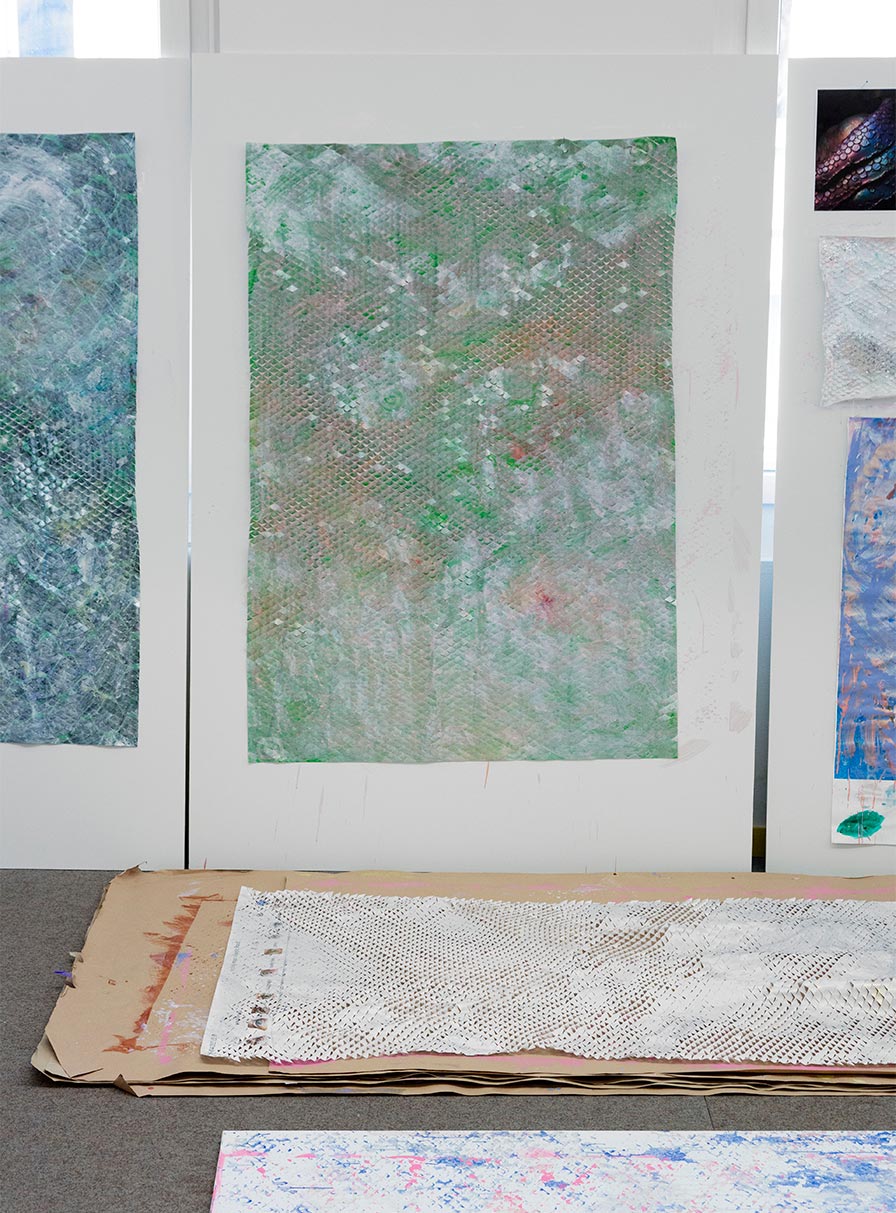
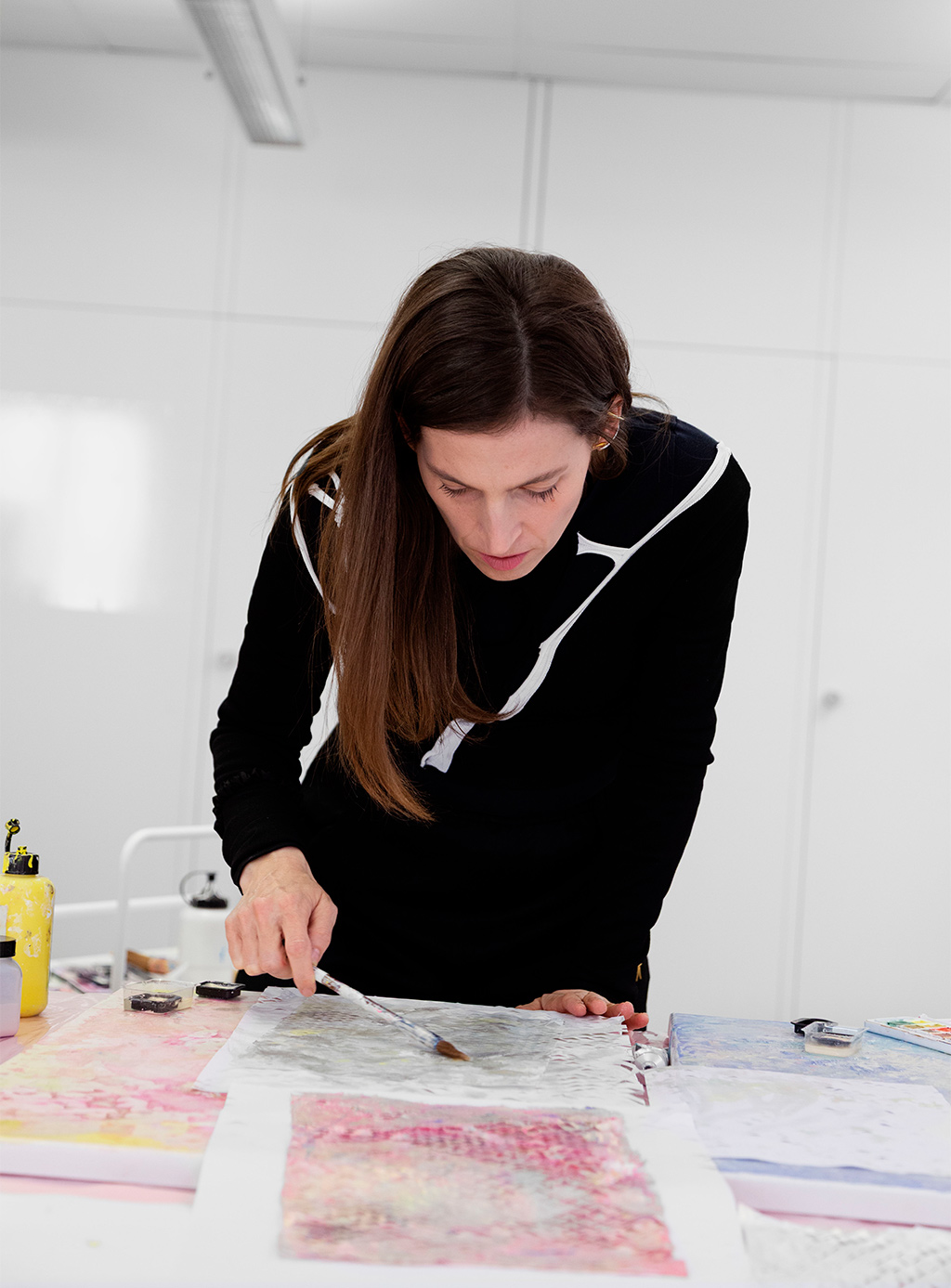
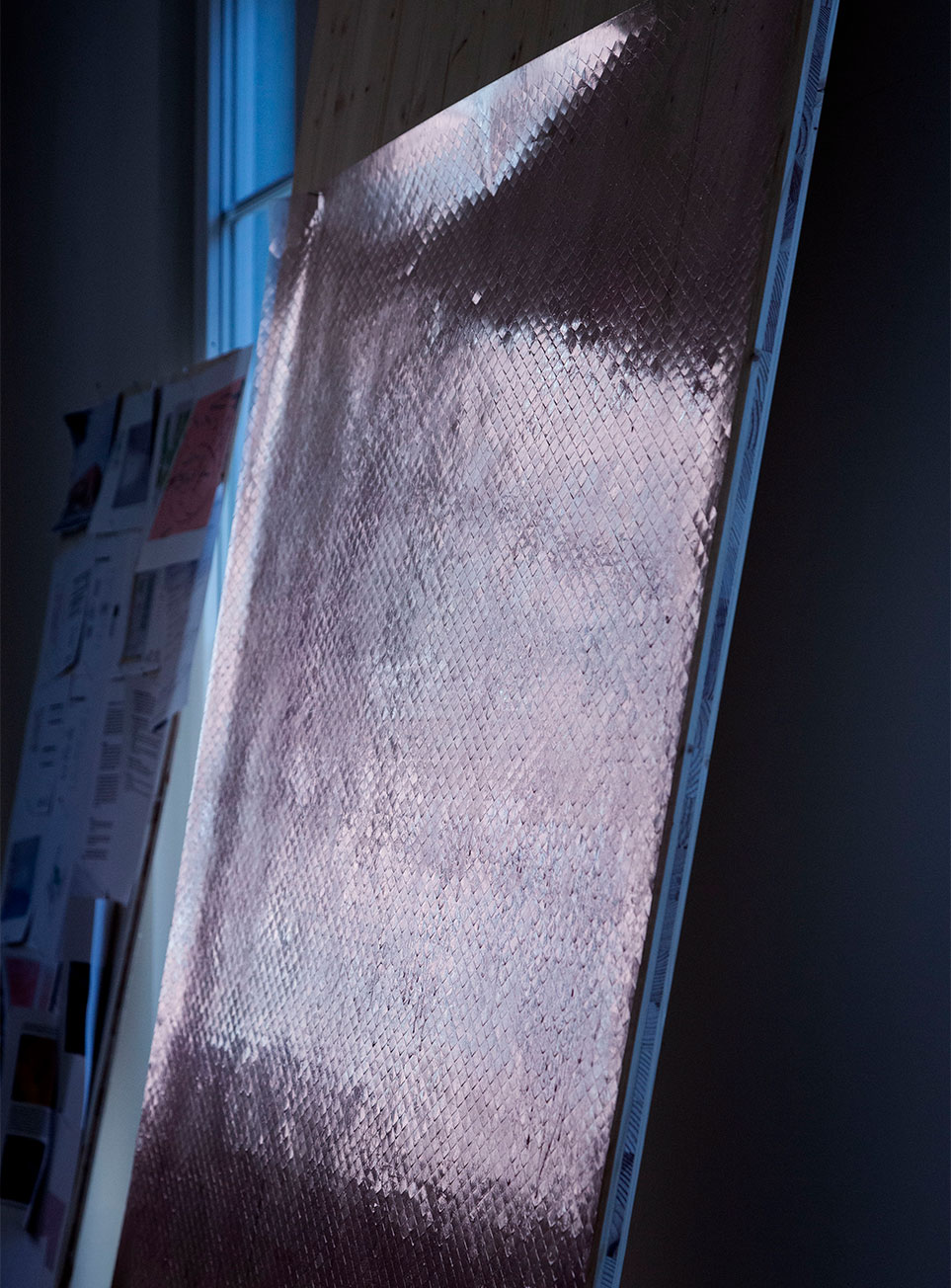
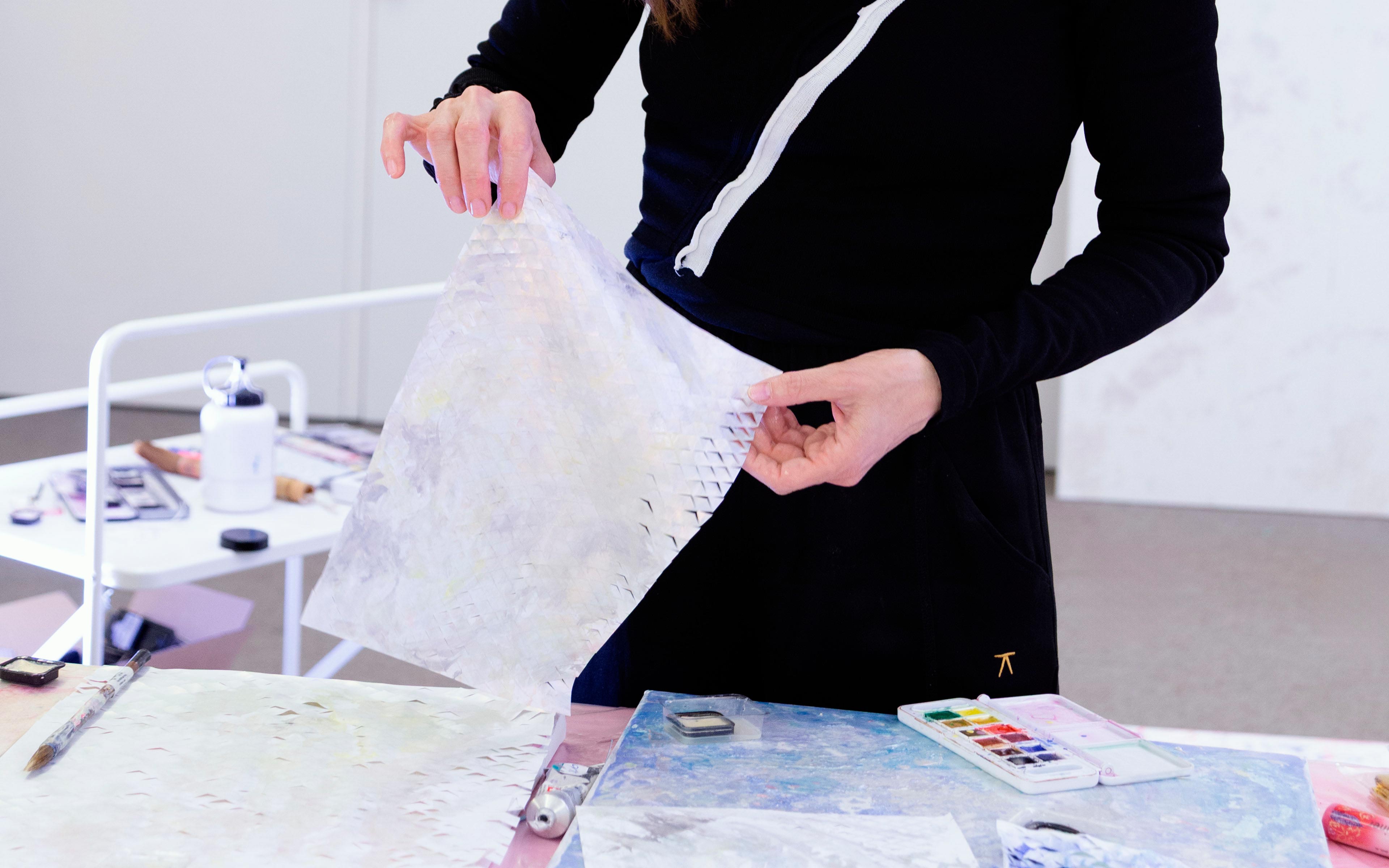
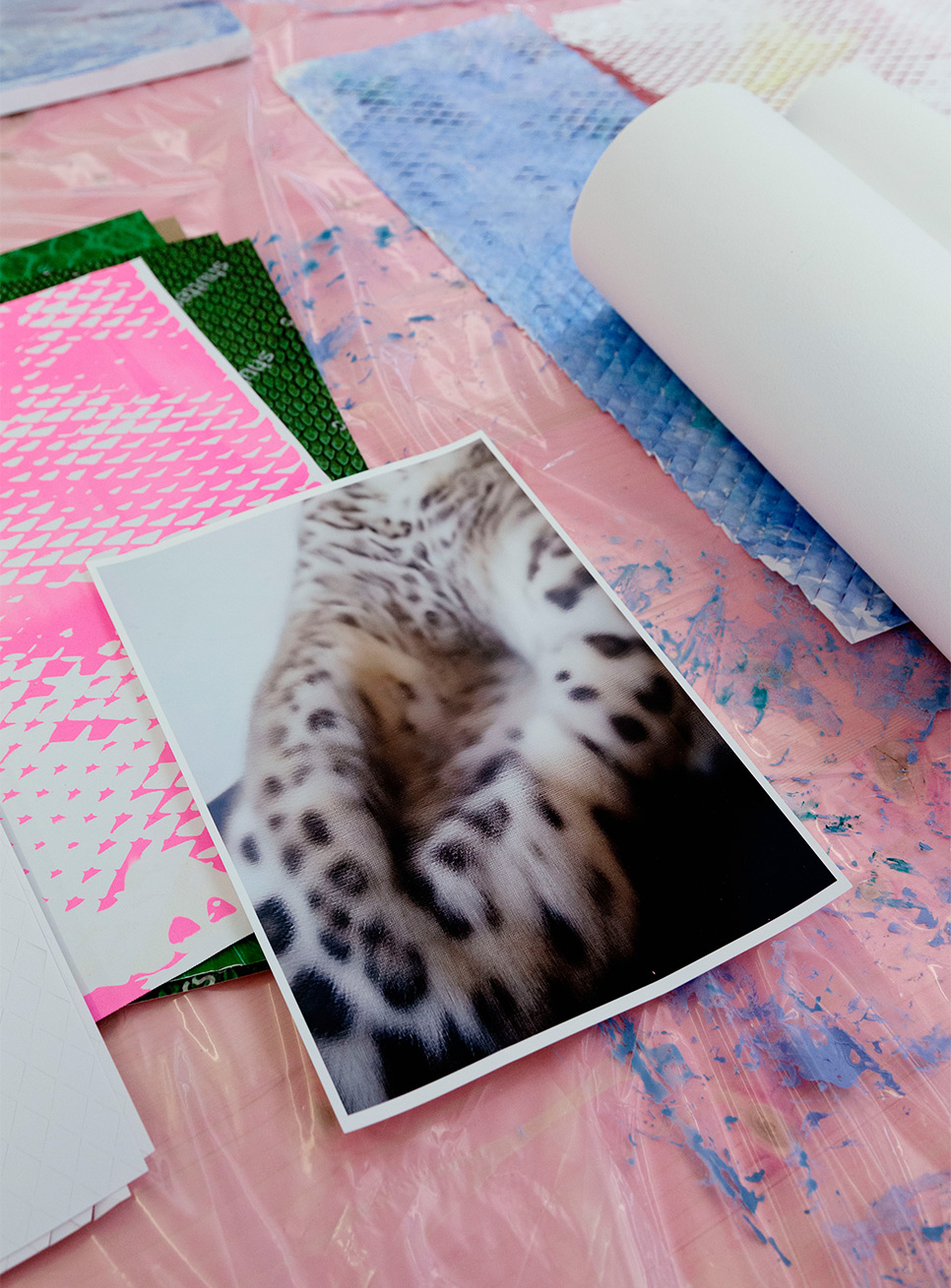
One focus is a new generation of Healer Scrolls. In these works, I combine forms of AI image generation with a very physical, seemingly alchemical, painting process. The images often begin with prompting dreamlike scenes – such as animals that only appear to be real but are humanised, interacting with food or language – and then translated into membrane-like paintings, which I then paint. The surfaces are structured like skin cells or codes. I am interested in how algorithmic image production, archaic symbolism and a very material painting can come together in a single object.
Do you also continue to develop works that you have already presented?
Yes, I am also continuing my work with the robot snake Healer. For New Humans: Memories of the Future, the show marking the reopening of the New Museum in New York, a new version was developed, entitled Healer (Skies). The snake has shimmering blue skin, hand painted this time, and its behaviour influenced by electrical noise.
How does it move?
The signals subtly modulate its movements, creating a form of behaviour that oscillates between instinct and technology. The work ties in with my long-standing exploration of the snake as one of humanity's oldest symbols. In its robotic form, biological archetypes, mythological meanings and contemporary technology come together to create an object that appears both archaic and futuristic.
Do you also work on larger installations?
I have been working on outdoor sculptures since Old Tree. Another tree work is currently being created for the island of San Giacomo in Venice for the Fondazione Sandretto Re Rebaudengo. Like a hybrid body – both naturally grown and technically produced – the tree seems to want to climb over the wall surrounding the island and glows from afar across the lagoon.
Text: Alexandra Markl
Photo: Théa Giglio