Sophie Hirsch I Maruša Sagadin
11 September – 27 October 2026
Franz-Josefs-Kai 3/16, 3rd floor
1010 Wien
Opening times
Wed – Fri 12 – 6 pm
Sat 12 – 4 pm
Closed on bank holidays
As part of the current exhibition at Collectors Agenda, Sophie Hirsch (*1986, Vienna) and Maruša Sagadin (*1978, Ljubljana) enter into a joint dialogue for the first time, one that engages with the body as a form-giving principle. Sculpture is understood here as something corporeal: as a structure that negotiates strength and vulnerability as much as support and care.
In a close, hands-on engagement with posture, bodily memory and emotional processes, Sophie Hirsch explores the interplay of materiality, movement and tension, in which the robust within the fragile meets the fragile within the robust. Shaped by earlier experiences at a Pilates studio in New York, she understands the body as a structure that can be formed and manipulated. Using materials such as silicone, metal, fabric, thera-bands, fascia balls and orthopaedic cushions, she creates works that draw on somatic treatment techniques while deploying the grotesque and the discomforting as much as the graceful and the seductive.
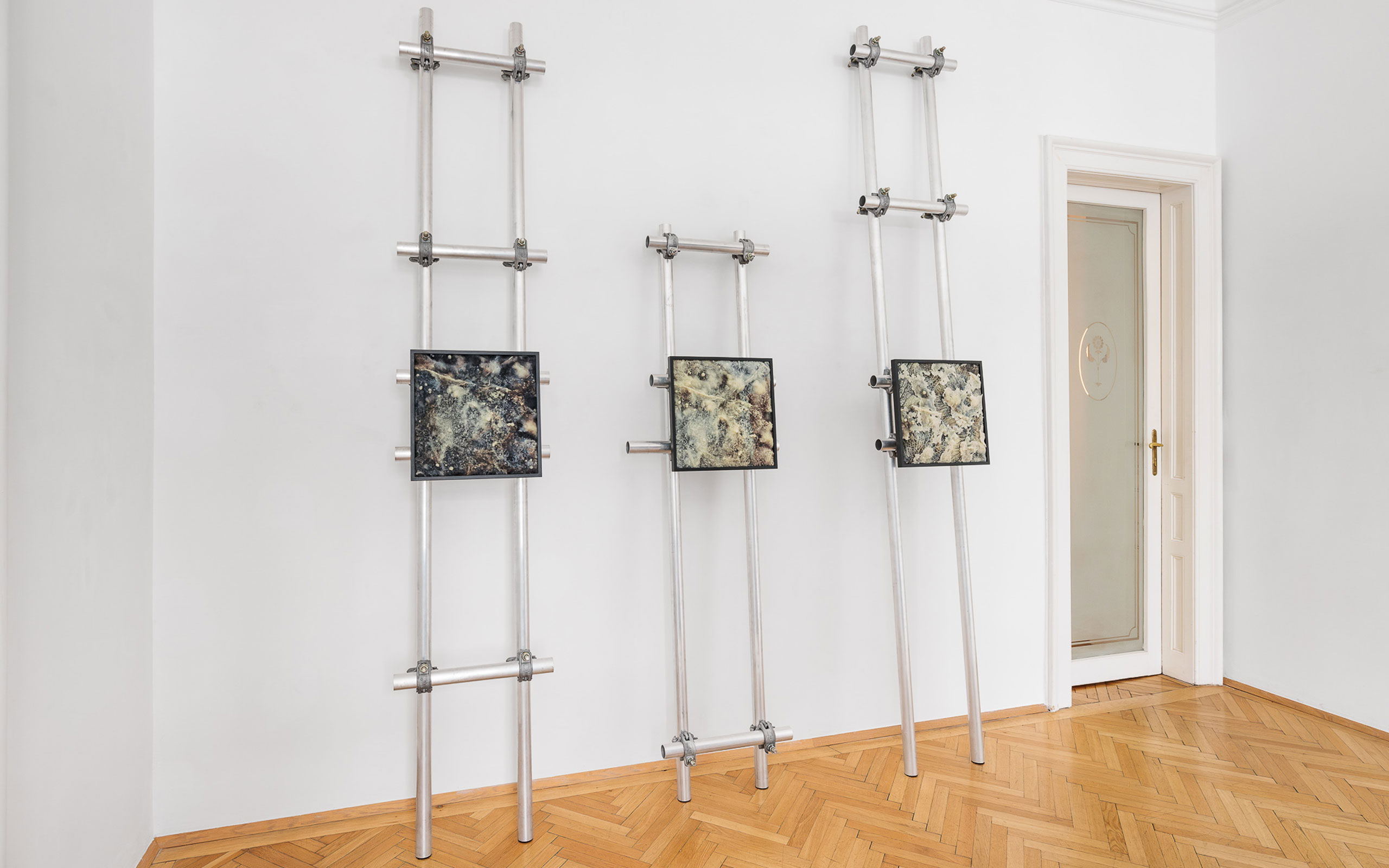
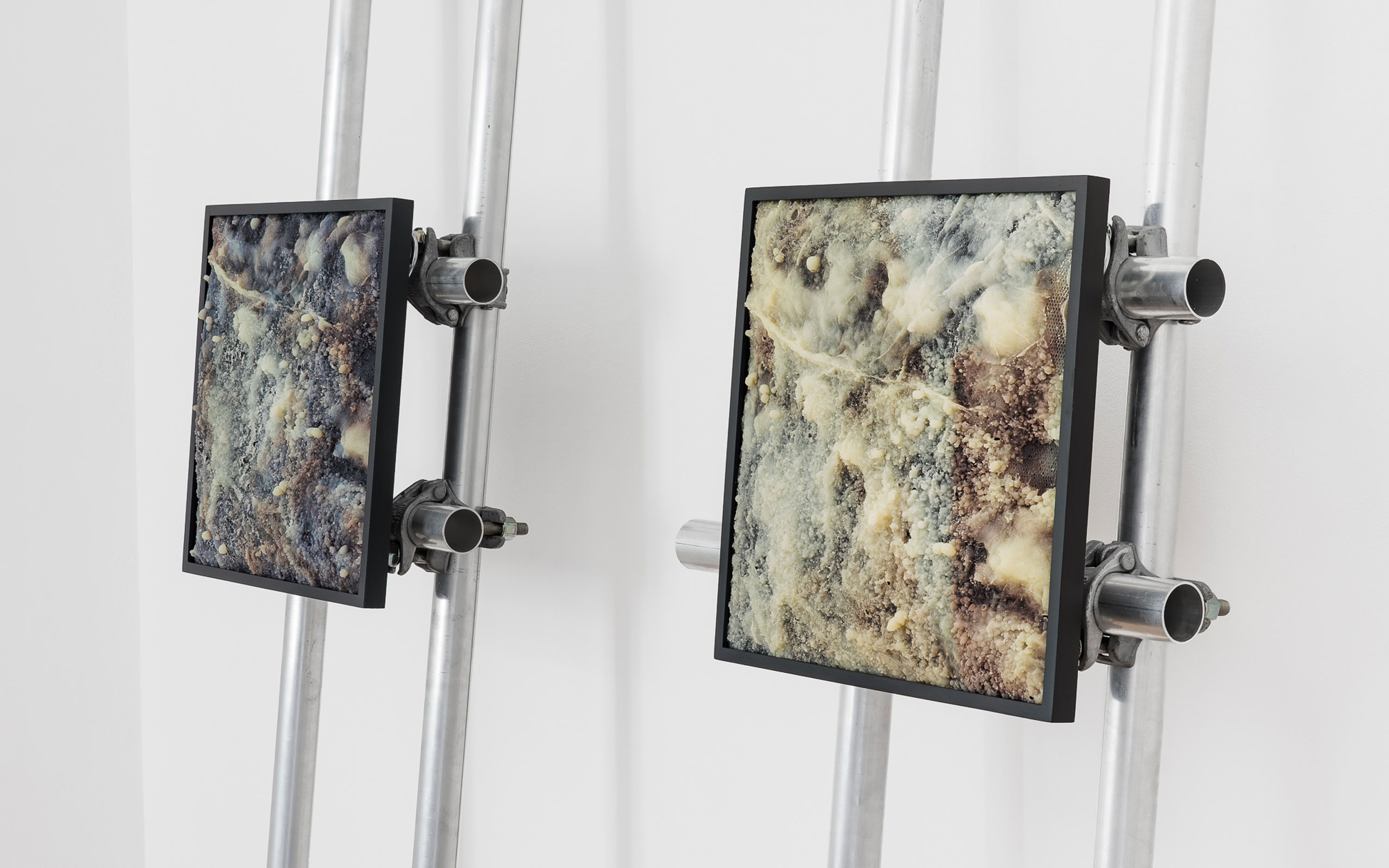
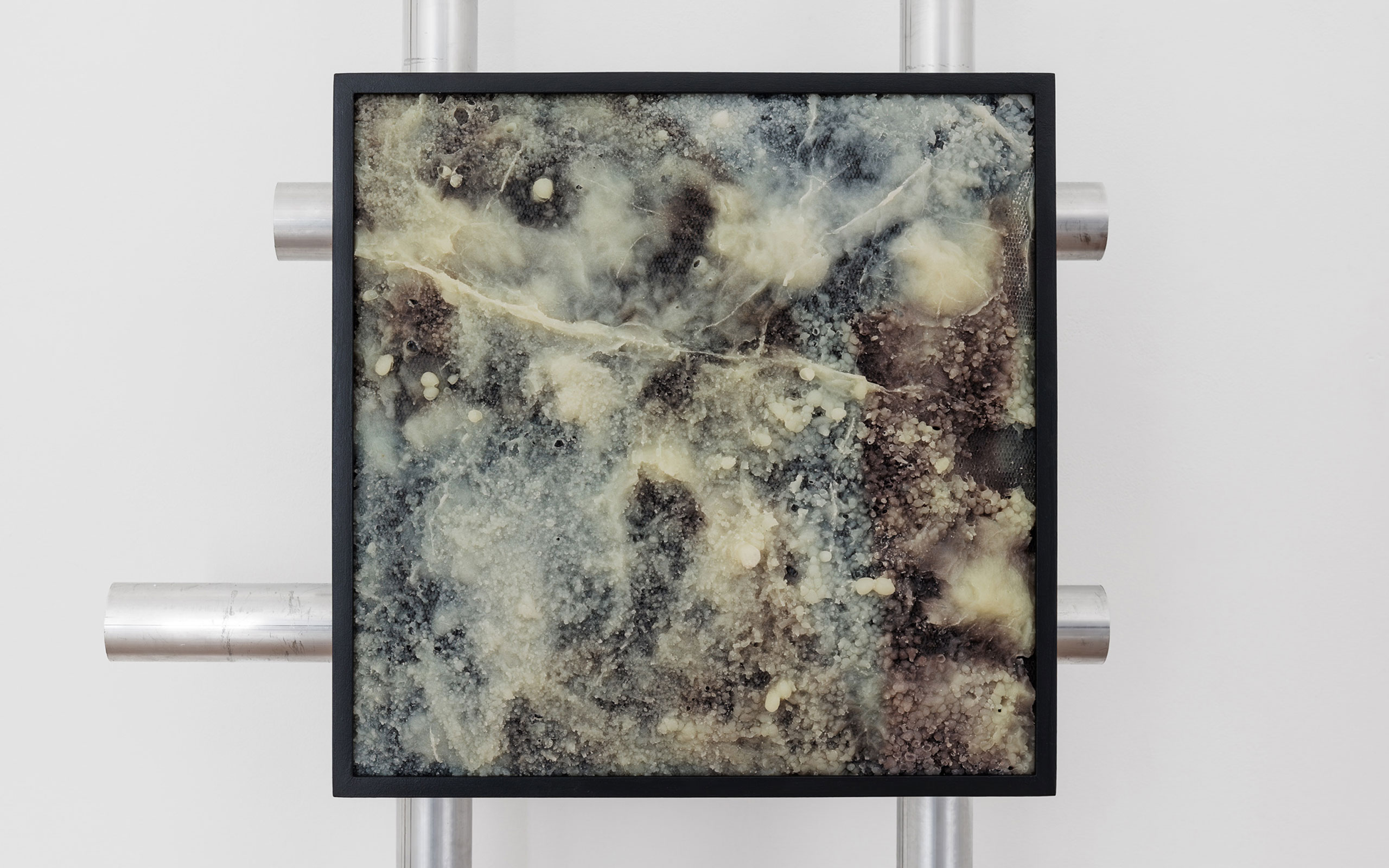
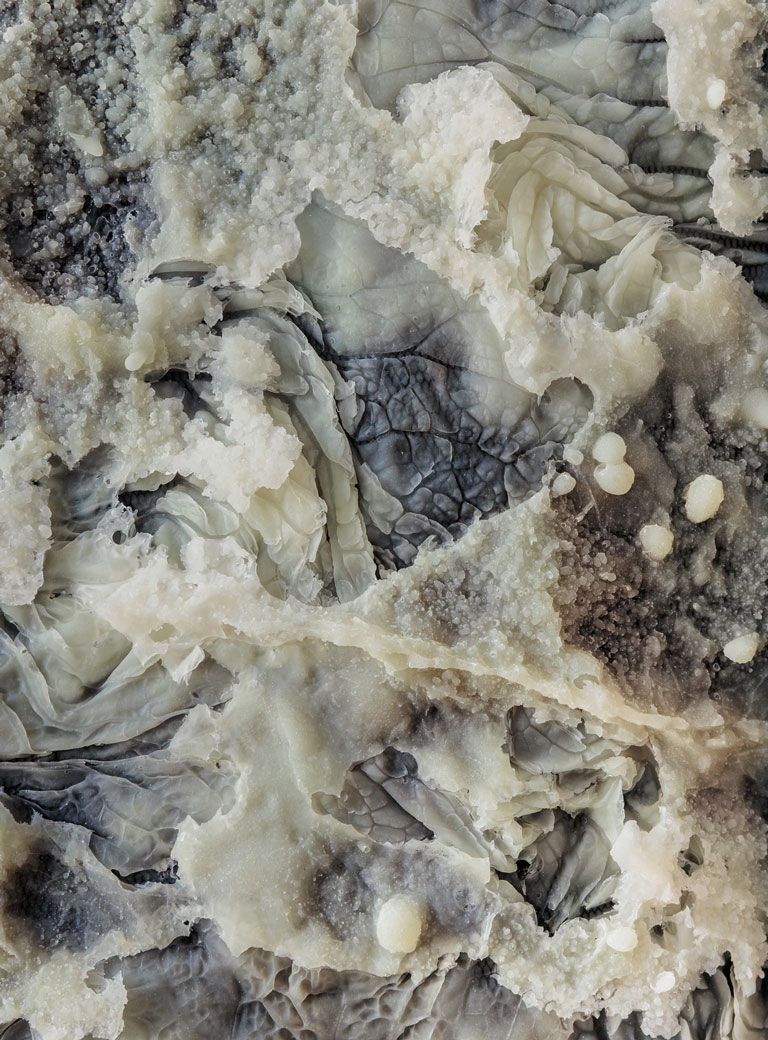
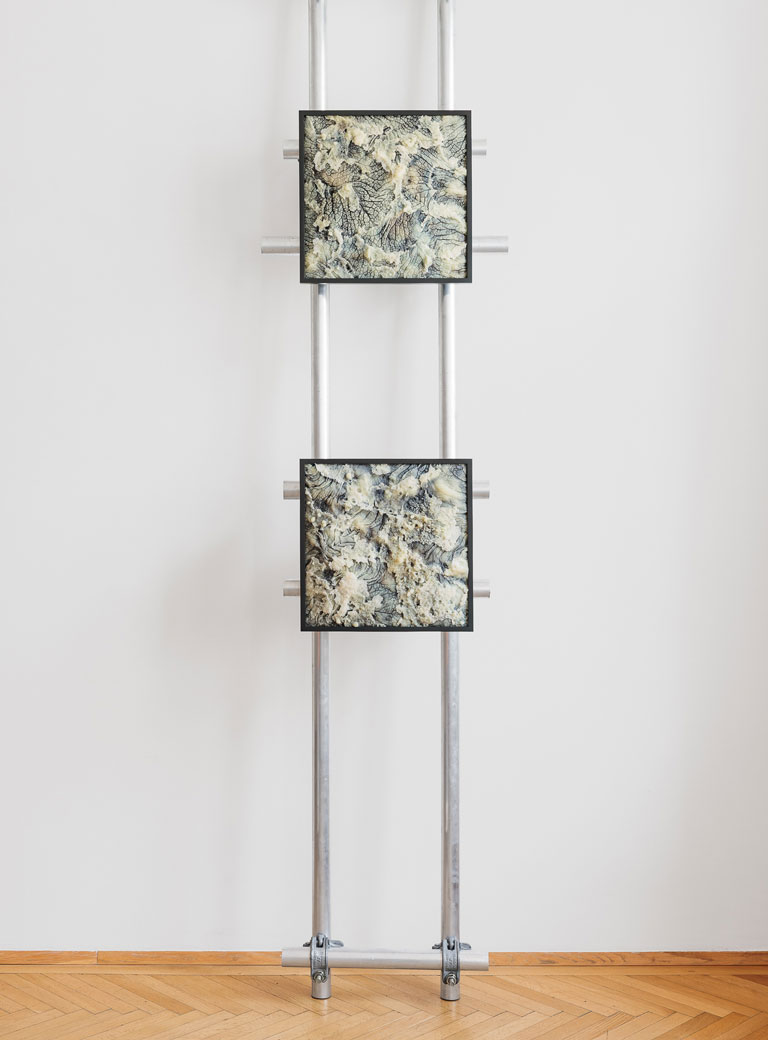
For Collectors Agenda, Hirsch presents an edition of eight wall works titled Anneal. All eight pieces originate from the same mould, yet gradually change through repeated casting, material interaction and time: subtle shifts in colour and surface turn each piece into a variation rather than a copy. The title is drawn from materials science, where annealing describes the reorganisation of a material's internal structure after stress—essentially a reshaping from within. The starting point is a plaster cast of a stone, eroded by the sea, found on the Lido di Venezia. It is the first time the artist has worked with a mould she did not create herself. She has also worked cabbage into the cast, introducing a further, natural texture. Set in square frames—a format new to Hirsch—the works function both individually and as a grid.
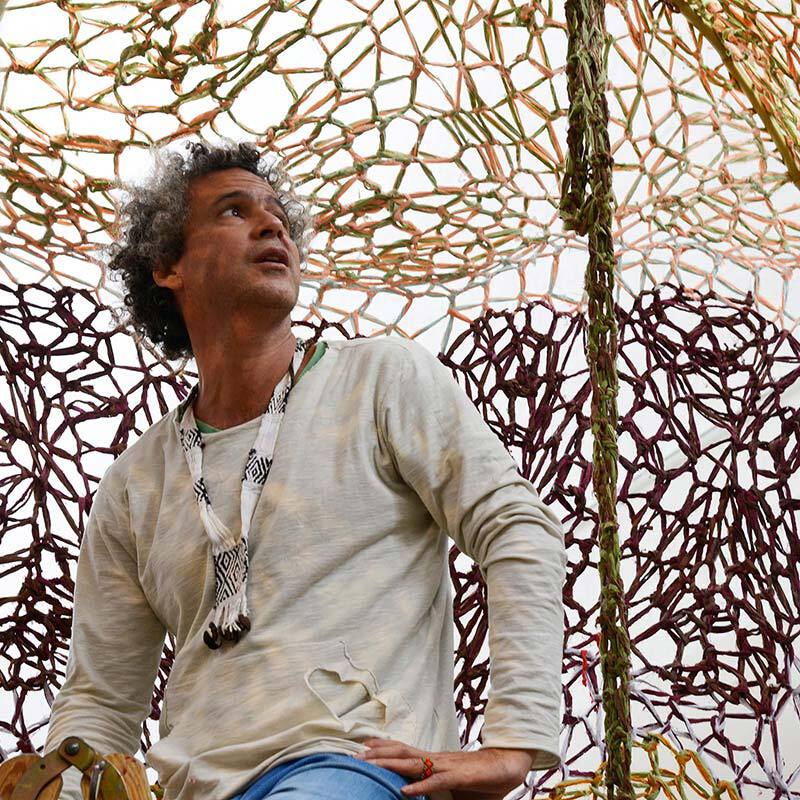
In her artistic practice, Maruša Sagadin explores the interplay of gender, language and sculpture through the means of modern architecture. Her installations and objects are conceived to function equally indoors and outdoors, often within the context of everyday, public spaces whose permeability and usability she questions, and draw on elements of pop and subculture, working with playfulness, fantasy and exaggeration. At their centre lies, again and again, the body: its form, its needs, and the care it demands. Her interest lies as much in the body of the viewer as in the human body as a universal measure for her sculptures. She frequently extends her works with a performative act that invites viewers to actively participate in the art.
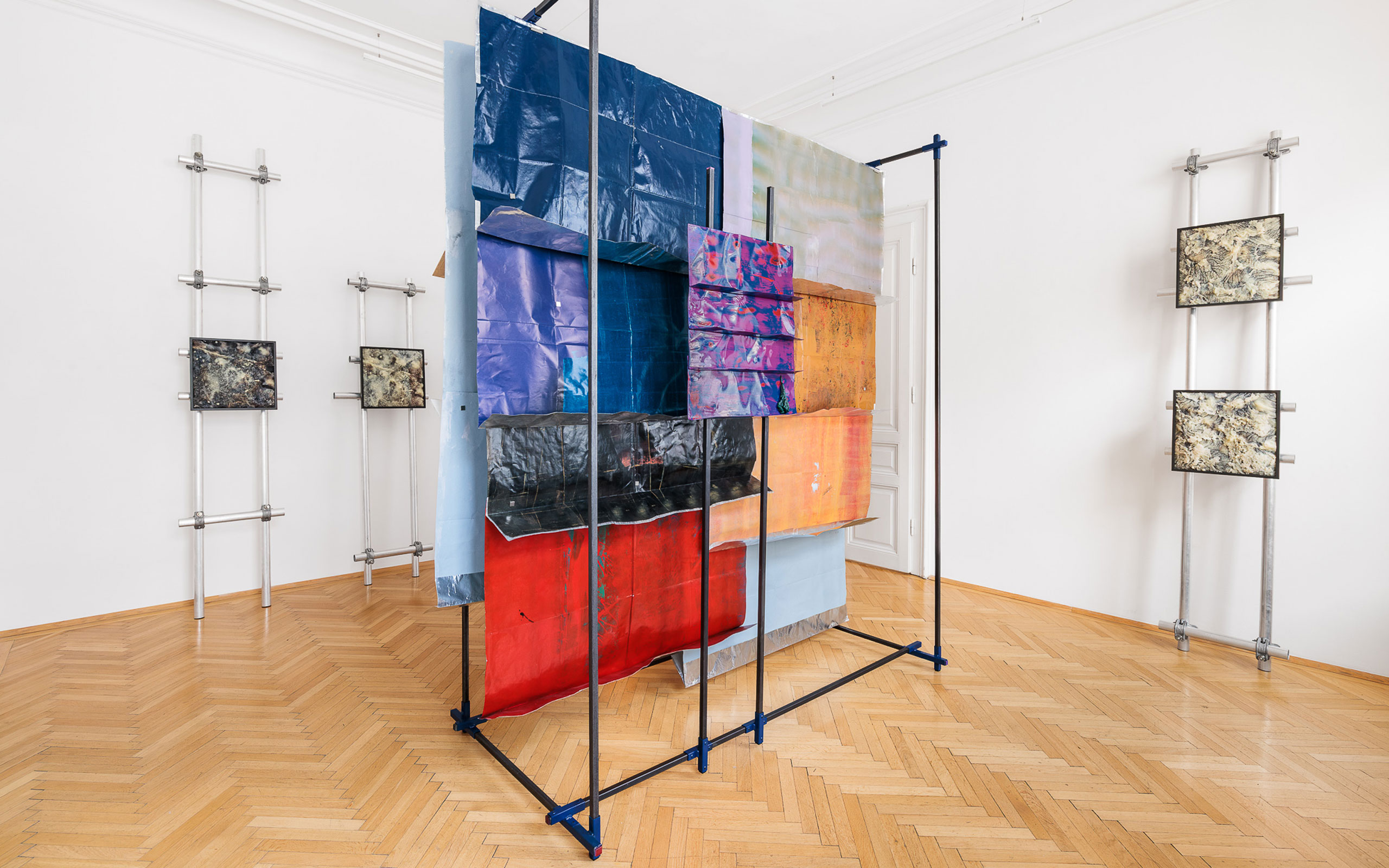
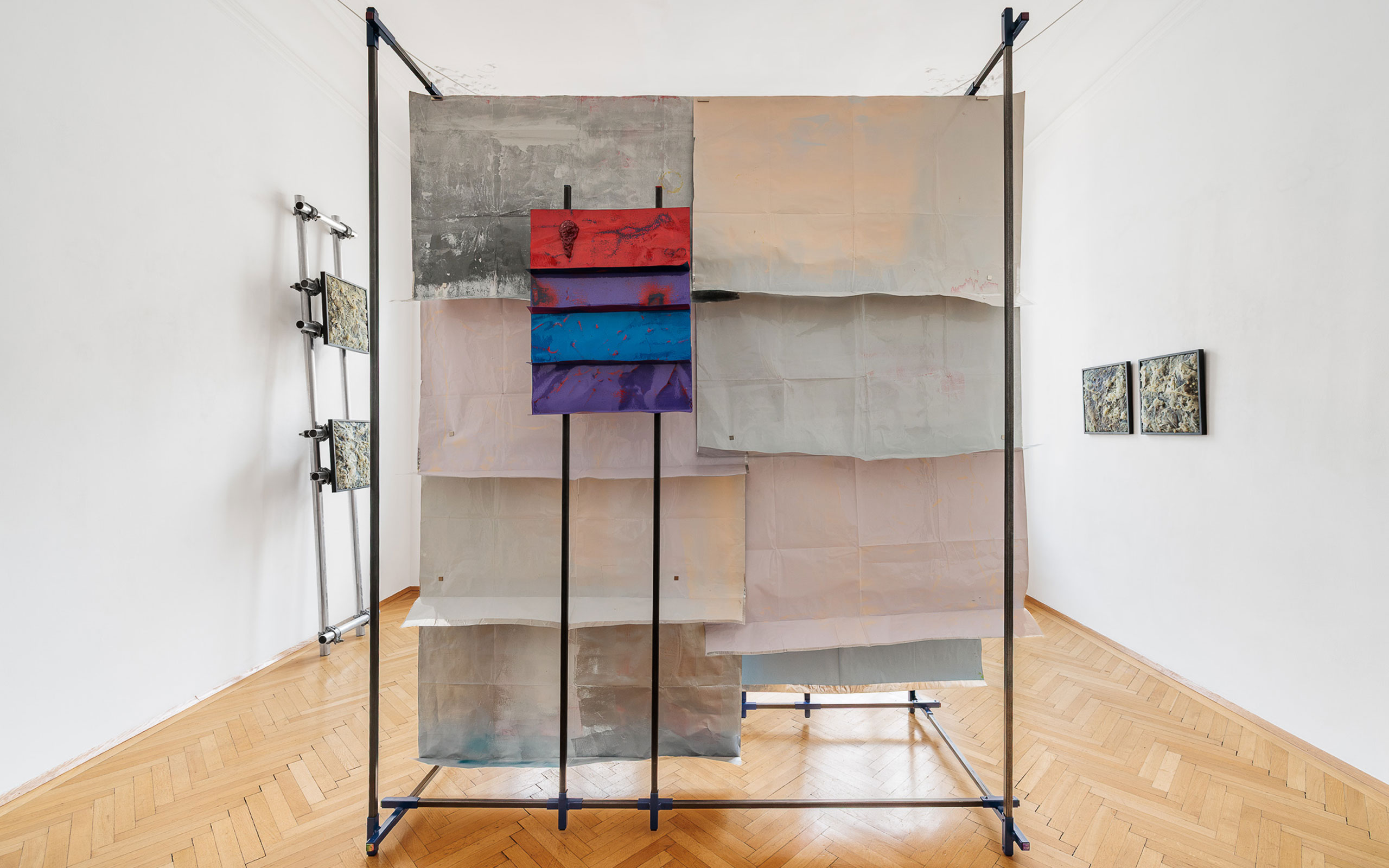
For Collectors Agenda, Sagadin creates a series titled Jealousy, which moves between painting, architecture, and object. Overlapping panels recall a Venetian blind, opening and closing over the space behind. The series has its origins in an earlier, paper-based body of work. Now, Sagadin translates this principle into metal for the first time: the steel sheets are lacquered in several layers and sanded in between, producing shifting colour nuances and a high-gloss finish. Hand-formed using the artist's own body weight rather than machine pressing, each piece acquires an irregular, handmade edge and its own fixed, unrepeatable variation. The organic shape on the surface—in the paper works, a functional magnet that held the sheets in place—appears here, still held magnetically but freed from that function, as an autonomous, almost parasitic element. The three works are presented on a scaffold that Sagadin developed specifically for the exhibition.
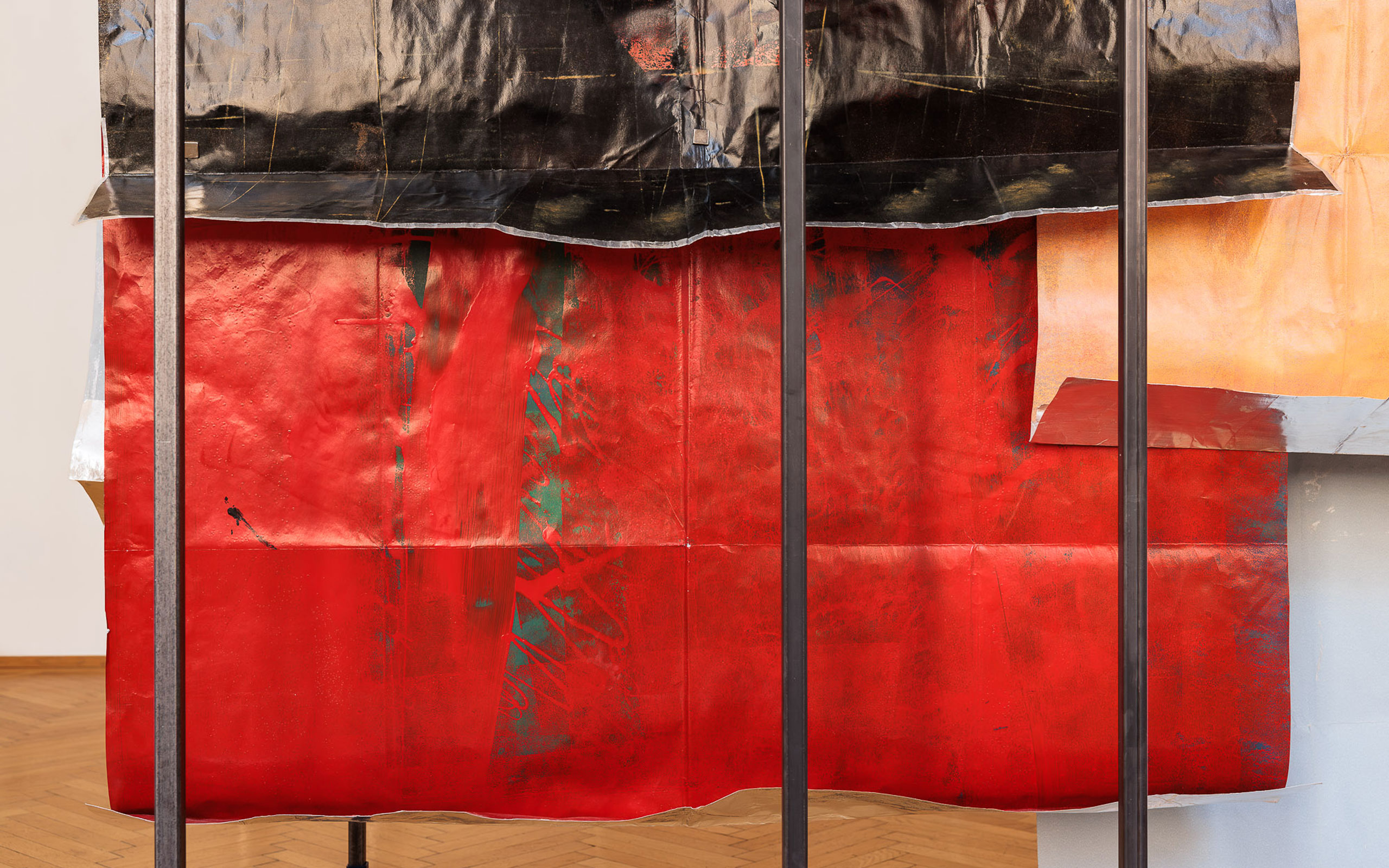
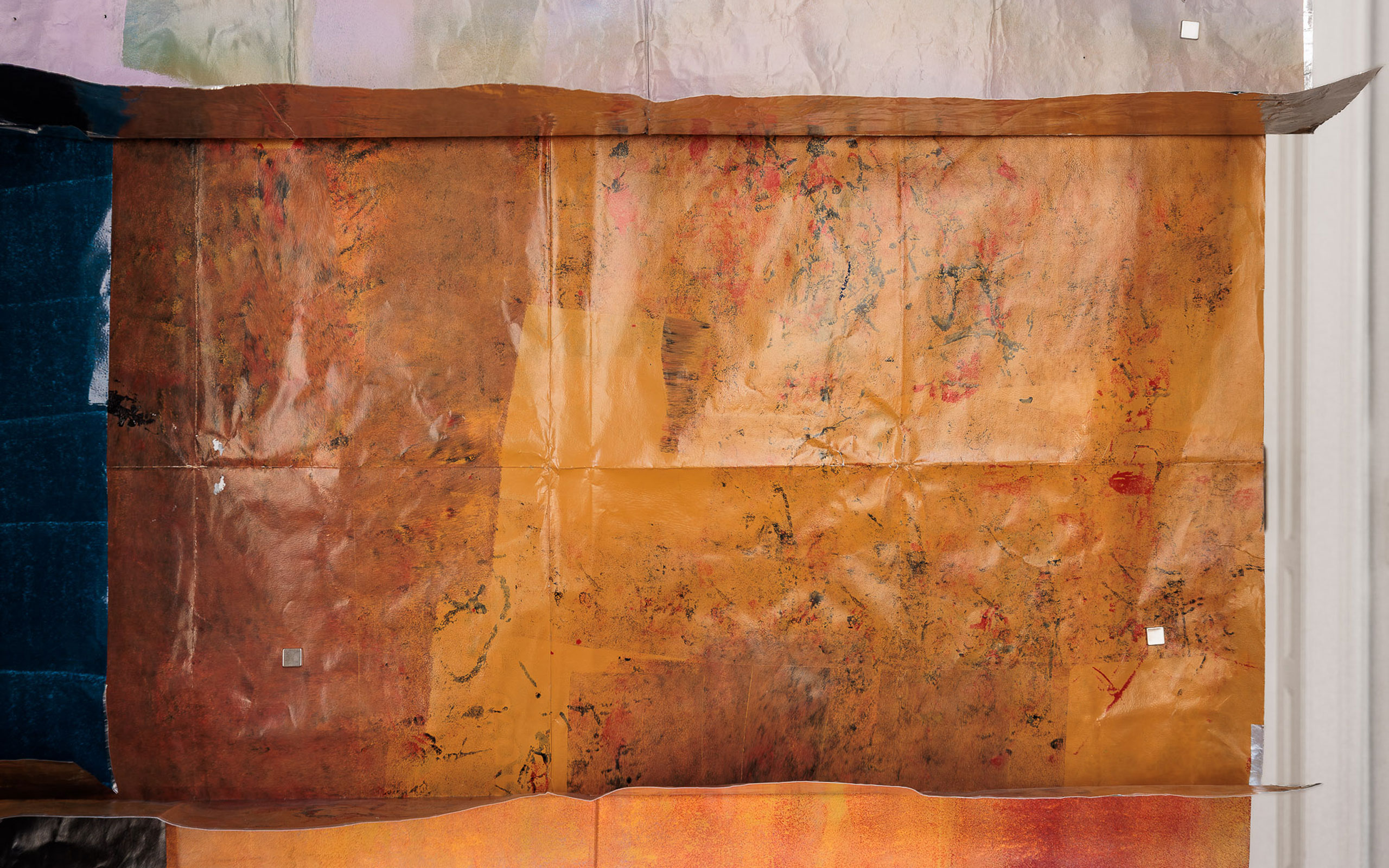
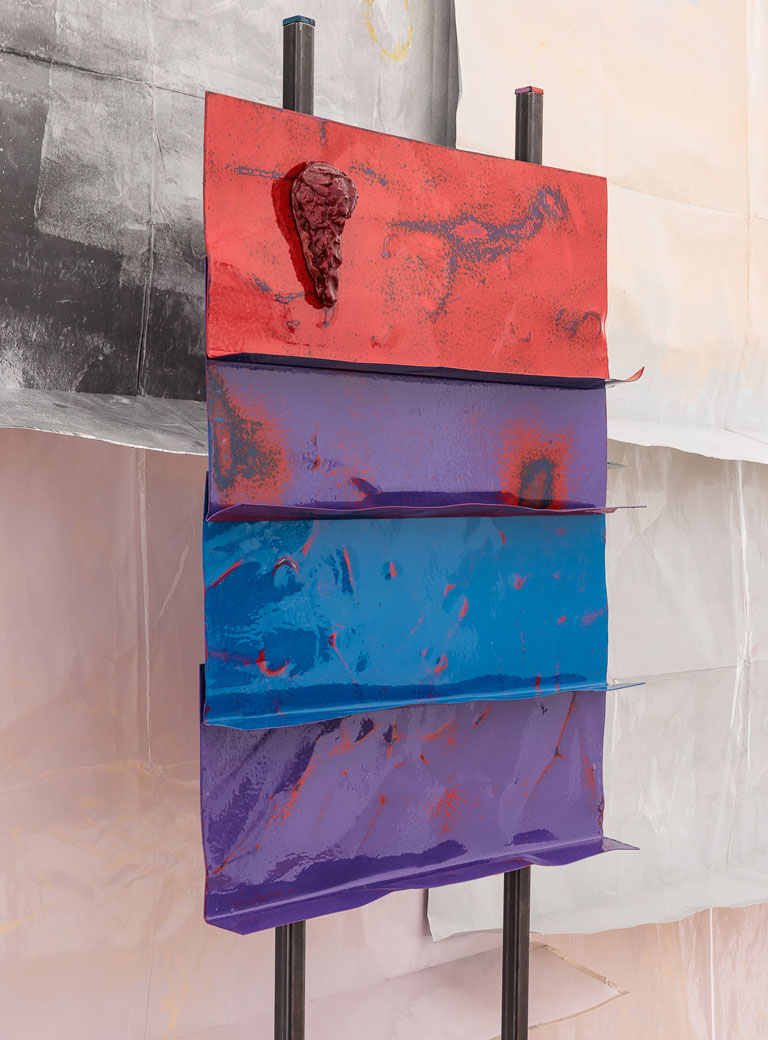
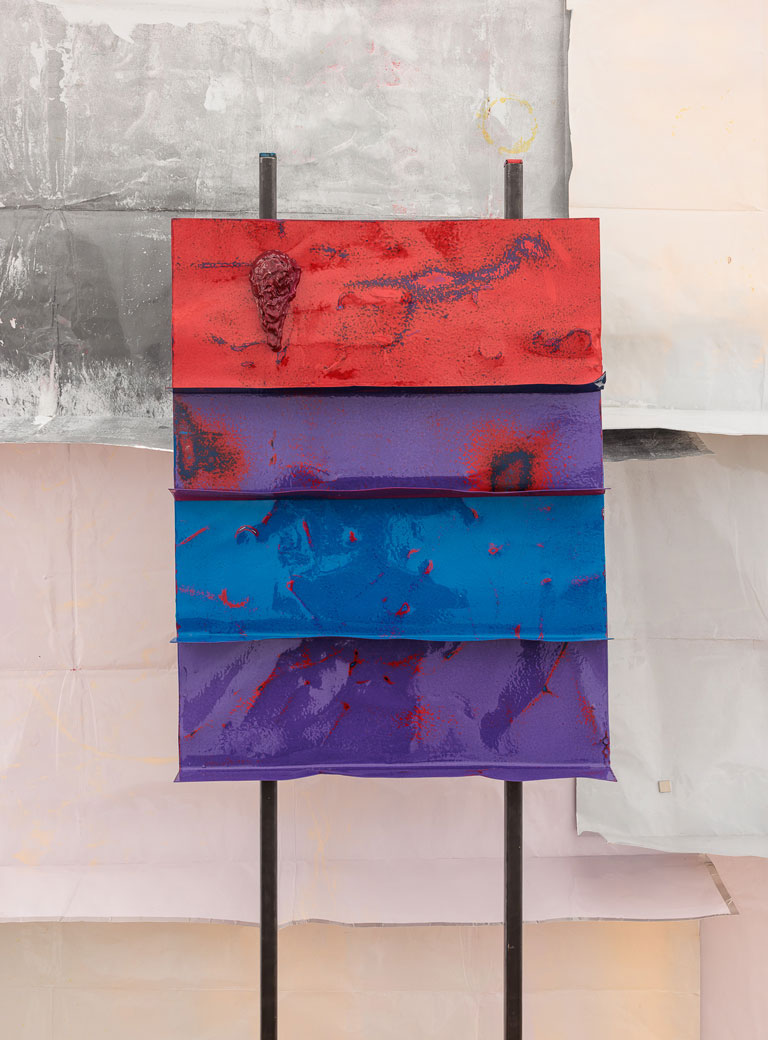
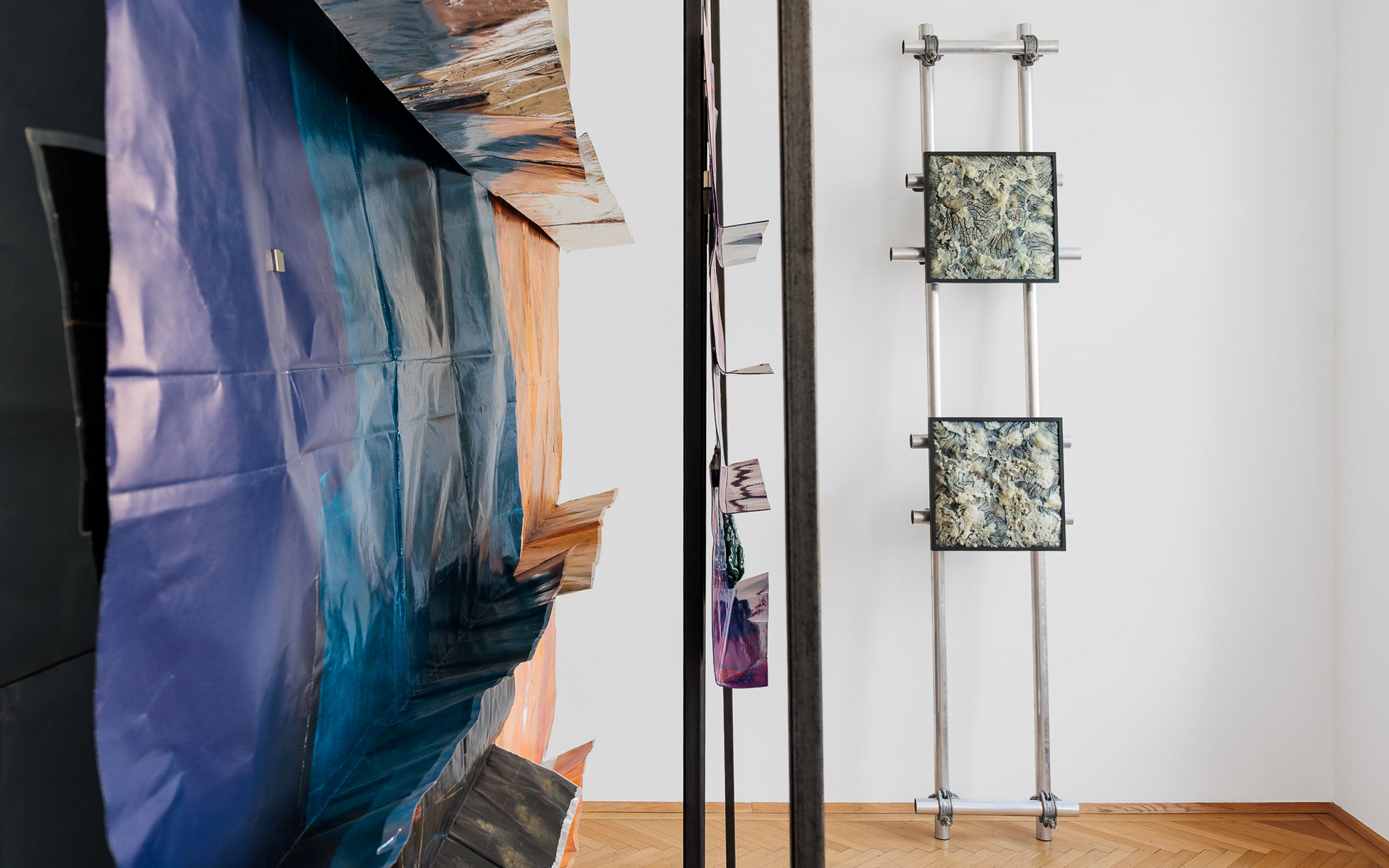
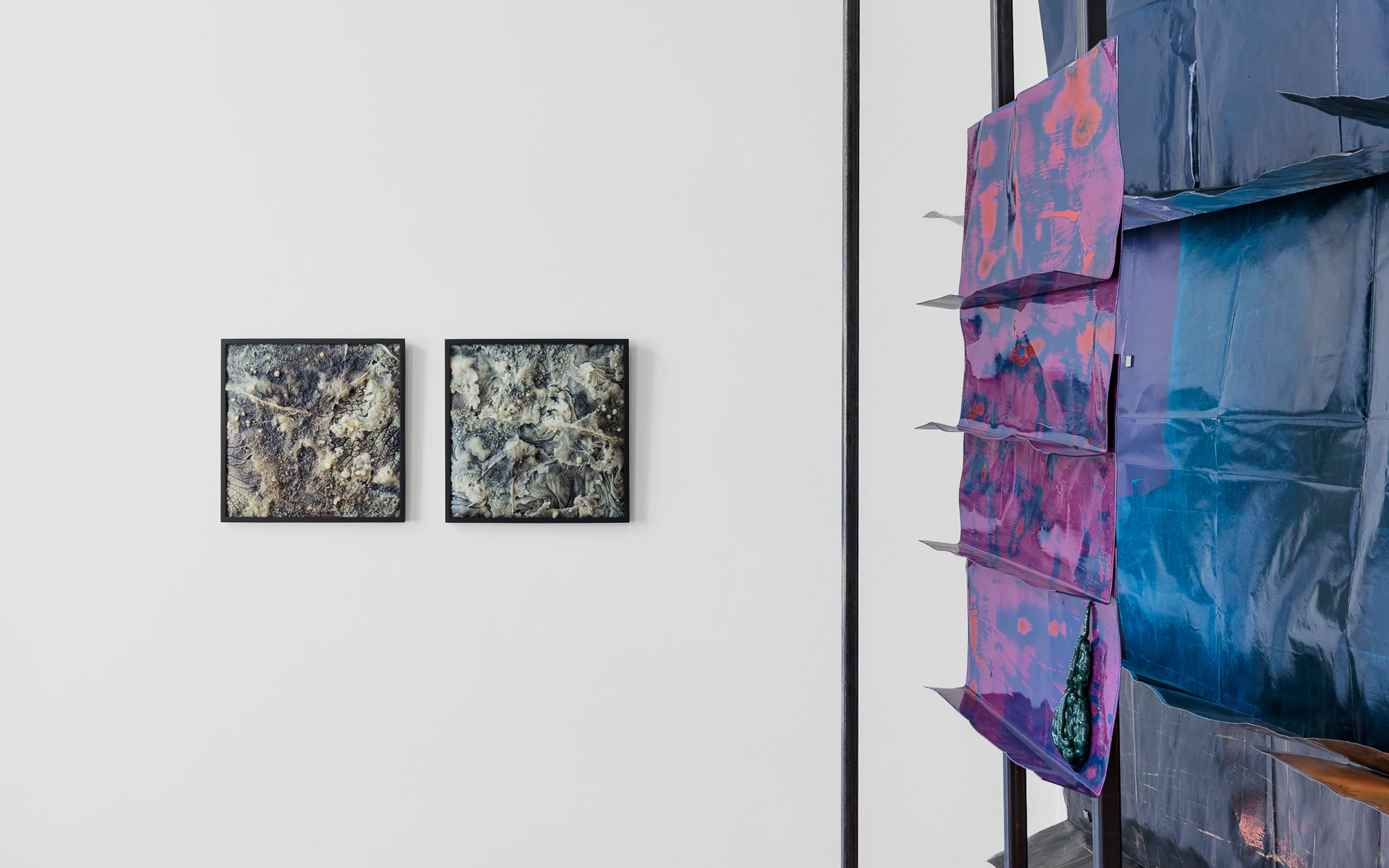
Placed side by side, Sophie Hirsch's intimate, body-near silicone wall works meet Maruša Sagadin's spatial, architecturally conceived objects. Where Hirsch approaches the body from within, as a structure holding tension between strength and vulnerability, Sagadin approaches it from without: as a measure for spaces that open, close and demand care. Both editions for Collectors Agenda also begin from a single point of origin that shifts slightly from piece to piece: for Hirsch, the same plaster cast, poured eight times; for Sagadin, a serial module that recomposes itself depending on its arrangement. In both artists' work, sculpture remains closely bound to the body, even as each approaches it from opposite directions.
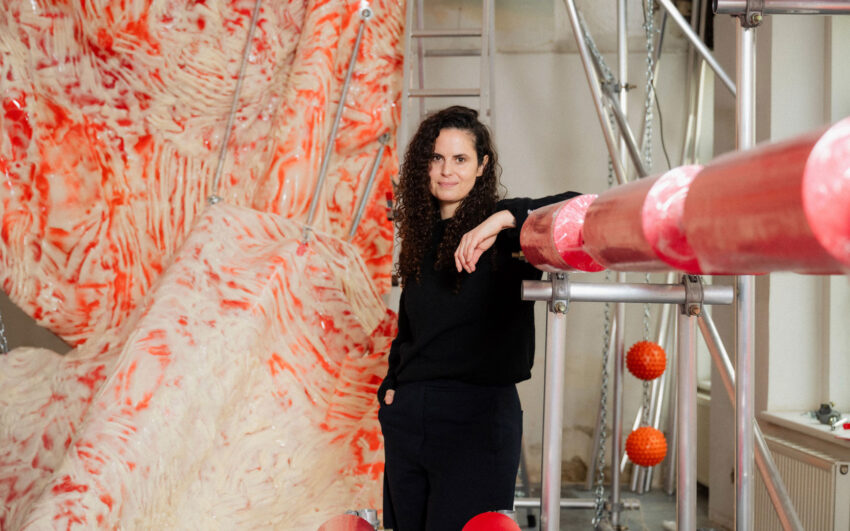
(c) Christoph Liebentritt
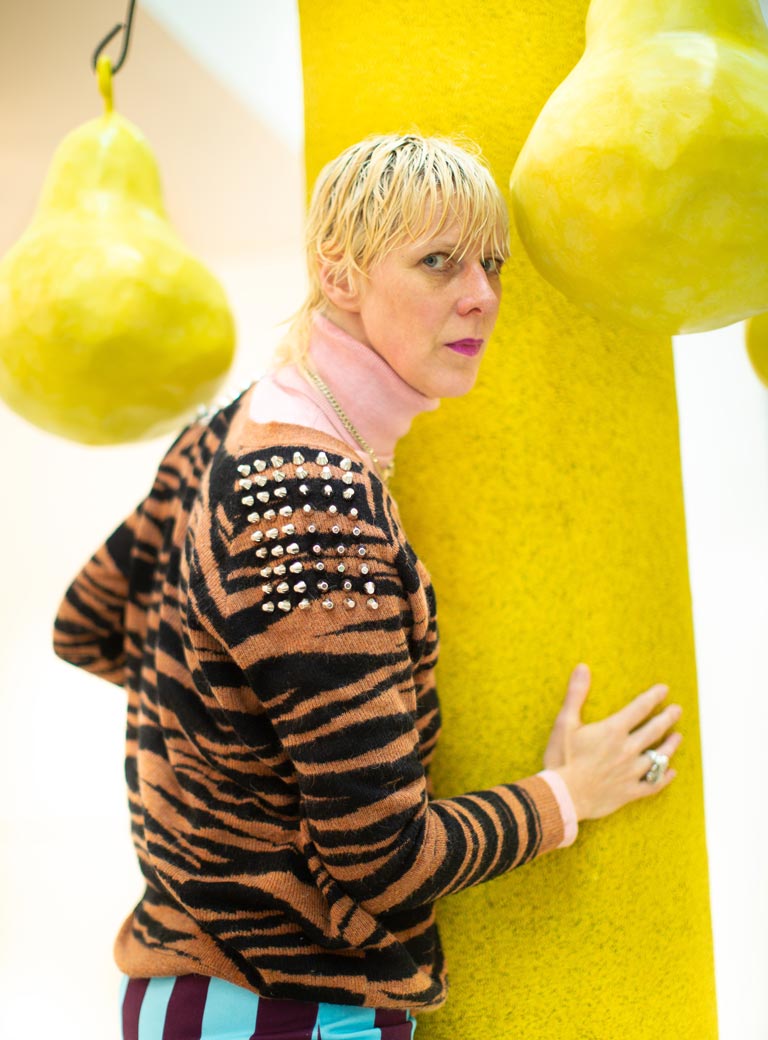
(c) Aleksandra Vajd
Text: Livia Klein
Exhibition views: (c) Manuel Carreon Lopez