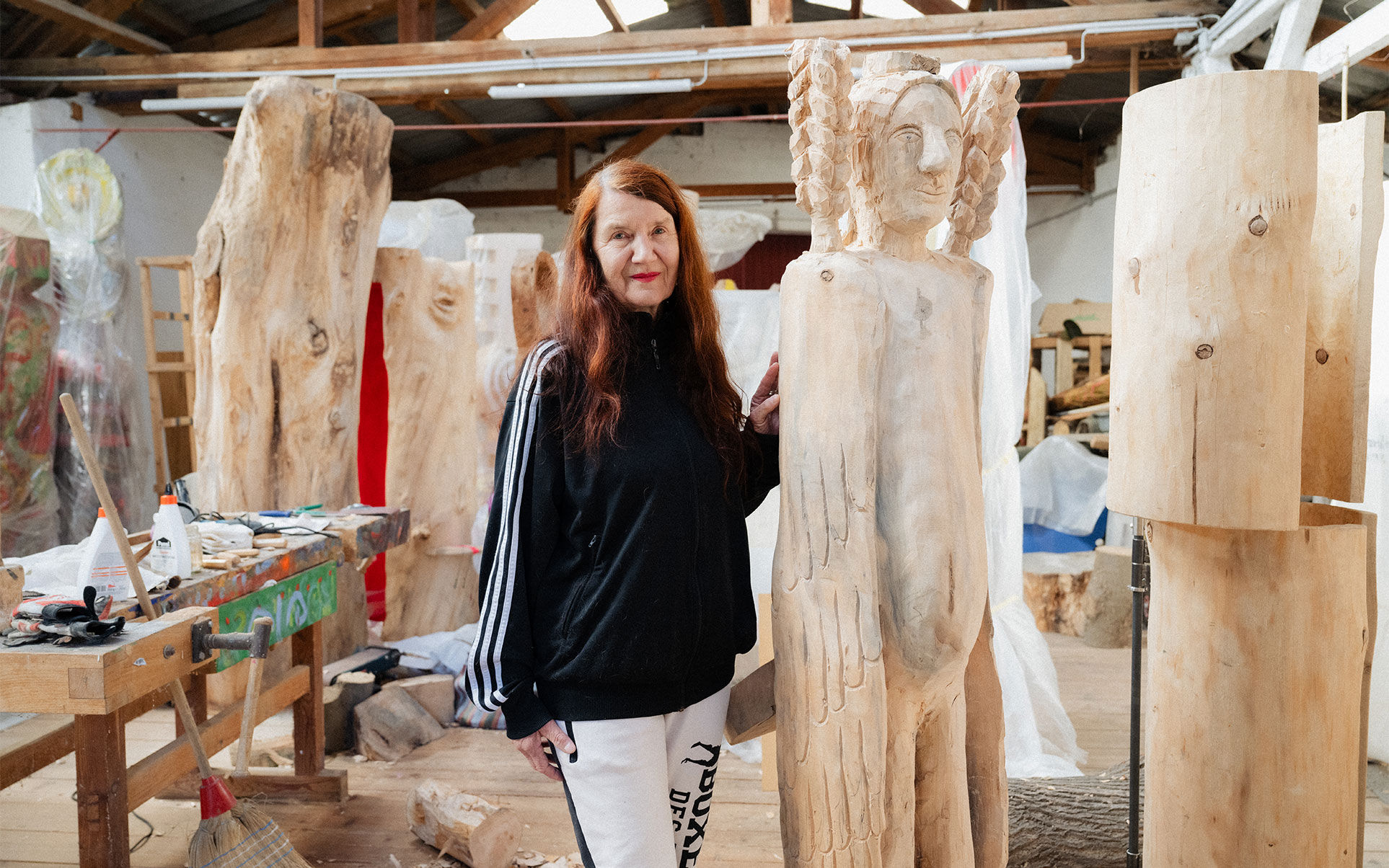
Elisabeth von Samsonow is a philosopher, artist, author and emeritus professor of Philosophical and Historical Anthropology at the Academy of Fine Arts Vienna. In her work she brings together art, ecological concerns and feminist theory. She is the founder of the Dissident Goddesses Network, which examines our relationship to the earth, to nature and to the feminine.
Elisabeth, how did you come to art?
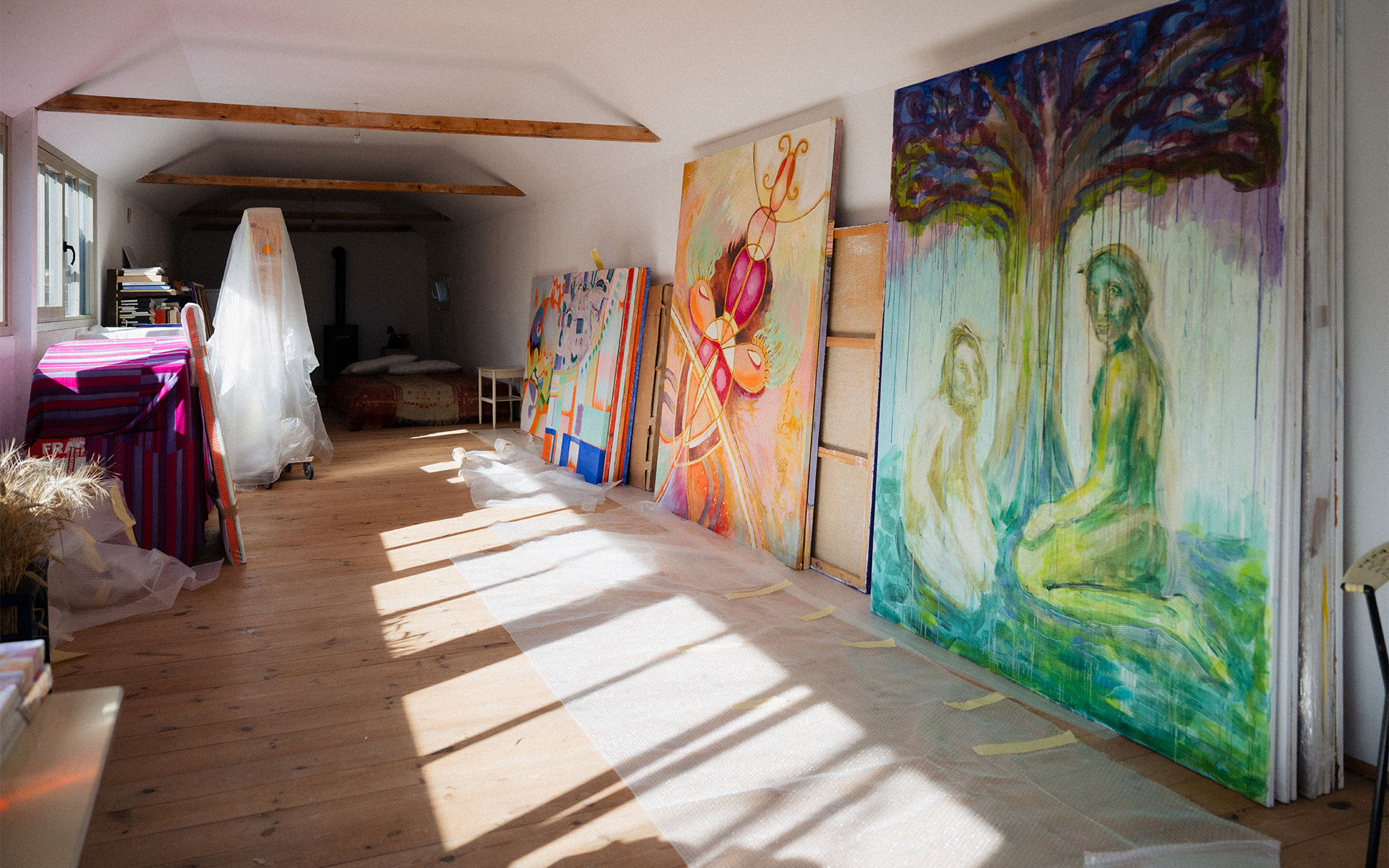
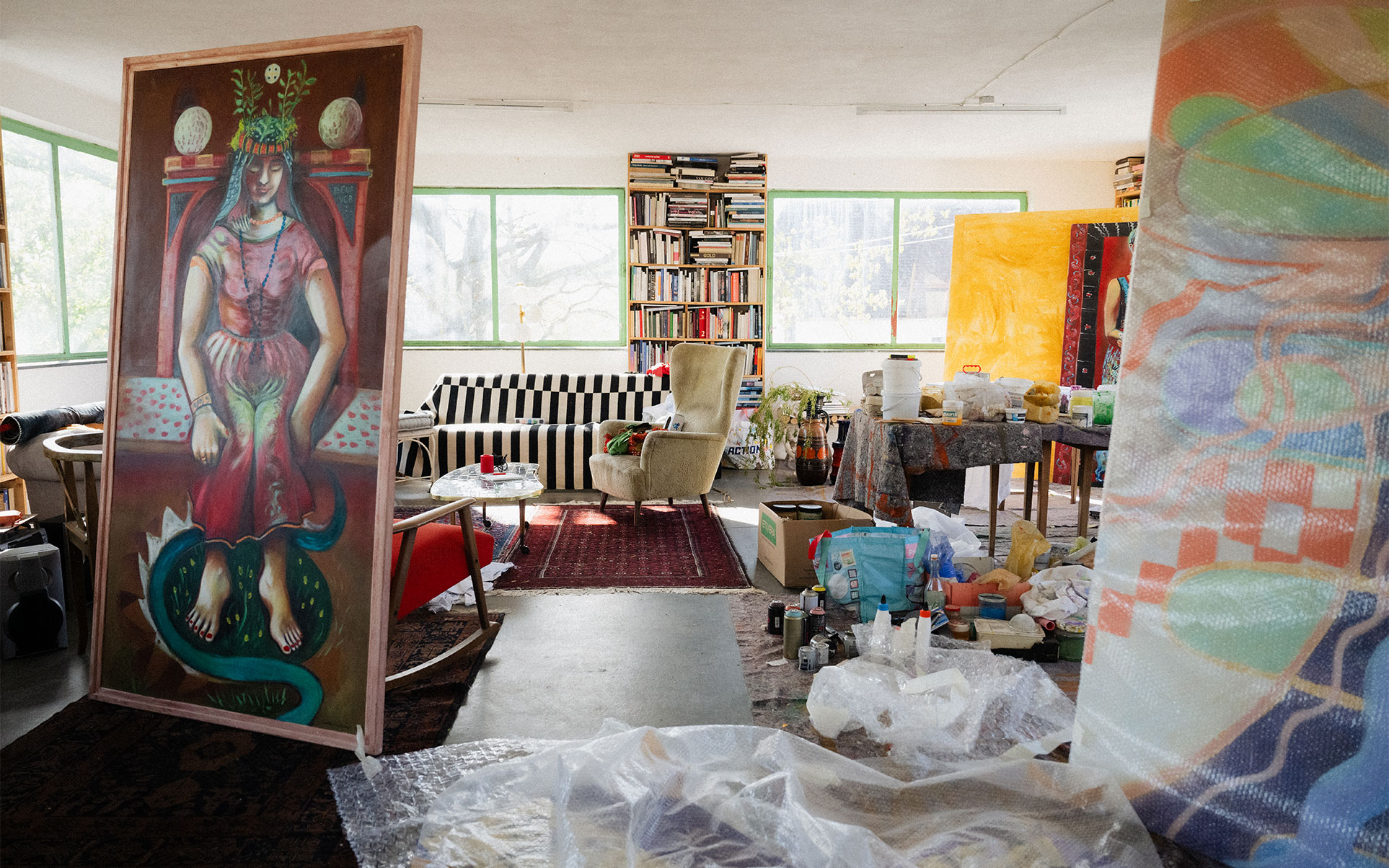
I was already drawing and painting as a child. In our village I had a kind of status: whenever it came to decorating something — deciding on the colour for flagpoles, for instance — I was called in. The neighbours and farmers in the area commissioned me to draw them.
And yet you didn’t study art?
I actually wanted to be a vet. And I was very interested in reading — Sartre, Durrell…
So literature could have been the direction as well?
Yes! I started studying in Munich: philosophy, modern German literature — German studies — and theology. I was fascinated by the transitions, the pattern knowledge, the overlaps: these disciplines are very closely intertwined. I was interested in this knowledge that seemed to govern the world. My father, who wasn’t actually an intellectual but a fantastic craftsman, loved knowledge. He always said: “Learn as much as you can — nobody can take it away from you”.
How did art enter the picture?
Through meeting Daniel Spoerri in Munich. I was studying at Ludwig Maximilian University, near the Academy of Fine Arts. Everyone went to the canteen there — it had the best Sicilian cooks! That’s how I came into contact with Spoerri and became an auditor at the Academy. I was painting at the time.
That sounds almost a little self-taught?
No, I wasn’t enough on my own for that. In 1987 I received the Promotional Prize from the Bavarian Ministry of Culture for my debut exhibition “Vorstellungszauber” (Magic of Imagination) at the AK 68 artists’ association in Wasserburg/Inn. I was 31 at the time. It was wonderful: there was an exhibition with a catalogue, which brought great visibility. Sophia Süßmilch received the same prize in 2018, by the way — she became something like my spiritual successor, which we laughed about a great deal!
What kind of art were you making at the time?
Painting! Organised around the concept of the self-portrait. That wasn’t out of vanity, but out of a sense of bewilderment. It also had to do with the fact that as a child I had seen a great deal of German Expressionism: Der Blaue Reiter, Die Brücke, Ernst Ludwig Kirchner, works ranging from Kandinsky to Gabriele Münter and Marianne Werefkin. Lovis Corinth is still important to me today. That “toothpaste painting”, as I call it, with lots and lots of titanium white… And Oskar Kokoschka… I can’t get enough of it.
How did the transition to sculpture come about?
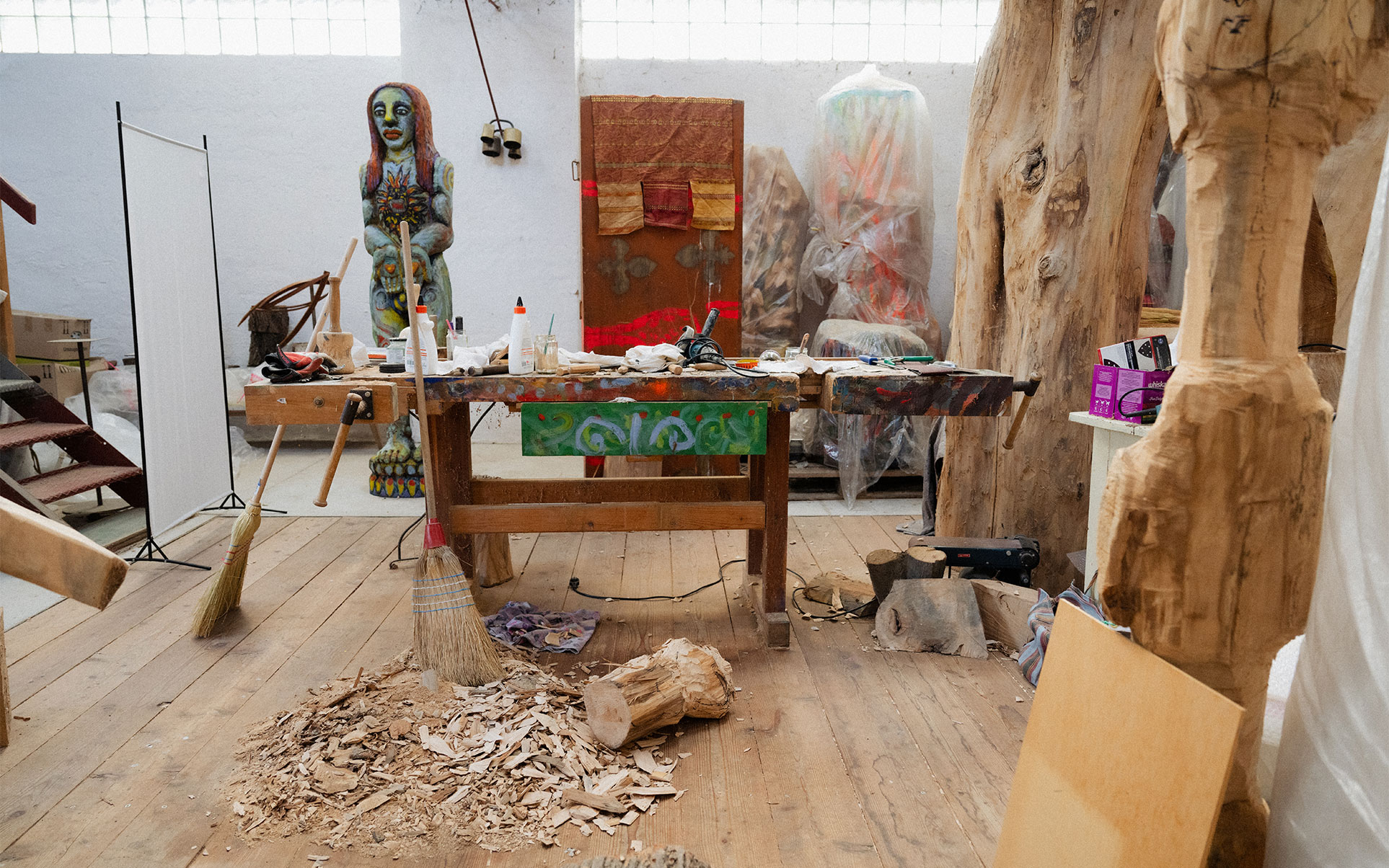
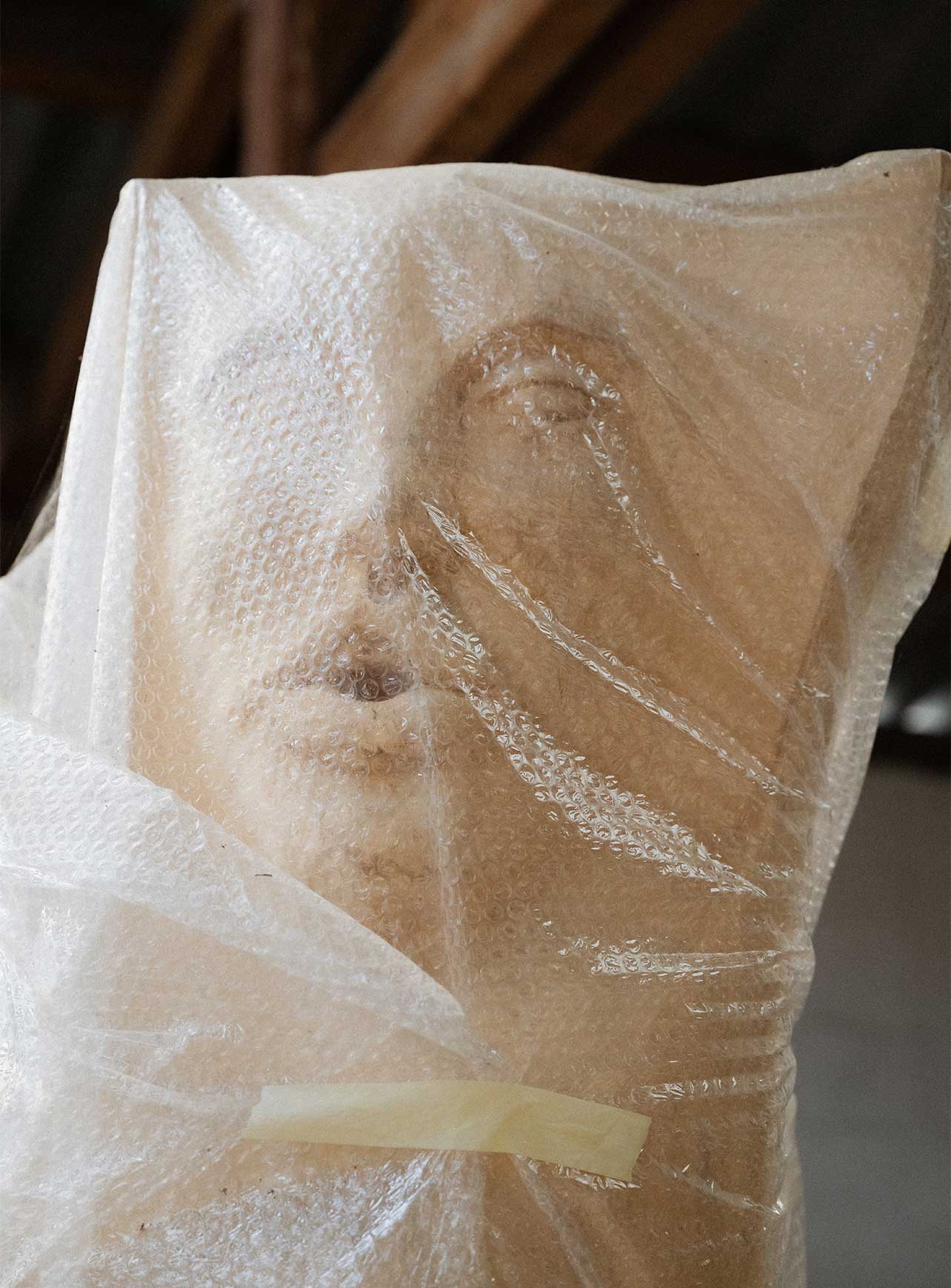
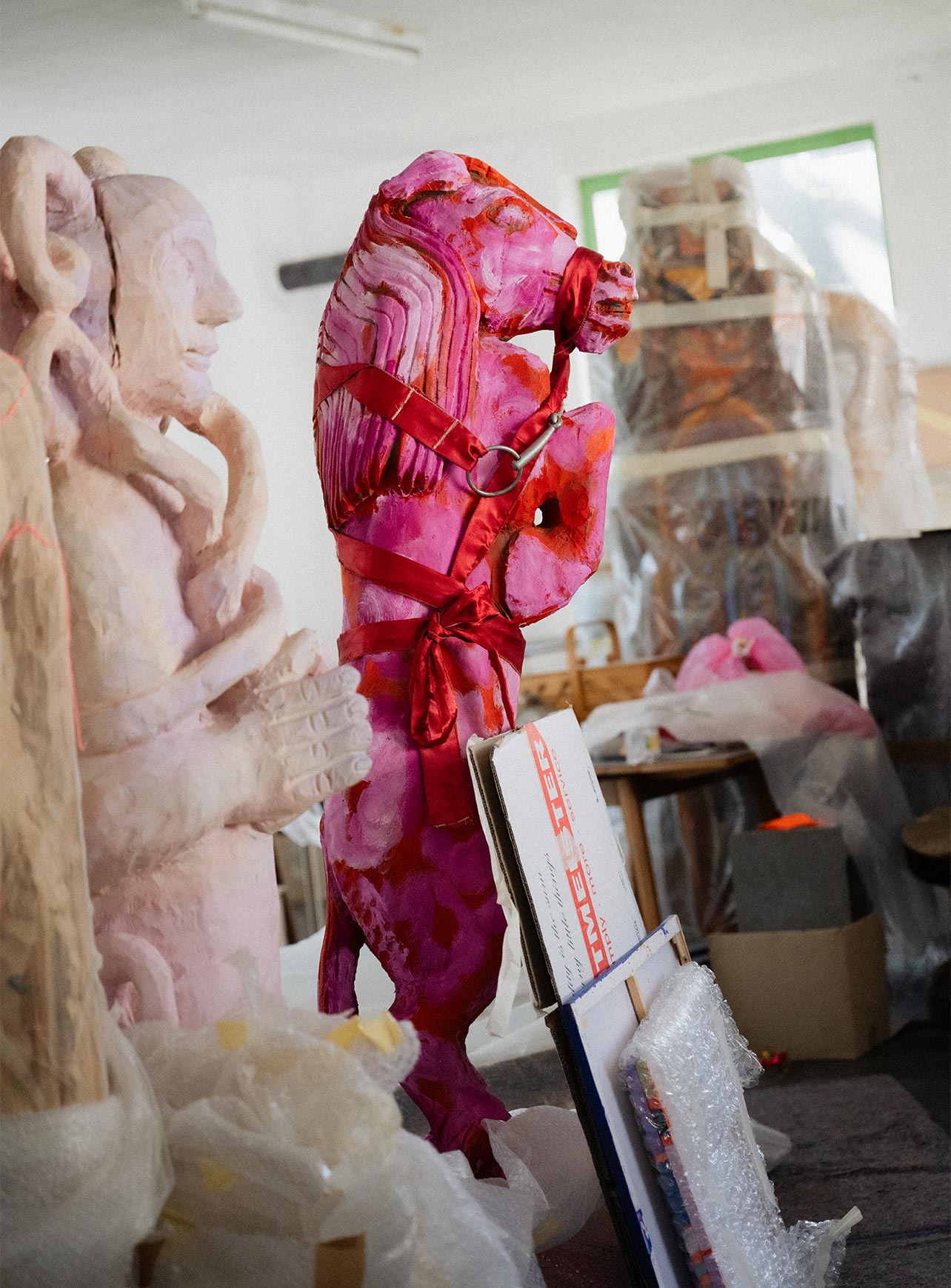
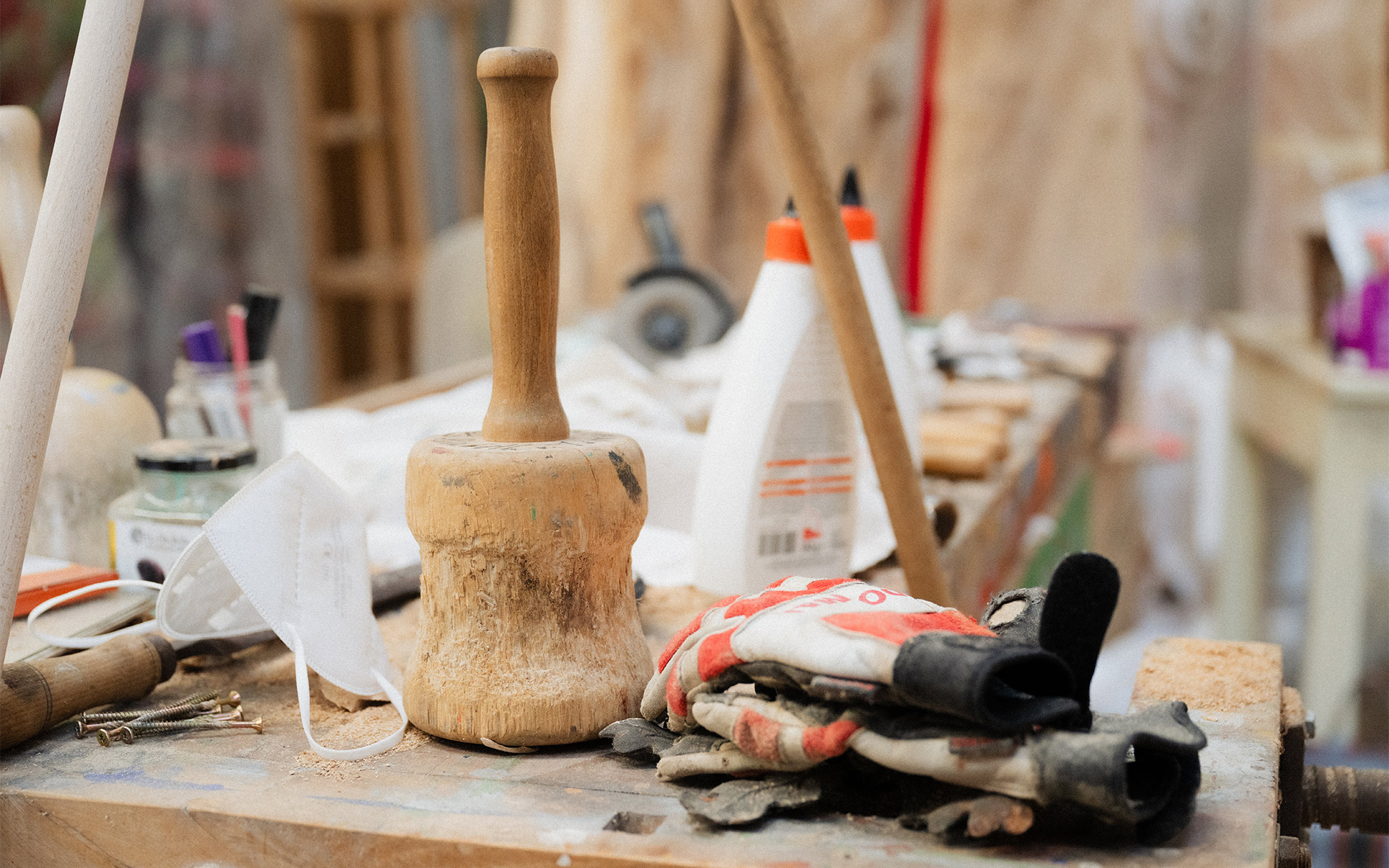
In the AK 68 artists’ association there were two adorable beings, sculptors who were already over 90 at the time: Luise Stomps and Lidy von Lüttwitz. Both worked with limewood. One day, right near my house, the famous thousand-year-old linden tree of Heitzenberg fell during a storm. I simply had to buy it! Suddenly I had a lot of limewood. I gave some trunks away — to the sculptor Ute Lechner, for instance. And then they drove off with these beautiful trunks, and each time a little part of me died… Eventually I said: now I’m going to do the sculpting myself!
Can you simply decide that — I’m a sculptor now? Doesn’t it require technical knowledge?
There was a wood carver nearby who taught me — the sharpening, how to set the chisels. Then he said: “Now I’ll leave you on your own, because if you don’t figure out yourself how the grain runs, I can’t teach you that either”. And so I learnt. I immediately wanted to make very large things, because I thought that only big was good.
Like Baselitz, for instance?
Exactly! Though I was absolutely terrified of the chainsaw (laughs). To this day I don’t work with one!
How did things develop from there? Where does what you want to show come from?
That’s a good question! I actually wanted to make a kind of history of the world from that first, enormous tree — so that the trunk itself is the oldest layer, into which I carve the Babylonian myth. From there it was meant to continue through history, like an emanation: you see the trunk and its branching, an image of the world.
When did you make your first sculptures?
In 1990 I made the founding couple of the Babylonian myth, Apsu and Tiamat, in large format. And then on the next level came Cybele and the Mithraic Chronos.
When you stand in front of a piece of limewood, what happens?
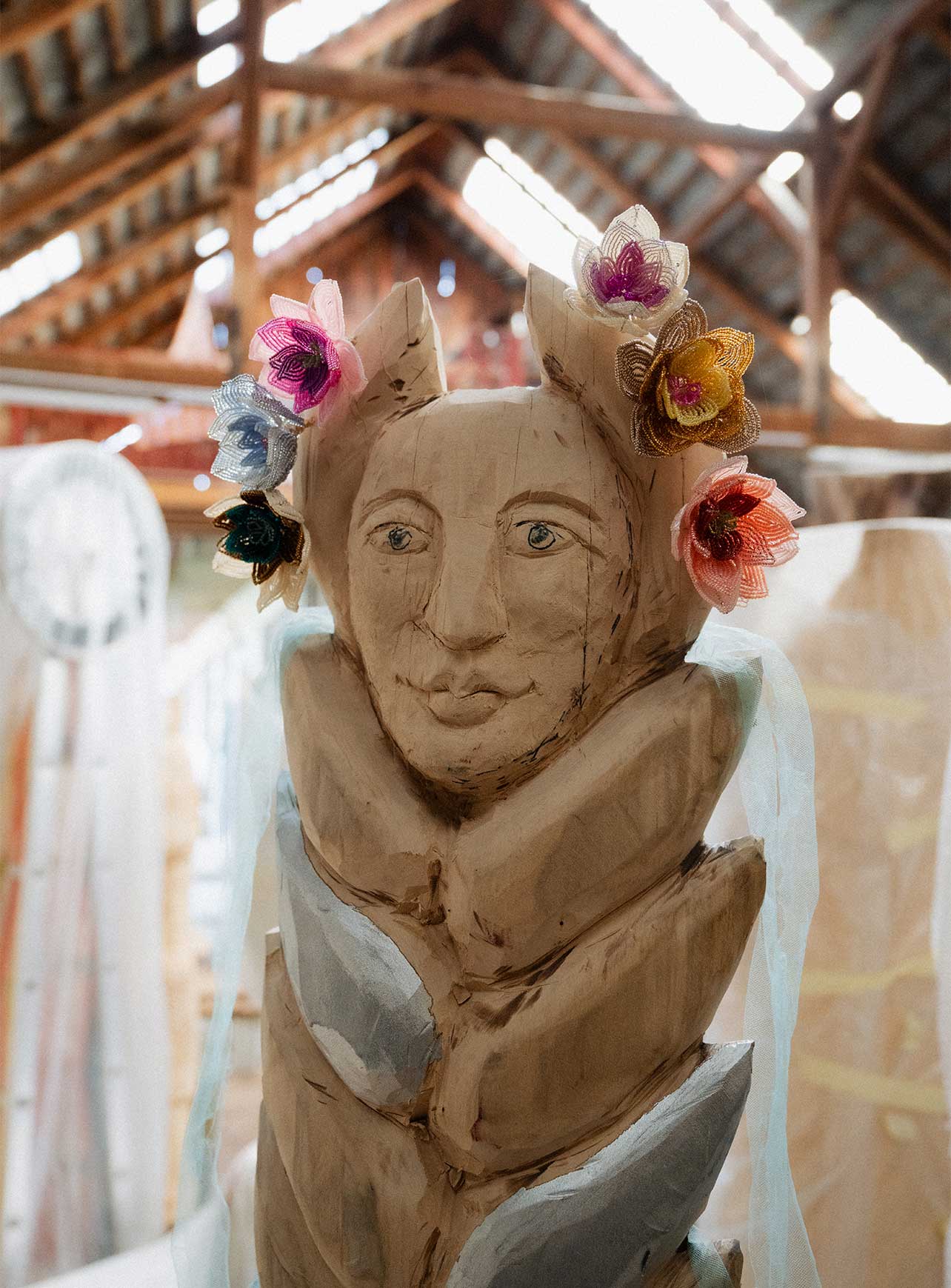
There is a way. I draw a great deal. As for the thousand-year-old linden tree of Heitzenberg: at first I worked my way through the sequence of ages in the tree. But around 2010 there was a total shift: I noticed that the tree itself was having more of a say. I think that’s something many artists experience in the studio — something like a thrust reversal. The tree was the centre, and I was merely a kind of appendage, an executor. The tree was telling me entirely new things, which became the content of the sculpture. And so we became connected to one another. I am inside the tree too, just as my figures are.
Nature is clearly an important theme for you; you describe yourself as a proponent of ecofeminism. Could you explain the concept?
Ecofeminism was for me the most important episode within feminism. In the 1970s and ’80s, Vandana Shiva and Maria Mies developed an interesting equation: patriarchy has several levels of effect — the exploitation of nature is linked to the oppression of women. I felt that when I myself wanted to make land a place of encounter between humans and other beings.
You’re talking now about your land, the Goddesses’ Land. How did that come about?
I have this ecofeminist side and had already done feminist, theoretical and artistic work — but from more of a psychoanalytical perspective. That wasn’t enough for me. Somehow I had to open a new chapter, and so…
…you devised your own theory?
Absolutely! I set the Dissident Goddesses Network in motion. I explain it like this: the Venus of Willendorf comes from Lower Austria. But why does that have no effect? I see the subalternity of female positions very clearly; women are barely represented in politics, they work in support of men. How might one articulate this anew? We designed an ambitious research project, received a grant… and started, for example, interviewing women farmers. That was Romana Schuler’s task. According to statistics, 96 per cent of agricultural land in Lower Austria belongs to men and 4 per cent to women. Something was clearly wrong! In principle, land ownership ought to be prescribed for women.
That’s easily said!
Quite right. But then, as it happened, an advertisement actually appeared shortly afterwards in the Pulkautaler Anzeiger (a local gazette in the Pulkau Valley region of Lower Austria): land for sale. I went to view it and thought I was going to flip out, it was so beautiful. I wanted to buy it — and had absolutely no money! And yet: within a week the money was together. That was 2020. Many people contributed. We bought the land.
And how did you come up with the name Dissident Goddesses?
We think that the Goddesses are the intense points in the earth, connected to one another worldwide, and that they define the body of the earth.
As energy, then, rather than as form?
Yes. And for that you first have to invent the appropriate images.
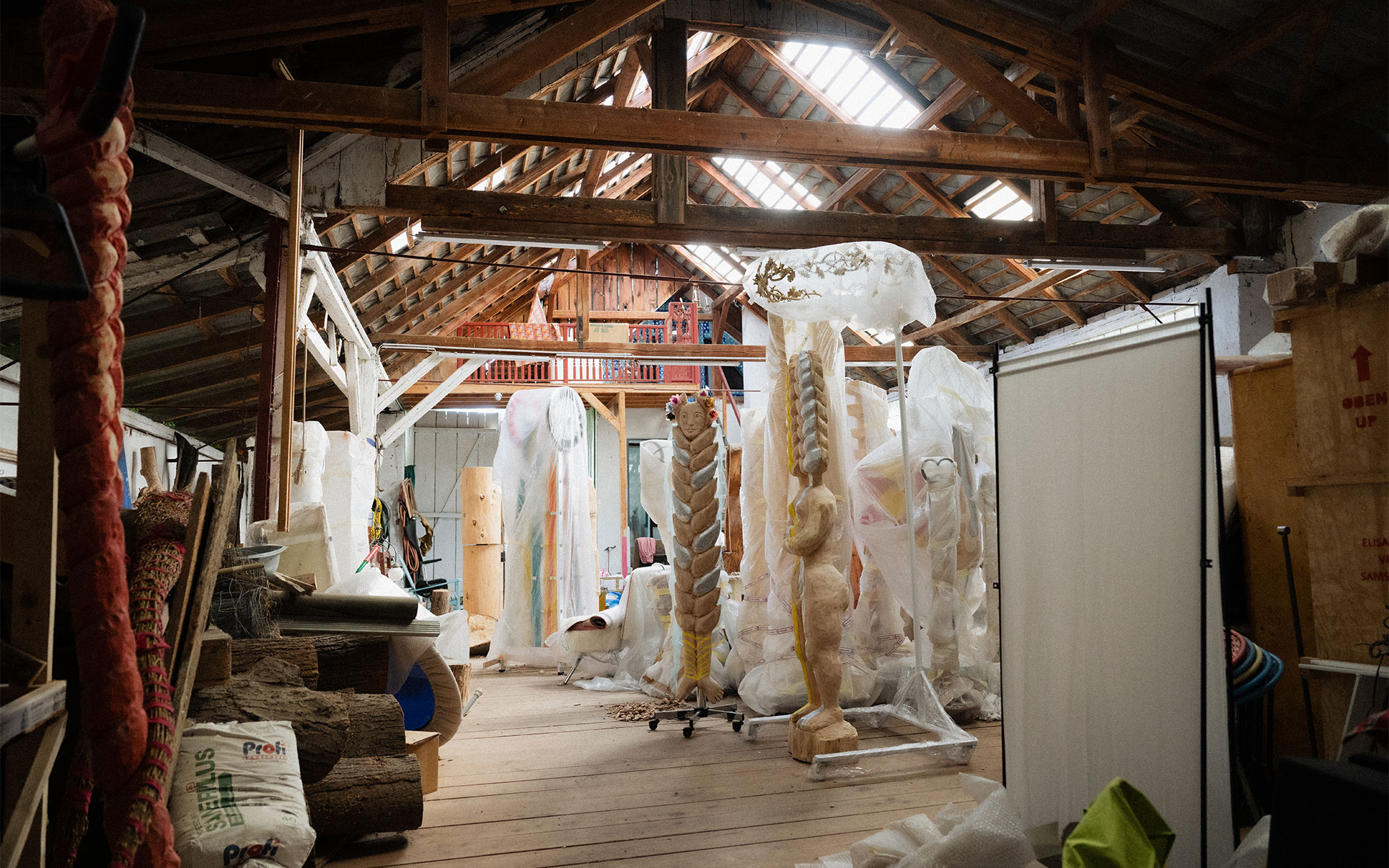
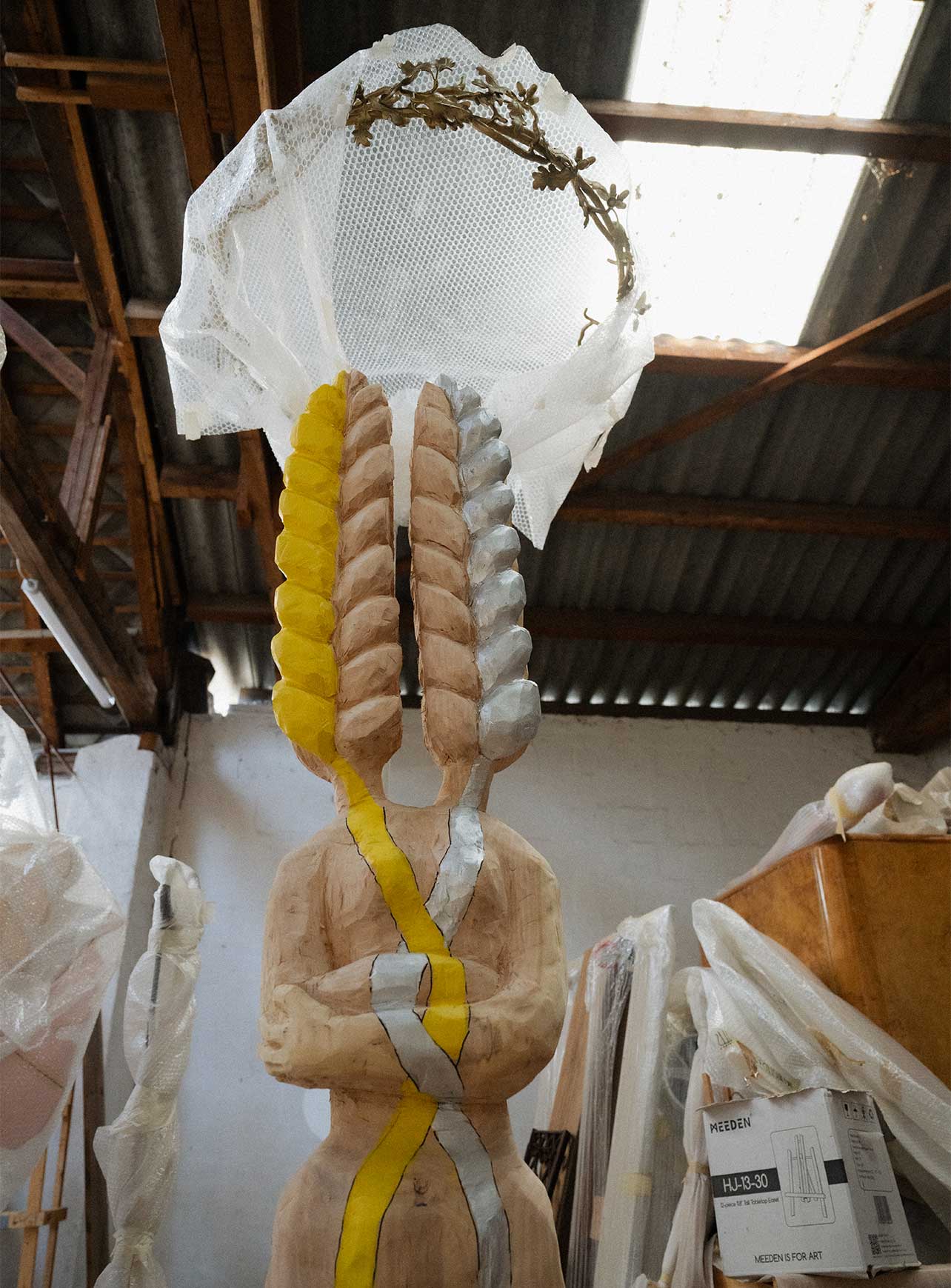
Are those the images you have invented with your sculptures?
Yes.
You say in an interview: “Feminist activity is doomed to fail as long as it does not succeed in connecting the figure of the feminine with a function”. What function do you give it?
Land ownership. Territorial power. That’s where everything begins. These are the means of production from which women have been excluded. What is completely ignored in the current debate — which is fixated on energy — is the significance of agriculture and food security. If women — mothers — held the means of production: what would that look like?
That brings us to the subject of matriarchy. How would you define it?
Matriarchy is, for me, the only advanced idea for organising a society. What we have now is barbaric and underdeveloped. But matriarchy is not the mirror image of patriarchy — most people don’t understand that.
So the idea is not that women should be in power and oppress everyone else, I assume?
No! The idea of matriarchy is so good precisely because every human being has a mother. It’s the mother as a concept, as a symbolic function. Men and women stand at the same distance from her and from one another — an egalitarian organisation. No ranking would arise from gender ownership: because men matter and women matter, and everyone defends the shared values. We absolutely need men!
And yet they think: “Ooh, matriarchy is only for women, we’re not allowed to be part of it”.
And they’re afraid. Afraid that women will be sadistic and nasty. I always say: as nasty as men? But I’m talking about a symbolic order. And that’s what the Dissident Goddess is for — it’s network work. As far as the land is concerned, a broad range of tasks has emerged for me. I am now a farmer.
Do the practical tasks sometimes take over?
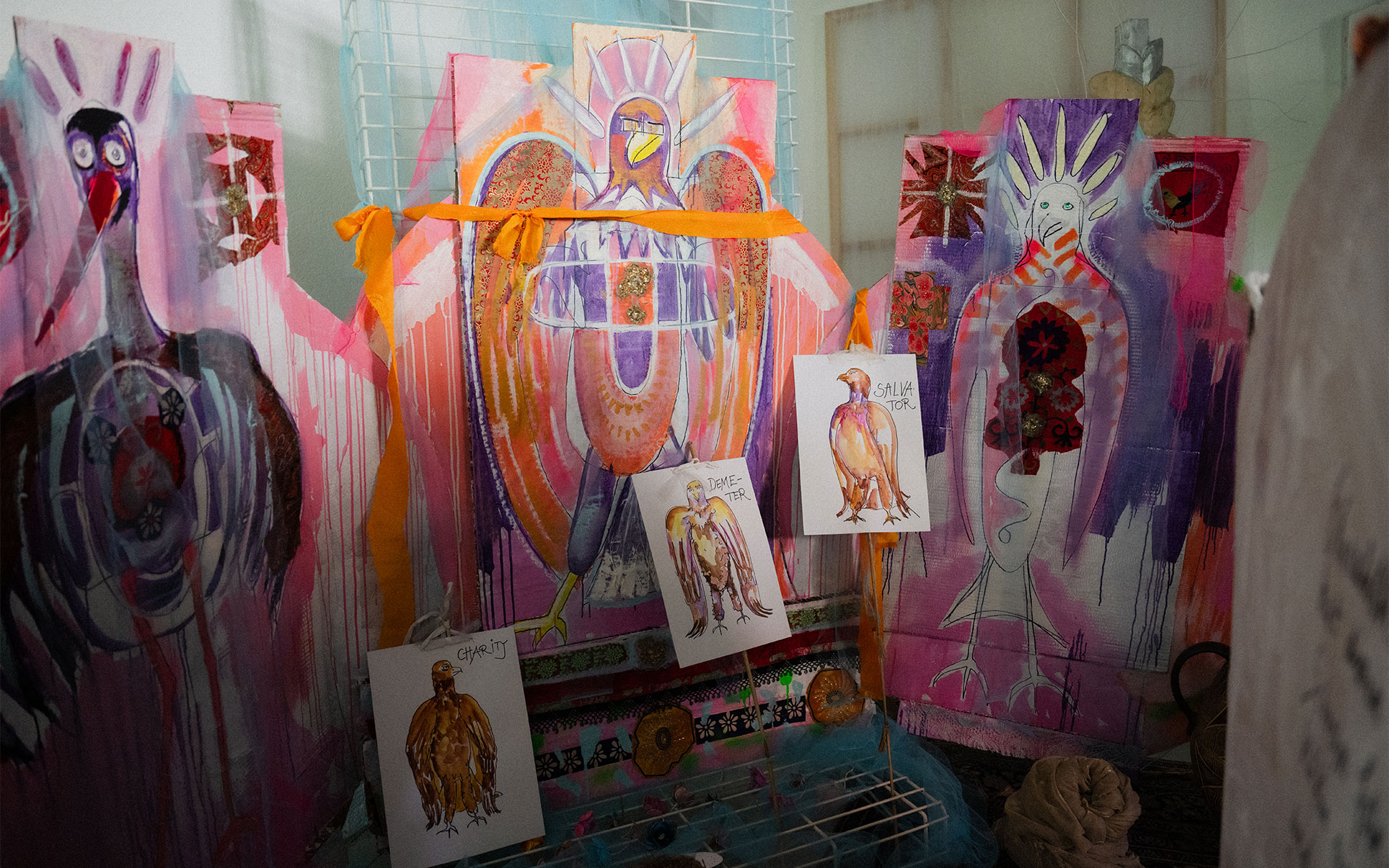
There really is a great deal to do. Some people in the project would like to give land to the Goddess, but can’t get involved themselves. But it’s not quite that simple! We have to get areas that have already eroded back into shape, for instance — I’m trying to do that with quince and almond plantings. And I have to defend the land against encroachments! There’s talk, for example, of building a wind farm right on the border of our Goddesses’ Land. We now have 3,000 people in the citizens’ initiative opposing it. Legally we had no chance — unless an animal from the Red List happened to be nesting right in the middle of our land. And what happens? A female imperial eagle nests right in the middle of the area! So we are going to win. But not because we are so clever, but because the eagle loves the land. Isn’t that extraordinary!
Do you feel that through your work you are more closely bound to nature — that there is even an exchange?
If I’m completely honest, I would no longer just say “connected”, but rather: what you see before you is no longer simply Elisabeth, but half a mountain, a quarter eagle and a remainder of human being. That’s the breakdown. I don’t know how one comes to be like that, but it really is the case. I now understand many things differently. When I go up the mountain, the eagles appear to me immediately. They know when I leave the house.
So you have entered into a symbiosis with nature?
Completely. I have given up my aggregation of subjectivity in this proud humanity. Three-quarters of my magnificence have already been scattered anew!
How do you live with that? How can you integrate that into a world that also has an art world, in which you have to take care of exhibitions?
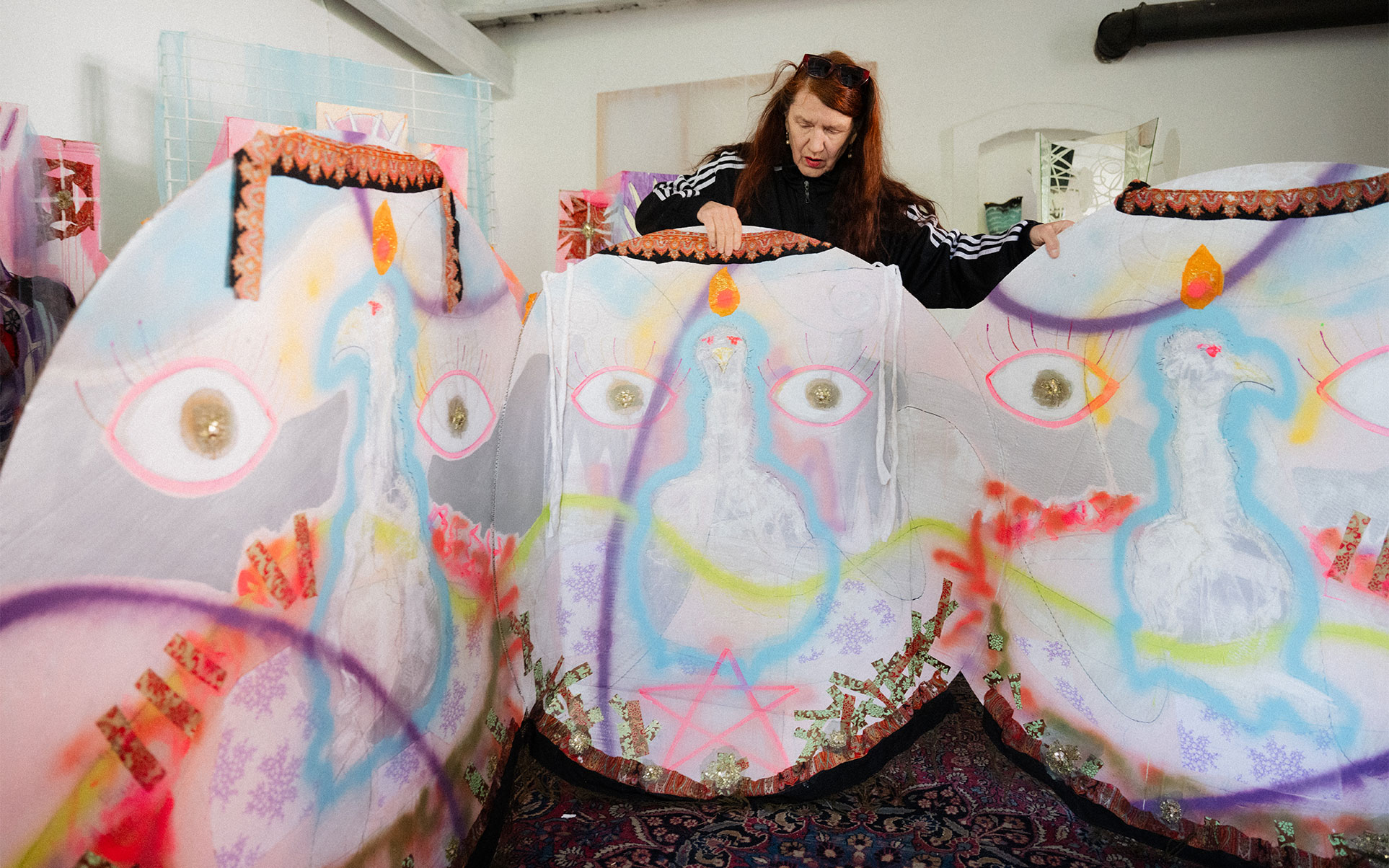
Aha, what I’m telling you sounds completely bonkers — doesn’t it? But art can do something very important — I’ve learnt that. Art can formulate advanced hypotheses, project them into the future and present them in such a way that people sense: this is a path. There has long been no time in which nature has been talked about so much in art. Ninety per cent of exhibitions are some kind of glorification of nature!
To raise a critical objection: that often seems rather forced to me…
Yes, I sense it too. At the moment I have many exhibition invitations because people sense that the Goddesses’ Land has a very serious and honest core. The difference is our land. I don’t talk about nature because it’s trendy.
What are your next projects?
An exhibition at the Heidi Horten Collection in autumn, then a show at Rotor — Centre for Contemporary Art in Graz, where I am invited as an eagle to inhabit the main space. As the only Austrian I am taking part in an exhibition in Ostrava, at the city gallery, “Soil and Friends”. In 2027 I am involved in the exhibition of the new director of the State Gallery of Lower Austria in Krems, Nikolaus Kratzer, and I have a solo exhibition at the Academy Graz with Astrid Kury. And the project “Die Sprache der Göttinnen” (The Language of the Goddesses), currently on view at MAMUZ in Asparn, is travelling to New York, to the Austrian Cultural Forum.
You have an exhibition coming up at the Heidi Horten Collection this autumn 2026. Can you tell us anything about it yet? What themes or works will be at the centre of it?
First I want to say how delighted I was when the invitation came from director Verena Kaspar-Eisert. She had always had a solo show in mind, but now it will actually be the first comprehensive retrospective of my artistic work, beginning with the early 1980s. The curatorial team of Hana O.O. Haas and Rolf Johannsen has worked its way precisely through my extensive body of work and developed a coherent parcours. It will be above all about our approach to the world — how we can encounter the world, the earth, how we can speak with the beings who live alongside us, and how it is that we may expect answers. It is about a poetics of listening and of empathy, and how a path has slowly taken shape in my art. And it is about how one embraces a land — in my case, the Goddesses' Land. It will be a very beautiful and expressive exhibition!
And then there’s the Pulkautal Biennale?
It grew out of the energy of the citizens’ initiative — many people have woken up with regard to our land! I thought: let’s plan a celebration for the land. Let’s call it a Biennale! We have to choose grand words! We have thirteen pavilions and the Arsenale is the fire station in Hadres. The Biennale takes place from 11 to 19 July 2026. The first edition has the theme “A Language for the Land”. We have over 50 artists, an international jury and a wonderful artistic director, Romana Schuler, who was already part of the research project The Dissident Goddesses’ Network.
What is your relationship to living and working in Vienna — is Vienna even still a factor?
I couldn’t do all this without Vienna. I need the city too. As an eagle, I have to feed these truths into the city — here the people already know them.
Text: Alexandra Markl
Photos: Christoph Liebentritt