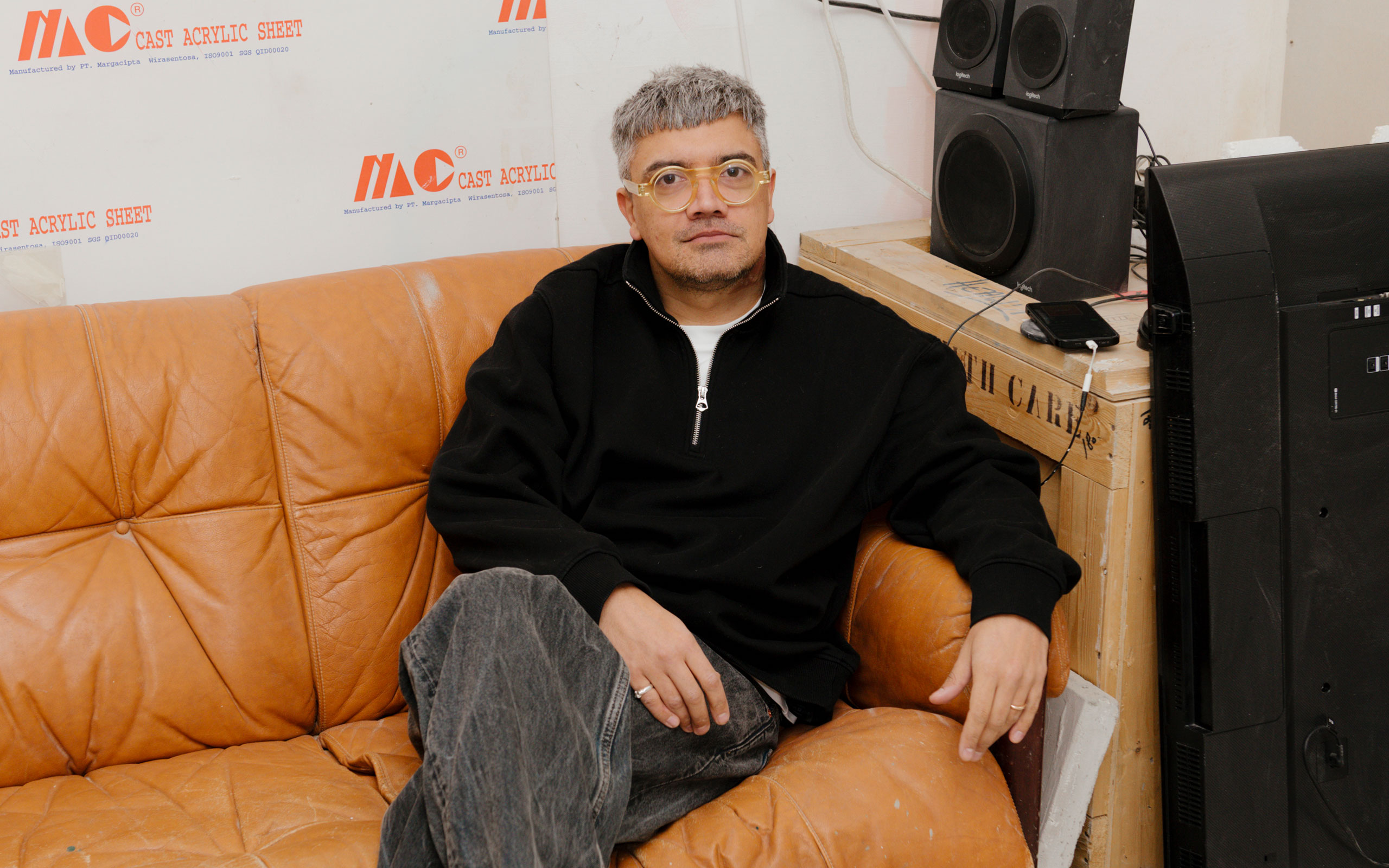
This story was created in collaboration with Phileas – The Austrian Office for Contemporary Art. Phileas supports artists, curators, galleries and institutions in Austria by strengthening their presence on the international landscape of contemporary art. Through long-term partnerships with museums, biennials and art institutions around the world, we enable the production and exhibition of new artworks and their donation to public collections.

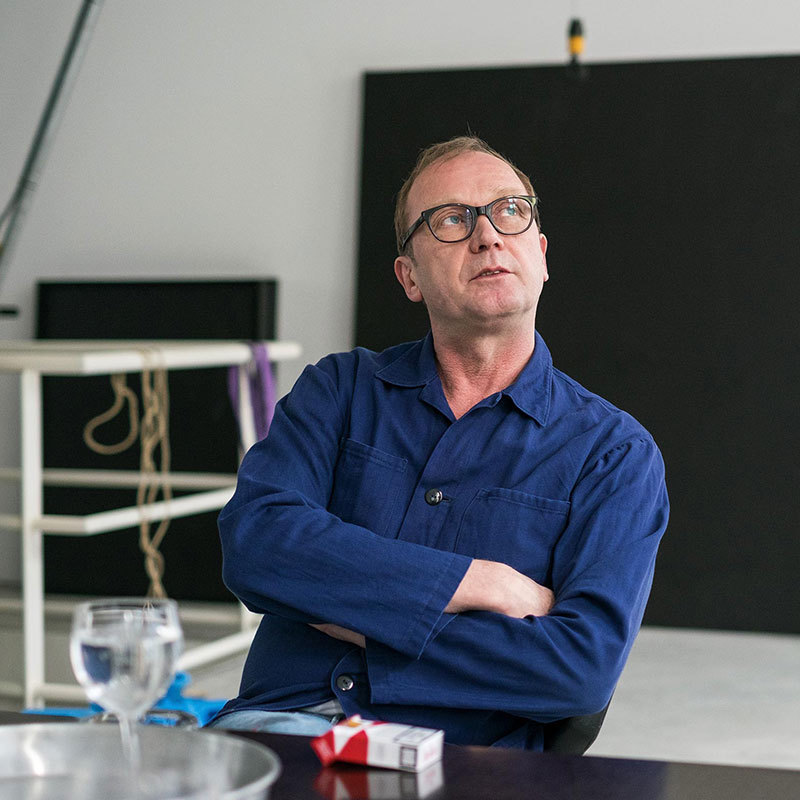
James Lewis works with the things that remain when certainty begins to disappear. Data, family photographs, scientific classifications, scent and fragments of memory are materials that appear to offer a way of knowing, but which become unstable the closer you look. Born in London and based in Vienna, Lewis moves between the empirical and the deeply personal, creating installations that explore how we construct knowledge and what happens when the systems we rely on begin to drift. His process often starts with an attempt to understand something. He follows a question through archives, conversations and data, allowing the research to become something physical and sensory. In his work, information is rarely an end point. A statistic might become a sculpture, a family memory a scent, a scientific standard an allegory for inheritance. What interests Lewis is often what cannot quite be recovered. His works inhabit that space between evidence and imagination, asking how we might give form to experiences that cannot be fully known.
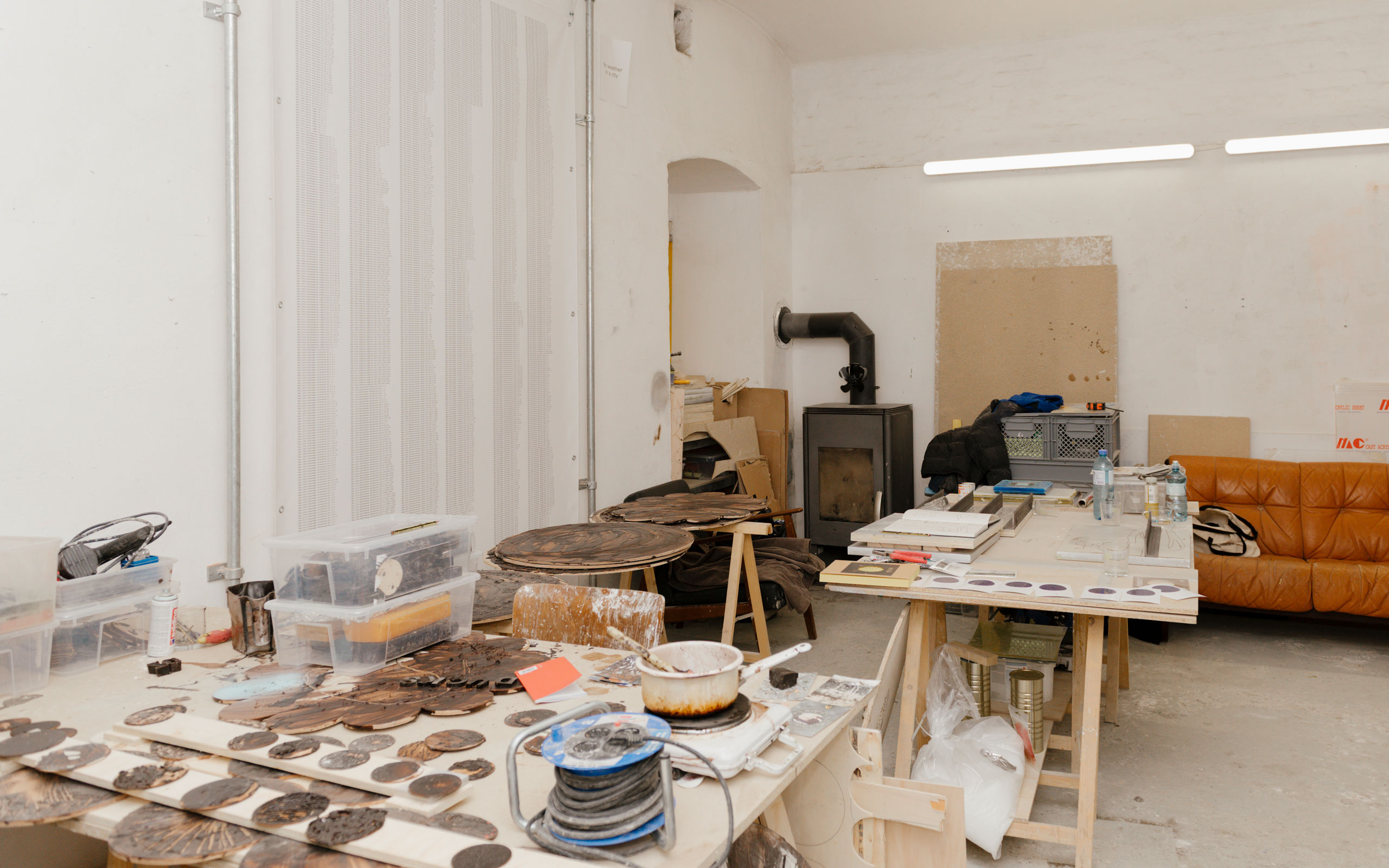
James, how did you first come to art, and when did you begin to understand it as a way of thinking and working?
I have a few core memories that feel like the best answer that I can offer to the question of how I came to art and my approach to making. When I was in Primary School, I must have been around six or seven years old, we were asked to draw a portrait of our family. I spent a long time on this drawing and I even decided to colour it in. Unfortunately, my completed portrait caused the teacher to call my parents and I into the school for a meeting. This was when we learned that I had a severe colour deficiency and that my mother isn’t actually green. From this moment, I understood that colour was incredibly deceptive, everyone thinks that there is a right and a wrong way to make a picture and when we look at something I probably don’t see what you see. These were difficult truths to carry into art school. A large part of my development as an artist is a process of unlearning. Art doesn’t have to be, and in my case it could never be, replication. It can be inventive, it can tell a story, convey a feeling and it can move beyond depiction. I have to think about what I make and then when I’m making it I hope that I manage to forget about thinking.
You have described your practice as a way of trying to understand things you don’t yet know. What kinds of questions tend to lead you into a new work?
I sometimes mistakenly make it sound like my works are thought into existence. But that would totally negate some of the unexpected diversions that happen when pursuing an idea. I think it’s crucial to remain porous when I’m starting a work. There will always be surprises along the way and maybe responding to them is the thing that separates an artist from being a designer? A designer is handed the problem and has to solve it, whereas I have to be willing to be led away from mine. New works are born from the world they inhabit. I think that it’s impossible to separate the artwork from the world. I don’t want to make artworks that wallow in their own orbit. Apolitical has always struck me as suspect. The kind of practice that mistakes detachment for beauty. Everything I make is conditioned by the world it arrives into, otherwise what’s the point?
Your work often begins with research - archival material, scientific information, family histories or systems of classification - but ultimately becomes something physical and sensory. How do you move from research into making?
Sometimes with great difficulty. And sometimes, rarely, I find a kind of flow state. I don’t know how to best describe this kind of fluency. It’s almost like the artwork falls out of the practical experiments and it reveals itself. So yes, there is a movement between the archive, things that are classified, the forgotten and a thing that isn’t made yet. I had to learn that the things I make aren’t resolute. That would mean that there is a right and wrong and I don’t think that’s the case. They are propositions. The works themselves are new questions. Because the making is also a type of research, but not the kind that ends in an answer. I'm not trying to restore an original. I'm rebuilding a world I don’t have direct access to, provisionally and in a way that stays accountable to its own gaps.
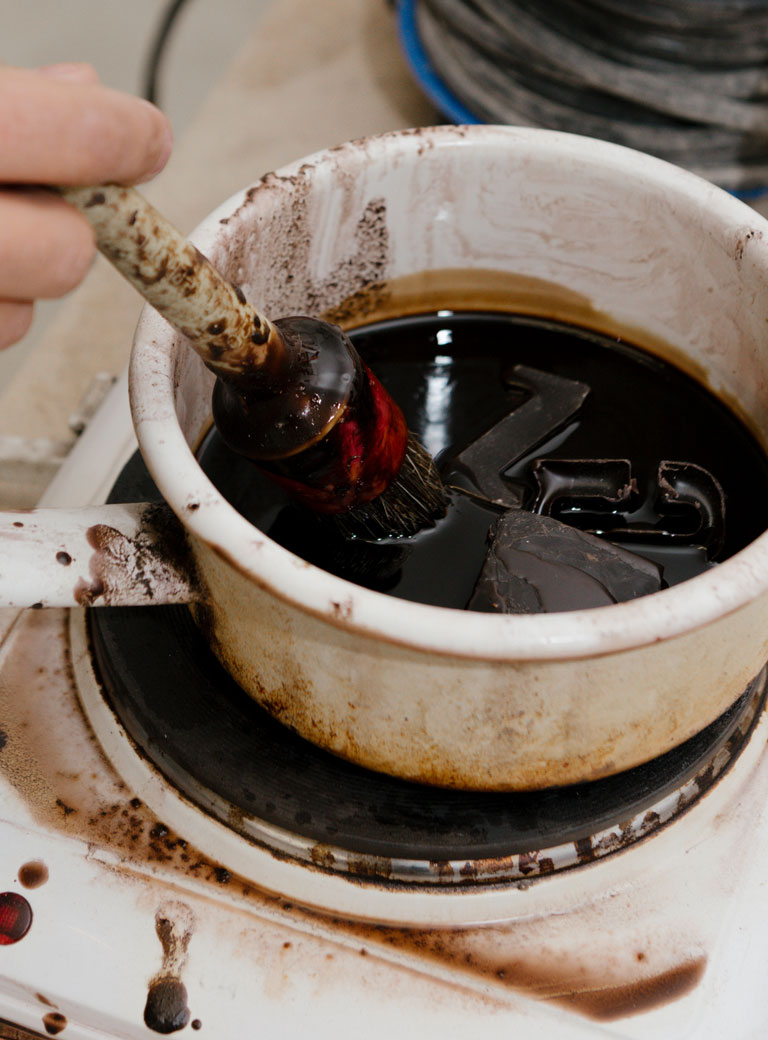
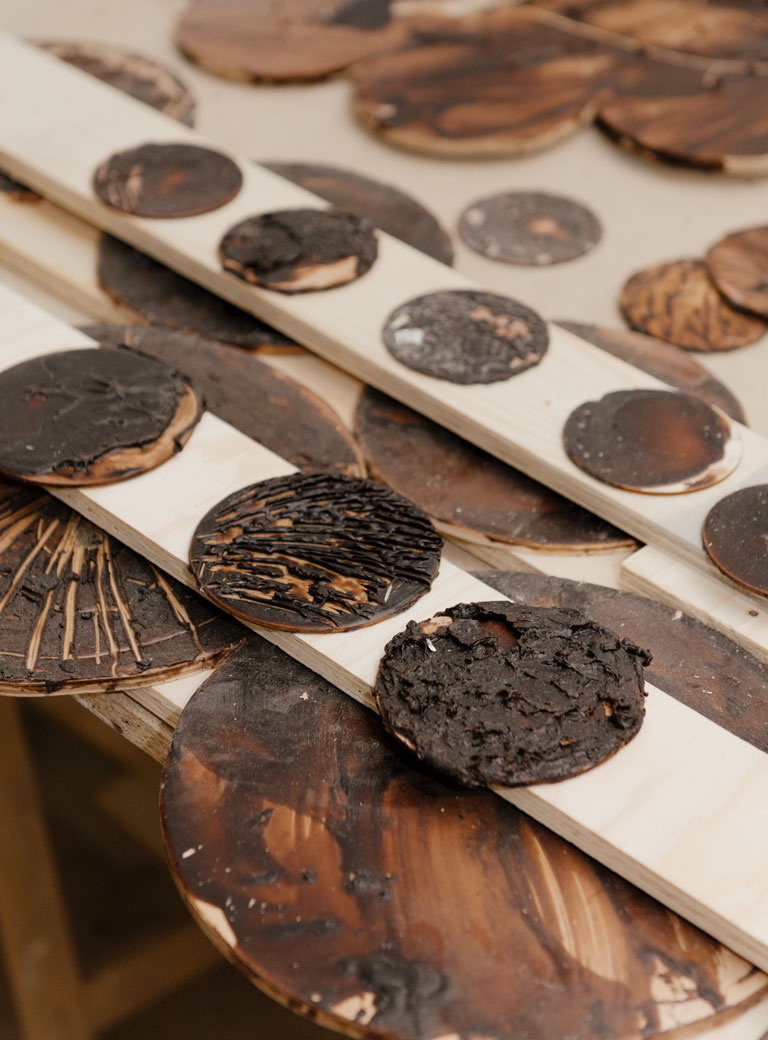
What can visitors expect to see when entering your installation at the 18th Lyon Biennale?
The installation will be in a former control tower at Les Grandes Locos [a former industrial site used by the French railway company]. It’s in an office space that pushes out of the building, so it’s simultaneously inside and outside. For me, this embodies a kind of duality that felt right for a work about not quite belonging, or being two things simultaneously.In the first room, the windows will be whitewashed with diluted chalk powder, the same material used to obscure windows of abandoned shops, but also more recently as a remedy for rising temperatures. The space will be filled with fluorescent yellow light, giving it a dystopian feeling. As with previous installations that have used this yellow light, it signals a warning to me. It’s a way of encouraging the audience to think about the possibility of an impending environmental disaster. Viewers will then pass into a second space, with a beige carpet on the floor and a dim light. It has the feeling of a room you’ve remembered, rather than one you’ve been in. There’ll be a large duct sculpture that spans the two rooms of the second area, functioning as a prosthetic organ or lung. The sculpture will take in the air from the first room and mix it with a custom-made scent, which is then circulated through the sculpture and exhaled in the final room. The whole installation treats reconstruction as approximation, as something provisional and made out of what’s missing.
Can you tell us about the twelve concrete plant sculptures you’ve created as part of your new commission for the Lyon Biennale?
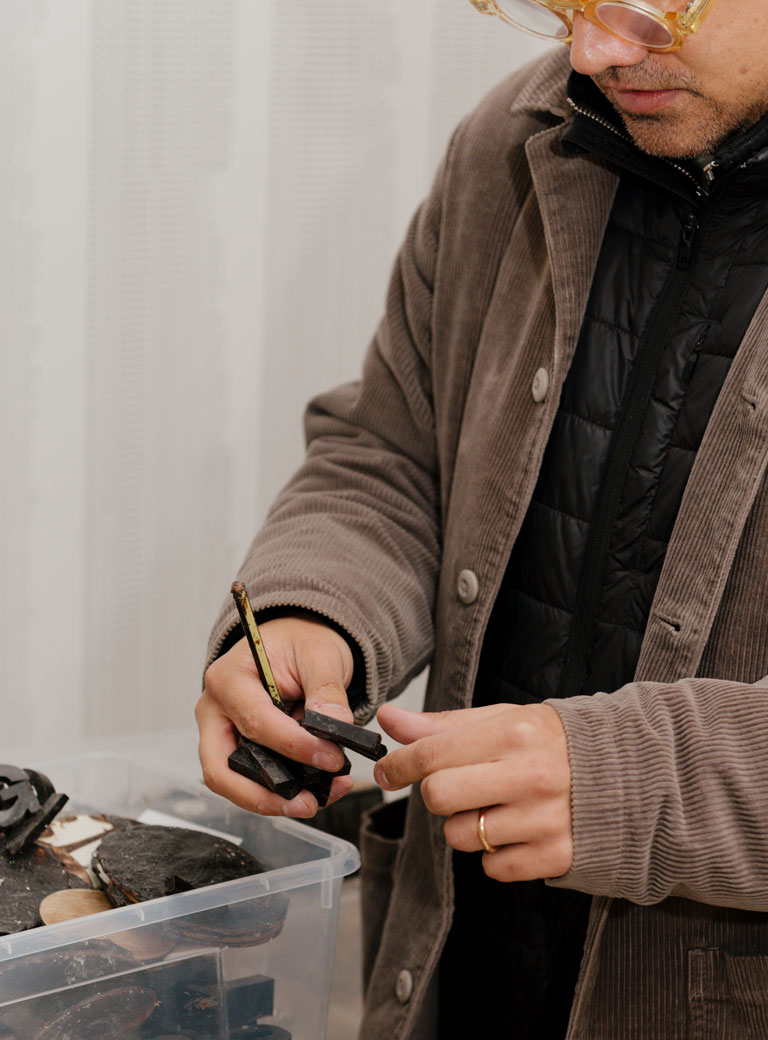
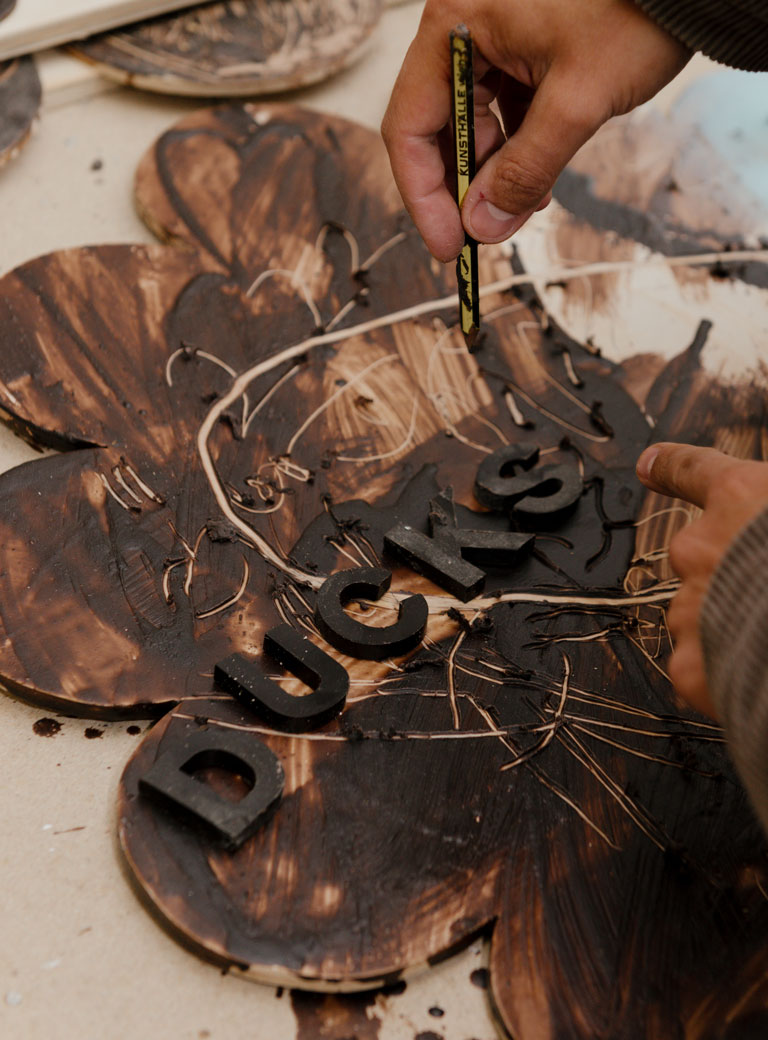
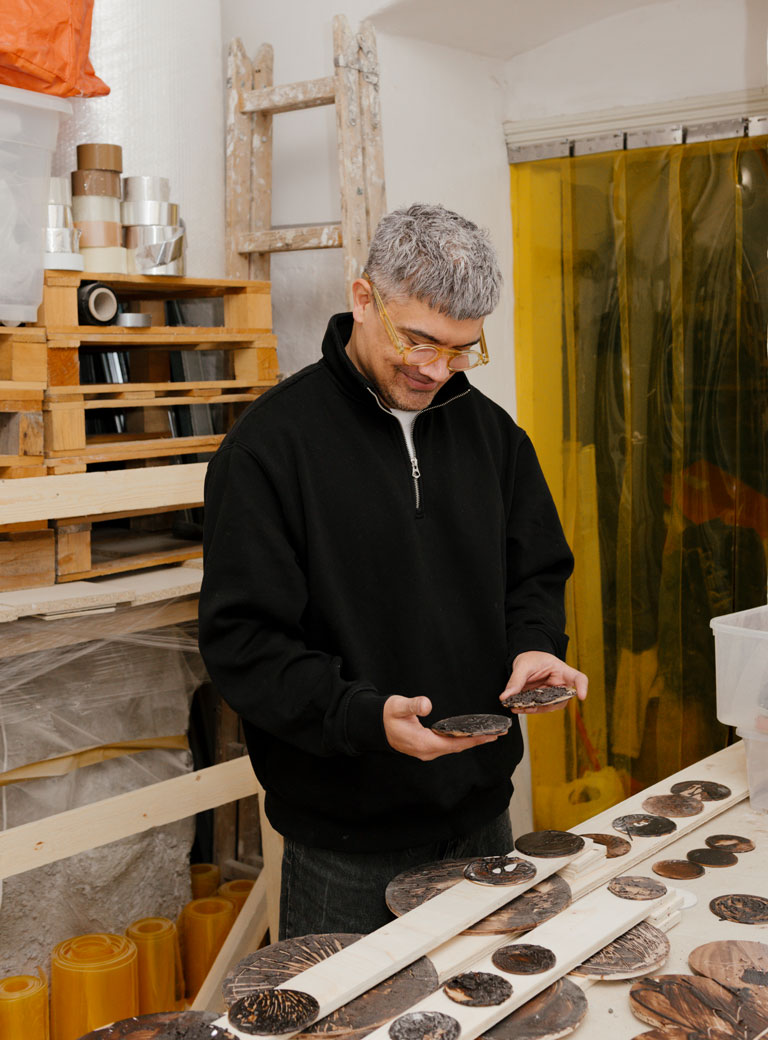
I have been developing plant-like sculptures or sunflowers in concrete for a while. Some are currently on show at Kunsthalle Wien, Lebt und arbeitet in Wien: Contemporary Art from Vienna (Lives and works in Vienna, until 26 October 2026). Every time I add to the series it feels like a community that grows. Each one is made by hand, not cast, so no two are the same. When they come together in a space, they read less as individual objects and more as a gathering.
How are you interpreting Catherine Nichols’s curatorial title for Lyon – To pass from one dream to another? Can you tell me a bit about the conversations you had with her when she came to visit you in your studio?
The title led me to think about how we remember worlds that we don’t have access to. Within this context, the project investigates how worlds are remembered, rebuilt, and ethically reimagined. The new works approach approximation and forgetting as an indication of what cannot be seamlessly carried across time, geography, and political history. I enjoyed meeting Catherine when she visited my studio. Unbeknownst to me, she had quietly been following my practice since seeing my solo presentation at Frieze London art fair in 2023. As an artist, it often feels like your work disappears into the world without you knowing how it is received, so it was fascinating to learn that she had been engaging with it behind the scenes. When Catherine came to the studio, she had begun to construct a world around the work. During our intense, inspiring conversation, we talked about why I make work, what I hope it can do, and, above all, the questions that drive my practice. I think I work towards understanding the things I don’t yet know. Much of our conversation centred on those grey areas.
An exciting part of the work you’re producing for Lyon is the creation of a scent. You’re developing it with your mother to recreate the aromas of the day she left India in 1963. How did you begin researching this?
Sometimes my work deals with inheritance and both of my parents appear in my practice, though in very different ways. Collaborating with my mother and excavating her very unstable memory of a day from her childhood has, in a way, given me access to something she experienced. But through the process of making this work, I also realised that I was learning about her imagination. A lot of what she thinks she remembers is also how she imagines India to have been.
Have you travelled to India together to do some of this research?
No. I’ve never been, and my mother hasn’t returned to this day. For her and her family, it was really about leaving something behind. She didn’t just leave momentarily, her life changed. But as my mother gets older, and through this collaboration, we’ve understood that we would like to go back and have developed more of an interest in visiting India together.
Perhaps we can talk about the research material and the creation of the scent. Was there a moment when you thought, ‘this is it – this is the scent’?
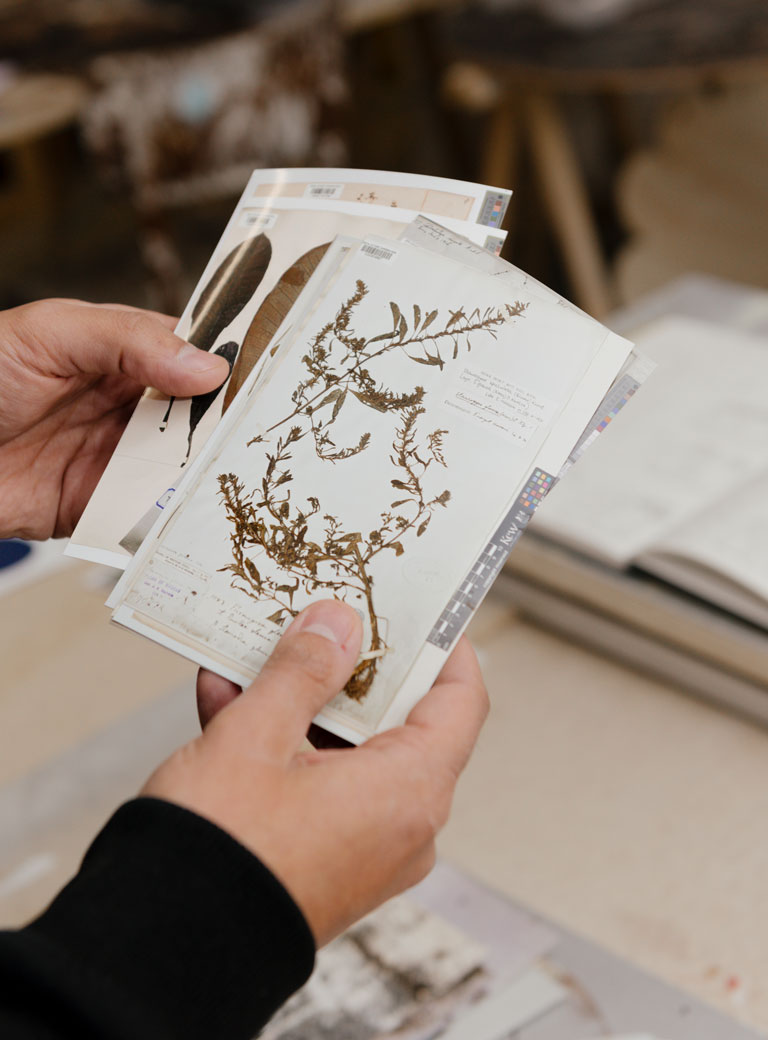
I think the act of trying to recreate something that is lost or forgotten is the most important part of the project. We didn’t have a Eureka moment, but I think I would have questioned the validity of that moment anyway, had it appeared. The Eureka moment is interesting in this context. It implies that a factual recreation of that ‘smellscape’ would have been possible. There were moments when my mum smelled the samples and recognised something or experienced a strange sense of familiarity. So, what emerged from the process was something much more nuanced than a factual recreation.The scent was made in collaboration with RYOKO Senses Salon in Berlin. They specialise in using natural materials to create scents and olfactory installations. I discovered that the founder, Ryoko Hori, was deeply rooted in Japanese Shinto philosophy but had also taken a very moving and important trip to India with her father, which impacted her work. I shared lots of family photographs, archival material, weather reports, civic data, descriptions from my mother, along with writing and documents from places such as Kew Gardens, London’s major centre for botanical research, classification, and material collection. The key part was figuring out how to move from statistical or analytical information and convert the data into a scent, something that is emotional and ephemeral.
Which samples were particularly important to finding the scent?
One of the notes in the composition is kewda, an essential oil that, interestingly, shares the same aromatic compound that is naturally present in basmati rice. Rice is an integral part of the personal narrative as to why my family left India. The fable goes: one morning, when my grandad went to collect the newspaper from the front door, he saw that somebody had left a bag of rice on their doorstep. In some parts of Indian culture, rice on the doorstep indicates a bad omen. So, with this potential curse, the family fled India. It was important to me that the scent somehow paid homage to this superstition, especially because rice was really crucial to their departure. Here it is. [James passes over a small bottle of scented liquid]
Wow, it has a very woody note as well.
Yes! We didn’t want to create a cliché of India. I kept returning to the idea that the scent shouldn’t feel complete. Like it had loss, or something unresolved written into its composition.
It reminds me of a house with wooden furniture. There is a slightly dark interior, but light is coming in from outside.
Exactly! It’s really interesting that the scent creates an image of a domestic setting for you. Much of what I’m trying to do in my work is create a representation of a domestic space.
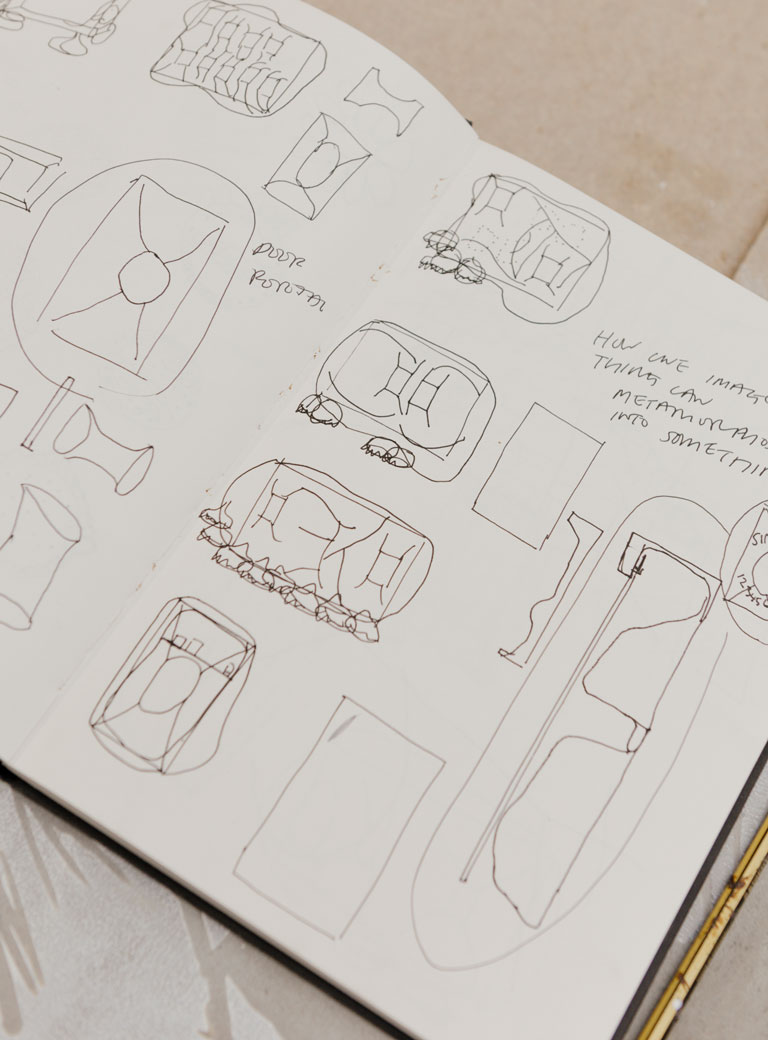
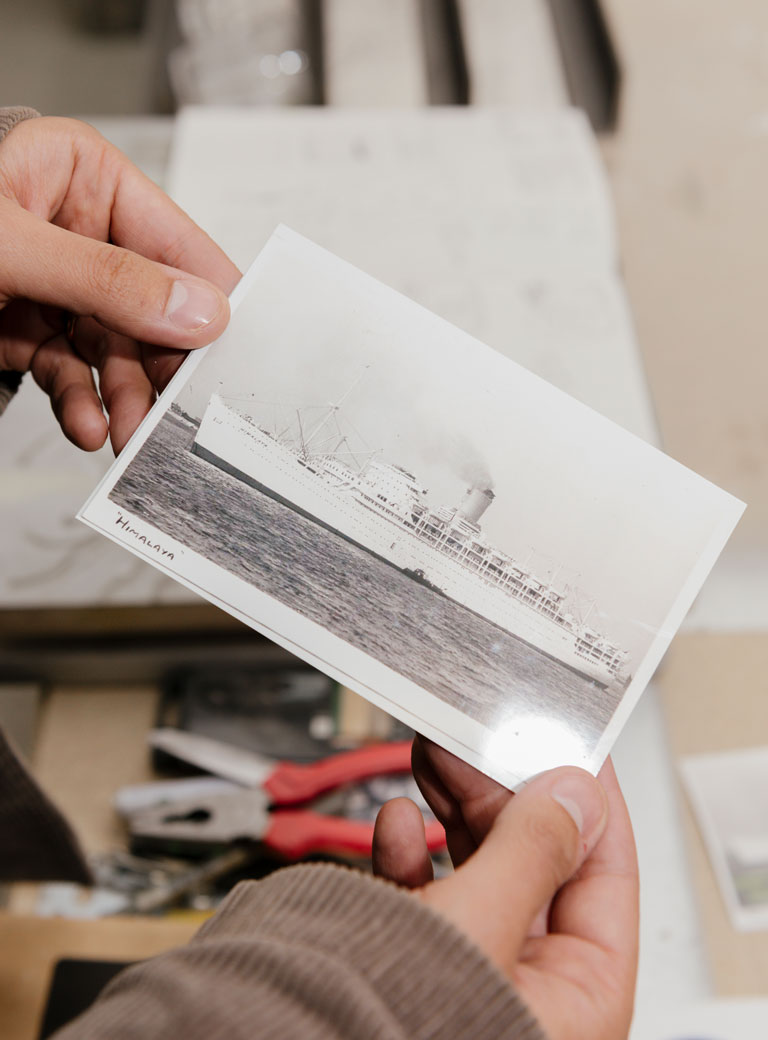
To quote your mother from your 2025 video work, The Third House, she talks about ‘a kind of architecture made of errors’ when trying to remember her home in India. Could you tell me a little more about what this means?
That video was a subtitled conversation with my mum, where I asked her to describe the house she grew up in, in India. As she tries to remember the layout of the house, she describes the act of remembering as ‘an architecture made of errors’. It was a really interesting terminology for me and her phrasing helped me understand my work a bit better. So, rather unexpectedly, my mother helped me to articulate what I’ve been trying to do for the last fifteen years.
It’s interesting that sometimes it takes a generation of space to then re-enter these discussions with slightly more perspective, which isn’t quite so first-hand. Through these conversations with your mother, you’ve been able to develop something together, while keeping your own agency within that, and translate it with her.
Through this work, I’m made to ask my mum questions. There was something really comforting about being given a space that legitimises me asking my mother questions.
Yes, definitely, it’s wonderful. Excitingly, at the same time as your presentation in Lyon, your work will be presented at Galerie Hubert Winter in Vienna. How are you thinking about these two spaces together? Is The Third House the connecting point between your presentation at the Lyon Biennale and Galerie Hubert Winter?
The show at Galerie Hubert Winter will move into a new area of The Third House, my theoretical framework. For this exhibition, I’d like to include memories of my father. As you walk into the space, you’ll be walking under a suspended ceiling. The first work in the show has a lot to do with weight and suspension. I became increasingly fascinated by Le Grand K, the standard kilogramme that is kept in a locked vault at the International Bureau of Weights and Measures near Paris. By definition, this object weighed exactly one kilogramme. It couldn’t be wrong because it was thekilogramme, and everything else in the world was measured against it. When it was made in 1879, dozens of near-identical official copies, sister standards, were distributed to countries around the world to serve as national references. Periodically over decades, these copies were brought back to Paris and compared against the original. But over about a century, the original lost mass and no one knows why. I think of Le Grand K as an allegory for inheritance – you’re handed a standard and you measure yourself against it. But it drifts, it loses mass and, at times, definition. So, the two shows are really the same house in two different cities. Lyon is related to spatial memory and its instability. The exhibition in Vienna asks you to stand beneath something that is slowly, unaccountably redefining a classification.
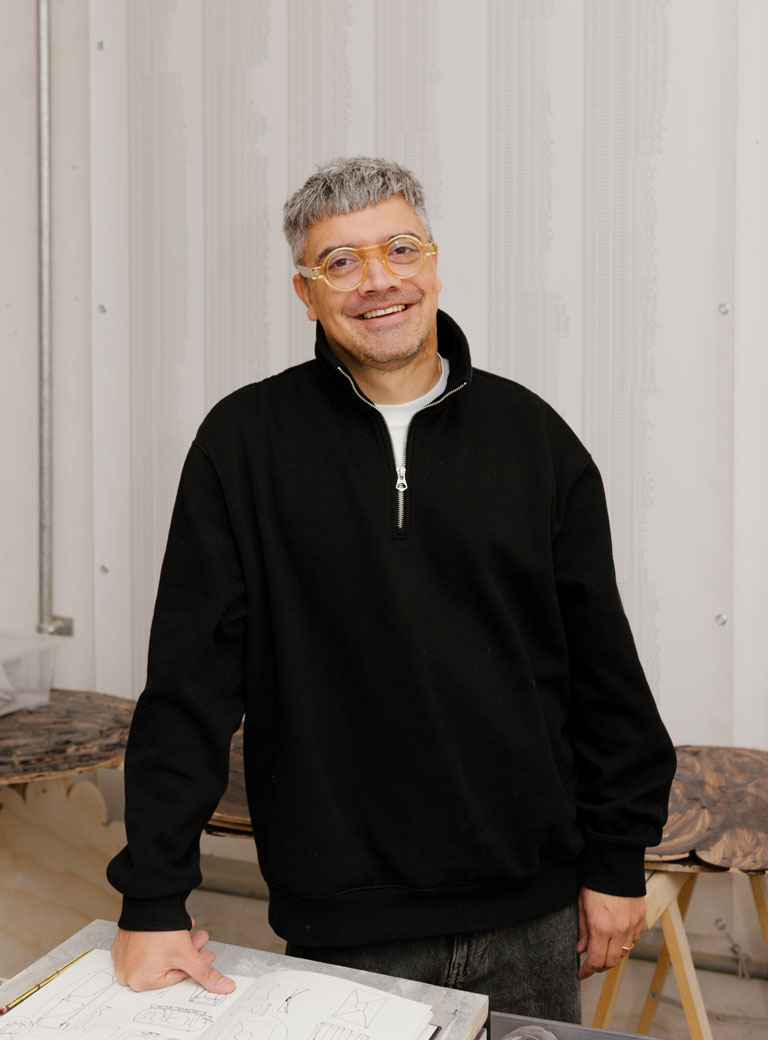
Before we finish, may I ask what brought you to Vienna in the first place?
I was invited to participate in the exhibition On Being In The Middle, curated by Alfredo Cramerotti at Galerie Hubert Winter as part of the Curated By Festival in 2015. Luckily I agreed to participate in the exhibition because it changed the course of my life. I now collaborate with Galerie Hubert Winter which is an incredibly privileged position to be in as a young artist but more consequentially I also met Laura, my now wife, during the install. I’m really proud to participate in such an ambitious and exciting community that Vienna offers. London, despite it being my home town, never felt like my city. I love London dearly but Vienna feels like home.
Text: Nell Hargrove
Photos: (c) Lea Sonderegger