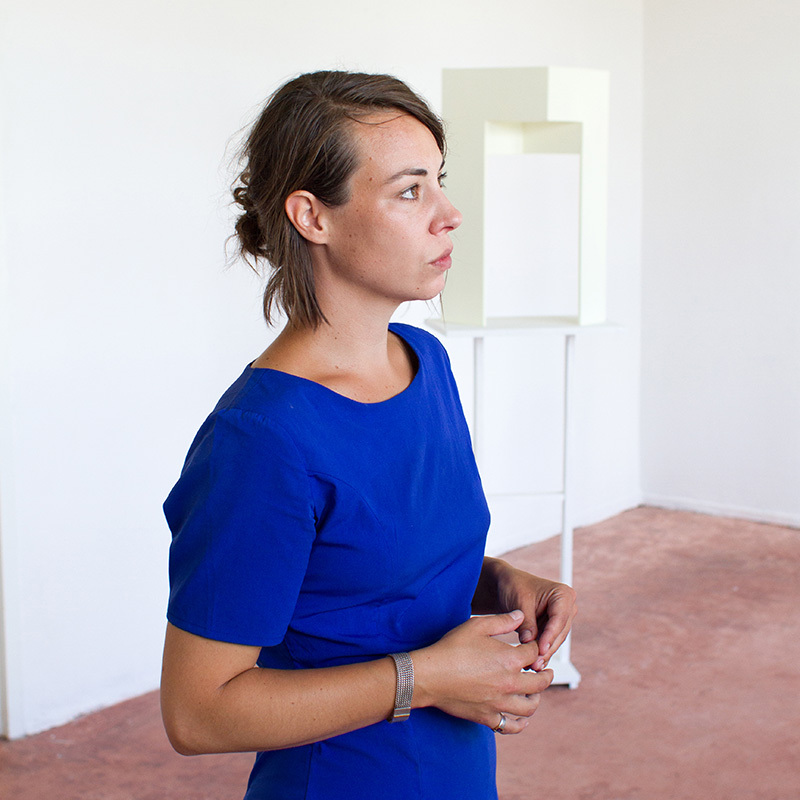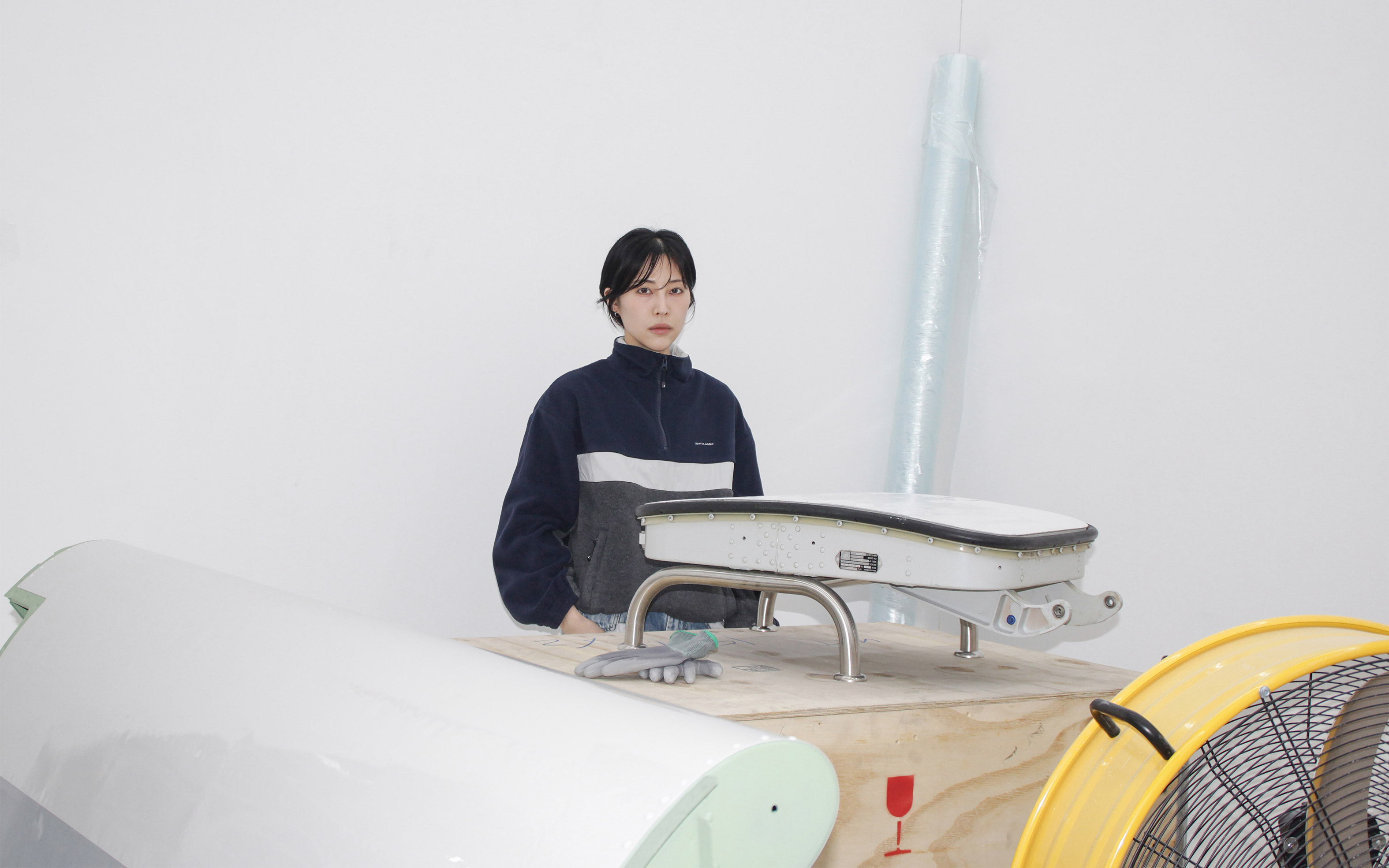
Ju Young Kim’s sculptural and installation-based practice unfolds from a position of movement and transition. Working with materials such as glass and industrial forms drawn from transportation and architecture, she explores states of in-betweenness, temporary inhabitation, and suspended time. Kim’s works often evoke spaces of passage, where notions of belonging, protection, and displacement intersect. Shaped by her experiences of moving between South Korea and Europe, her practice approaches mobility not as a fixed narrative, but as an open condition marked by vulnerability, imagination, and the quiet tension of what comes next.
Ju Young, when did you first realise that you wanted to become an artist?
I actually studied sociology at first, and art wasn’t my major initially. But looking back, I think I always wanted to be an artist. I remember this form we had to fill out in elementary school, where you had to write what you wanted to become. I wrote that I wanted to be an artist. I still remember the paper very clearly, the layout, the little balloon shapes on it.
During your Master’s degree, you also encountered Olaf Nicolai. How did that come about, and how did it influence your path?
I met him on a class trip. During that time, I first learned about the Academy in Munich. That encounter was pivotal: it introduced me to the University, and shortly afterward I decided to move to Munich. The process was somewhat complicated, but in hindsight it proved to be a decisive step. Olaf Nicolai became my professor, and remained so until I completed my diploma in February 2024.
Looking back, would you say there was a specific moment or shift that shaped how you work today?
It was a long process, but I think the decision to relocate was crucial. Studying in a different environment made me realise that I am much more interested in space, installation, and sculptural situations than in painting or strictly two-dimensional work.
Do you feel that this broad material interest benefits your work today?
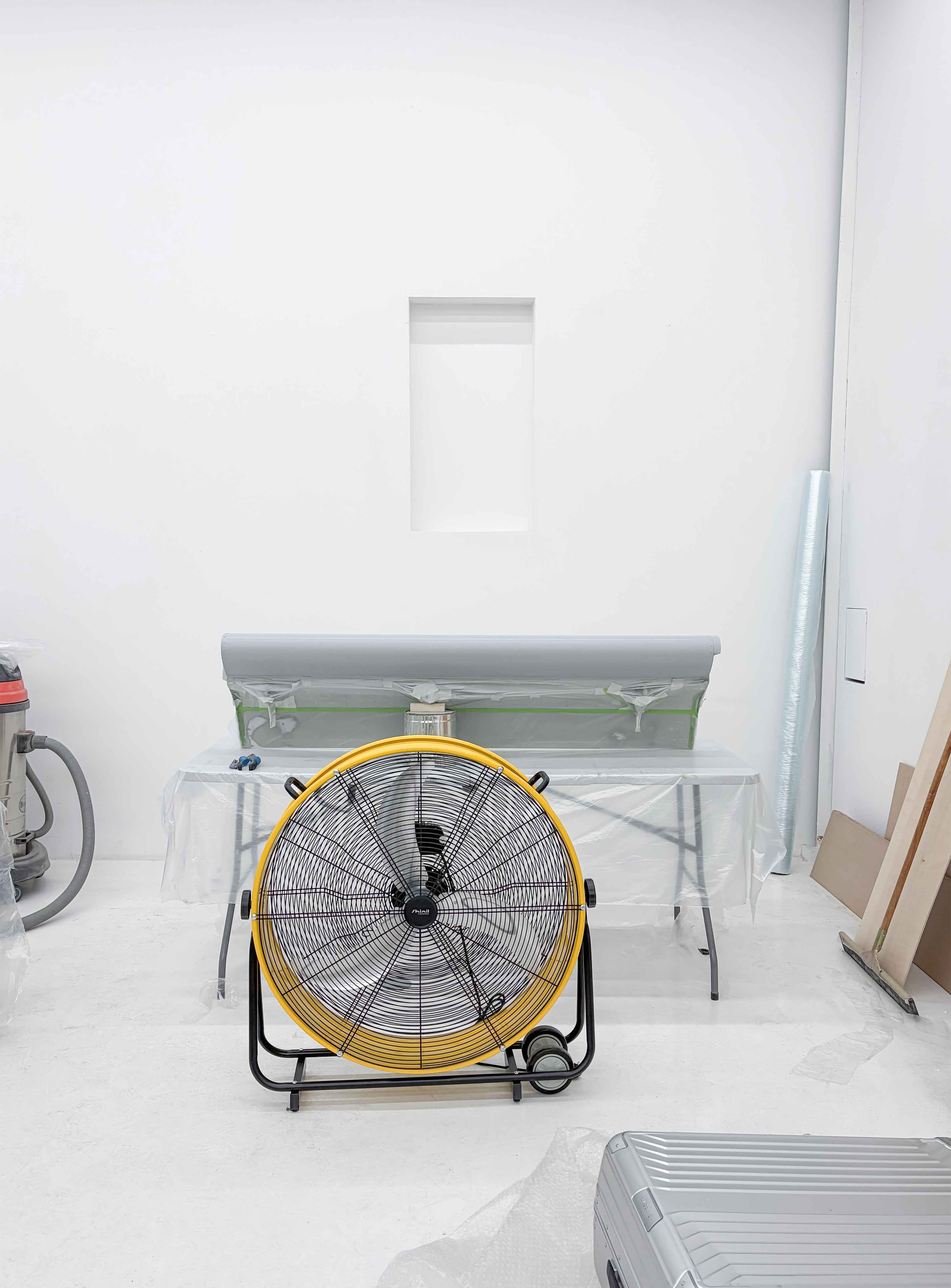
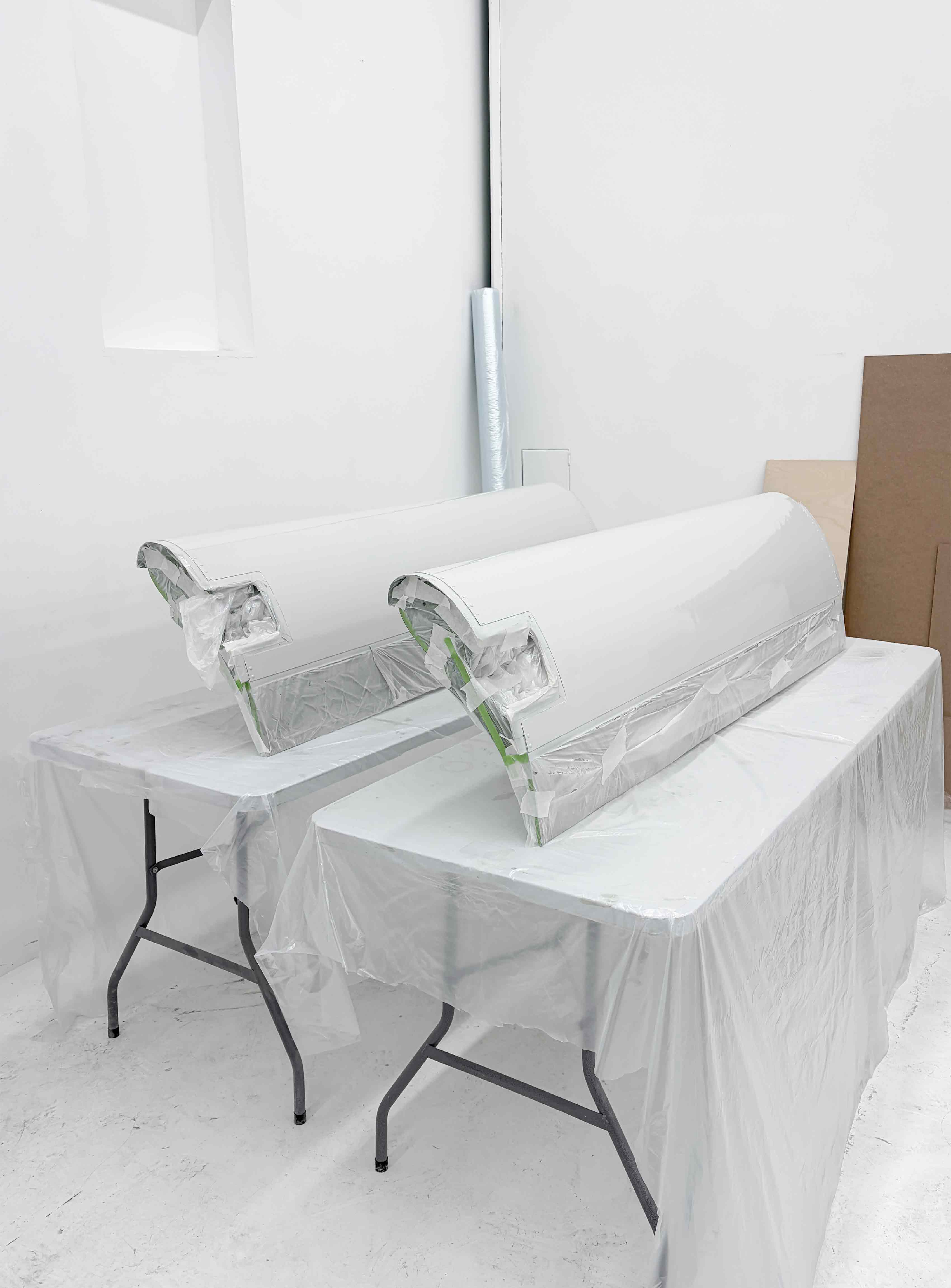
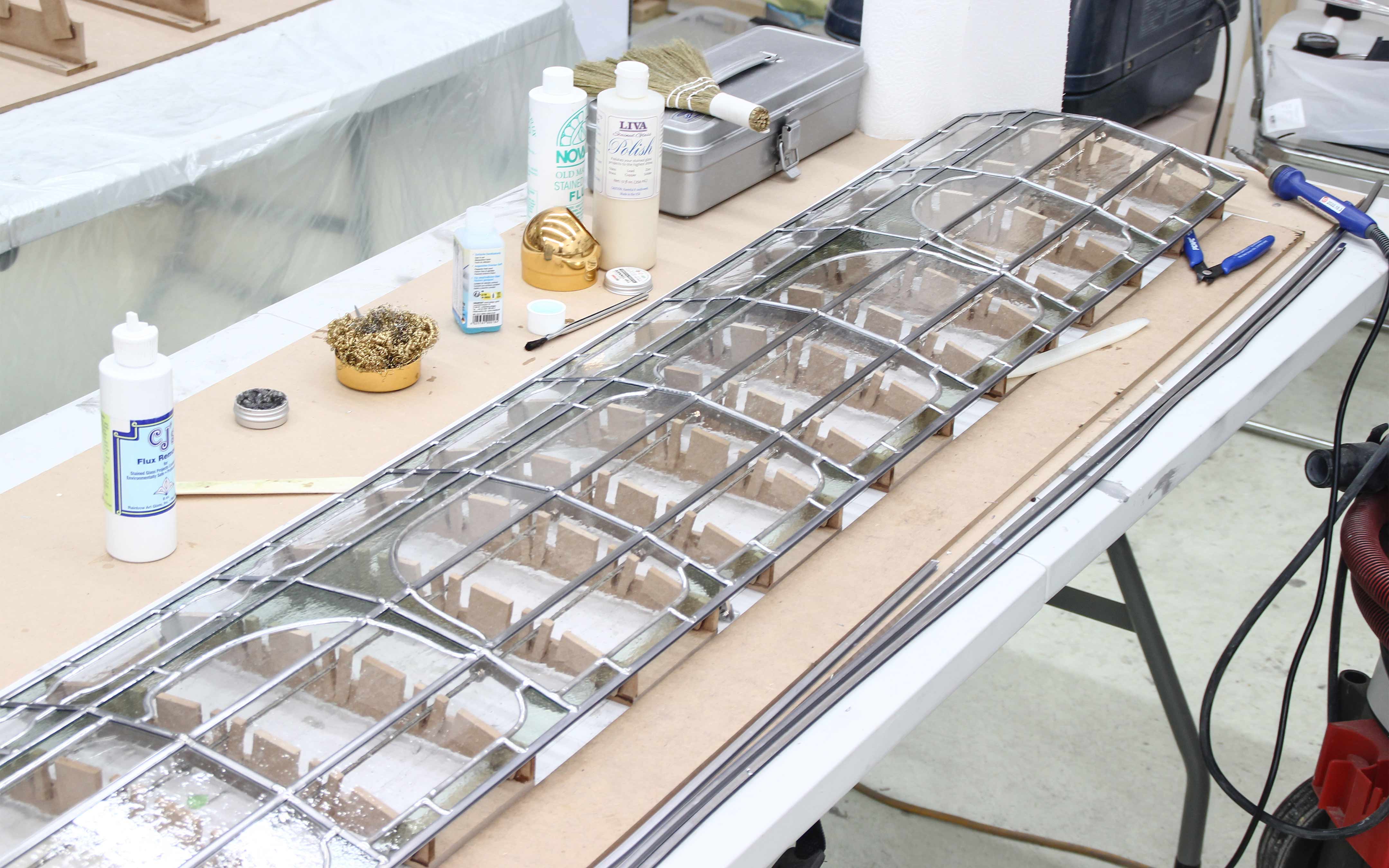
Definitely. Learning so many different techniques gives me a strong understanding of what is possible materially. You know what materials can do, how things are made, and what kinds of processes are involved. For me, this also feeds into how I look at architecture and everyday structures. When I move through cities or travel, I often find myself observing buildings or infrastructure and trying to understand how they were constructed. That kind of material awareness directly informs my practice and how I adapt certain techniques.
How would you describe your artistic concerns in your own words?
At the core of my work is a perspective that could be described as that of a traveler, but not necessarily in a literal sense. It’s more about not fully belonging to one place and constantly moving between places. This state of being in-between is not only physical, but also emotional and psychological. I’m interested in transitional spaces; spaces of waiting, passage, or temporary inhabitation. This can be very concrete, like being on a plane or a train, sitting in a waiting room, or living in a rented apartment. These are all spaces where you are present, but never fully settled. That sense of in-betweenness is central to how I think about space, installation, and the situations I create.
You describe this state of being in-between as something that also carries possibility and imagination. Could you expand on that?
For me, these in-between states are moments where you are already oriented toward what comes next, without knowing exactly what that will be. You prepare, imagine different futures, make plans, but everything remains open. There’s a sense of expectation, and of carrying multiple possibilities at once. I think this reflects something shared by our generation. Mobility and freedom are much greater today, but that openness can also be limiting. When everything feels possible, it becomes harder to choose a direction or commit to a path. My work emerges from this tension.
Does this come from your own experience of moving and living in places where you are not from originally?
Yes, initially it does. I do not fully belong here. My language is different, I look different, my cultural background is different, and my family is far away. But I also think many people can relate to these themes, even if they are not immigrants. People leave their hometowns, move to different cities, and live in changing environments. Sometimes the place you imagine as “home” no longer exists, or never really existed in the way you remember it. You might long for something that you can’t fully reach, or that might not be there anymore. So for me, it’s not only about moving from one continent to another. It’s about a more general condition, about constantly moving toward the next phase in life.
Would you say your practice is driven more by intuition, or is it conceptually structured?
It’s both. Conceptually, there is a clear structure based on the ideas I mentioned before. But intuitively, the work develops through specific situations. For example, in my exhibition at Kunsthalle Mannheim, the exhibition space was about seven by eight meters, almost the same size as many student apartments or shared flats. I started thinking about renting an apartment as a form of living that mirrors this in-between condition. From a more distant perspective, renting a space is similar to traveling. You temporarily occupy a place, then hand over the key to the next person, who continues their life there. In that sense, it’s connected to movement, transition, and progression. You’re always passing through, always moving toward the next stage.
When you begin a new work, what is usually the starting point for you?
It can come from many different directions. Sometimes it starts with an image, sometimes with an object, sometimes with a concept. I tend to mix all of these. I keep visual diaries, collecting photographs, taking snapshots, and writing down sentences I come across while reading. These fragments stay somewhere in the back of my mind. Over time, connections form between them. And then, at a certain moment, they begin to transform into a work.
Do you think of your works more as objects, environments, or situations? How would you frame your practice?
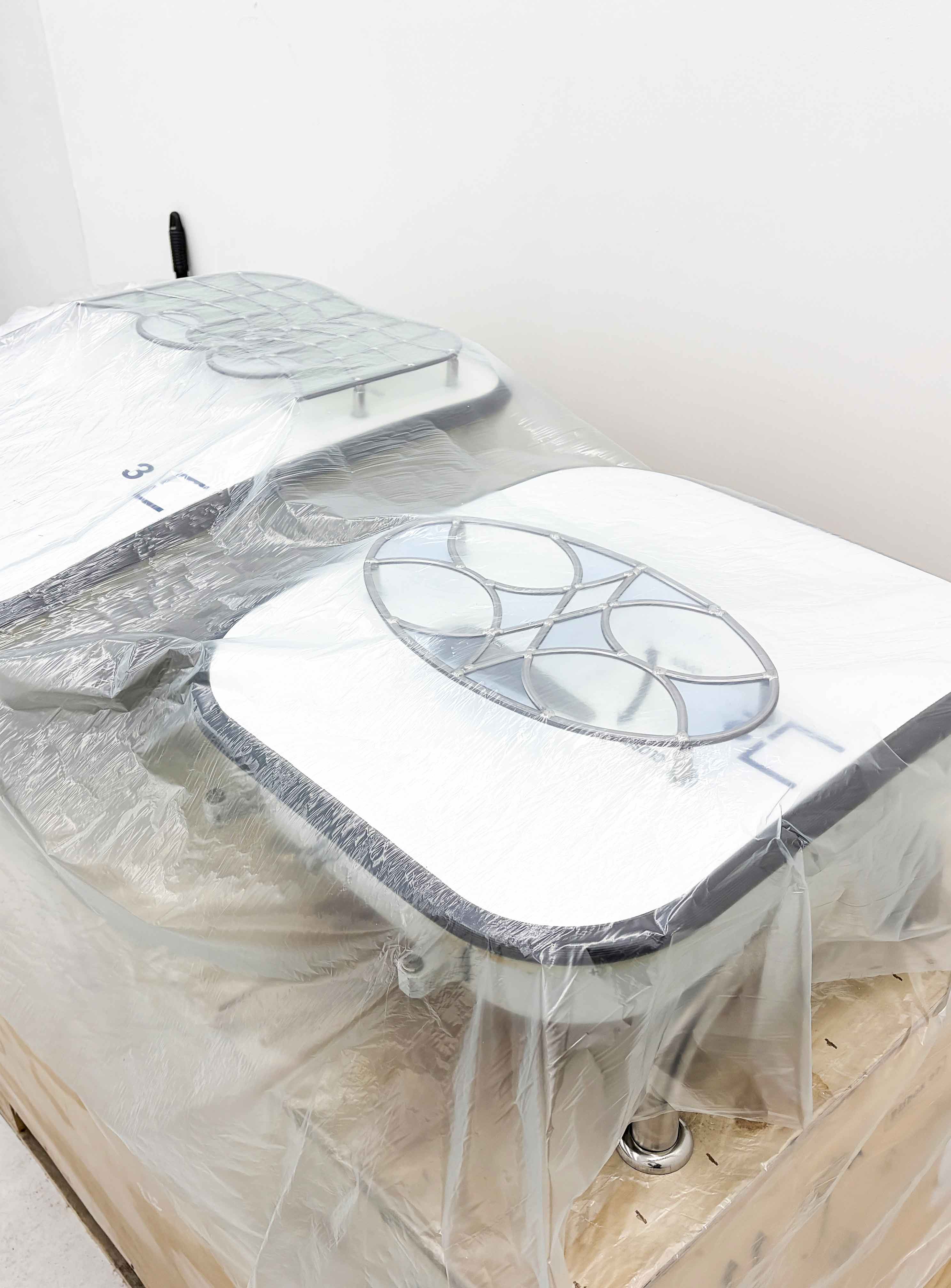
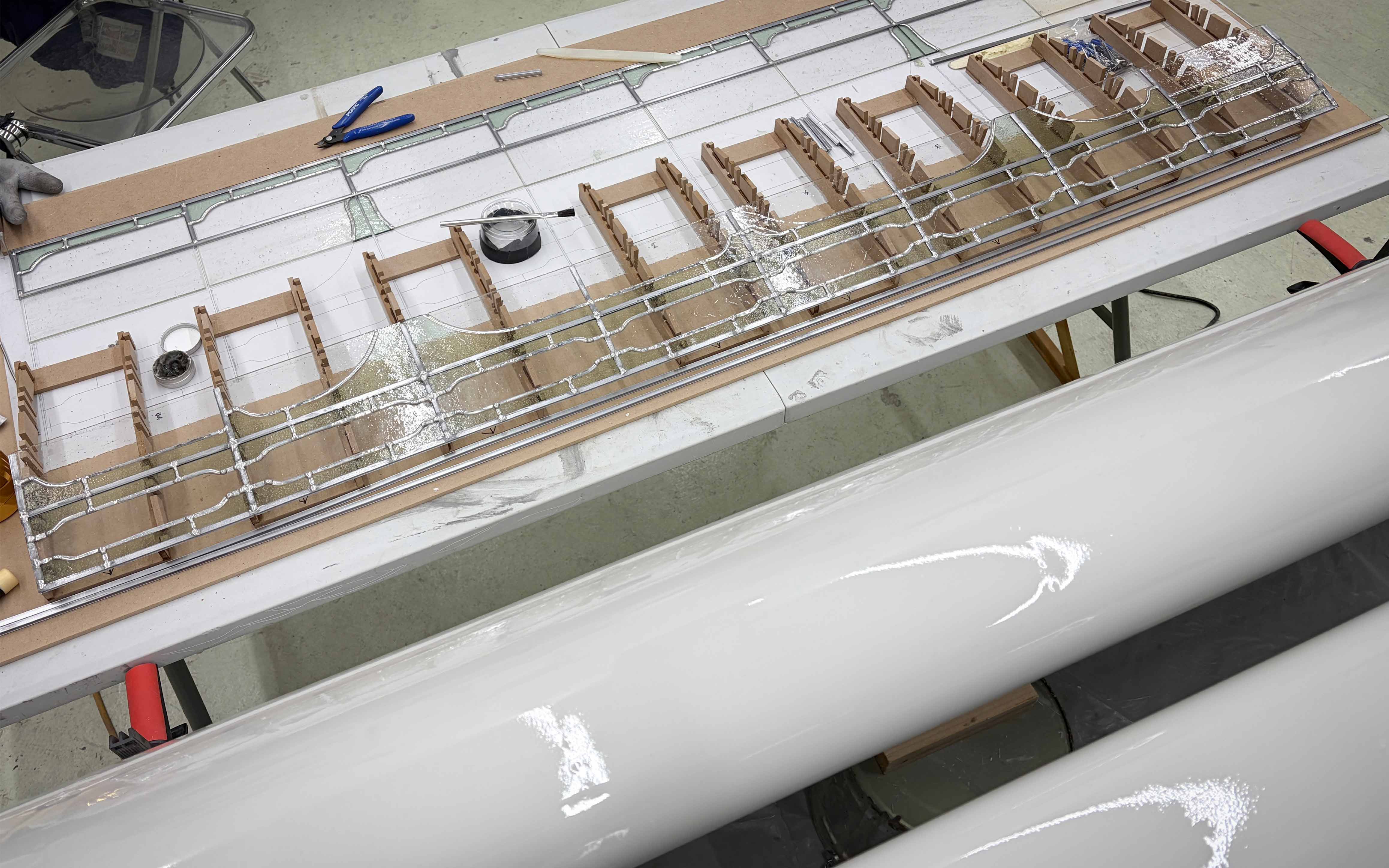
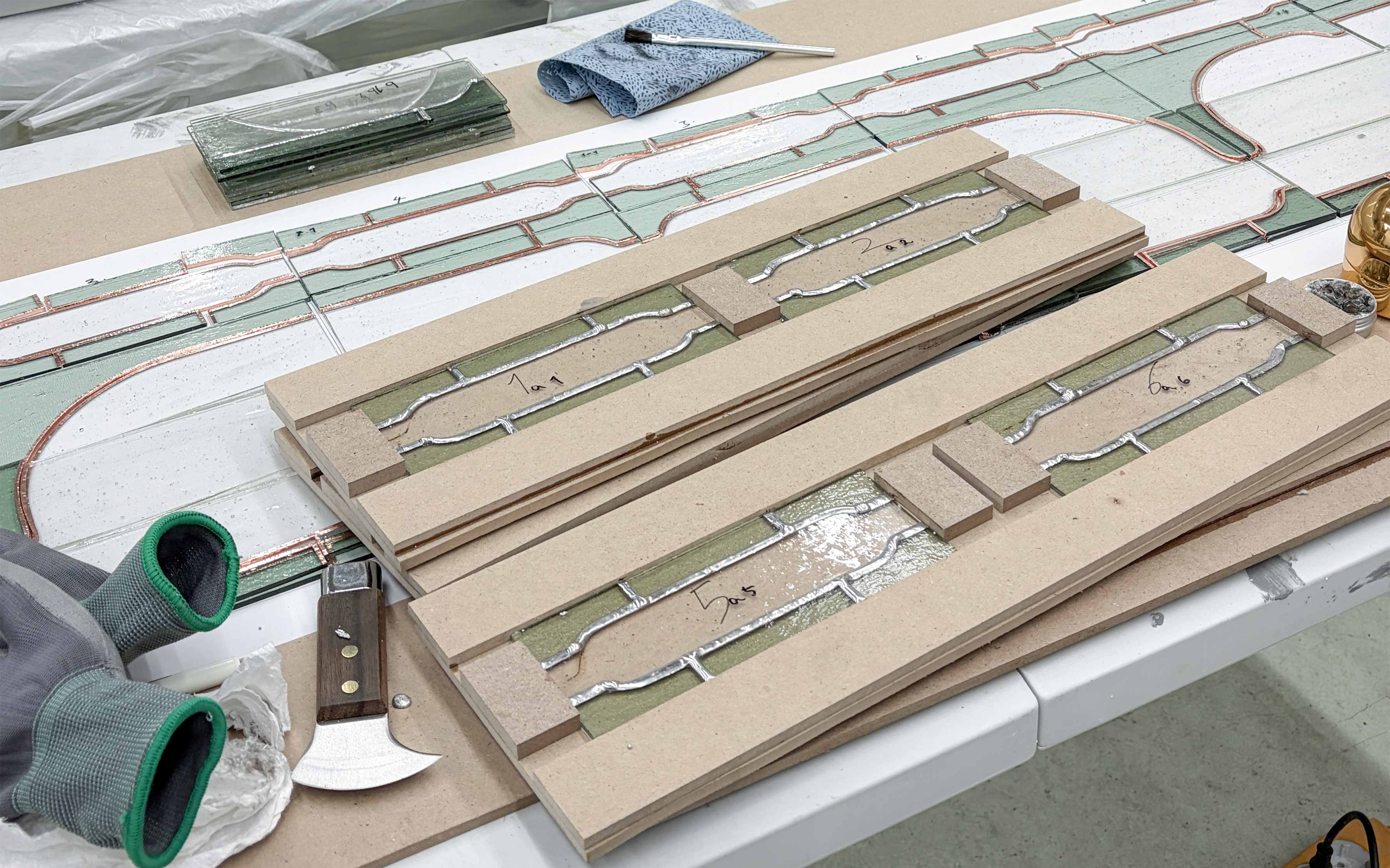
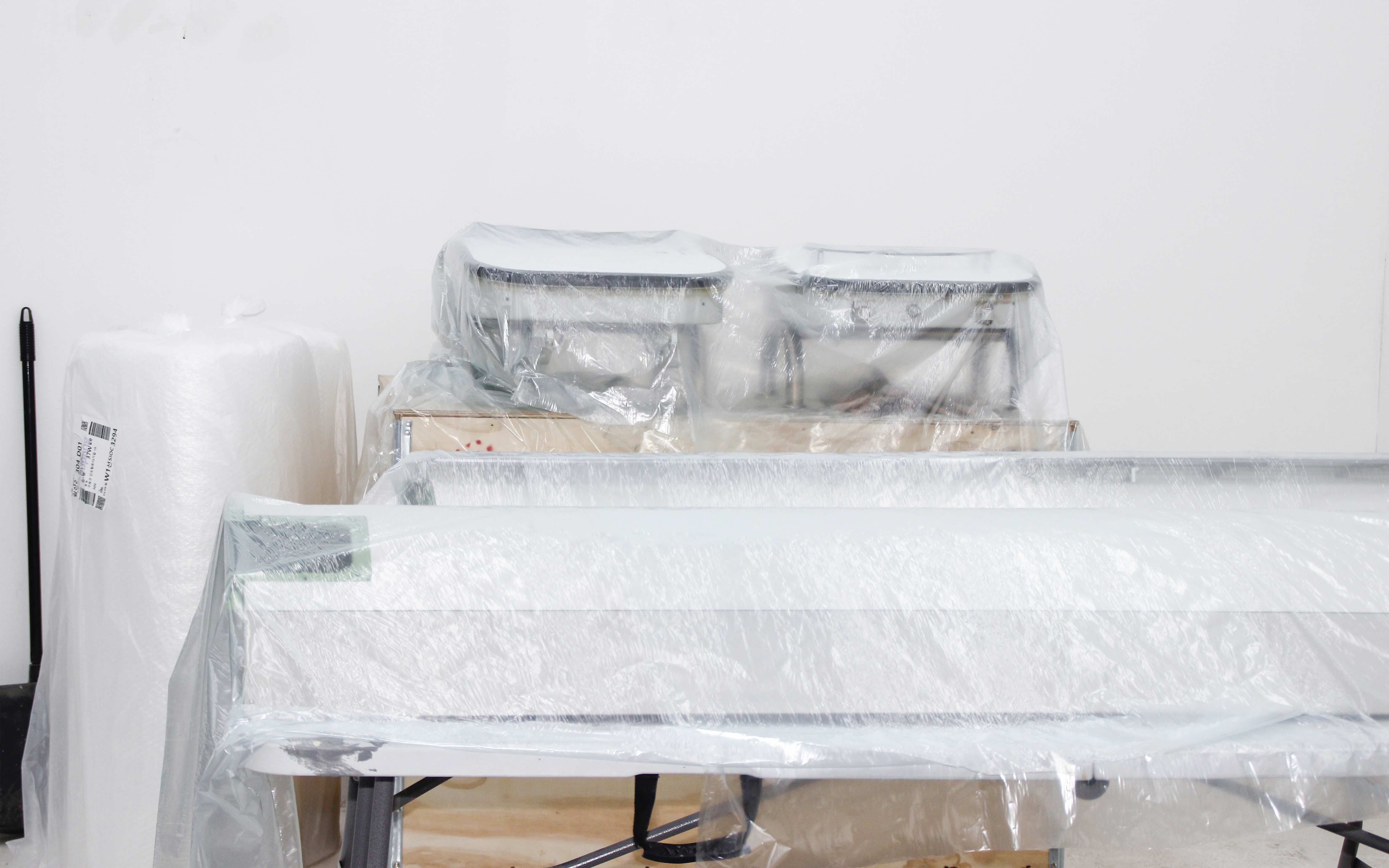
At their core, they are sculptures, and they can also function as objects. Although I’ve noticed that they work much better when several pieces come together. In that sense, installation is very important to me. When the works are shown together, they start to interact with each other in unexpected ways. That collective presence adds another layer that a single piece alone doesn’t necessarily have. As if the space contained a fuselage structure at full scale, with carpeted flooring and sculptural aircraft seating.
Your work references industrial objects like airplanes, yet the gestures feel fragile. Is fragility something you pursue, or does it emerge through the process?
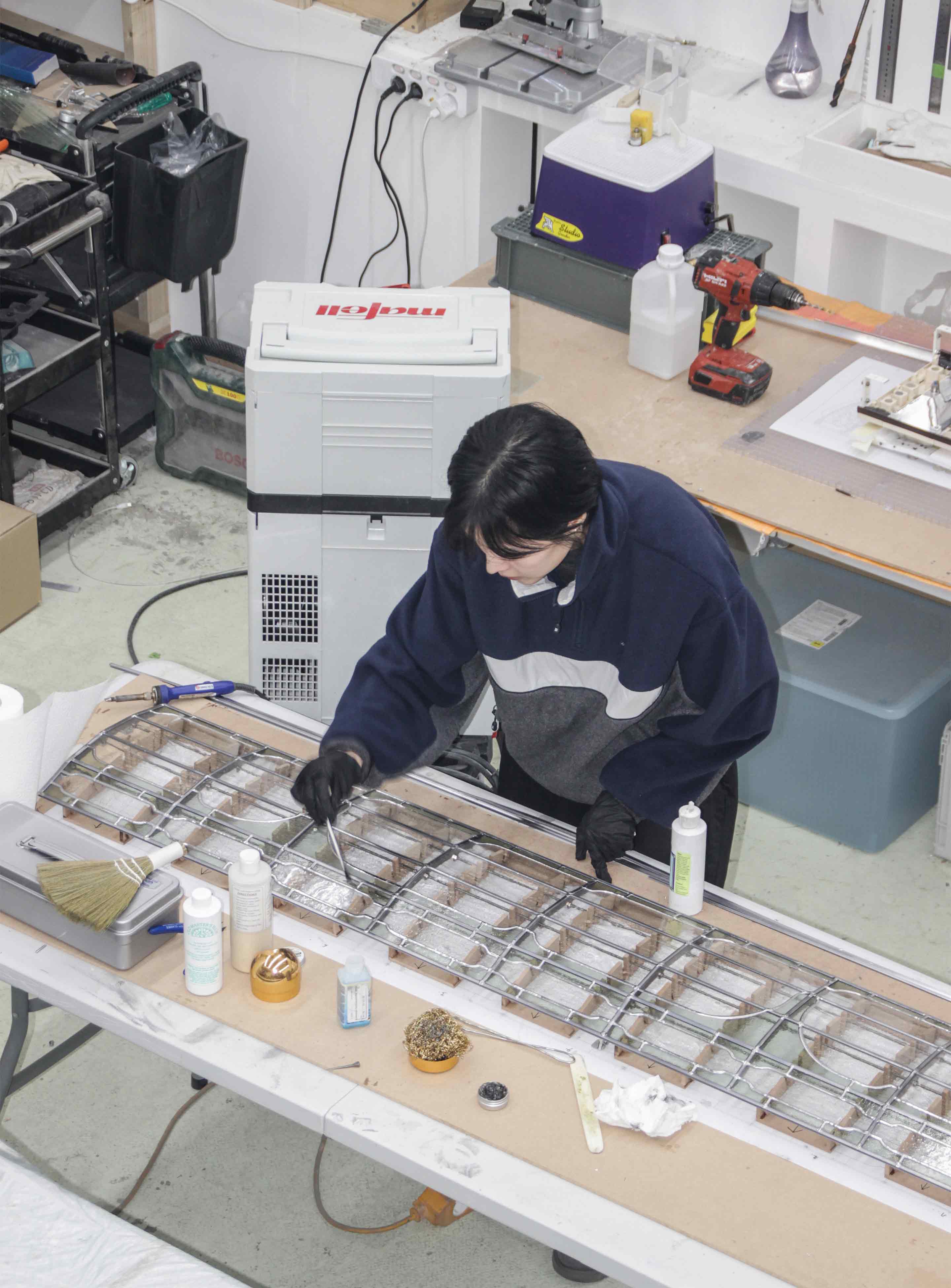
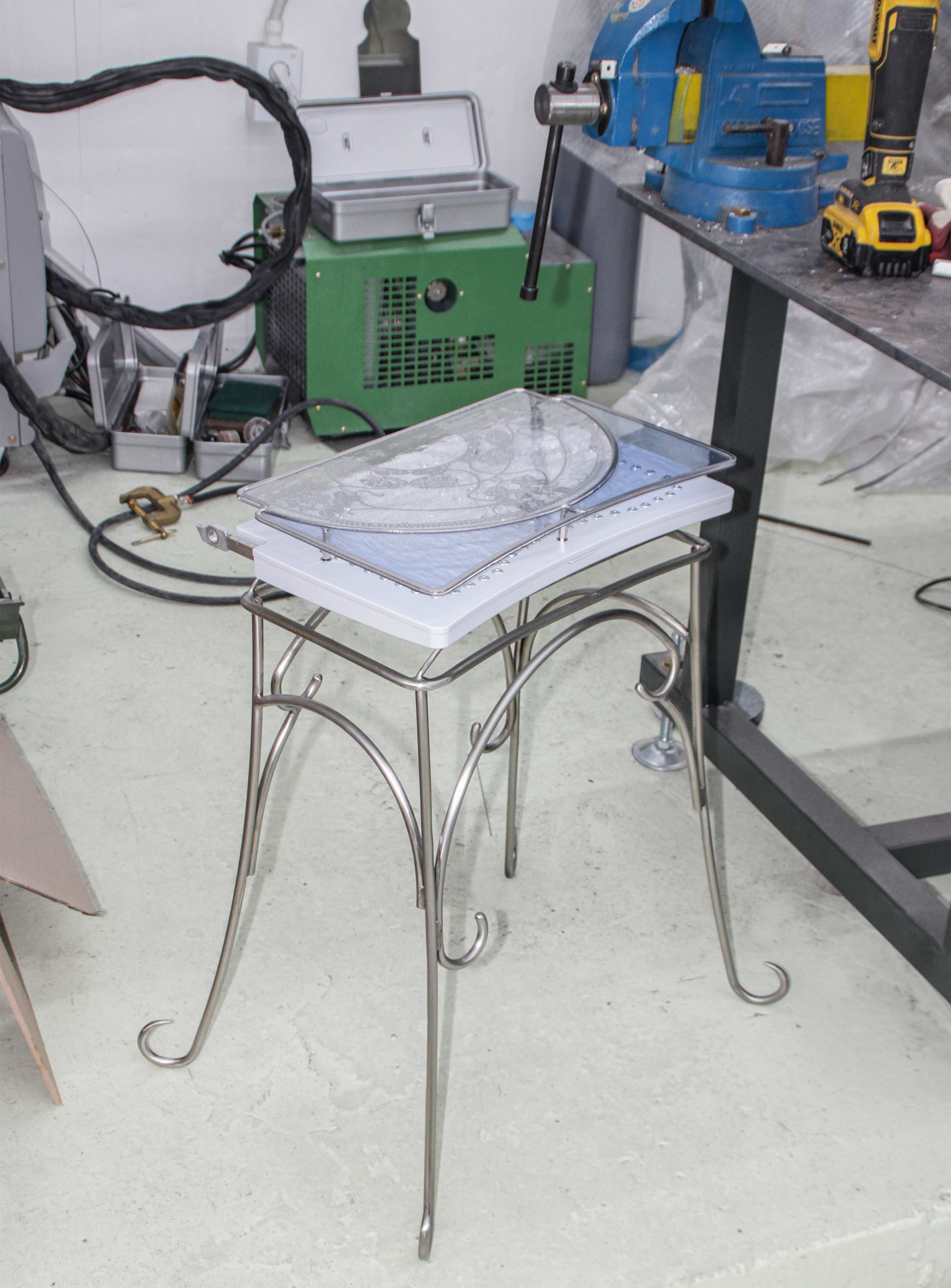
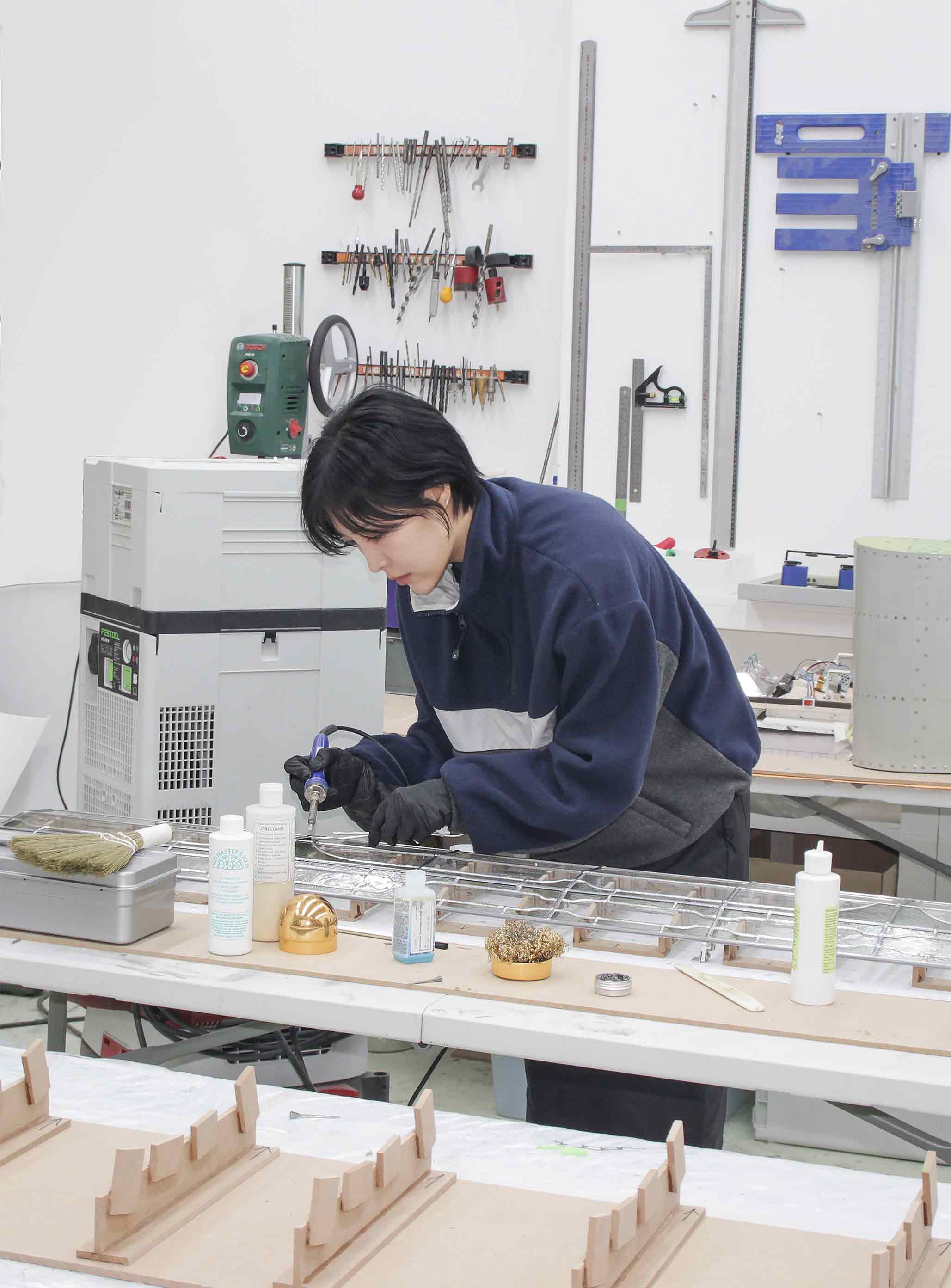
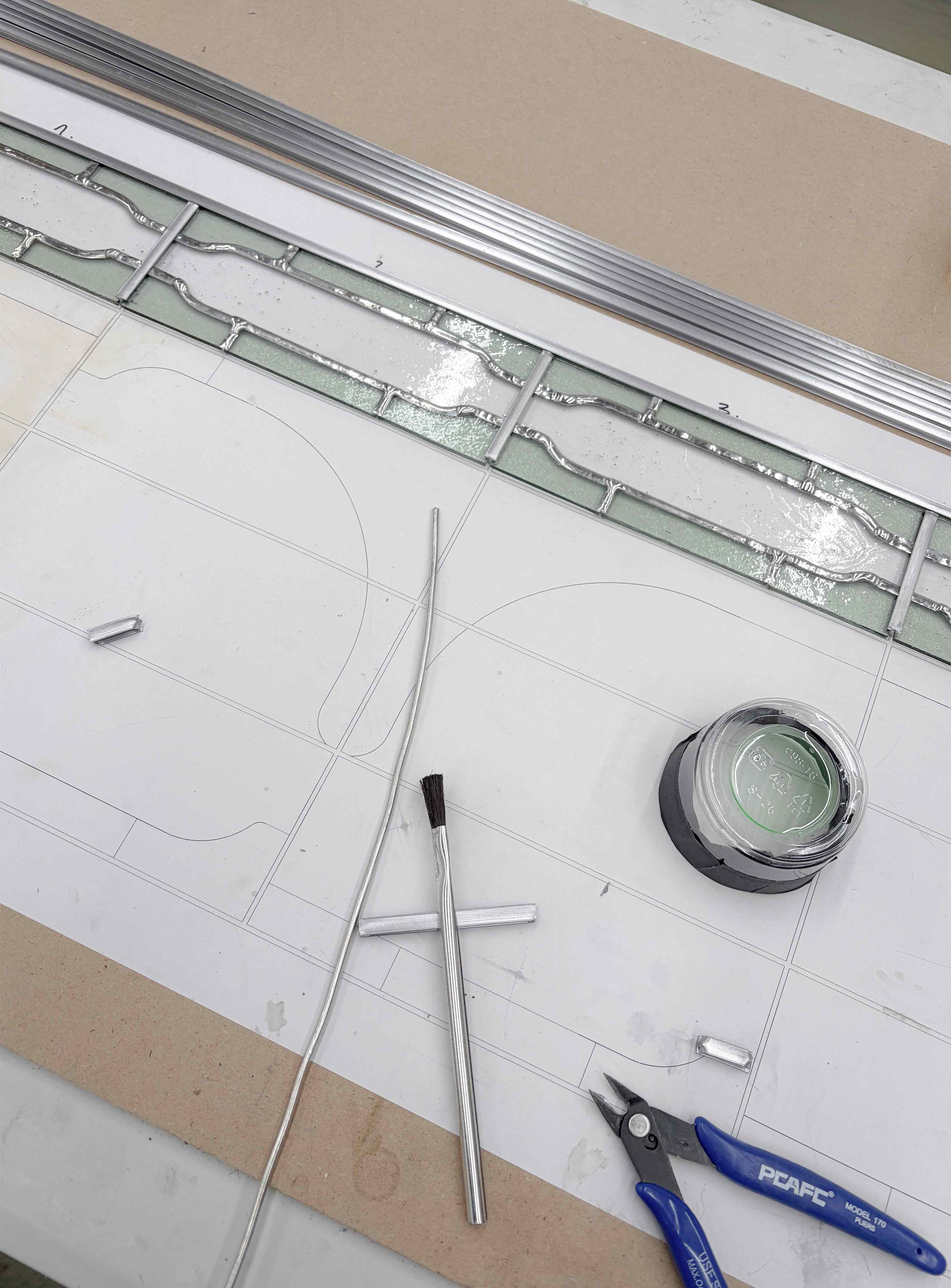
That’s feedback I hear quite often, that my work feels fragile or subtle. It’s not something I consciously aim for; it’s probably more connected to my personality. That may also be why I’m drawn to glass. It’s extremely fragile, demanding a lot of care, patience, and concentration, which I both hate and enjoy. Fragility isn’t a concept I start from, but it’s closely linked to how I work and live. Living between places, constantly adapting to new environments, comes with a certain vulnerability, and I think that state inevitably finds its way into the work.
Where does the interest of airplanes come from?
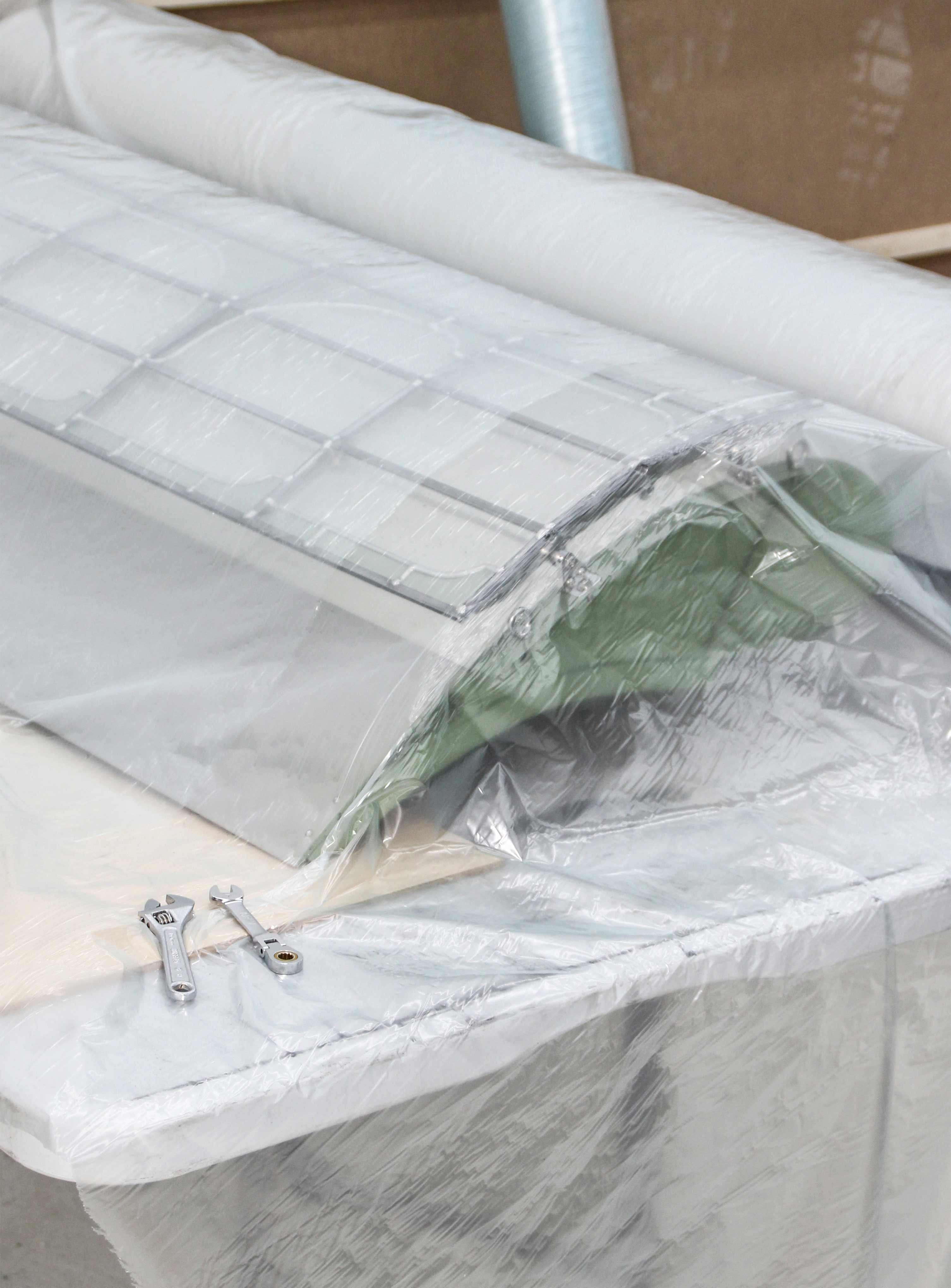
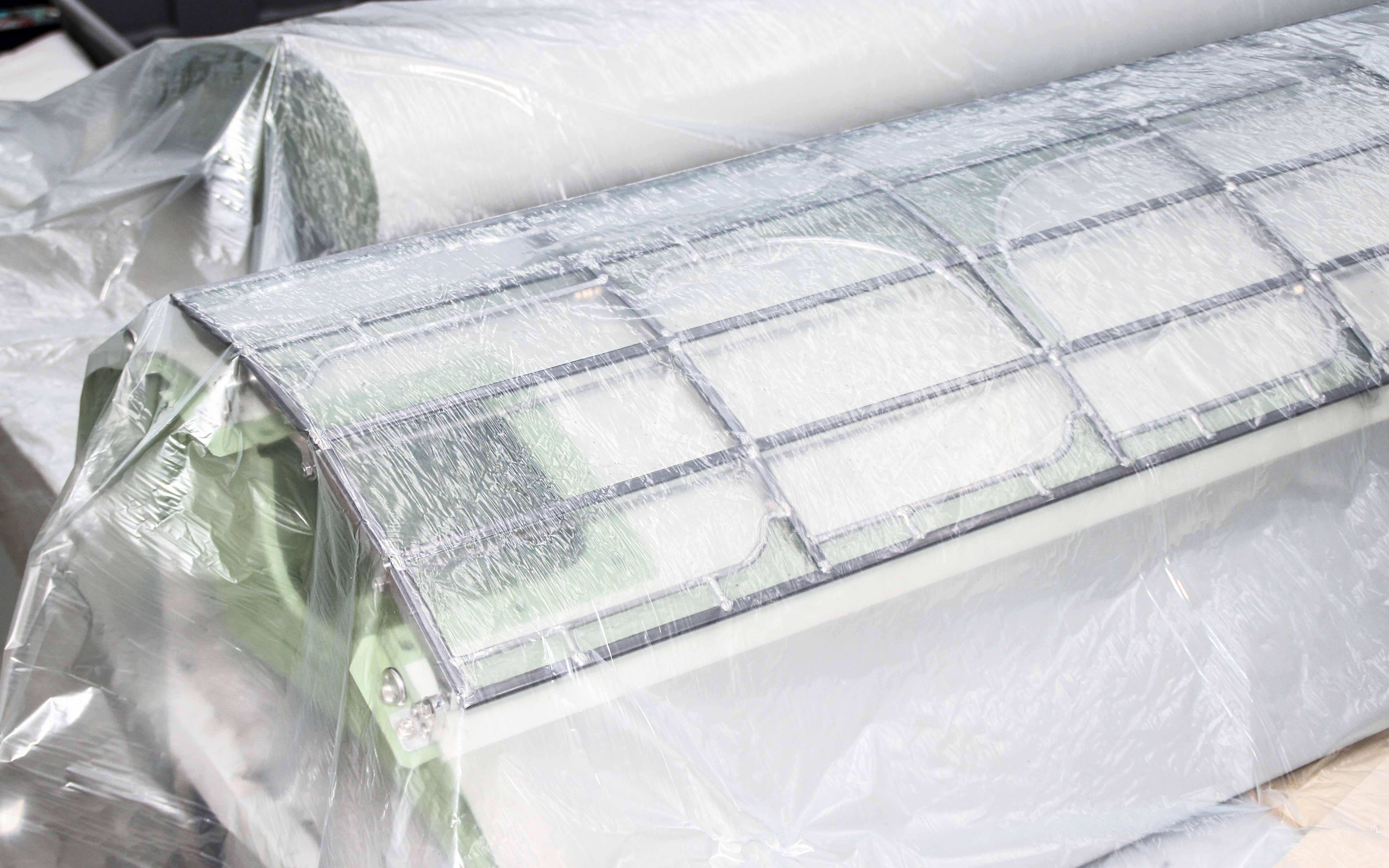
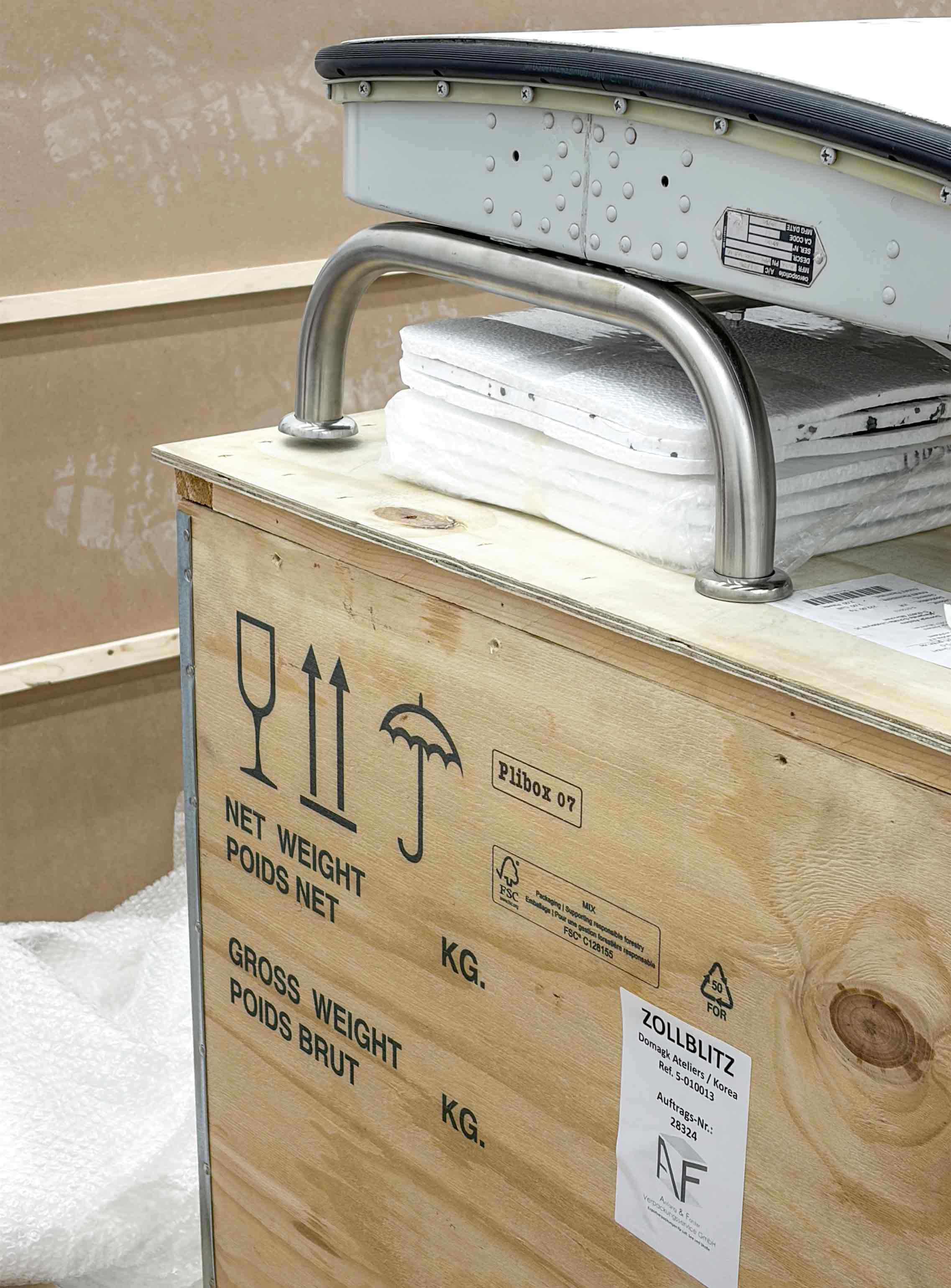
It comes from the interior and atmosphere of airplanes. I’m interested in the small details of these spaces, which can feel intimate and anonymous at the same time, yet oddly domestic. Early airplane interiors borrowed heavily from the aesthetics of trains, and today this influence seems to move in both directions. For example, the aesthetics of retro transportation, where old airplanes resemble a living room with chairs, tables, and curtains. These spaces are designed to make people comfortable for long periods, and during long flights, the airplane becomes a temporary habitat. I’m fascinated by how elements of domestic architecture appear within spaces of movement, and by the strange overlap between architecture on land and in transit.
It's almost like an organic presence. Where does that perception come from?
It started with watching the small screens inside airplanes, the ones that show the view from the outside. You see the plane from the tail, from the cockpit, from the landing gear. The surface often looks shiny, sometimes very grey, and strangely smooth. At times, it almost feels organic, like the skin of a living being. I also became interested in the fate of airplanes once they stop flying. These machines are built for movement, for constant travel. But at some point, they’re decommissioned, dismantled, and sold piece by piece. Their bodies are cut up and redistributed. I find that destiny very strange. An object designed entirely for movement eventually becomes static. It loses its function, its identity, and ends up waiting, parked somewhere, inactive, as if suspended between uses. For me, it’s less about being on or off and more about being activated and deactivated. And I think that condition is strangely close to human experience as well.
How do you address temporality within your work?
Temporality is important to me because spaces like airplanes are always tied to time. A flight has a duration; you know something will happen, but while you’re there, you’re suspended. There’s pressure, but also a strange freedom. This in-between time, where you are waiting but already moving, is something I try to translate into my work. For me, it also means being temporarily detached from the world. It’s an inward-focused moment, a time for reflection. Time can stretch or shrink; a few days can feel incredibly long. With time differences and the experience of flying, time becomes surreal. Clocks lose meaning, you gain and lose time, and everything feels slightly altered. In that state, you rely more on bodily perception. You’re enclosed, almost capsule-like, which creates a mix of disorientation and protection. Thoughts shift from the practical to the philosophical.
Is misunderstanding something you accept, or even value, in the reception of your work?
People are often curious, maybe because the combination of elements feels unusual. But once they read a title or a short description, they usually understand it quite easily. I think our generation, especially people who travel a lot or who have lived in different places, connect to it very quickly. Many people share similar experiences of movement, displacement, or transition, even if their backgrounds are very different.
What are you currently working on, and what can we expect next?
There’s quite a lot happening at the moment. In about a month, I’ll be flying to South Korea for a solo exhibition with Gallery P21, which opens at the end of March. I’ll go a bit earlier to work on-site. At the same time, I have a group exhibition opening very soon in Munich, and I am involved with several other projects in parallel. After that, I will travel to the United States to participate in the Pilchuck Glass Program, followed by a solo exhibition with Max Goelitz in Munich in the fall. So it’s a very busy year.
Finally, what keeps you committed to continuing your practice as an artist?
That’s a philosophical question. It sounds simple but it’s not easy to answer. For me, it’s about having experiences that you want to process, digest, and somehow share with others. Art becomes a way of communicating things that are otherwise difficult to articulate, sometimes even within your own family.
Text: Livia Klein
Photo: Younsik Kim