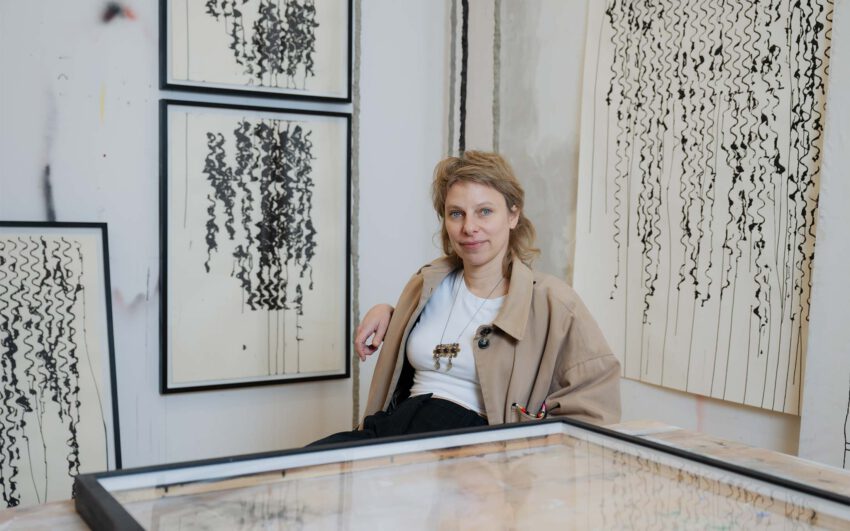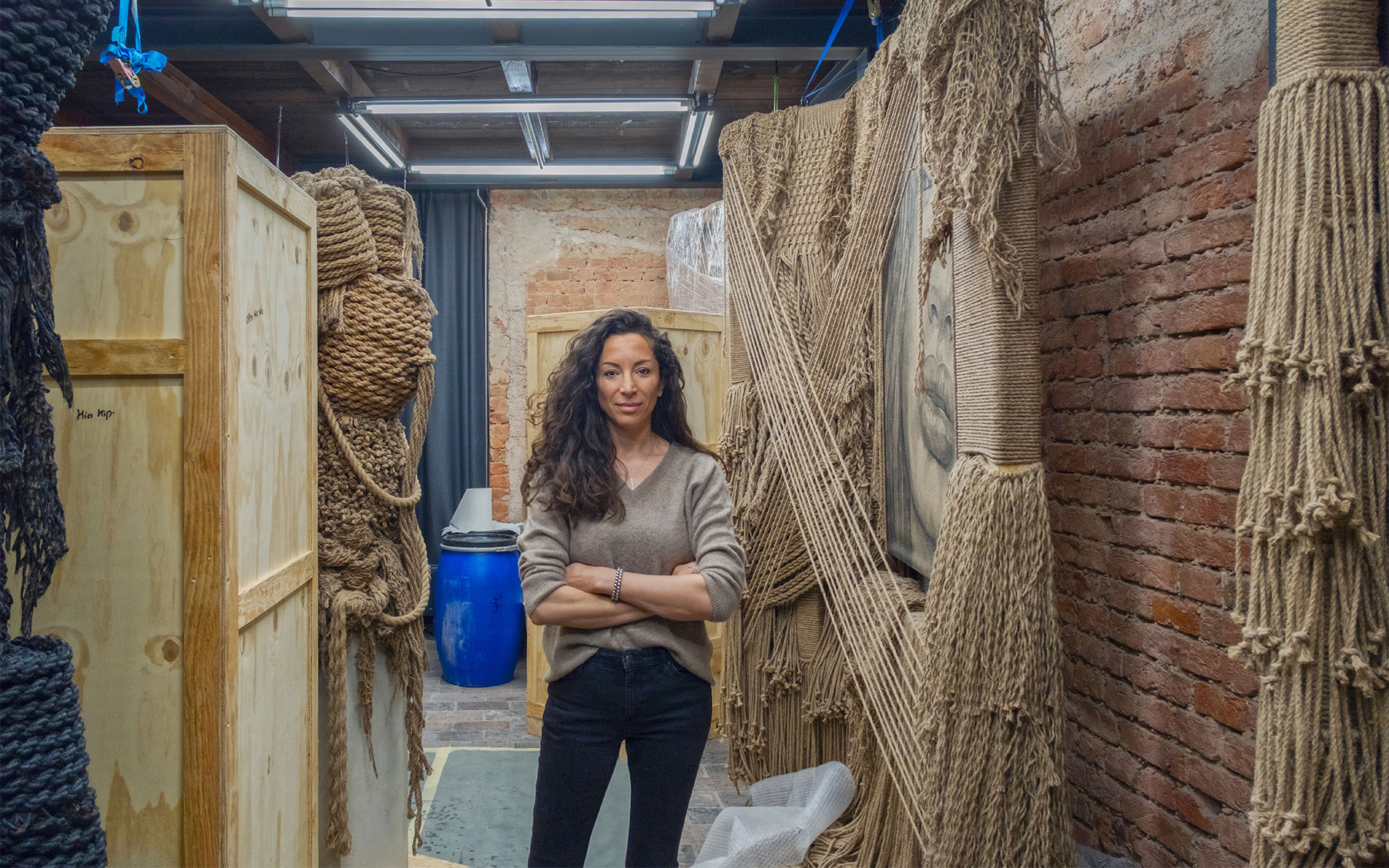
Soli Kiani was born in Shiraz, Iran, and has lived in Vienna since 2000, where she studied at the University of Applied Arts. She works in a wide variety of media, including photography, painting, and sculpture. What remains consistent, however, is her perspective, through which the artist offers Western viewers a unique glimpse into the patriarchal society of her homeland.
Soli, how did you get into art?
I’ve been drawing for as long as I can remember. But as a teenager, I didn’t dare say I wanted to be an artist, because my parents didn’t consider it a serious profession.
How did you end up in Vienna?
I first came here at 19; after five years, I went back to Iran. Eventually, I decided to study in Austria and attended the University of Applied Arts in Vienna.
What did you focus on in your studies?
Back then, I was doing a lot of representational, almost photorealistic painting. In the third or fourth semester of my studies, however, I ended up in the abstract realm, painting with oil and acrylic, and also experimenting with printmaking. That is when I created almost relief-like images.
And today?
Today my work is more conceptual; I’m more concerned with the message, with the political and critical aspects.
When did you start expressing yourself politically in your work?
There was a lot of political discussion at home. However, my father wanted us to stay out of politics, after my uncle was executed for political reasons after the mullahs seized power in the 1980s. As an artist, I did not reflect on these events until much later.
How did that come about?
After graduating in 2012 and my first exhibitions, I somehow felt like I was on a hamster wheel. So I took a complete break from making art for a few months, around 2015 and 2016. Instead, I read a lot of books on the history of Iran.
Was it a difficult decision to step back from the creative process?
I just felt like I was not making any artistic progress, and that did not make me happy. I needed spatial and temporal distance for my development, to be able to view things more critically; I had simply been part of the system in Iran for too long. Today I am glad that I am doing what I am doing, and I know what I am talking about.
Taking a critical stance toward one’s own homeland—and thus toward one’s own family—is certainly a difficult process.
When you grow up in an isolated country where state violence is exercised and a climate of fear prevails, in a country that has executed members of your family—what does that do to your family? I needed time to come to terms with that. I also think that over time I have become increasingly bold with my criticism, both in my work and in interviews. But it is difficult, because when I criticise Iran, I am also, in a way, criticising my roots or a part of myself. That takes courage, because it is easy to engage in politically critical work in a free country like Austria.
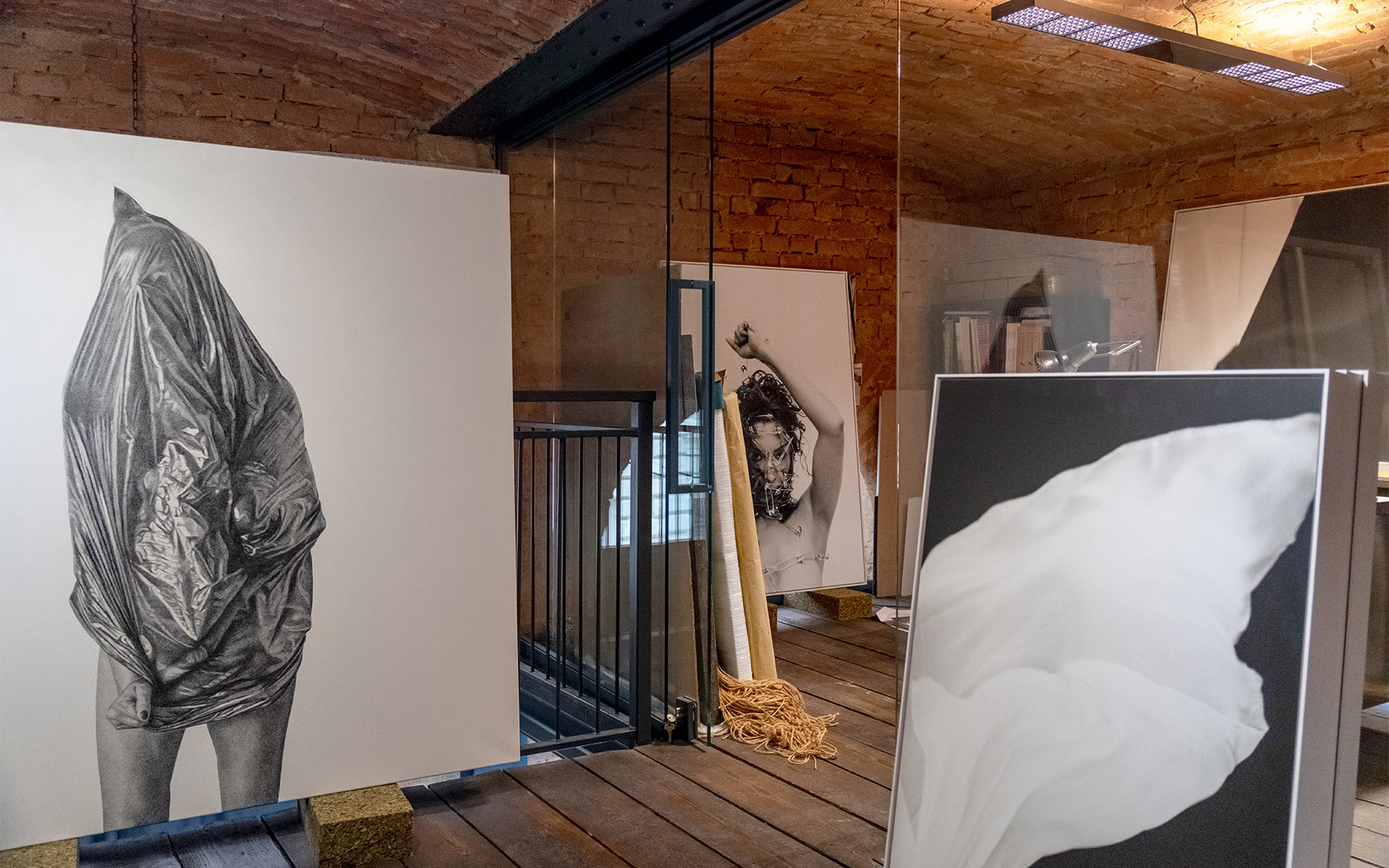
The last time you were in Iran was in 2018, so long before the protests surrounding Mahsa Amini four years later. And yet you created the following photo portrait as early as 2017: A chain of safety pins is wrapped around your neck, which you are pulling with one hand. It’s almost eerie how reality caught up with your work…
Yes, I revisited the 2017 motif after the “Women, Life, Freedom” movement erupted; unfortunately, it fit all too well. But in truth, this is a theme that has naturally been running through my country and my work for much longer.
What is your creative process like?
I work in a very experimental way: I have an idea and try to bring it to life. Some ideas work, some do not, some evolve in a different direction—I am open to that. I have specific ideas for specific mediums.
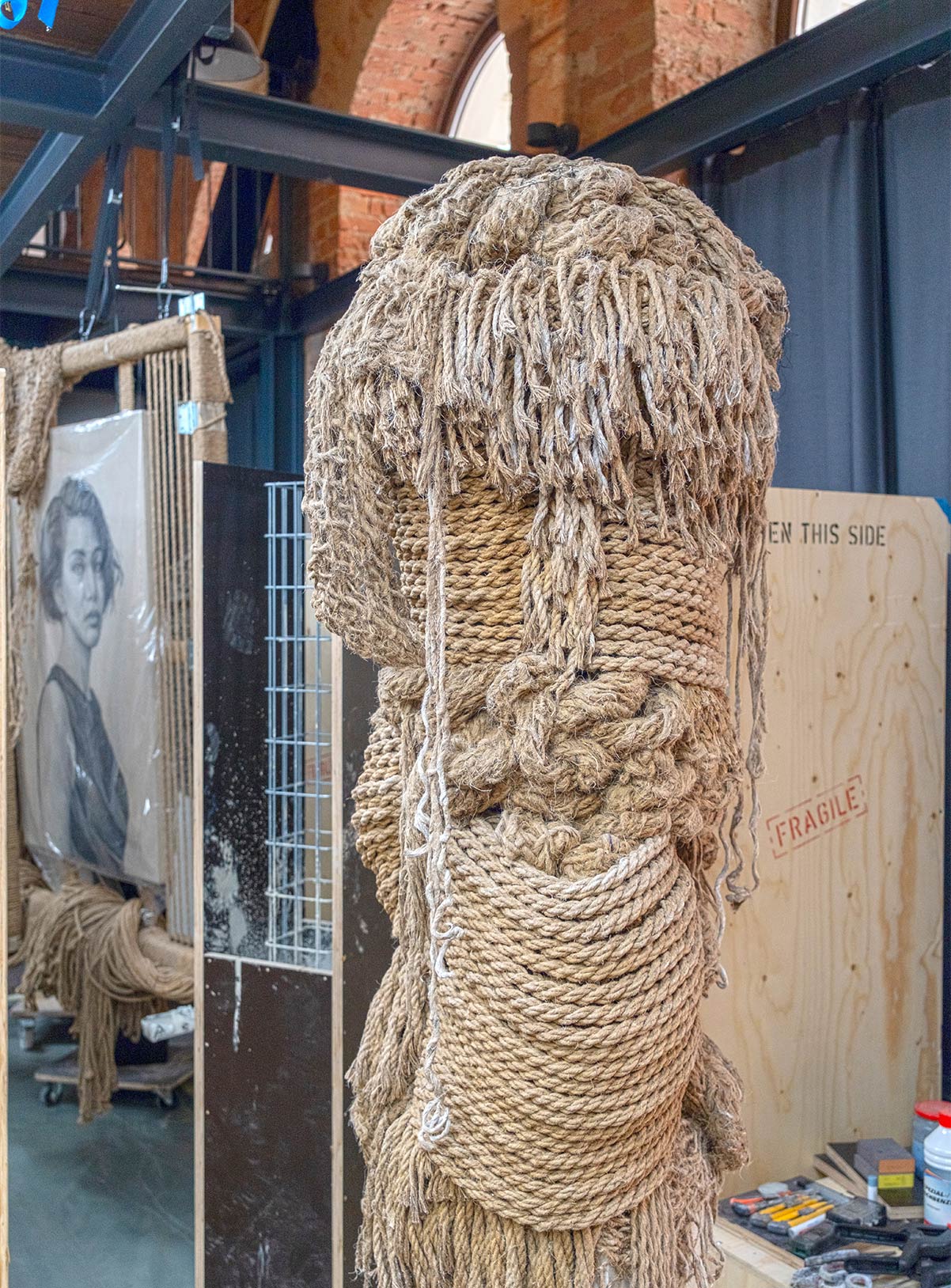
Regarding the sculptures: Here you wrap fabric around a structure, stiffen it with glue, and paint the object. Is that also about painting?
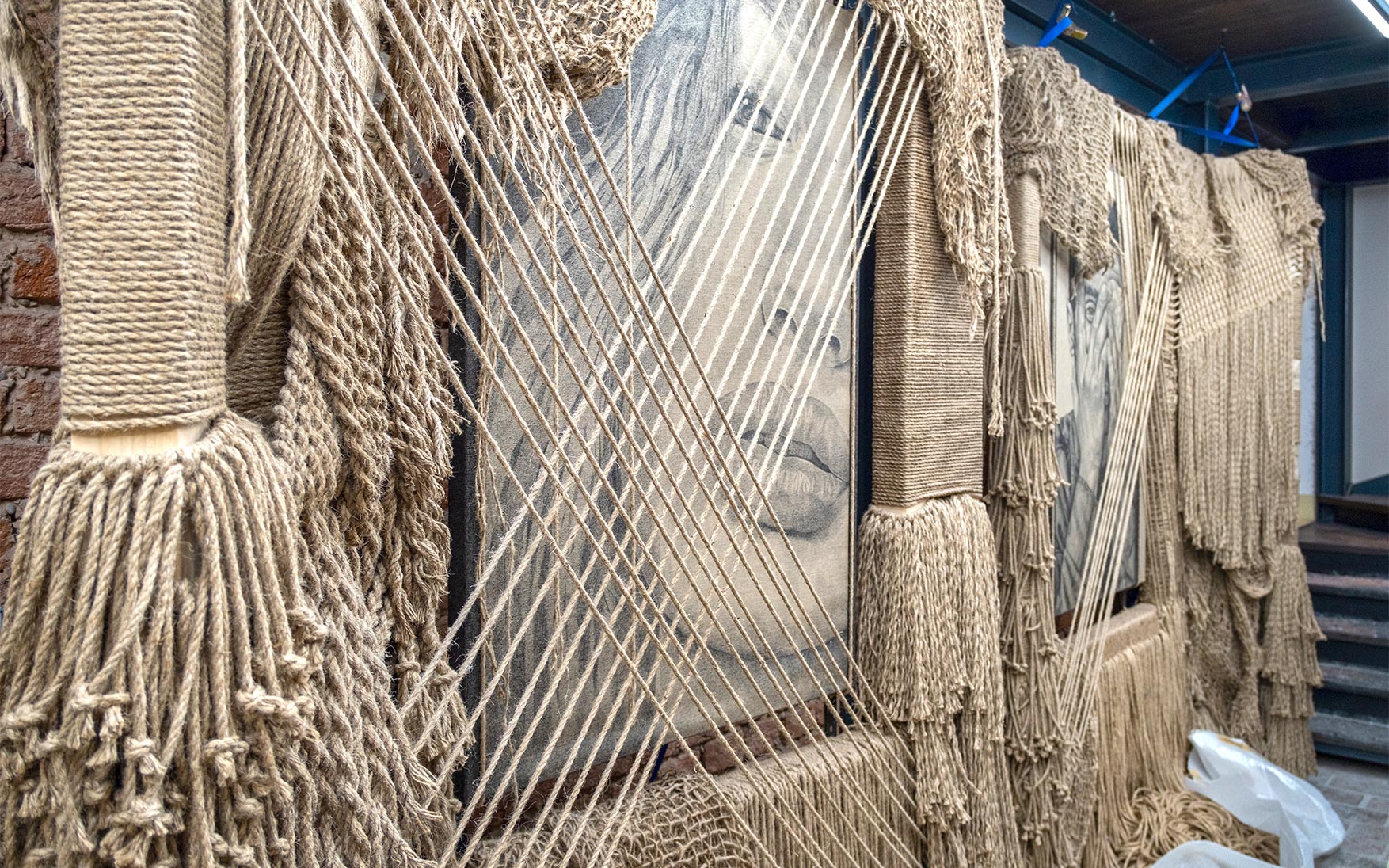
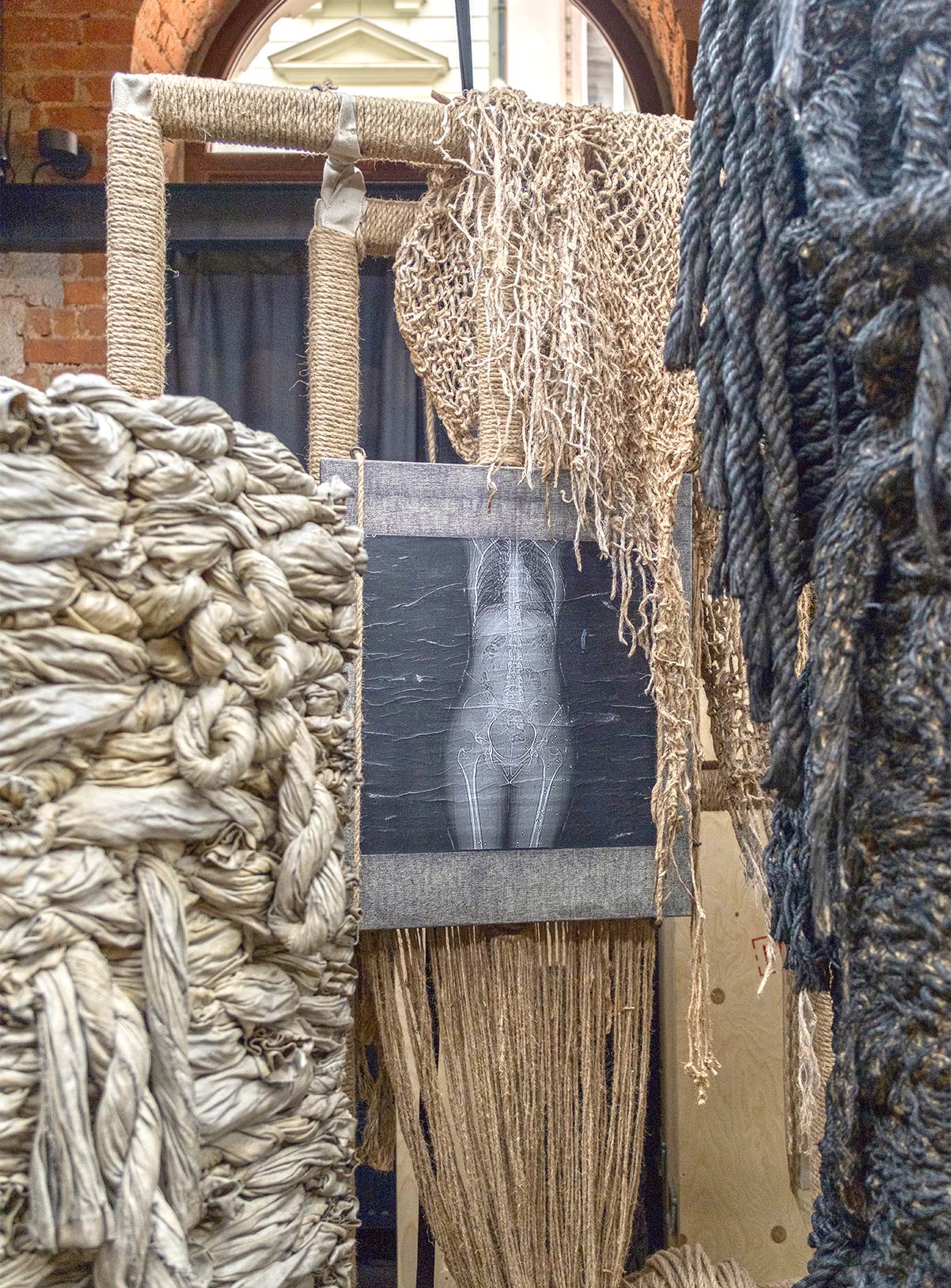
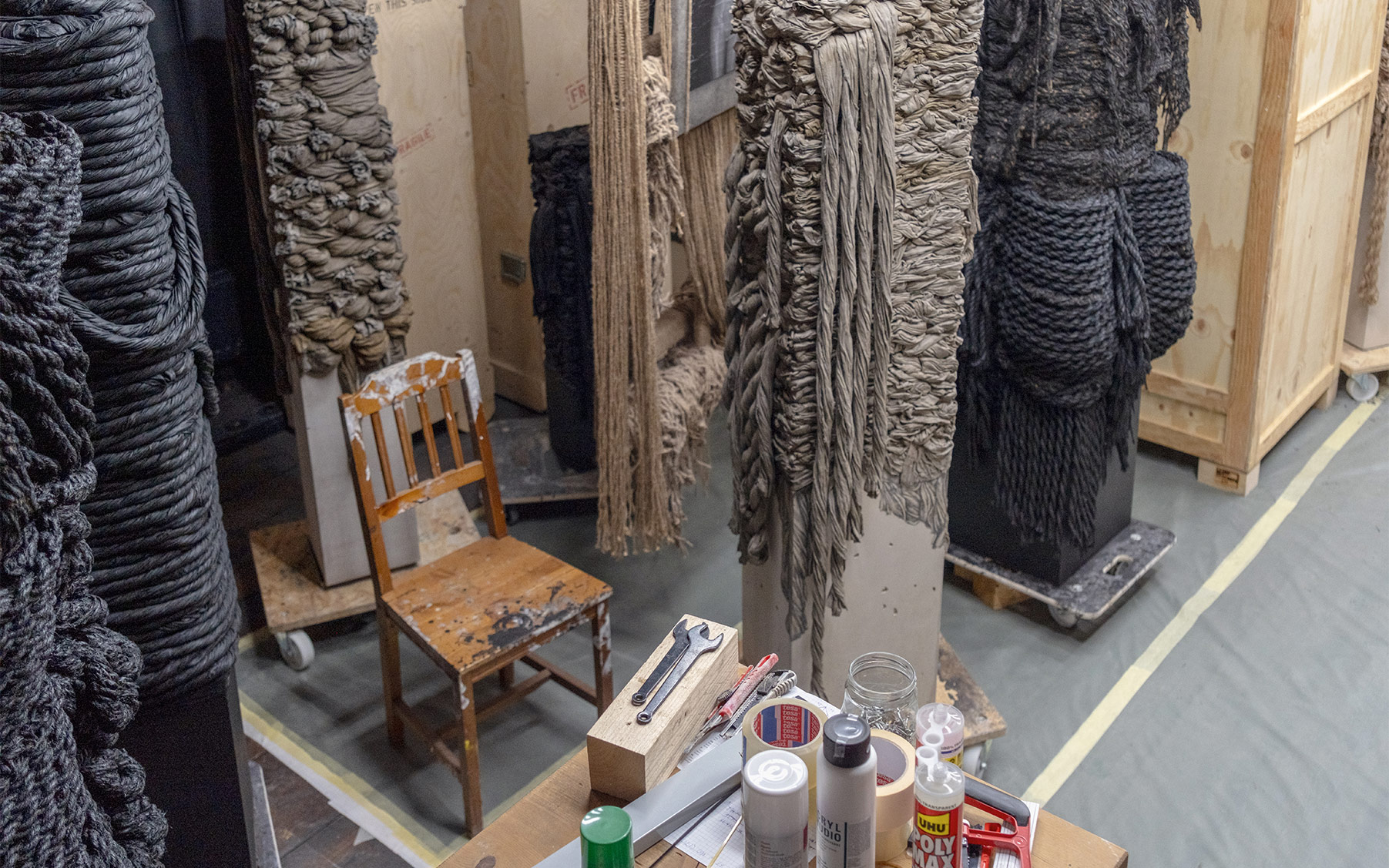
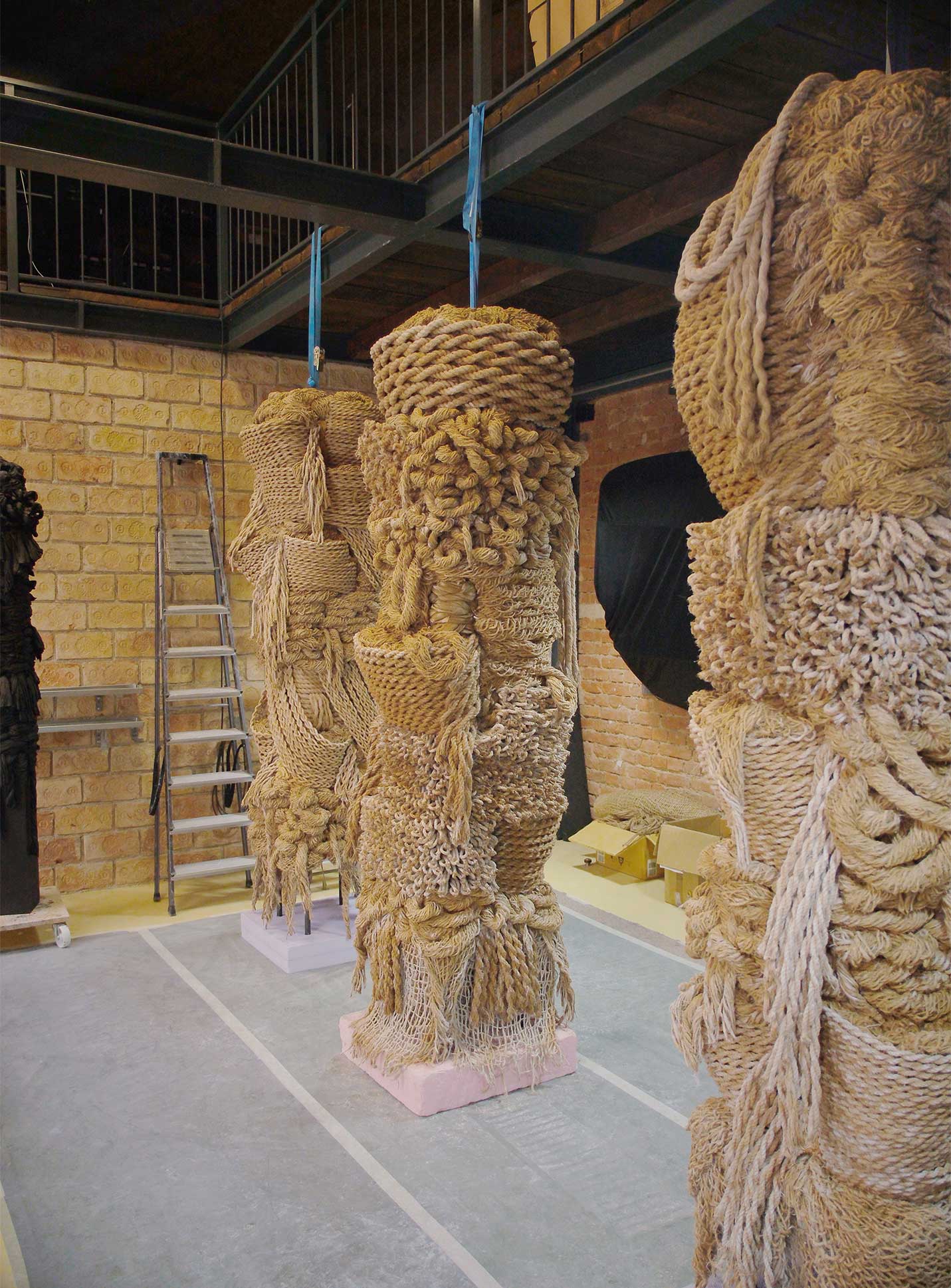
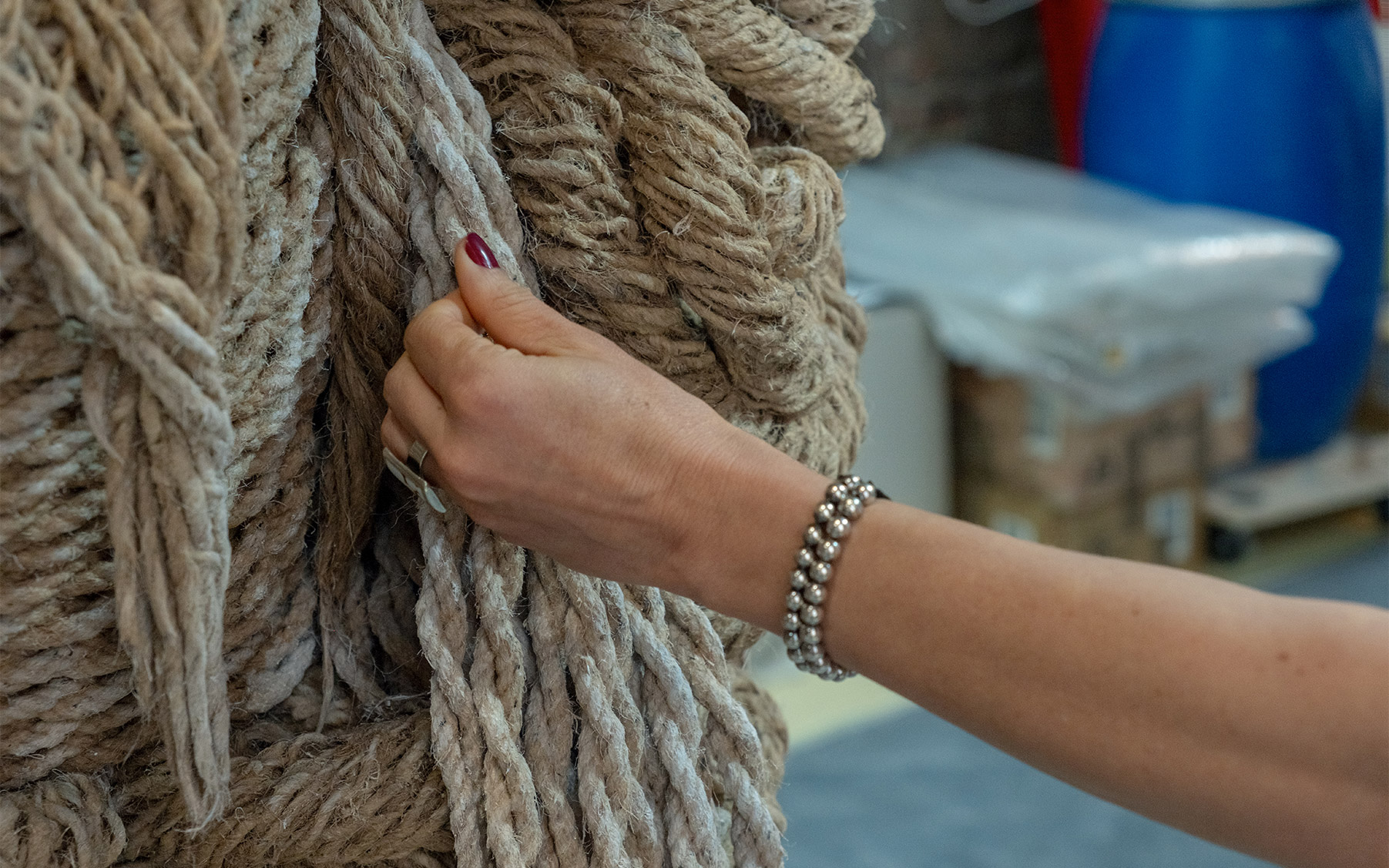
I do paint some sculptures with a brush at the end, but it is different from painting because the sculptures are physically demanding! On the one hand, I can do a lot with the material; on the other hand, however, I cannot realise all forms. By the way, I also use the same fabric for my canvases. Sometimes I use rope instead of fabric, which gives the sculpture a denser, firmer character.
How did you come up with the idea of using rope?
Ropes are used for executions in Iran.
So the material comes from your history?
Exactly. The first time I worked with ropes, I hung them from the ceiling in an installation. Later, I wanted them to stand on their own, which is how I came up with the concrete bases around which the ropes wind. I order the base frames from a hardware store and cover them with concrete—I have a small concrete mixer.
Your fabric and rope sculptures seem almost human, as if they were veiling a person: Do your works have anything to do with the burqa or the chador?
Yes, of course! It’s about the feeling of being confined, about the constriction of body and mind. But at the same time, the fabric or rope elements look like hair, like stylised braids. In Iran, people who show their hair are imprisoned, flogged, or worse. I also use grid forms in the sculptures; because grids, in turn, symbolise prison, confinement, isolation. The sculptures are, of course, meant to function abstractly as well, but constriction and confinement are important themes.
On some sculptures, you can see drawings on the concrete part—how did that come about?
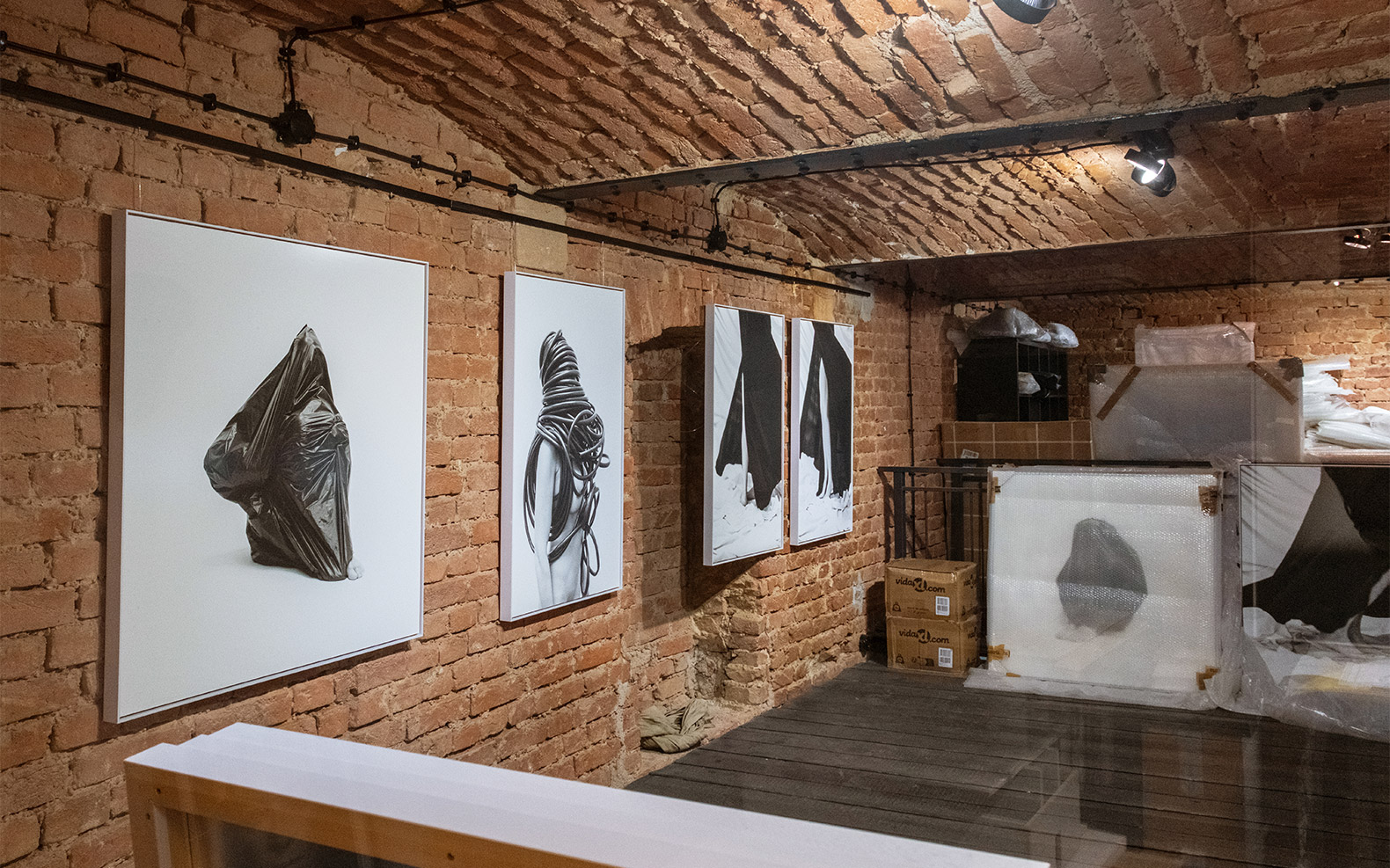
I don’t like being pigeonholed; I am a painter/photographer/sculptor. Some of my photos look like drawings at first glance. And so one thing flows into the other, and I can blend the drawing with the sculpture.
From sculptures to photography: Do you shoot analog?
Yes; I find it exciting when I don’t immediately see how the image will turn out. I like the suspense until I have the negatives (laughs)! I also like those dots you see when you enlarge the image; I play with that in some of my photographs. I often refer to Pictorialism, to the soft line; an exhibition by Francesca Woodman impressed me deeply a long time ago. It was precisely this imperfect photography that I found interesting.
Are you more concerned with the content than with the perfect form?
I don’t think anything is perfect. I am not, and neither are my artworks. I generally believe that in art, you can always keep working on a piece, but as an artist, you should know when to stop.
So do you have to force yourself to walk away from your work?
When I close the fabric sculptures at the top, I can’t change anything anyway. But the sculpture has to work for me from all sides. I want them to form an abstract shape, but at the same time, they should have a distinct character. Especially the rope sculptures! So a few years ago, I started naming them after the first names of people who advocated for human rights in Iran and were executed or imprisoned because of it. So that someone would ask about their stories!
You’re continuing with this idea, aren’t you?
Yes. In a sculpture I completed in 2023, I engraved the date and the number of people executed in Iran up to that point into the concrete base. No one will understand the numbers alone. But when people ask what it means, it is the start of a conversation. And no longer just an abstract sculpture standing in a room.
Do you see yourself as the chronicler of your country abroad?
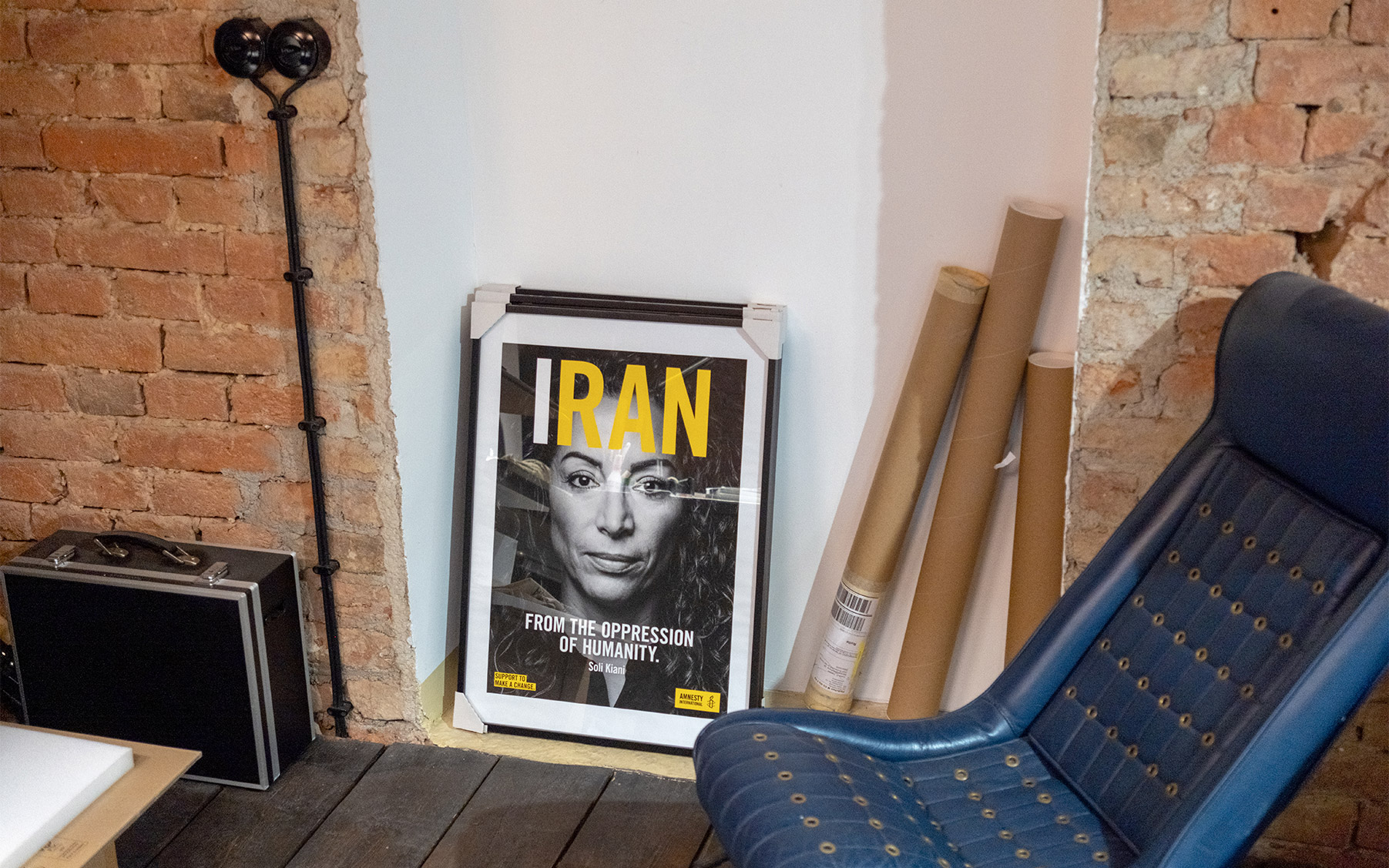
It’s interesting that you bring that up; with certain works, I feel like they are almost documentary in nature. But the reason I do this is for visibility and awareness. My art is perhaps made more for people in Western countries, because Iranians at home are familiar with oppression—for them, it is nothing new. I have heard from people in Iran many times now that they want these things to be shown. For me, it is about human rights. But for people who are not familiar with Iran’s history or the current situation, these events are abstract. Unfortunately, people only see images from the news.
Or social media?
One of the few advantages of social media is the propagation of the protest, which becomes visible in real time. That is why the authorities shut down the internet every time there are major protests. So they can commit massacres, kill more people; and they believe that it won’t get out.
The situation in Iran is the context for your work; do you generally find explanations for artworks important?
I believe the best works are those that function even without text. But I am aware that this is not always possible. Generally, I think art should always be viewed within its context. But take, for example, my photo with the safety pins: it does not need any text, does it? For me, it is a declaration of war. The image is self-explanatory.
We talked about the artist Francesca Woodman, who influenced you. Which other artists have inspired you?
For example, I admire the Mexican artist Teresa Margolles. She was a forensic pathologist; her work deals with violence in Mexico. She works with, among other things, light cloths and corpse fluid, and I like how she translates these themes into art. And I admire Anselm Kiefer for his handling of materials and spaces. I feel that he is not afraid of large spaces.
What are your new projects?
In June 2026, I will be opening the installation “Hope moves History toward Freedom” at the Dominican Church in Krems, curated by Florian Steininger; almost everything that will be there, I made specifically for this location. I always think very carefully about how the works function in the space! This also includes a few sculptures on whose bases I have engraved the names of people who were shot dead on the streets during the recent protest movement on January 8 and 9. I am also represented in the exhibition “Iconic Portraits of Women from Matisse to Alex Katz – Girl. Woman.Other” at the Kunsthaus Gmünd, which runs until October 2026. And at the end of the year, my works will be on display at Belvedere 21 in the exhibition “Feminist Futures Forever.”
How do you find living and working in Vienna?
Well, I am happy. It’s not always perfect, but where is it ever? I like being in Vienna. In addition to my studio here, I also have a space in Styria where I can work at a height of up to three meters. As for support: Thanks to the 2023 state scholarship, I was able to go to New York for two months of research, and now my monograph is being co-funded by the Federal Ministry of Housing, Art, Culture, Media, and Sport.
Text: Alexandra Markl
Photo: Maximilian Pramatarov