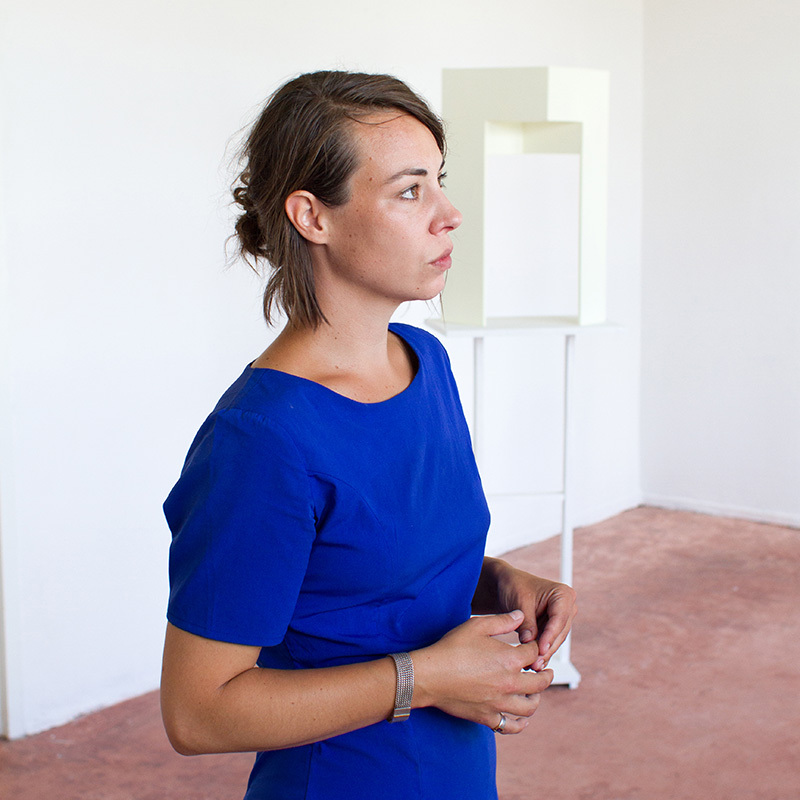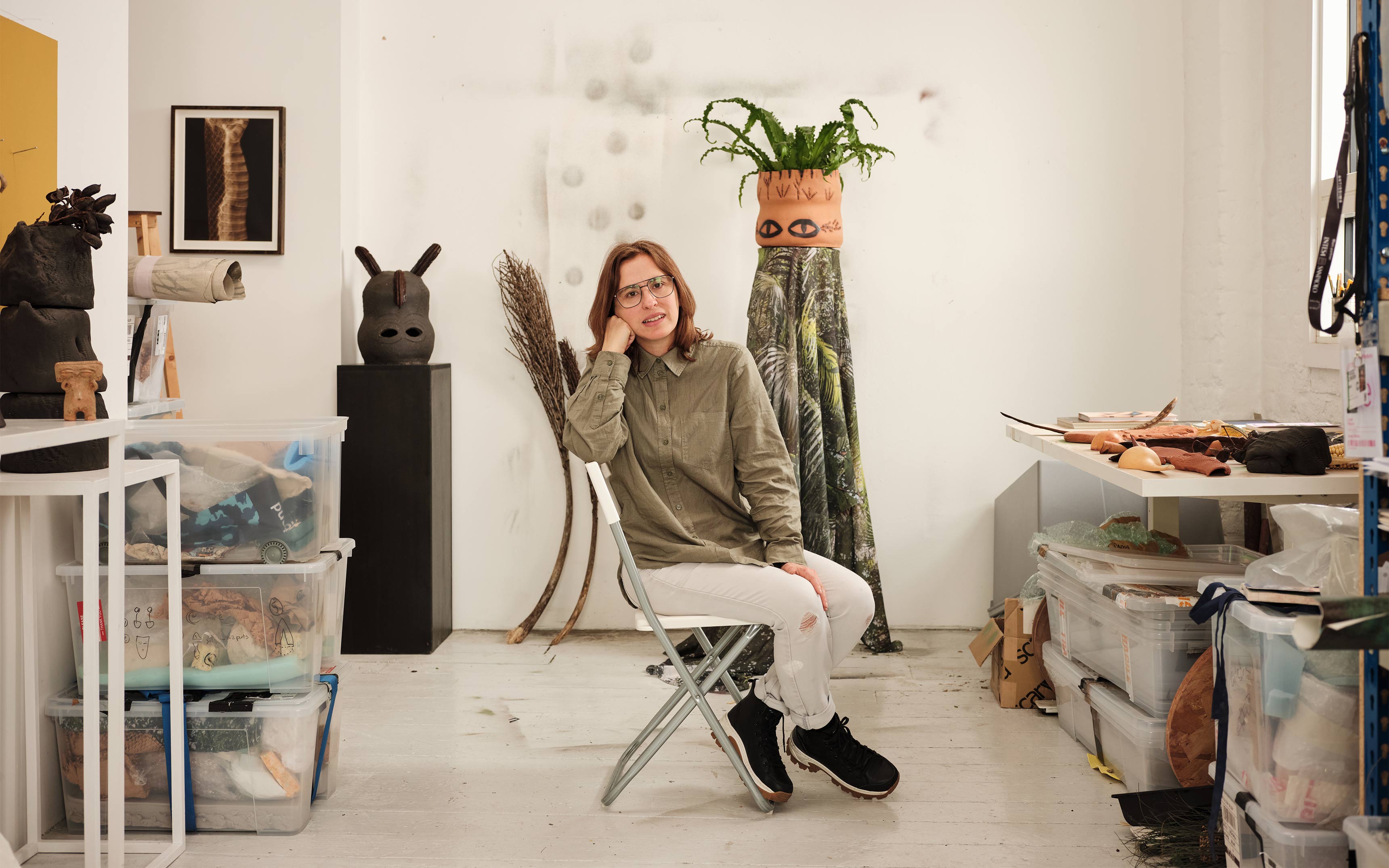
Lucia Pizzani’s life and art are defined by syncretism. Born in Venezuela and later moving to New York and London, her ceramics, sculptures and installations appear rooted in a specific time and place, yet she is unconstrained by temporal or geographical boundaries. Best known for her biomorphic ceramic sculptures, she combines ancient and contemporary practices, materials and media to create art that spans species, cultures and communities. Pizzani’s work, like the natural world that inspires it, continues to grow long after its completion, taking on a life of its own.
Lucia, you have an academic background in communications and conservation biology. What led you to art?
I think they were important detours. Both my parents are artists, so I was surrounded by art and grew up in a city with a lot of public art. I was pretty sure I wanted to use art in some way, but my path to it was through ecology. In the final two years of my BA, I specialised in visual communication - film, radio and photography. When I graduated, I worked for an environmental organisation in Venezuela, which led me to study conservation biology. When I moved to New York, the art in my veins emerged. I had more free time, and I was on my own, so I started to explore more. I started to submit to open calls, and my work was still ecological, one of my first projects was about Chico Mendes, the Brazilian environmentalist, which is still an everyday concern in my practice, because of the materials that I use.
A lot of your materials are organic, with migration inherent in their makeup. How does your own experience of migration inform your work?
When you move like I have, you start to absorb the cultures of the places you inhabit. I have been in cities that are especially multicultural, like New York and London, where there is a diversity in language, objects, food and music, which also has a deep similarity to Latin America’s own syncretic culture that is a mix of the colonisation process. So it is everywhere, these layers.
Your work combines myth and science. How do you reconcile the two?
I think there is knowledge in both science and ancestral communities - I believe in both. Myths are attempts to explain the forces of nature, and in Western cultures we have disregarded this ancient knowledge and forgotten many things about, for example, the power plants have to cure. There is also the concept of vegetal intelligence, where indigenous communities I visited, many of them in the Amazon, already knew what we are now discovering through science, like how trees communicate and send resources to each other through mycelial networks underground. It is funny, we are going back to square one through science and these concepts are now coming back. I think, because of the environmental crisis.
How do those concepts appear in your work?
It depends on each project. I did a whole series during COVID on zoonotic processes, how diseases jump from animals to humans. Normally the forest would absorb viruses, but when you clear the forest, this happens. I did a series of collages and installations with ceramic and wallpaper for Planet B: Climate Change and the New Sublime with Nicolas Bourriaud, an exhibition that ran in parallel with the 2022 Venice Biennale. I layered images of animals’ armour to say nature is what protects us, instead of pointing to it as a source of disease. I had already been doing lots of research around armour for a show I did in Mexico, Coraza, which means armour in Spanish. I was looking at the snake, for example, as a symbol of transformation. I collected pangolins, armadillos, reptile skin – all these armours that animals use to protect themselves. Then COVID happened and the pangolin was supposed to be the carrier species.
Your work exists in dialogue with its surroundings. How does your studio, in turn, influence your work?
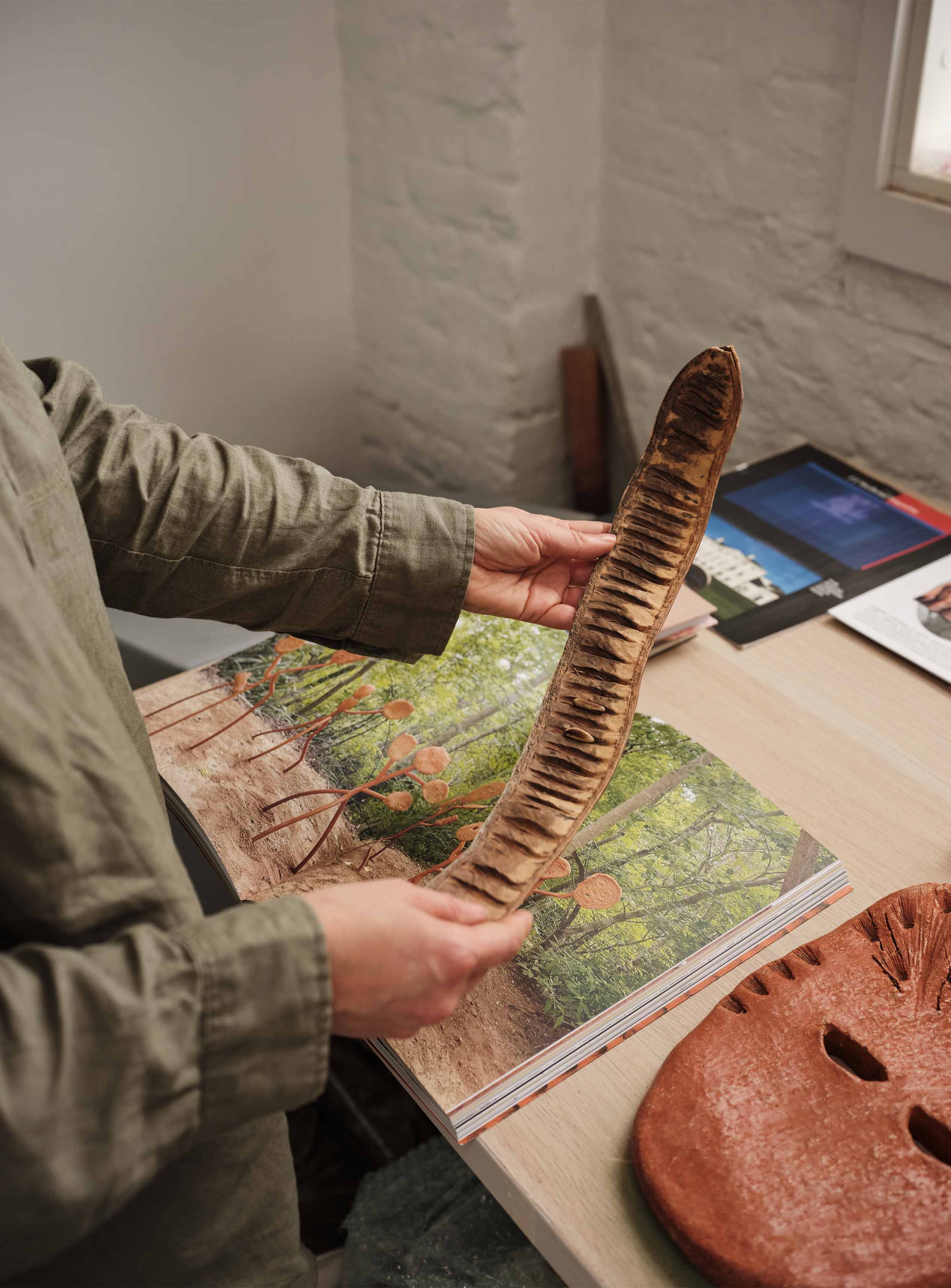
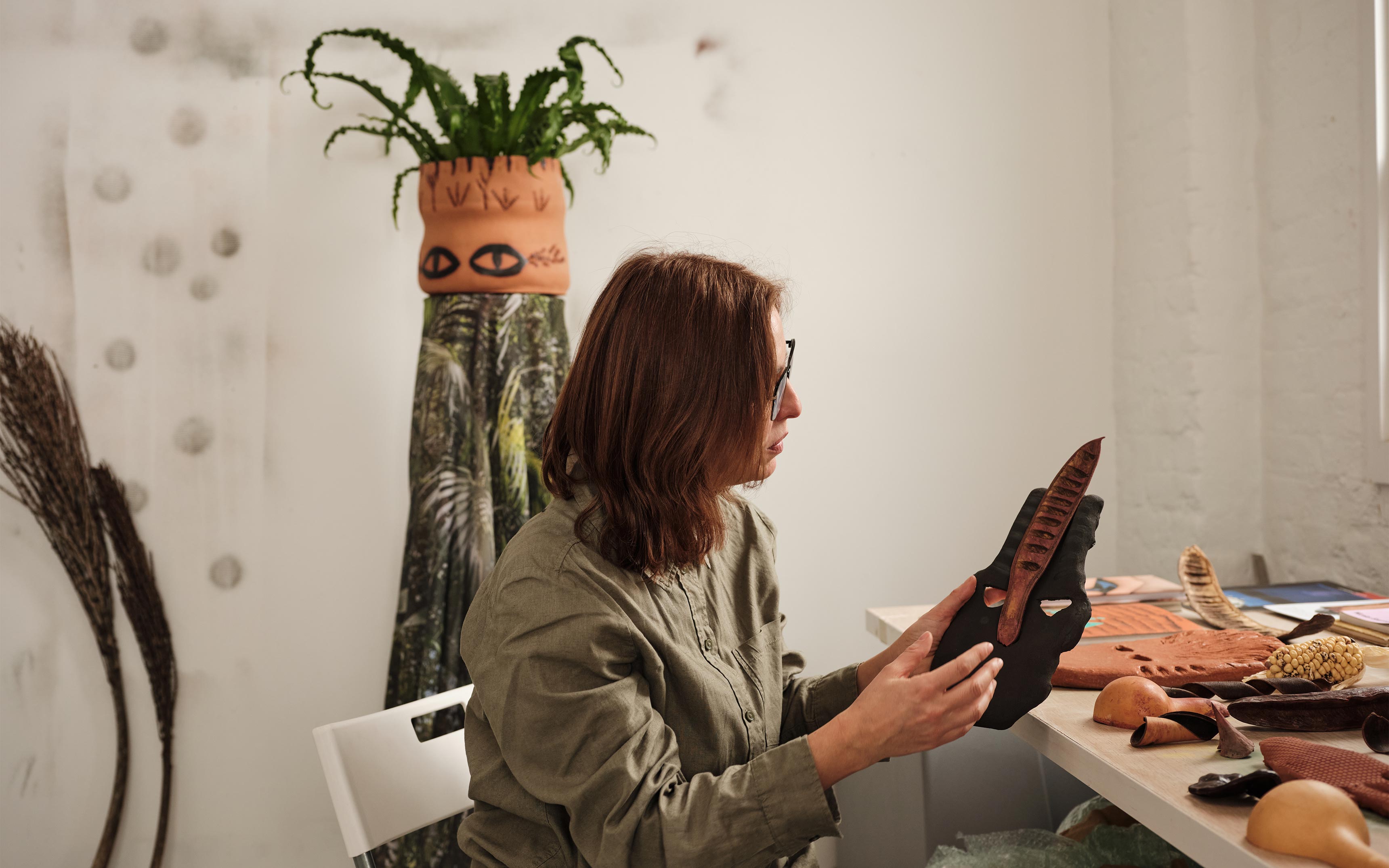
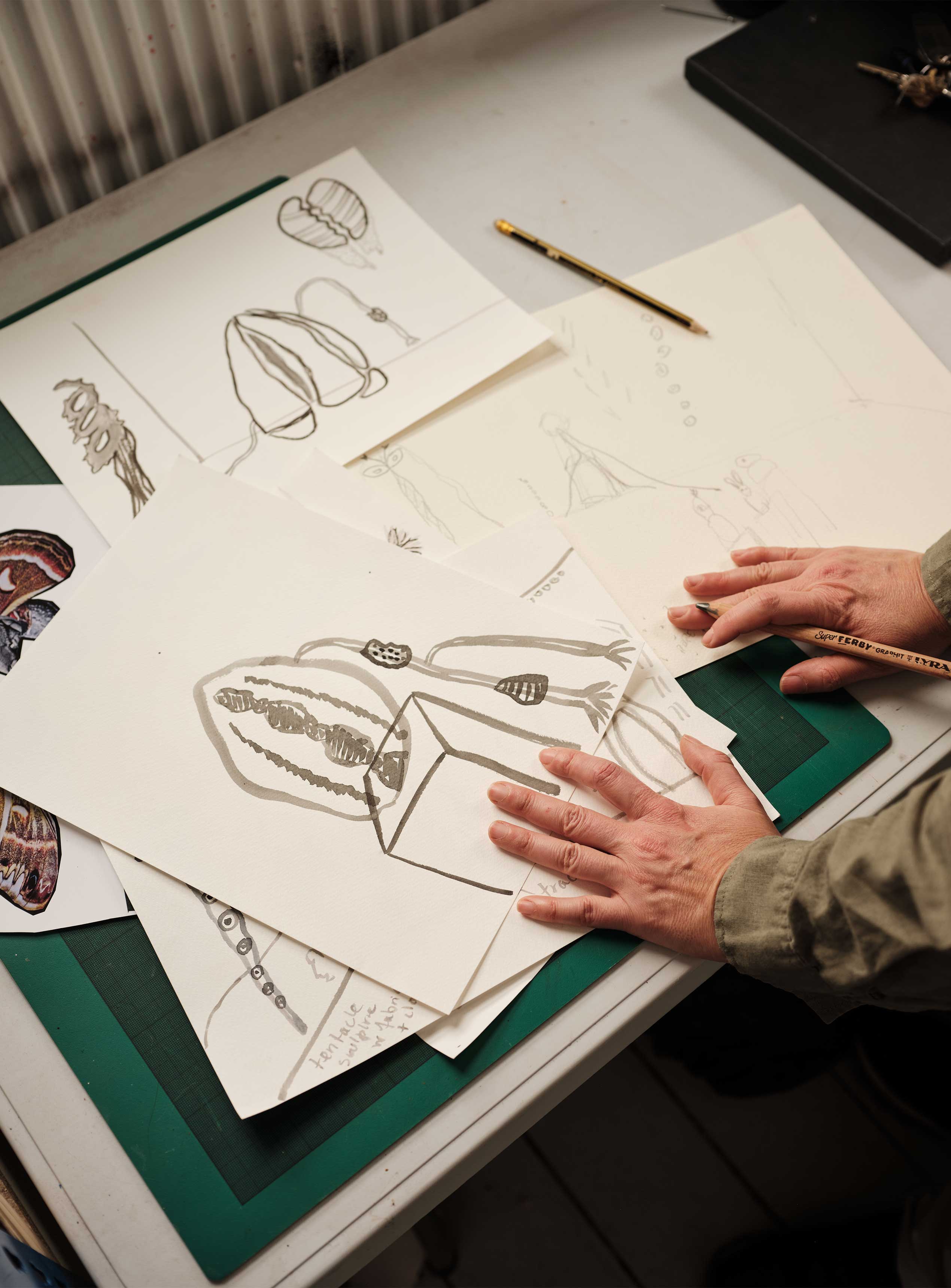
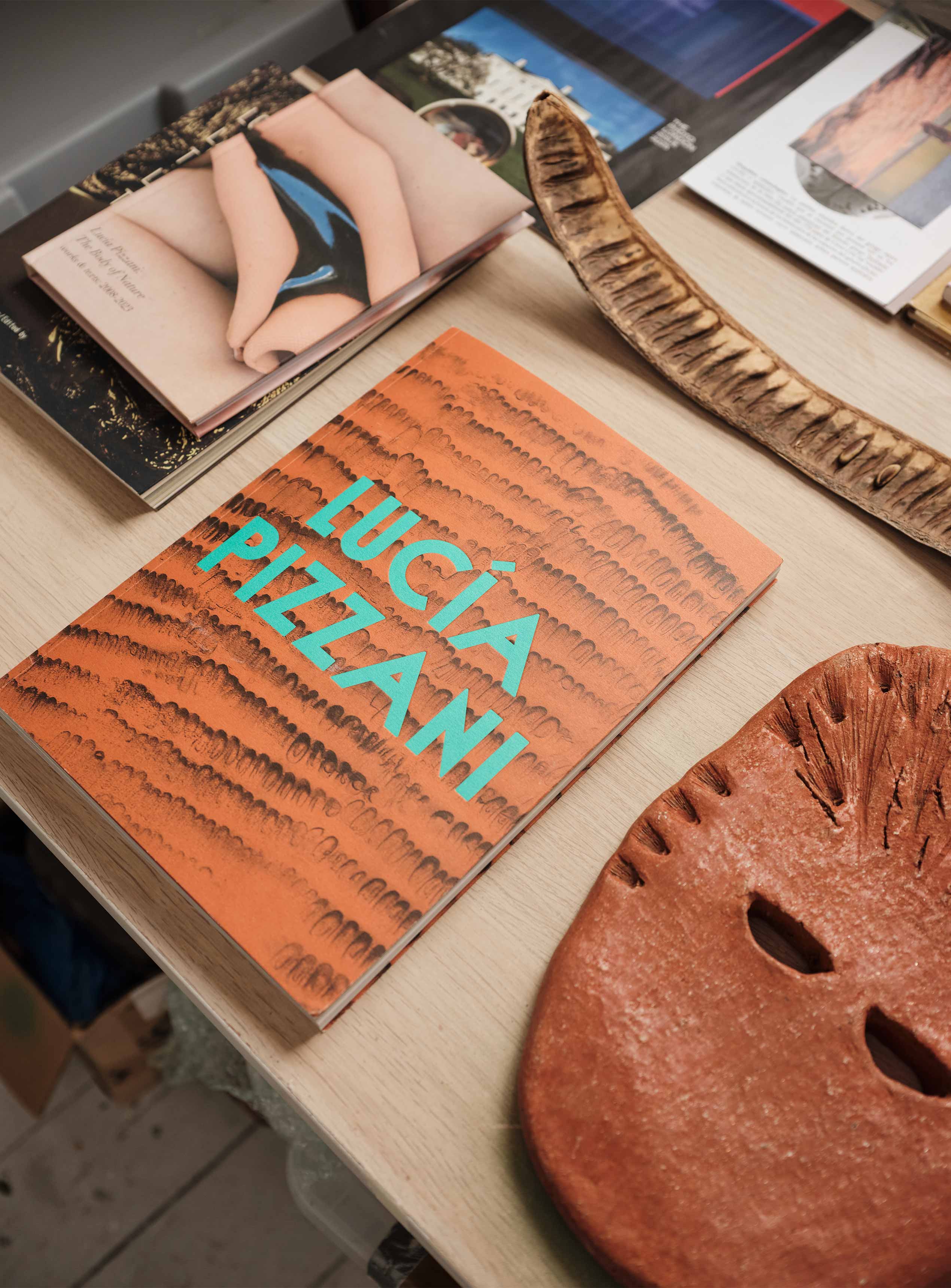
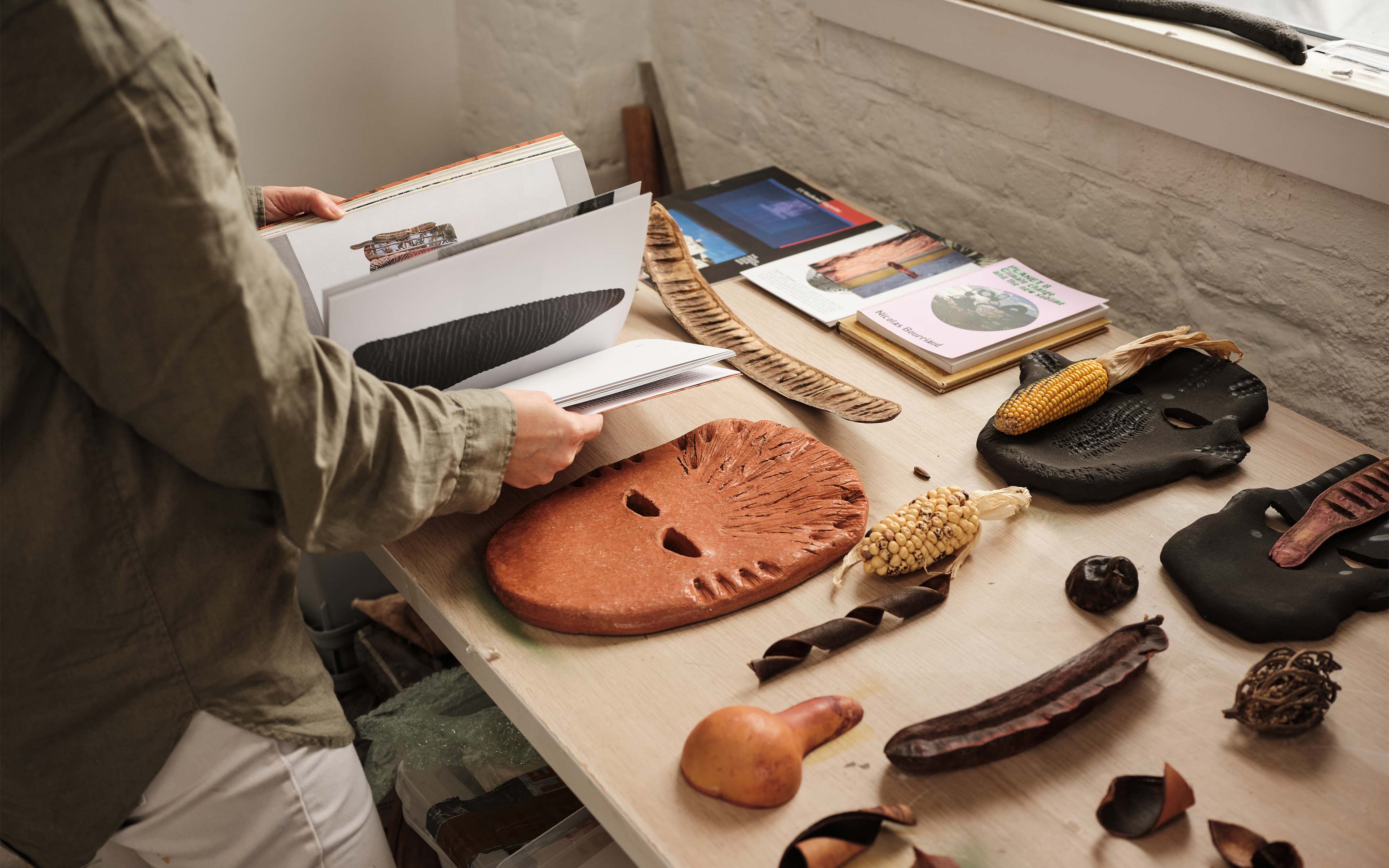
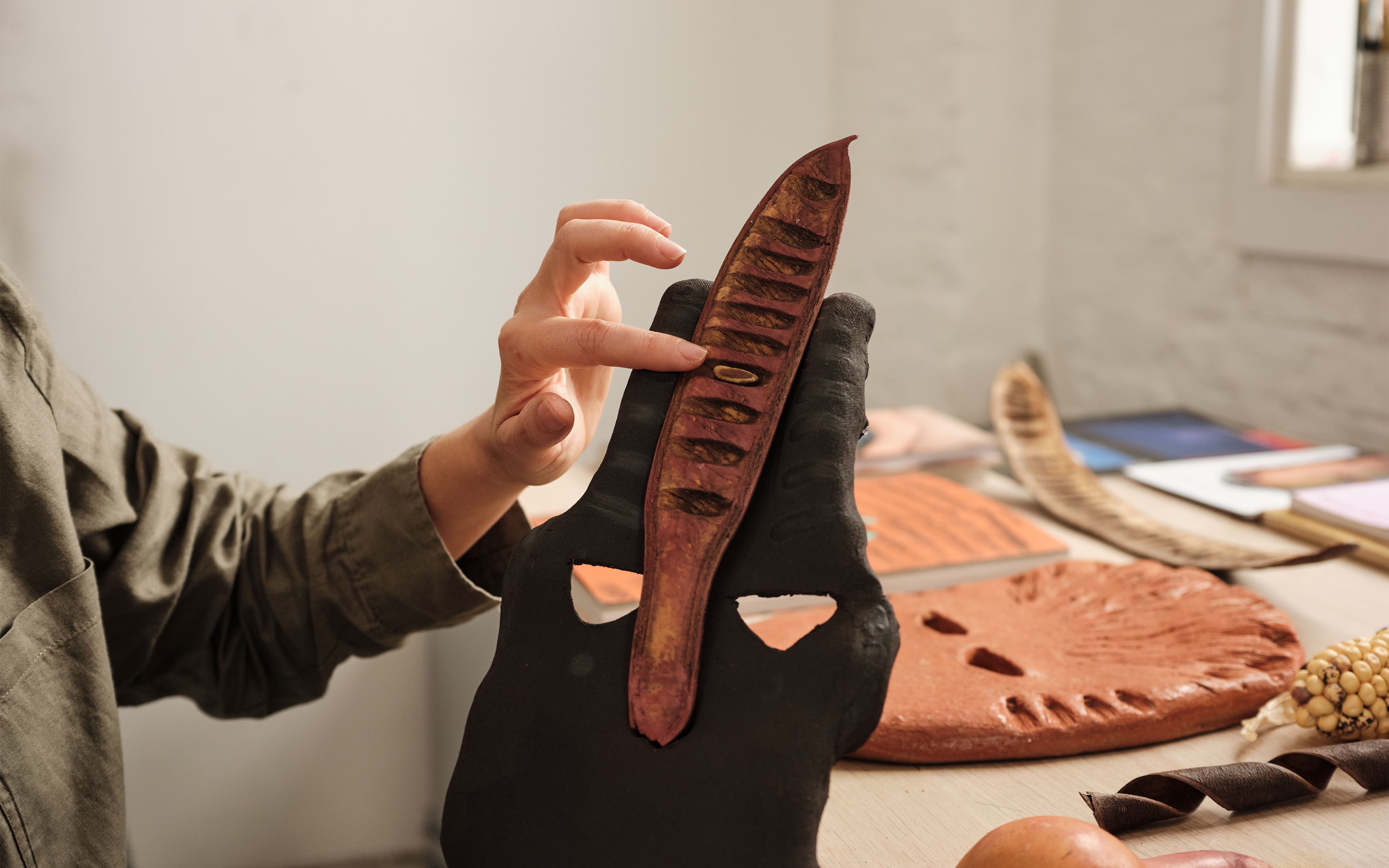
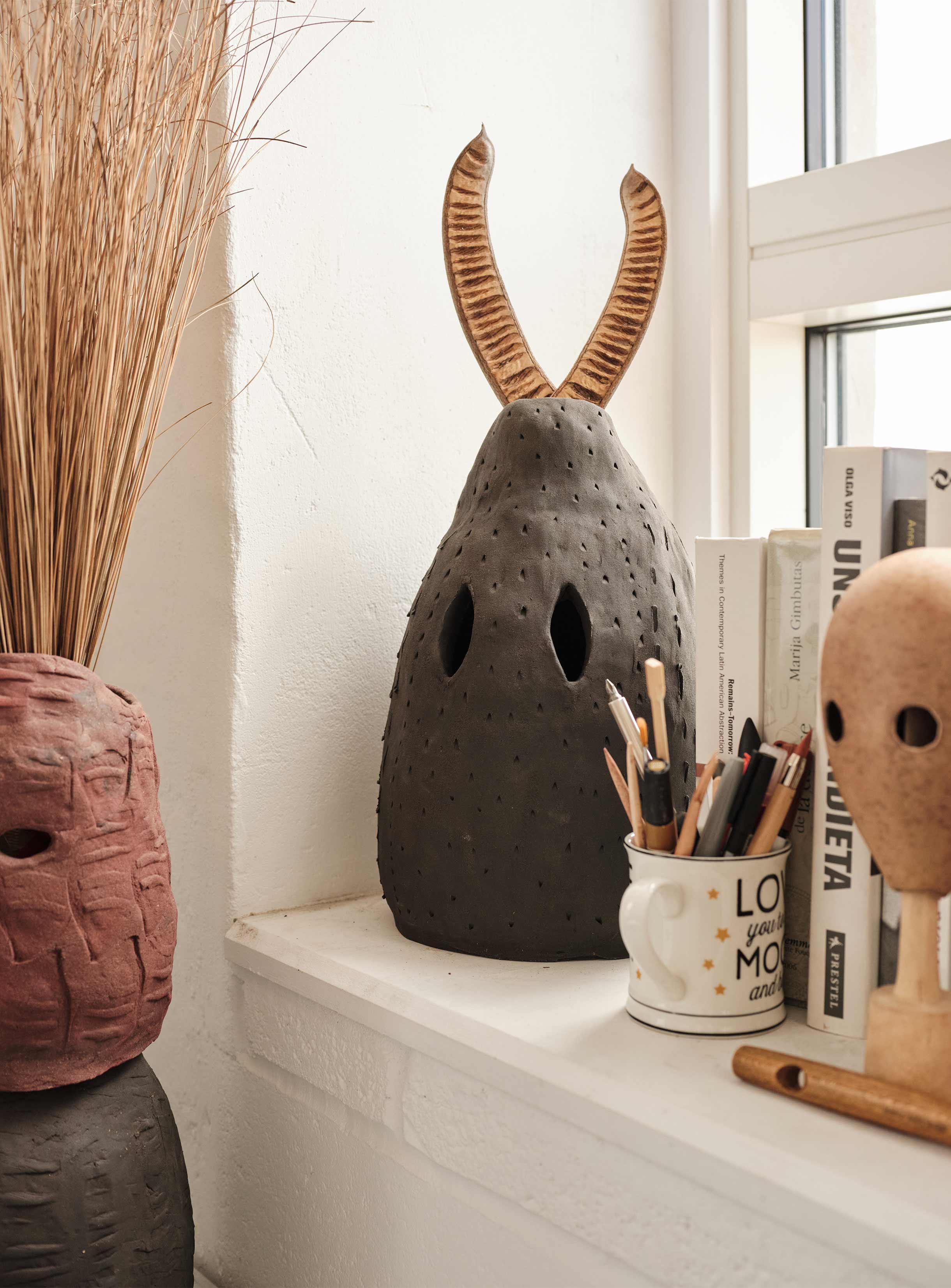
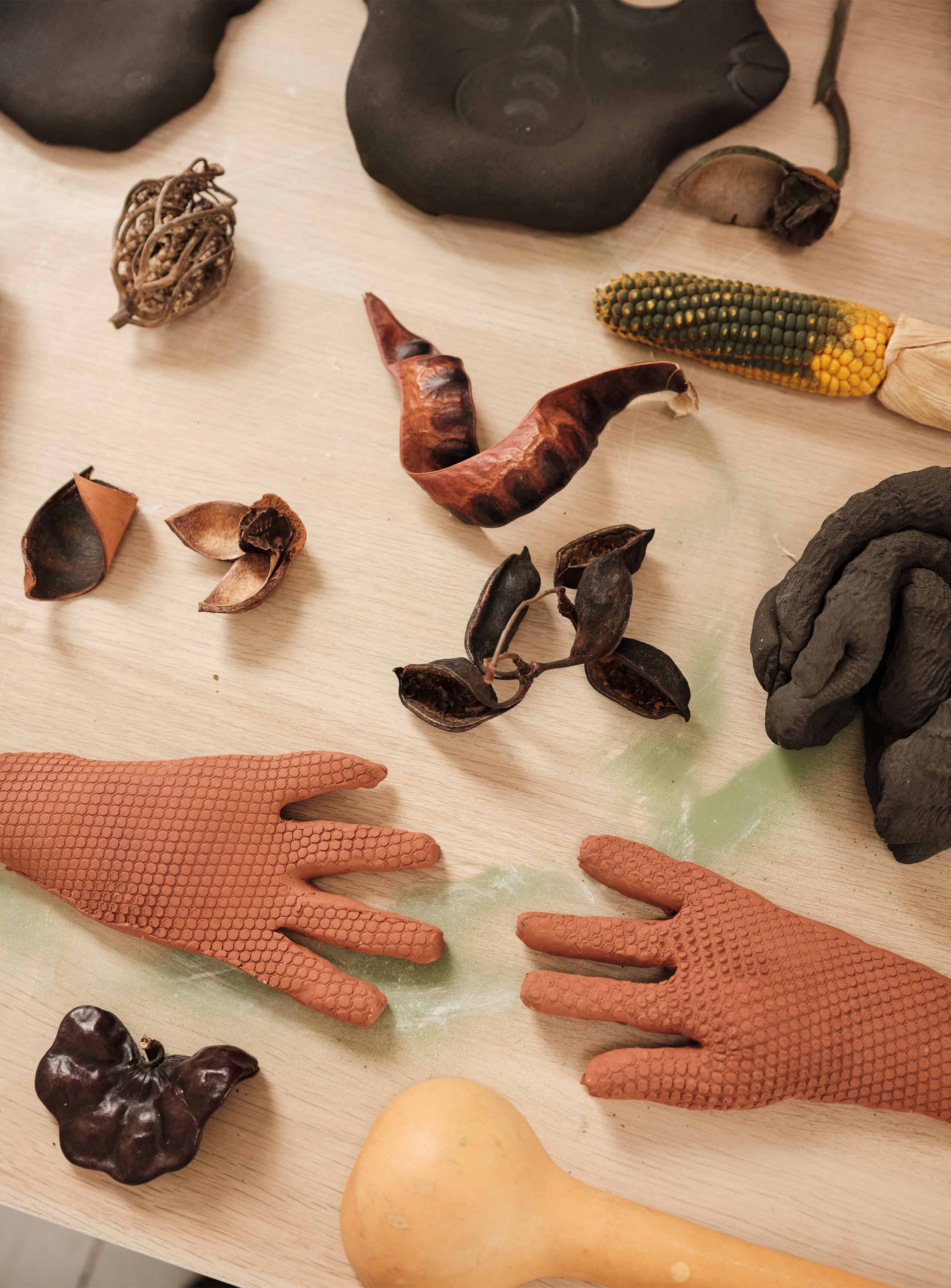
My studio becomes an accumulation of things I bring from other places. My parents, for example, live in the Canary Islands, which is a subtropical landscape, and I collect a lot of dry seed pods from there, species from South America or even Madagascar, which goes back to this idea of migration through plants that we were discussing. I have been living in South London since I moved to the UK. In Brixton market you can find many vegetables and fruits from the Caribbean, I love it, and the area is very Latin American. Here, the understanding of the Caribbean is through the former British colonies, but I think of it in a wider way, as Venezuela is the country with the longest stretch of Caribbean coastline and we have a lot in common with these islands.
How does Venezuela inspire your practice?
It is, in a sense, the source of much of my current inspiration – to grow up in a country that is so biodiverse. In the city, you can have trees that are ten metres tall and ten macaws on your balcony – life there feels very rich and really, really vibrant. But on top of this amazing place, you have a crisis. The longest time I was unable to visit was six years, because there was scarcity of food and medicine. I was able to go back in 2022 and I did a survey show of fifteen years of my work. I was so happy to be able to go back and engage with the local art scene. I gave lots of exhibition tours, workshops, and more recently, I have been in El Cercado on Margarita Island, where I have been doing a residency with the local potters – teaching, but also learning. It is super important to keep going back and having this exchange.
How did you remain inspired during the six years you were unable to visit?
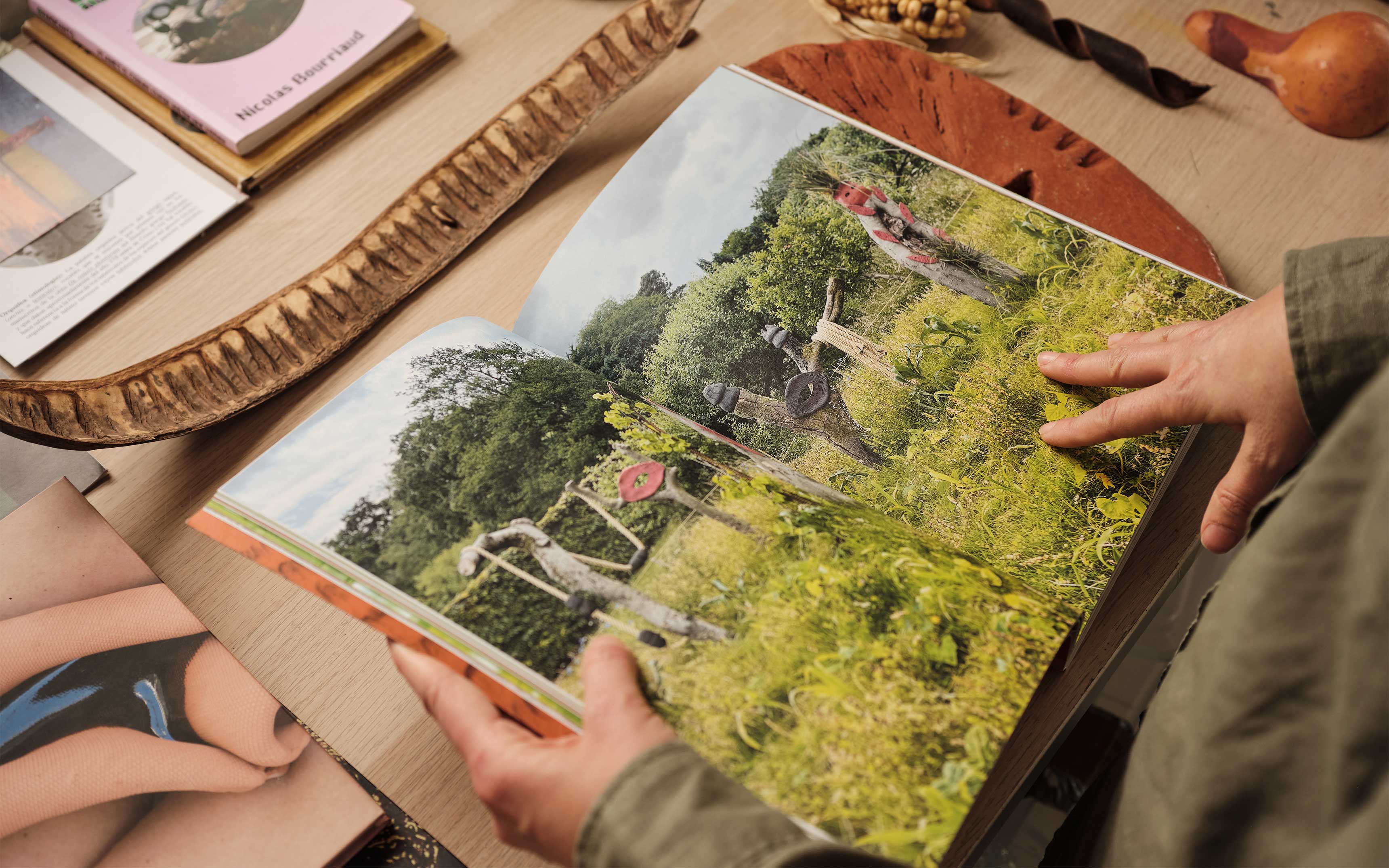
One of the things I did was to collect books about the landscapes and national parks, and these images were the ones I used in the collages for Coraza, the armour. I wanted to surround myself with the places I was not able to visit.
Because your work is so closely tied to nature and ecology, is it harder to remain inspired in a city like London?
Yes. The thing that has been the most difficult is the weather, because I am not used to very long winters! I come from a tropical place. Having said that, London is a very green city in its own way. When we had COVID, I ended up spending so much time in the parks and forests of South London, and some of them are very old patches, small but ancient, like Dulwich Wood. I travel when I can, but I still find inspiration in London, as it is very multicultural.
You mention ancient spaces – there are many ancient practices in your work. Why do they interest you?
I have been visiting lots of caves in France and you can see how ancient humans were trying to develop a language through an imprint of their hand or drawing symbols to communicate. Ceramic is one of the mediums where material culture first happened, where humans had this desire or necessity to go beyond the utilitarian and draw on a pot, or maybe create a figurine or statue. Maybe they would break it, or they would put it underground. Creating rituals and meaning around objects is fundamentally human, like all things that go beyond our basic needs. It’s very interesting – I have been doing a lot of research on prehistoric times, and my next project at Focal Point Gallery, Faunal Succession, is all about deep time.
In Faunal Succession you collaborate with other artists. How do you approach artistic partnership?
It’s a calling I have, to work in a more collective way. I think it has to do with my own past, when I was part of the NGO, where you were a team. You had scientists, farmers, you had indigenous people, you had this plural group, where each brings his own voice, and I value that a lot. So, for example, I have been doing projects like The Tale of the Eye, the Snake and the Seed at Frieze Sculpture 2025 where I collaborated with Lucia Pietroiusti, the former head of ecologies at Serpentine Gallery. For Faunal Succession, I am opening the experience by extending it to working with artist Cecilia Bonilla and women migrants from the community group Welcome to the UK. We did a collage workshops around ideas of hybridity through evolution and how humans have always been a migrant species. Before visas, there were just groups of humans moving in the same way birds move in the sky or fish swim in the sea.
What about public participation?
We worked with local schools through another artist, Jaime Gili, who ran “subjective maps” workshops based on large canvas paintings he did for the exhibition and the result of those, and the ones created with Welcome to the UK, are going to be on view in Faunal Succession. It's about not having one hundred percent control. When you do performance, some things are just going to happen. You have to open yourself to losing control. I think it's interesting that people are so used to controlling everything now, even TV. You can see what you want, you can stream it, you can stop it. I grew up with a TV that had two channels, maybe three.
Does your creative process differ for performance versus other forms, like sculpture?
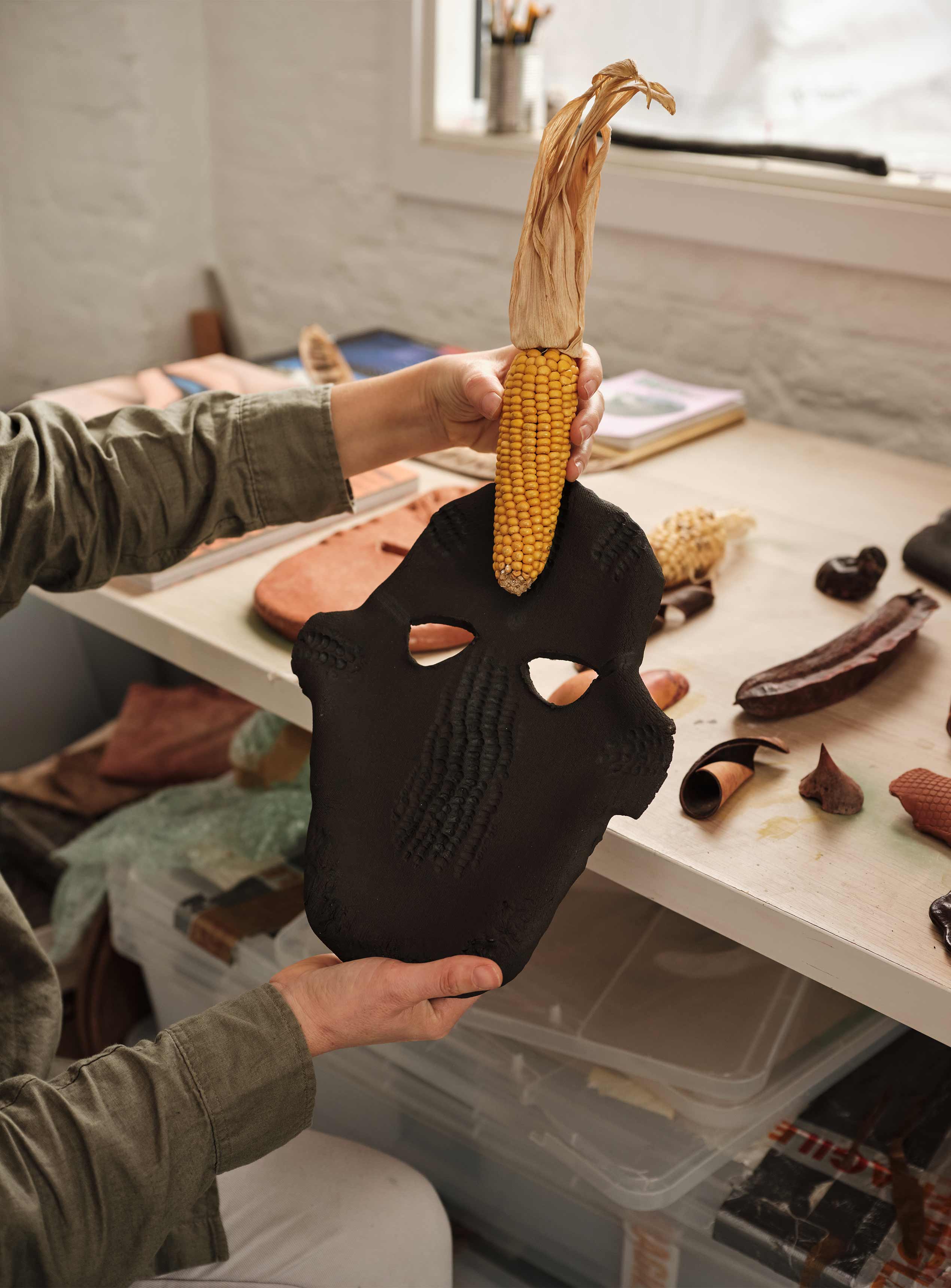
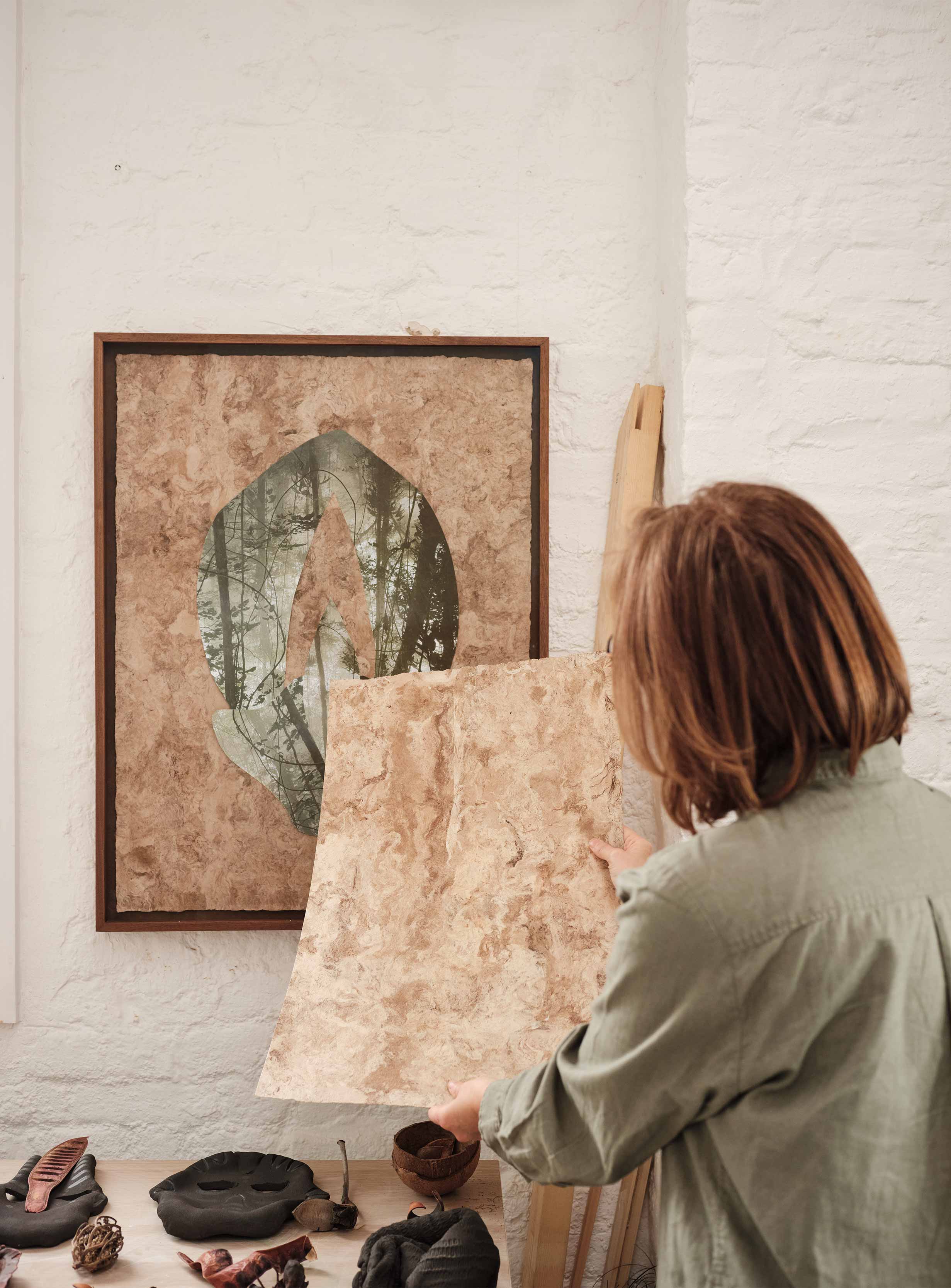
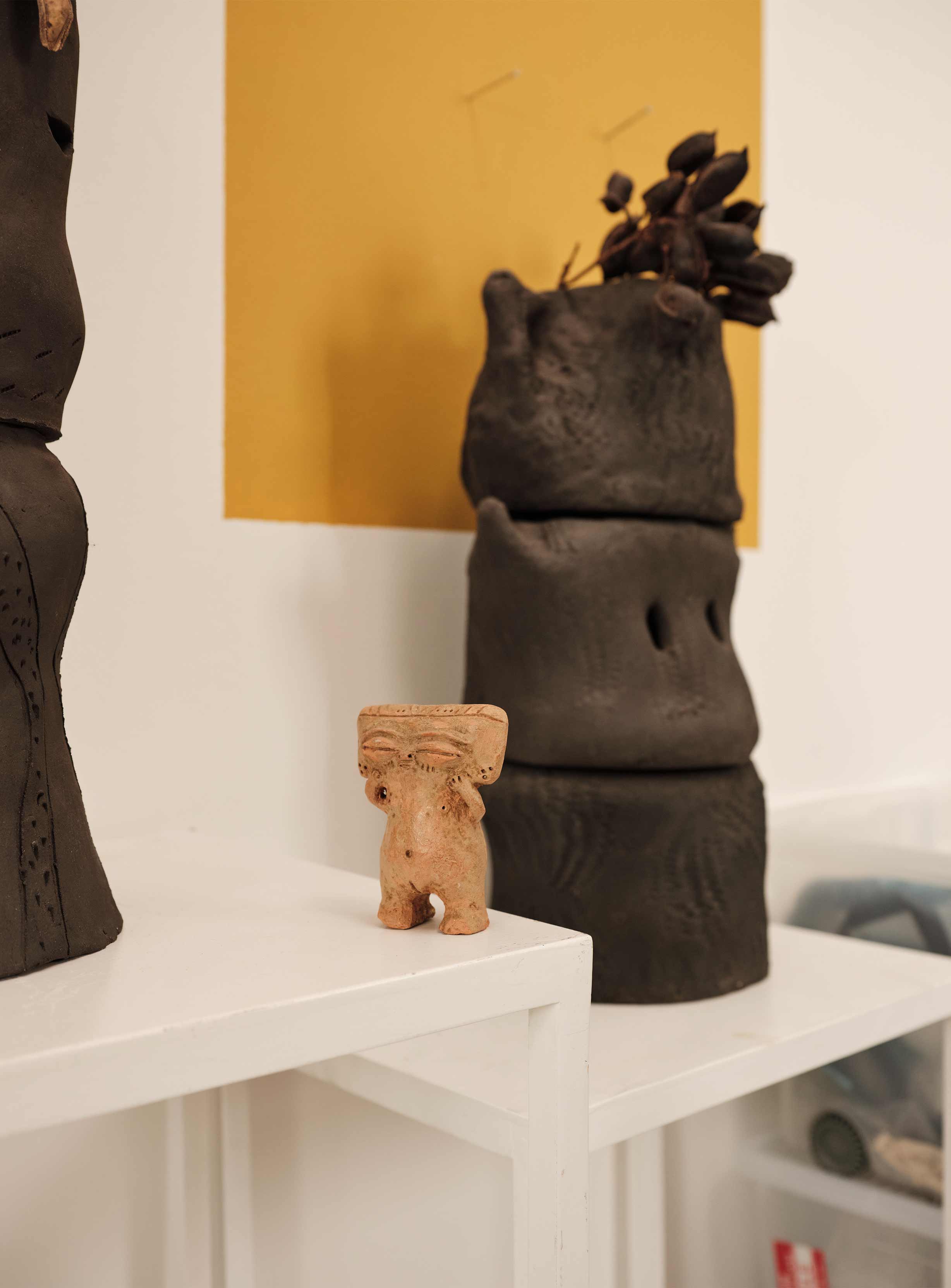
Yes. I start with ideas, but they are also married to the material. For example, for the sculptures in the show in Vienna, the Flora Totems, I decided to go more vertical and create a totem to talk about identity. Totems were used for rituals, but they also were, in a way, trying to represent the spirits of these plants, with each representing a species, like corn and eucalyptus. The way of approaching it has to do with the story of the materials and the layers of things, which, for me, is always going to be the Northern and the Southern hemispheres. The corn represents the South in this body of work, and the eucalyptus the globe.
How do you know a work is complete?
A lot of the process starts with the ideas, drawings and research, but I normally know what I want to get at the end. Sometimes a ceramic can be reused in different ways, which is also working more sustainably. I did this big project for a walled garden for the Harewood Biennial, Cultivo y Memoria, where I worked with fallen trees from the forest and I had ceramics become their eyes. Then these ceramics went to create sculptures with trees in the Dolomites, for Trópico Pasado. When this happens, a work can have a new life, depending on the other elements I combine it with. It is not about creating something new, putting it in a box and then creating something else new to put in another box. No, I prefer work that is traveling, mutating, growing and changing – it makes it more alive.
The shape of an eye is repeated throughout your work. Where did your interest in the symbol come from?
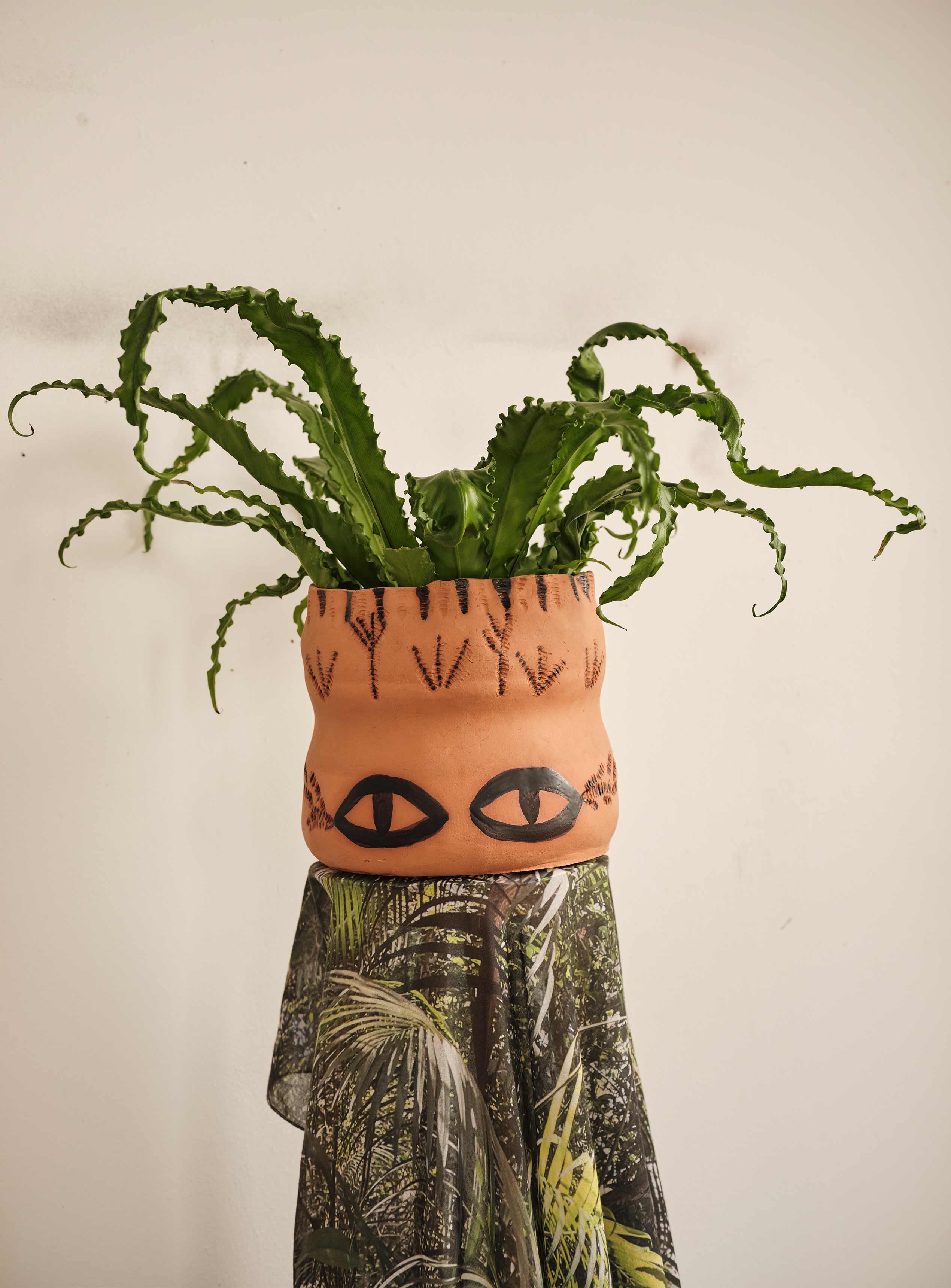
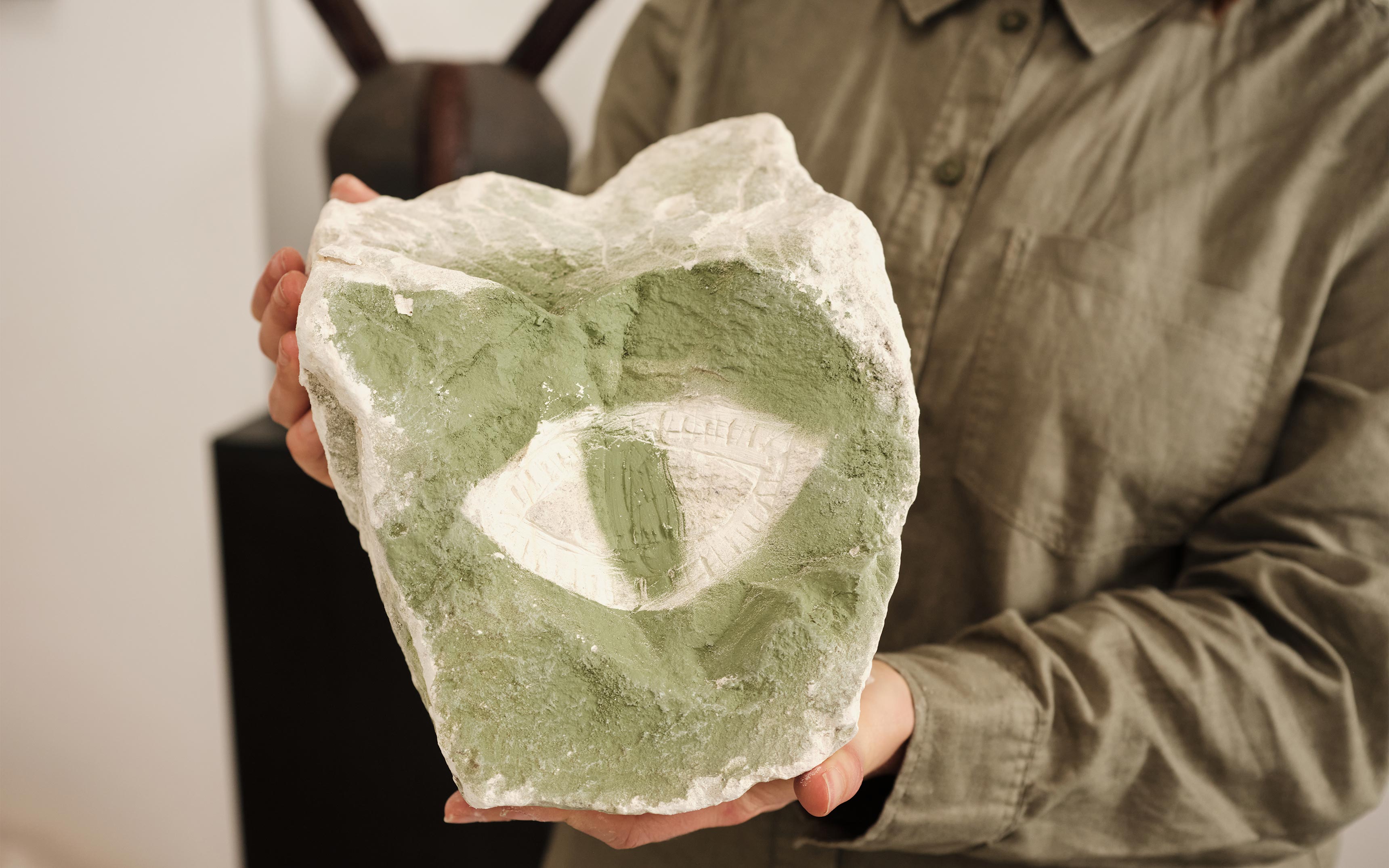
The first time I was trying to make my sculptures more anthropomorphic was for a project at the Botanical Garden in Puerto Escondido, Oaxaca, when I did the Casa Wabi residency and wanted a project where visitors could be more engaged – where something looks at you and you want to look back. So I created the Seres Vegetales or “vegetal beings”, each imprinted with a variety of seed pods. It was the first time that my sculpture had eyes, and it was a continuous relationship between culture, life size sculpture and the human visitor. From then on, the shape has been used to try to talk about vegetal intelligence, to try and make them become these beings who represent the spirit of the plants.
Do you think about how visitors will respond to your work when you're making it?
There is always a lot of things that will happen that you do not imagine when doing the work. After it is finished, it has a life of its own. Because I work site specifically, there is a whole thinking process that happens before, to respond to the space. With the Casa Wabi residency, I visited the Botanical Gardens, chose a space and aligned the sculptures with the route of the visitors. Then, of course, there is a moment where it is like when you have a baby and it is out of your body. Now the work is out there for the world to experience and react to in different ways.
You have covered numerous topics in your career so far, from political and ecological crises to the history of British women. How do you decide what's next?
I think it is a lot of things. It’s the books that I'm reading, it's my travels. It's sometimes my concerns, but you sometimes also respond to certain invitations and you go and do the field visit and talk to the people, which is always the most interesting part, and learn about their culture, then prepare in a way where the work will take this into account, respond to it, and bring some of my own perspective.
What’s next for you?
Faunal Succession at Focal Point Gallery is opening on 21 March, but it's a touring show, so it’s going to travel to KARST in Plymouth, where I am also going to be doing a residency in the Dartmoor National Park. Next year, it will travel to Mostyn, in Llandudno, Wales, and with each site, the idea is to create a participation program around it. I’m also doing a workshop at the Biennale in Vienna, with ceramics and clay imprinted on paper, what I call “clay drawings”, fostering conversations about migration through plants and identity. I am also featured in the group show Sculpture in the Garden: The Storytellers at Worcester College, Oxford University opening on 1 May. It is a very busy next year and a half.
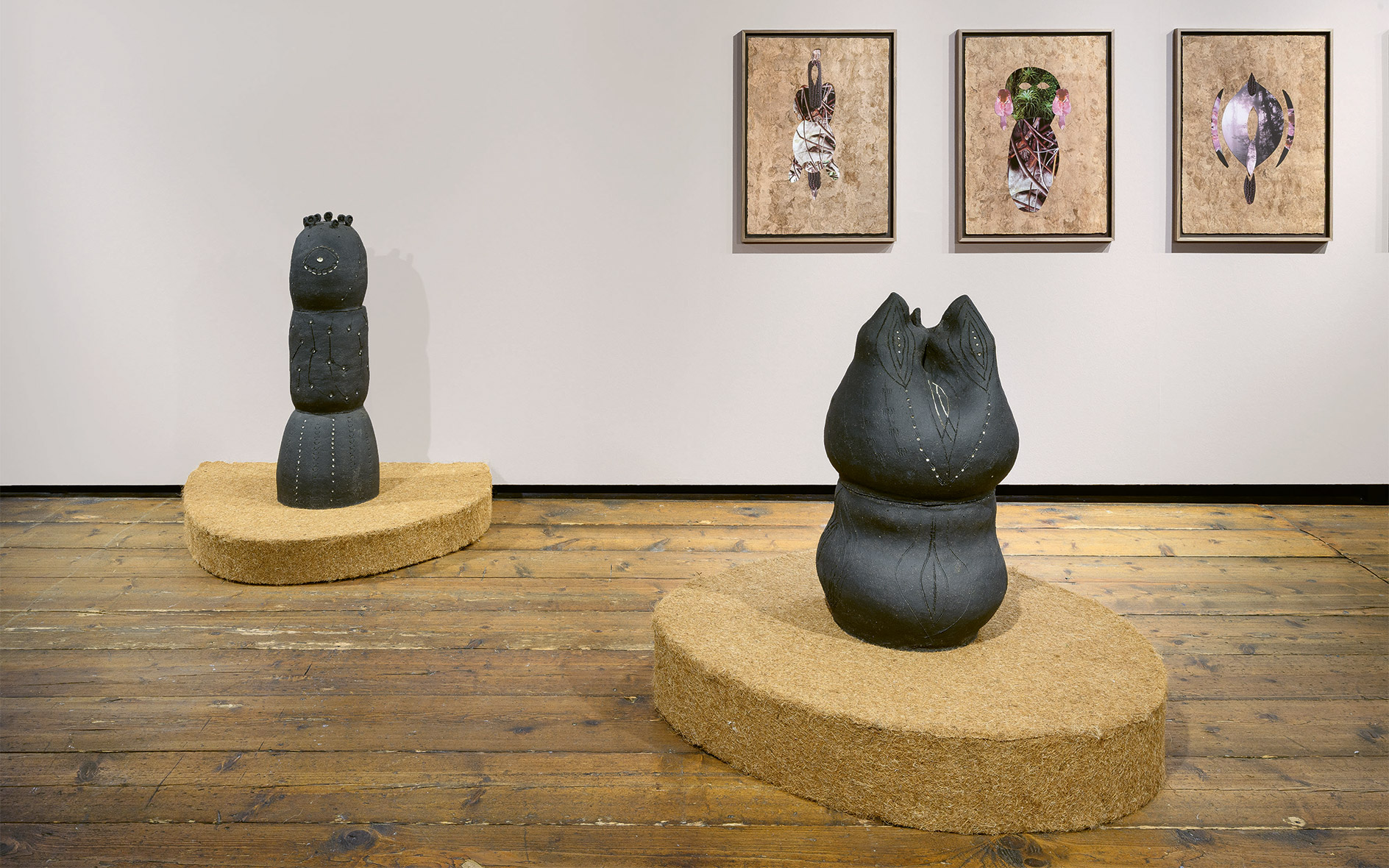
Flora Totems and the Amate series by Lucia Pizzani, featured in Seeds. Reclaiming Roots, Sowing Futures, KunstHausWien, 2026. Photo: Iris Ranzinger
Text: Baneet Sarai
Photos: Liz Seabrook