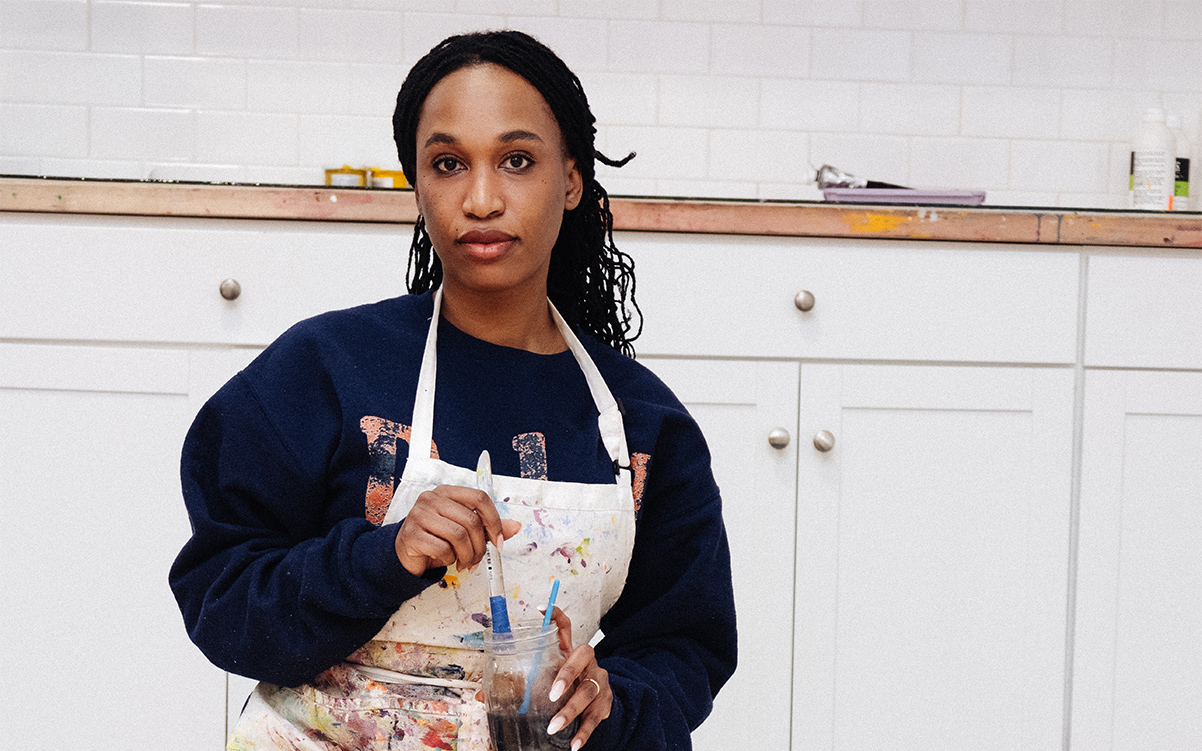
By combining paint, recycled materials, collage, and textiles, Tschabalala Self creates a world that is both sensuous and political. In her powerful images of black bodies, mostly women, she centres pleasure, relaxation, and self-possession, while working against the histories of racism and sexism that have shaped how these bodies are seen. Drawing from personal memory, lived and observed experience, and the material histories of fabric and craft, Self’s work reclaims the right to be seen fully, on the terms of her characters.
Tschabalala, how do you usually introduce yourself as an artist to someone who doesn’t know your work?
When I meet people for the first time, I usually say that I am a painter. They often follow up by asking what medium I work in, and I explain that I use a lot of fabric in my work — that’s what makes it unique. When they ask about the subject matter, I always say figuration. It feels like a good boilerplate, something that gives people a general understanding of what I do and what my interests are.
Drawing is somewhat of a childhood instinct — how did yours evolve into a way of seeing the world and, eventually, into an artistic practice?
Drawing was always something I did for fun as a child — a way to occupy myself and to process ideas and emotions. Because I was the youngest in my family, I spent a lot of time watching and listening to other people and observing a world I wasn’t quite participating in. My siblings were much older than me, and my parents had me later in life, so being at home often felt like theatre. I was watching events unfold in their lives — my siblings with their friends and partners, my parents — and picking up on how people express themselves, from micro-expressions to interpersonal dynamics. I think I’ve carried all of that into my practice. As I got a bit older, I decided to pursue art more seriously. It had always interested me, but growing up in New York City, especially in Harlem, I was surrounded by people who had dedicated their lives to the arts — actors, singers, artists, writers.
And I guess there were a lot of art spaces to explore?
During high school, I spent a lot of time visiting museums and interning there, and I also worked at a couple of galleries. I was curious to understand what the art world is and how art becomes part of the world, because it can feel very opaque. I figured out enough to see that there was a mechanism — a social space within the art world — that seemed to facilitate this. So I tried to place myself in those environments as much as possible. For college, I went to Bard College, a private liberal arts college, rather than an actual art school, though many visual artists go there and it has a strong arts program. I began taking my art coursework more seriously, and that was the point in my life when I decided I wanted to be an artist — or at least try to be one. But it was only at the Yale School of Art that I had my first experience in an institution entirely dedicated to the arts. I was surrounded by people who really understood what it meant to pursue a life as a painter, and that’s when I doubled down on my desire — and my belief — that it was truly possible.
Your family was supportive of your decision, I assume?
I didn’t have any pushback from my family about pursuing the arts. They’re people who support and love art. In fact, my parents moved to New York from the South because my Dad was pursuing his MFA in writing at Columbia, so I grew up in a family that believed in art as something valid and meaningful.
While your style has evolved, the core ideas remain consistent. Did you always know what you wanted to express and what your visual language would be?
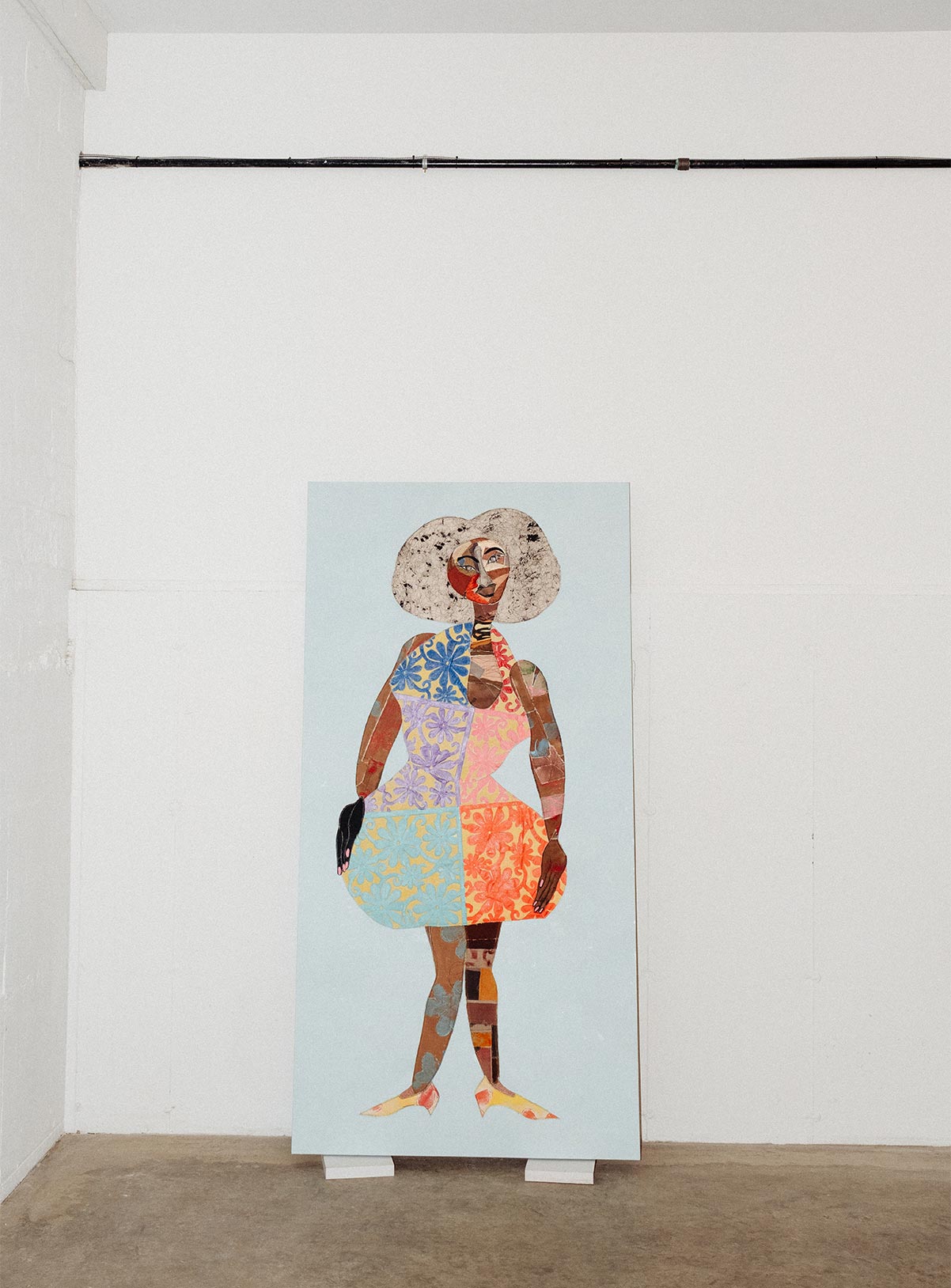
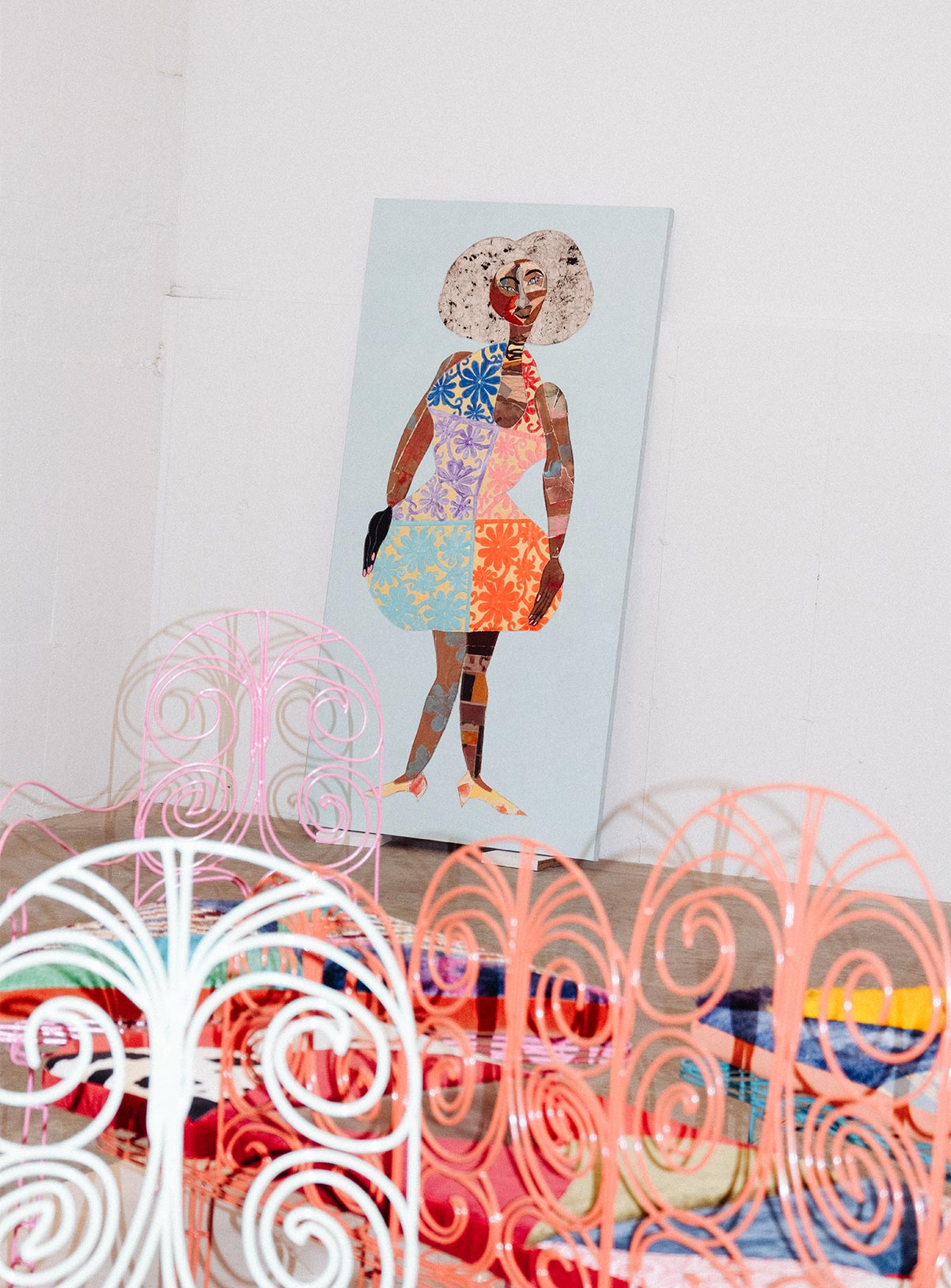
Since around 2015, I developed the visual language I wanted to use to fully express my ideas. Once I found that language, it became a matter of refining it and experimenting within its boundaries. Conceptually, my work has expanded and shifted over time, but at its core, it really has remained the same. It’s a preoccupation with the significance of the human body as a vessel — and specifically, the Black female body, which is my main subject of interest. I think about that body as both an icon and a symbol, and about the symbolism associated with it — the symbolism inherent to its form and experience, as well as what has been attached to and assumed about the meaning of the Black female body when it is represented in popular culture, particularly in the Western world.
I experienced a strong sense of freedom, joy, and self-awareness at your 2024 exhibition Around the Way in Helsinki. How do you combine these feelings with critique and political consciousness in your work?
For the Black body, and especially the Black female body, it’s crucial to counter racism and sexism through embodiment. These systems are designed to make you resent your own physicality and to fear living fully in your body. To become embodied, to feel settled and confident in your femininity and Blackness, and to find joy in that, is, in my opinion, the only way to counter those realities. Sexuality in my work is about pleasure, but at its root, it’s truly about a Black future. Without Black sexuality, there are no Black future people. It needs to be championed because it speaks to the future of Black communities. It is both a political and social aspect, encouraging embodiment and pleasure.
Some might respond first to the visual intensity or eroticism in your work, while its conceptual layers might be less apparent. What do you think about that tension between surface and depth?
Art cannot be didactic in the sense that everything would be fully spelled out for each viewer. What you can do is propose a set of prompts and questions for the audience and allow them to reflect and ruminate on them. I also think that all art has two layers of meaning. There’s one meaning that is somewhat superficial — what most people will readily land on — and then there’s a deeper, more esoteric meaning. Sexuality in my work functions in a similar way. On the surface, it’s a conversation about freedom, embodiment, and expression. But on a deeper level, sexuality is a protest against death. The goal of racism is, essentially, to stop Black people from proliferating and moving forward. I view sexuality as being more than just something that deals with someone's physicality; it’s a God-given aspect that allows for the creation of new life, potentially more human beings. Sexuality is about bringing forth life — literally, but also metaphorically, through being fully present in the moment, not thinking about the past or future, but the here and now. If just one out of ten in the audience lands on that deeper realisation, that is enough for me.
Can you talk about your characters and how they emerge? Do they reflect aspects of your own personality, or are they shaped more by what you observe around you?
My own experiences are definitely a part of the fabric of the work but also my recollections of other people, and other scenarios. Many of the characters in my paintings are expressions of feelings, emotions, or aspirations made physical. They’re not portraits, because they’re not based on any one person’s life. They’re a combination of things.
What has been the response to your work from Black women, and how does it affect you?
I think a lot of Black women easily identify with the work. Some people also have criticisms, particularly around the depiction of sexuality. Sexuality has often been weaponised against the Black community, so I feel those concerns are legitimate. But once people understand my intention and the function of sexuality in the work, it tends to fall into a better context. I also think that people with very different lived experiences from mine can still identify with the work, because at its core, it’s about the human experience. I’m telling that story through my own perspective, which I know best, but the purpose is to get a certain level of clarity, sincerity, and truth. And once that truth is reached, all people can resonate with it, because it is something universal.
The figure of a seated woman, at ease yet strong, appears in many of your works. What does this posture convey to the viewer?
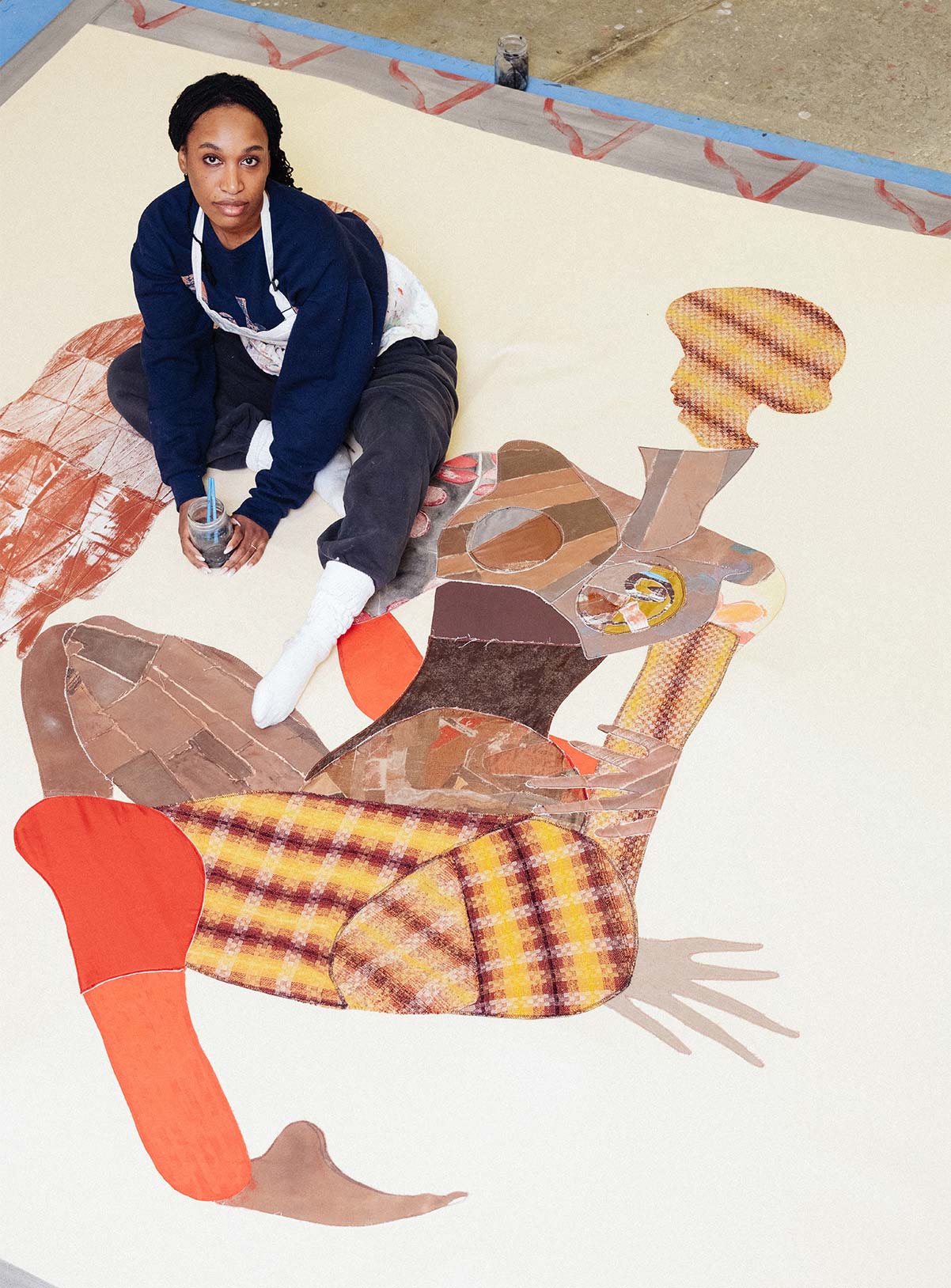
In the context of identity politics, a Black woman and a chair — especially in America — can be a powerful gesture. It’s about taking up space and claiming a moment of leisure or rest. Rest is often elusive for Black women, who are expected to labor constantly and care for others. The idea of leisure — not just rest, but a respite from work and a moment of personal pleasure — becomes something rare. I see the seated female figures as reflecting that narrative. Separately, but related, it’s also about quotidian moments of life being elevated to a profound level. This is something all viewers can identify with: those moments when you are just alone with your thoughts, taking in what it means to be alive, and maybe even asking why you are having that experience. These lone seated figures are really about solitude, the inner work of one’s mind, and what it feels like to have a human experience. They carry existential associations as well, because it’s such a common, everyday gesture. I wanted to distill it and see what comes out from hyper-focusing on something quite ordinary.
Your work spans painting, sewing, printmaking, and fabric. How does a piece come together from start to finish?
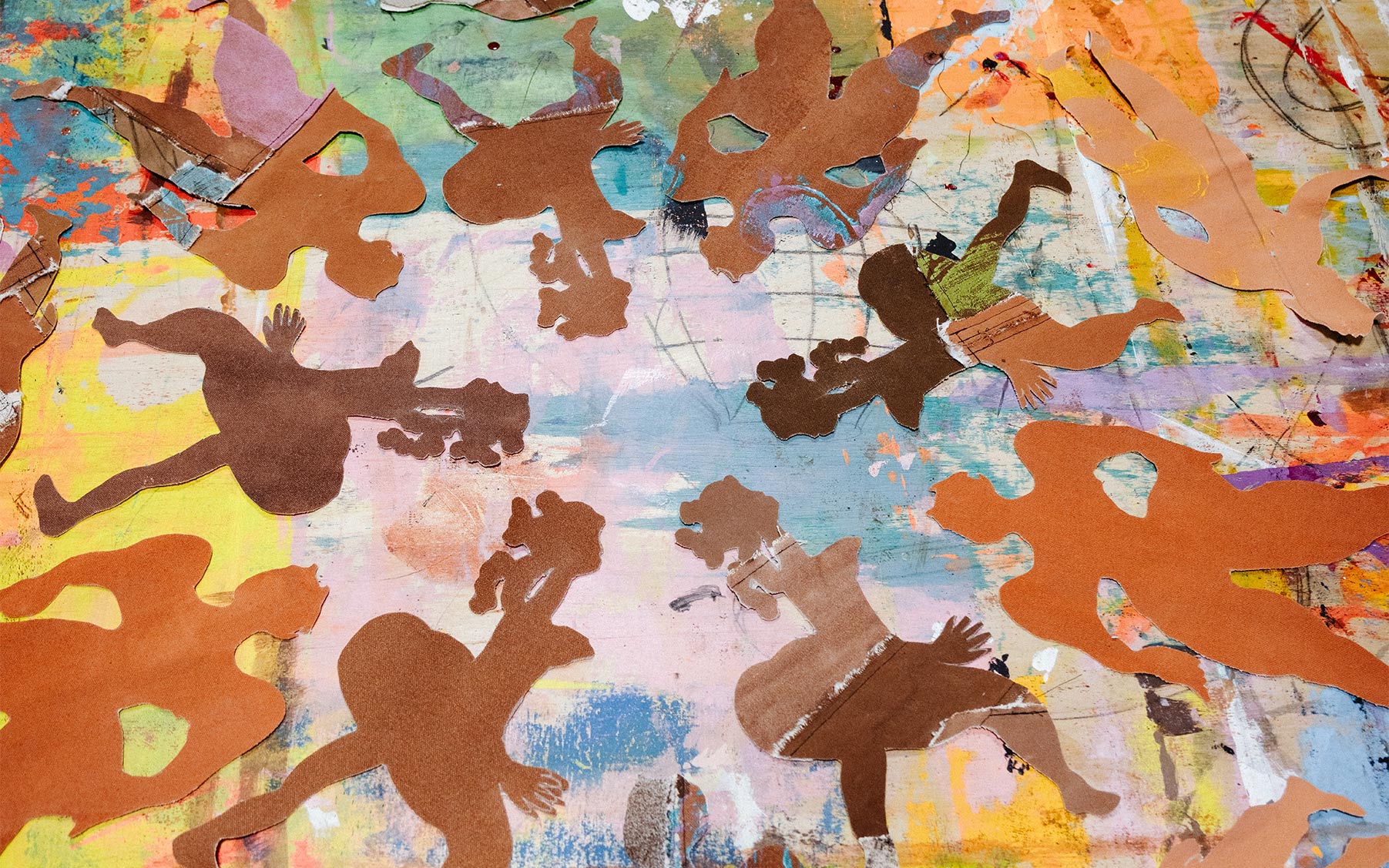
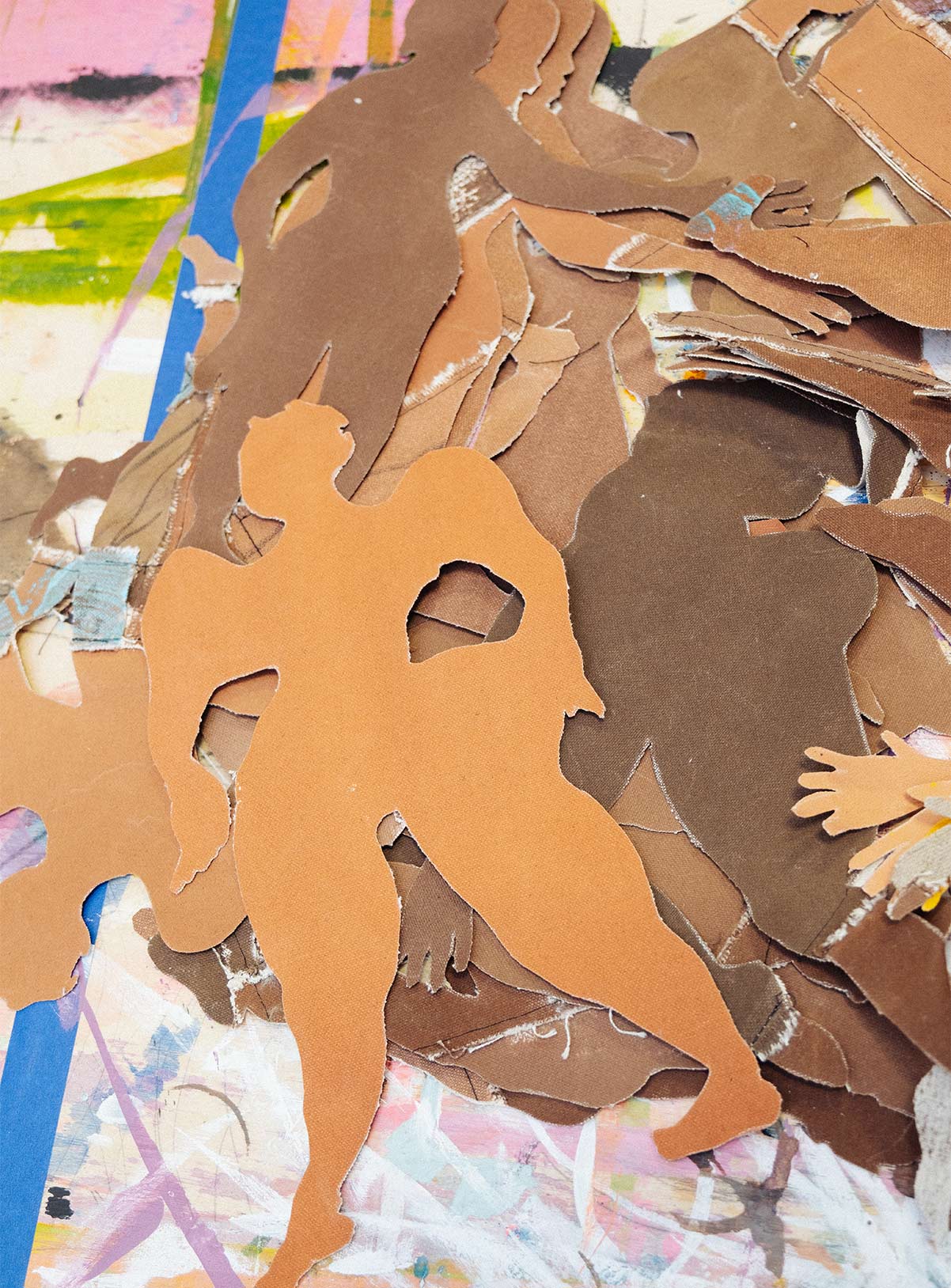
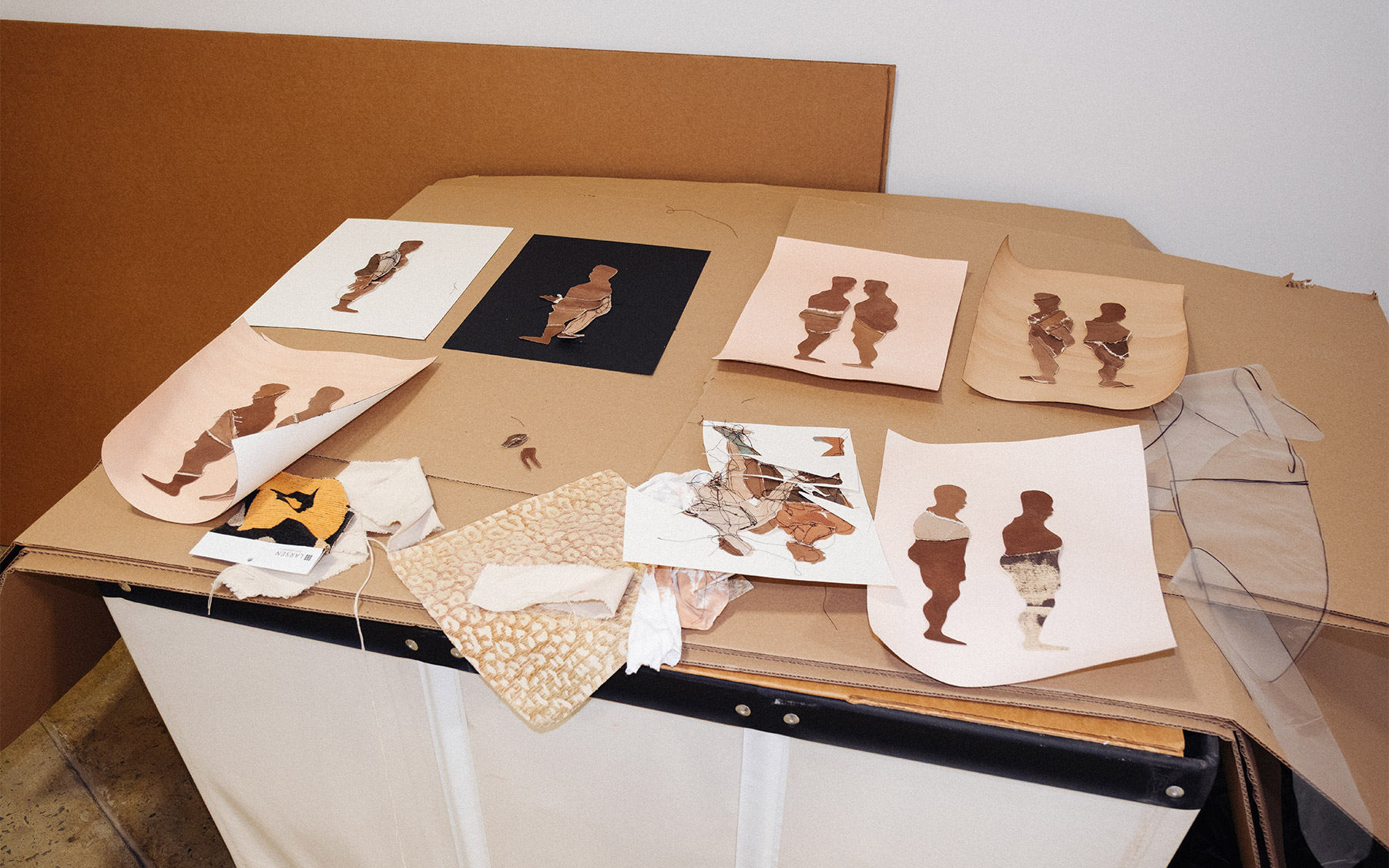
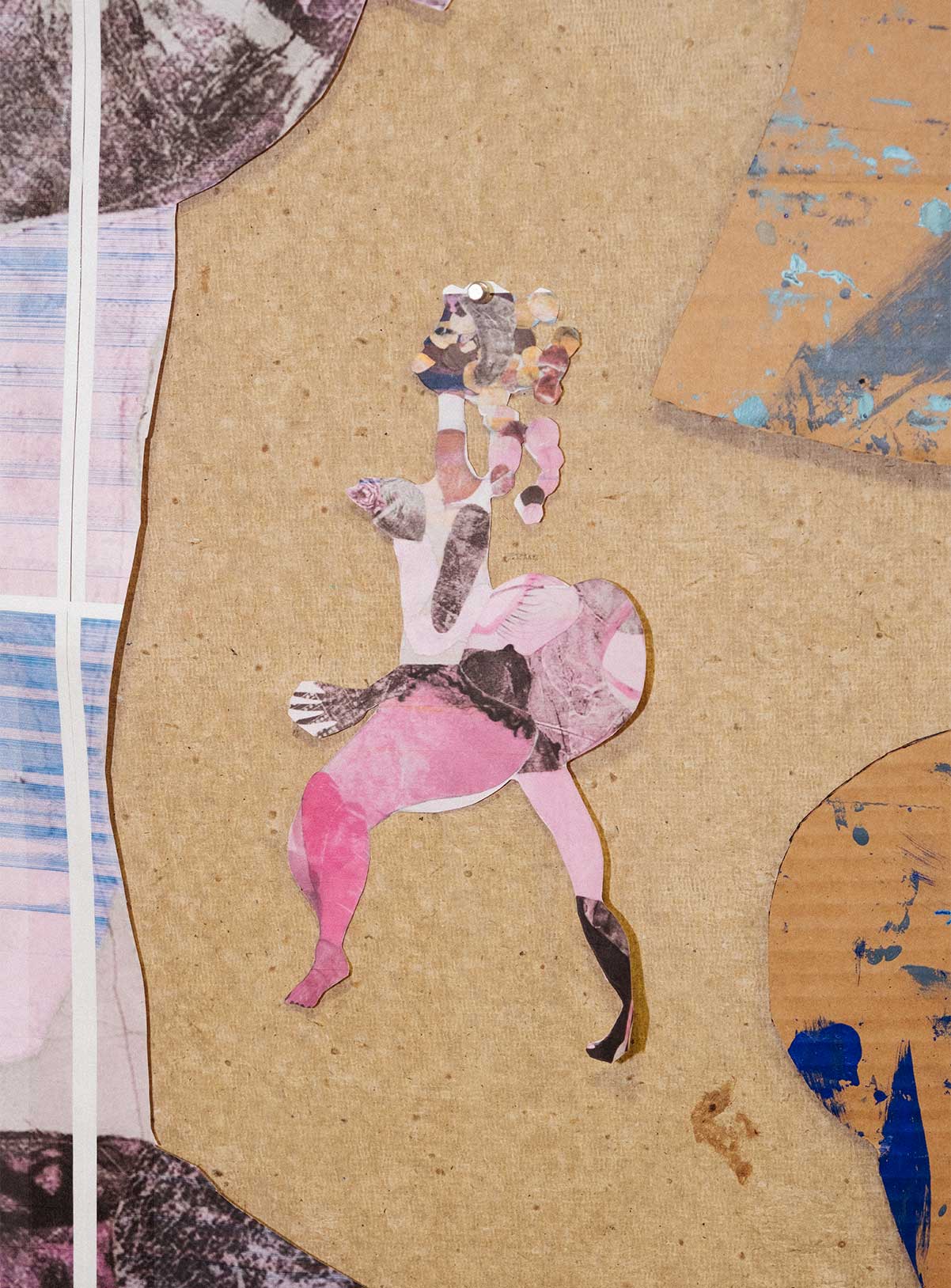
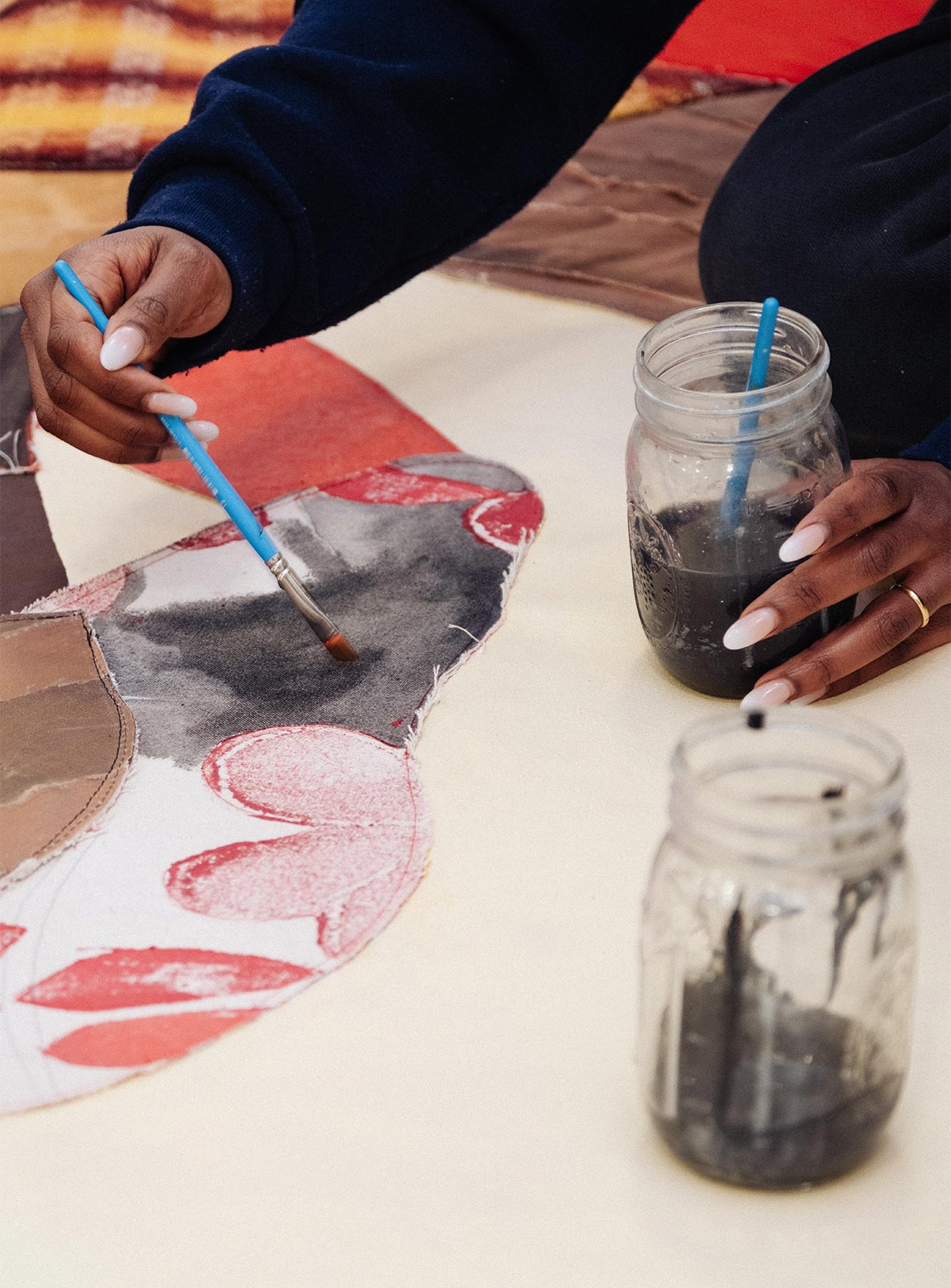
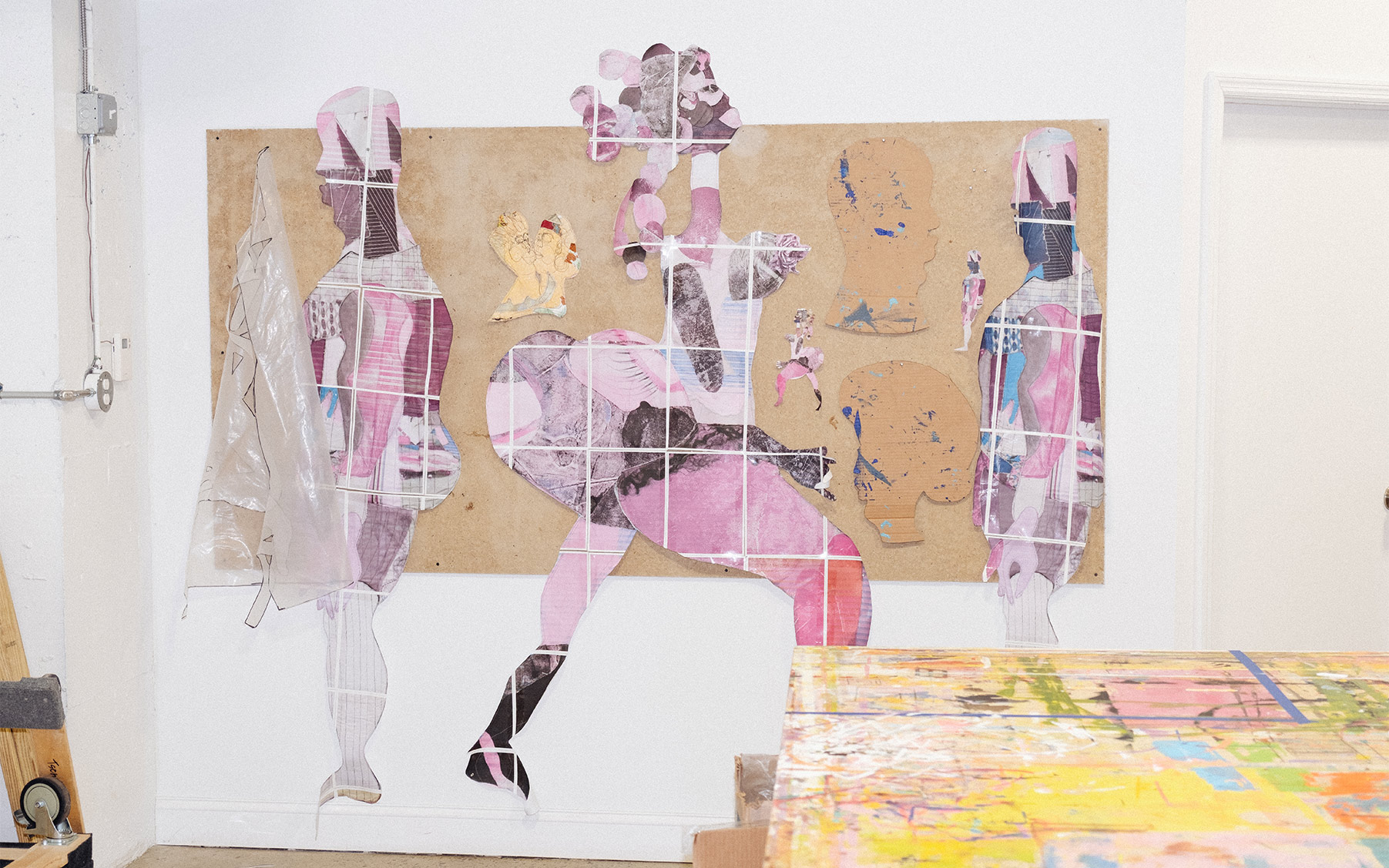
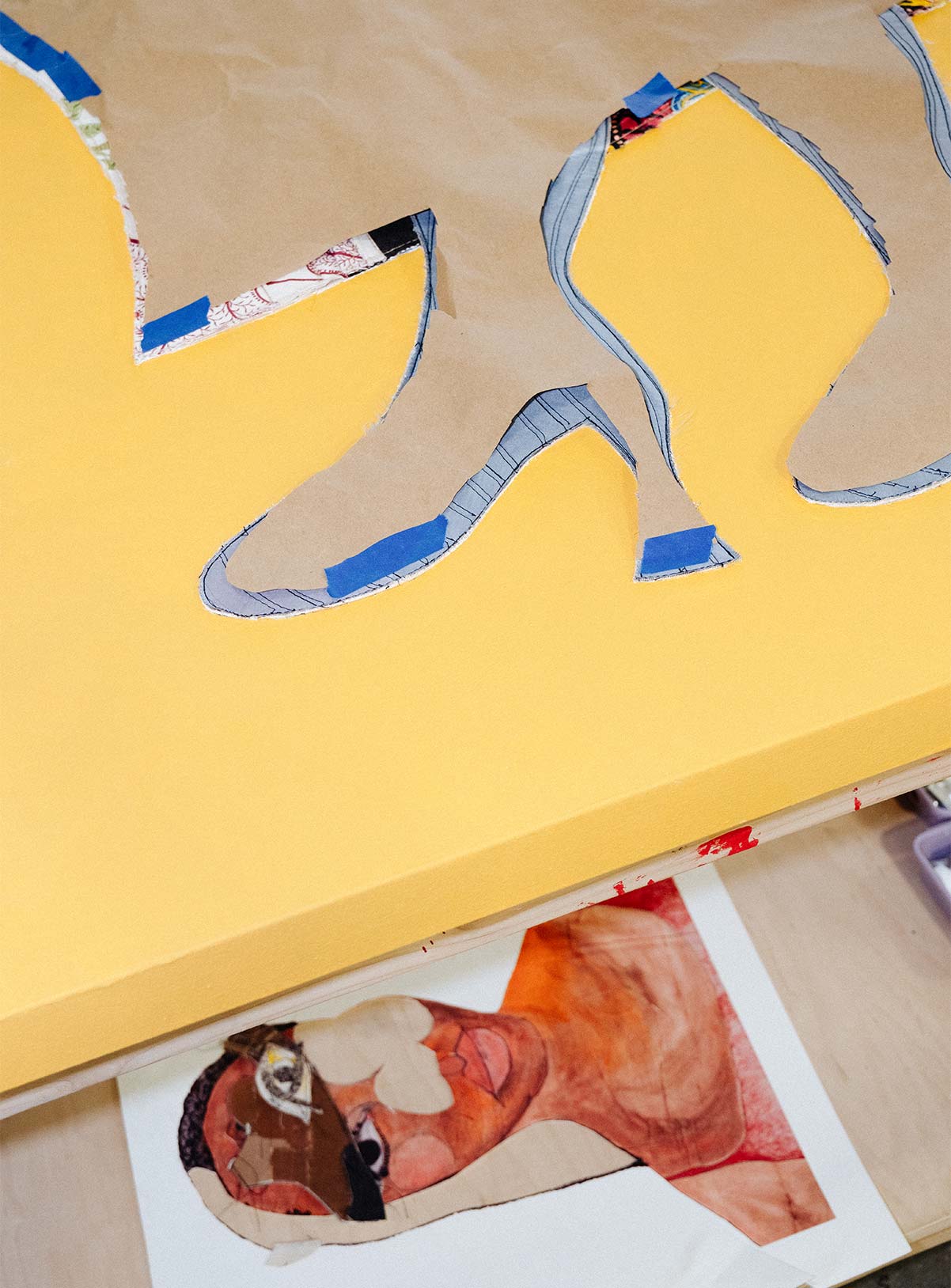
A lot of the time, I start with one part of the body, often the face. That part becomes the anchor for the figure. Because I’m working in collage, it’s a physical object: a piece of fabric, an appliqué element I’ve fashioned with a sewing machine. From that point, I begin to build the rest of the form. As the figure takes shape, the narrative around them generally starts to emerge. As their body is composed, I begin to imagine who they are, what they’re experiencing, and where they are, based on their gesture, shape, and pose. Sometimes they exist in liminal environments — not in a physical space, but in a mental or emotional state. The work develops in real time alongside this emerging narrative. Once the figure is composed, I start considering how they will exist on the picture plane. Then all the elements are sewn down and fixed to a larger canvas, which becomes the ultimate substrate for the painting. Once the canvas is stretched, I start painting, which is the second phase of world-building around the figure.
Textiles carry histories of care, labor, and femininity, and I know your connection to them is personal, rooted in your mother’s sewing practice. How has that influenced your work?
My mother sewed as a hobby, just for fun. For me, it was one of the first examples I saw of someone having a creative outlet. The sewing machine now is the bedrock of my entire practice. It’s deeply connected to those early memories of my mother. Sewing was also a way for her to show affection, making dresses for us or creating things for the home. I also see it as an affectionate gesture, and in my work, it allows me to show affection toward my figures and the subjects in my artwork.

Where does the fabric you use in your work come from?
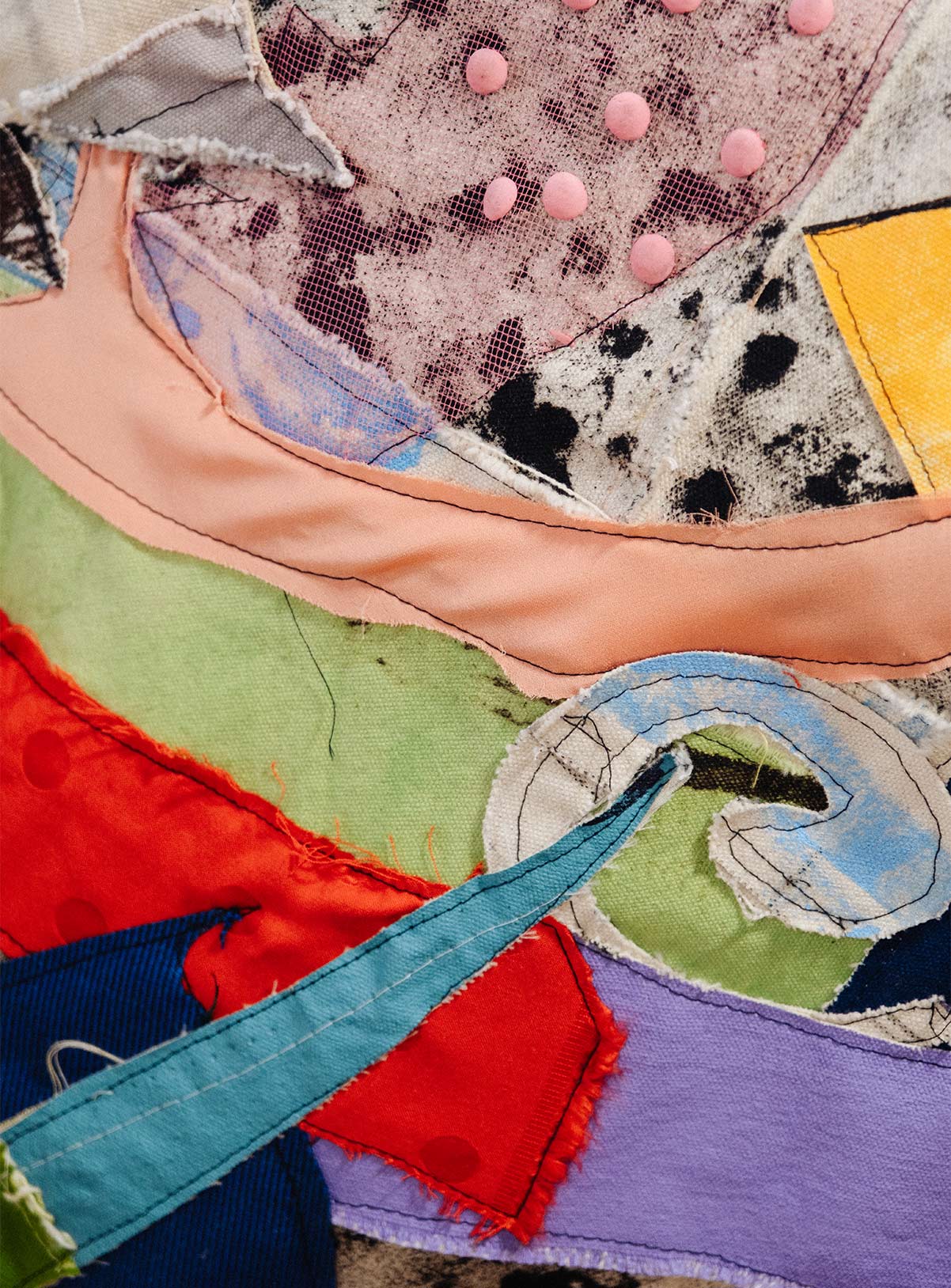
I started with an original batch from my family’s home, and since then I’ve continued to collect them. Some pieces are minutiae from my life — like an old bedsheet with a beautiful design that’s too worn to use, which then becomes part of my work. When I travel, I’ll pick up fabrics at antique stores or fabric shops. I also buy fabric from time to time, doing a sort of “fabric haul” once or twice a year. I like them coming from random places because it creates a diverse palette for me to work with.
In 2026, you started with a solo show Fresh Paint at the Parrish Art Museum in New York. What’s next?
During spring, I’m featured in a group exhibition at Galerie Eva Presenhuber in Zurich alongside Sandra Mujinga and Aria Dean, which I’m really excited about. All of us deal with figuration in different ways, and we’re coming from Black diasporic experiences, so we each have a distinct relationship to the narratives that surround Blackness. Later in the year, I’ll be having two commercial gallery exhibitions with two of my other galleries. I also have two public sculpture commissions opening this year. One will be on the façade of a New Museum of Contemporary Art in New York, and the other will be in Trafalgar Square in London. Several of my sculptures are inspired by the paintings. When I’m creating and conceptualising them, I often try to create a three-dimensional version of a figure or character from one of my painted works. That process is challenging in itself, which is something I really appreciate about sculpture.
You have only once explored performance as a medium, with The Sounding Board at the 2021 Performa Biennial—a play you wrote, directed, and designed yourself—translating your painterly language into a live, experimental work. How did that experience expand your practice, and do you see performance continuing to play a role in your work?
The most exciting part was the opportunity to collaborate with other people, because painting is a solitary experience. I really enjoyed having the actors’ creative abilities and energy fully integrated into one of my ideas. I do feel that I’ll continue working with performance, but I imagine it more as film or experimental video in the future. Similar to my general preference for being more of a voyeur, I’m drawn to the role of directing and to finding muses who can fully enact the ideas I have for these performance-based projects. That’s something I’m actually planning to work on this year as well.
Your first solo exhibition dates back to 2015. Looking back over the past decade, how have you changed during this time—both personally and in the way your practice has evolved?
I’ve changed so much personally over the past ten years. Put simply, I’ve grown up. There are losses, there are new people who become central to your life. You lose a lot, you gain a lot, but all of it is refinement—if you take it seriously and without judgment. All of my personal experiences, my development and growth, have informed my practice. Some works I love deeply, and feel proud of. Others are more challenging, as you don’t necessarily like them, but you can still understand their value, why you need to make them in order to move on to the next one. When I look at my work from different years, more than anything else, I remember exactly what was happening in my life at the time I made it. My paintings are like a diary for me.
Text: Anton Isiukov
Photos: Christian DeFonte