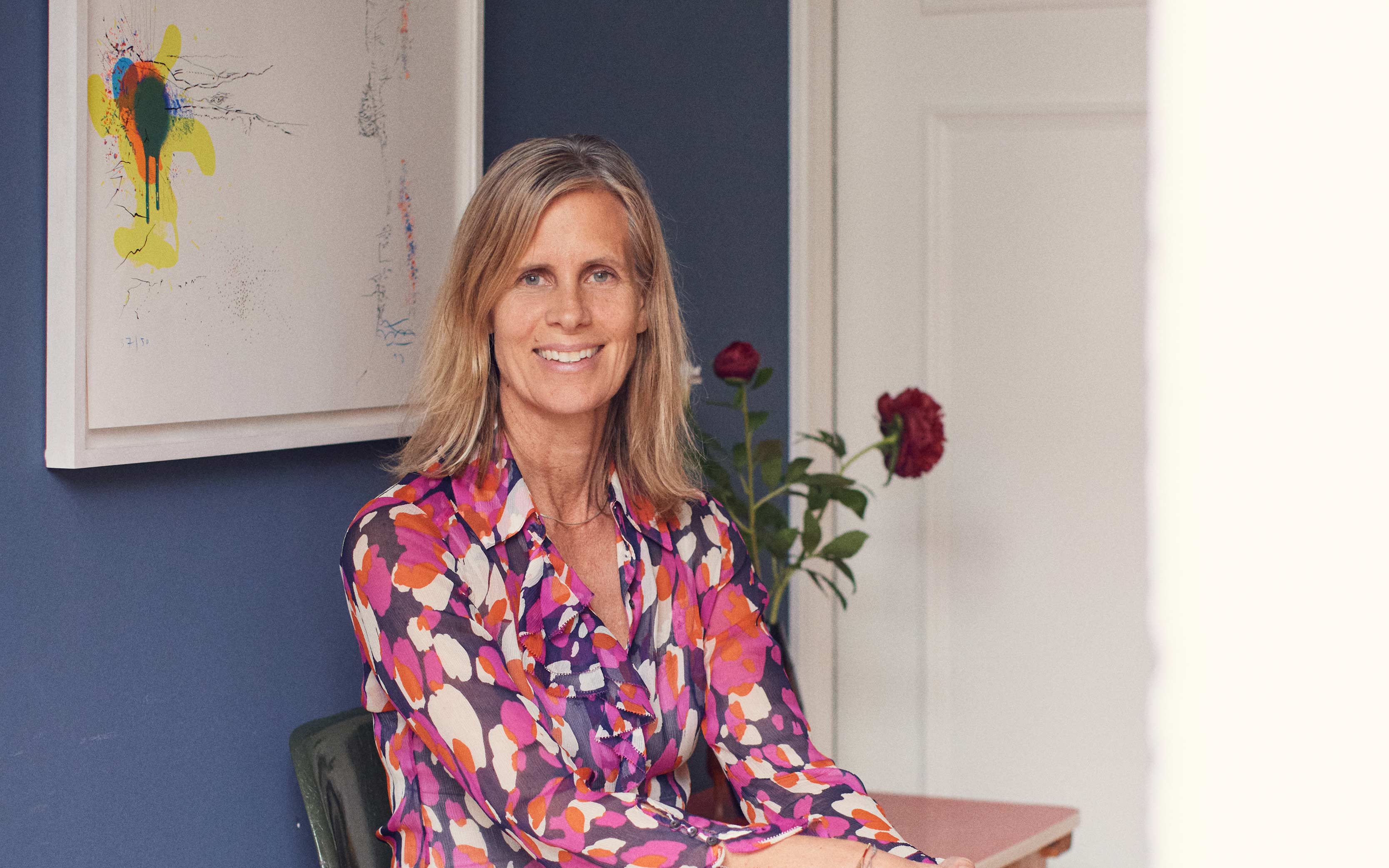
Katharina Bauckhage founded artflash in 2012 as the first online gallery for artworks and limited editions in the German-speaking world. The platform appeals to newcomers and established collectors alike — more than 1,000 editions by over 500 artists have been sold to date. Most of the works are finds unearthed from Kunstvereine (German non-profit art associations), edition publishers and galleries.
Katharina, what brought you to art?
My grandparents lived in Kassel, and even as a child I used to listen closely whenever people talked about Joseph Beuys — back then the question was: “How can 7,000 oaks be art?“ Then in 1997 I visited documenta for the first time, where Rosemarie Trockel and Carsten Höller put up a House for Pigs and People and claimed it was art. I didn't understand a thing — but I thought it was brilliant.
Did you pursue that interest during your studies?
Yes, but more on the side. I studied business administration and communications, with art history as a minor. Chronologically, though, we never got past Andy Warhol — the focus was almost entirely on the past.
How did you find your way back to contemporary art?
I was living in Berlin when Christo wrapped the Reichstag in 1995, and I worked on it as a monitor at the time — there was a wonderful sense of new beginnings in the air. The wrapping of the Reichstag also became the subject of my art history degree. After that I was hired to organise visitor services at documenta — and suddenly I was back in Kassel.
That was quite a different scale, wasn't it?
The project was honestly a size too big for me (laughs). I was in my early thirties, didn't know much about the art world, and my job was to look after more than 600,000 visitors in 100 days, together with a small team — provided they'd booked a guided tour. It was hugely complex and exhausting, because documenta never closes.
What do you take away from an experience like that — in terms of understanding art?
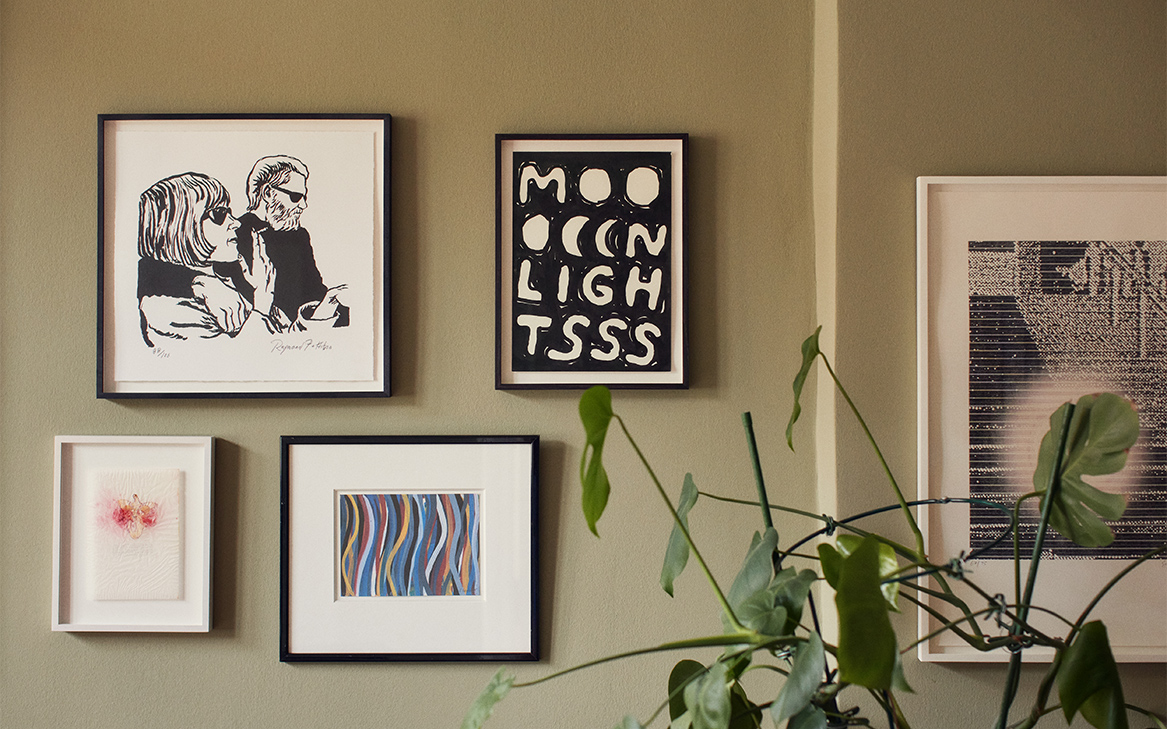
What I found really fascinating was how many artists develop something site-specific. I met Raymond Pettibon, who put his signature drawings straight onto the wall, spontaneously and directly. In that moment I understood: everything was possible, anything could be art. That freedom fascinated me. On the other hand, I also found a lot of it too cerebral. That kind of cyclical art, for me, raised too many barriers instead of breaking them down.
Did that wear you out?
It did, rather. After that I stayed in the museum world, but in a less contemporary vein — Kunstsammlung Nordrhein-Westfalen, the Staatliche Museen Dresden... Then I worked in Bremen on the city's bid for European Capital of Culture, where I met Susanne Pfeffer, now director of the Museum für Moderne Kunst Frankfurt. To help finance an exhibition, she had editions produced by artist friends of hers. Until then, it had never crossed my mind that I could buy art or afford it, because in the context I'd been working in, art wasn't for sale. It served inspiration and discourse.
How did you come by your first artwork?
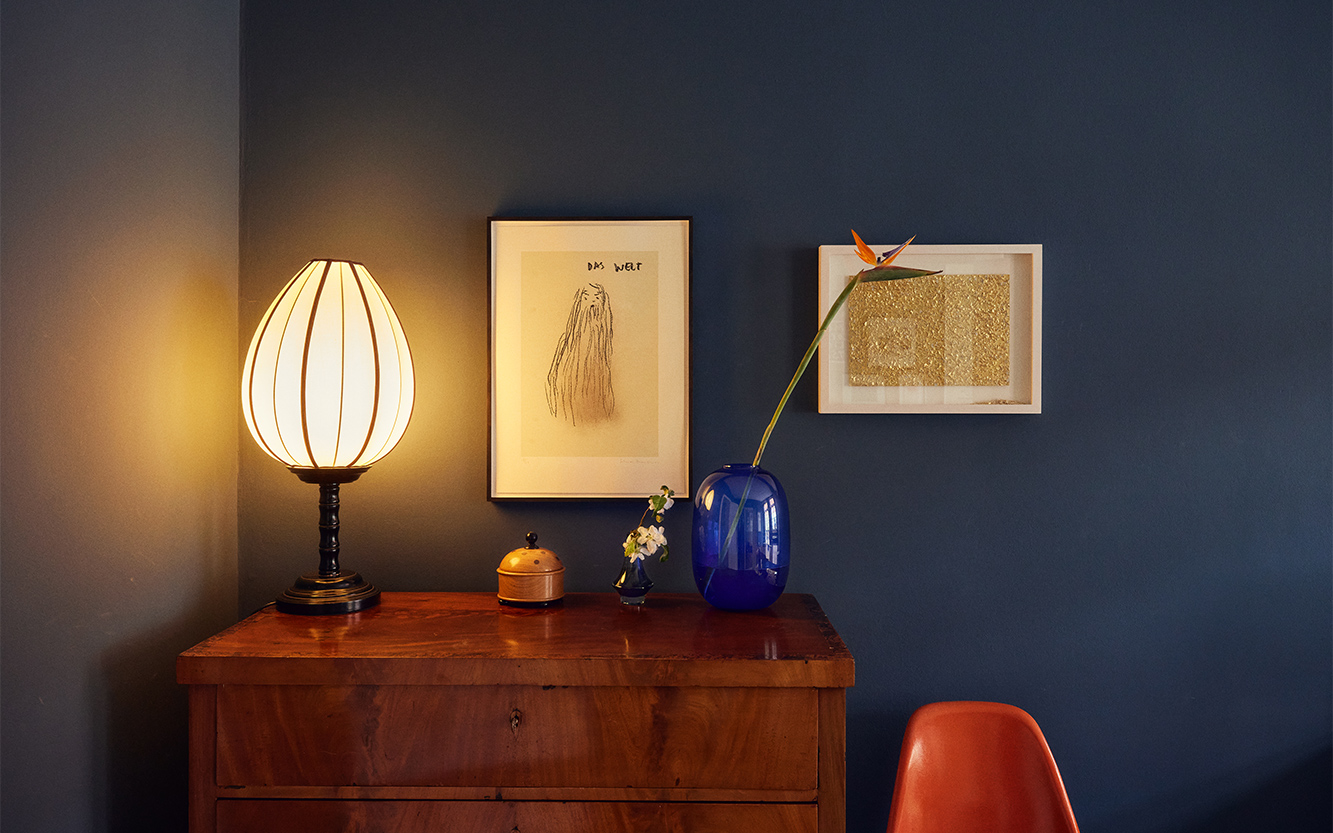
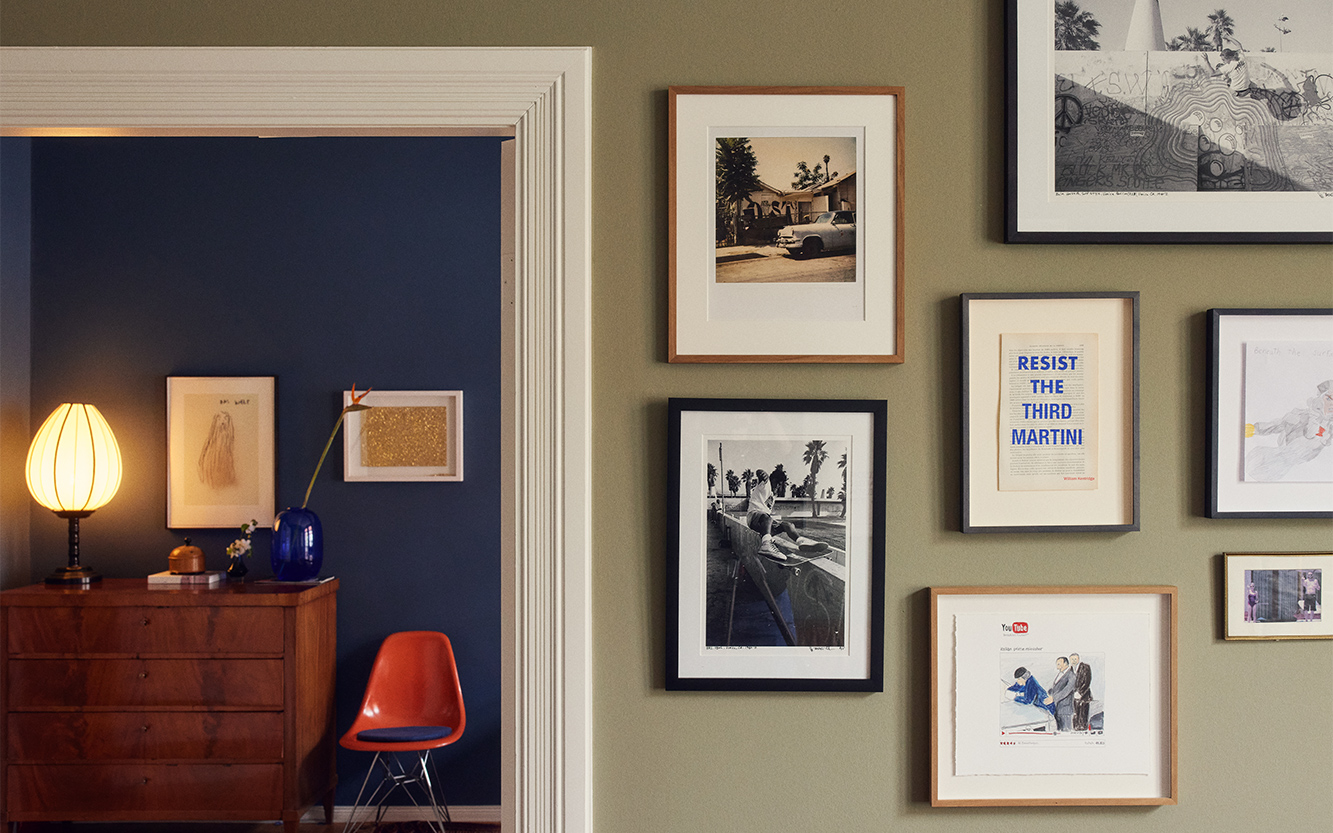
Susanne recommended the lithograph Das Welt by Norbert Schwontkowski. It captivated me instantly: a shaggy, long-haired dog — or perhaps half dog, half god? — floats in nothingness, covered in gold dust. That aura, the deliberate imperfection, and the openness to interpretation never let go of me. That work eventually became the trigger for artflash, too. Seven years later I found out that copies from the edition were still available at the original price. How could it be that this wonderful piece was still to be had at all? From then on, the subject wouldn't leave me alone.
So there are undiscovered treasures out there waiting to be found?
Exactly. I started researching and discovered that, across Germany's more than 200 Kunstvereine, works by well-known artists could be bought quite cheaply — often even well below market price. And people simply don't know it. So in 2012 we became the first online gallery in the German-speaking world to offer art — editions, lithographs, screen prints, etchings and much more — always signed and limited. We launched with Jonathan Meese and Norbert Schwontkowski.
Just with two artists?
Yes. The idea from the start was: two artworks every two weeks. That's also where the name artflash comes from — like a flash sale. In between, I had time to find new works. I also liked the idea of concentrating on just two positions in our fast-moving times — as a principle of scarcity.
And how many artists do you have now, after all these years?
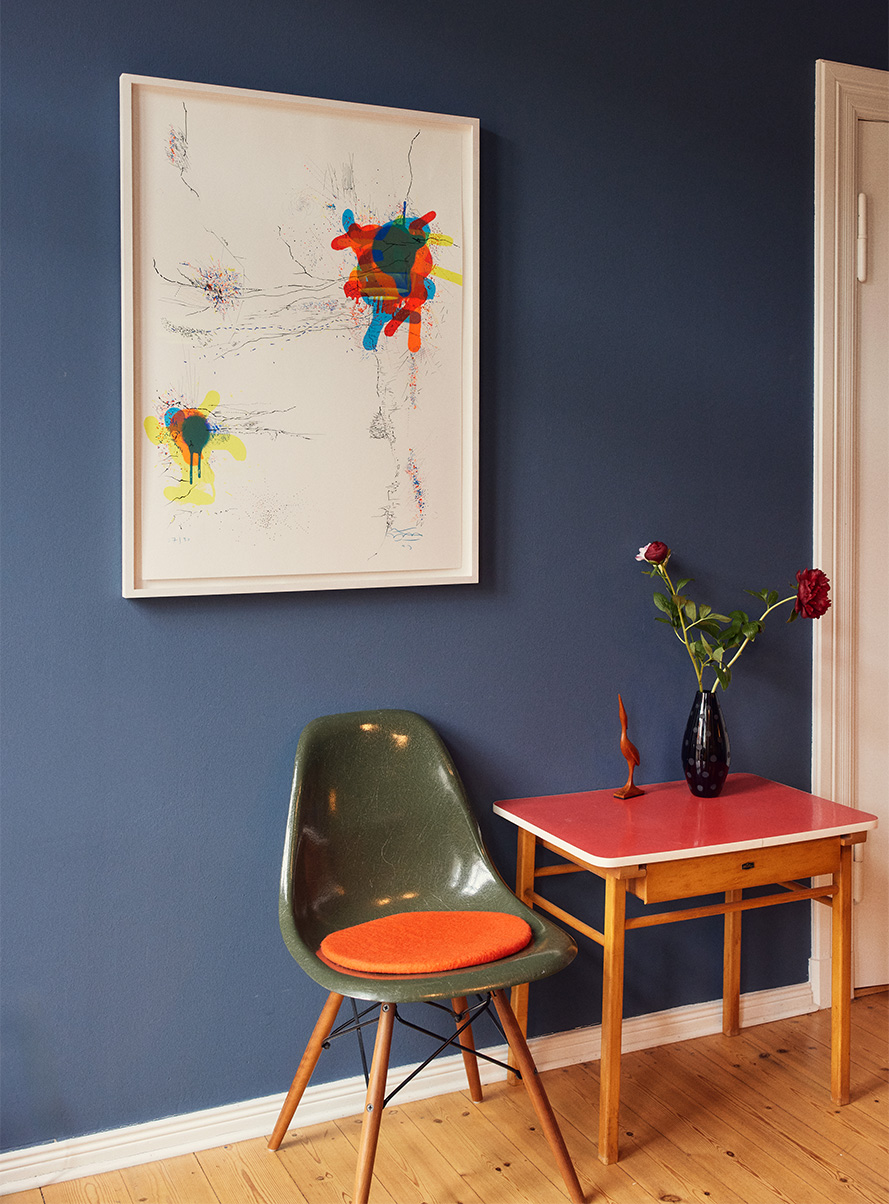
Over five hundred; we have a wonderful etching by Cecily Brown in the programme, several works by Wolfgang Tillmans, Rosemarie Trockel, Joseph Beuys and Sigmar Polke, but also exciting younger positions like Grace Weaver, Bianca Kennedy or Michelle Jezierski. It's a fantastic repertoire, and many works sell out shortly after launch.
Does your portfolio only feature living artists?
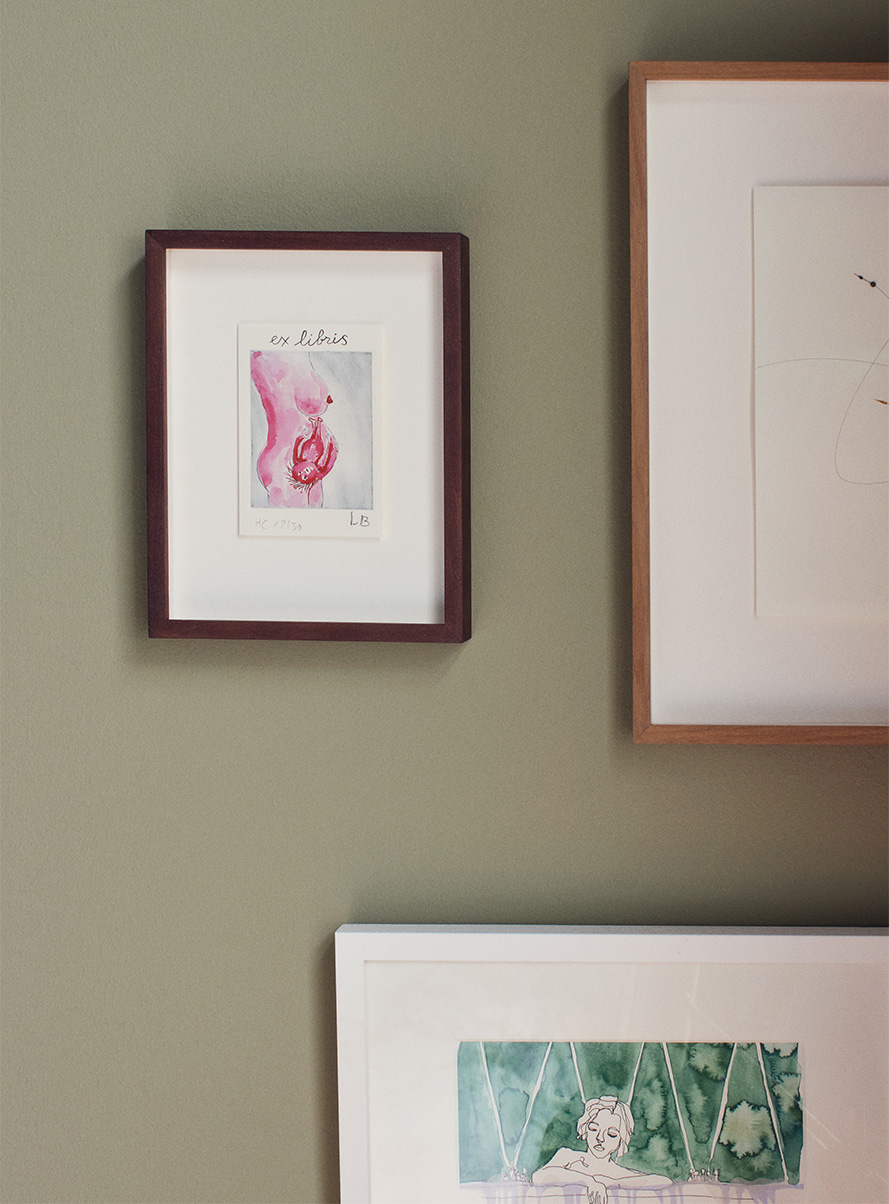
No. One of our oldest prints dates from the 1920s, by Christian Schad. Or Meret Oppenheim, or Louise Bourgeois.
How do you present the works on the website?
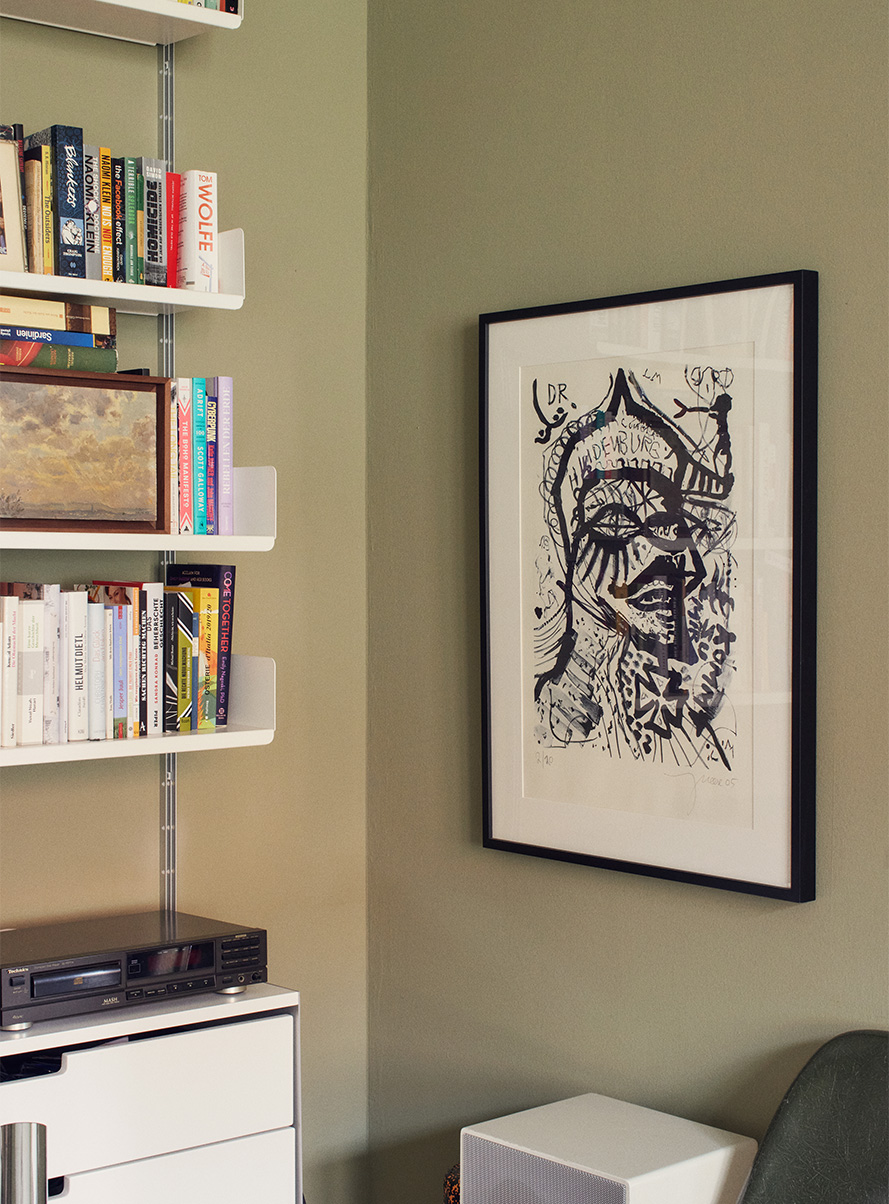
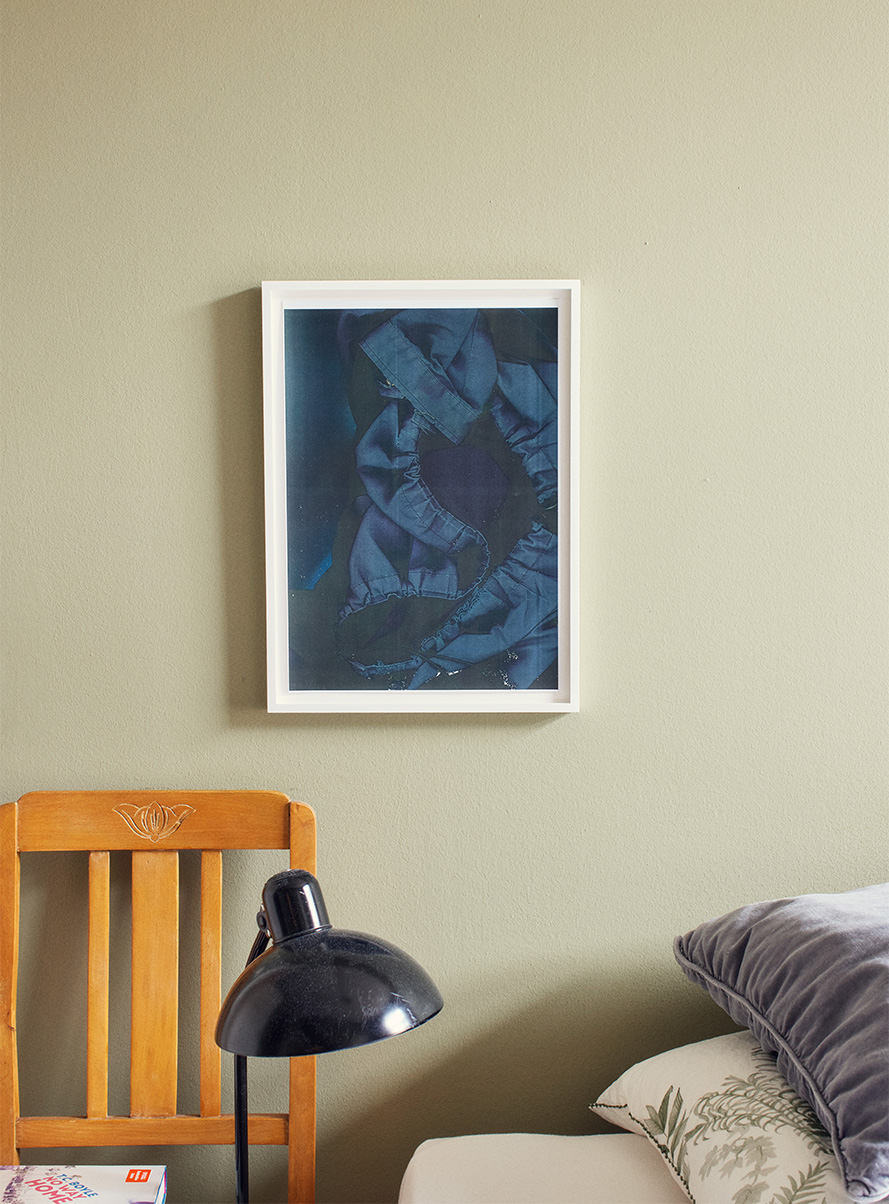
We photograph them in a domestic setting — I think that's important, so you get a feel for how a piece looks above the sideboard or next to a lamp. But it's also about making art accessible and breaking down barriers.
The first artwork you bought was an edition. Have you stuck with that?
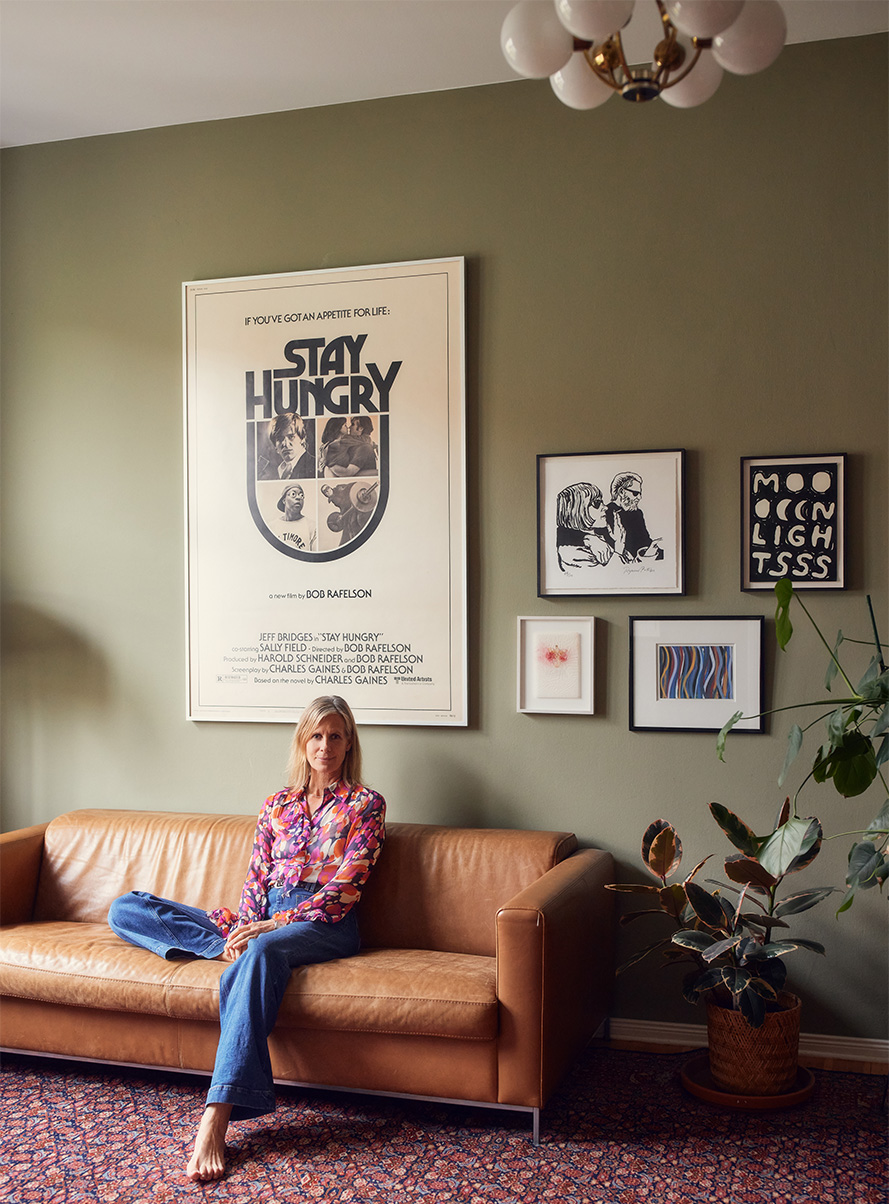
Yes. Now and then I might buy a smaller original too, but I'm really a huge fan of works on paper. Lithographs, screen prints, etchings are incredibly beautiful media — not least because you can style them individually through framing and mounting. I've now got around 30 editions at home. Though you do have to be careful not to become your own best customer.
Some collectors might say, “Oh, it's not a one-off, that doesn't interest me.” How would you defend the edition against that?
Editions are the ideal way in for collectors, because they make it possible to afford works by established artists. There are also great, internationally renowned artists — Markus Lüpertz or Rosa Loy, for instance — for whom printmaking is an essential part of their art. And editions often show a completely different side of these artists.
How well do you know your buyers?
We actually have a lot of people who want personal contact — who call up, have another question, want advice on framing, or come by in person. But then there are also many who value the anonymity. We offer our works framed or unframed; we're transparent, accessible, low-threshold. And that's not yet the norm in the art market — there still aren't many galleries with a web shop that sell works directly. Most do show the works on their website, but without a price, which is often only given on request. And newcomers to the art market ask themselves: “Why doesn't a work that's for sale have a price tag?”
Do you also offer information about the artists?
We have an editor who's been writing texts for us for 13 years — that matters to me. She finds a lovely tone that takes customers and readers along with her, explaining who's behind a work and what it means. Every work has something to tell: we're storytellers in the best sense of the word. It matters to me that everything that lands in our subscribers' inboxes is of real quality.
How do you find editions? Do you go to museums and Kunstvereine and ask around, or do they come to you these days?
We've worked with many renowned museums for years, for instance the Kunstsammlung Nordrhein-Westfalen, which itself publishes editions. And at the Kunstvereine, fresh supply is constantly being produced because new exhibitions are always being planned. Many associations are glad that we open up new circles of buyers for them — because the bulk of the proceeds flows back to the Kunstverein or the artists, and we ourselves only take a percentage. It's a lovely thing: you buy affordable art while knowing you're supporting artists and institutions at the same time.
How much art do you consume yourself?
Oh, I have to hold myself back: the Venice Biennale, documenta, Art Basel every year. Fairs like Paper Positions or Art Cologne interest me too, of course. But exhibitions at Kunstvereine are just as exciting for us — they're the platform for discovering young artists.
Young artists are sometimes hyped to astronomical heights these days. How do you see this development in the art market?
It can make your head spin. That's why you also have to cut back a bit on your own consumption. I think you have to stay true to yourself — tune out when there's hype or people chasing trends.
How would you describe your taste? What interests you?
It's personal and emotional, and often has to do with memories. We lived in Venice Beach for seven years — and if I see a work with palm trees, there's an immediate connection. Though you have to ask yourself: am I falling for that palm tree right now (laughs)? Aesthetically I like figurative work, but also truly abstract art — I'm very open there. artflash covers a broad field too.
Is there a subject that particularly occupies you — feminism, for instance?
Yes, above all keeping a balanced ratio between female and male artists matters to me — though it's not at all easy to achieve.
There are more women at art schools, though. So where are the women artists?
A filmmaker who's made portraits of many artists once told me: “If you write to ten artists for a film portrait — five women, five men — all the men say yes, and maybe one of the women.” Perhaps we women have too little confidence, we're a bit more reserved. Then children come along, and the artistic practice takes a back seat. It's a real problem. I try to counter that with artflash: when we produce editions, we deliberately work with more women.
Who does the selecting — just you, or do you have support?
I have a very important colleague, Sabine Großwendt, and we apply the four-eyes principle. You mustn't forget that we work in a strongly curatorial way. Artists have often produced an entire series of prints — but we can't and don't want to show every single sheet, so we make a selection. That's not easy.
Have you ever thought about opening a pop-up or a shop?
We do pop-ups again and again. It's interesting: buying behaviour there is different, because people can inform themselves first and see the art in person. Customers get a feel for what handmade paper looks like, or what distinguishes a screen print from a lithograph. And in the process, we build personal relationships with our customers.
How is your roster split between national and international artists?
We have a strong weighting towards German artists — but we're still very broadly positioned. Our artists come from more than 25 countries, from Albania to the United States.
In Austria, you work with institutions such as mumok or Museum in Progress. Which Austrian artists are among your favourites?
We've just shown a neon work by Brigitte Kowanz, in collaboration with Collectors Agenda — it's wonderful. Then there's Maria Lassnig, of course, Lois Weinberger, Martha Jungwirth, Eva Beresin. We have a really great edition of hers — very humorous. And I only recently discovered Madita Kloss, a young artist worth keeping an eye on.
If you could choose any artwork in the world, which would you pick?
Ooh, that's hard. I love the work of Pierre Soulages tremendously. And I'm a big fan of Louise Bourgeois.
And how do you find life in Berlin?
I love the internationalism and generosity of Berlin. Sure, a lot has changed since I arrived here in 1994 — back then there was a special spirit of new beginnings, because East Berlin was practically undiscovered. Now everything is more established. But through art in particular, I keep discovering new places, studios in the most out-of-the-way areas, raw and radical — that's incredibly enriching.
Text: Alexandra Markl
Photos: Sabrina Weniger
Links: