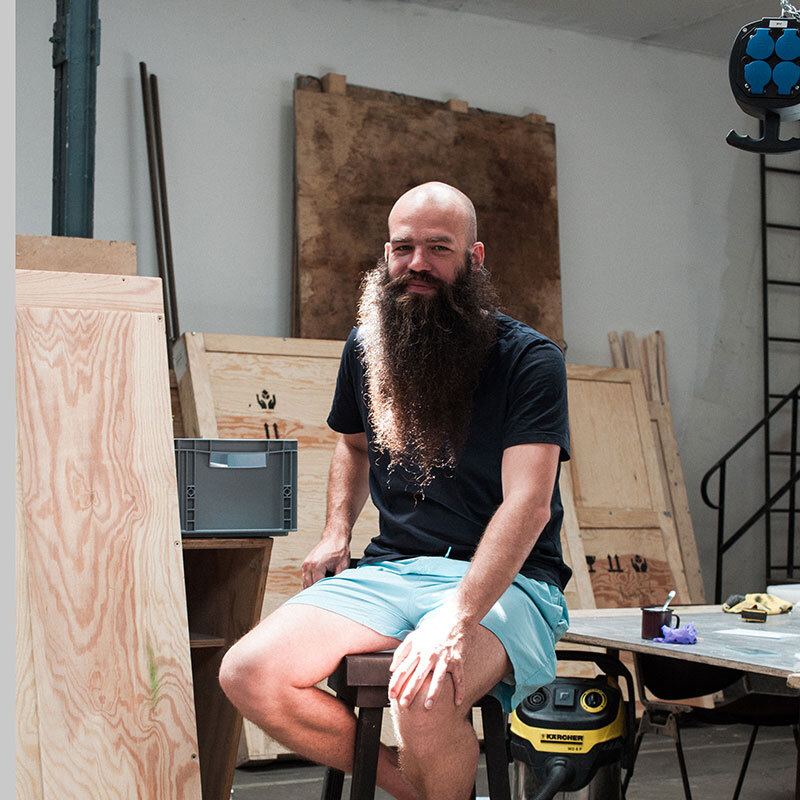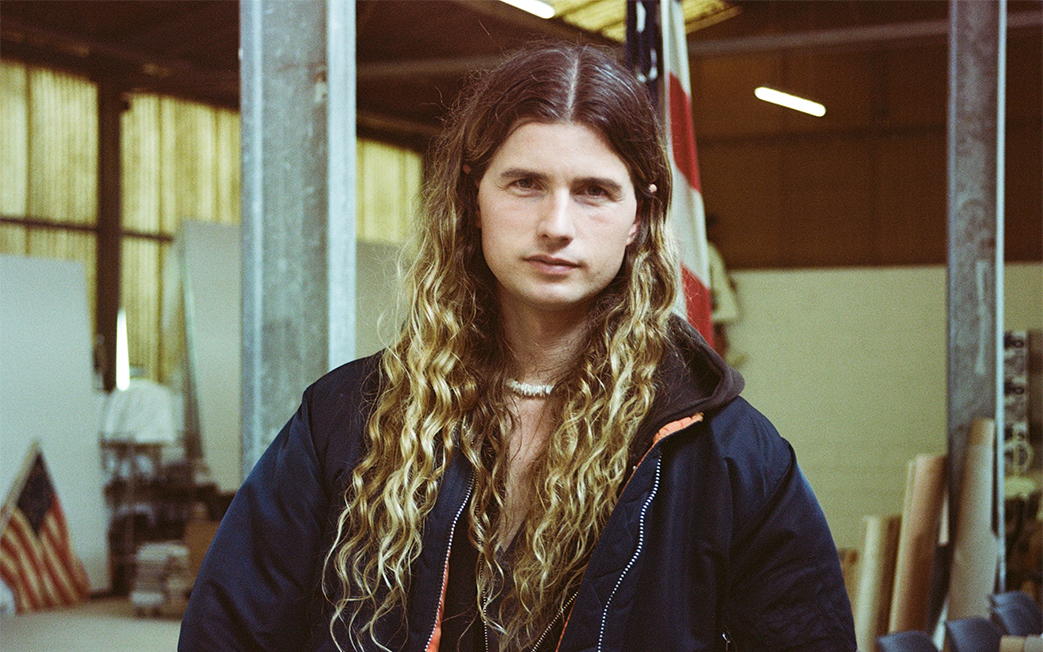
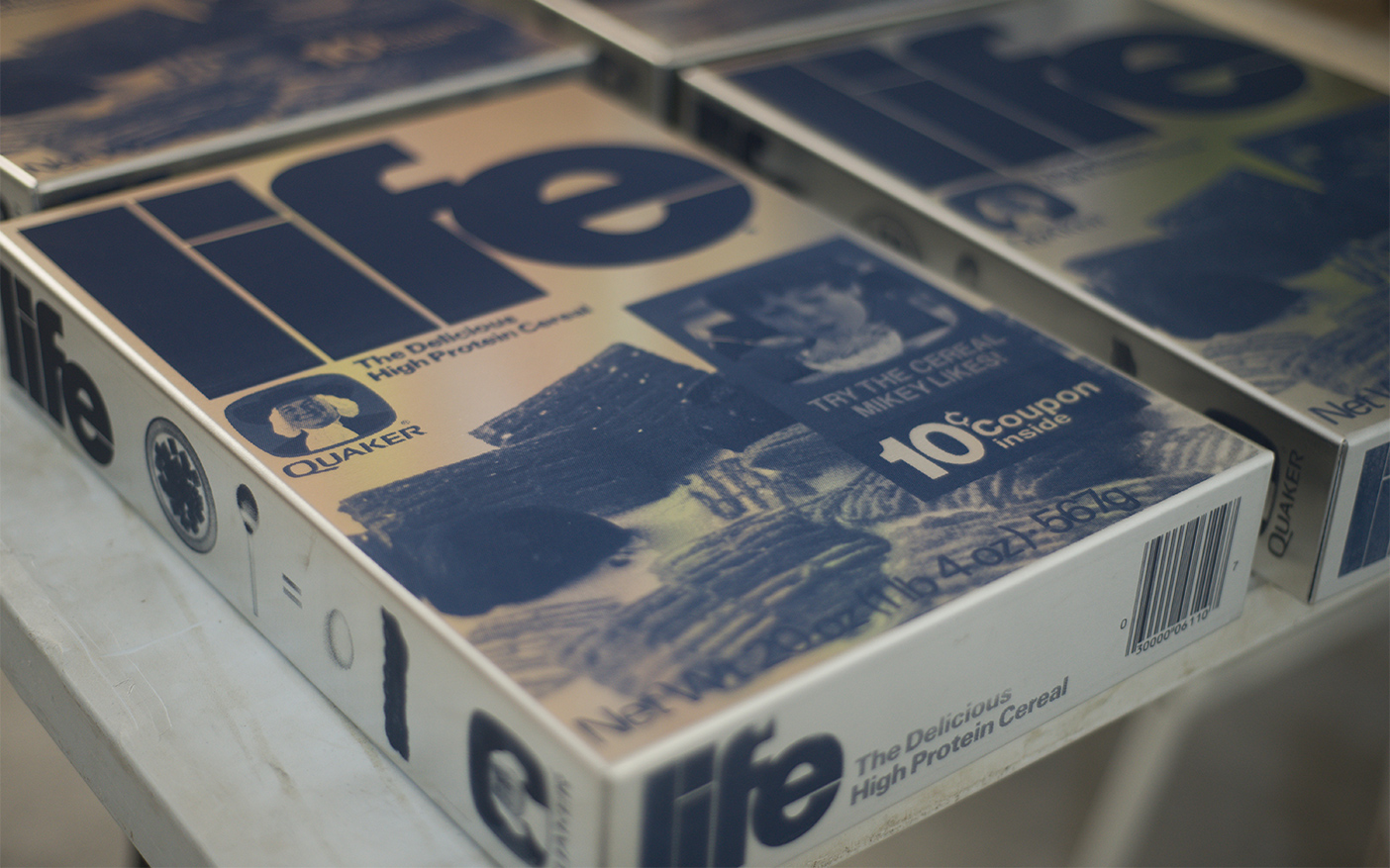
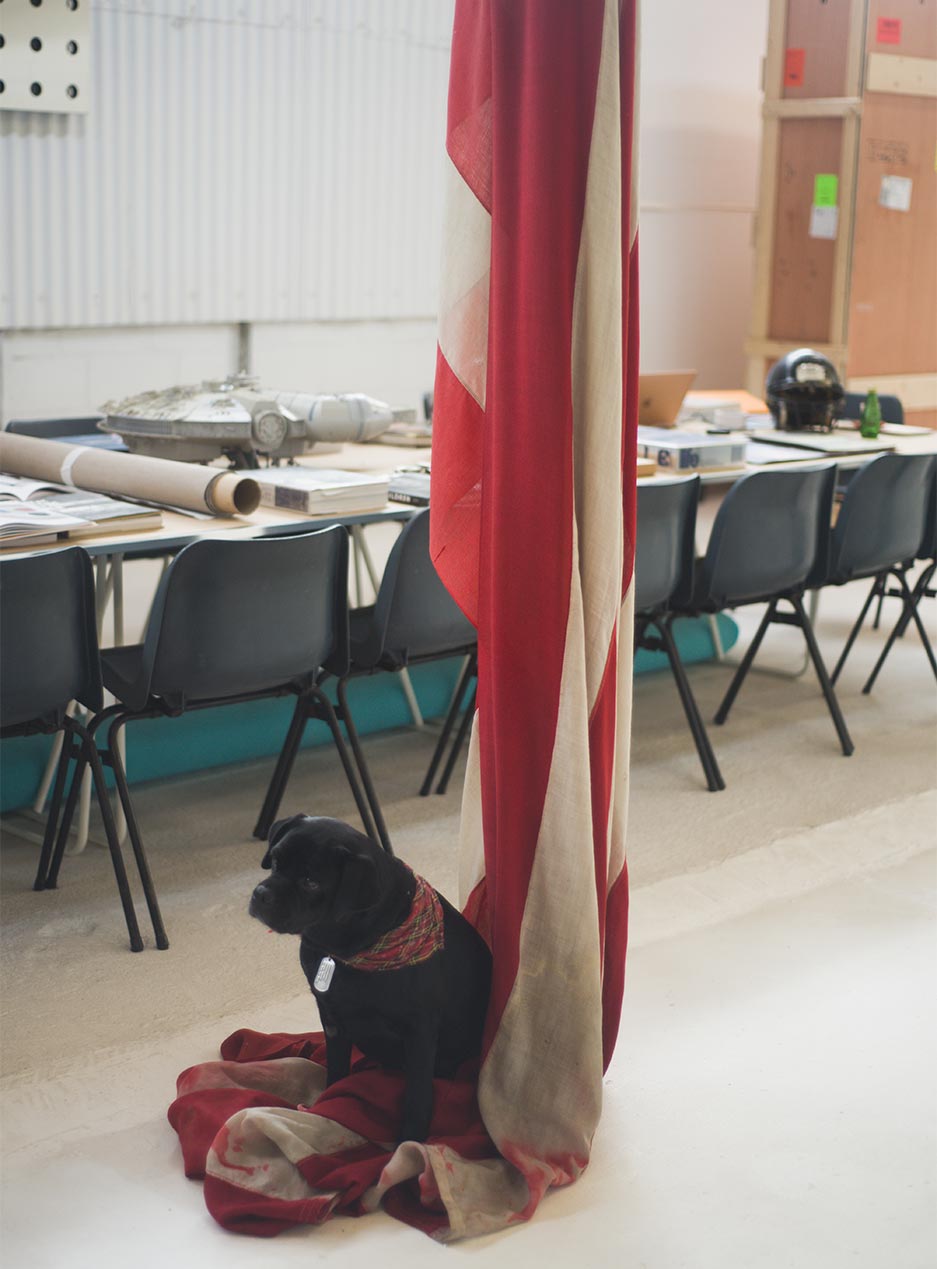
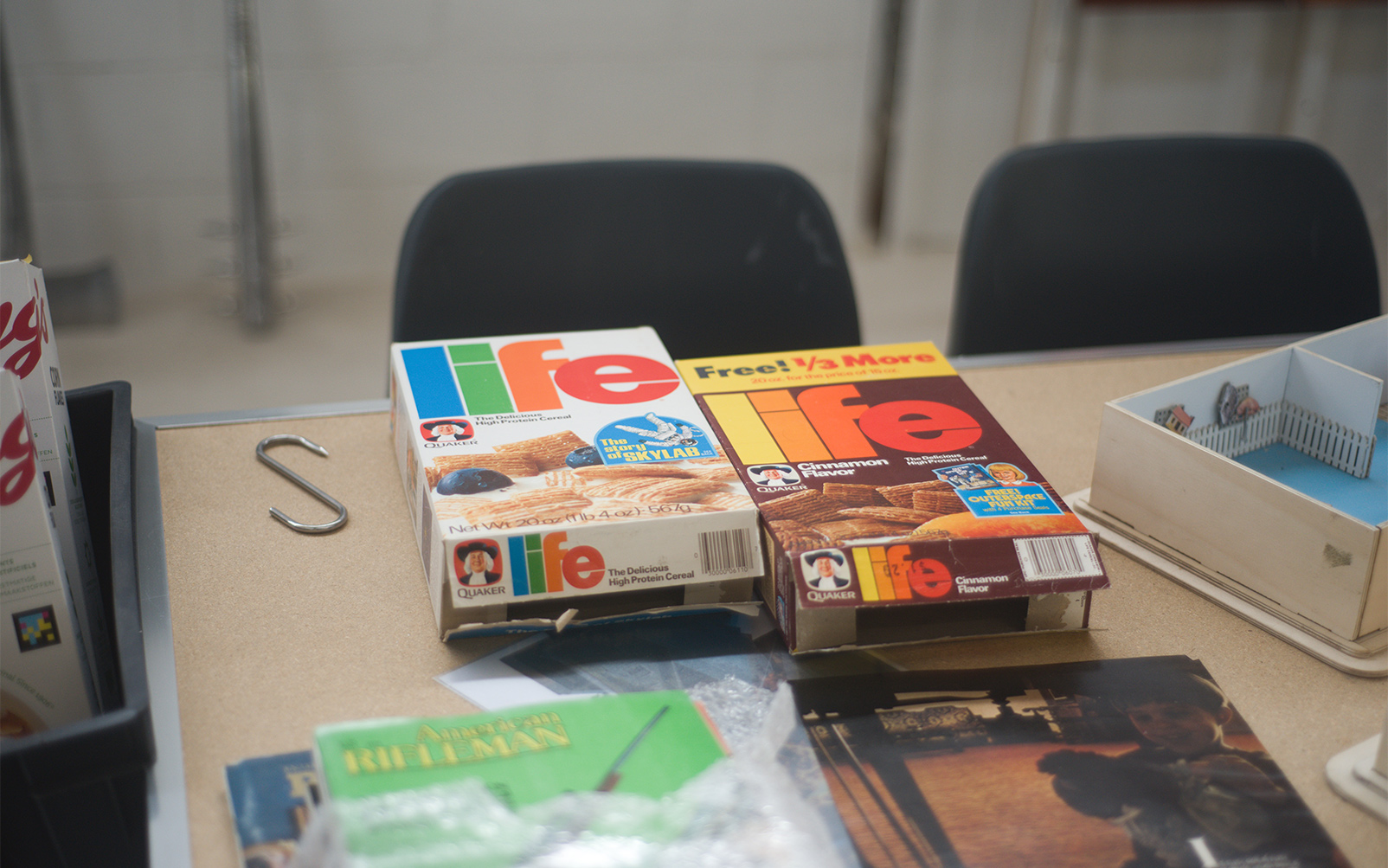
Robin Kid works with images that feel less made than encountered. Cowboys, cops, fragments of cartoon Americana: images that existed long before he picked them up, suspended somewhere between memory and mass culture. Raised in the south of the Netherlands by his grandparents, in a former mining neighbourhood bordering an American army base, he grew up with the idea of the U.S. glowing faintly from the other side of the fence. The United States was less a place than an image, absorbed through Disney films and televised narratives that blurred fantasy and reality. That distance, close enough to see, not close enough to enter, remains a driving force in his work. Robin’s process moves through accumulation: attics filled with his grandparents’ toys, screenshots stored in endless folders, scattered 1980s cereal boxes promising life itself. In his practice, he returns to familiar images to create what he describes as historical paintings, not to fix history so much as to expose its construction: layered, enlarged, sometimes eroded, hovering between recognition and collapse. What remains is the attention to how images function: how they persist, fade, and reassemble our sense of reality.
You grew up in the south of the Netherlands, raised by your grandparents. What kind of images or stories surrounded you?
I grew up in a working-class family; my grandfather was a miner, and my father a policeman. The street I grew up on looked like a scene straight from Billy Elliot. It was a mining neighbourhood of identical small brown brick houses with perfectly kept gardens; the only thing differentiating them was the name on the mailboxes. We lived just behind an American army base, so I grew up with the sense that the United States was literally a few meters away, just beyond our garden. That proximity created a fantasy about a world that felt close yet unreachable, existing just behind our fence.
Did that seep into your work as an artist?
Yes, completely. I never went to art school, so it entered my practice in a very unfiltered way. A lot of my work still returns to the imagery of that time. In my grandparents’ house, there was a trapdoor in the ceiling leading to the attic. You would pull it down, and a ladder would unfold. Upstairs felt like Ali Baba’s cave, with three generations of objects and toys from my great-grandparents, grandparents, and parents. That layering of time was very formative. Television was another influence. Most of what you learn as a child about morality, what is right and wrong, comes from Disney films and TV. Even though I grew up in a small European town, my imagination was Americanised through television.
Was there anything particular you were watching?
In the Netherlands, we only had three public channels, and they often broadcast old documentaries, many of them European films about America. There was one I became obsessed with as a child: America as Seen by a Frenchman by François Reichenbach, narrated by Jean Cocteau. The idea of America filtered through a European Nouvelle Vague lens stayed with me. My grandparents also belonged to that post-war generation shaped by the Nouvelle Vague, even though they came from a working-class background. Being surrounded mostly by them, I absorbed that period almost as if I had lived it myself. Everything carried that imprint: objects, toys, books, music, the house itself.
And how did you step into art?
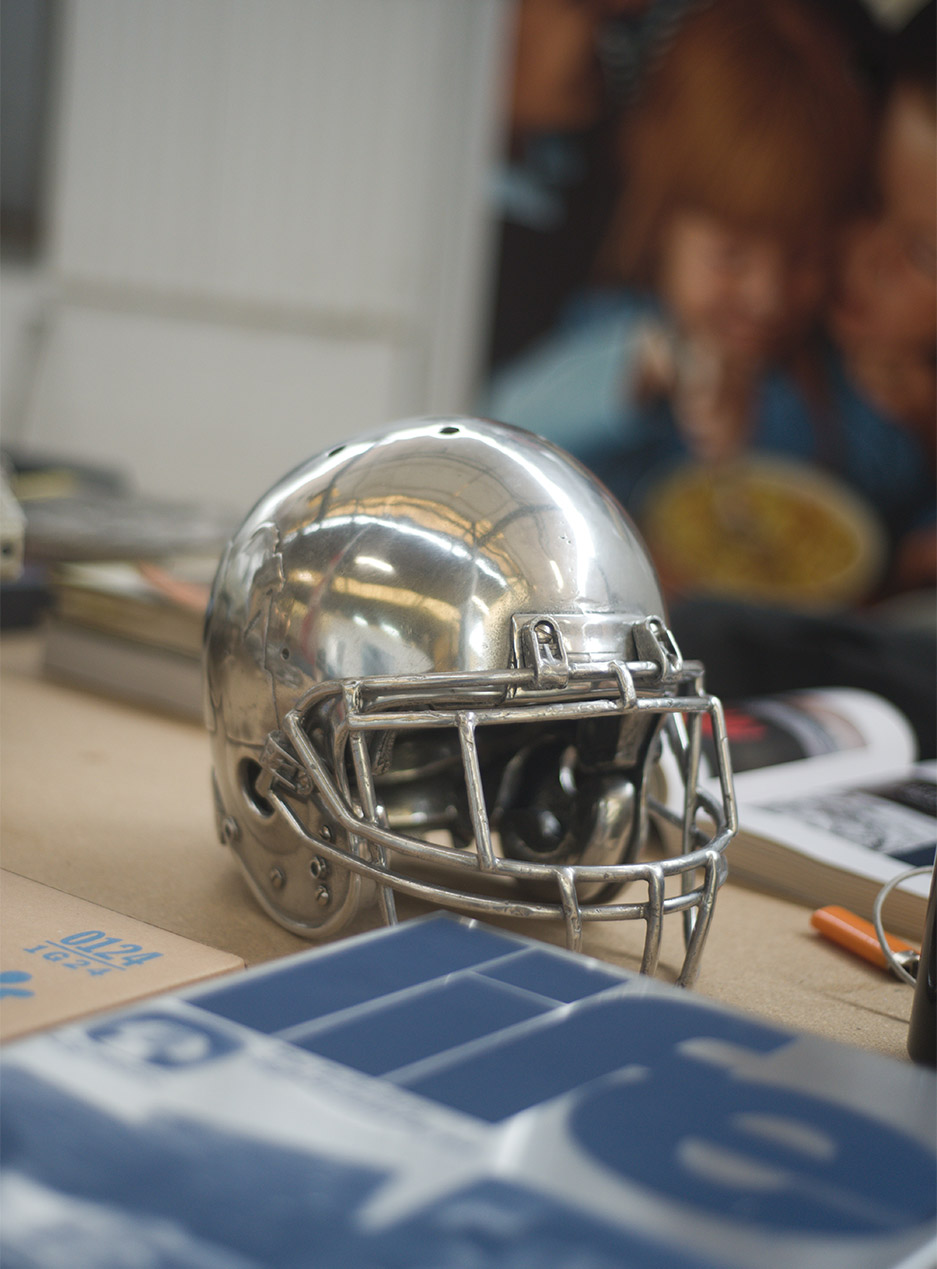
As a child, I had a constant need to create worlds to escape into. After school, my grandfather and I would go into the garage and build things together. At Christmas, we would take over the house and reconstruct the city of Jerusalem across the windowsills. He is extremely skilled with his hands. I would come up with the ideas, and we would spend the entire year building them. With my grandmother, I played board games that required assembling entire cardboard environments before you could even begin. The act of building the world was already part of the game. Later, I went through a difficult time at school and left at fourteen to start travelling. I worked in fashion and theatre. In both, I had to follow someone else’s instructions. Eventually, it became clear that art was the only place where I could build the entire system myself.
You just spoke about how you've always had a relationship with the image of North America. What do you think the U.S represented to you growing up, before it became material for your work?
When I was a child, America was the hero, the good guy, the saviour. That perception is tied to the Second World War. My grandparents lived through it, and it was constantly present in their stories. Through films, that history became an authority figure that represented justice in a clear moral sense, something that feels almost inverted today. What interests me is how influential and shared these images actually are. In a way, they are fake memories, constructed through media, magazines, television, and film. We internalise them until they feel personal, as if they belong to our own childhood, even though they were commercials designed to sell an idea of the world.
Today, that same imagery feels inseparable from political division and a broader sense of instability. Has your way of working shifted as these tensions have intensified?
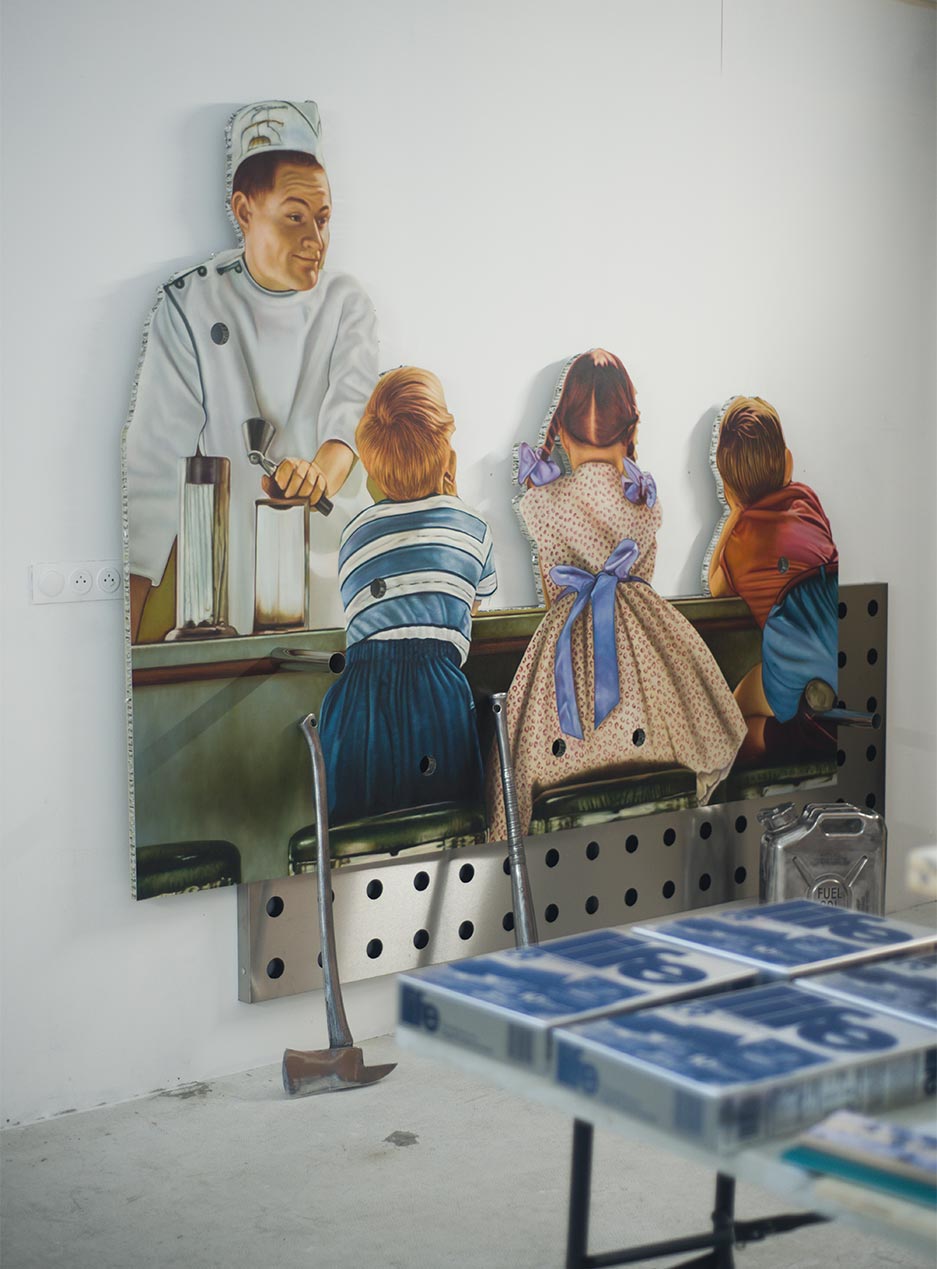
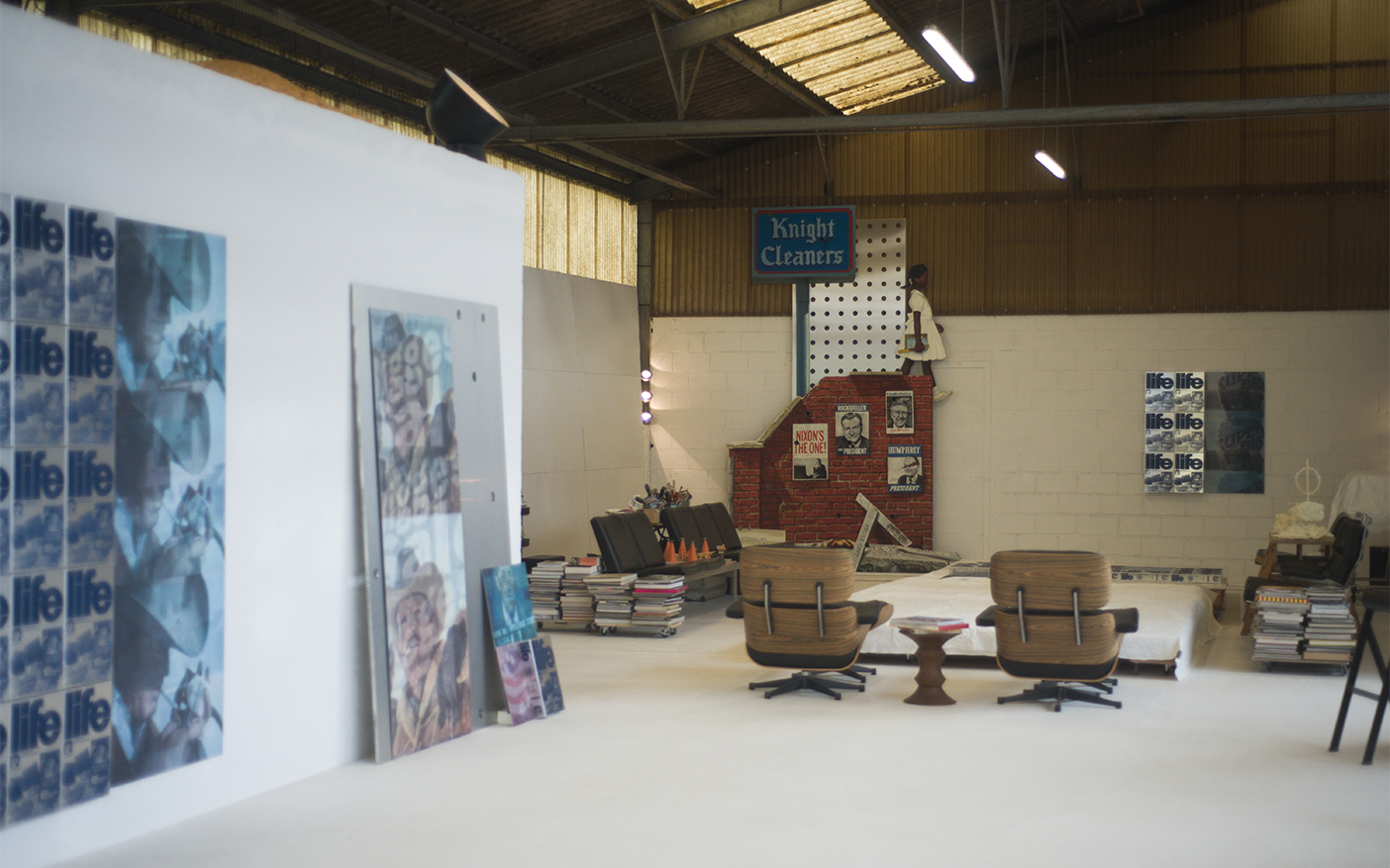
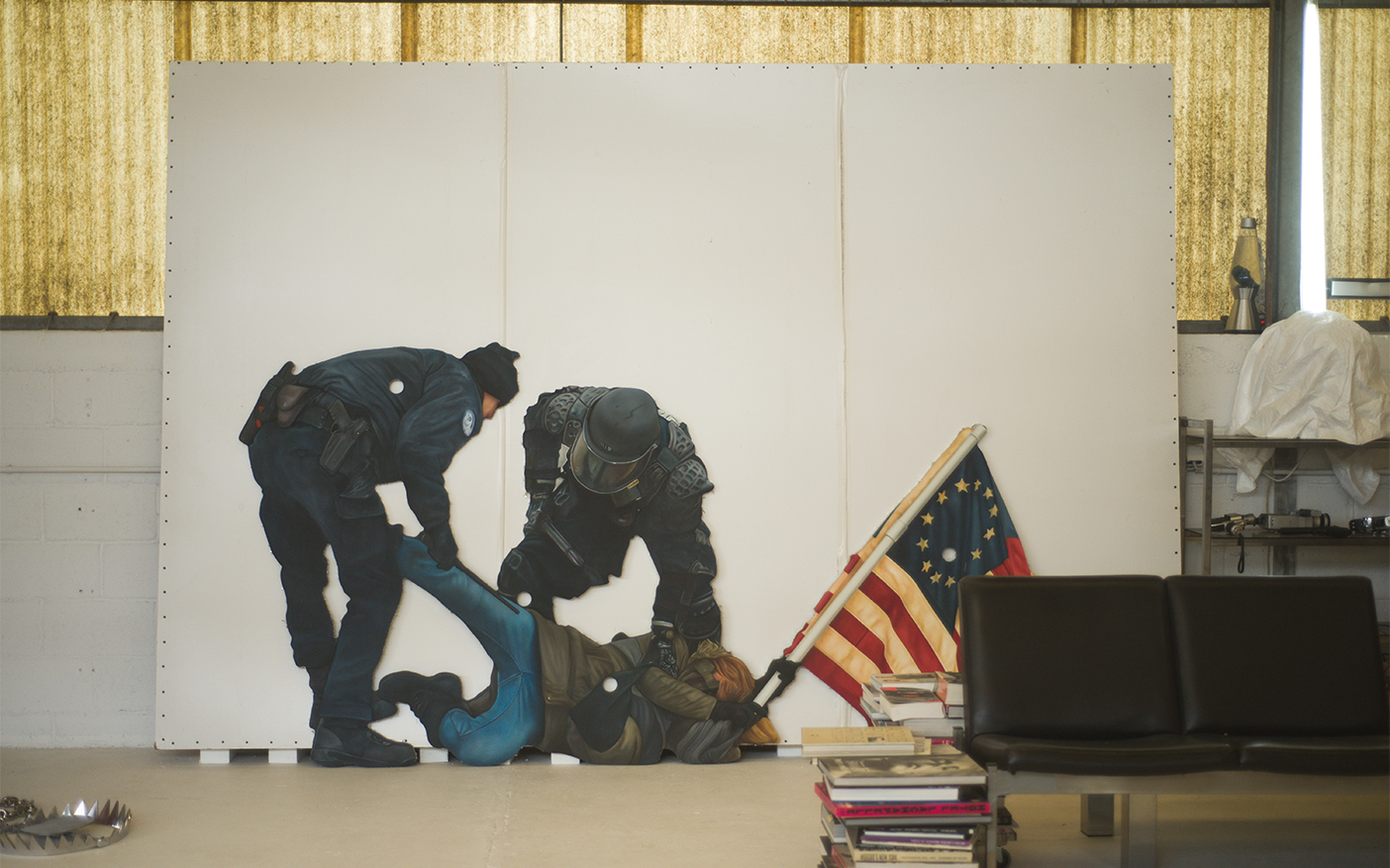
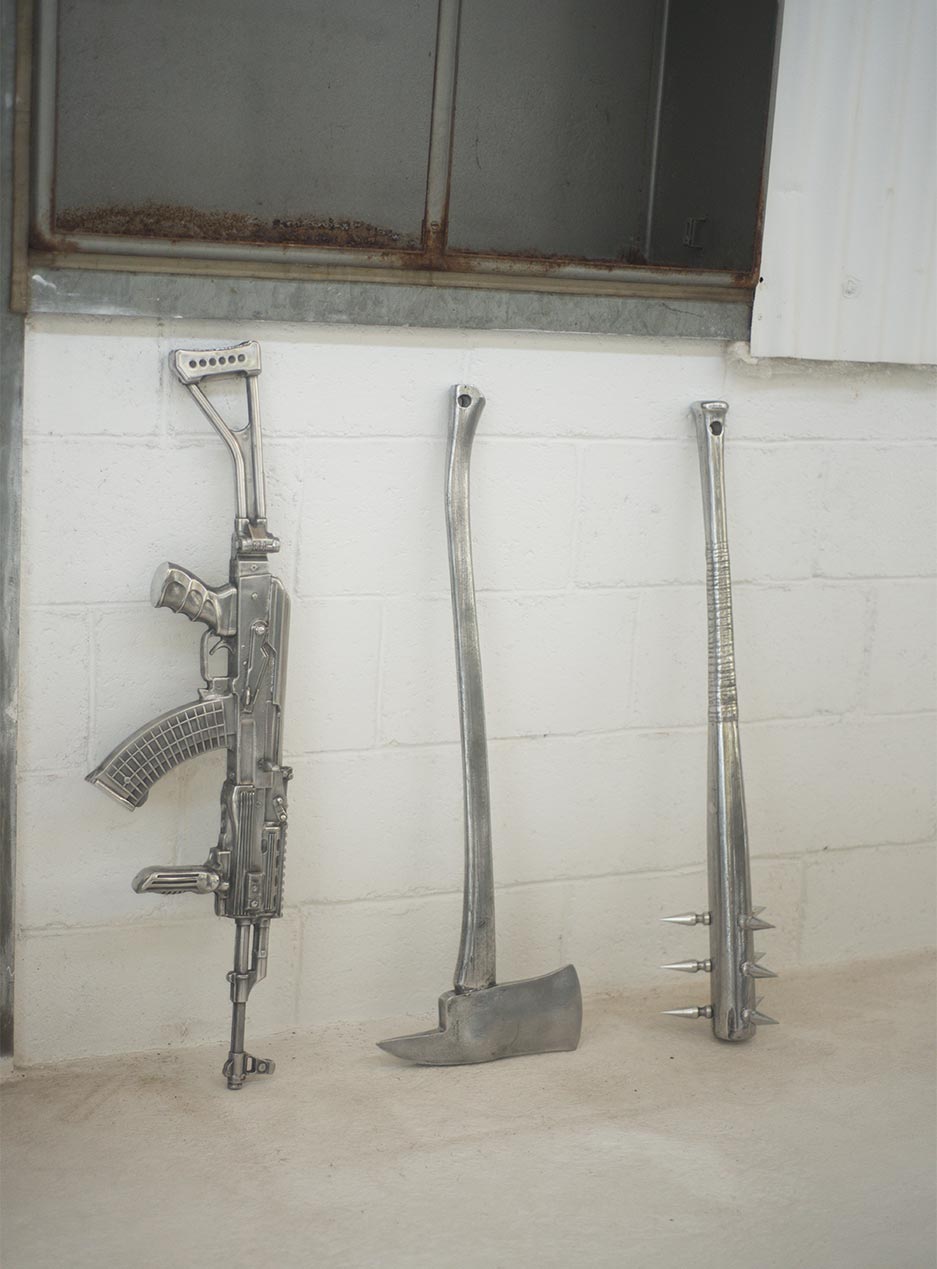
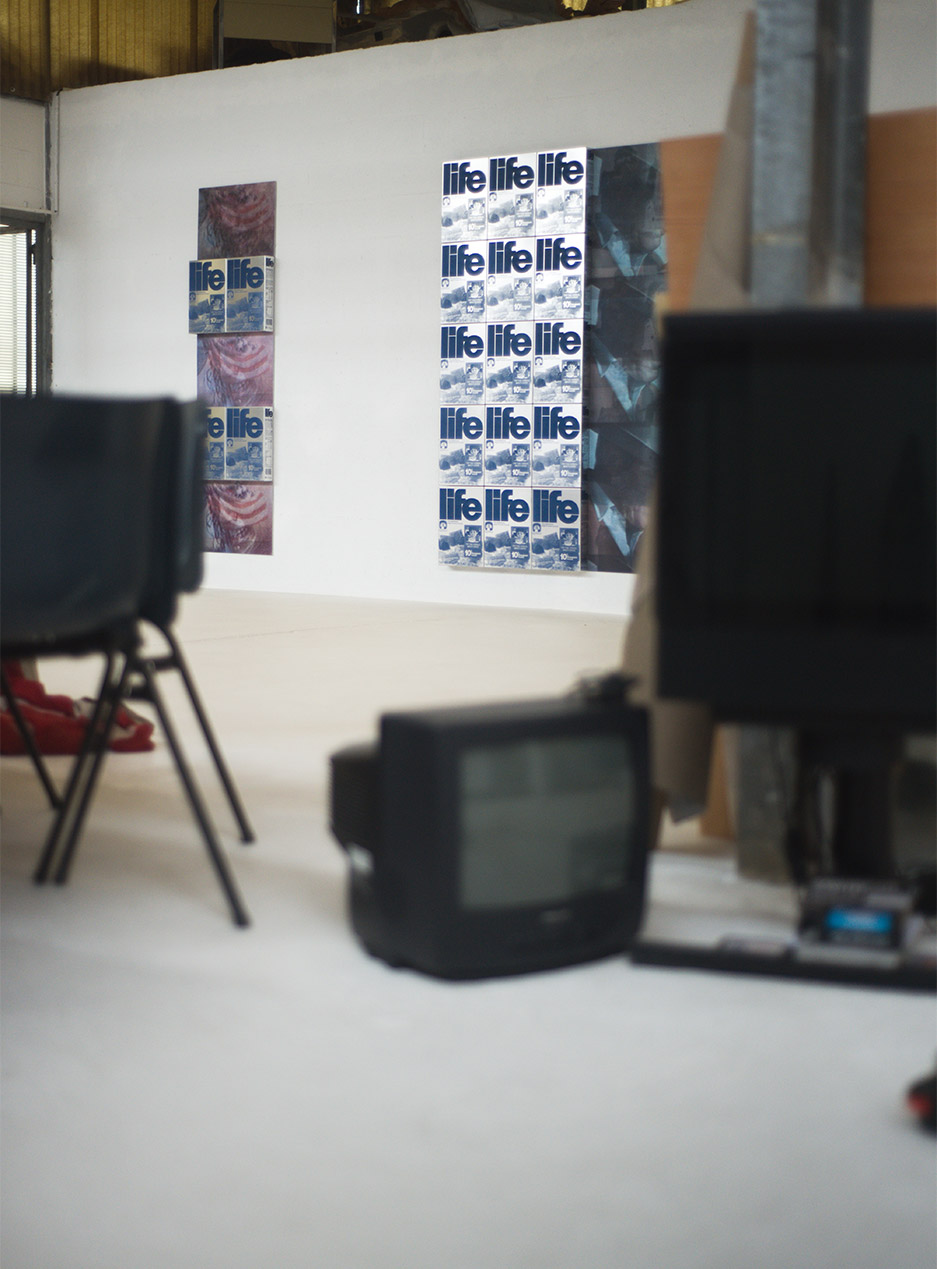
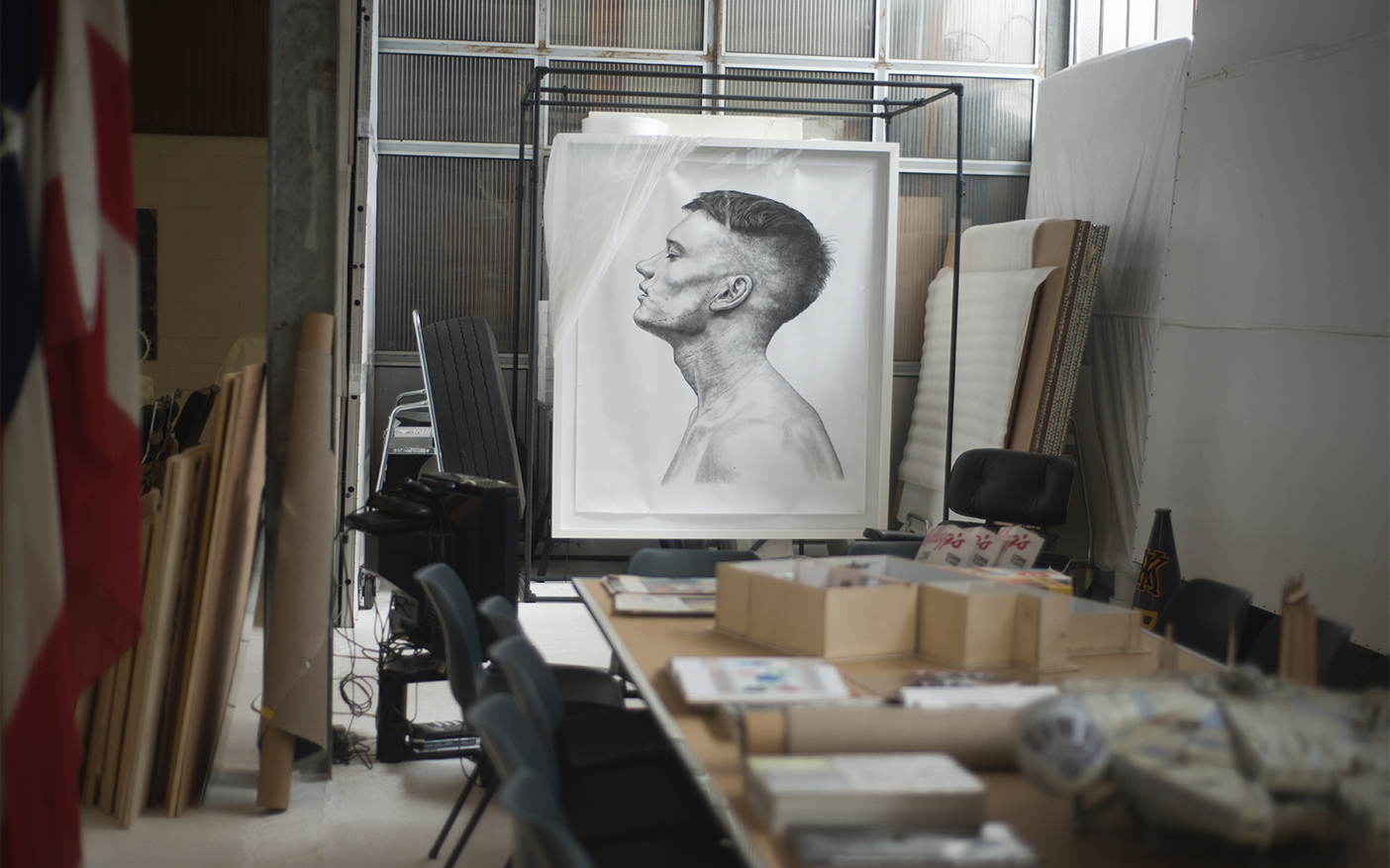
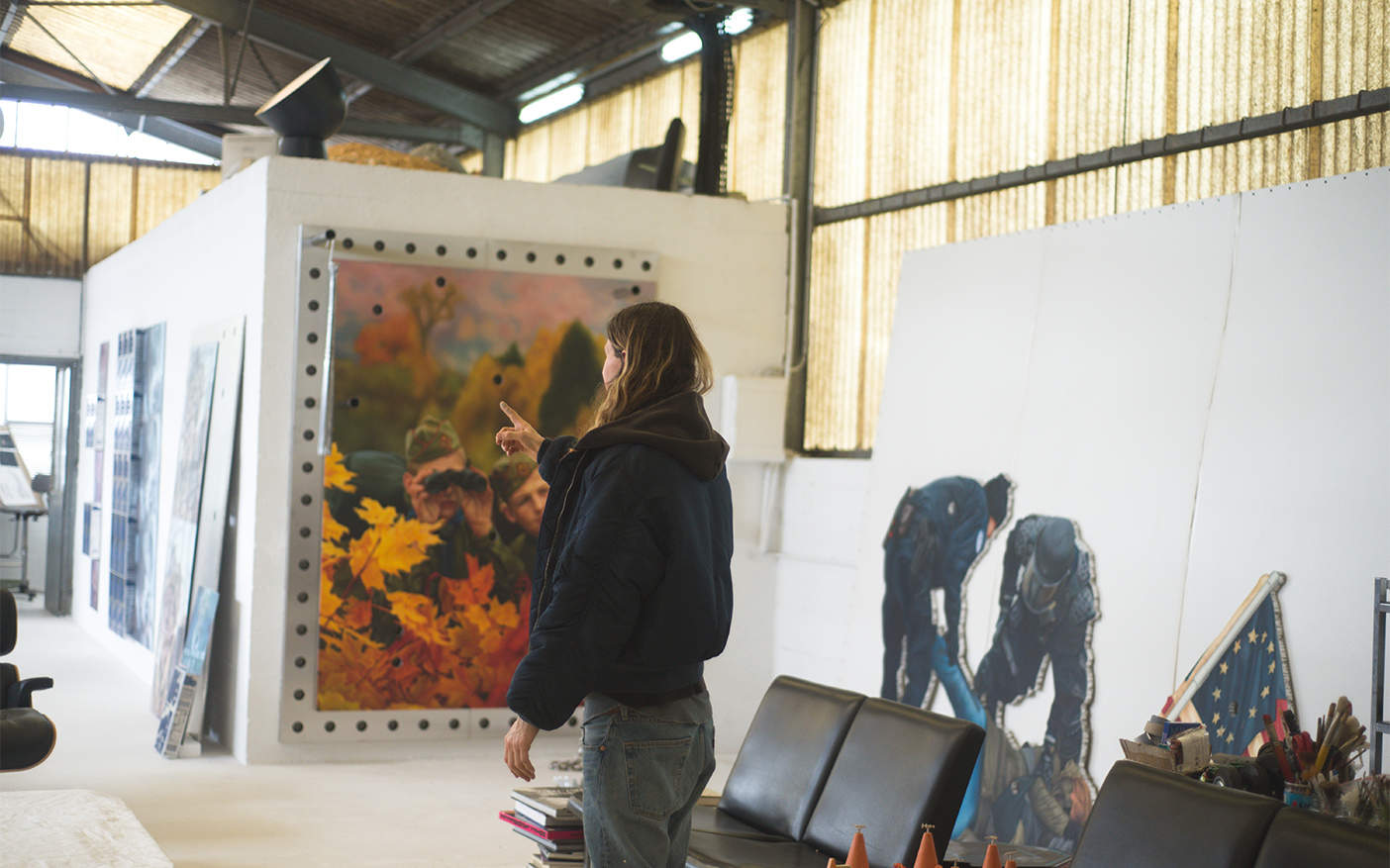
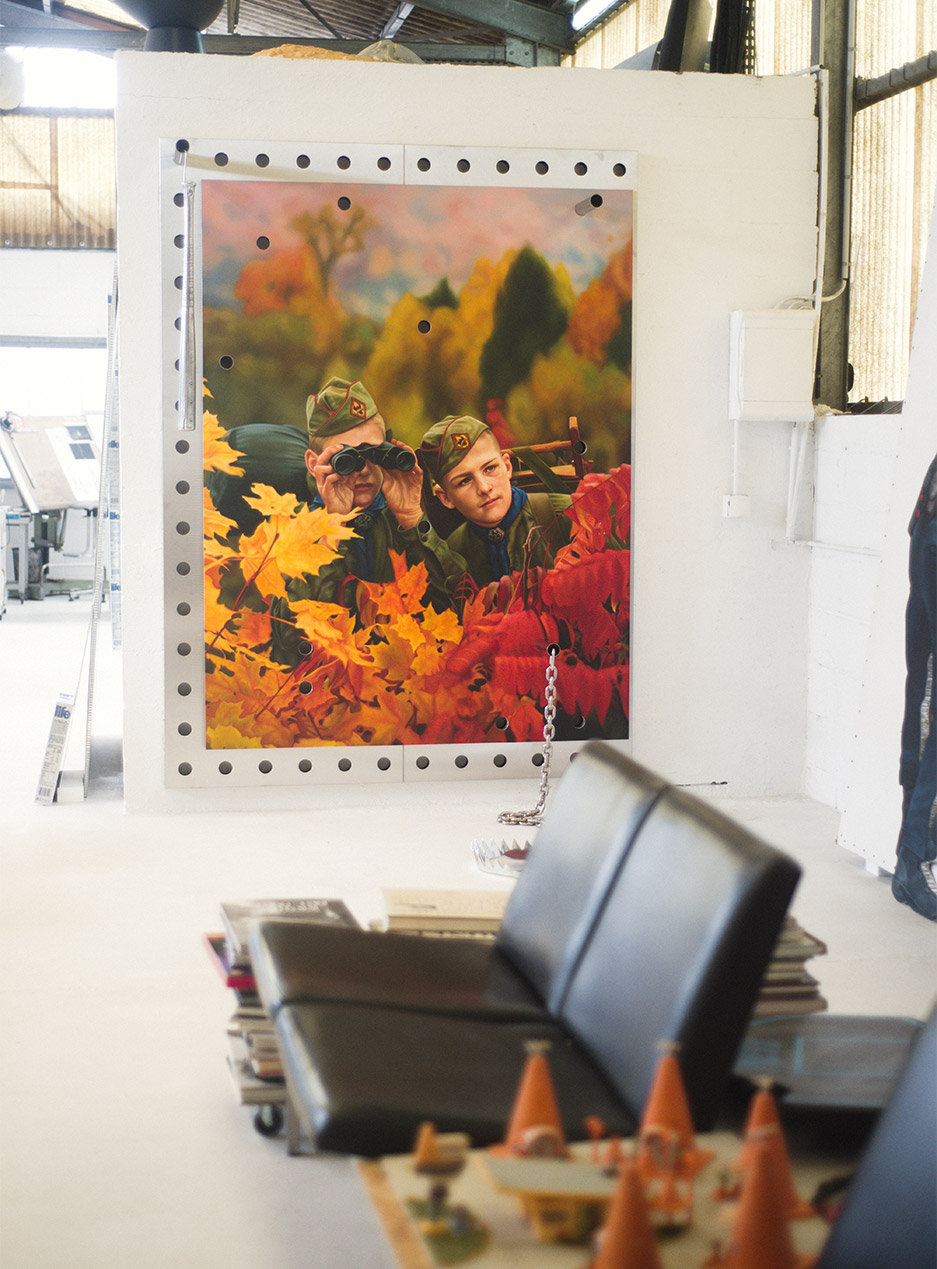
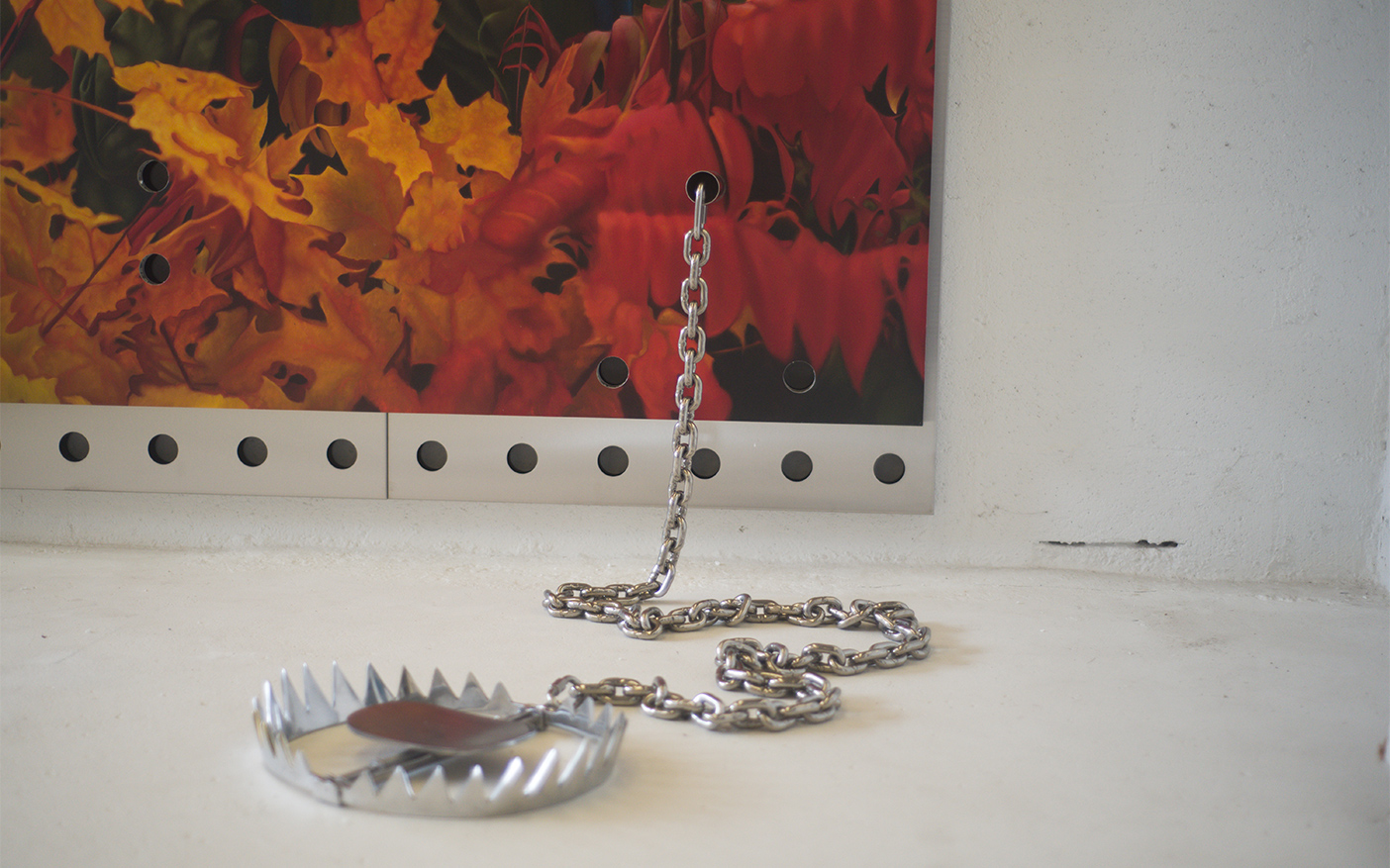
Yes, definitely. In my recent work, the shift becomes more explicit. It’s increasingly about pain as spectacle, and about questioning what the American hero has become, or whether it ever was what it appeared to be. Figures like the cowboy or the policeman are central to that. They are rooted in violence, yet historically they were sold as symbols of order and protection. In the new work, I try to expose that contradiction. For example, in my new series, LIFE, I layer the cowboy with references to events like the Waco siege. There is a visual collision where the surface narrative begins to dissolve.
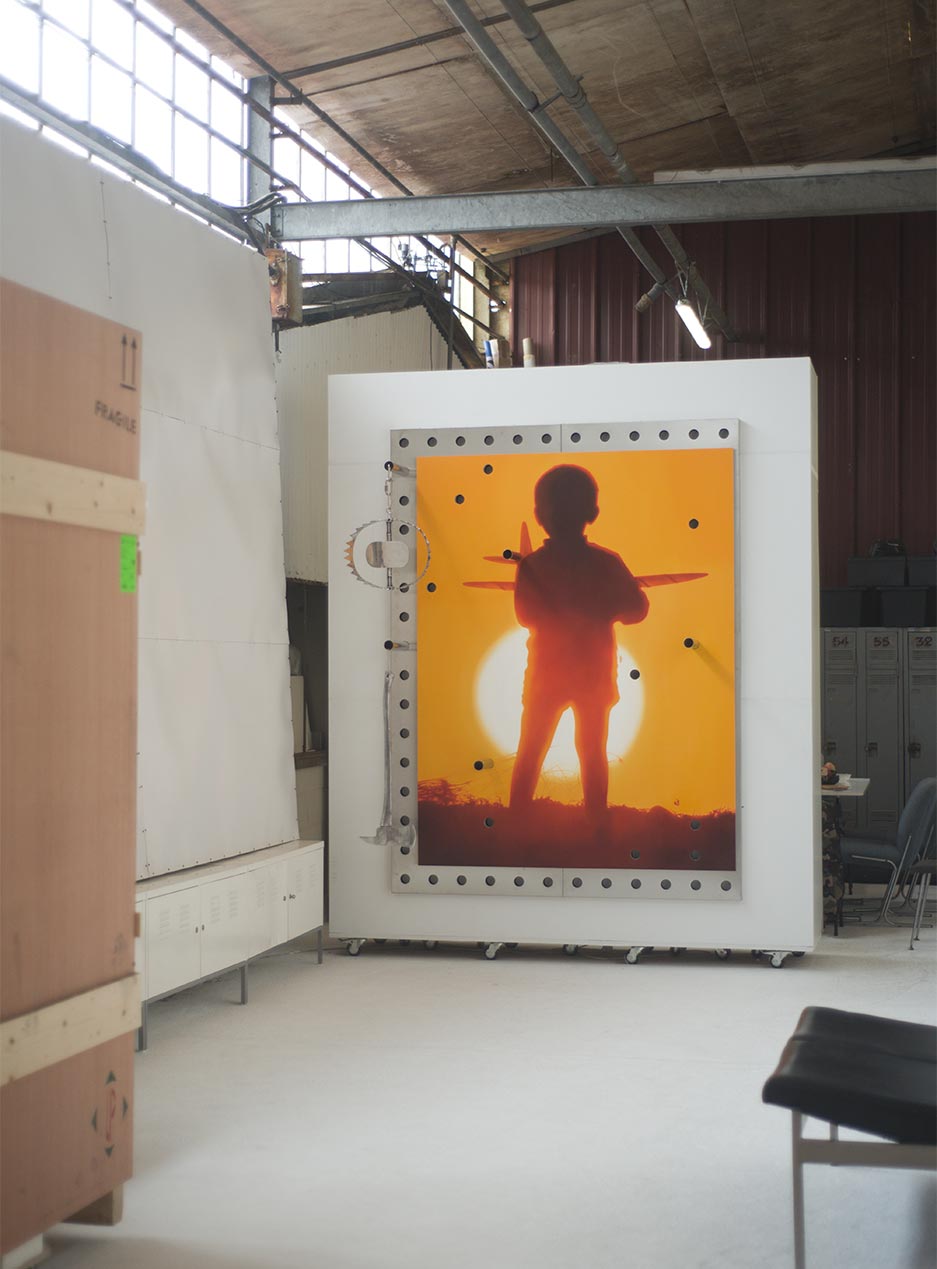
Is this why you have decided to work with silkscreen and more translucent images than in your previous works?
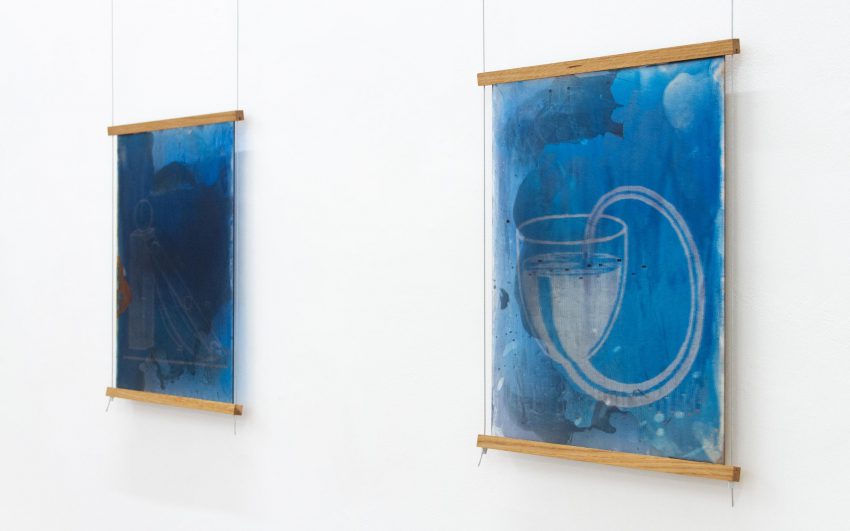
Yes. It relates to how images circulate today. In the past, especially in the 1960s, images had a sense of singularity. Now we live in constant recycling. Images are repeated endlessly through YouTube, Instagram, and TikTok, and their meaning gradually erodes. Even events like 9/11 no longer carry the same immediate visual impact. Images become progressively flatter over time. That flattening reflects the broader shift in transmission, from television to VHS to digital platforms to algorithmic feeds. With each layer of reproduction, something is lost. Silkscreen and translucency make that loss visible.
You have spoken about the importance of nostalgia, especially in more tense or uncertain times. What do you think nostalgia can offer today?
Nostalgia is double-edged. On one hand, it’s an idealised version of the past, that can feel hopeful even when history contradicts it. On the other hand, it has become weaponised. “Make America Great Again” is built entirely on constructed nostalgia. It depends on who is using it and how, and that ambiguity is why I am interested in it. Nostalgic imagery speaks differently to everyone. It shifts depending on memory, ideology, and projection.
You work a lot with images that already exist. How is the process of sourcing them?
It is completely organic. My phone holds thousands of images, and if I am not on Instagram, I am on eBay buying old magazines or screenshotting commercials. It is just my life. In a way, Warhol feels like the primitive of the art I am making today. My generation is less literate through books and more literate through television and the internet. We carry millions of images in our heads. The challenge is how to assemble them without creating overload. Earlier series were dense and intuitive. Now I am challenging myself to strip things back. I had to go through that accumulation to arrive at something more specific.
Your work is so monumental in scale. Where does that come from?
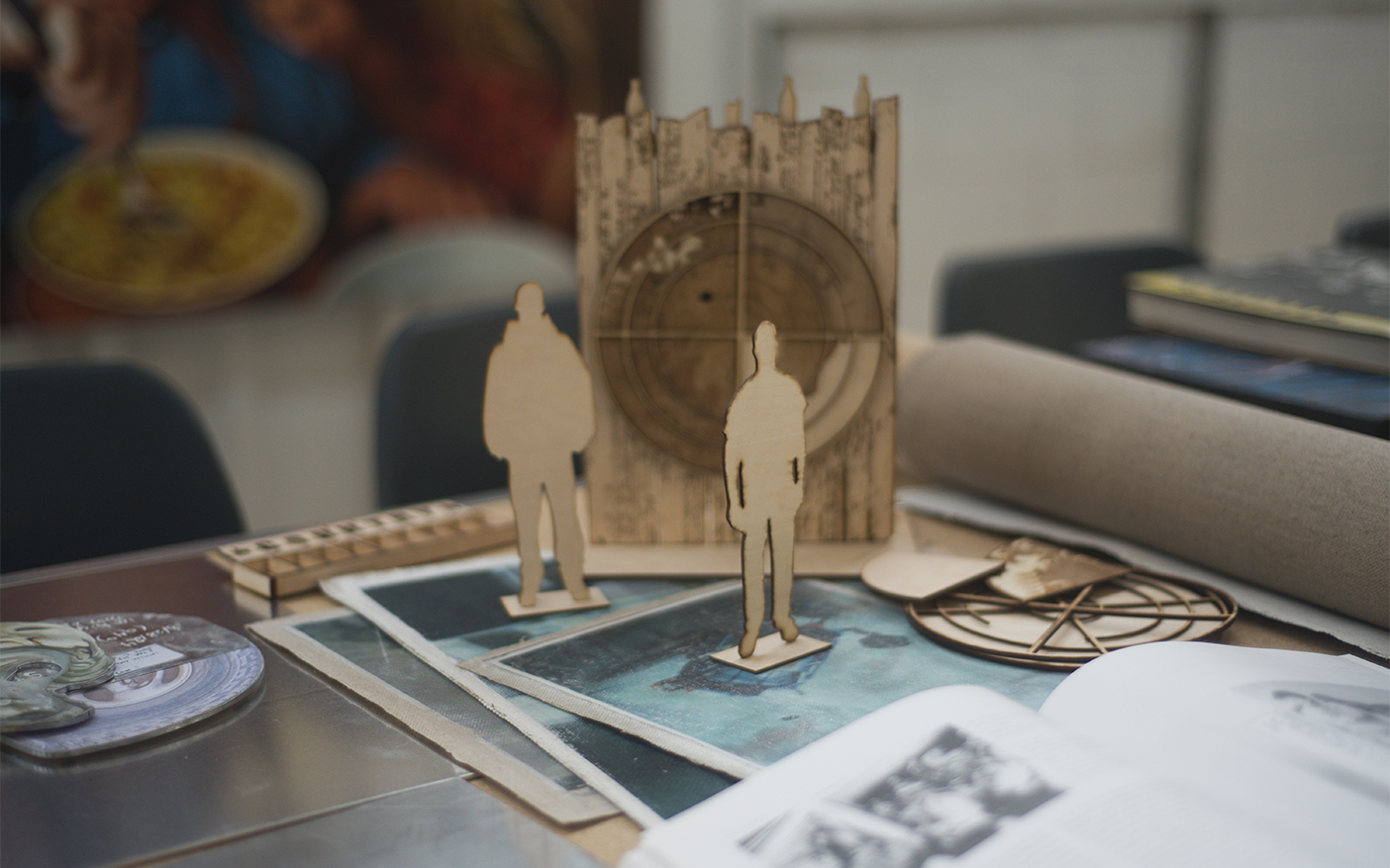
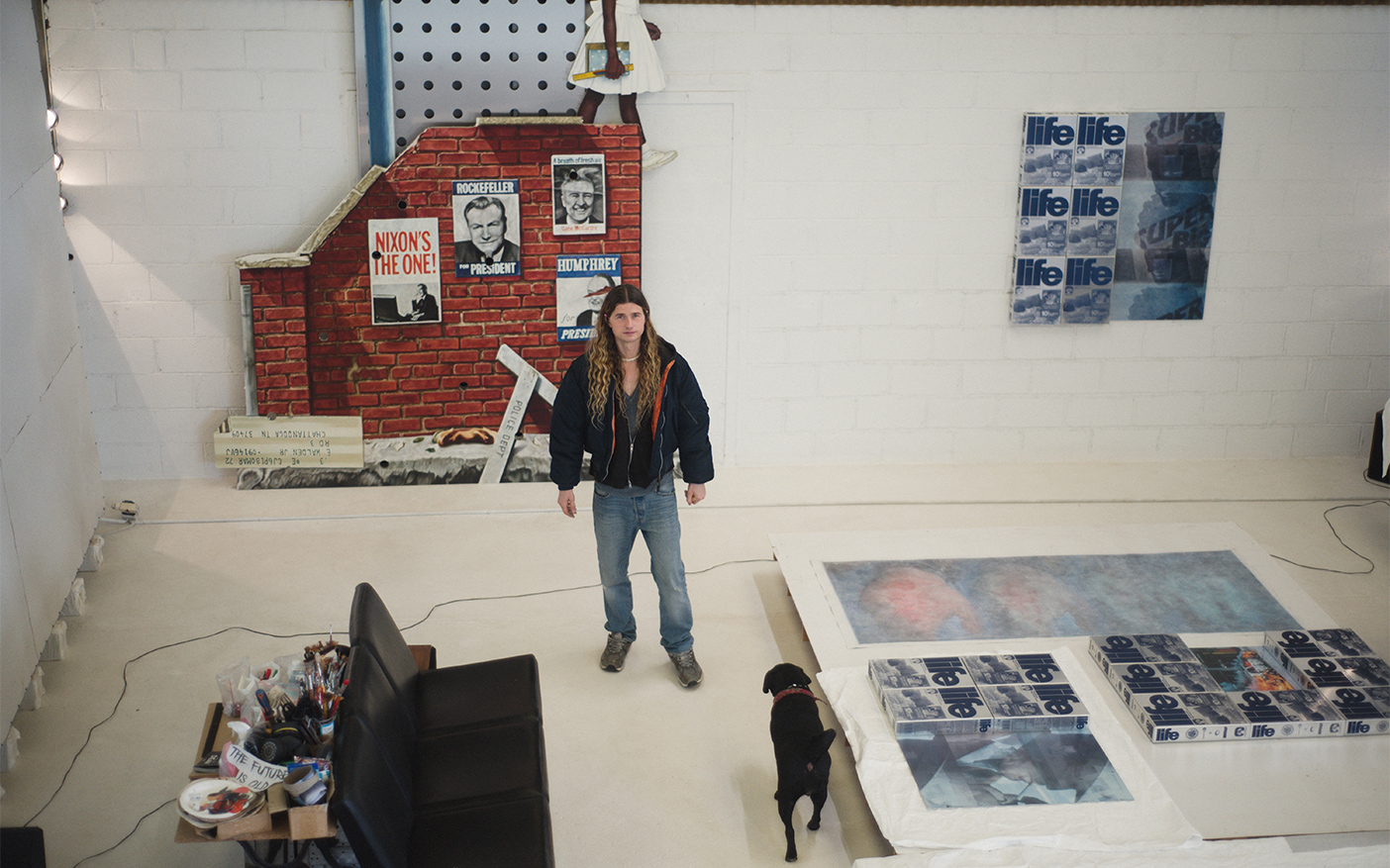
It probably started with The Muppet Movie. I watched the VHS tape obsessively as a child. At the end, the sets collapse, and they sing: “Life’s a movie, make your own ending, keep believing, keep pretending.” That moment stayed with me, the idea that a constructed world could fall apart and still feel real. The film is also full of roadside billboards, huge studio sets, and oversized cut-outs. As a child, I would try to rebuild those sets and billboards myself at home. Later, when I started travelling in the U.S., I recognised them from the Sunset Strip, in cinema lobbies, in the scale of American advertising. At the same time, I became interested in how that language has European roots. Early billboard culture in France, like the Cadum Baby campaigns, already used monumental advertising in public space. America took that language, made it bigger, and turned it into a spectacle. Working on a large scale comes from wanting to recreate that feeling of a world you do not just look at but physically step into. Almost like a theme park.
Were you drawn to the idea of entertainment?
As a child, I was obsessed with the idea of creating a ride people could move through, something overwhelming and immersive. That feeling intensified when I attended early Alexander McQueen shows, where he manipulated the audience through sound, music, and even smell. Controlling the room like that was mind-blowing. Entertainment was sometimes a bad word in the art world when I started. It’s something I still play with today, though my newer work is becoming less entertaining in that way.
Your work draws so much from the past, but it doesn’t feel nostalgic in a straightforward way. What time does it belong to?
The work is about today. The present is complex, and the work is layered to reflect that. I try to resist didactic morality. My work is grounded in strong convictions, but it shouldn’t provide simple moral conclusions to a complex reality, especially in a society that no longer operates through clear-cut right and wrong. And anyway, in the end, it’s up to the audience to complete the work through their interpretation.
Where do you stand in relation to the future?
I am less optimistic than I used to be. I feel more overwhelmed, and perhaps that is why I am narrowing things down. I think much of what we do is an attempt to recapture childhood - not as it actually was, but as a version shaped through television and advertising. In that sense, these are fabricated memories, shared cultural images that we all carry and mistake for personal experience. I believe those images will hold power over us for the rest of our lives, shaping how we see the present and making us long for an idealised yesterday. When days felt endless, summers never seemed to end, and waiting for Christmas felt like an eternity.
Text: Maria Paris
Photo: Elise Toïdé