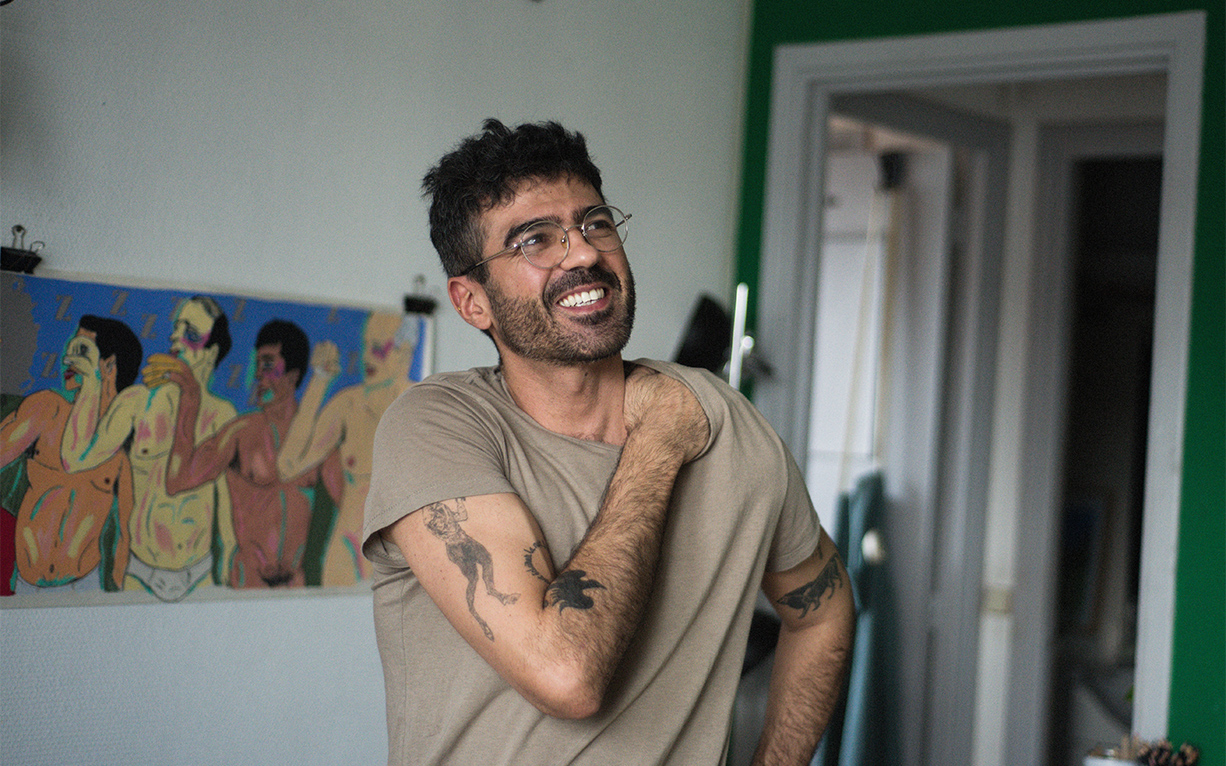
Leaving the past behind is not a choice for the artist Soufiane Ababri. After moving from Morocco to France at 18, he began creating a personal visual archive of queer life in the Arab world and of gay immigrants in the West — one that weaves together autobiography, political awareness, and homoeroticism. While some might see his work as frivolous, his crayon- and pastel-drawn figures reclaim tenderness, desire, and defiance. Rejecting the traditional artist’s studio, Ababri works in his room — most often in bed — turning intimacy into both method and manifesto.
Hi, Soufiane. If you had to introduce yourself to a stranger, what would you say?
I am a visual artist, gay, an immigrant, and part of a post-colonial generation. I was born in North Africa in 1985, during the peak of the AIDS epidemic, into a family of Arab-Muslim culture deeply rooted in their faith. This is my situated biography.
Could you tell us how your morning begins?
I usually wake up quite early, and in January in Paris, it’s still dark outside. I live near a ring road that I can see from my window, so from my bed I watch cars passing by — people heading to work or coming back home. Then I go straight to the kitchen to make coffee, though sometimes, if I have a drawing in progress, I’ll first look at what I did the day before. After that, a long, quiet moment of coffee and reading before I start drawing or diving into research.
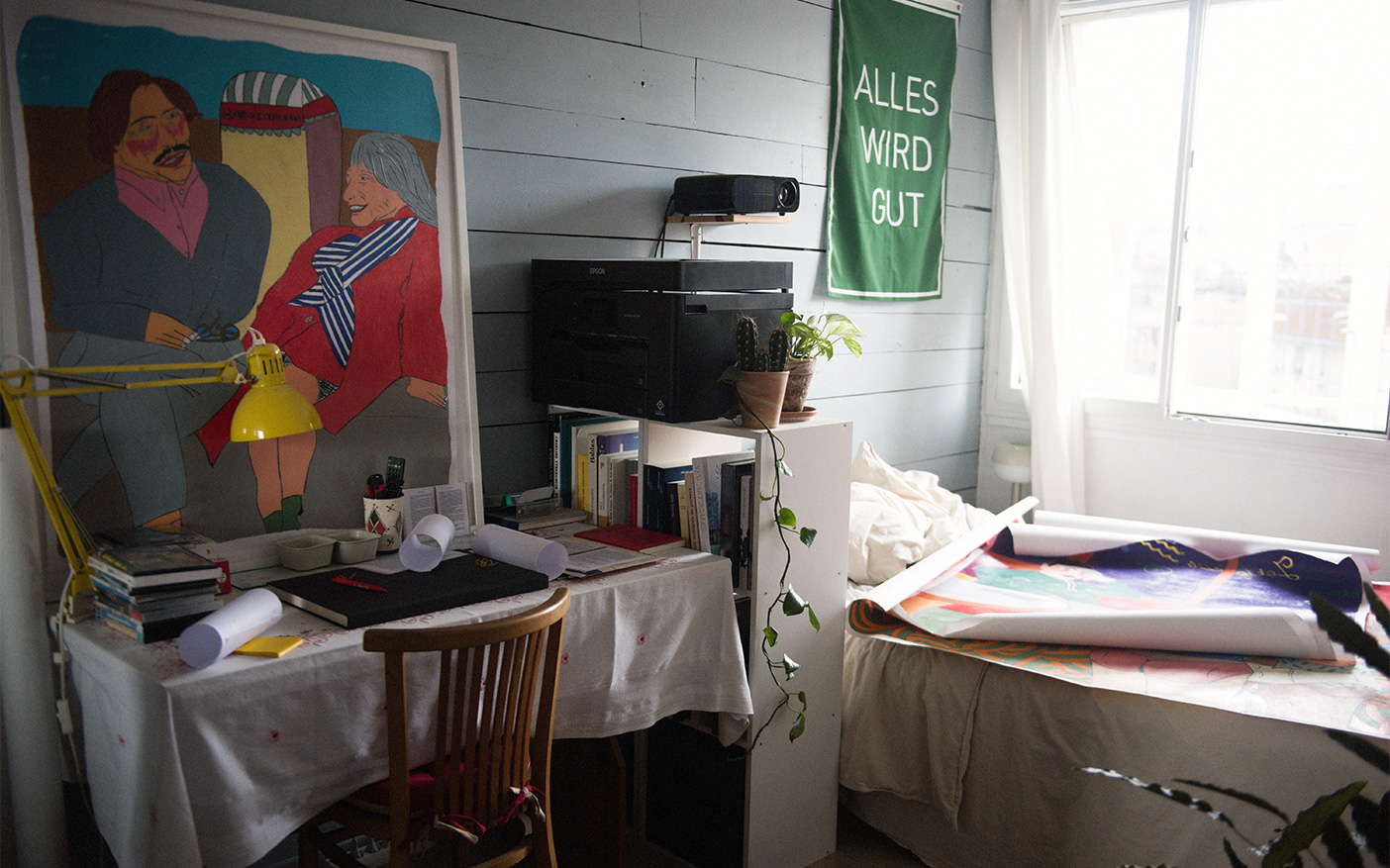
You work in the bed. Was this choice driven by practical factors, or was it from the start a conscious rejection of the traditional studio?
For me, all reflections in my artistic practice are primarily generated by lived experience. I never make decisions based purely on “art for art’s sake” or theoretical positions. To tell it as a story: after my studies at the National School of Decorative Arts in Paris, I had to leave the country quite abruptly, as France had at that time refused to renew my residence permit. I settled in Tangier for that year — a year that proved decisive for me.
How come?
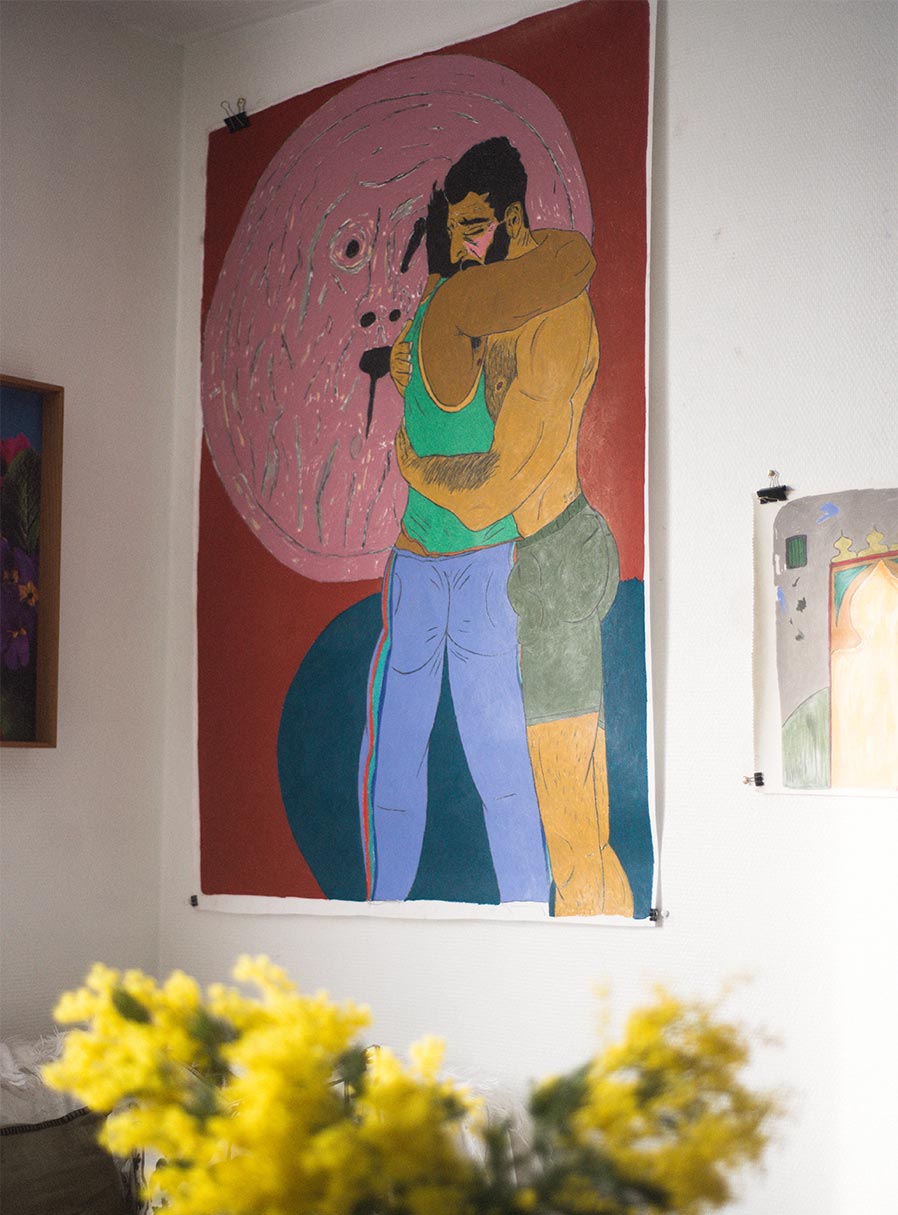
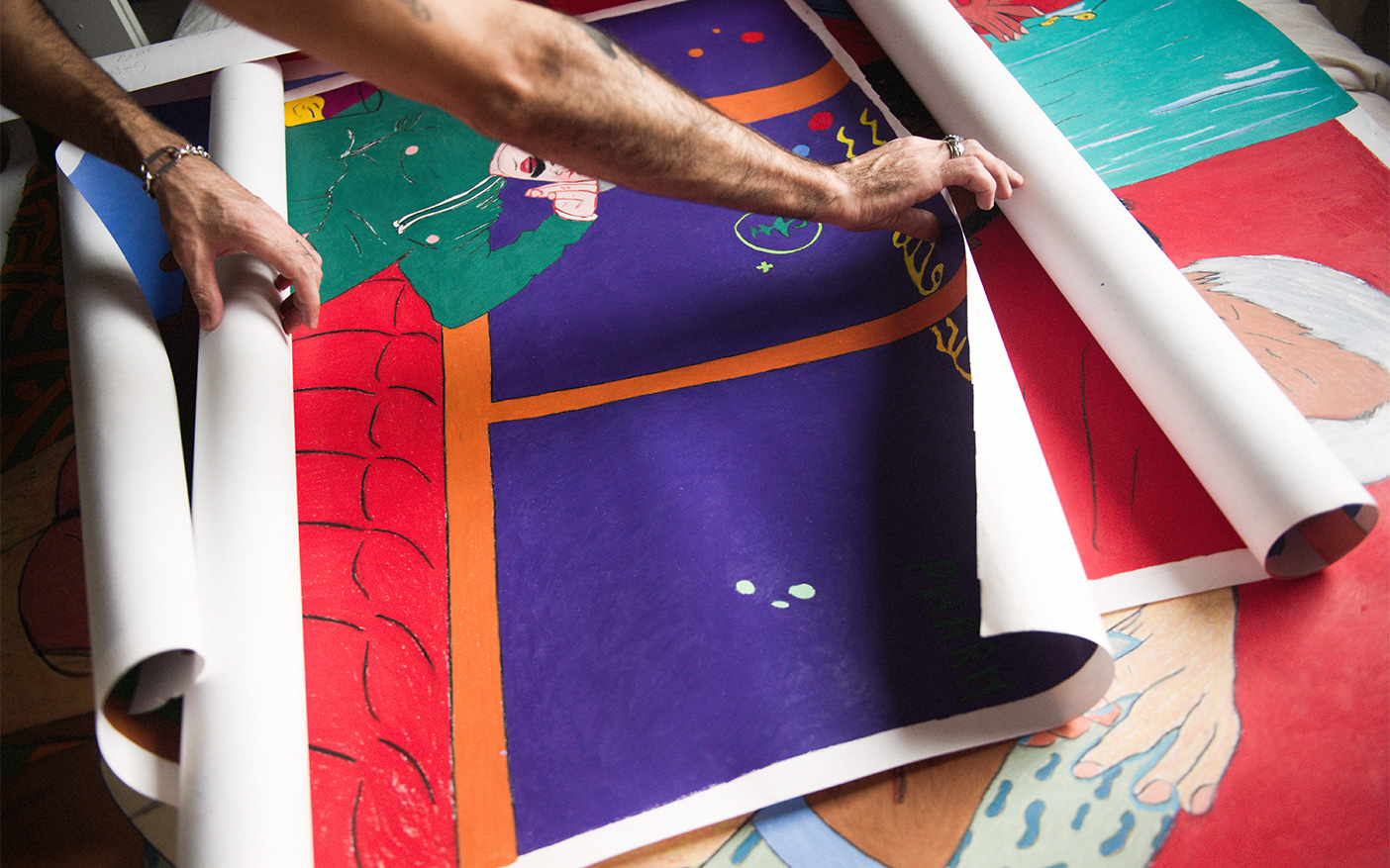
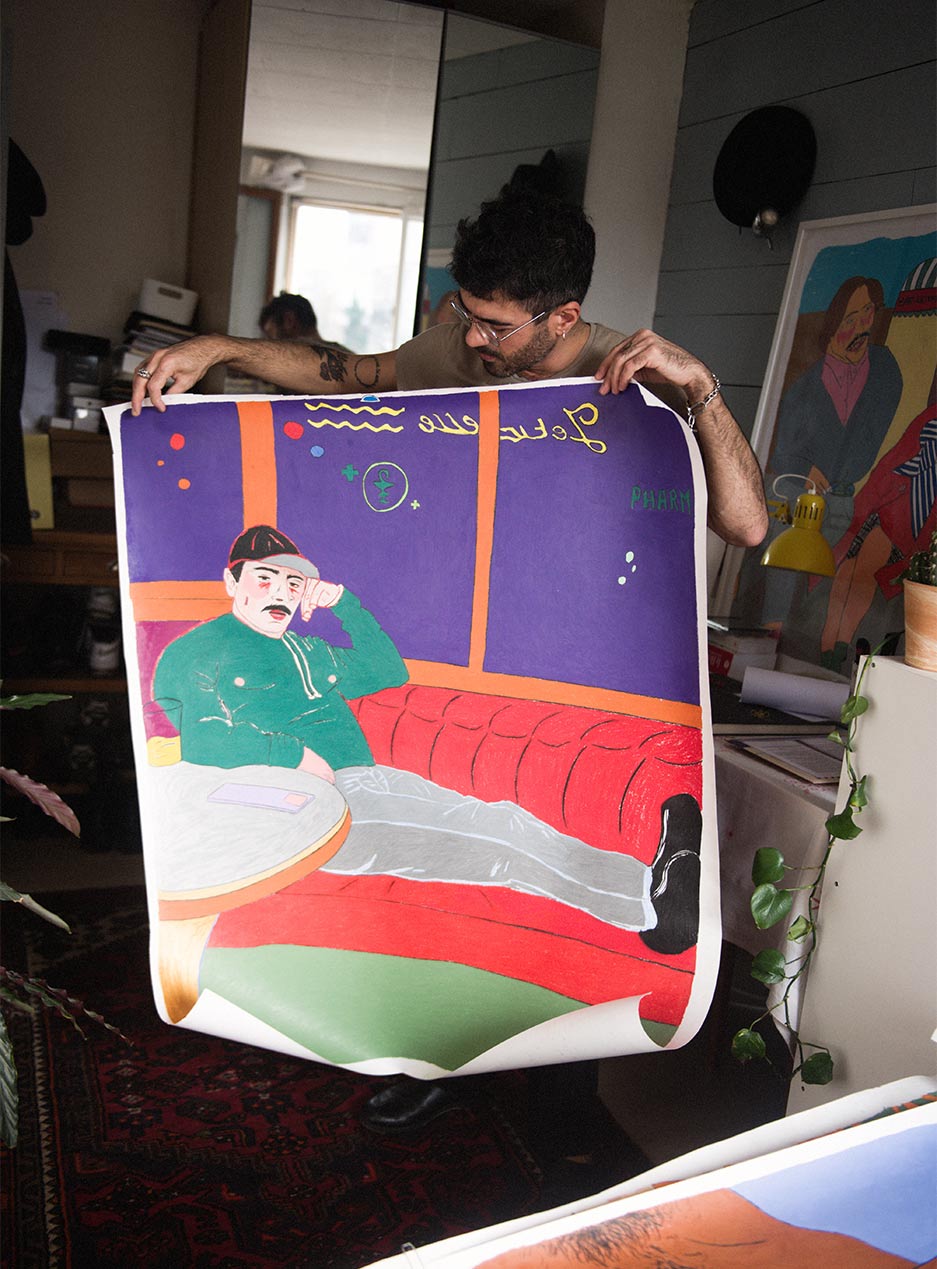
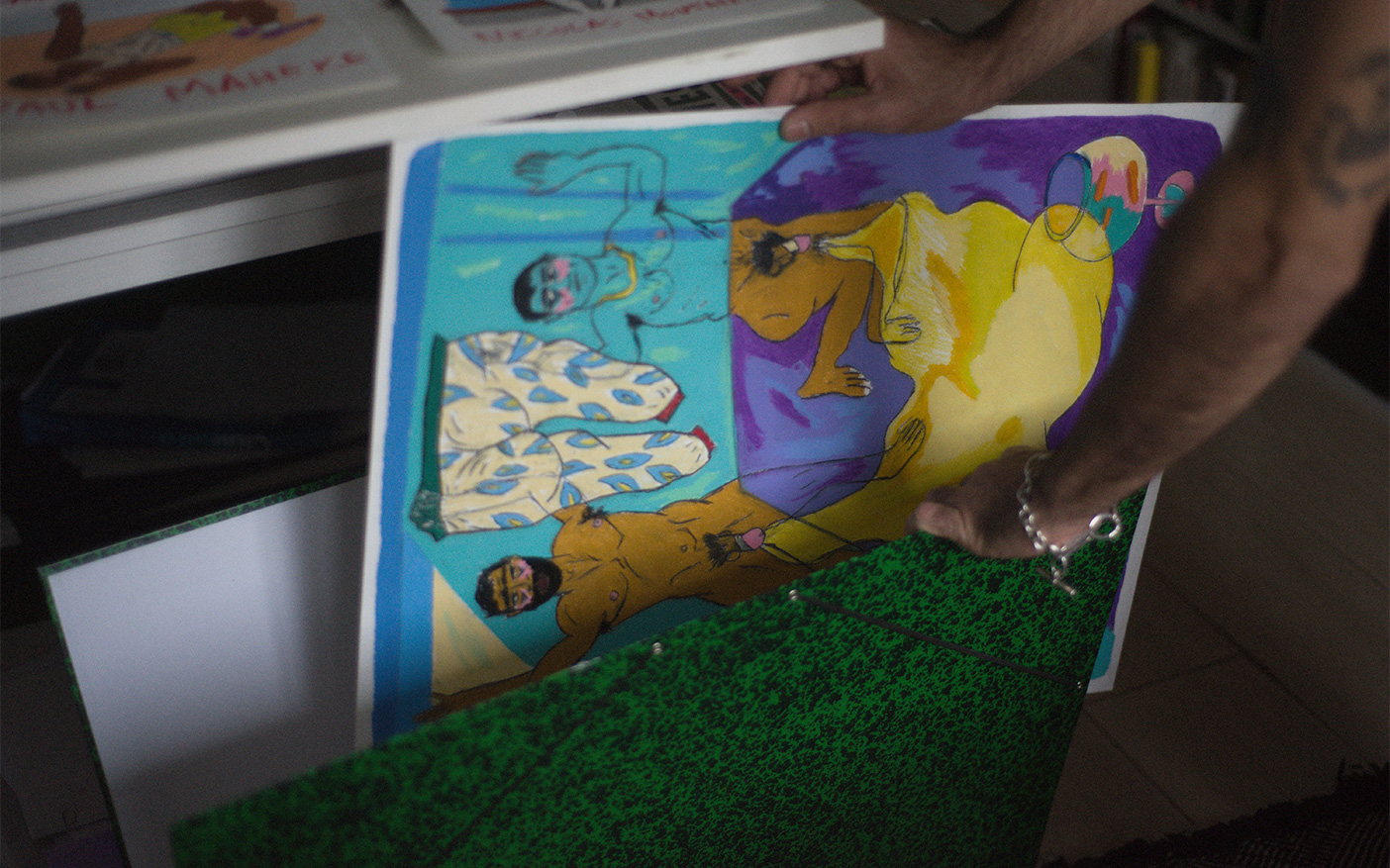
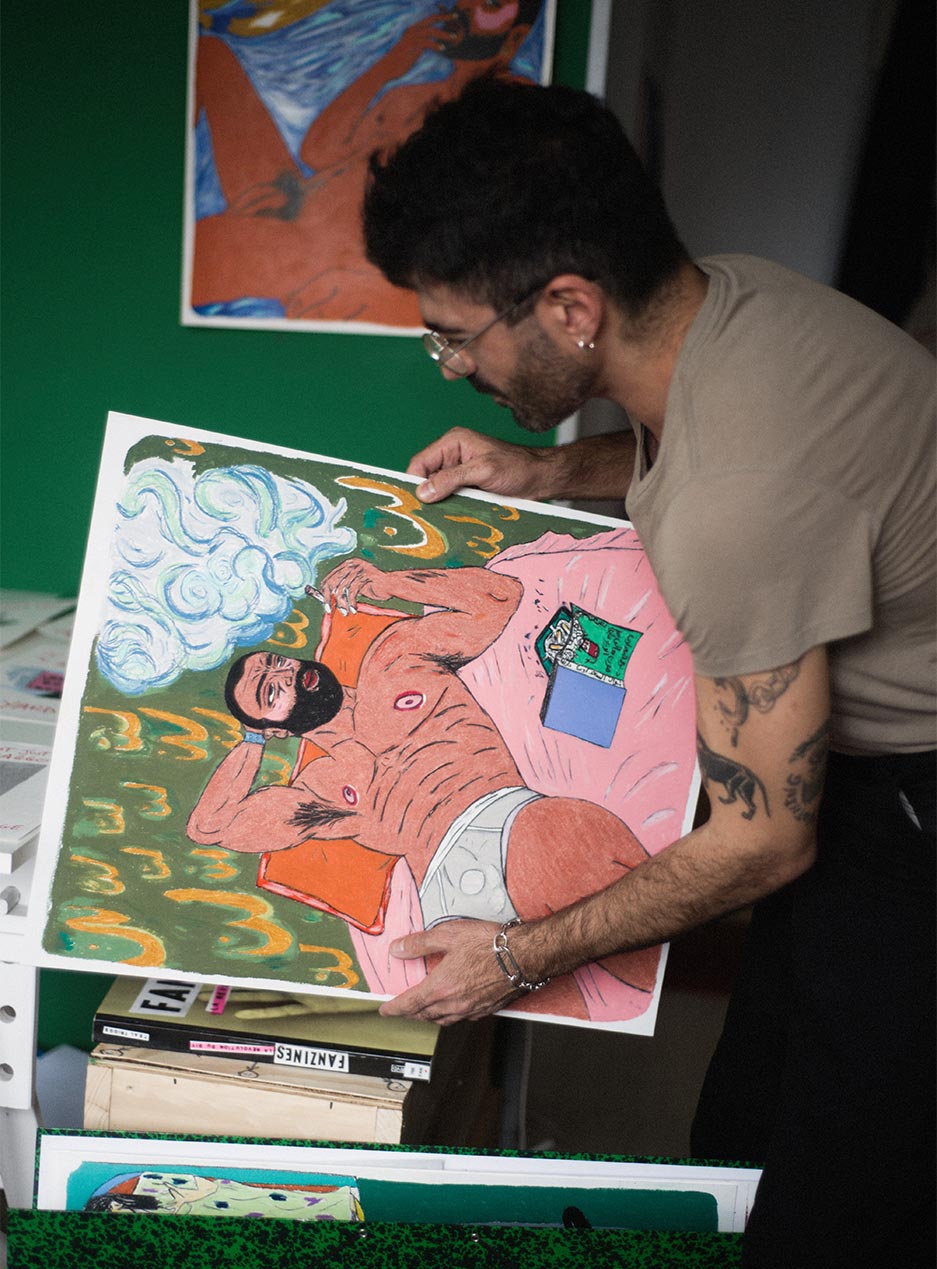
Given this unplanned departure, I did two things: drawing in my bed and performing in the streets of the city. From that experience, I began to realise that turning situations of violence into discourses of resistance is the essence of my work: a process of transforming weakness into strength. Lying in bed is a powerful protocol that disconnects me from the masculinity of the studio space and aligns me with the passivity of models in paintings, like those Eugène Delacroix painted in Tangier. Drawing itself is also a deliberate choice—it’s an undervalued medium in the art world and the market. I try to denounce the experience of being marginalised, to talk about domination without using the tools of the dominant group. I’m summarising quickly here, but it’s a major intersection that I’ve tried to simplify and channel into the most accessible form. This idea of turning stigma into pride is something I’ve come to apply in many projects.
So, in your case, do coloured pencils and crayons — often seen as informal or ‘naive’ materials — take on a different kind of power?
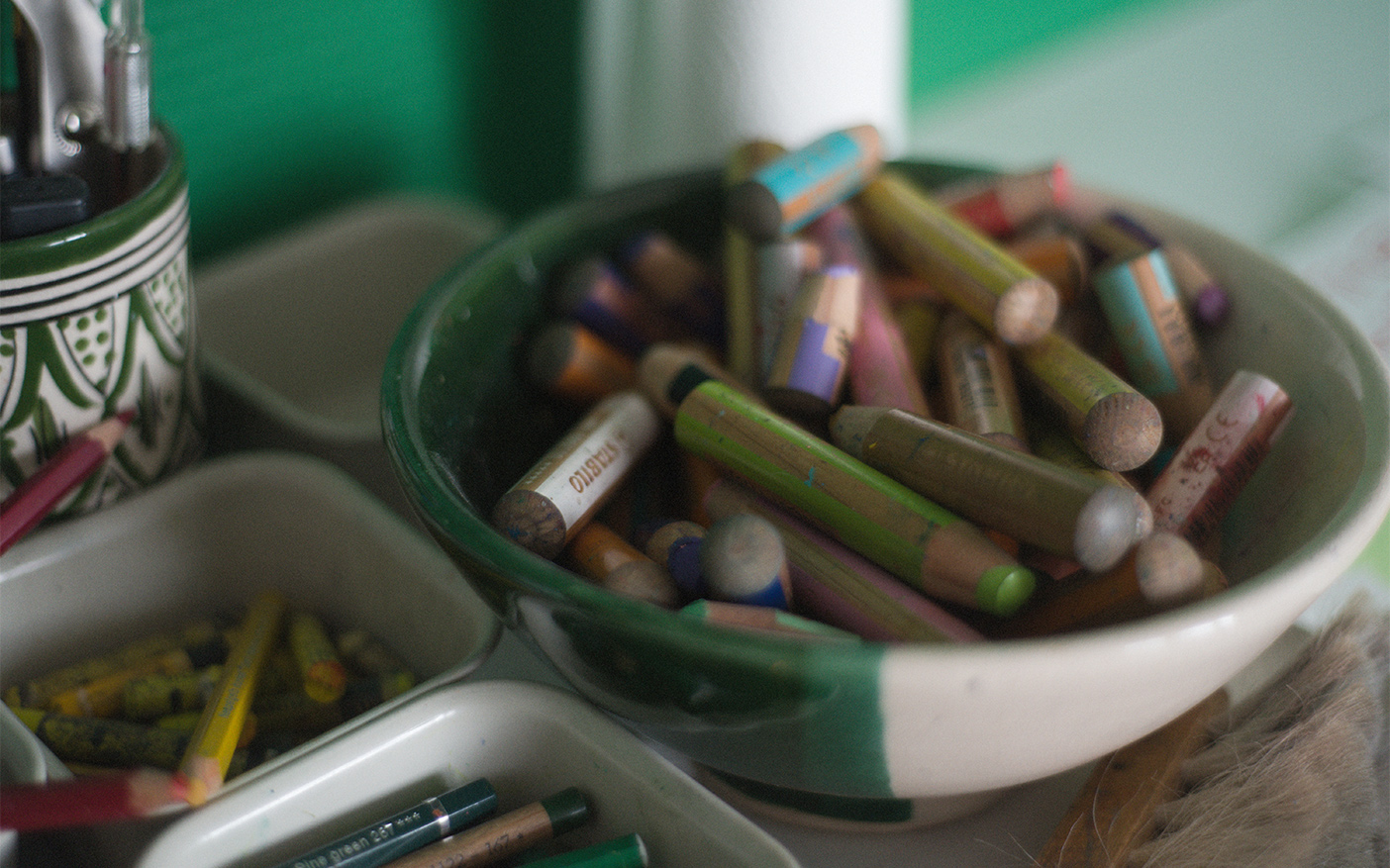
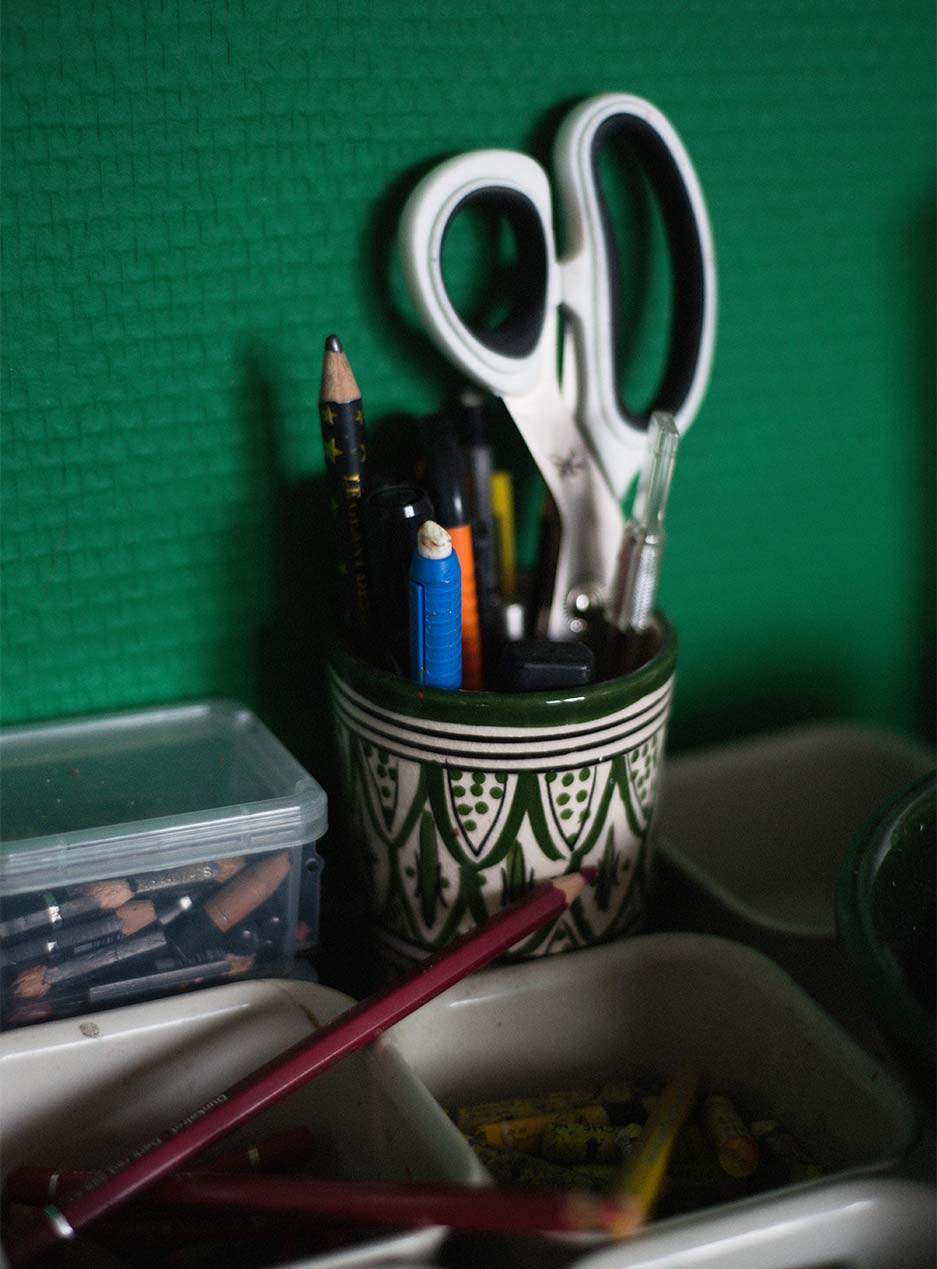
These are, first and foremost, non-academic tools; they don’t fall into a category tied to the history of technique or require specific expertise. It’s very important for me to shed academic constraints, because since I’m addressing the margins, my tools and workspaces must reflect that as well. The subject matter of my drawings and projects engages with marginalised communities, but the protocol and the tools are also integral. I want visitors, when looking at my work, to imagine someone working from a bed in a domestic space. It’s a way of saying that it’s Delacroix’s old model speaking to you, telling you what was going through his mind when he was represented in art history.
Can you describe how your upbringing and background in Morocco shaped your artistic interests — particularly around queerness and identity?
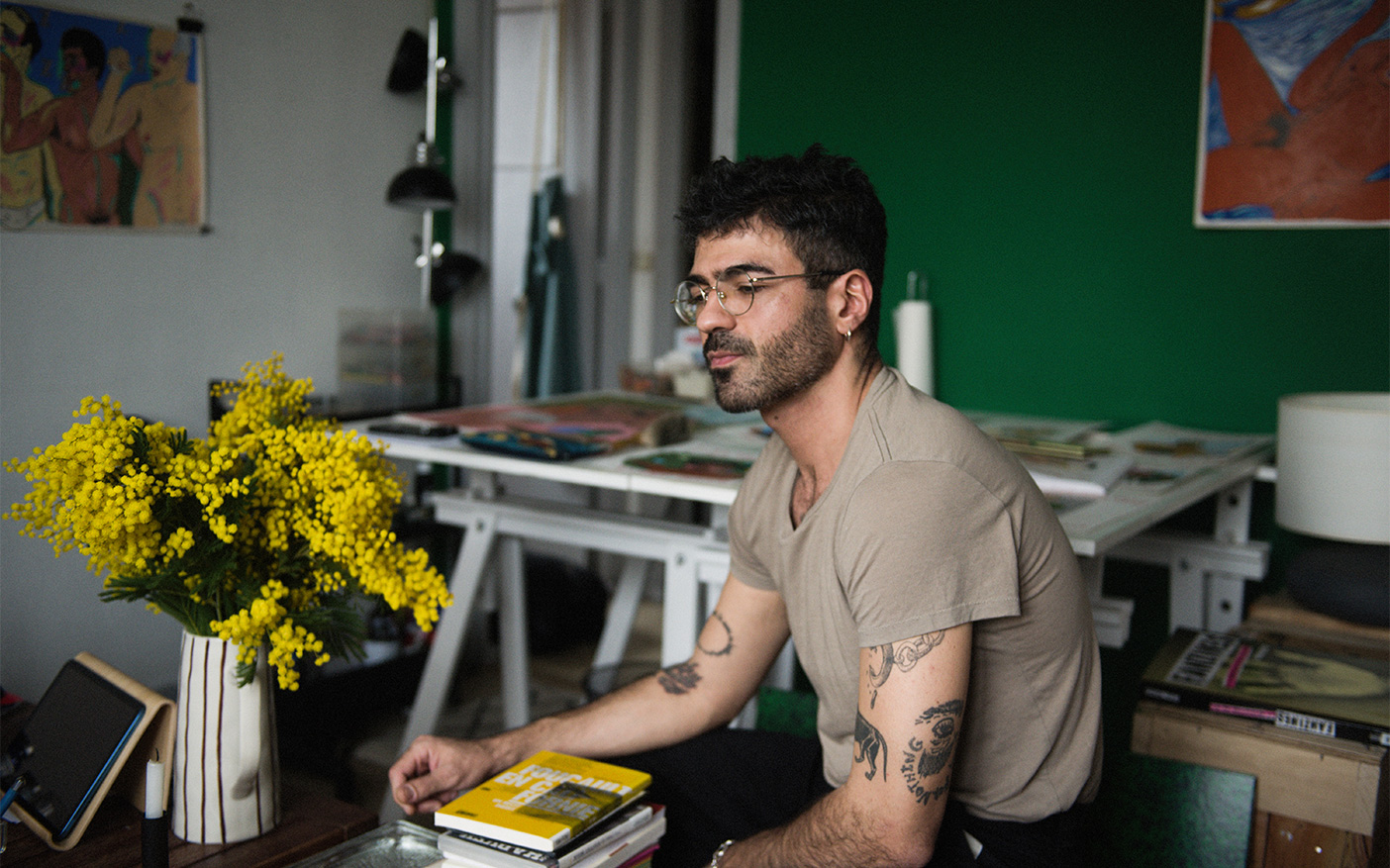
This completely influenced my relationship to queer issues, since homosexuality is forbidden and punishable by law in Morocco. My interest in these themes arose from a position of resistance and a desire for visibility. I had to build myself up piece by piece, starting from very few references within my culture of origin regarding sexuality. What matters most to me now is leaving traces and creating paths for queer people from Morocco and the Arab world who will come after me.
Was your family supportive?
I don’t have that kind of relationship with my biological family, and they offer no support on queer issues. But I have another family I’ve chosen — friends and a vast, global community — who provide a joy that has absolutely nothing to do with the small, narcissistic comfort of nuclear family support.
Working within a context where queer expression faces significant constraints, how do you approach exhibitions in Morocco, and how do audience responses there compare with those abroad?
Of course, we must be very careful. The goal is to create relational forms, not to put ourselves in a dangerous situation, since I am an artist, not an activist. I believe in imagining new strategies of resistance that allow people to understand and reflect on these issues — and I promise you, it works. The public can grasp subtler nuances; it’s not just overt, first-degree subversion that helps them understand queer issues. For me, the most important thing is to create contexts that showcase as many forms as possible that contribute to the visibility of minorities.
How is your work received within the queer community in Morocco? Do people see their own experiences reflected in it?
I can’t speak for an entire community, but the feedback I’ve received from Morocco and the Arab world has been quite enthusiastic.
Is keeping your Instagram account private related to questions of safety or control over how your work circulates?
Since I post things related to my friendships, personal tastes, and daily activities, I prefer to make it accessible only to those who want to see it, rather than treating it as something visible to everyone. For my work, however, I collaborate with two galleries — Dittrich & Schlechtriem in Berlin and The Pill, between Paris and Istanbul — which circulate my work widely, as do the art spaces and museums that make it accessible online. I’m not that hard to find.
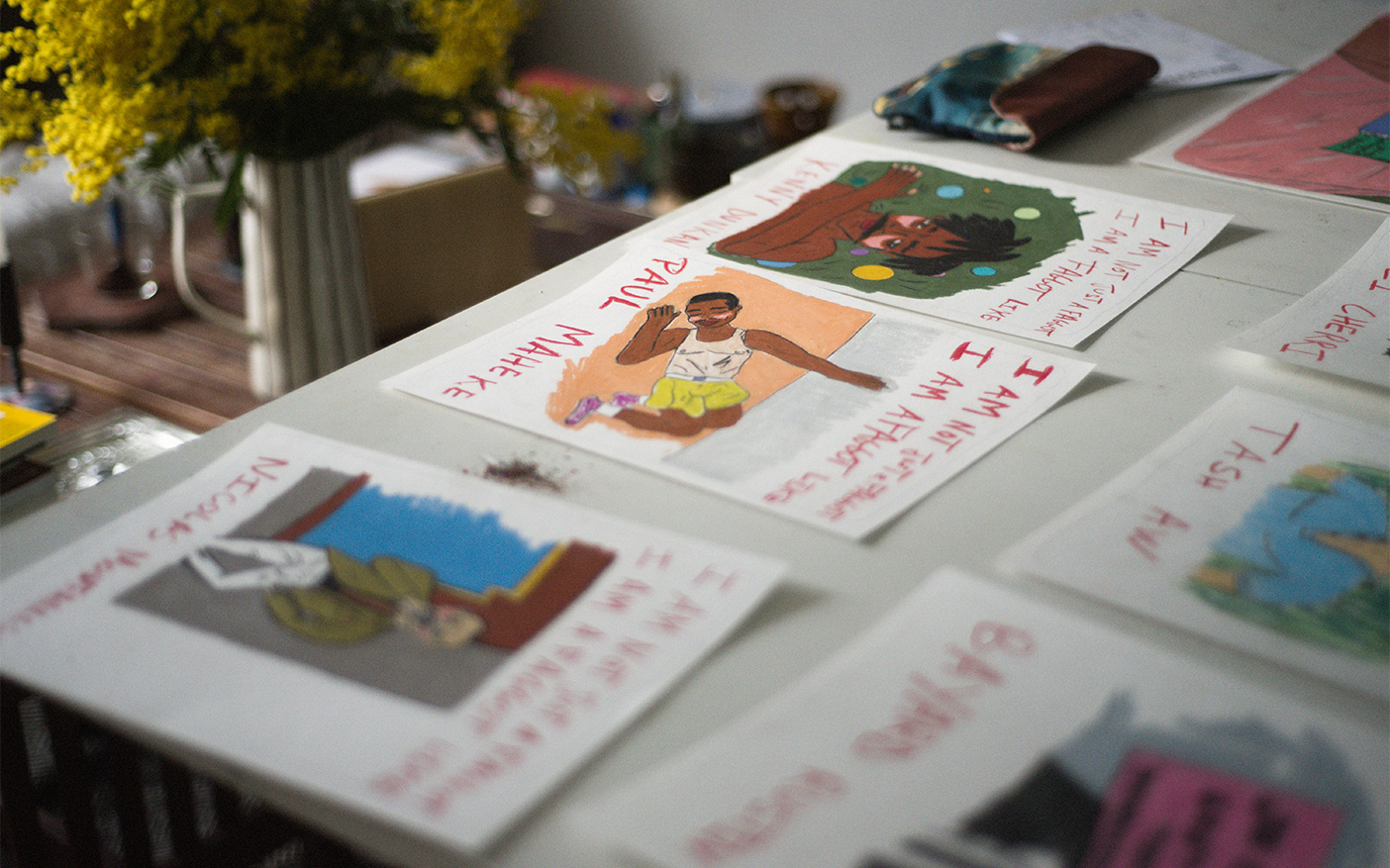
Your Bedwork / Yes I AM got a lot of attention. It constructs a queer genealogy of historical figures. Many of the figures you include come from diverse historical and cultural contexts. What was your process for choosing them, and what connections do you see between their stories and your own?
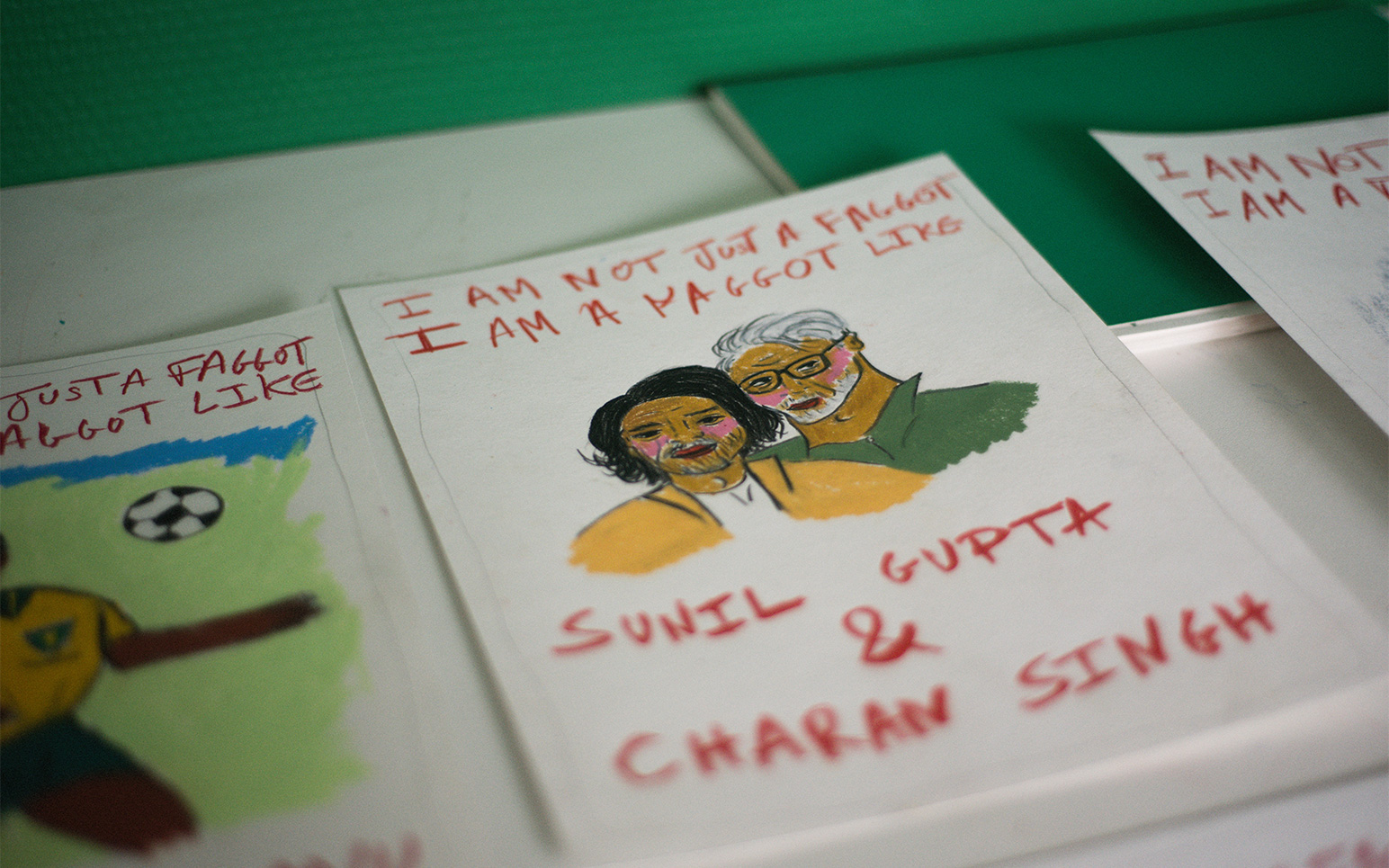
I see this series as a kind of pantheon of gay figures who have contributed to the beauty of the world or changed the course of history. It’s a family of role models. Didier Eribon, the French author and philosopher, speaks about the moment when young gay people — alone and misunderstood by their heterosexual families — find themselves in libraries and begin to discover queer figures like themselves throughout history, people who are even more remarkable than they imagined. And the question remains: how can we still consider the word “faggot” an insult when this community includes people like these? It’s with this dynamic in mind that I create this series.
Do you see this series expanding, for example by including contemporary queer icons from pop culture?
Yes, the project thrives on quantity, like a portrait gallery in a nobleman’s castle. I’m constantly producing an ever-growing number of drawings. Recently, as suggested, I’ve added some living artists with their permission, which has led to new friendships and encounters. I’ve also published a book with Triangle Books. I hope this series will continue to grow for a long time.
Some viewers might focus more on the erotic or visual aspects of your work rather than the deeper questions. How have you dealt with these kinds of judgments or prejudices?
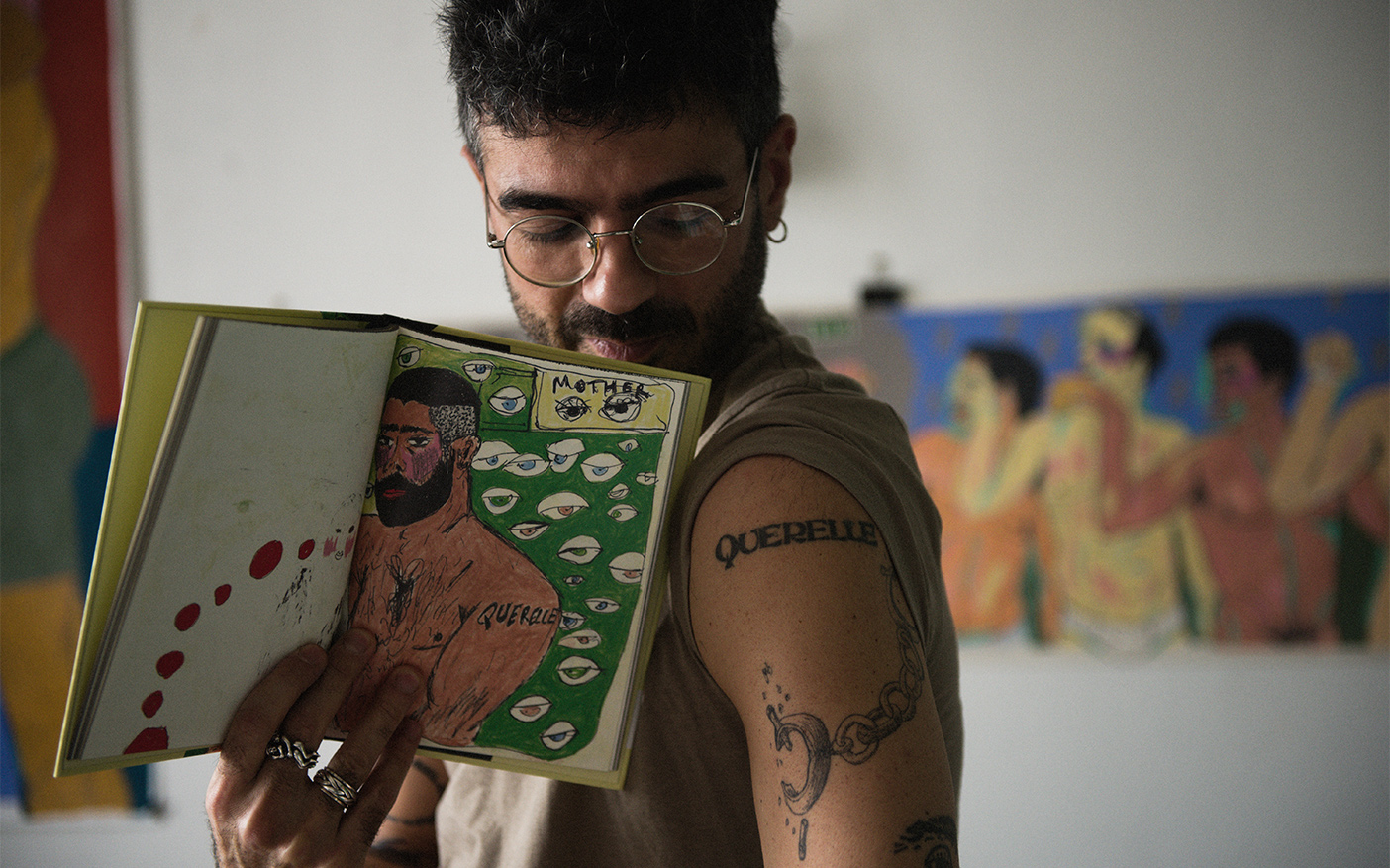
I really like it! At least this way I don’t leave anyone indifferent — it’s a very camp attitude and response. (laughs) But more seriously, I think there are many ways to approach a work of art, and I always hope that these colourful and attractive forms will encourage people to delve a little deeper into my work. I see it as a kind of visual trap: once it catches someone, it can prompt reflection on post-colonial issues, the fetishisation of bodies, the loneliness of immigration, and violence against minorities.
Performance feels like a natural extension of your work. How does engaging with it change the way you explore your themes or connect with audiences?
I’ve always loved this medium. In Tangier, I did street performance art, heavily influenced by artists I deeply admire, such as David Hammons and William Pope. L. Over time, performance became a natural extension of my practice, since I never wanted anything in my work to feel fixed. Because I combine drawing with a performance — a physical protocol rich with meaning — I also wanted to treat the exhibition itself as a medium. Exhibition design and performance allow me to maintain movement and action throughout the entire show. However, this format can be quite expensive, so we often limit performances only to the opening day.
However, during your 2024 exhibition Their mouths were full of bumblebees but it was me who was pollinated at the Barbican’s Curve gallery in London, you presented the performance multiple times. How did choreography interact with the space and the work’s concept?
For that project, I worked with six performers who traversed the gallery — transformed into an indoor/outdoor club setting — horizontally, by crawling. Through the choreography, we conveyed the idea that they were so disappointed in humanity and what they had endured that they chose to abandon bipedalism and experience “the world” differently.
What are your plans for the near future?
I’m part of a group show opening in May 2026 at the Moderna Museet in Stockholm, where I'm showing a drawing that has never been exhibited before. It’s a new format, created on a 4-meter-long drawing roller. I also have a solo exhibition opening in Paris in September with my gallery, The Pill.
Your work has been widely exhibited across Europe — from Paris, Antwerp, Istanbul, London, and Berlin to your hometown. When you were growing up in Rabat, did you imagine having this kind of international artistic trajectory?
Absolutely not — especially as I don’t come from a family of intellectuals or artists, and I had no examples of artistic careers around me. I feel the need to dig a little deeper to understand how social determinism has shaped my life.
Text: Anton Isiukov
Photos: Elise Toide