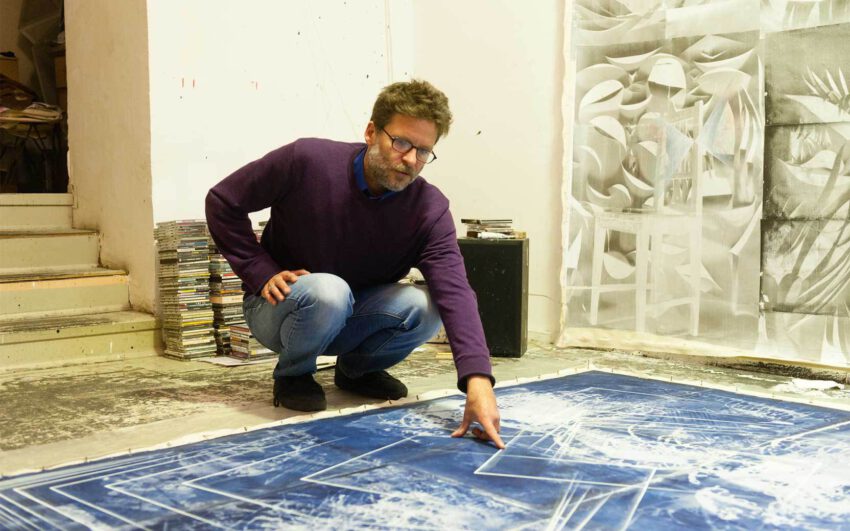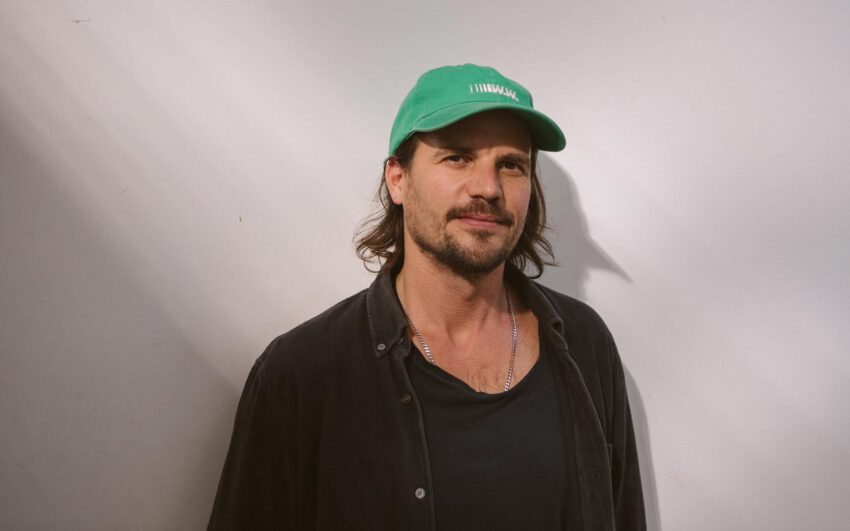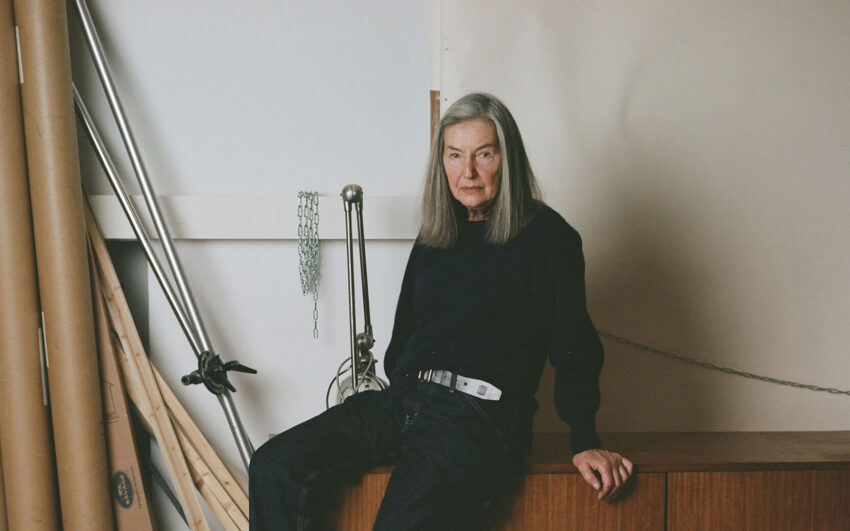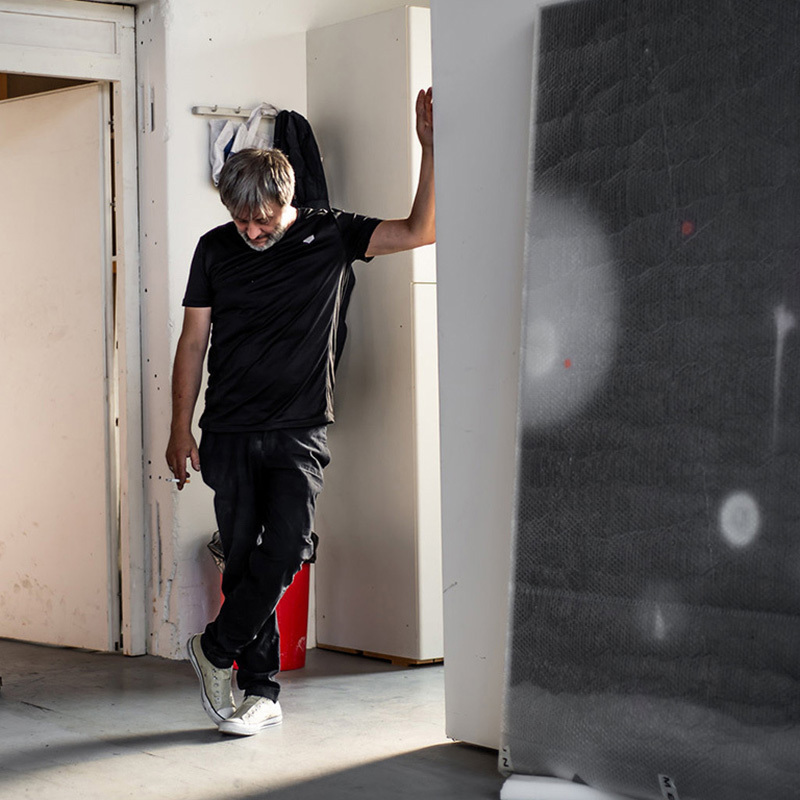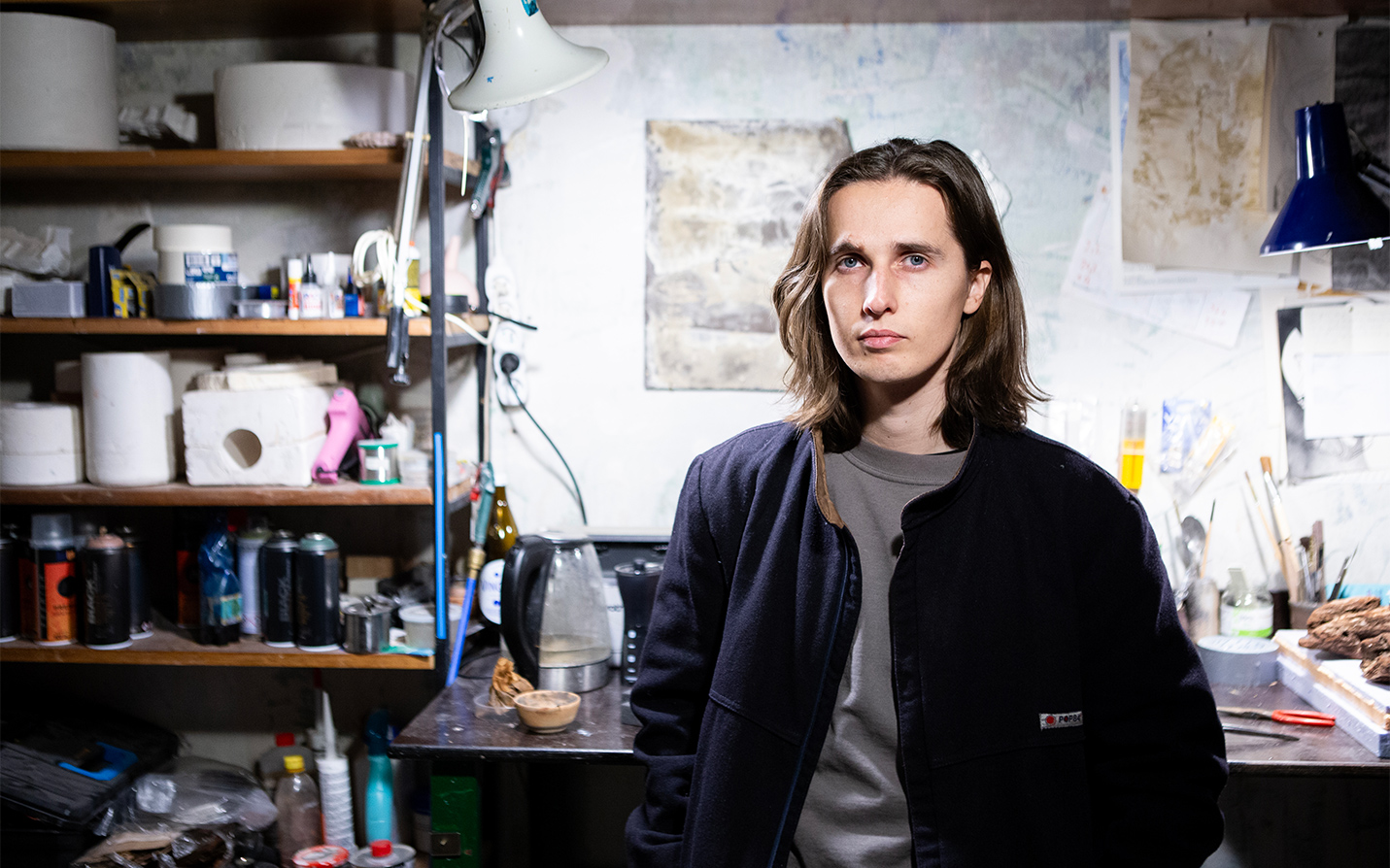
Pine rosin becomes a time capsule, limestone carries the traces of human activity, pressed into forms that simulate geological processes spanning millennia. In his reliefs and installations, Stanislav Zábrodský investigates how time and materiality unfold, in an era dominated by human influence. Rather than following a straight timeline, he fractures temporalities—layering past, present, and future—and invites the audience to imagine the world around them as archaeological layers still in formation.
Stanislav, could you tell us what you have been doing these days?
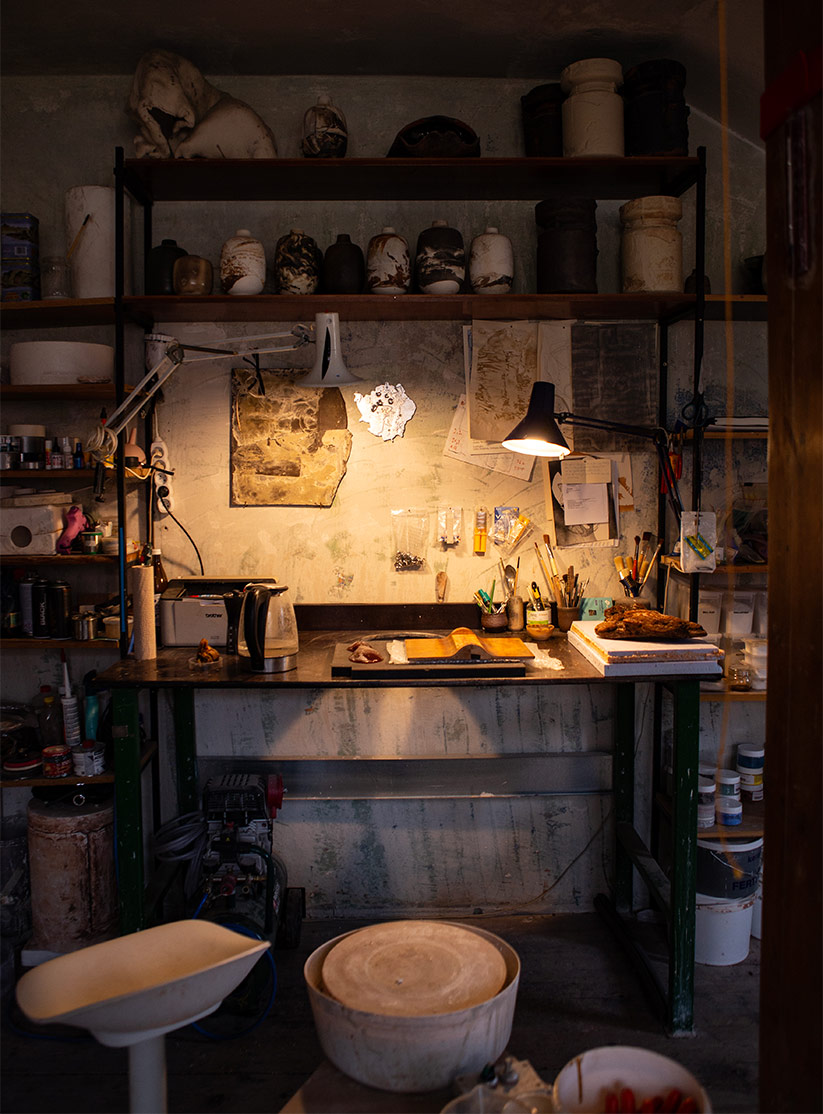
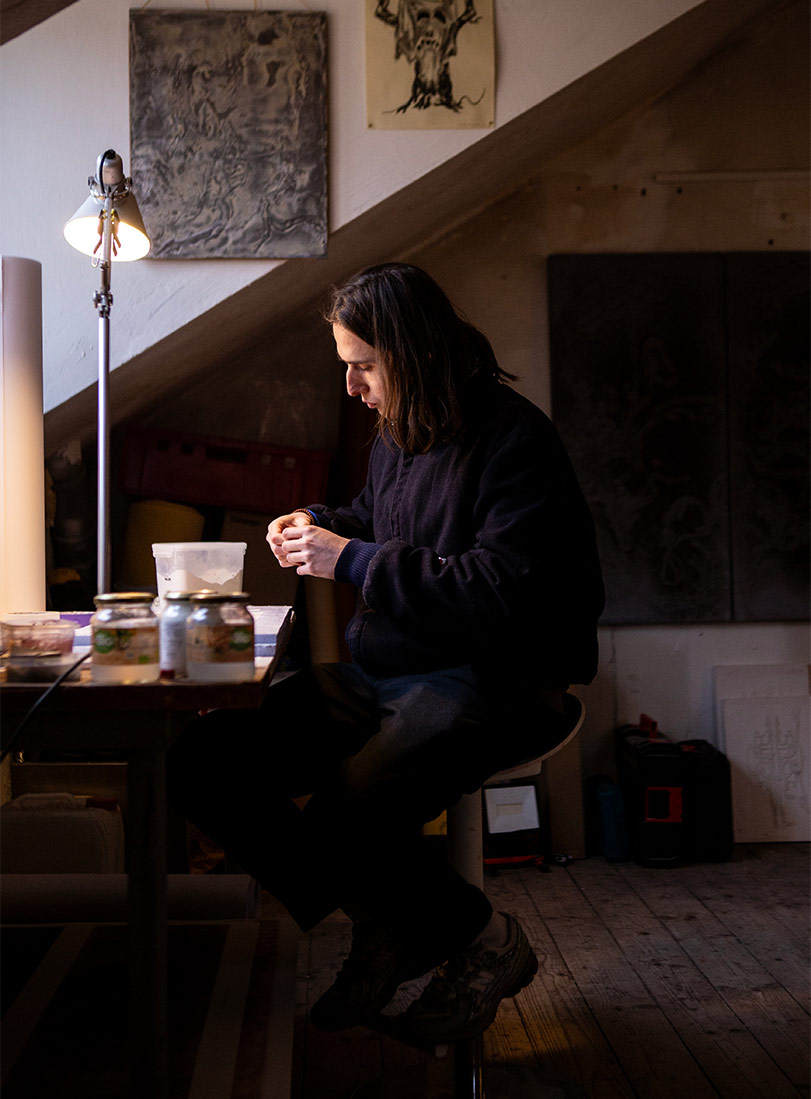
It has been quite busy. There is going to be a group exhibition in Hong Kong that I am participating in, so I’m focused on that right now. I am developing a new kind of work, which feels like an adventure for me because I’m trying a lot of new things—new technologies and different approaches. As a notorious deadline person, my current routine is to be in the studio all day, seven days a week.
Tell us more about this exhibition.
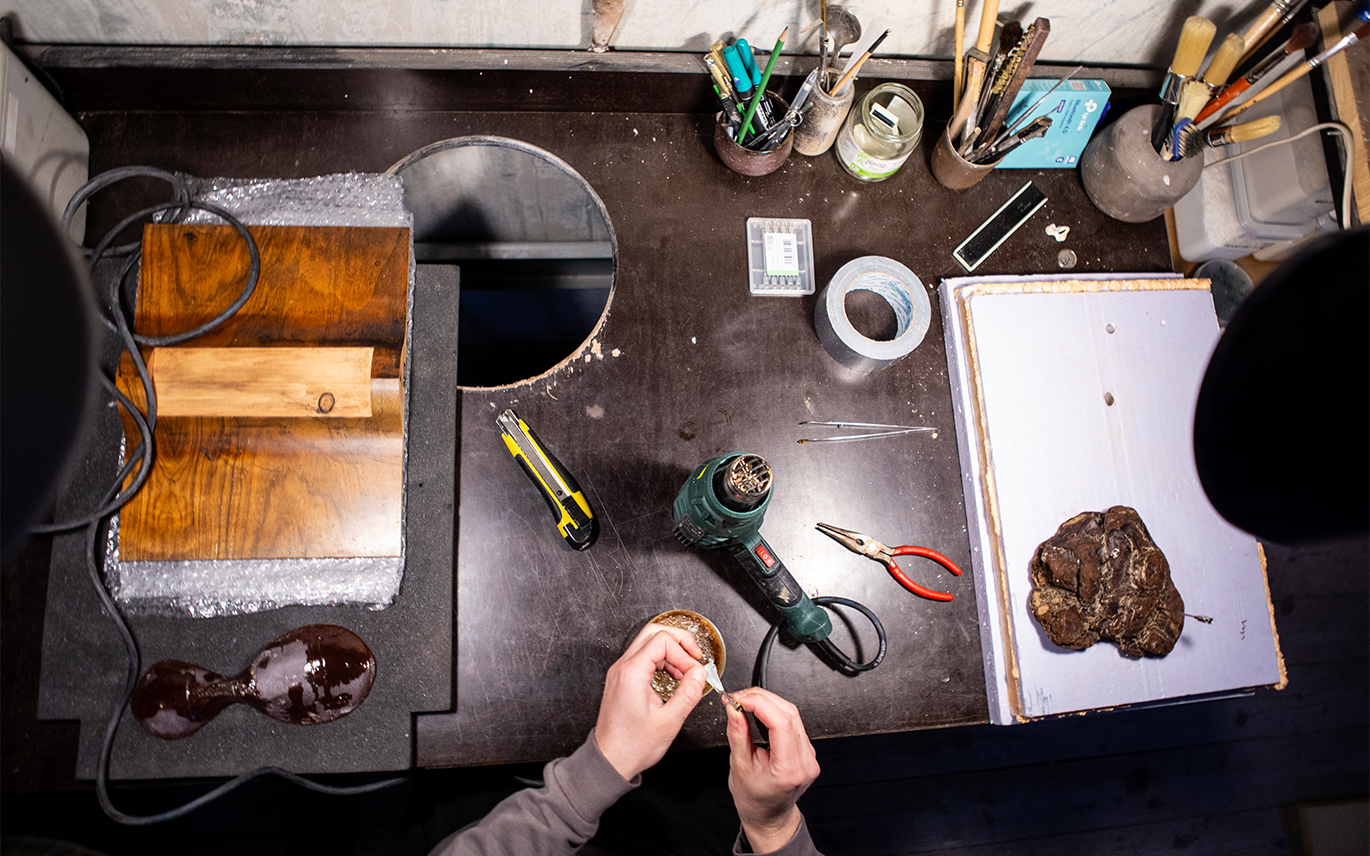
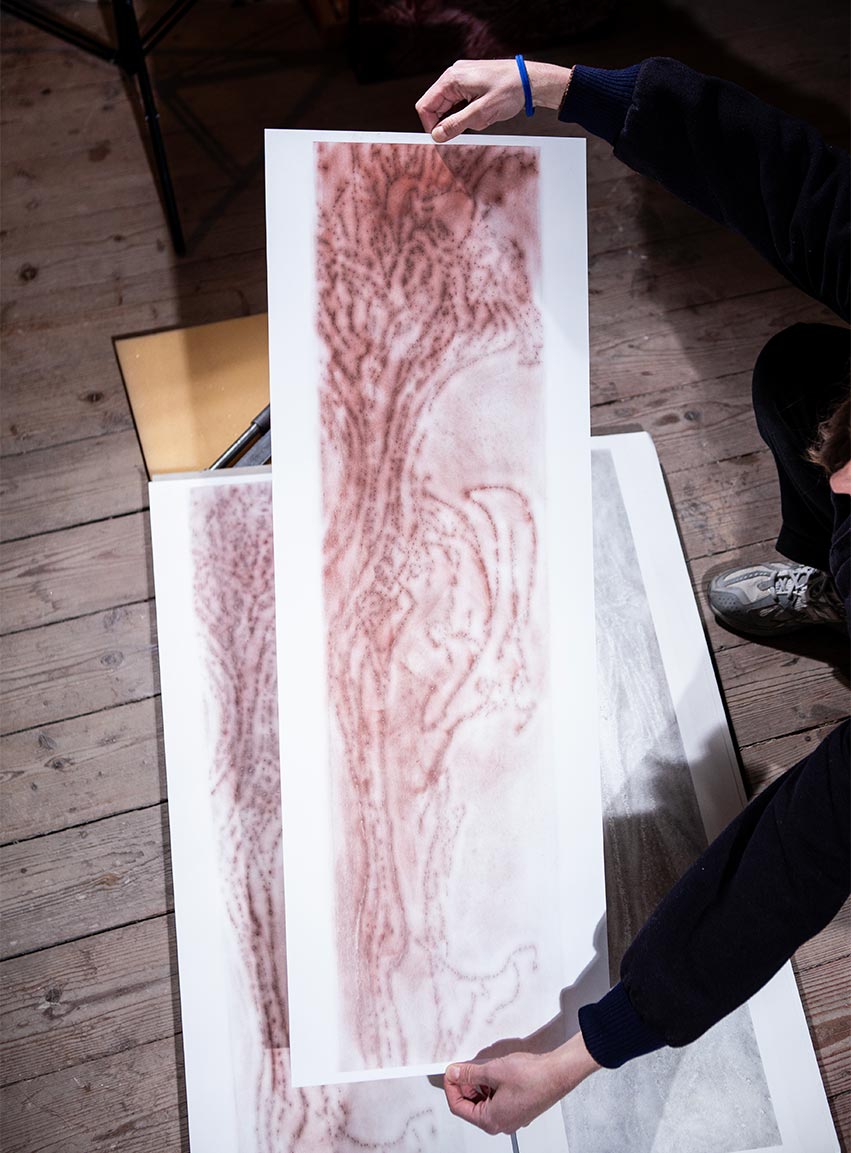
This exhibition is an off-space project organised by SATA,Society Art Technology Asia, in collaboration with Berlinskej Model and the Czech Consulate General in Hong Kong, titled Symbiosis 3.0: Artificial Flavor. In this project, I will be working with imaginative situations in which computational systems fail under unrealistic conditions that I have set. Invisible forces, such as electrical currents and electromagnetic fields, imprint themselves into the liquefying metal — something like a hardened topography shaped by the final rhythms of information flow. Parallel to this technological disintegration, the work turns toward another recording system: the biological memory of the pine tree. Unlike digital storage, tree growth encodes time through continuous material transformation, registering fluctuations in temperature, humidity, and atmospheric chemistry. These two memory systems converge, forming hybrid archives that I assemble and connect physically.
Has your curiosity about materials already started in childhood?
These geological themes were already present in my childhood. I used to go gemstone hunting with my cousin in the north of the Czech Republic. He was exceptionally good at it, with a real eye for finding these things. For a child, that sense of treasure hunting is incredibly exciting. That feeling was also present later, when working with the kiln. When you put something into a kiln, you never really know how it is going to turn out.
There is a compelling intersection between art, geology, and anthropology in your practice. When did these disciplines begin to converge for you?
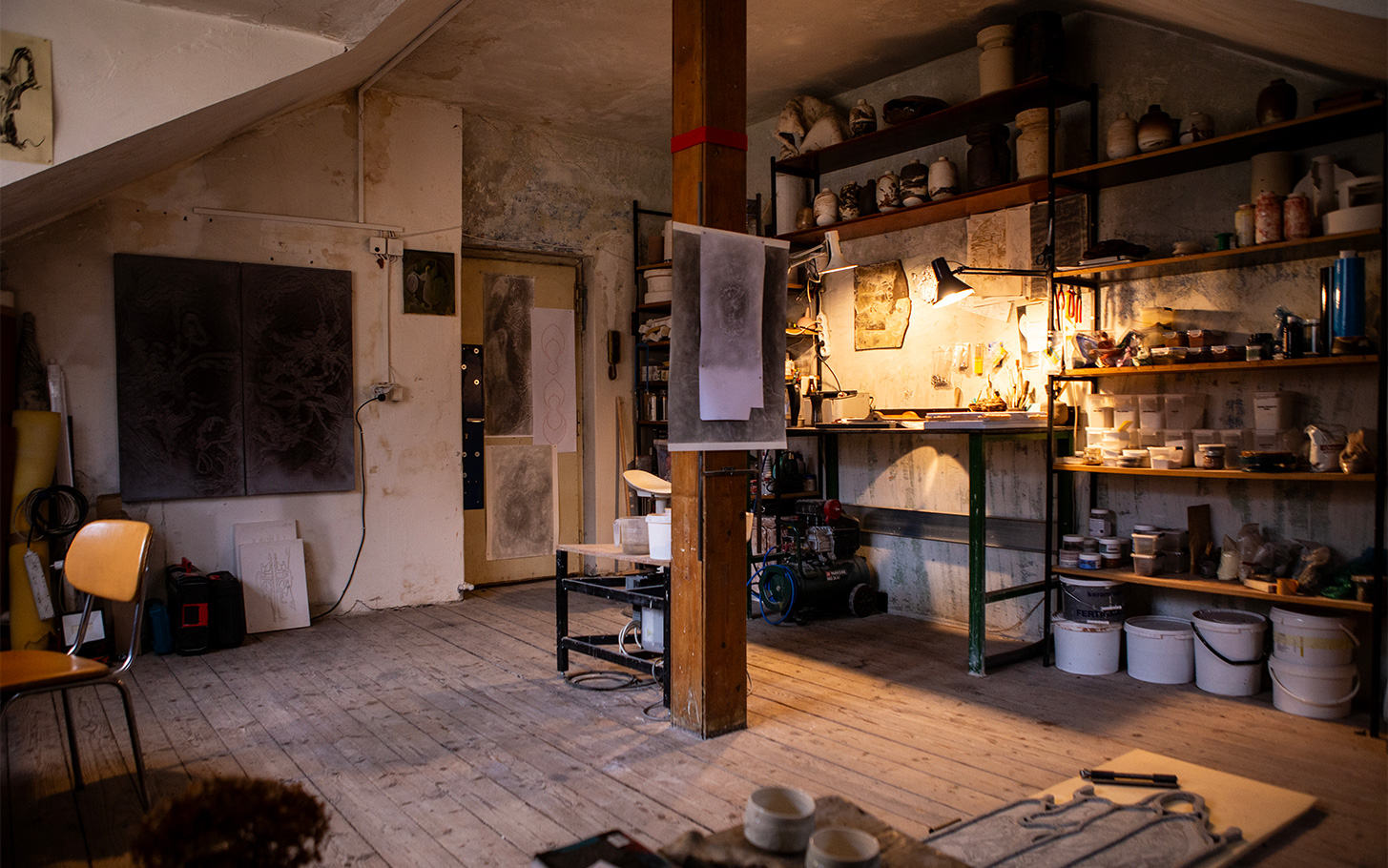
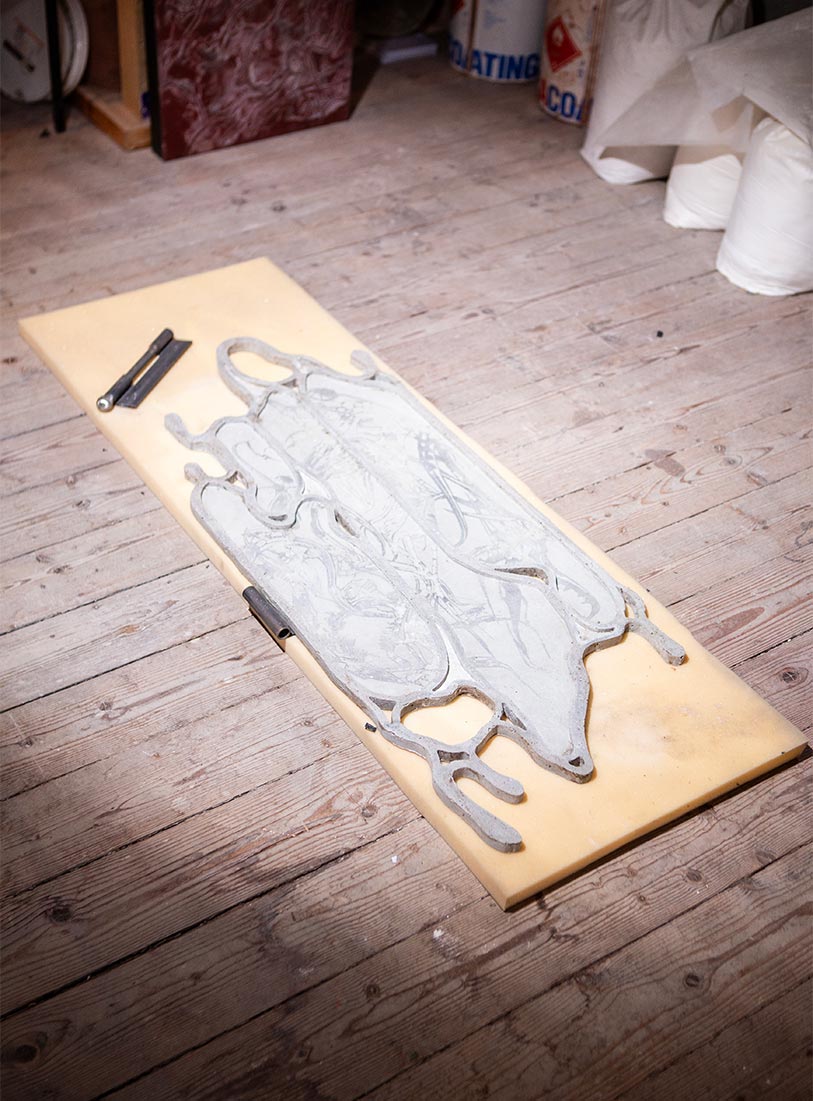
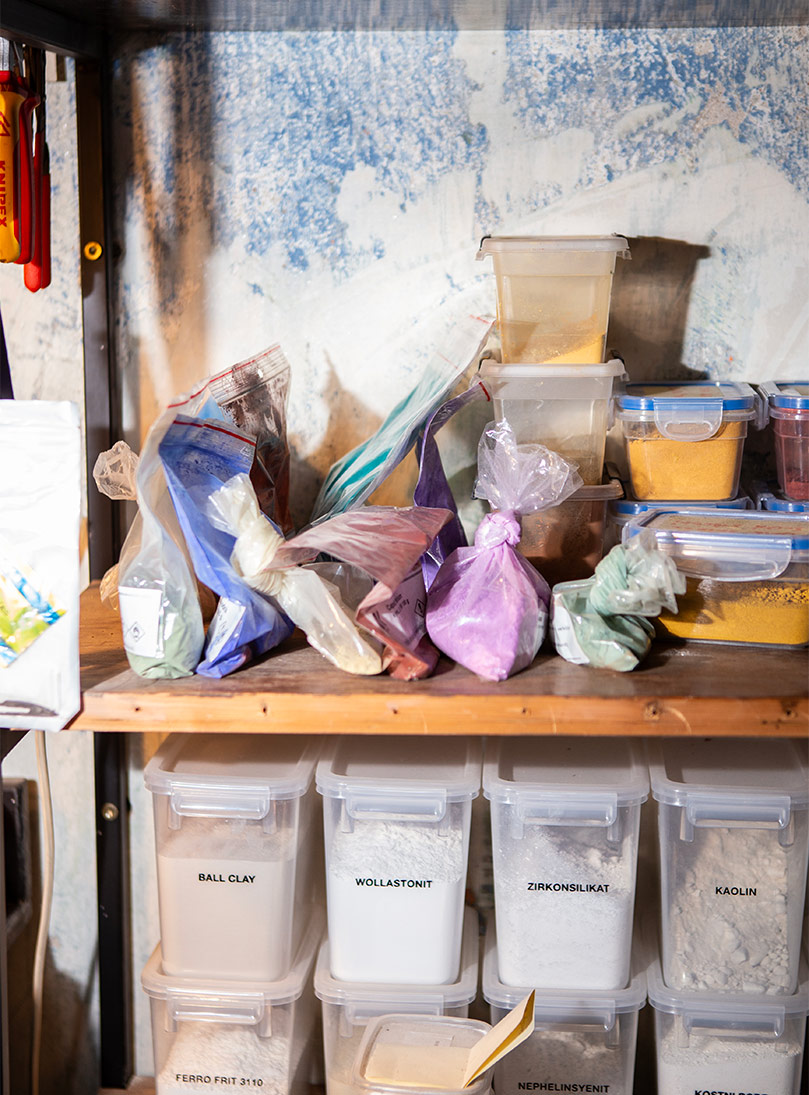
It began at the Academy of Fine Arts in Prague, where I studied, and it was a slow transition. I worked a lot with biological matter, like kombucha and the biopolymers these kombucha bacteria produce. Then it gradually shifted into an interest in geology and imagining these vast timescales that shift our presence. It was an ongoing project up until my graduation. I also worked a lot with ceramics from the same perspective, like how I work with concrete. When you fire pieces in the kiln, the pressure and heat change the structural properties of the ceramics. In my mind, the kiln was like a time machine—the clay becomes stone, skipping geological eras. I like moving across these timescales in the kiln and creating artefacts that point to this perspective.
What is the current beat of your practice?
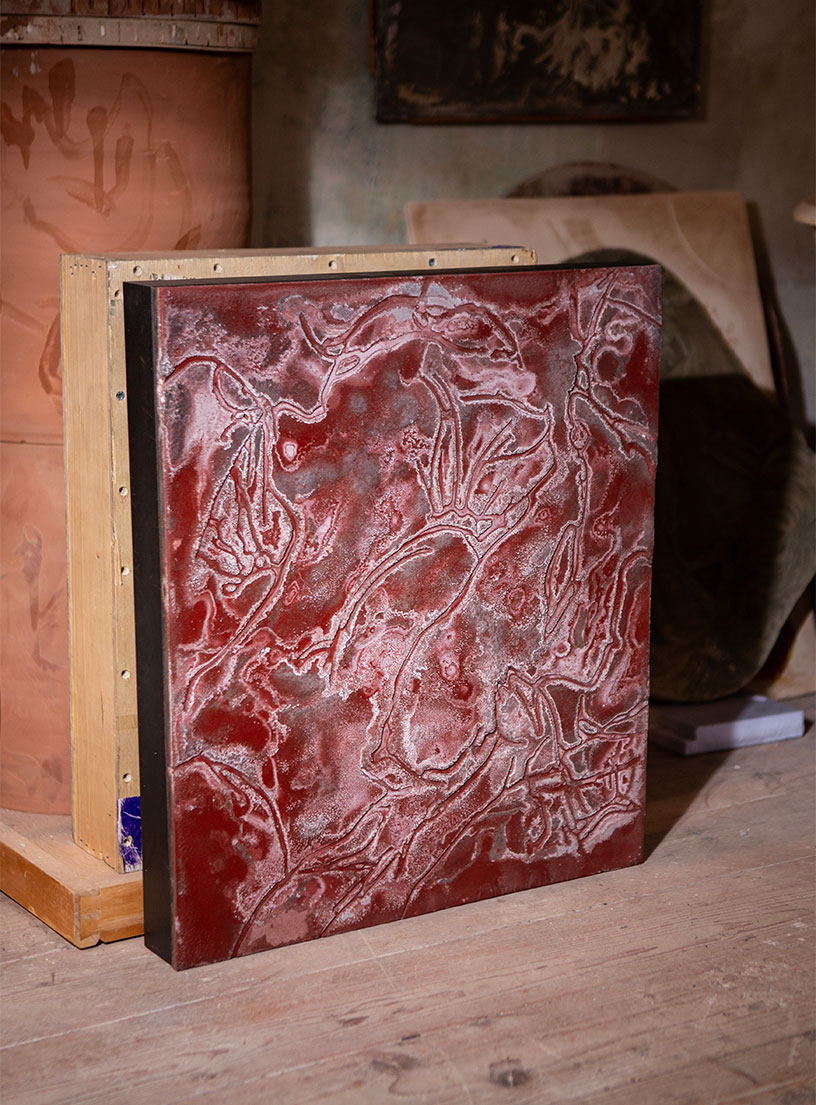
In my recent works, I have been exploring how time and materiality operate in the Anthropocene, and how certain materials can function as synthetic simulations of geological processes unfolding over immense timescales. I am particularly interested in limestone and its role in preserving ancient life forms. As a sedimentary rock, limestone has properties that make it ideal for preservation. Even when transformedinto concrete or cement, which I use in my work, it can still silently hold remnants of prehistoric eras within today’s architecture and infrastructure, as well as within my reliefs.
What role does concrete play in your practice?
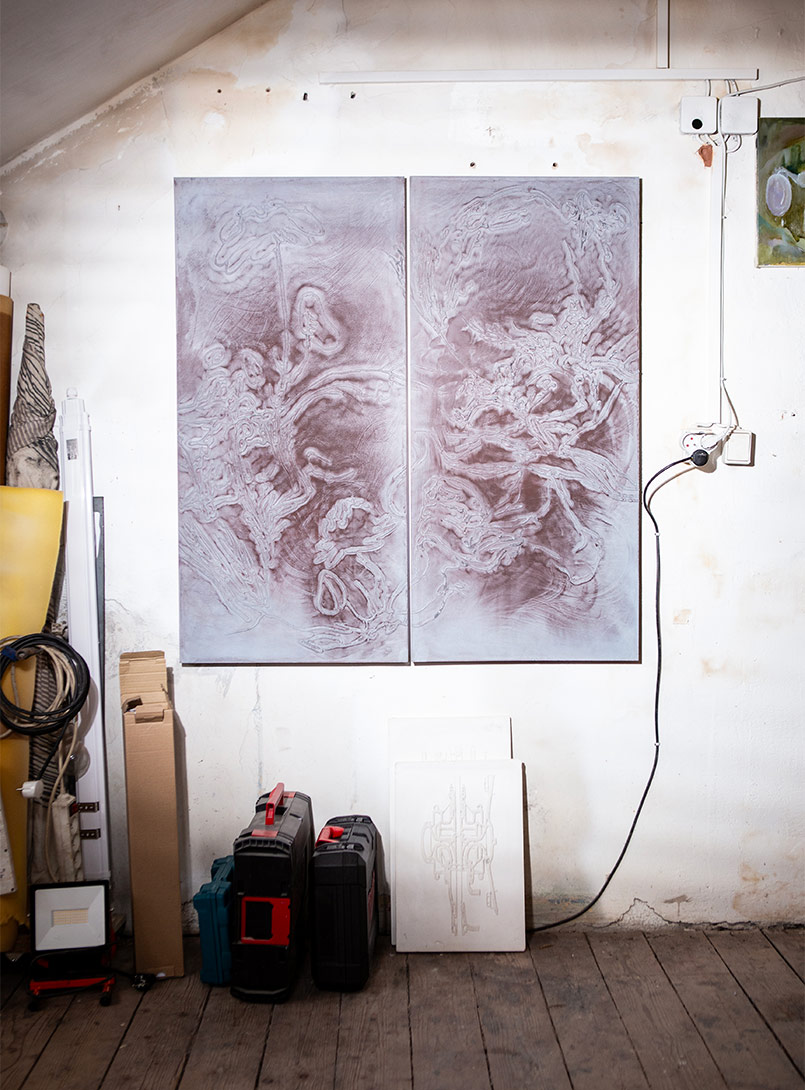
I work with concrete as a medium of memory. I use it to create fossil-like imprints in my reliefs. These pieces are not natural relics, but traces of human activity. I am especially drawn to landscapes shaped by mining—places where limestone deposits have been extracted. I also work with the flora that grow in these environments, imprinting them into the concrete surfaces. Often, these landscapes no longer exist in their original form. Although not reconstructing them, exactly, I am working with the plants that once grew there and bringing their traces into the work.
Your concrete reliefs can resemble maps, fragments of lost landscapes, or even medical scans. What kind of reflections do you hope they provoke in viewers?
The main point is to develop the idea that everything around us—everything in our environment—will someday become part of the geological layer. It is inevitable, and I try to explore that perspective in my work. I like to imagine how these materials will look in the future. Biological materials, for example, might be gone, but metals—copper wiring, knobs, porcelain adjustments—will persist. I think about how they might compress over time, forming rock-like structures. For me, the most interesting part is how to engage audiences in these imaginative shifts. I want people to consider how materiality itself might behave in the distant or even not-so-distant future.
It seems you do not operate within a linear sense of time. How would you describe your relationship with time?
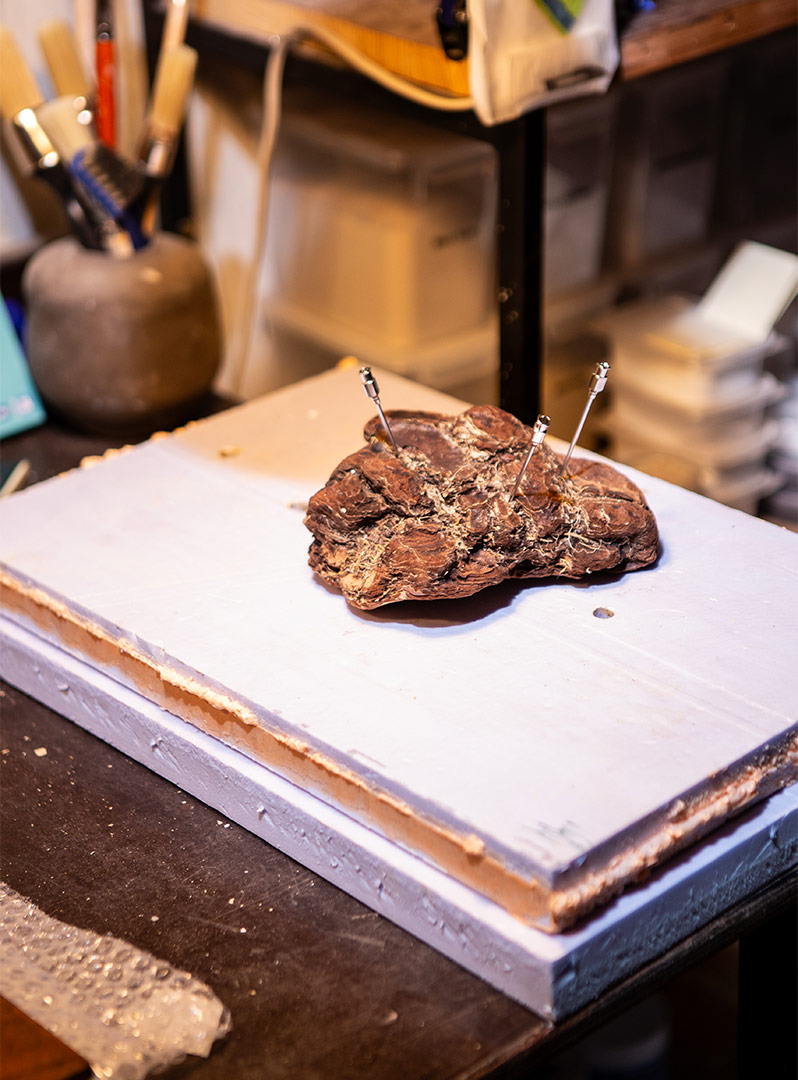
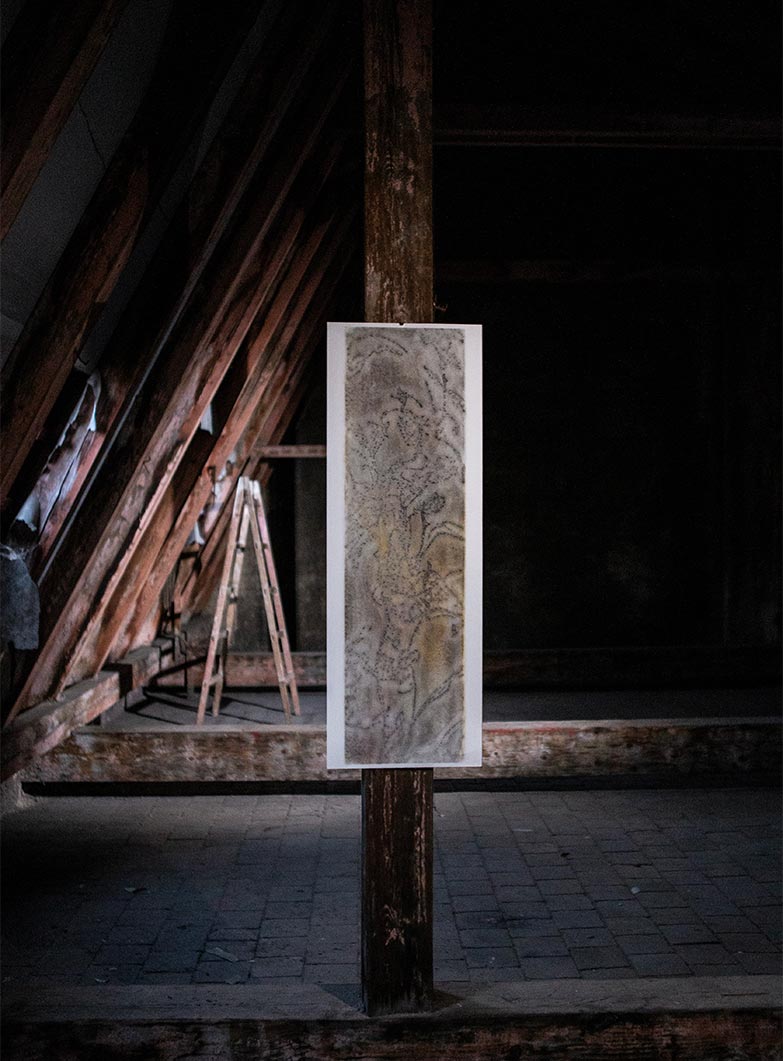
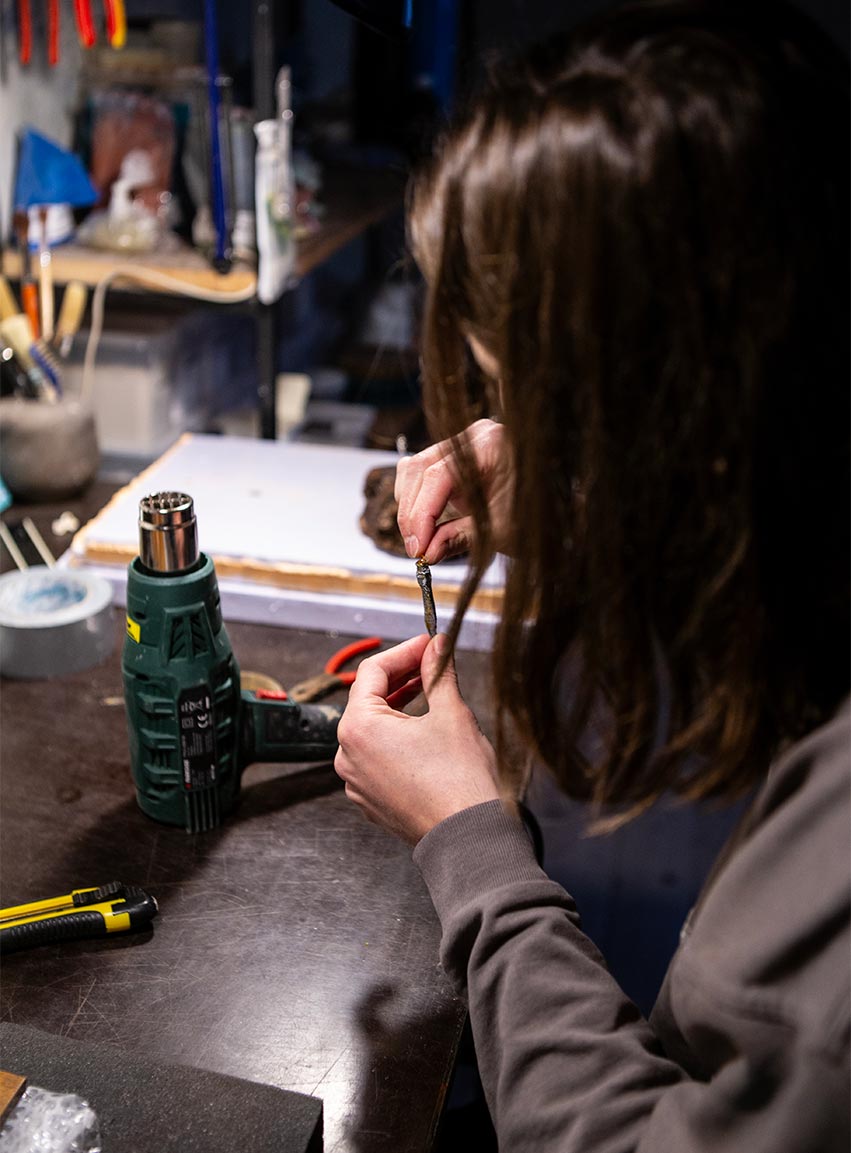
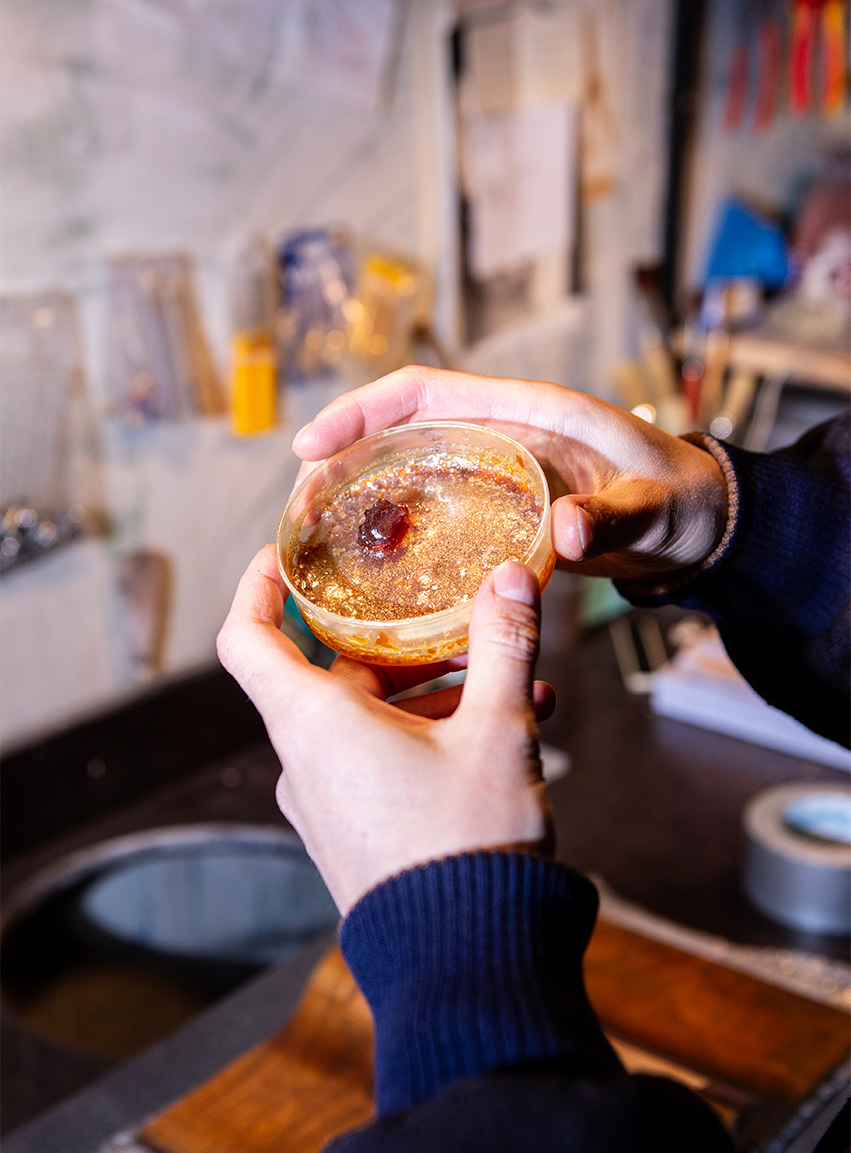
Pine rosin, which I am working with right now, is a fitting example of how I think about time in my work. In these imaginative timescales, the pine rosin hardens into an amber—a kind of time capsule. The materiality of rosin presents time not as a linear progression from past to future, but as multiple temporalities unfolding at once. For me, time does not move forward in a straight line; it fractures and layers. From this perspective, industrial, biological, technological, and geological processes all coexist. Yet eventually, all these materials will crumble and return to the Earth’s strata.
I’ve read that you were also part of a community of collectors of rocks, minerals, and other materials. Did that help you find new ideas on working with raw materials?
I used to be, and it is connected to my early experiences of searching for gemstones. I used to go to trading events—not really for collectors—but there were a lot of interesting stories. Some people were experimenting with counterfeiting stones, and I remember thinking, “You can’t counterfeit stones—it’s impossible.” Now, from my perspective, it seems more manageable. I was fascinated by the narratives they were developing, using ingenious ways to change the properties of the minerals themselves. They often use kilns to alter their properties. These kinds of transformations, and how it is possible to change something seemingly immutable within a material, really captured my attention. That focus continues to unfold in the work I am doing today.
Where does the process of a new work usually begin?
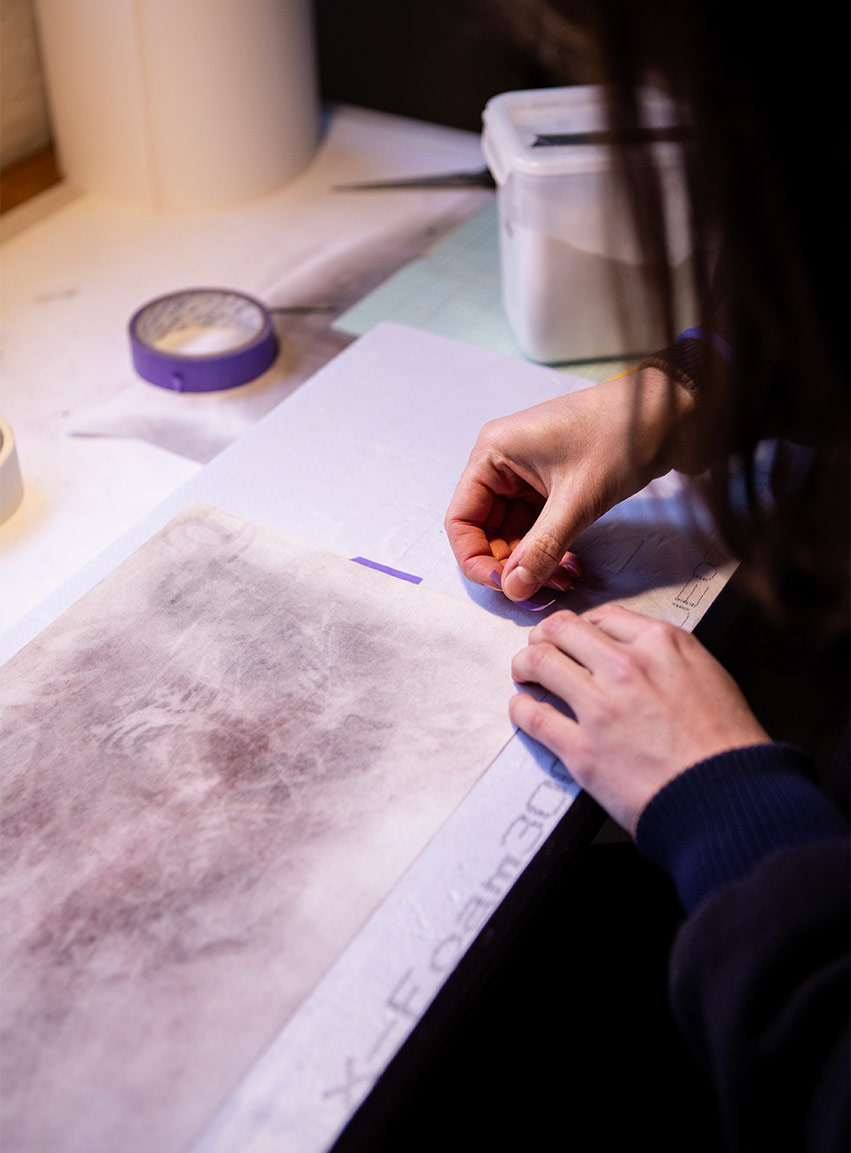
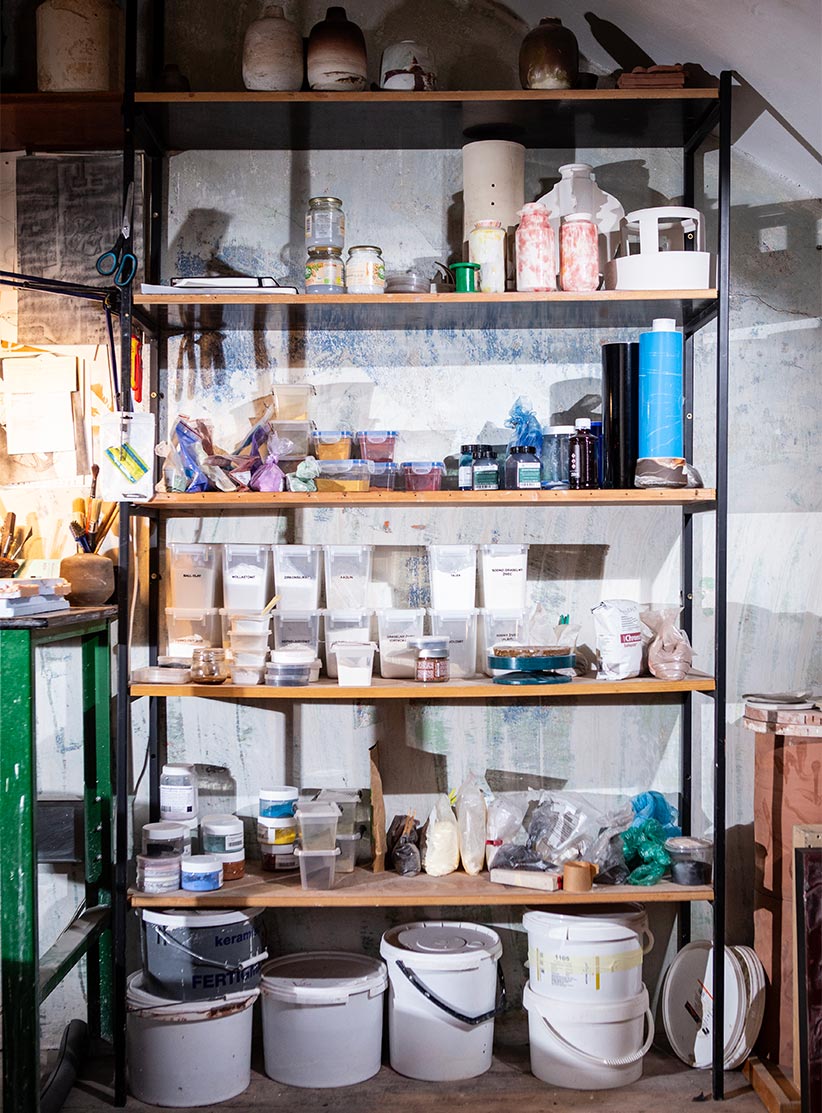
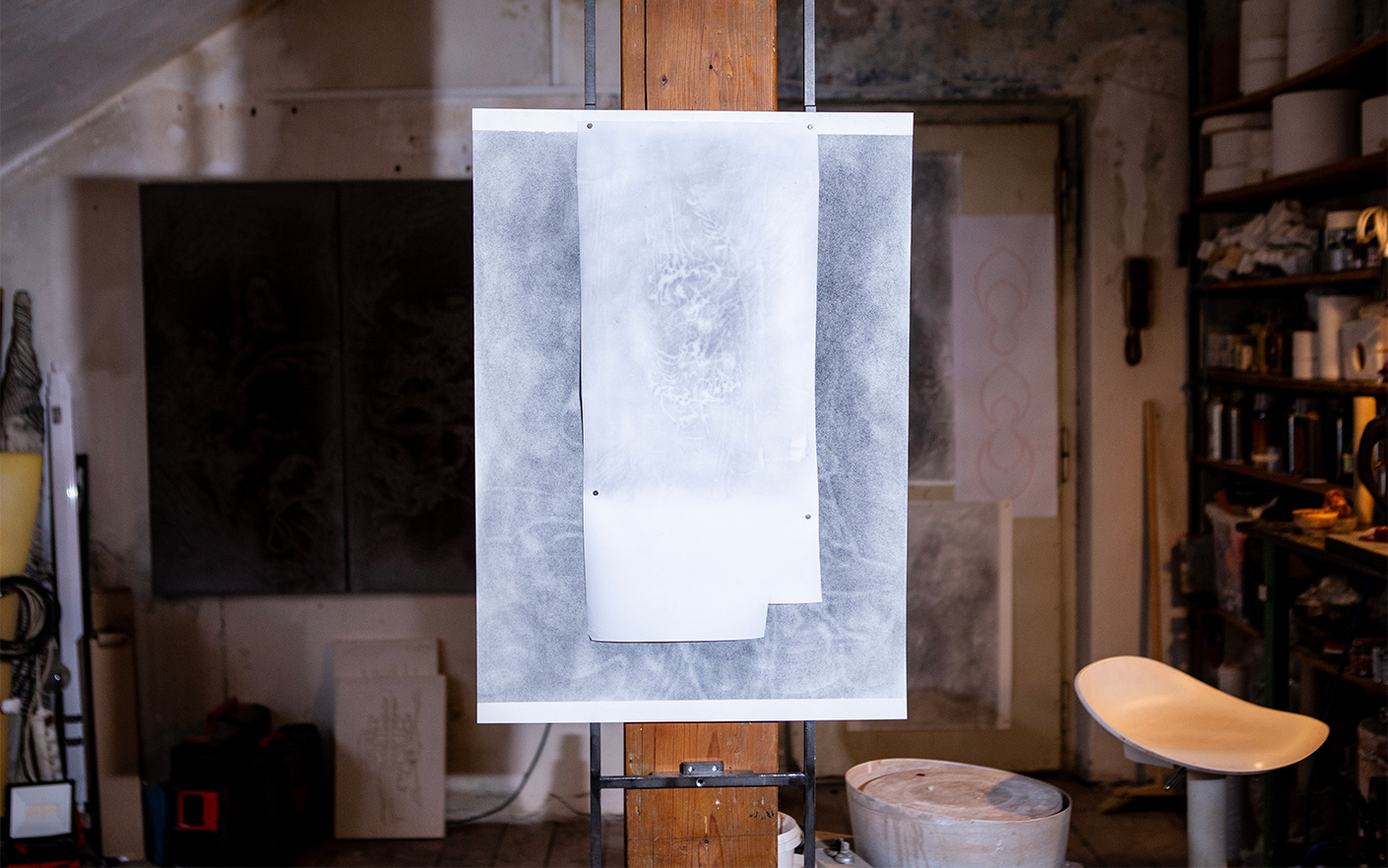
It happens in various ways. At the beginning of each new work, I usually start by researching the materials I want to use. I try to understand them not as a single, isolated element, but in relation to all the other components I’m working with—the assemblages, the combinations, and how they interact. Usually, it’s a continuous shift from one event to another. For example, when I work with a material that is part of a larger whole and not entirely familiar to me, I test how it behaves under certain conditions, guided by accumulated experience. These may sound like clichés, but many dead ends emerge as paths I eventually return to. I’m guided by a mental pre-image that, in most cases, does not align with what actually forms. And it’s this comparison — this dissonance — that I find enjoyable.
How do you approach the space in which your work is exhibited?
In every project, it’s completely different. I guess I have one form that I show in almost every exhibition—these wall-mounted concrete reliefs. For those, you mainly focus on placement. The real engagement with space comes in the installations, like at my recent solo show Rule of Thumb at Polansky Gallery in Prague. I was figuring out how to arrange all of these new objects into a single, coherent larger piece. For example, in that exhibition, there were track lines and co-providers connecting the objects, creating an infrastructure for the works I exhibited. I always remind myself that the installation is about 50% of the final work. You might start with an idea in your head, but once you begin installing, the picture you imagined keeps evolving.
You mentioned your solo show Rule of Thumb at Polansky Gallery in September 2025. How does this rule guide your practice?
The name of the exhibition came from this saying: when it’s hard to measure something, you use the “rule of thumb.” These are rough measures — not precise — and everyone perceives them differently. I think this is closely related to my need to clarify what actually forms the hypothetical core of my work. It was my first solo presentation, and this saying not only fit the concept of the exhibition but also reflected a methodology I follow. I often feel that within this divergence a certain gap is revealed, along with the assumption of how my perspective truly reflects the nature of the things I work with or simply observe. We are all familiar with this moment of uncertainty, and it is a nice moment to pause.
It doesn’t seem like you are usually drawn to pop culture, but in 2022 you had an exhibition called Fourth Moment in Eternia that featured characters from a famous sci-fi series. How did your work and that universe cross paths?
That project was for my diploma, and some of these perspectives have since faded. For me, the series Masters of the Universe was not really about superheroes or action. I was more interested in the peripheral storylines—the world and its ecosystems. The planet Eternia has a core made of a special mineral. They extract it to forge new weapons, but over time, mining this ore undermines the planet’s ecosystem and structure. I found it fascinating that, while the main storyline is full of sword fights and battles, if you watch long enough, you can see a different story emerging: about resource extraction, ecological balance, and the power concentrated in the hands of a few of those creatures, which is very dangerous for society. In my work, I tried to make that hidden storyline visible. I reshaped the characters and environments, creating my own version of the narrative—a kind of animated series filtered through my imagination.
Looking back, how do you feel your perspective — both personally and artistically — has evolved?
I think a lot has changed. After many doubts, especially those I had right after graduating from The Academy of Fine Arts, I realised that I want to fully dedicate myself to my artistic practice and take steps toward some form of sustainability, shall we say. I am learning to live with a certain instability that all cultural workers face. It is certainly a major shift in how I perceive reality and the pitfalls of artistic practice now compared to a few years ago. If I were to speak more about the nature of my work itself and how it has evolved, I have reassured myself about what my interests are, and I trust the pace at which I move.
Text: Anton Isiukov
Photos: Maxim Stano